
















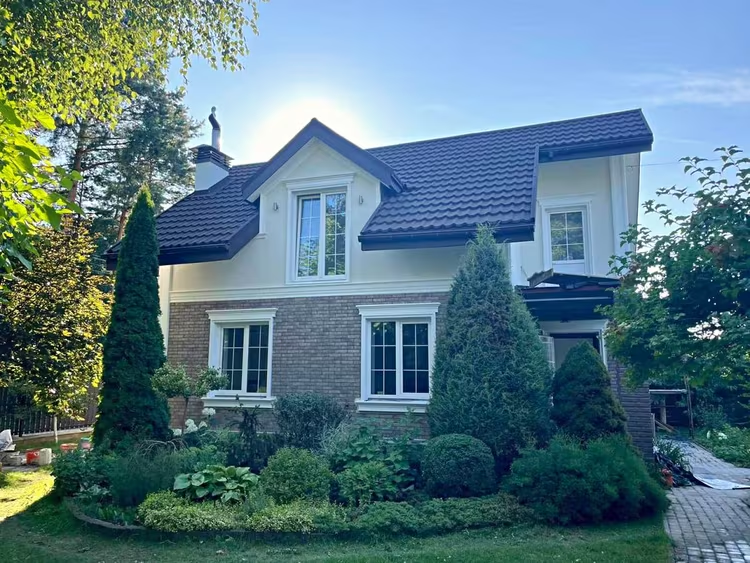
Royal Facade clinker thermal panels: what they are and how to choose a system
Stucco facades are cheaper up front but need regular refreshing. Clinker thermal panels work differently: the insulation and the facing are combined in a single element. Here is how such a system works and what to check before you order.
A clinker thermal panel combines two layers: insulation inside and clinker tile pressed into it on the outside. In Germany, exterior wall insulation is governed by the Building Energy Act (Gebäudeenergiegesetz), so a facade renovation is almost always tied to insulation work. The panel handles both tasks at once: it keeps the heat in and gives you a finished surface that needs no further cladding.
What clinker thermal panels are
💡 In short:
- The panel combines insulation and clinker tile in a single element
- Suitable for new construction and for renovating an old facade
- Installation is possible year-round, including at sub-zero temperatures
- Heat transfer standard for exterior walls (U-value): 0.24 W/(m²·K), as of 10/2026, Energie-Fachberater
A clinker thermal panel is a factory-made element that insulates the wall and replaces the cladding at the same time. The outer part is made of clinker or ceramic tile, the inner part of thermal insulation material. The layers are bonded at the factory rather than on the building site, so every panel has the same composition and thickness. You get a ready-made facade block and spend no time on finishing work.
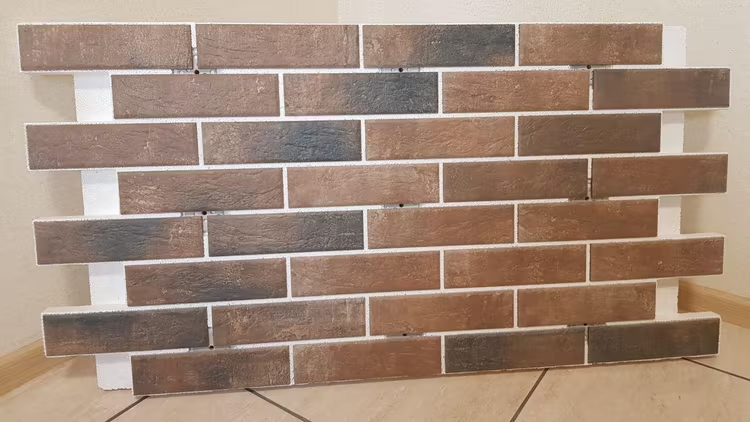
How a clinker thermal panel is built
The system is built around insulation with low thermal conductivity. Most often this is expanded polystyrene, and less often a dense extruded material that absorbs less moisture. The outer layer is tile pressed into the insulation under pressure. It is held across its whole area, not just at the edges.
The panel takes the brunt of rain, frost, UV radiation and mechanical impacts. The wall behind it stays dry and is spared sharp temperature swings. As a result, an insulated facade lasts longer than plaster alone and needs repairs less often. You save on upkeep, not just on heating.
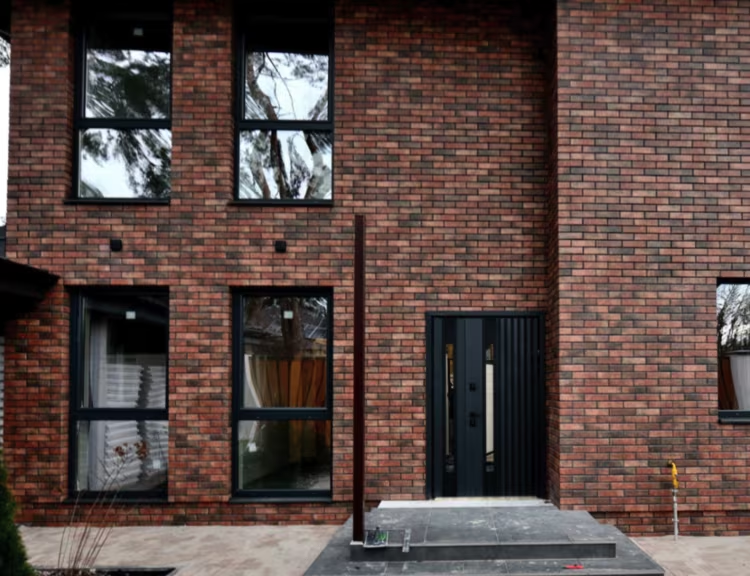
The Royal Facade system: composition and specifications
Clinker thermal panels are produced by Royal Facade, whose European office is in Warsaw: by its own account, it has been making them since 2013. According to Royal Facade (checked 10/2026), the system uses insulation made of PSB-C expanded polystyrene or extruded XPS. The tile is pressed into the insulation to a depth of up to 40 mm, and a finished panel weighs 7-9 kg. The manufacturer claims a facade service life of more than 50 years and installation at temperatures down to -14 °C.
The system uses concealed fastening: you won't see any screw heads on the surface, and the panel is held by plastic elements and anchors. The edges have an interlock that covers the joint and reduces the risk of cold bridges. The joints are filled with grout at above-freezing temperatures, so installation in winter is possible, and the grouting is sometimes postponed until spring.
Why clinker instead of a stucco facade
A stucco facade over insulation often cracks, fades and needs repainting. A clinker surface doesn't behave that way: the tile doesn't fade in the sun, isn't afraid of water and needs no painting, and rain washes the dirt away.
The difference shows in repairs too: stucco is refreshed across the whole surface or its cracks are patched, while with clinker cladding a damaged panel is removed and replaced on its own. For you, that means fewer repairs years after installation.
Comparing facade systems
It is convenient to compare a system by four parameters: you see right away how well it retains heat, how much upkeep it needs, how long it lasts and how much it costs at the start. Below are four solutions that are most common on European projects.
System | Thermal insulation | Upkeep | Service life | Upfront cost |
|---|---|---|---|---|
Clinker thermal panels | high | minimal | several decades | above average |
Stucco facade (WDVS) | medium | regular | shorter | low |
Ventilated facade | high | medium | several decades | above average |
Solid clinker | high | minimal | decades | high |
These ratings describe the system types themselves. Exact figures depend on the insulation thickness, the region and the specific project, so each house is calculated individually.
What matters when choosing a system
First you work out the required level of insulation: for exterior walls in a renovation, the regulations set a limit value for heat transfer, and you choose the insulation thickness to meet exactly that. If the layer is thin, heat loss stays high even with expensive cladding.
The second parameter is the thickness of the whole assembly. On older houses a facade can't be built out indefinitely, because the windows, reveals and drainage system stay where they are. A panel with the tile already attached takes up less space than insulation plus a separate finish.
The third parameter is maintenance. What matters here is not only the price but also how often the system will need attention. The durability of stucco solutions has been studied by Fraunhofer IBP: according to the institute's data (10/2026), when properly installed, such facades last for decades. Clinker tile does not need its top layer renewed.
The fourth parameter is appearance and repairability. The cladding keeps its color, and an individual panel can be replaced. For houses where the facade is renovated once every few decades, this is a weighty argument.
Which buildings the panels suit
The system suits both new construction and the renovation of old houses. It is chosen most often for private houses, townhouses and small residential complexes. On commercial projects, the panels go on office and administrative buildings, where both appearance and heating costs matter.
A separate area is the energy renovation of old facades. The house gets new insulation without any change to its architecture. Installation takes a single stage, since the insulation and the cladding go on together. You won't have to wait for finishing crews a second time.
Typical projects:
- private houses and cottages
- townhouses and small apartment buildings
- office and administrative buildings
- renovation of outdated facades
What to choose for a specific task
Task | Suitable solution | Why |
|---|---|---|
New house, facade appearance matters | clinker thermal panels | insulation and cladding in one go |
Old house, insulation needed | clinker thermal panels | slim overall build-up |
Commercial building | clinker thermal panels | durable surface |
Limited budget | stucco facade | lower upfront cost |
The table explains the logic of the choice but does not replace a calculation: the final decision depends on the condition of the walls, the insulation thickness and the permissible load.
Strengths and limitations
The advantages include durability, weather resistance and low upkeep costs. The surface doesn't need painting, and the tile keeps its color. For houses that are rented out or built to last, this makes operation simpler.
There is one honest catch: the upfront cost is higher than for ordinary insulation under stucco. The panel is more complex and more expensive to produce than rolled insulation with a reinforcing mesh. The payback depends on heating prices, on your region and on how many more years the house will be in use.
⁉️🤔 Frequently asked questions
What are clinker thermal panels?
They are ready-made two-layer facade elements: insulation and clinker tile pressed into it. The panel insulates the wall and forms the outer surface at the same time, so separate cladding is not required. The layers are bonded at the factory rather than on the building site, which means the quality is consistent across all panels.
Which buildings are they suitable for?
For private houses, townhouses, residential complexes and commercial buildings. The system works for both new construction and the renovation of old facades, when a house needs insulation but you don't want to change its look. The solution is chosen based on the insulation thickness and the permissible load on the wall.
How long does such a facade last?
Manufacturers claim a service life of several decades, because clinker tile doesn't fade and isn't afraid of moisture. Stucco systems, according to Fraunhofer IBP, also last for decades, but they periodically need their top layer renewed.
Does the facade need upkeep?
Clinker tile doesn't need painting: rain washes the dirt away, and the color doesn't fade. Unlike stucco, the surface doesn't have to be refreshed across its whole area. A damaged panel can be replaced on its own, and you won't have to dismantle the entire facade.
Can the panels be installed in winter?
Manufacturers allow installation at sub-zero temperatures, because the technology is dry, with no wet processes. The joints are grouted at above-freezing temperatures, so some of the work is sometimes postponed until spring. The exact conditions depend on the system and the region.
In short: how to choose a facade system
First determine what level of insulation the house needs: the panel thickness depends on it. Then check how much space there is on the facade and how the load will be distributed across the wall. If a long service life and minimal upkeep matter, choose clinker thermal panels. If the upfront budget is the deciding factor, compare them with a stucco system.
Before ordering, check the contract for the panel composition, the type of insulation and the installation conditions. That way you will understand exactly what you are getting for your money.

A small editorial team writing guides for independent travel. We travel ourselves, but we haven’t been everywhere, so we check prices, opening hours and how to get there against official sources.