
















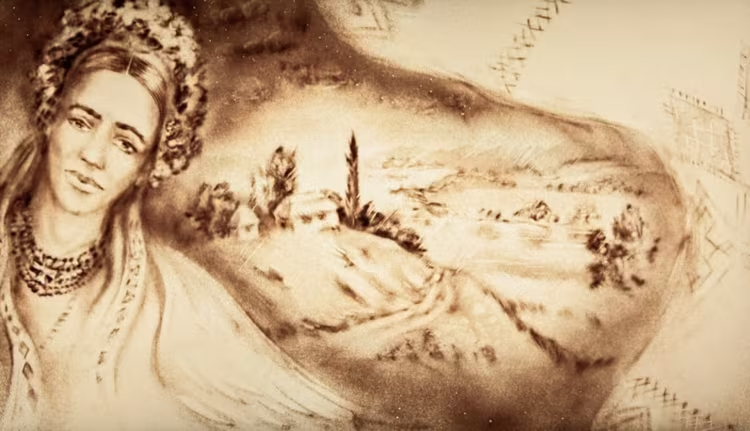
Sandelf Show: how a sand animation show works
Sand animation lives only in the moment of the performance. The artist draws with their fingers on backlit glass, and each picture lasts just a few seconds. Then a palm sweeps the sand away, and the image disappears before the audience's eyes.
A sand show takes up little space and doesn't require a large stage. The performer needs a light table, a projector, and dimmed lighting, while the audience sees the drawing on a big screen. The program works equally well for a wedding in a restaurant, a corporate evening, or a city festival.
Below we break down the technique, formats, and selection criteria, plus what to look for in the contract so your event goes off without surprises. A separate section is devoted to the Sandelf Show studio.
What sand animation is
💡 In short:
- Sand animation draws pictures with sand on glass that is lit from below.
- The artist builds a story in real time rather than showing finished slides.
- Definition and technique: 10/2026, according to Wikipedia.
Sand animation is also called sand painting or drawing on a light table. The principle is simple: the artist pours fine sand onto frosted glass with a lamp underneath. Where there is more sand, the picture is darker, and where it has been brushed away with a finger, light passes through freely. That is how silhouettes, faces, and entire scenes appear on the screen, lasting only a couple of moments.
The technique resembles drawing but requires a different kind of dexterity. It is not the tip of a pencil that does the work but the whole palm, the edge of the hand, and a pinch of sand. The picture is built in a matter of seconds: outline, details, and then immediately a transition to the next scene. There is no way to fix a mistake, so you watch the performance like a trick rather than like a framed painting.
Sand animation is often confused with sand therapy and with drawing for children, although their purposes are different. In a show, what matters is the audience and the story, not the process of moving sand around. For you, what matters is not the drawing itself but the story guests at the table will see and how it fits the mood of the evening.
According to Wikipedia, the classic form involves a glass plate lit from below, on which the artist creates images. The sand is constantly moving, so the story lives only briefly and never repeats. The finished work cannot be sold or hung on a wall, which is why the genre differs from ordinary graphics: the audience sees a given picture only at the moment of the performance.
How a sand show works
A sand show is prepared in advance. The artist breaks the story into short scenes and selects music for each one. In rehearsal, they work out how many seconds it takes to finish the details and leave a time buffer.
Technically, the performance rests on three elements. The light table provides illumination from below, a camera captures the drawing, and a projector puts it on the screen. For a small venue, a monitor in the corner of the room is enough. For a large stage, you need a bright projector, otherwise the stage lights will wash out the picture.
There are two formats. A live performance is seen by the audience in full: the artist draws in front of them, and every mistake is visible. A recorded video is prepared frame by frame and shown as a short film. The live version wins because guests watch the artist themselves. Video is more convenient when you need a precise clip without a performer on stage.
Syncing with music requires separate work. The drawing must land on the beat and match the meaning of the lyrics. That is why the script is first built around the composition, not the other way around. At the dress rehearsal, you check how the picture reads from the back row.
The length of the program is chosen to fit the format of the evening, and here it is important not to overload the block. A short piece is placed between speeches, while a longer story is given its own segment. Discuss the timing with the artist in advance so you don't have to cut the piece on the fly and break the script.
Sandelf Show: sand animation studio
The company Sandelf Show describes itself as a sand animation studio. According to its description, the artists perform at corporate events, weddings, festivals, and exhibitions. There are two formats. A custom program is prepared for a specific event, while themed pieces are taken from a ready-made set.
According to the service description (10/2026), the themes include love stories, historical moments, cultural dates, and charity evenings. For a wedding, the couple's personal story is the most common choice; for a company anniversary, the brand's journey. The interactive format assumes that guests influence the course of the story and help choose the ending.
This section gathers what the studio says about itself: the range of occasions, formats, and themes. Check team composition, prices, and travel terms directly with the studio.
What events people book it for
There are quite a few occasions for booking, and the story depends on them. We have collected typical options in a table.
Occasion | What the artist shows | Why it works |
|---|---|---|
Wedding | How the couple met and their story | All guests recognize the personal story |
Corporate evening | The company's journey and its anniversary | The brand becomes the hero of the stage |
City festival | Local legends and landmarks | The story is clear without words |
Exhibition or museum | The theme of the exposition | The picture leads visitors through the halls |
Charity evening | The problem and the appeal for help | Emotion persuades better than numbers |
Choose an occasion with a clear story. The more specific the plot, the easier it is for the artist to build it into scenes. For a wedding, how the couple met and one shared moment are enough. For a corporate event, two company milestones are enough instead of a full report.
If there is no story, choose a themed program. Then the artist performs a ready-made story set to music, and you save time on approvals. The catch is that the piece is not tied to your company or couple.
Also consider the venue format. In a banquet hall, guests sit at tables, and some of them see the screen from the side, so it is better to duplicate the picture. At an outdoor venue during the day, the show loses contrast. Check where you will be viewing the screen from and whether you have time to rearrange the furniture.
What makes up the budget
The final amount is given by the artist or studio after the brief. Several factors affect it, and almost every one of them is negotiable.
- Length of the program.
- A ready-made script or a new story made to order.
- Number of performers in the show.
- Travel and accommodation if the city is different.
- Equipment: screen, projector, lighting, and sound.
- Rehearsal and on-site run-through.
A ready-made piece is cheaper than a custom one. A script from scratch requires the work of a writer, music selection, and rehearsals, so more is built into the budget. Travel and accommodation noticeably change the amount when performing in another city. Equipment can be rented from the studio or found at the venue, and this also affects the total.
Specific prices depend on the city, season, and the artist's schedule, so we do not list amounts. Ask three things right away: whether equipment is included in the price, whether a deposit is required, and what happens if the date is rescheduled. If the budget is limited, you can skip a custom script in favor of a short themed piece and save on travel by hiring an artist from your own city.
How to choose a show artist
A portfolio says more about an artist than a description of services. Watch a full performance video, not a montage of beautiful shots. That way you will see the pace, the slips, and how the artist works with the room.
- There are recordings of full shows, not just short clips.
- It is clear which themes the artist can build.
- There is a separate file with technical requirements for the venue.
- It states what is included in the price and what is not.
Clarify the technical requirements. The artist needs dimming, a clear area for the table, and power for the equipment. If the room has panoramic windows and daylight, the picture will be pale. This is worth checking in advance, not on the day of the event.
Ask about the music. The composition must be legal for public performance. Sometimes a track has to be changed because of licensing, and it is better to resolve that before the show.
The contract covers three risks: rescheduling the date, equipment failure, and artist substitution. Check that it includes the deposit procedure, cancellation penalties, and a backup option. A typical mistake is when the client agrees to the show over messages and does not pin down the deadlines.
Look at how the artist behaves on stage and communicates with the host. An experienced performer suggests the order of entrances and pauses themselves rather than waiting for commands from the room. This is visible in recordings from real events, where you can see not only the drawing but also the guests' reaction.
How to book a show: steps
Booking takes several days, and sometimes several weeks. The logic is as follows:
- Determine the date, venue, and occasion of the event.
- Formulate the story you want to show.
- Send a request to the artist or studio through the website.
- Agree on the script, music, and length.
- Check the venue's technical requirements and the space for the table.
- Sign the contract and pay the deposit.
Requests are submitted through the studio's website form or by email. On the first call, you describe the event and receive a timeline and price. After the script is approved, the artist holds a rehearsal, and only then is the booking confirmed. The earlier you reserve the date, the more available themes and artists remain on the studio's schedule.
⁉️🤔 Frequently asked questions
How much does a sand show cost?
The price depends on the length, story, number of artists, and travel. A ready-made piece costs less than a custom one, and equipment and accommodation are often a separate line item. The studio gives the exact amount after the brief, so compare not only the number but also what it includes.
How long does the performance last?
A live program usually consists of several scenes in a row, and the total time depends on the story and the client's wishes. A short piece works well for a block between speeches, while a long one is better placed as a separate segment of the evening. Discuss the exact minutes in advance to fit the timing.
What does the venue need to provide?
The artist needs a light table, a projector or screen, and the ability to dim the room. You will also need a power outlet near the stage and a bit of free space behind the table. Many studios bring their own equipment, but this should be confirmed in advance so you don't have to hunt for a projector on the day of the event.
Can I book a show for a wedding?
Yes. For a wedding, the couple's personal story is usually prepared and set to music. The piece is placed after the official part or before the first dance, when guests are already at the table. Check with the artist in advance whether they can work in your venue with bright lighting if the room cannot be dimmed.
Can I get a recording of the show?
Yes, some studios offer a video format: the story is drawn in advance and edited into a short film. Such a clip is convenient to show on a screen without an artist on stage. Check whether filming of the live performance is included in the service or ordered separately.
In short: how to choose a sand show
A sand show rests on story and music, not on special effects. If you have a personal story, go with a custom piece. If time is short, look at a ready-made themed program.
- Wedding: the couple's story and a short piece after the official part.
- Corporate event: the company's journey and one or two key brand moments.
- Festival or exhibition: a local legend or the theme of the exposition.
- Small venue: a monitor will work instead of a projector.
Before paying, check the venue's technical requirements and the contract terms, including date rescheduling and artist substitution.

A small editorial team writing guides for independent travel. We travel ourselves, but we haven’t been everywhere, so we check prices, opening hours and how to get there against official sources.