
















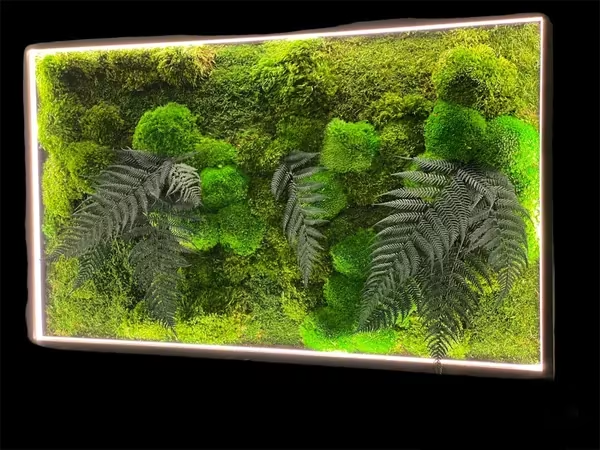
Stabilized moss in interiors: panels, walls and acoustics without watering
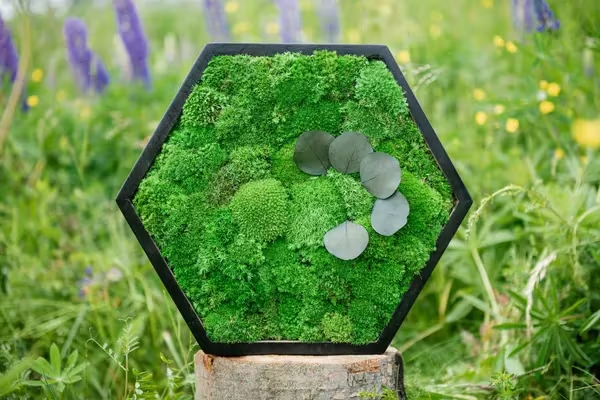
Stabilized moss on a wall doesn't need watering. It lasts for years and looks alive.
The natural plant is treated and stops growing. It stays soft and keeps its color, and the decor needs neither moisture nor light. Manufacturers quote a service life of 8 to 10 years (as of 10/2026, based on manufacturer descriptions).
The popularity of this material goes hand in hand with biophilic design. The idea is simple: bring natural textures back into homes and offices instead of bare concrete and glass.
Below, you'll find how it works for acoustics, where moss fits, and what to look at when buying.
What is stabilized moss
💡 In short:
- Moss is treated with glycerin: the plant stops growing and drying out, and it doesn't need light.
- Service life is 8 to 10 years at 40 to 60% humidity (as of 10/2026, based on manufacturer descriptions).
- Moss panels absorb some noise: NRC ranges from 0.5 to 0.9 (as of 10/2026, based on panel manufacturers' claims).
- Dust is removed with a dry brush, and water or spraying ruins the moss.
Live moss is not suitable for a wall: it needs humidity, light and constant watering. In production, natural moss is taken and treated with a solution of glycerin and alcohol. The ratio is usually 2 to 1, left to soak for up to half an hour, then dried (as of 10/2026, Utopia).
After treatment, the plant's metabolism stops. There is no growth, while the softness and green color remain. This material doesn't shed soil dust and doesn't reach toward the window.
You can buy a ready-made piece or modules. The needed area is assembled from separate parts, so wall size is not a limit.
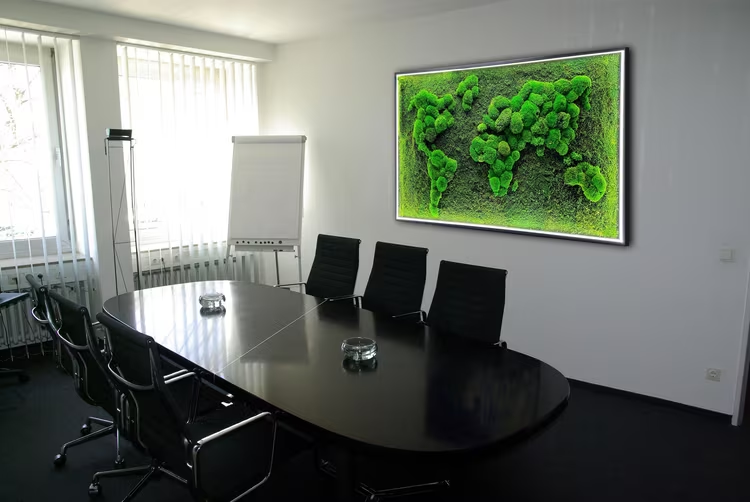
Why moss is coming back to interiors
Interest in green walls grew out of biophilic design. Its idea is simple: people feel calmer around natural textures. In an office or clinic, a green wall works more gently than bright graphics and doesn't distract from the task at hand.
The second factor is practical. Live plants die in dark corridors, while stabilized moss holds up there. You need no grow light, watering schedule or soil replacement.
There is also a third factor: looks. A dense green color gives a wall a depth that wallpaper or paint can't. Moss plays with light and shadow, so the surface doesn't look flat.
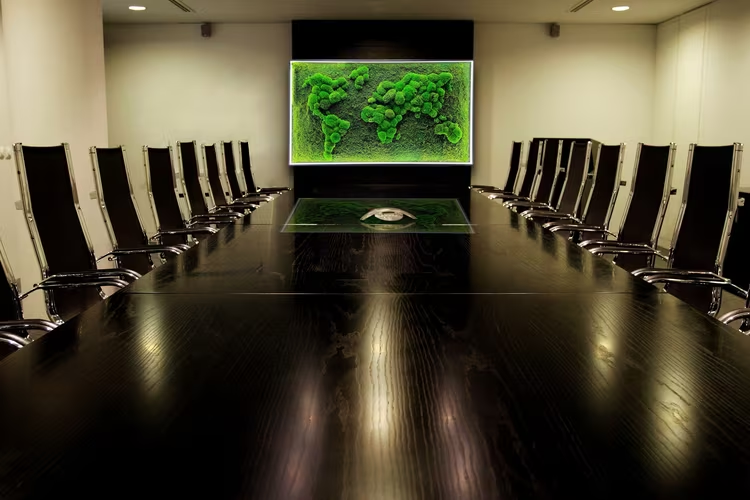
Moss panels: the Ekomoss example
The German company Ekomoss has a page on moss panels devoted to wall pieces made of stabilized moss. It shows how a ready-made panel differs from a full-width wall.
A panel is handy because it covers an empty wall without shelves or planters. Unlike live greenery, it doesn't dirty the windowsill with soil and doesn't take up space by the window.
For a small room, one panel is enough. For a large lobby, modules assembled into a single green surface make more sense. You should decide in advance what exactly you want to cover.
How moss works with acoustics
A moss wall doesn't replace professional acoustics, but it absorbs part of the noise. For soft moss panels, the NRC sound absorption coefficient, according to manufacturers, ranges from 0.5 to 0.9 (as of 10/2026).
The higher the value, the more sound energy goes into the material. The result depends on the thickness of the moss and the area of the wall. A small panel barely affects the hum, while a large surface noticeably reduces echo.
In a meeting room or open-plan office, moss is added for comfort in conversation. Here it works together with soft furniture and rugs, not instead of them.
If quiet is your main goal, have an engineer calculate the acoustics. In that setup, moss is a pleasant addition, not the solution.
Types of moss products for interiors
Product | Type | What it offers | Where to use |
|---|---|---|---|
Moss wall | large panel | dense green backdrop | lobby, showroom |
Moss panel | framed or frameless | accent on one wall | apartment, office |
Moss logo | separate modules | follows the outline of the layout | reception, shop |
Acoustic moss panel | panel with backing | absorbs some noise | open-plan office, meeting room |
The format is chosen by the task. A wall covers a large area, a panel solves a specific need, and modules work for branding. You should measure the wall in advance and decide what matters more: quiet, looks or a logo.
Where moss fits
Place | What it offers | Example use |
|---|---|---|
Office | quieter and softer | panels near work areas |
Hotel | atmosphere | lobby, reception |
Shop | recognizability | logo made of moss |
Apartment | natural accent | panel on a wall |
In public spaces, moss is more often placed somewhere prominent: the entrance, the waiting area, the checkout. At home, one wall or a panel above the sofa is enough. In a cramped room, a large green surface looks heavy, so choose a smaller format there.
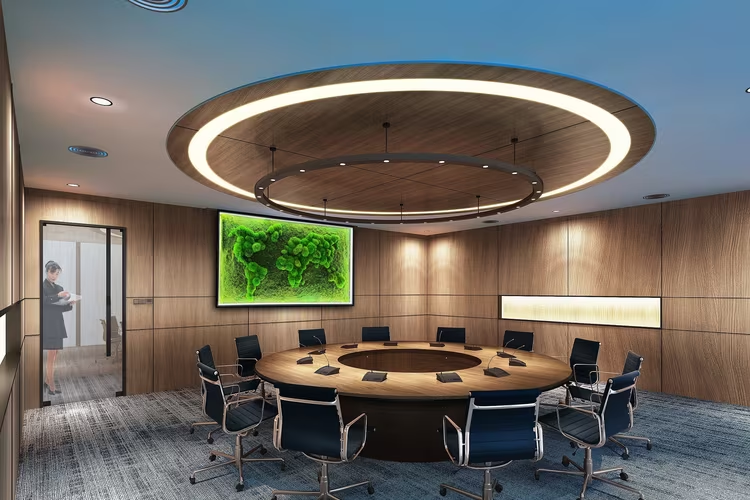
What to check before buying
Before ordering, clarify three things: fire protection, operating conditions and size.
For public spaces, the flammability class matters. For natural materials, fire resistance is achieved by impregnation, and some manufacturers claim certificates under DIN B1 and EN standards (as of 10/2026). For an apartment, the requirements are usually milder.
Moss panels don't like the sun. Even treated material fades in sunlight, so placing one right against a south-facing window is a bad idea. Keep humidity in the 40-60% range: this is the range manufacturers quote (as of 10/2026).
Care comes down to dust. Every few months, go over the moss with a dry, soft brush. Don't use water or spraying: they are harmful to stabilized moss.
⁉️🤔 Frequently asked questions
How long does stabilized moss last?
Manufacturers quote 8 to 10 years, and some pieces last longer (as of 10/2026). The color stays until the material fades or gets dusty. Steady humidity and no direct sun noticeably extend its look.
Do I need to water or spray moss?
No. Moss is treated with glycerin, so its metabolism and growth stop. Water and spraying do harm: the material absorbs moisture and loses its look. It's enough to occasionally remove dust with a dry brush.
Is moss dangerous for allergy sufferers?
Not in itself. Treated moss doesn't flower and doesn't release pollen, and it has no active metabolism. Reactions are usually caused by dust or mold, which appear without care. If you have an allergy, ask the seller about the composition and treatment of the material.
Does moss really absorb noise?
Partly. The NRC of moss panels, according to manufacturers, ranges from 0.5 to 0.9 (as of 10/2026). The value depends on the thickness of the material and the area of the wall. A small panel won't remove the hum, while a large wall will noticeably reduce echo in the room.
What fire protection class is needed?
For an apartment there are usually no strict requirements, while for hotels, offices and shops they are set by the client and by regulations. Some manufacturers claim DIN B1 and EN certificates for treated moss (as of 10/2026). Check the certificate before ordering if the site is inspected by regulators.
Where does moss look best?
In lobbies, at reception, near a meeting room and on an empty wall in an apartment. A green surface covers bare concrete and creates a soft backdrop. In a narrow corridor or a small kitchen, a large wall will look heavy.
In short: how to choose moss decor
For an apartment, choose a panel: it covers an accent wall without installing a whole structure. For an office and meeting room, acoustic panels with a fire certificate are a good fit. For a brand, order logo modules made to your layout.
Before paying, check three points: fire protection class, exact size and humidity in the room. Confirm the terms with the supplier before ordering.

A small editorial team writing guides for independent travel. We travel ourselves, but we haven’t been everywhere, so we check prices, opening hours and how to get there against official sources.