
















30 Best beaches in Tenerife: where to swim and how to get there
Tenerife's beaches are nothing alike. In the south you'll find imported golden sand and calm water behind breakwaters. In the north and west the island shows its character: black volcanic sand, pebbles, and a powerful Atlantic.
Choosing is hard. One shore is perfect for a child, another gets closed for swimming because of the waves. In 2026, 11 of the island's beaches hold the Blue Flag, and they aren't always the most beautiful coves (as of 07/2026, ADEAC list). Below we've gathered 30 Tenerife beaches with photos, infrastructure, and honest catches.
Tenerife beaches: a quick overview
💡 In short:
- The south of the island (Adeje, Arona) is covered with imported sand and protected by breakwaters: calm swimming and dense infrastructure.
- The north and west keep volcanic sand, pebbles, and waves: a choice for surfing, diving, and quiet.
- All Tenerife beaches are free and open to everyone; you pay only for loungers, umbrellas, and showers.
- Infrastructure and access: 09/2026, according to the official Tenerife tourism portal
What matters isn't the side of the island, but how protected the bay is. If you need a gentle entry and warm water, look south. If you want waves, black sand, and few people, head north and west.
Your situation | Beach |
|---|---|
Swimming with a child | Playa de las Teresitas |
Premium vacation | Playa del Duque |
Surfing and kitesurfing | Playa del Médano |
Black sand and quiet | Playa de la Arena |
Diving and snorkeling | Playa Montaña Amarilla |
Promenade and cafes | Playa de las Vistas |
Wild nature, a car | Playa del Bollullo |
Natural lava pools | Playa de la Jaquita |
1. Playa del Duque
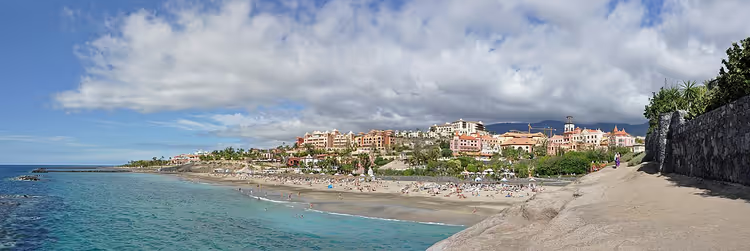
Playa del Duque holds the Blue Flag in 2026 (as of 07/2026, ADEAC 2026 data). It's the flagship of Costa Adeje in the south of the island. The shore is covered with imported light sand, but dark volcanic sand shows through in places underneath. The water entry is gentle, and there are almost no waves.
The resort is geared toward relaxed vacations and a higher budget. It's clean, there are trash bins, cafes, and umbrella and lounger rentals. Families and couples who value comfort over wild nature come here.
 © Marc Ryckaert · CC BYPhoto: Marc Ryckaert, CC BY (https://creativecommons.org/licenses/by/3.0), Wikimedia Commons
- Cost: entry is free; loungers, umbrellas, and showers are paid.
- Who it's for / Not for: for those who value comfort and are willing to pay; not for those looking for an empty shore.
- The catch: prices at beachfront cafes and rentals are high.
2. Playa de Fañabé
Playa de Fañabé sits next to Playa del Duque but is a step cheaper. The sand here is gray: imported sand was added on top of volcanic sand for years, so no black patches remain. The water entry is calm, and the shore is clean.
Families with children and older vacationers choose this beach. There are water attractions for little ones, and nearby shops sell swimsuits, umbrellas, and goggles. An important detail: the shower here is free, but the toilet is paid only.
 © Edgar El · CC BYPhoto: Edgar El, CC BY (https://creativecommons.org/licenses/by/3.0), Wikimedia Commons
- Cost: entry and showers are free; loungers and toilets are paid.
- Who it's for / Not for: for families with children and a leisurely vacation; not for surfers.
- The catch: the toilet is paid, and free facilities are scarce.
3. Playa de Torviscas
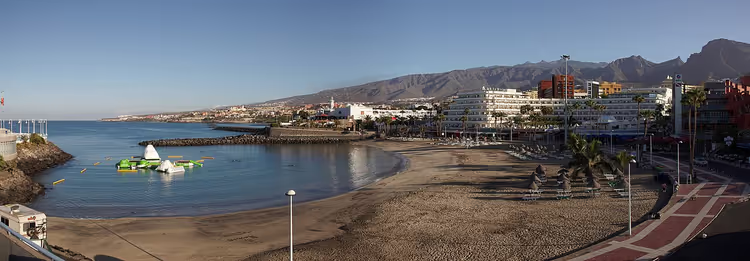
Playa de Torviscas continues Playa de Fañabé with no clear boundary. On maps these shores are even labeled with a slash: Playa de Fañabé / Playa de Torviscas. Together they form a long stretch of sand.
In the evening, restaurants, bars, and discos open here and run late. Want a quiet evening? Walk along the promenade and watch the sunset.
 © Wouter Hagens · CC BY-SAPhoto: Wouter Hagens, CC BY-SA (https://creativecommons.org/licenses/by-sa/3.0), Wikimedia Commons
- Cost: entry is free; lounger rental is paid.
- Who it's for / Not for: for those who combine the beach with nightlife; not for lovers of quiet.
- The catch: it's noisy at night because of the bars and discos.
4. Playa de Troya
In Costa Adeje, Playa de Troya thrives on young crowds: there's plenty of affordable accommodation around. Formally it's two shores, Troya 1 and Troya 2, but the boundary between them is invisible. The strip runs for about 400 meters, and in places the width reaches 80 meters (according to the map).
The infrastructure is simple: lounger rental, shade canopies, a toilet, and a shower. All of it is cheaper than at neighboring resorts. The village is full of budget bars and restaurants, some open until late at night.
- Cost: entry is free; rentals and showers are paid.
- Who it's for / Not for: for young people and budget travel; not for families with small children.
- The catch: noisy and crowded, and the breakwaters don't dampen the waves well.
5. Playa de la Pinta
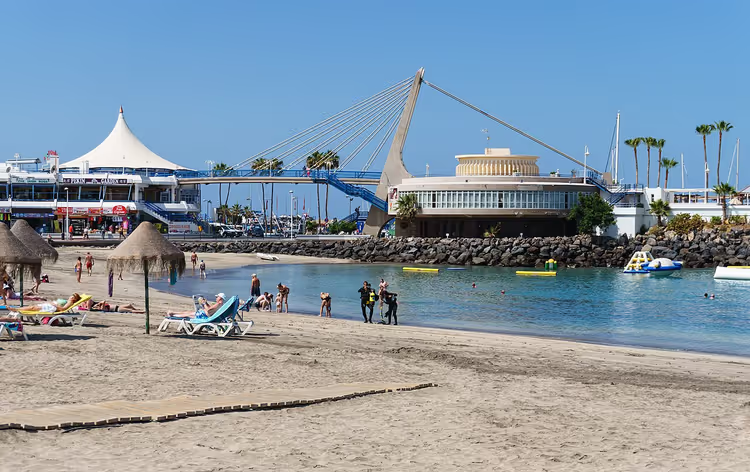
Playa de la Pinta is memorable for its Puerto Colón harbor. It's separated by a small breakwater and serves as a mooring for yachts and boats. Thanks to this protection, there are almost no waves at the shore, and the water warms up quickly.
People usually come here for active recreation: water equipment rental, boat trips, fishing. The shore is covered with imported yellow-gray sand, and there's a gentle entry and warm shallows for children. Some tourists feel that the harbor's proximity reduces water cleanliness and go swimming at neighboring shores instead.
 © Tuxyso · CC BY-SAPhoto: Tuxyso, CC BY-SA (https://creativecommons.org/licenses/by-sa/3.0), Wikimedia Commons
- Cost: entry is free; lounger rental, showers, and toilets are paid.
- Who it's for / Not for: for those who want to combine swimming with a boat trip; not for those seeking complete quiet.
- The catch: the water near the harbor is less clean than at neighboring beaches.
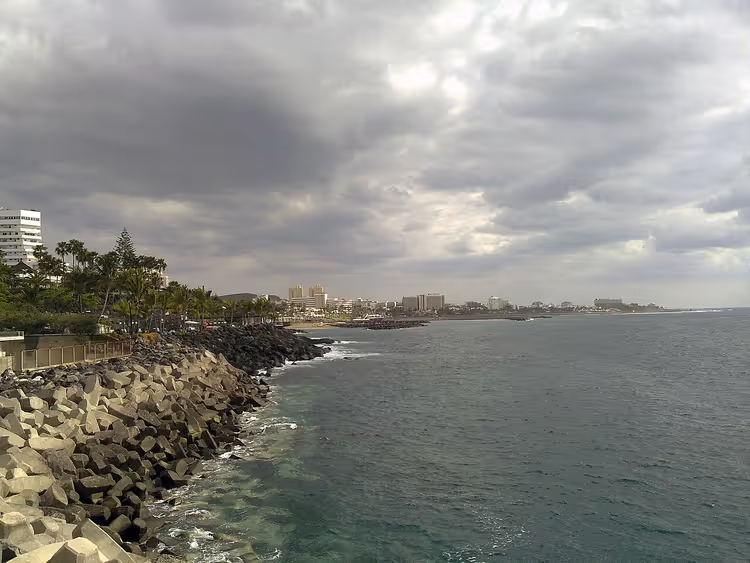
6. Playa del Bobo
Playa del Bobo is small and well kept. The area is tidy, there are bins for separated waste, and the sand is clean. The sea entry is gentle and the bottom is sandy, so swimming is comfortable for both adults and children.
There are many bars and small restaurants on the beachfront serving European and local cuisine. Go for the seafood on the menu: mussels, octopus, squid, and fresh fish. In the evening it's pleasant to walk along the shore and watch the sunset.
- Cost: entry is free; the toilet is paid.
- Who it's for / Not for: for a calm budget vacation; not for those who need a lot of space.
- The catch: the beach is small, so space is limited.
7. Playa Honda
Playa Honda is a surfer's choice. The Atlantic doesn't calm down at this shore, so even beginners catch waves here. Board rental is available right on the beach, and beginners can take lessons with an instructor.
The spot is poorly suited for swimming: the shore is pebbly, the water entry is steep, and the swell is constant. Sunbathing isn't very comfortable either, although loungers and canopies are available. Nearby accommodation fits any budget.
- Cost: entry is free; board and lounger rental is paid.
- Who it's for / Not for: for surfers and active recreation; not for calm swimming with children.
- The catch: pebbly shore and constant waves.
8. Playa del Camisón
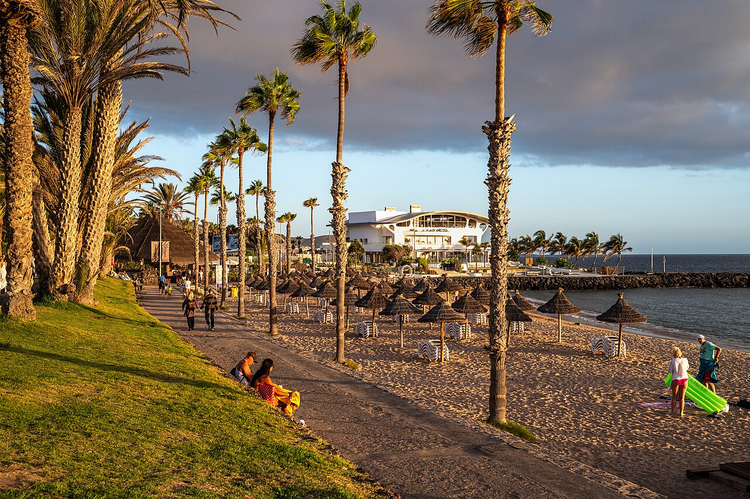
Playa del Camisón greets you with quiet after noisy Las Américas. You can spend a couple of hours here or stay for your whole vacation. Instead of volcanic sand, fine white sand has been brought in, and the sea entry is sandy and gentle.
Semicircular breakwaters close the bay off from the Atlantic. Even when the ocean is rough, swimming inside the bay is allowed. The beach has water equipment rental, and beginners can take lessons with an instructor.
The area is well maintained: waste is collected separately, and canopies, showers, and toilets are available. Beachfront accommodation is the most expensive; prices drop farther from the shore. You can eat without leaving the beach. After relaxing, it's worth walking to Las Américas: on Las Pirámides street there's the Pirámide de Arona exhibition center, which hosts shows and performances. A boutique district is nearby.
 © Tuxyso · CC BY-SAPhoto: Tuxyso, CC BY-SA (https://creativecommons.org/licenses/by-sa/4.0), Wikimedia Commons
- Cost: entry is free; loungers and rentals are paid.
- Who it's for / Not for: for those who plan their own vacation and value quiet; not for those looking for round-the-clock parties.
- The catch: beachfront accommodation prices are high.
9. Playa de las Vistas
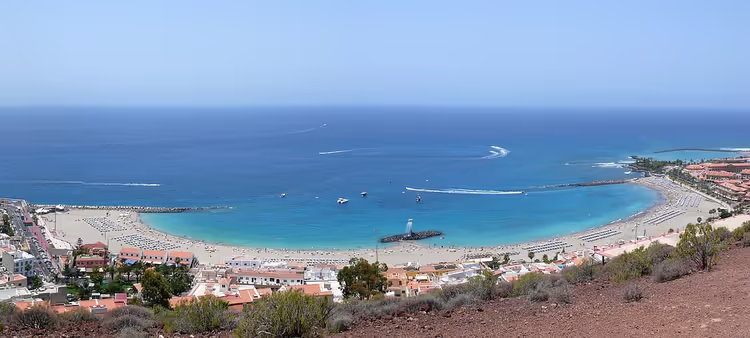
Playa de las Vistas is one of the Blue Flag beaches in 2026 (as of 07/2026, ADEAC (Bandera Azul) 2026 list). It is one of the widest and longest shores in Arona. The sand is golden yellow, fine and soft, pleasant to walk on barefoot.
Breakwaters separate the bay from the ocean, so waves hardly interfere with swimming. The bottom is sandy and slopes gently. There are beach soccer and volleyball courts on the shore, with equipment available for rent. Surfers can also find board rentals.
Life here never stops: bars and restaurants stay open until morning, and the promenade is perfect for evening walks. Beachfront housing is the most expensive, with prices dropping further from the shore. Keep in mind one nuance: all services are geared toward high season, and in low season the beach empties out with almost no entertainment available.
- Cost: entry and infrastructure are free, rentals are paid.
- Who it's for / Not for: for active recreation and evening walks; not for those seeking quiet.
- The catch: outside high season, services barely operate.
10. Playa de Los Cristianos
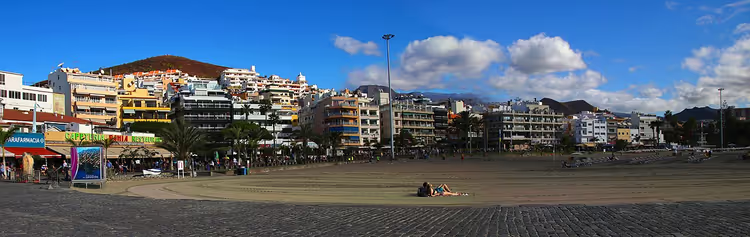
Playa de Los Cristianos merges into Playa de las Vistas and shares its infrastructure: cleaning, lounger rentals, showers and toilets. But in character it is a different shore, quiet and unhurried. Families with children and older vacationers choose it.
Important update: in 2026, Los Cristianos lost its Blue Flag, the only such loss in the Canary Islands that year (as of 07/2026, ADEAC (Bandera Azul) 2026 list). The flag is awarded for water quality, safety and services, and this season the beach did not confirm it.
A port operates nearby, with yachts, catamarans and banana boats departing from it. An extinct volcano is visible from the shore, with trails leading to its summit. Getting to the southern resorts is easy, and the beach is just a couple of stops from Las Americas with its shops and water parks.
 © Guillaume Baviere from Uppsala, Sweden · CC BY-SAPhoto: Guillaume Baviere from Uppsala, Sweden, CC BY-SA (https://creativecommons.org/licenses/by-sa/2.0), Wikimedia Commons
- Cost: entry is free, loungers and umbrellas are paid.
- Who it's for / Not for: for quiet family vacations; not for nightlife.
- The catch: the water near the port is less clean, and swimming is more pleasant at neighboring Playa de las Vistas.
11. Playa de los Guios
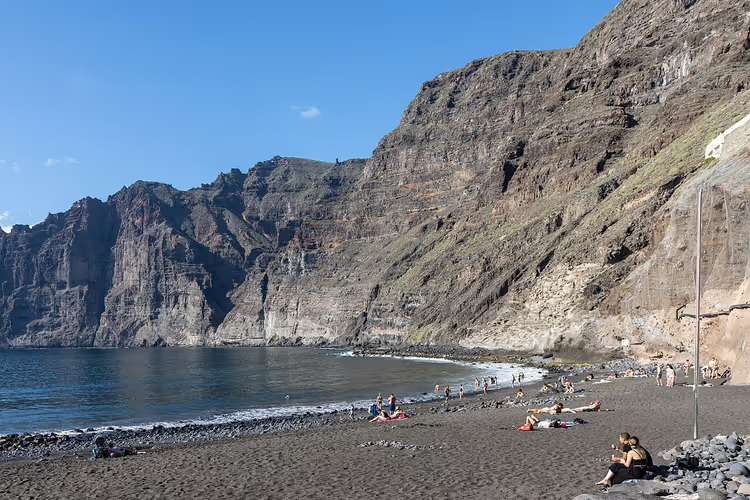
Playa de los Guios lies at the foot of the Los Gigantes cliffs. The sheer walls not only shelter the shore from winds but also warm the water further. Only a small part of the coast is cleared for swimming: rocks and large pebbles have not been removed everywhere, and the entry into the water is rocky.
The sand here is natural, black and volcanic. During strong swells, visitors move to a natural basin on the shore: lava solidified and formed a pool that the ocean fills. The edges of the basin have been reinforced.
The resort is aimed at above-average budgets: hotels and apartments are more expensive than elsewhere on Tenerife. Yachts and boats can be rented from the port. There are no nightclubs, but there are plenty of daytime bars and restaurants. From here it is convenient to hike the route into the Masca Gorge (Barranco de Masca).
 © Photograph by Mike Peel ( www.mikepeel.net ). · CC BY-SAPhoto: Photograph by Mike Peel ( www.mikepeel.net )., CC BY-SA (https://creativecommons.org/licenses/by-sa/4.0), Wikimedia Commons
- Cost: entry is free, loungers, umbrellas, shower and toilet are paid.
- Who it's for / Not for: for quiet couples and families; not for parties or budget travel.
- The catch: rocky entry and high accommodation prices.
12. Playa Chica
Playa Chica has preserved pristine black volcanic sand. At other resorts on the island it was long ago replaced with imported light sand, but here the shore remains as it originally was. It is worth stopping by at least once for this.
Infrastructure is minimal: loungers, a toilet and trash bins. Coastal snack bars offer a bite to eat, but comfort is limited. The beach sits next to a fishing village and its port, so the water near the shore is not the cleanest. Swimming here is less pleasant than sunbathing.
- Cost: entry is free, lounger rental and toilet are paid.
- Who it's for / Not for: for those who want to see the island's original shore; not for extended swimming.
- The catch: the water near the port is contaminated with traces of marine fuel.
13. Playa de la Arena
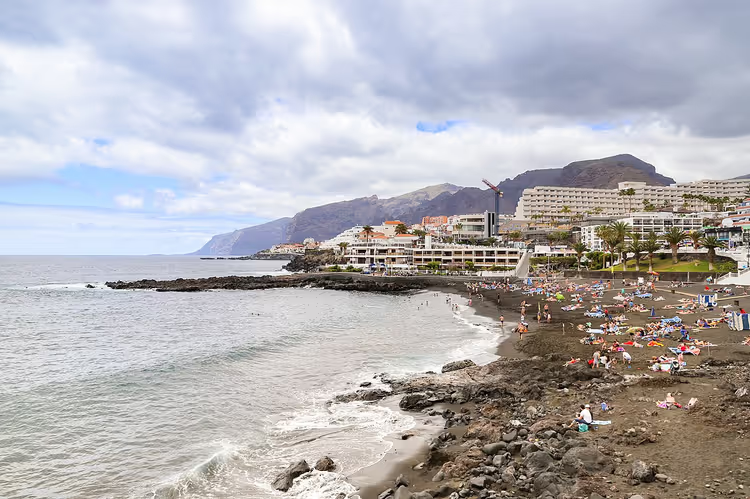
Playa de la Arena in Puerto de Santiago (Santiago del Teide) holds a Blue Flag in 2026 (as of 07/2026, ADEAC 2026 report). The shore is covered with natural volcanic sand. During the day it gets so hot that you cannot walk on it barefoot, so bring footwear.
A breakwater closes off the bay, so there is almost no high surf here. The shore offers a view of sheer cliffs. An exit from the highway leads to a well-maintained free parking lot.
Infrastructure is well developed: a sports court, water and beach equipment rentals, rest areas, shower, toilet, a separate access ramp for wheelchair users and a bike path along the shore. In high season you can book deep-sea fishing with your catch prepared right on the yacht. Teide National Park is nearby: when you get tired of lying around, head there for a walk.
 © dronepicr · CC BYPhoto: dronepicr, CC BY (https://creativecommons.org/licenses/by/2.0), Wikimedia Commons
- Cost: entry is free, some services are paid.
- Who it's for / Not for: for quiet relaxation and views; not for small children.
- The catch: boulders on the bottom and a steep drop-off near the shore.
14. Punta Blanca
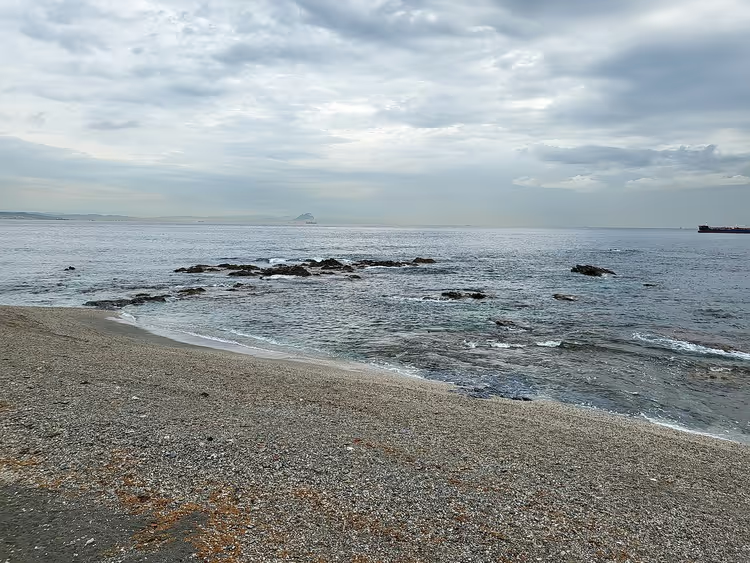
Punta Blanca is made for surfers. The waves here are good, especially outside high season. The bottom is the base of a volcanic reef, so beginners should not practice here. This is a spot for confident athletes.
The shore is not suited for regular swimming: waves are constant and the strip is covered with pebbles. There are no lounger or canopy rentals. But there is a shower, toilet, trash bins and parking, and small snack bars serve food at reasonable prices. Lifeguards watch over safety.
 © Xemenendura · CC BY-SAPhoto: Xemenendura, CC BY-SA (https://creativecommons.org/licenses/by-sa/4.0), Wikimedia Commons
- Cost: entry is free, no lounger rentals.
- Who it's for / Not for: for experienced surfers; not for families and calm swimming.
- The catch: pebbles, constant waves, and minimal amenities.
15. Playa de la Jaquita
Playa de la Jaquita holds a Blue Flag in 2026 (as of 07/2026, ADEAC (Bandera Azul) 2026 list). After the renovation, the shore has become one of the best maintained on the west of the island. Palm trees have been planted along the water's edge, with benches underneath for resting.
The shore is covered with natural black sand. Waves rarely bother swimmers. Natural basins of solidified lava remain along the shore: they make for a pleasant saltwater soak. The beach has a lifeguard service, lounger and umbrella rentals, showers, and a paid toilet.
There is just one catch: the bottom drops off quickly, and large rocks lie near the shore. Be careful when entering the water.
- Cost: entry is free, loungers, umbrellas, and the toilet are paid.
- Who it's for / Not for: for calm swimming and natural baths; not for toddlers without supervision.
- The catch: rocks on the bottom and a quickly deepening seabed.
16. Playa de Alcalá
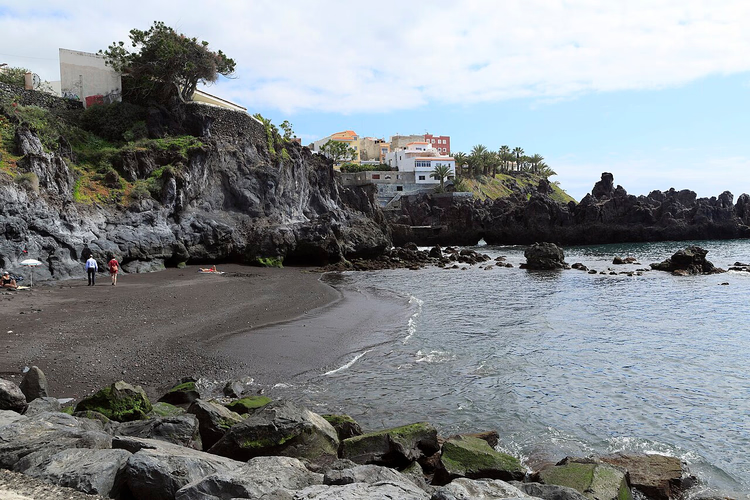
The shore of Playa de Alcalá belongs to the village of Alcalá in Guía de Isora. Fishermen and farmers live here, and tourism is supported by a few hotels of different categories. The local fish market sells the day's catch.
 © Falk2 · CC BY-SAPhoto: Falk2, CC BY-SA (https://creativecommons.org/licenses/by-sa/4.0), Wikimedia Commons
The Gran Meliá hotel has a large seawater pool. Two other notable shores, Playa de Méndez and Playa de la Jaquita, are nearby, so Alcalá is a convenient base for a couple of days. You get a quiet vacation without crowds and noisy clubs.
- Cost: entry is free.
- Who it's for / Not for: for a quiet vacation and fresh fish; not for nightlife.
- The catch: few hotels, limited accommodation options.
17. Playa de Méndez
Playa de Méndez is protected from the Atlantic by rocks: they form a natural breakwater and enclose the small cove in a semicircle. There are almost no waves here, but the shore is covered with large and small pebbles.
Walking on the pebbles without shoes is impossible, it cramps your feet. The bottom in the water is also rocky, so swim in special water shoes. There are no lounger or umbrella rentals, and no lifeguard post either. You will have to arrange your own shade.
On the plus side, it is quiet and uncrowded even in high season. You can walk there from Alcalá, so many people choose this shore for seclusion.
- Getting there: on foot from the village of Alcalá.
- Cost: entry is free, no rentals.
- Who it's for / Not for: for seclusion and calm swimming; not for families with small children.
- The catch: no lifeguards or rentals, water shoes required.
18. Playa de San Juan
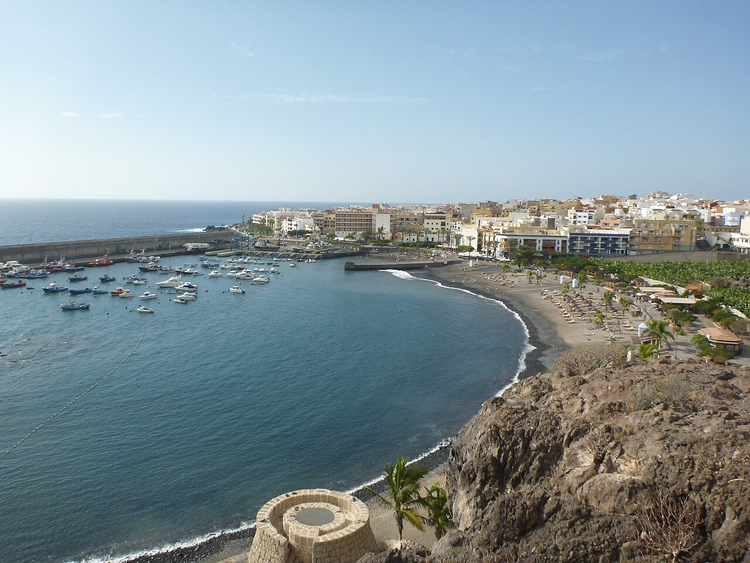
Playa de San Juan holds a Blue Flag and is considered one of the best family beaches on the island (as of 07/2026, ADEAC (Bandera Azul) 2026 list). The shore is covered with white sand, mixed with pebbles in places. The bay is reliably protected by a breakwater, and the entry into the water is gradual.
The infrastructure is well thought out: there is a children's playground and a sports area, showers, toilets, shade canopies, and loungers. Lifeguards keep an eye on safety. Its own marina lets you charter a yacht for a trip along the coast.
The beach is away from the main tourist routes, so accommodation prices here are lower than in the south. A palm-lined promenade runs along the shore, popular with cyclists and scooter riders. There is some evening life, but it doesn't interfere with a quiet vacation.
 © Wusel007 · CC BY-SAPhoto: Wusel007, CC BY-SA (https://creativecommons.org/licenses/by-sa/3.0), Wikimedia Commons
- Cost: entry is free, loungers and umbrellas are paid.
- Who it's for / Not for: for families with children and a quiet vacation; not for partying.
- The catch: it's a long drive to major resorts and the airport.
19. Playa de Ajabo
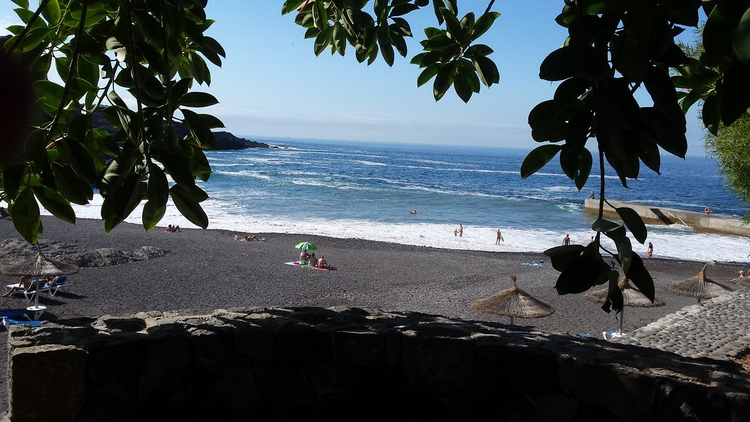
Playa de Ajabo appeared after the municipality of Callao Salvaje cleared part of the wild coastline. Today it's a small, cozy beach where it's pleasant to spend a few hours. The shore is covered with gray sand, the entry into the water is gentle, and there are no underwater rocks.
Low cliffs enclose the bay on both sides, so the ocean here is almost always calm. It's convenient for swimming with toddlers. You'll be offered loungers, sun canopies, and food at the beachside snack bars.
For road trippers, the main advantage is the large free parking lot. The area is cleaned regularly, and trash is collected separately.
 © http://tenerifka.ru/ · CC BYPhoto: http://tenerifka.ru/, CC BY (https://creativecommons.org/licenses/by/2.0/), Flickr
- How to get there: by car, there's a large free parking lot at the beach.
- Cost: entry is free, loungers and canopies are paid.
- Who it's for / Not for: for a quiet vacation with toddlers; not for surfing.
- The catch: the beach is small, and in high season there are few spots.
20. Playa de la Enramada
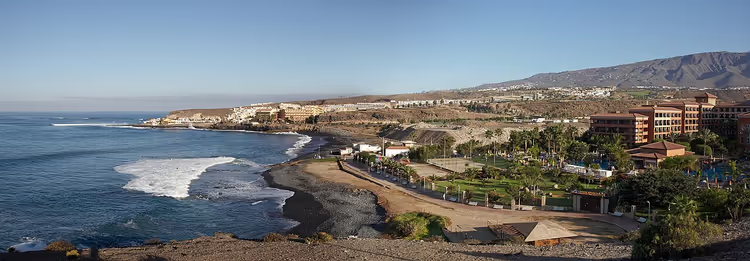
Playa de la Enramada lies not far from Playa de Fañabé. Its appearance took shape along with the development of Costa Adeje: originally the shore was inconvenient for swimming, covered with rocks and pebbles. The municipality cleared the coastal strip of large boulders and replaced the black sand with imported sand dredged from the Atlantic floor.
The large rocks were crushed and used as fill. At the same time, hotels sprang up along the shore and infrastructure appeared. Bars and restaurants operate in the coastal zone, so you can grab a bite without going far.
After the beach, take a trip to Adeje: it has a historic center with colonial houses. It makes for a relaxed day without long transfers.
 © Wouter Hagens · CC BY-SAPhoto: Wouter Hagens, CC BY-SA (https://creativecommons.org/licenses/by-sa/3.0), Wikimedia Commons
- Cost: entry is free, loungers are paid.
- Who it's for / Not for: for calm swimming and walks around Costa Adeje; not for surfers.
- The catch: imported sand and dense development around.
21. Playa de la Tejita
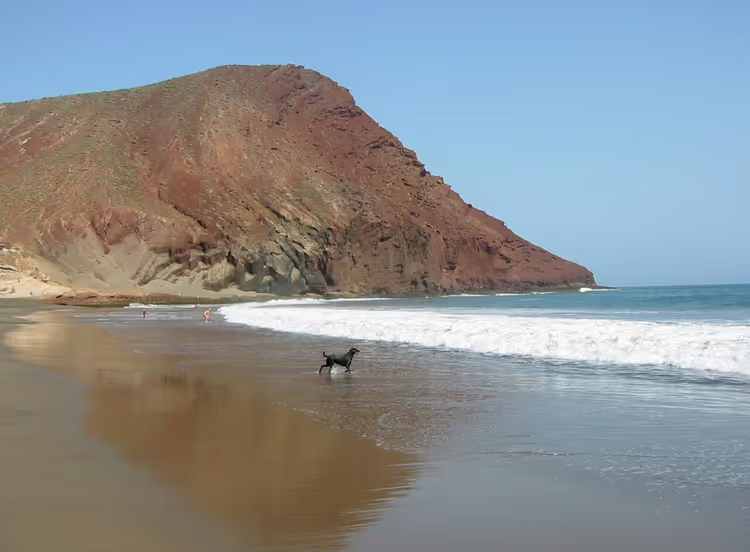
Playa de la Tejita is called the Red Mountain beach, and with good reason. The ground around the resort is multicolored: black volcanic sand, yellow sand carried by winds from the Sahara, and red sand formed by weathering. The beach is wide and spacious.
There is no breakwater here, so there is always surf near the shore. Swimming is mostly done by those who are confident in the water, and the waves attract surfers. On the plus side, the swimming season lasts all year round: the temperature difference between winter and summer is small, and the water stays cool but suitable for swimming.
The area is equipped: loungers, canopies, showers, toilets, cafes, and parking. Lifeguards keep an eye on safety. Part of the shore is favored by nudists, and there is no separate zone for them.
 © Jose Mesa from island of Tenerife, Canary Islands, Spain · CC BYPhoto: Jose Mesa from island of Tenerife, Canary Islands, Spain, CC BY (https://creativecommons.org/licenses/by/2.0), Wikimedia Commons
- Cost: entry is free, loungers, umbrellas, and toilets are paid.
- Who it's for / Not for: for experienced swimmers and surfers; not for calm swimming with children.
- The catch: constant surf.
22. Playa del Médano
Playa del Médano lies right at El Médano, so it's easy to reach on foot from the hotels. The shore is not protected from the winds and is open to the ocean, so you can always catch a wave here. This beach suits surfing and kitesurfing.
Swimming is unsafe because of the constant waves. Children must not be allowed into the water without adults. On the plus side, the infrastructure is well developed: toilets, showers, foot-washing fountains, changing cabins, shade canopies, and loungers.
There are many restaurants and bars nearby, but no lively nightlife. World Cup kitesurfing and surfing stages and Spanish championships are held here, so on competition days the shore is full of athletes.
 © Andree Stephan · CC BYPhoto: Andree Stephan, CC BY (https://creativecommons.org/licenses/by/3.0), Wikimedia Commons
- Cost: entry is free, rentals and some services are paid.
- Who it's for / Not for: for athletes and active recreation; not for calm swimming.
- The catch: constant waves and wind.
23. Playa Leocadio Machado
Playa Leocadio Machado in El Médano is chosen by surfers from all over the world. The wind raises waves almost all year round, so the spot is considered reliable for riding. The shore is covered with fine gray sand, and the water is clear.
 © Jules Verne Times Two · CC BY-SAPhoto: Jules Verne Times Two, CC BY-SA (https://creativecommons.org/licenses/by-sa/4.0), Wikimedia Commons
There are also conditions for passive relaxation: shade canopies, loungers for rent, showers, toilets, and trash bins. Snack bars and bars serve food at budget prices, and a lifeguard service keeps an eye on safety.
But swimming is rarely possible: the Atlantic is rough in this spot. There is especially little for children to do. In the evening, bars and restaurants close, so don't expect any nightlife.
- Cost: entry is free, loungers are paid.
- Who it's for / Not for: for surfers and kitesurfers; not for calm swimming and children.
- The catch: waves almost always, swimming is uncomfortable.
24. Playa de las Galletas
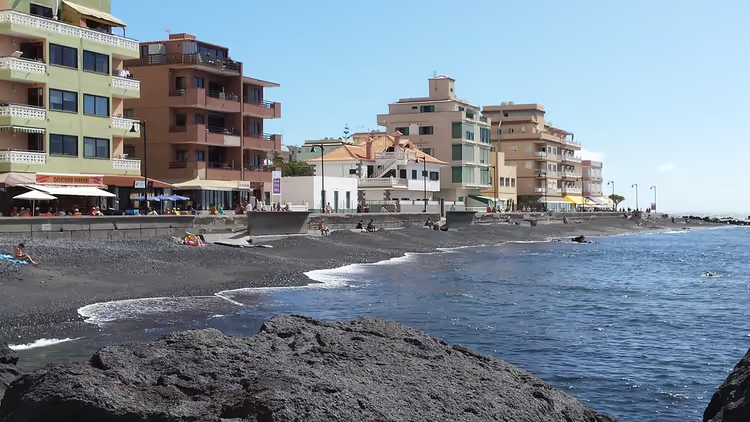
Playa de las Galletas in Arona suits underwater swimming. The seabed near the shore is rugged, with caves and grottos that swimmers explore. Local residents are engaged in fishing, so the village has a fish market and a weekly farmers' market.
The cuisine here is a topic of its own: Las Galletas is known for its fish restaurants and budget apartments. Gastronomic tourism is well developed in this small village.
The coastline is covered with gray sand mixed with fine and medium pebbles. You'll be offered loungers, umbrellas, showers, and toilets. The police keep order, and lifeguards ensure safety in the water. The entry into the ocean is steep, so toddlers can swim only with adults. A palm-lined promenade runs along the shore.
 © http://tenerifka.ru/ · CC BYPhoto: http://tenerifka.ru/, CC BY (https://creativecommons.org/licenses/by/2.0/), Flickr
- Cost: entry is free, loungers and umbrellas are paid.
- Who it's for / Not for: for snorkeling and fish cuisine; not for toddlers without supervision.
- The catch: steep entry and pebbles near the shore.
25. Playa Montaña Amarilla
Playa Montaña Amarilla is a wild shore favored by divers. The seabed here is heavily rugged: during dives, swimmers explore grottos, caves, and rocks covered with colorful algae. The bay is sheltered from the winds by cliffs, so there are no waves and diving is comfortable.
There are no facilities on the beach. Moving along the narrow rocky strip is difficult, but you can find a spot for an umbrella and a mat. The entry into the water is inconvenient: the shore drops off sharply, and you have to go down by stairs.
Waves and winds have carved the rocks over centuries, so their shapes have been recognized as a natural monument. It's worth coming here even just for the view, not only for diving.
Nearby there is another angle on the black rocks and the ocean, photographed at sunset. Bring water and footwear: there are no services on site.
- Cost: entry is free, there is no infrastructure.
- Who it's for / Not for: for divers and lovers of wild nature; not for families with strollers.
- The catch: inconvenient entry by stairs and a complete lack of facilities.
26. Playa de las Teresitas
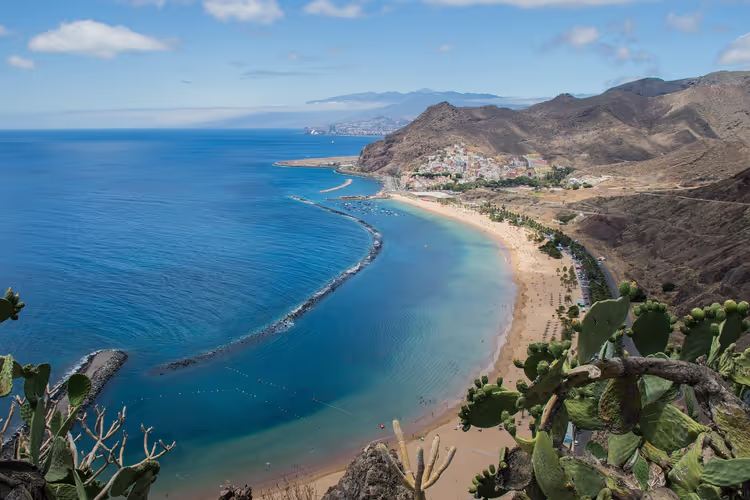
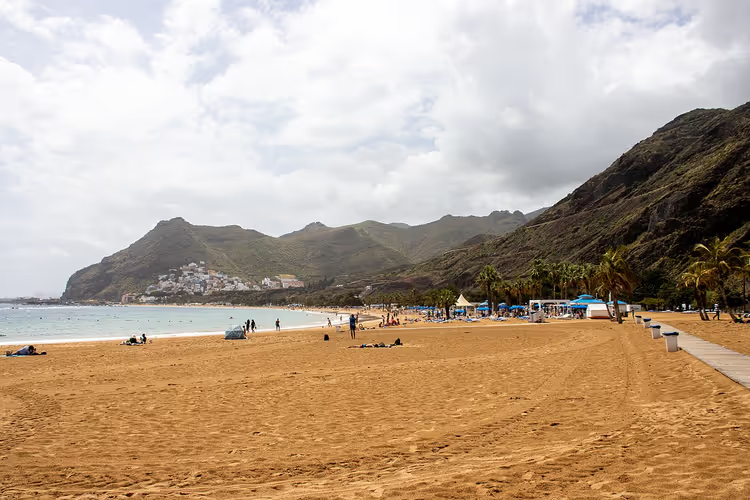
Playa de las Teresitas is man-made. Until 1973, this was a wild stretch of shore, open to wind and waves. The volcanic sand was replaced with sand brought in from the Sahara, and a breakwater was built along the shore (as of 09/2026, official beach website). The water became calm and warmer.
The beach is long and wide, with soft golden sand. It's great for kids near the shore: the entry is gradual and there are almost no waves.
A palm-lined promenade runs along the shore. The palms provide shade and relief from the heat. Kids ride rollerblades, scooters, and bikes here, and there are benches for parents. Loungers and shade canopies are available on the beach, showers and restrooms are available, and lifeguards keep watch. You can grab a bite at the beachfront restaurants.
Las Teresitas does not have a Blue Flag: the beach only held it in the early 2000s (as of 07/2026, ADEAC 2026 review). That doesn't stop it from being the island's signature beach postcard.
 © Photograph by Mike Peel ( www.mikepeel.net ). · CC BY-SAPhoto: Photograph by Mike Peel ( www.mikepeel.net )., CC BY-SA (https://creativecommons.org/licenses/by-sa/4.0), Wikimedia Commons
- Getting there: the village of San Andrés is nearby, and a promenade runs along the entire shore.
- Cost: entry is free, lounger and umbrella rental is paid.
- Who it's for / Not for: for families with kids and a first swim; not for solitude.
- The catch: the sand is imported, there is no natural volcanic sand on the beach.
27. Playa Jardín
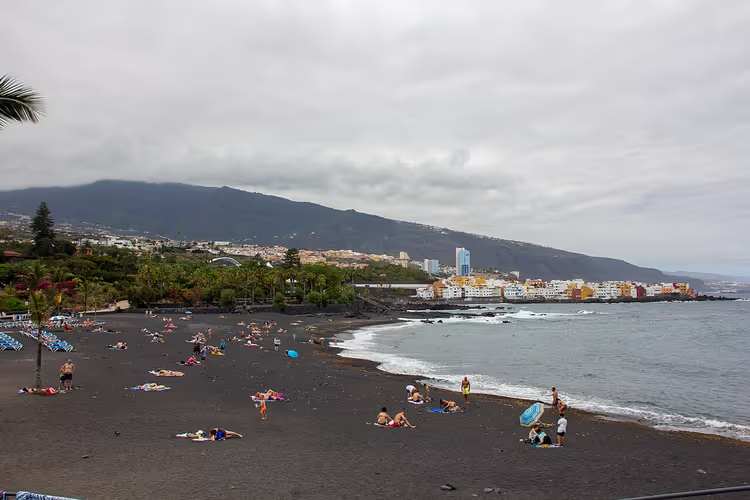
Playa Jardín in Puerto de la Cruz is entirely man-made. The project was designed by César Manrique. A pier was built to protect the shore from waves, and the breakwater was half-submerged so it wouldn't spoil the view.
The beach is divided into three sections: Charcón, El Castillo, and Punta Brava. Natural rocks serve as the boundaries. A garden with palms, coconut trees, and banana plants was planted right next to the swimming area.
The garden is home to Loro Parque, which has a large collection of parrots, and there's an aquarium with tropical fish nearby. The infrastructure is well developed: loungers, shade canopies, changing cabins, and beach equipment rental. Lifeguards and police keep watch over safety, and there's a dedicated access ramp for wheelchair users.
 © Photograph by Mike Peel ( www.mikepeel.net ). · CC BY-SAPhoto: Photograph by Mike Peel ( www.mikepeel.net )., CC BY-SA (https://creativecommons.org/licenses/by-sa/4.0), Wikimedia Commons
- Cost: entry is free, rental is paid.
- Who it's for / Not for: for families and garden strolls; not for a wild, untouched experience.
- The catch: the beach is man-made, there is no natural shoreline here.
28. Playa de Martiánez
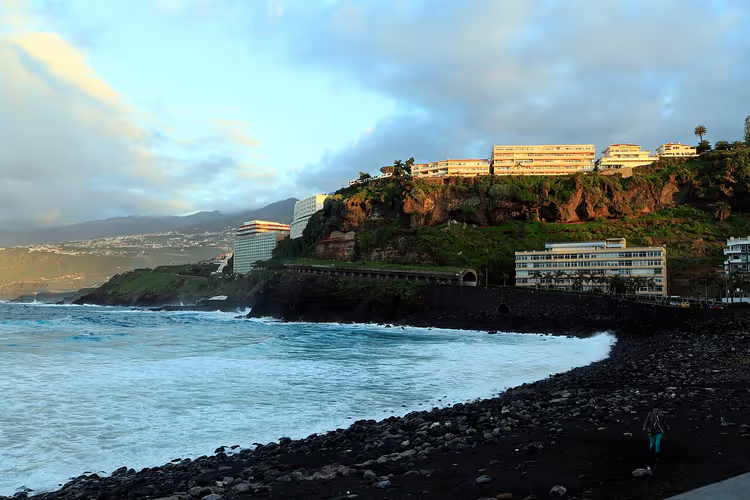
Playa de Martiánez in Puerto de la Cruz was expanded and divided into two sections. The northern section is protected by a breakwater and is suitable for swimming. The sand here is black and natural, with some fine and medium pebbles in places.
The southern section is open to the Atlantic. Waves rise here, attracting surfers from around the world. At the same time, the shore is free of dangerous underwater rocks, so learning to surf here is fairly safe.
Amenities include showers, restrooms, changing cabins, and trash bins. You can grab a bite at the many cafes and bars along the coast. Beach security keeps order, and lifeguards watch over swimmers.
 © Falk2 · CC BY-SAPhoto: Falk2, CC BY-SA (https://creativecommons.org/licenses/by-sa/4.0), Wikimedia Commons
- Cost: entry is free, some services are paid.
- Who it's for / Not for: for swimming and learning to surf; not for solitude.
- The catch: the southern section is open to waves and wind.
29. Playa del Bollullo
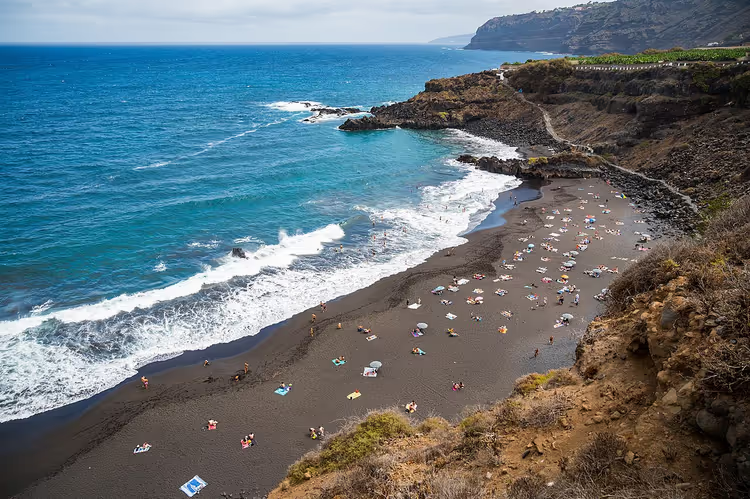
Playa del Bollullo lies far from tourist routes, behind black cliffs. You can get there by car, but you'll have to leave it in the parking lot by a roadside restaurant. From there you walk down: part of the path passes in the shade of banana plantations, part along a rocky cliff.
The effort pays off with the views. High and low rocks rise out of the water, and waves sift through the black sand. Swimming, however, requires caution: the cove has underwater currents that change direction depending on the tide. The water surface looks calm all the while.
Children should not be allowed into the water without adults. You'll need to bring your own shade: lounger and umbrella rental is limited. There's no cafe nearby, so you'll have to go back to the village for food.
 © TenSob · CC BYPhoto: TenSob, CC BY (https://creativecommons.org/licenses/by/4.0), Wikimedia Commons
- Getting there: by car, then on foot down a rocky path.
- Cost: entry is free, almost no rental available.
- Who it's for / Not for: for those willing to hike for the view; not for families with small children.
- The catch: underwater currents and no infrastructure.
30. Playa de San Telmo
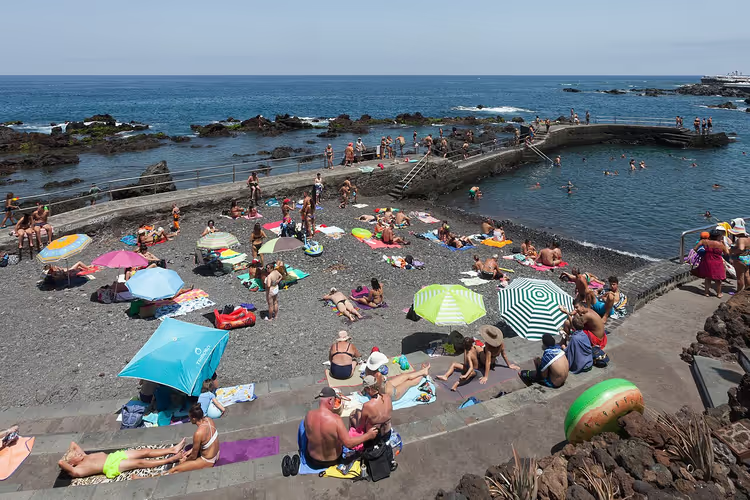
Playa de San Telmo lies in the north of the island, in Puerto de la Cruz. The shore is covered with pebbles mixed with black volcanic sand. The cove is deeply indented, so there are practically no waves here. The entry into the ocean is gradual and free of underwater rocks.
The infrastructure is well developed: loungers, umbrellas, showers, and restrooms are available. Police are responsible for safety. Food is not a problem: bars and restaurants with local and European cuisine are nearby.
If you get tired of the Atlantic, check out Lago Martiánez, an artificial seawater pool nearby. It was designed by César Manrique.
 © Lmbuga (Luis Miguel Bugallo Sánchez) · CC BY-SAPhoto: Lmbuga (Luis Miguel Bugallo Sánchez), CC BY-SA (https://creativecommons.org/licenses/by-sa/4.0), Wikimedia Commons
- Cost: entry is free, loungers and umbrellas are paid.
- Who it's for / Not for: for calm swimming and lunch by the sea; not for surfers.
- The catch: pebbles and colder water than in the south.
Tenerife beaches on the map
All the beaches from the list are marked on the map. Open it to build a route between shores and calculate your drive.
30 best beaches of Tenerife
Places on the map
- 1Playa del Duque Blue Flag, imported sand, flagship beach of Costa Adeje
- 2Playa de Fañabé Grey sand, families with children, free showers
- 3Playa de Torviscas Continuation of Fañabé, restaurants and bars until late
- 4Playa de Troya About 400 metres long, budget holidays for young travellers
- 5Playa de la Pinta By Puerto Colón, almost no waves
- 6Playa del Bobo Small well-kept beach with a gentle entry
- 7Playa Jonda Surfers' choice, pebble shore, board rental
- 8Playa del Camisón Bay closed off by breakwaters, fine white sand
- 9Playa de las Vistas Blue Flag, wide golden sand
- 10Playa de los Cristianos Quiet shore for families, next to the yacht marina
- 11Playa de los Guíos By the Los Gigantes cliffs, black volcanic sand
- 12Playa La Chica Preserved untouched volcanic sand
- 13Playa de la Arena Blue Flag, volcanic sand, view of the cliffs
- 14Punta Blanca Surf spot, pebbles, constant waves
- 15Playa de la Jaquita Blue Flag, black sand, natural lava pools
- 16Playa de Alcalá Fishing and farming village, seawater pool nearby
- 17Playa de Méndez Sheltered by rocks, coarse and fine pebbles
- 18Playa de San Juan Blue Flag, one of the island's best beaches for children
- 19Playa de Ajabo Cleared wild shore, grey sand, calm ocean
- 20Playa de la Enramada Imported sand, Costa Adeje development nearby
- 21Playa de la Tejita Red Mountain beach, multicoloured ground, swimming year-round
- 22Playa del Médano Open to the wind, surfing and kitesurfing, swimming unsafe
- 23Playa Leocadio Machado World surfers' choice in El Médano
- 24Playa Las Galletas Jagged seabed with caves and grottoes for snorkelling
- 25Montaña Amarilla Wild shore for divers, grottoes and caves, natural rock monument
- 26Playa de Las Teresitas Man-made beach with Saharan sand, the island's postcard image
- 27Playa Jardín Man-made beach designed by César Manrique, Loro Parque nearby
- 28Playa de Martiánez North part for swimming, south part for surfing
- 29Playa del Bollullo Off the beaten track, reached through banana plantations
- 30Playa de San Telmo Pebbles with black sand, jagged wave-free bay
⁉️🤔 Frequently asked questions
Which Tenerife beach should I choose for swimming with kids?
Playa de las Teresitas, Playa de San Juan, Playa del Camisón, and Playa de Ajabo are the best options. They have a gradual entry, calm water, and lifeguards. Avoid Playa del Médano and Playa Leocadio Machado: they have constant waves and swimming is not safe.
Are there black sand beaches in Tenerife?
Yes. Natural volcanic sand remains at Playa de los Guíos, Playa de la Jaquita, Playa Chica, Playa de la Arena, Playa de Martiánez, and Playa de San Telmo. At southern resorts, such as Playa del Duque and Playa de la Enramada, it has been replaced with imported light sand.
Where can you surf in Tenerife?
The main surf spots are Playa del Médano and Playa Leocadio Machado. Fewer people at Punta Blanca and Playa Honda. Playa de Martiánez is good for beginners: its southern section is free of dangerous rocks, so it's safe to learn there.
Do you need water shoes on Tenerife beaches?
On some beaches, yes. Playa de Méndez is covered with pebbles and the bottom is rocky, so going barefoot hurts your feet. The entry at Playa de los Guíos is also rocky. On the sandy southern shores, such as Playa del Duque or Playa de las Vistas, you don't need water shoes.
When is the best beach season in Tenerife?
You can swim year-round: the difference between winter and summer is small. The south is more comfortable in winter and spring; it gets hot there in summer. The north is cooler and windier. High season is July and August, when all services are fully running but crowds are at their peak.
In short: what to book
The choice depends on what you're coming to Tenerife for. In short, by type of trip:
- You want a calm entry and sand: Playa de las Teresitas or Playa de San Juan.
- You want premium service: Playa del Duque.
- You're chasing waves: Playa del Médano or Playa Leocadio Machado.
- You're looking for quiet and black sand: Playa de la Arena or Playa de los Guíos.
- You're planning to dive: Playa Montaña Amarilla.
Before your trip, check the wind and tide: on the northern shores, waves can change your plans. Pick a beach from the table above and bring water shoes.

A small editorial team writing guides for independent travel. We travel ourselves, but we haven’t been everywhere, so we check prices, opening hours and how to get there against official sources.