
















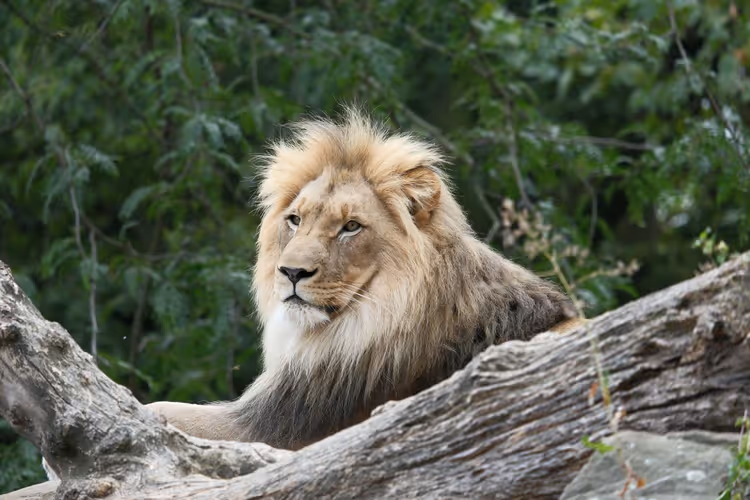
Berlin zoo: tickets, opening hours and panda feeding
Berlin Zoo is open every day, and tickets bought online cost less than at the ticket office (as of 09/2026, zoo price list). In one visit you can see the giant pandas and also stop by the Aquarium. It is the oldest zoo in Germany, and it sits right in the center of the capital.
We have put together the exact opening hours by season, all ticket prices, and the feeding schedule for you. We also cover the Aquarium and the two entrances to the grounds separately.
Ad: this article contains affiliate links, we earn a commission if you book through them, at no extra cost to you.
Berlin Zoo: the essentials
💡 In short:
- Online tickets are cheaper than at the ticket office: adults from €16 instead of €25, children aged 4 to 15 from €7.50 (as of 09/2026, ticket prices).
- A combined ticket for the zoo and the Aquarium costs from €24 for adults (as of 09/2026, tickets page).
- Pandas are fed at 11:00 and 15:00, sea lions have a training session at 14:00 (as of 09/2026, feeding schedule).
- Prices and opening hours: 09/2026, verified on the official website.
The zoo is home to around 20,000 animals (as of 09/2026, official website). The grounds are located in the Tiergarten district in the west of the city, and it is easy to spend a whole day here with children.
History
 © Adamantios · CC BY-SAPhoto: Adamantios, CC BY-SA (http://creativecommons.org/licenses/by-sa/3.0/), Wikimedia Commons
The zoo's history began in 1841 with a petition to King Frederick William IV. It was signed by naturalist Alexander von Humboldt, Africa explorer Martin Hinrich Lichtenstein, and gardener Peter Joseph Lenné (as of 09/2026, zoo history). Three years later, the garden opened on the grounds of the royal pheasant yard. Its first residents were animals from the menagerie of the neighboring Tiergarten park.
In 1869, physician and biologist Heinrich Bodinus became the zoo's director. Under him, the garden became a home for exotic animals. Within two years, houses for giraffes and antelopes, enclosures for ostriches, and pens for elephants were built here (as of 09/2026, Berlin Zoo history).
At the end of the 19th century, the stone Elephantentor arch in Asian style appeared at the main entrance. Two elephant figures made of Elbe sandstone support heavy columns, topped by a curved red-and-green pagoda roof.
World War II destroyed almost all of the zoo's buildings, including the Elephantentor arch. It was only rebuilt in the 1980s. Of 3,700 animals, only 90 survived (as of 09/2026, zoo chronicle). Restoration from 1945 to 1956 was led by biologist Katharina Heinroth.
Animals
 © Meine Mutter (Erlaubnis liegt vor) · CC BY-SAPhoto: Meine Mutter (Erlaubnis liegt vor), CC BY-SA (https://creativecommons.org/licenses/by-sa/4.0), Wikimedia Commons
There are no cramped cages here with dejected animals staring out at visitors. Herbivores are separated from the paths by a shallow moat, predators live in spacious enclosures and pavilions, and birds in large aviaries.
To the right of the main entrance begins the big cat zone. In winter, the predators live in a heated pavilion, and in summer they come out to an area among rocks and greenery. Nearby, roe deer, red deer, reindeer, bison, anoas, bantengs, and gaurs graze.
The artificial lake is always crowded. California sea lions perform for the public: they do somersaults, jump through hoops, and catch frisbees. After the show, the animals swim up to the trainers and get their fish.
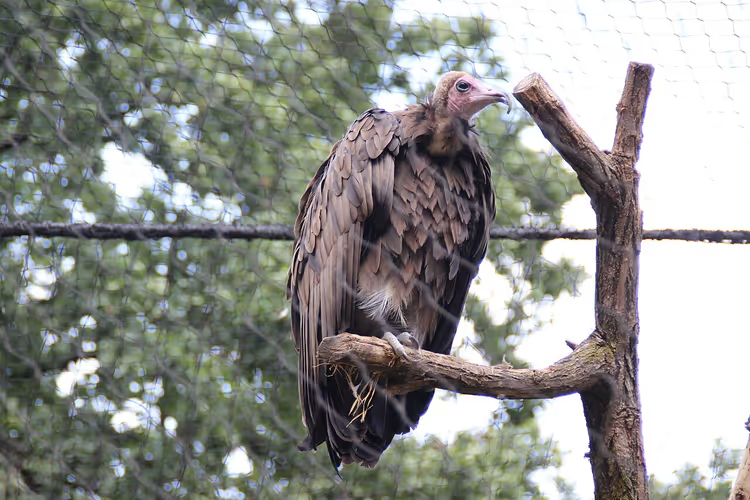
A pack of polar wolves patrols its territory. Two bears, a Himalayan and a sloth bear, stroll along the creek bank. A bit farther on, large polar bears sit on a rocky ridge. Nearby stretches a huge bird aviary, where the hornbill and the Australian kookaburra stand out among the noisy birds.
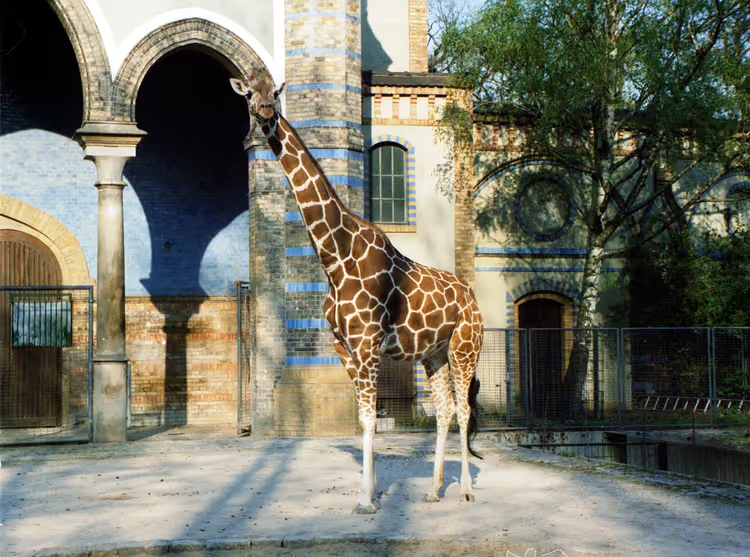
The hippo pool glistens with clean water. Through the thick glass you can see a hippo family playing in the water, while the young ones swim up to the glass and study the people. Not far away are the rhino enclosure, the elephant pen, and the antelope and giraffe house, which resembles an oriental palace.
In the children's zoo, you can pet and feed sheep, goats, and piglets. Children linger longest in the monkey zone, where the gorilla Fatou lives. The giant pandas from China have also become crowd favorites, and Panda-Talk takes place at their enclosure (as of 09/2026, panda feeding schedule).
Animal feeding
 © Steffen Zahn from Berlin, Germany · CC BYPhoto: Steffen Zahn from Berlin, Germany, CC BY (https://creativecommons.org/licenses/by/2.0), Wikimedia Commons
At the Berlin Zoo, feeding animals food from home is prohibited. Veterinarians have designed a separate diet for each animal. The daily menu is displayed in special pavilions: behind glass you can see the products the animals are fed.
In good weather, you can watch meals being served. The zoo itself publishes the feeding and training schedule (as of 09/2026, official schedule).
Time | Residents | Format |
|---|---|---|
11:00 | Pandas | Panda-Talk with commentary |
11:30 | Elephants | feeding with commentary, except in winter |
12:15 | Hippos | feeding in the hippo house |
13:30 | Bonobos | feeding |
13:30 | Chimpanzees | feeding with commentary |
14:00 | California sea lions | training |
15:00 | Pandas | Panda-Talk with commentary |
16:00 | Gorillas | feeding with commentary |
Times sometimes change due to the weather, so check them on the day of your visit on the feeding page.
Aquarium
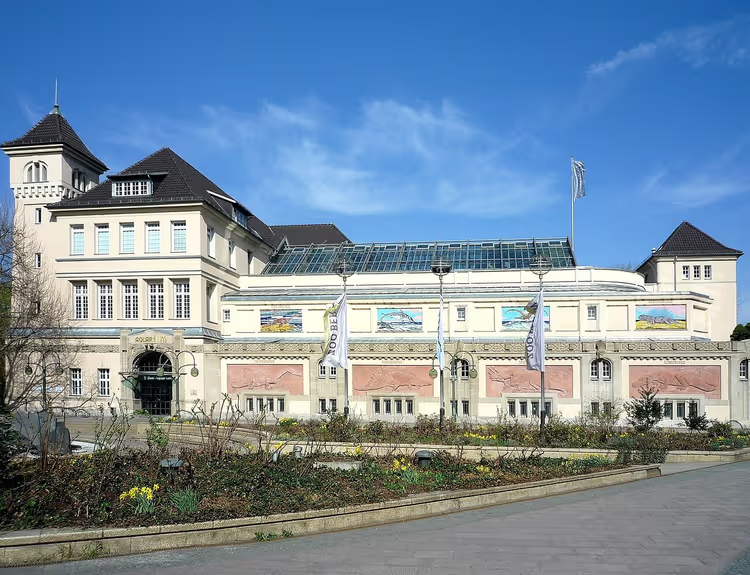
The first aquarium in Berlin opened in 1869 on Unter den Linden boulevard. In 1910, the city authorities closed it as unprofitable. A new building for aquatic life was built in 1913 right in the zoo (as of 09/2026, aquarium history).
 © Manfred Brückels · CC BY-SAPhoto: Manfred Brückels, CC BY-SA (https://creativecommons.org/licenses/by-sa/3.0), Wikimedia Commons
Today, the historic building to the right of the main entrance has three floors. Fish, reptiles, amphibians, and insects live here. The first floor resembles an underwater kingdom: blacktip reef sharks, jellyfish, and clownfish swim in the tanks, and seahorses hide in the seaweed.
The reptile hall is humid and warm. Turtles and tuataras crawl among tropical plants. King snakes, cobras, copperheads, an anaconda, and a python sit in terrariums. Caimans and gharials doze under a glass dome.
The third floor is occupied by insects and tailless amphibians. Small spiders and grasshoppers are hard to spot in the grass, but a large tarantula and a bright blue poison dart frog are visible from afar.
Separately, the Aquarium feeds gharials and freshwater fish (as of 09/2026, aquarium schedule).
Opening hours and ticket prices
The zoo is open 365 days a year, but opening hours vary by season (as of 09/2026, official hours).
Period | Hours | Last entry |
|---|---|---|
January 1 - February 22 | 9:00-16:30 | 15:30 |
February 23 - March 29 | 9:00-18:00 | 17:00 |
March 30 - September 20 | 9:00-18:30 | 17:00 |
September 21 - October 25 | 9:00-18:00 | 17:00 |
October 26 - December 31 | 9:00-16:30 | 15:30 |
Animal houses and restaurants close 30 minutes before the zoo closes, and the last entry coincides with the ticket office closing. On December 24, the zoo closes at 14:00.
Online tickets are cheaper than at the ticket office. Current prices for 2026 were checked on 14.09.2026 on the official price list:
Ticket | Online | At the ticket office |
|---|---|---|
Adults, zoo | from €16 | €25 |
Adults, zoo + Aquarium | from €24 | €37 |
Children 4-15, zoo | from €7.50 | €12.50 |
Children 4-15, zoo + Aquarium | from €11 | €17.50 |
Children under 4 | free | free |
Concession, zoo | from €9 | €14 |
Concession, zoo + Aquarium | from €13 | €20 |
The combined ticket is valid for one day only, and you cannot leave the grounds between visits. You can buy it until 15:00. Each day ticket already includes a voluntary nature conservation donation of €0.50, which you can opt out of at purchase (as of 09/2026, zoo prices).
Frequent visitors benefit from an annual pass: for adults it costs €69 for the zoo and €102.50 including the Aquarium (as of 09/2026, annual passes). A children's annual pass for the zoo costs €37 (as of 09/2026, annual passes).
Buy tickets in advance: on the zoo's official website or through Berlin Zoo tickets on Tiqets.
Tours and tickets in Berlin Zoo
Guided tours, skip-the-line tickets and activities — most offers can be cancelled free of charge.
See offers on TiqetsThe widget loads once you give your consent.
Location and how to get there
The zoo has two entrances. The main gate is at Budapester Strasse, 32, and the second entrance is at Hardenbergplatz 8, next to Zoologischer Garten station (as of 09/2026, zoo website).
Zoologischer Garten station is served by U-Bahn, S-Bahn, regional trains, and buses. From the Hardenbergplatz exit, you can walk to the ticket office in a couple of minutes.
If you are staying in Berlin longer, visit the second zoo, Tierpark, in the east of the city. It covers a huge area and looks like a landscape safari park, address: Am Tierpark 125.
Berlin Zoo on the map
The map below shows the main entrance and the entire zoo grounds. Open the map and build a route from your hotel or from the station.
⁉️🤔 Frequently asked questions
How much does a Berlin Zoo ticket cost?
Online tickets are noticeably cheaper than at the ticket office, and children under 4 enter free. All rates for adults, children, and concession holders are listed in the table above (as of 09/2026, zoo rates).
Is the zoo open in winter?
Yes, the zoo is open all 365 days of the year. In winter it operates from 9:00 to 16:30, with last entry at 15:30. Animal houses and restaurants close half an hour earlier (as of 09/2026, opening hours). The heated pavilions are open, so you can see the animals even in freezing weather.
When are the pandas fed?
Panda-Talk takes place twice a day, with exact times listed in the feeding schedule above. Commentated feedings are also available for elephants, chimpanzees, and gorillas (as of 09/2026, feeding schedule). Times may change due to weather, so check on site.
How much time do I need for the zoo?
Allow half a day for the zoo itself, and a full day if you combine it with the Aquarium. The grounds are large, with a lot of walking between enclosures. Pick up a map at the entrance and mark the feedings you want to catch in advance.
Is the Aquarium ticket worth buying?
The Aquarium occupies three floors of a historic building to the right of the main entrance. It houses fish, reptiles, and insects. The combined ticket is cheaper than two separate ones, but it is valid for one day only. If you are traveling with children, buy it right away so you do not have to queue twice.
In short: what to book
If you are going to Berlin with children, buy the combined zoo plus Aquarium ticket online. It is cheaper than at the ticket office and covers two attractions at once.
If you have only one free day, leave the zoo for the morning. Before lunch you can catch Panda-Talk and, outside winter, the elephant feeding.
If you plan to return to the city, consider an annual pass. At the online price it pays for itself from the fifth visit, at the ticket office price from the third.
Booking tickets in advance is easy through tickets on Tiqets.

A small editorial team writing guides for independent travel. We travel ourselves, but we haven’t been everywhere, so we check prices, opening hours and how to get there against official sources.