









Car rental in Morocco: how much it costs and where to avoid a deposit
In Morocco, a car gives you freedom: you go wherever you want. Buses and trains don't offer that kind of flexibility, especially if the Sahara or the Atlas Mountains are in your plans. But the choice of rental company has a big impact on your budget and your nerves. An international chain charges more for the brand and requires a deposit on your card, while a local outfit can be noticeably cheaper and require no deposit at all.
Below, we break down how these two options differ, what makes up the price, which extra charges blow up your budget, and what to check in the contract before you sign.
It's best to plan your trip in advance: travel to Western Sahara and areas near the Algerian border is not recommended (as of 10/2026, Auswärtiges Amt).
Ad: this article contains affiliate links, we earn a commission if you book through them, and at no extra cost to you.
What to know before renting a car in Morocco
💡 In short:
- Local companies are usually cheaper, international chains are more predictable in terms of service.
- Compare the total cost: insurance, deposit, and extra charges matter more than the base rate.
- Book in advance, because in high season cars get snapped up and rates go up.
- Speed limits and alcohol limit: 10/2026, according to ADAC.
You pick up the car at the airport or in the city. Major companies have counters in Marrakech, Casablanca, Agadir, and Rabat, while local services often bring the car right to your hotel, so finding an option near your route is easy. First decide what matters more to you: price or a known standard of service.
International rental chains: a standard you pay extra for
Hertz, Avis, Europcar, and Sixt have been operating in Morocco for a long time. You'll find their counters at the airports in Marrakech and Casablanca, as well as in major cities where the flow of tourists never stops year-round. Travelers usually pay for the recognizable brand and a clear process.
What you get:
- A familiar name and predictable service. The level of service and quality of cars here is usually above the market average.
- Online booking on international websites, often in several languages, so planning your trip in advance is convenient.
- A newer and larger fleet: a wider choice of models, and vehicles are maintained on schedule.
- Standard contracts and insurance, similar to what you've seen at home.
- Staff who speak several languages and help when problems arise on the road.
The catches are just as predictable:
- Prices are higher than local competitors. That's the price you pay for the brand and higher operating costs.
- A strict deposit policy. A large amount is almost always blocked on the main driver's credit card, and the money isn't returned right away.
- Less flexibility. Changing the terms at the last minute or getting a non-standard request fulfilled is harder.
This option is chosen by those who value consistent service with no surprises.
Local rental companies: cheaper and no deposit
There are many local firms operating in Morocco. The offices are often small, but they rent cars all over the country, from Marrakech to Agadir and Fez. For a budget traveler, this is the first option worth looking at.
Pros:
- Lower prices. Local companies have lower costs and adapt to the local market.
- Room to negotiate. For a long rental or in low season, the price can sometimes be discussed.
- Flexible payment terms. Some local services rent cars with no deposit and no credit card.
- Local knowledge. Staff will tell you about road conditions and route specifics.
Cons:
- Fleet quality varies. Read reviews before booking, and inspect the car carefully when you pick it up.
- Processes are less standardized. You'll need to read the contract and insurance carefully, and there may be a language barrier.
- Weak online presence. Finding and booking a local firm online can be difficult.
- Service levels vary: from excellent to poor.
Payment deserves a separate mention: some local services really do operate with no deposit and no credit card. For example, the booking service RosCar Morocco, website roscar.ma, by its own description accepts cash or a debit card when you pick up the car, and a prepayment of 15-20% is usually required for booking. It's worth checking the reputation of a local partner in advance, especially if you're renting a car for the first time.
How much does car rental cost in Morocco
The price depends on the car class, season, and pickup location. The cheapest cars start at 7 € per day, SUVs from 15 €, minivans from 18 €, premium from 37 €, and the average rate is around 20 € per day (as of 10/2026, RosCar Morocco). The season moves the price noticeably: cars are cheapest in November and most expensive in August.
Look at the total amount, not the base rate. In high season cars get snapped up, so book in advance and take the class you actually need, without overpaying for extra size.
You can compare rates from several providers at once on DiscoverCars.
Hidden extra charges and deposit: what to check in the contract
The contract matters more than the base price, because the main costs are often hidden right here. Check a few points before signing.
- Deposit. International chains almost always block a large amount on a credit card. Local companies more often accept cash or a debit card, and some rent cars with no deposit at all.
- Deductible and insurance. Clarify the deductible amount for each risk and what exactly full comprehensive coverage includes.
- Fuel policy. The standard is: a full tank at pickup and a full tank at return. Returning the car with less fuel often costs more than filling up at a gas station.
- Additional driver and child seat. These options are paid, so confirm their cost in advance.
- Travel restrictions. Ask whether leaving the region is allowed, because some rental companies have restrictions on certain areas of the country.
The country's rules also apply when you rent a car, so getting familiar with local regulations will save you from fines.
What to know on the roads of Morocco
The roads in the country are mostly paved, but in places the surface is poor: there are potholes and sand drifts. The basic rules are simple.
- Speed: 40 km/h in the city, 100 km/h outside the city, 120 km/h on highways, and the legal alcohol limit is 0.0 per mille (as of 10/2026, ADAC).
- Roundabouts: the "priority to the right" rule applies unless signs say otherwise.
- Using a phone while driving is allowed only with a headset.
- At police checkpoints, slow down and stop when signaled.
- In an accident with injuries, always call the police and request a report, otherwise you may have problems when leaving the country.
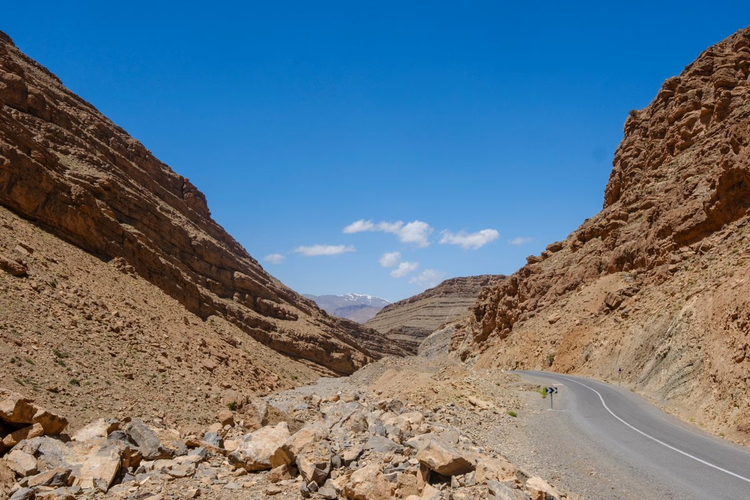
At night you need to be especially careful: there are cars on the road without lights, and animals and pedestrians may appear on highways. So allow extra time and don't plan long stretches for the dark hours.
How to choose a rental company: five criteria
Criterion | Local company | International chain |
|---|---|---|
Price | Usually lower | Higher |
Deposit | Often no deposit or flexible | Almost always a block on your card |
Flexibility | Higher, room to negotiate | Lower |
Fleet | Quality varies | Newer and larger |
Online booking | Weaker | Stronger |
Service | From poor to excellent | Consistent |
Compare offers on these points, not just on the daily price.
⁉️🤔 Frequently asked questions
Do I need a credit card to rent a car in Morocco?
Not always. International chains almost always block a deposit on the main driver's credit card. Many local companies accept cash or a debit card, and some rent cars with no deposit. Clarify the payment method before booking, because it determines whether money will be frozen on your account.
How does a local rental company differ from an international chain?
International companies offer consistent service, new cars, and a clear contract, but they charge more and almost always require a deposit on your card. Local firms are cheaper and more flexible on payment, but the quality of their fleet and service varies. Read reviews and inspect the car when you pick it up.
How much does a car cost per day in Morocco?
The price depends on the car class, season, and pickup location. According to RosCar Morocco (10/2026), small cars cost from 7 € per day, SUVs from 15 €, minivans from 18 €. In high season, rates rise noticeably.
Can I rent a car with no deposit and no credit card?
Yes, with some local companies. They accept cash or a debit card and don't block an amount on your account. Each service has its own terms, so confirm payment and deposit in writing in your booking, not just over the phone.
What should I do in an accident or during a police check?
At police and military checkpoints, slow down and stop when signaled. In an accident with injuries, always call the police and request a report, otherwise you may have problems when leaving the country. Minor damage can be settled by mutual agreement, but it's better to fill out a "constat amiable" form.
In short: what to book
The choice depends on your priorities:
- You value consistent service and a new car: choose an international chain.
- You want to save money and not block funds on your card: look at a local service.
- You're traveling in high season: book in advance, while the right class is available.
Before paying, compare the total cost and read the contract. That way you'll avoid unpleasant extra charges on the spot.

A small editorial team writing guides for independent travel. We travel ourselves, but we haven’t been everywhere, so we check prices, opening hours and how to get there against official sources.