

















eSIM for South Africa in 2026: which network works on the highway and how much a plan costs
South Africa roaming eats into your trip budget fast. Outside Europe, home plans often charge for mobile data by the megabyte, and one week of maps and messaging can cost more than the holiday itself. A travel eSIM solves this: you buy a data package online, install the profile at home and get online as soon as you land in Johannesburg or Cape Town.
But eSIMs for South Africa vary a lot. Some run on the Vodacom or MTN network with wide coverage, others don't name the carrier at all. The price per gigabyte can differ several times over between providers, and "unlimited" plans almost always come with speed restrictions. Below we've gathered the plans of eight online providers and two local carriers, checked them on the official websites in September 2026 and worked through what to look at before you buy.
You'll find out where and when to buy an eSIM, how to install it in a couple of minutes, how it differs from a local SIM card and which network holds up better outside the big cities. At the end there are frequently asked questions and a short decision matrix.
Ad: this article contains affiliate links. We earn a commission through them, and the price for you stays the same.
Which eSIM for South Africa we recommend
💡 In short:
- Check that your phone is unlocked and supports eSIM, otherwise the profile won't install.
- Go for an eSIM on the Vodacom or MTN network: Cell C and Telkom have noticeably weaker coverage outside the cities.
- For a trip of 2-4 weeks, a 10-25 GB package for 30 days is enough.
- Unlimited data only makes sense if you tether a laptop or watch video on the road.
- Provider prices and networks: 09/2026, checked on the official Vodacom website and the eSIM providers' websites.
South Africa has four mobile carriers: Vodacom, MTN, Cell C and Telkom. The main difference between them is not price but the coverage map. In Cape Town, Johannesburg and Durban, all of them offer good service. But on the Garden Route, in the national parks and on the long highways between cities, the picture is different.
The coverage map comparison at the end of this article shows one simple thing. Vodacom and MTN cover the country far more densely than Cell C and Telkom. So the first thing to check with any travel eSIM is the carrier it runs on. If the provider doesn't say, you'll only find out the network after you land, when switching plans is no longer convenient.
Important: an eSIM only works in an unlocked phone that supports eSIM. If your smartphone is locked to a carrier or the model doesn't support an embedded SIM, no plan will install. We explain how to check this in the preparation section below.
On the balance of price and network, two options stand out. The first is Ubigi: a 25 GB package for 30 days costs $39 and runs on the MTN and Telkom networks with 5G support (as of 09/2026, Ubigi website). That's about $1.56 per gigabyte, one of the lowest figures among the plans we checked.
The second option is an eSIM on the Vodacom network. aloSIM, for example, sells packages like this. Airalo only offers unlimited data on Vodacom, while its 10-20 GB packages run on Cell C. Vodacom has the widest coverage in the country, which matters more if you're driving around it. aloSIM's 10 GB and 20 GB packages for 30 days cost $23 and $37, and we list the other prices in the comparison below.
Both eSIMs are data only. They don't support calls or SMS, and there's no phone number. For calls you use WhatsApp, Telegram or another messaging app, and you keep your home SIM switched on for SMS codes from your bank.
If South Africa is just one country on a longer route, look at regional and global eSIMs. Some providers sell packages covering dozens of countries at once, so you don't have to switch profiles at every border. We cover one such option in the section on international SIM cards.
eSIM for South Africa compared by provider
The local carriers Vodacom, MTN, Cell C and Telkom sell eSIMs in their stores. But that means starting your trip in a queue at the airport. An online provider sorts this out in advance: you pay for the package at home, and your phone picks up the network right after landing.
There's plenty of choice. Travel eSIMs for South Africa are sold by Airalo, Ubigi, Holafly, Sim Local, aloSIM, Saily, SimOptions, Yesim, Nomad, Jetpac, GigSky, Airhub, Roamless, Firsty and others. Below we look at eight providers whose South Africa plans we found on their official websites, plus two local carriers. Prices are given as the website showed them when we checked in September 2026.
First, a summary table. It shows the network and a rough price, with details on each provider further down.
Provider | Network in South Africa | 5G | Sample plan | Source |
|---|---|---|---|---|
Ubigi | MTN, Telkom | yes | 25 GB / 30 days = $39 | Ubigi website, 09/2026 |
aloSIM | Vodacom | not stated | 10 GB / 30 days = $23 | aloSIM website, 09/2026 |
SimOptions | Vodacom, MTN | 4G/LTE | 10 GB / 30 days = $17.90 | SimOptions website, 09/2026 |
Yesim | Vodacom, MTN, Cell C | not stated | 10 GB / 30 days = $24 | Yesim website, 09/2026 |
Holafly | Vodacom, MTN, Cell C, Telkom | where available | unlimited 7 days = $39.50 | Holafly website, 09/2026 |
Airalo | Vodacom, Cell C | not stated | 10 GB / 30 days = €21.50 | Airalo website, 09/2026 |
Vodacom (local) | Vodacom | not stated | 10 GB / 30 days = 699 ZAR | Vodacom terms, 09/2026 |
Online providers change their prices often, sometimes every few weeks. New customer discounts and seasonal promotions shift the picture too. So the table shows the price range, not the exact amount you'll pay. Before paying, check the plan on the provider's website.
Airalo
Airalo is one of the largest sellers of travel eSIMs, and it currently has two product lines for South Africa. In September 2026 the website showed prices in euros. The first line runs on the Cell C network and includes call minutes as well as data. The second line offers unlimited data on the Vodacom network.
The Cell C package with 10 GB and 100 minutes for 30 days costs €21.50, and the package with 20 GB and 200 minutes costs €35.50 (as of 09/2026, Airalo website). Unlimited data on Vodacom for 7 days costs €32. For a short city break, the smallest package is enough: 1 GB for 3 days at €4.
The screenshot above shows Airalo's previous South Africa line from the reseller CellSA. Back then the plans were data only on the Vodacom network. Airalo's plan lineup changes, so check the package card to see which network is listed now.
Who it's for: an Airalo package suits you if you already use their app in other countries and want to keep all your eSIMs in one place. The app shows your remaining data and lets you top up without switching profiles.
- The catch: the main line with minutes runs on Cell C, and that carrier's coverage outside the cities is weaker than Vodacom's and MTN's.
Ubigi
Ubigi has a lot of plans for South Africa, and spotting the good-value one straight away isn't easy. We picked out the packages with a clear price per gigabyte. According to the website, Ubigi eSIMs for South Africa run on the MTN and Telkom networks, support 5G and allow tethering.
 © Evan Bench · CC BYPhoto: Evan Bench, CC BY (https://creativecommons.org/licenses/by/2.0), Wikimedia Commons
The headline plan: 25 GB for 30 days at $39 (as of 09/2026, Ubigi plan card). The 10 GB package for 7 days costs $19 (plan on the Ubigi website). The smallest package, 1 GB for 30 days, costs $5 (1 GB plan page).
There are unlimited packages too: 7 days for $36 and 30 days for $88 (as of 09/2026, Ubigi 7-day unlimited plan). On price per gigabyte the 25 GB package wins, and it's our top pick among online eSIMs for South Africa.
Ubigi has a feature called Smartstart. The plan activates by itself when your phone connects to a network in the destination country, and the validity period counts from that moment. You can install the profile well in advance without losing any days of your package.
- The catch: the plans are data only, with no calls or SMS, and the second network listed, Telkom, has weaker reception in rural areas.
Holafly
Holafly sells only unlimited plans for South Africa. You choose the number of days, not the amount of data. According to the website, the network is selected from four carriers: Cell C, MTN, Telkom and Vodacom. For a road trip that's a plus, because your phone can pick the network with the best signal.
Prices in September 2026: 3 days for $19.90, 7 days for $39.50, 15 days for $63.50, 30 days for $111.90 (as of 09/2026, Holafly website). That's noticeably more expensive than fixed-data packages. Unlimited only pays off if you use more than a gigabyte a day.
Duration | Price | Price per day |
|---|---|---|
3 days | $19.90 | about $6.60 |
7 days | $39.50 | about $5.60 |
15 days | $63.50 | about $4.20 |
30 days | $111.90 | about $3.70 |
Tethering is allowed, but capped at 1 GB a day. On the plan page Holafly also warns about its fair use policy. If you use too much, the carrier may reduce your speed, but for no longer than one day.
Holafly itself says that coverage is excellent in cities, while in deserts, mountains and forests the signal can be weak. That's an honest description, and it applies to every eSIM, not just Holafly.
- The catch: the plans are data only, there's no phone number, and the price per day is higher than with 20-25 GB packages.
Sim Local
Sim Local sells travel SIM cards from kiosks in international airports and eSIMs under the Smartroam brand. In its earlier description of the South Africa plans, Smartroam listed the Vodacom network. For South Africa that's a strong point.
The screenshot shows the previous lineup of 1, 3, 5 and 10 GB packages. Sim Local's South Africa plan page wouldn't open for us in September 2026, so we aren't giving exact prices. As a guide, Smartroam packages usually cost about the same as Airalo and aloSIM.
Sim Local also has unlimited plans. Their fair use policy isn't spelled out in detail. If you see an unlimited plan with no precise throttling threshold, assume the speed may drop after a heavy day of use.
- The catch: you have to check the exact terms and prices on the website on the day you buy, so comparing in advance is difficult.
aloSIM
aloSIM has been in the eSIM market for a long time and uses the Vodacom network in South Africa. What sets it apart from competitors is that every eSIM for South Africa comes with a free number in the Hushed app. It's handy for receiving SMS at hotel check-in and for signing up to WhatsApp and local apps.
 © Bernard DUPONT from FRANCE · CC BY-SAPhoto: Bernard DUPONT from FRANCE, CC BY-SA (https://creativecommons.org/licenses/by-sa/2.0), Wikimedia Commons
Packages in September 2026: 1 GB for 7 days at $4, 3 GB for 30 days at $10, 10 GB for 30 days at $23, 20 GB for 30 days at $37 (as of 09/2026, aloSIM website). There are also unlimited plans from 3 to 30 days, the shortest of which costs $20.
aloSIM's unlimited plans have restrictions, which the website lists separately. Under the earlier terms, "unlimited" at aloSIM meant a limited daily allowance at full speed, after which the speed dropped. Before buying, open the terms section and check the current threshold.
- The catch: 5G isn't explicitly mentioned on the South Africa plan page.
Saily
Saily is an eSIM provider from the NordVPN family of companies. It has a simple app and good prices on small packages. But there's a significant drawback for South Africa: Saily doesn't say which network its plans run on, stating only that the network depends on the local carrier.
The screenshot shows a lineup of packages from 1 to 20 GB. When we checked in September 2026, the Saily website blocked our access to the page, so we can't confirm current prices. Going by the earlier screenshot, Saily sat at the lower end of the price range among the providers in this comparison.
If you're only visiting Cape Town and Johannesburg, an unknown network matters less. For a trip along the Garden Route or to Kruger, we'd choose a provider that names Vodacom or MTN.
- The catch: the carrier and 5G support aren't stated, and there are no calls or SMS.
SimOptions
SimOptions sells a lot of packages for South Africa, and its prices are among the lowest in this comparison. According to the website, the plans run on the Vodacom and MTN networks at 4G/LTE speed. The page says nothing about 5G.
 © Bernard Gagnon · CC BY-SAPhoto: Bernard Gagnon, CC BY-SA (https://creativecommons.org/licenses/by-sa/4.0), Wikimedia Commons
Packages in September 2026: 1 GB for 7 days at $4.50, 3 GB for 30 days at $5.90, 10 GB for 30 days at $17.90, 20 GB for 30 days at $32.90, 50 GB for 60 days at $73.90 (as of 09/2026, SimOptions website). The 3 GB package at $5.90 offers one of the lowest prices per gigabyte among the small plans.
Package | Duration | Price |
|---|---|---|
1 GB | 7 days | $4.50 |
3 GB | 30 days | $5.90 |
5 GB | 30 days | $9.90 |
10 GB | 30 days | $17.90 |
20 GB | 30 days | $32.90 |
30 GB | 30 days | $46.90 |
50 GB | 60 days | $73.90 |
A SimOptions eSIM has to be installed within a year of purchase. According to the website, the package activates by itself when you arrive in a country within the coverage zone. The plans are data only, with no phone number.
- The catch: there's no 5G in the description, and the network is given as the pair "Vodacom/MTN" without saying which one you'll actually get.
Yesim
Yesim sells both fixed-data packages and unlimited plans for South Africa. According to the Yesim website, the eSIM runs on the Vodacom, MTN and Cell C networks, which means your phone can pick one of the two strong carriers. No ID check is needed to buy, and you can install the eSIM within 180 days of payment.
Package | Duration | Price (as of 09/2026, Yesim website) |
|---|---|---|
1 GB | 30 days | $3.96 |
10 GB | 30 days | $24 |
20 GB | 30 days | $34.80 |
30 GB | 30 days | $43.20 |
unlimited | 7 days | $30 |
unlimited | 15 days | $46.80 |
unlimited | 30 days | $64.80 |
The prices in the table include the discount the website showed when we checked, and they may change. The package period starts when the eSIM first connects to a network in South Africa. Tethering depends on the carrier, and the unlimited plans are subject to a fair use policy. You can see the plans and the current price for your travel dates on the Yesim page for South Africa eSIMs.
- The catch: the plans are data only, and the package doesn't include a phone number.
Vodacom
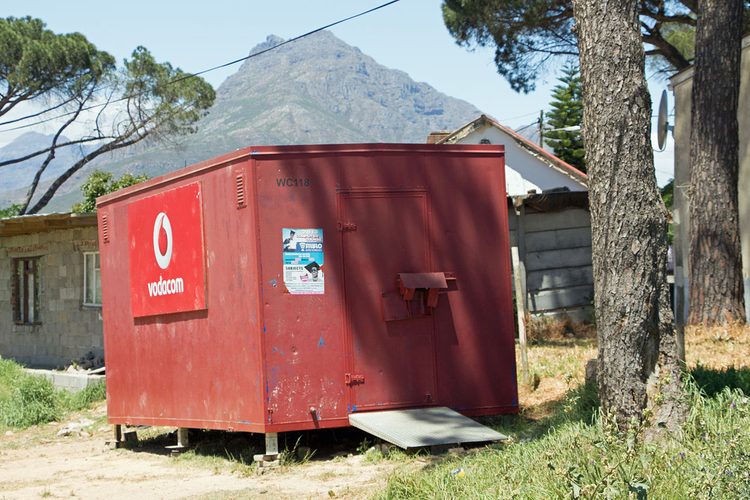
Besides the online providers, you can buy an eSIM once you're there. Vodacom sells Travel SIM packages to tourists in its airport stores and through partners, as well as via the code *135# and the VodaPay app. Each package includes data, minutes, airtime credit and SMS.
 © HelenOnline · CC BY-SAPhoto: HelenOnline, CC BY-SA (https://creativecommons.org/licenses/by-sa/4.0), Wikimedia Commons
Package | Data | Minutes | Credit | SMS | Duration | Price |
|---|---|---|---|---|---|---|
Small | 3 GB | 30 | 50 ZAR | 30 | 30 days | 299 ZAR |
Medium | 5 GB | 50 | 100 ZAR | 50 | 30 days | 449 ZAR |
Large | 10 GB | 100 | 150 ZAR | 100 | 30 days | 699 ZAR |
The prices and package contents come from the carrier's terms (as of 09/2026, Vodacom Travel SIM terms). The package is issued once and doesn't renew automatically. Unused data expires at 23:59 on the 30th day after purchase.
The main advantage of a local package is that you get a South African number with calls and SMS. The catch is that you'll be buying it after your flight, in the queue at an airport store.
MTN
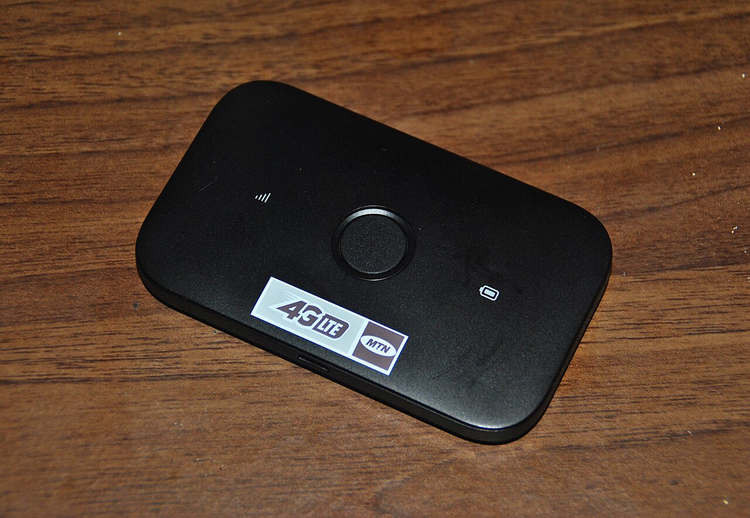
MTN, South Africa's second major carrier, sells tourists dedicated Traveller Bundles. According to MTN, they're set up in MTN stores at the major international airports, and you're asked for your passport and flight details when you buy. The bundles are valid for 30 days from activation.
 © Sabung.hamster aka Everyone Sinks Starco aka BxHxTxCx · CC BY-SAPhoto: Sabung.hamster aka Everyone Sinks Starco aka BxHxTxCx, CC BY-SA (https://creativecommons.org/licenses/by-sa/4.0), Wikimedia Commons
The MTN terms page wouldn't open for us when we checked in September 2026. So we aren't giving exact prices: MTN's tourist bundles are in the same range as Vodacom's Travel SIM. Check the current data allowance and price at the MTN store when you arrive.
Going by the coverage maps, MTN and Vodacom are the two widest networks in the country. If you need a local number and you're flying into Johannesburg, Durban or Cape Town, an MTN bundle at the airport is still a workable option.
Which eSIM for South Africa is the cheapest
The cheapest way in is a 1 GB package. At aloSIM, 1 GB for 7 days costs $4 (as of 09/2026, aloSIM plans for South Africa). At SimOptions the same amount for 7 days costs $4.50, and 3 GB for 30 days is just $5.90 (as of 09/2026, SimOptions plans).
Yesim's 1 GB package is valid for 30 days and costs $3.96, according to the Yesim website in September 2026. A month-long period is more convenient than a week if you use little data and mostly rely on hotel Wi-Fi. Check the price for your dates in the Yesim eSIM catalogue.
But a cheap package is only good value if your usage is low. If you use more than 3 GB, look at the price per gigabyte of the 10-25 GB packages. That's where SimOptions and Ubigi come out ahead.
Why get an eSIM for a trip to South Africa
An eSIM is now the easiest way to stay connected in South Africa. Everything is sorted online in a few minutes. There's no need to find a phone store, stand in a queue or swap a plastic card. You pay for the package, scan the QR code, go through a couple of steps in your settings and connect.
The main reason is simple: without mobile data, a smartphone is almost useless on a trip. Ride-hailing apps, getting around the city, finding a restaurant nearby, keeping in touch with family, your banking app for contactless payments. All of that needs data. In South Africa, safety comes into it too: you can see your taxi's route in the app and you aren't finding your way through an unfamiliar neighbourhood with a paper map.
The second advantage is that you're online right after landing. The plane touches down, your phone picks up the network, and you order a car to your hotel before you even reach the arrivals hall. We cover the best time to install an eSIM in a separate section below.
At the same time, nobody wants to overpay for roaming. Many European carriers charge for data by the megabyte outside the EU or sell expensive day passes. Opening a social media feed with video once uses tens of megabytes, and a week's bill easily overtakes the cost of a travel eSIM for a month.
From our own travel experience, the cheapest setup is "home SIM for SMS, eSIM for data". The home card stays in the phone, but mobile data and data roaming on it are switched off. Your bank sends its codes, and all your internet goes through the travel eSIM.
An eSIM is also convenient if you're travelling through several countries. The South Africa profile sits in your phone alongside the others, and you switch on the one you need in settings. For Namibia, Botswana or Eswatini, you can install a separate package in advance or get a regional Africa plan.
And finally, an eSIM is harder to lose. A physical card is easy to drop while swapping it in a taxi or to leave in a tray at the hotel. An embedded profile stays in the phone until you delete it yourself.
Roaming with your home carrier
What about your home carrier's roaming package? We don't recommend it. Price isn't the only reason. Many carriers limit speed in their roaming terms, and you end up with 3G-level internet where the local network offers 4G/LTE.
The small print in roaming plans is worth reading before you travel. It usually sets out the data cap, the speed after the cap and the countries where the package works at all. Check which zone your carrier puts South Africa in.
On price, the comparison is simple too. A travel eSIM for a month usually costs noticeably less than roaming packages for the same period. The difference is especially clear on a long trip.
A typical scene in a group of friends: one person has slow roaming and spends the whole day asking someone to share their hotspot. Spend a few dollars on an eSIM or an international SIM card, and you won't depend on café Wi-Fi or on someone else's hotspot.
Where to buy an eSIM for South Africa
Online
You can buy an eSIM for South Africa on the provider's website or in its app. There are many providers, and above we compared eight of them on network, price and terms. To pay, you usually only need an email address and a bank card.
Online providers don't require passport registration. You can browse packages in the Yesim section for South Africa.
On arrival in South Africa
The country has four main carriers: Vodacom, MTN, Cell C and Telkom. You can buy an eSIM or a regular tourist SIM in their stores across the country. Vodacom and MTN have stores in the major international airports, including Johannesburg and Cape Town.
Bring your passport for a local package. According to MTN, you're asked for your passport and flight details when buying a tourist bundle. Allow for the queue as well: after an overnight flight, the store in the arrivals area can be busy.
When to buy and activate an eSIM for South Africa
You can buy an eSIM at almost any time. Most providers give you between a month and a year to install it. With SimOptions, the profile has to be installed within a year of purchase (as of 09/2026, SimOptions terms). Yesim allows 180 days for installation, according to the Yesim website.
Something else matters more: when the package's validity period begins. With some providers the clock starts right after installation. With others, the period only starts when the eSIM first connects to a network in the destination country. We looked at an example of this kind of plan above, in the Ubigi section (as of 09/2026, Ubigi plan description).
We recommend installing the eSIM at home, on the day of your flight or the day before. You need an internet connection to install it. South African airports have Wi-Fi, but the connection can be unstable, and an error while installing the profile creates unnecessary trouble.
Read your package's terms before installing. If the period starts immediately, install the eSIM as close to departure as possible. If it starts on connecting to a network in South Africa, install it a few days ahead and take your time checking that the profile has appeared in your settings.
On the plane, leave the eSIM switched off for data, then after landing turn it on along with data roaming on that line. Within a minute your phone will find the network, and you're connected.
How to install an eSIM: step by step
Installing an eSIM has been made as simple as possible. The provider emails you instructions right after payment, but in practice the QR code is all you need.
- Pay for the package. After payment you'll see an order summary with a QR code on screen. An email with the same code and instructions arrives in your inbox.
- Connect to a stable internet connection. Without internet, the profile installation can fail with an error.
- Scan the QR code. Open the mobile network section in your phone's settings and choose to add an eSIM. The camera reads the code, which already contains all the profile data.
- Go through the setup steps. Your phone will suggest naming the line, selecting it for mobile data and keeping your home line for calls and SMS. Installation usually takes less than a minute.
- Check the result. A new line should appear in your list of SIMs. Turn on data roaming for it after you arrive.
A common problem: you buy the eSIM on the same phone you need to install it on. You can't scan a QR code from your own screen. There are two ways around it. Ask someone nearby to photograph the code and scan it from their screen. Or open the email on a laptop.
Many providers also let you install the eSIM straight from the app, without a QR code. In that case you tap the install button and the phone adds the profile itself.
Don't delete the eSIM after your first trip if the package is still valid or the provider allows top-ups. With many providers you buy more data on the same profile, and there's no need to install it again.
What to check before buying an eSIM for South Africa
Below is general advice on travel eSIMs. It doesn't apply only to South Africa, but in South Africa a mistake costs more: the phone store is a long way from the highway, and without internet it's hard even to order a car.
Is your phone unlocked
If your phone isn't tied to a carrier, you can install any provider's eSIM without trouble.
A phone bought on an instalment plan or a contract is sometimes locked to the home carrier. It's easy to check: insert another carrier's SIM card or look at the lock status in settings. If the phone is locked, ask your carrier to unlock it before your trip. Bear in mind that the carrier may charge a fee for unlocking.
If you can't get the phone unlocked, there are two workarounds. The first is a portable Wi-Fi router with a local SIM card. The second is to bring a second, unlocked phone and use it as a hotspot for your main one.
Does your smartphone support eSIM
The second check before buying: does your model support an embedded SIM. Almost all modern smartphones from the major brands do. But older models and some versions made for particular markets don't have eSIM support.
The quickest way to check is to open your mobile network settings and look for an "Add eSIM" option. The second way is to search online for your exact phone model plus the word eSIM. Many providers also publish lists of compatible devices on their websites.
If your phone doesn't support eSIM, this way of getting connected won't work for you. But there's a way out: order a physical international SIM card online before your trip or buy a local SIM card in South Africa. We cover both options below, in the section on ways to stay connected.
Can you trust eSIM providers
Most of the providers in our comparison have been in the eSIM market for a long time. They don't build their own networks but act as resellers or partners of the local carriers. Put simply, you buy a data package from a middleman, and the signal comes from Vodacom, MTN, Cell C or Telkom.
Airalo and SimOptions have been selling eSIMs for many years and maintain a large catalogue of countries. Sim Local sells travel SIM cards through kiosks in international airports and continues that business with its Smartroam eSIMs. Jetpac is younger but focuses on perks for travellers, such as airport lounge access.
Reviews of Nomad are mixed: there are complaints about connection and activation. Opinions on Holafly are divided too, and the most contested point there is unlimited data with speed restrictions.
There are other providers on the market as well: GigSky, Airhub, Yesim, Saily. Two unusual services stand apart. Roamless sells data that never expires, and Firsty gives you free data in exchange for watching ads.
A word on our editorial role. tourism.com.de doesn't sell eSIMs; we compare plans and terms. If something goes wrong with your eSIM, contact the provider's customer support: every provider in the comparison has one, and that's also where refunds are handled.
Will you keep your home number
Yes, you will. For many people this is the main reason to choose an eSIM. A travel eSIM works alongside your physical SIM or home eSIM at the same time. You don't need a separate dual-slot phone.
One phone can store several eSIM profiles. Usually two lines can be active at once, while the rest simply sit in memory and can be switched on in settings.
Here's the setup that works. On your home SIM you turn off mobile data and data roaming but leave the line on for calls and SMS. The travel eSIM for South Africa handles internet only. That way you don't pay for data roaming and you still receive SMS with one-time codes for logging into your bank and apps.
Switching between lines takes a few seconds in settings. Before you fly, check once more that data roaming on your home SIM is off. Incoming calls and SMS while roaming can cost money, and the terms depend on your carrier.
Can you make calls with an eSIM for South Africa
You can't make regular calls with online travel eSIMs for South Africa. The Ubigi, Holafly, aloSIM, Saily, SimOptions and Yesim packages we covered above are data only. They don't support outgoing calls or SMS.
The exception when we checked: one of Airalo's South Africa lines includes call minutes (as of 09/2026, Airalo plans). Before buying, look at the package card to see whether calls are listed.
For calls on a trip, messaging apps are usually enough: WhatsApp, Telegram, Signal. If you need a real local number with calls and SMS, buy a Vodacom or MTN tourist package in South Africa.
Does an eSIM give you a phone number
No. A data-only eSIM doesn't come with a phone number, so you can't receive regular calls or SMS on it.
aloSIM gets around this with the free Hushed number we mentioned above (as of 09/2026, aloSIM's description of the Hushed number). The number works in the app, not on the eSIM itself.
Does 5G work on an eSIM for South Africa
Partly. Ubigi explicitly states 5G support for South Africa. SimOptions lists 4G/LTE speed on its plans page. Holafly promises 4G or 5G wherever the network allows it. The other providers don't clearly mention 5G on their South Africa plan pages.
In practice, 4G/LTE is enough for maps, messaging and social media. If you're spending most of your trip outside Johannesburg, Pretoria, Cape Town and Durban, 5G support is secondary for you: what matters more is that the eSIM runs on the Vodacom or MTN network.
Are there unlimited eSIMs for South Africa
There are, but with caveats. Genuinely unlimited data with no throttling and no speed cap is rare. Almost every "unlimited" plan has a fair use policy.
Holafly and Yesim sell unlimited plans for South Africa. Holafly says that if usage is too high, the carrier may temporarily reduce speed, but for no longer than one day (as of 09/2026, Holafly terms). Yesim states that speed may be reduced under the carrier's rules. You can check the terms on the Yesim unlimited plans page.
Ask yourself a simple question: is the unlimited plan really unlimited? If high speed only applies up to a certain amount per day, the speed drops after that. Often it's only enough for messaging and email.
Nomad's daily plans work this way, for example: a few gigabytes at high speed per day, then slow internet with no data limit. That's enough for maps and WhatsApp, but not for video or working on a laptop.
Look at the terms especially carefully if you have a long bus or train journey ahead. On days like that you use a lot of data, and being throttled on the road is when it's most annoying. For trips like these, a package with a large fixed allowance is often more reliable than unlimited.
Which way to stay connected in South Africa should you choose
An eSIM gets you online fastest. But whether it's the best option for your trip depends on your data usage, the length of your trip and your phone. There are three options in total:
- a local prepaid SIM card;
- an international prepaid SIM card;
- an eSIM.
Below we compare them on price, convenience and what you get besides internet.
Local SIM card
If you're going for a long time and make a lot of calls within South Africa, a local SIM card may work out better value. Its packages often include minutes and SMS as well as data. For example, Vodacom's tourist package includes data, minutes, airtime credit and SMS (as of 09/2026, contents of Vodacom's Travel SIM packages).
The main limitation: you can only buy a local card in South Africa, at a carrier's store or from its partners. You can't arrange it online in advance. If you arrive late in the evening, the airport store may be closed or busy.
Who it's for: a local SIM suits those staying in the country for a month or longer, making a lot of calls within South Africa or wanting a South African number for bookings.
International SIM card
If your phone doesn't support eSIM, order an international prepaid SIM card. These cards work in South Africa and in many other countries across Europe, the Americas and Asia. They're convenient if you're flying on somewhere else after South Africa.
The physical card is posted to your home before the trip. You put it in your phone, and after landing it connects to the network. No stores and no QR codes.
An example of this kind of plan: Holiday World from Orange, sold by SimOptions. The 20 GB package for 31 days costs $39.90, works in 127 countries and includes 15 minutes and 50 SMS (as of 09/2026, Orange international plan at SimOptions). The screenshot above shows an earlier version of this plan with a smaller data allowance.
- The catch: delivery takes time and the card has to be ordered in advance, while the price per gigabyte is higher than with South Africa-only packages.
eSIM
Over the course of this article we've covered two kinds of eSIM:
- an eSIM you buy online from a third-party provider;
- an eSIM you set up in South Africa at a local carrier's store.
Local carriers sell packages both as a physical SIM and as an eSIM. Both options are also available in the stores at international airports.
An online eSIM wins on convenience: you're ready for the trip before you take off. A local eSIM wins on data volume and gives you a number. The choice depends on what matters more to you in the first hours after arrival.
eSIM or local SIM card in South Africa
With an online eSIM you arrive prepared, and there's no need to visit a phone store.
The plane lands, and you're already online.
Difference in price
Which is cheaper: an eSIM or a local tourist SIM card? If you compare data alone, online packages are usually cheaper. A local package wins on what's included, because it comes with minutes, credit and SMS. The Vodacom Large package at 699 ZAR includes 10 GB, 100 minutes, 150 ZAR of credit and 100 SMS (as of 09/2026, Vodacom terms).
An online package with the same 10 GB and no minutes costs $17.90 at SimOptions and $23 at aloSIM (as of 09/2026, SimOptions prices for 10 GB). If data is all you need, an online eSIM competes well on price with a local package.
But there's also the entry price to consider. The smallest online packages cost a few dollars, while Vodacom's local tourist package starts at 299 ZAR. If 1-3 GB is enough for a short trip, an online eSIM works out cheaper.
After a long flight you want to head straight to the hotel, not go looking for a phone store. With an online eSIM you're connected right after landing. For that convenience we recommend getting one of the eSIMs from our comparison, especially for the first days of your trip.
Many travellers combine the two. A small online package covers arrival and the first few days, and they buy a local SIM later if they're staying a long time. It's faster, simpler and less stressful, and how the price works out depends on how much data you need. You'll find packages for this approach in the Yesim catalogue for South Africa.
Data speed
The second difference comes down to how the network is set up. Travel eSIMs are often sold by a middleman, known as an MVNO (mobile virtual network operator). An operator like this runs on the network of one of the major carriers and effectively buys capacity from it.
In practice this means one simple thing. When the network is congested, the middleman's traffic is served last. At peak times, speed on a travel eSIM can be lower than on a local SIM from the same carrier.
The upshot: an online eSIM's speed sometimes falls short of a local SIM card's. For maps and messaging you'll barely notice it, but for video calls during the evening peak the difference is more noticeable.
4G/5G coverage in South Africa: Vodacom, MTN, Telkom and Cell C
Now for why we've recommended an eSIM on the Vodacom or MTN network throughout this article. We compared the coverage maps of South Africa's four carriers. The difference is obvious at a glance, no technical detail required.
Below is the 4G/5G coverage map for the Vodacom network.
The Vodacom network covers not only the big cities but also the main highways between them. MTN's coverage is comparable on the maps. For a road trip around the country, this is the deciding factor.
And this is the 4G/5G coverage map for the Telkom network.
Telkom's coverage is noticeably weaker, especially outside the major urban areas. The Cell C map looks similar to Telkom's. For a trip to Cape Town or Johannesburg alone, that's not critical. For the Garden Route and the national parks, you'll feel the difference.
Networks used by the providers in our comparison:
Provider | Network in South Africa |
|---|---|
aloSIM | Vodacom |
Airalo | Vodacom (unlimited), Cell C (packages with minutes) |
Ubigi | MTN, Telkom |
SimOptions | Vodacom, MTN |
Yesim | Vodacom, MTN, Cell C |
Holafly | Vodacom, MTN, Cell C, Telkom |
Sim Local | Vodacom (per Smartroam's earlier description) |
Saily | not stated |
The networks in the table are taken from the providers' websites as checked in September 2026. Before buying, check your plan's card, because providers sometimes change their local partner.
⁉️🤔 Frequently asked questions
Which eSIM gets the best reception in South Africa outside the cities?
Choose an eSIM on the Vodacom or MTN network. Going by the coverage maps, these two carriers reach noticeably more of the country than Cell C and Telkom. In our comparison, aloSIM and SimOptions list Vodacom, Ubigi lists MTN, and Yesim and Holafly connect to several networks, including both strong ones. Check the network on the plan card before paying.
Do you need a passport to buy an eSIM for South Africa?
For an online eSIM you usually don't need a passport: providers only ask for an email address and card payment, and Yesim explicitly states that no ID check is required. You will need a passport if you buy a tourist package at a local carrier's store. MTN asks for your passport and flight details when you buy one.
How many gigabytes do you need for two weeks in South Africa?
For maps, messaging, taxis and social media without video, 5-10 GB is usually enough for two weeks. If you tether a laptop, watch video or upload a lot of photos to the cloud, get 20-25 GB. A 30-day package with some headroom is better value than topping up on the road when you're already in a national park.
Can you use WhatsApp with a data-only eSIM?
Yes. WhatsApp is tied to the number you registered it with, not to the SIM your internet runs through. Leave your home SIM in the phone for SMS, turn off data on it, and route your internet through the travel eSIM. WhatsApp calls and messages work as usual, and your contacts see the same number.
When should you install the eSIM if the package period starts immediately?
In that case, install the eSIM as close to departure as possible, ideally on the day you travel, while you're at home on stable Wi-Fi. If the plan starts automatically on connecting to a network in South Africa, like Ubigi's Smartstart, install the profile a few days ahead. That way you can check the installation without rushing and won't lose any days of your package.
What should you do if the eSIM won't connect after landing?
Check three things: the eSIM is switched on, it's selected for mobile data, and data roaming is allowed on that line. Then restart your phone and wait a couple of minutes while it finds the network. If there's still no connection, message the provider's support over the airport Wi-Fi: every provider in our comparison has a support team.
In short: which eSIM to get for a trip to South Africa
For South Africa, what matters most is not the price per gigabyte but the network. Get an eSIM on the Vodacom or MTN network, especially if you're driving around the country. Install the profile at home and keep your home SIM for SMS. Few people need unlimited data, and a 10-25 GB package covers most trips.
- If you're on a short trip to one city: get a small 1-3 GB package from aloSIM, SimOptions or Yesim.
- If you're travelling around the country for 2-4 weeks: get a 20-25 GB package on the Vodacom or MTN network, such as Ubigi or aloSIM.
- If you tether and watch video: look at unlimited plans from Yesim or Holafly, but read the throttling terms first.
- If you need a local number with calls: get a Vodacom or MTN tourist package at the airport.
- If your phone doesn't support eSIM: order an international SIM card in advance or buy a local SIM when you get there.
Choosing a package for your dates takes a couple of minutes: compare plans on the Vodacom, MTN and Cell C networks in the Yesim section for South Africa eSIMs.

A small editorial team writing guides for independent travel. We travel ourselves, but we haven’t been everywhere, so we check prices, opening hours and how to get there against official sources.