















How the most famous ghost photo was taken at Raynham Hall
In September 1936, two photographers were shooting the grand staircase of Raynham Hall for Country Life magazine. The film was developed at home, and a silhouette of a woman in a brown dress appeared on the negative (according to Wikipedia). The shot spread through the British press, and the ghost of Raynham Hall has since been called one of the most famous in England).
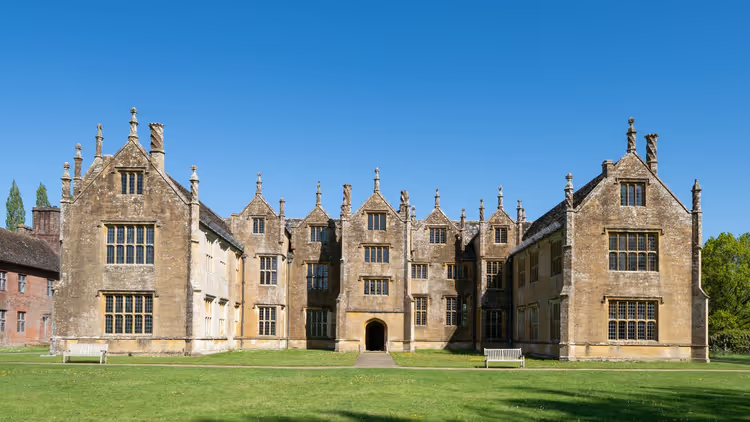
Raynham Hall has stood in Norfolk for four centuries and still remains the private home of the Townshend family. If you are heading to Norfolk, you will find useful a verified history of the estate, a biography of the presumed ghost, and an analysis of that very shot.
What is known about the 1936 photograph
💡 In short:
- According to legend, the Brown Lady is named Dorothy Walpole, wife of the second Viscount Townshend.
- The house was built under Sir Roger Townshend and still belongs to the same family.
- Visitors are allowed inside only on open days.
- Tours and schedule: 09/2026, verified on the official estate website.
The shot was taken on September 19, 1936. London photographer Hubert Provand and his assistant Indre Shira were photographing the house for a Country Life article (according to Wikipedia). Shira noticed a misty figure on the staircase, called out to his partner, who removed the lens cap, and Shira pressed the shutter with the flash. The finished photograph and the eyewitness account were published by the magazine on December 26, 1936, and in January 1937 the story was reprinted by the American magazine Life.
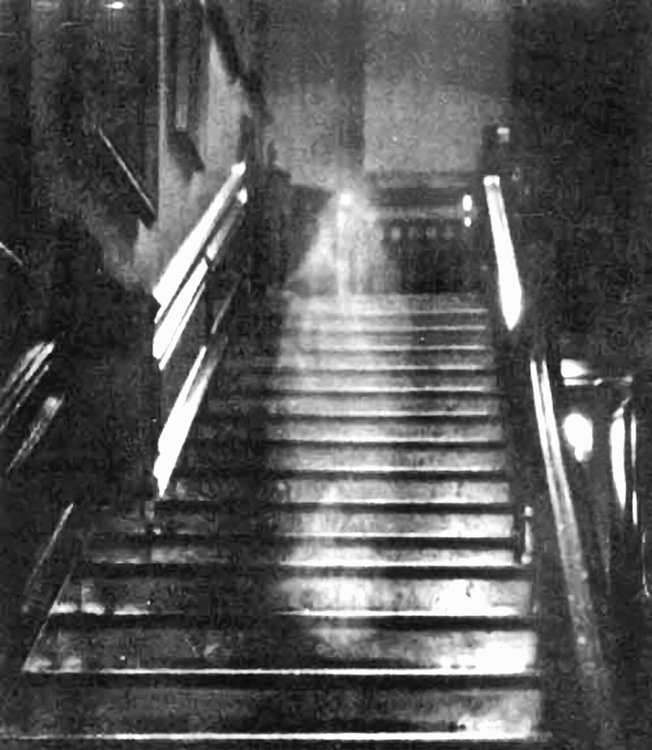 © Hubert C. Provand e Indre Shira · CC BY-SAPhoto: Hubert C. Provand e Indre Shira, CC BY-SA (https://creativecommons.org/licenses/by-sa/4.0), Wikimedia Commons
Skeptics still argue about the shot to this day. Some look for traces of double exposure, others note that the silhouette resembles a church statue of the Madonna (according to Wikipedia). Researcher Harry Price interviewed both authors and recorded that their account held up, and the photo could only have been faked through collusion.
Who the Brown Lady is
According to the most widespread version, the ghost belongs to Dorothy Walpole (according to Wikipedia). She was born in 1686 and was the thirteenth child in the family of Robert Walpole. Her older brother of the same name later headed the British government and is considered the country's first prime minister.
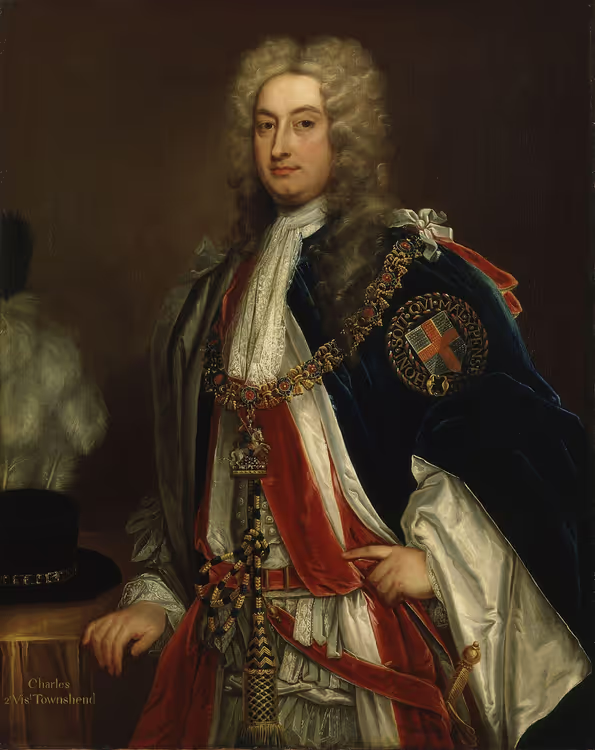
Dorothy married Charles Townshend, the second Viscount Townshend, a man with a difficult and hot-tempered character.
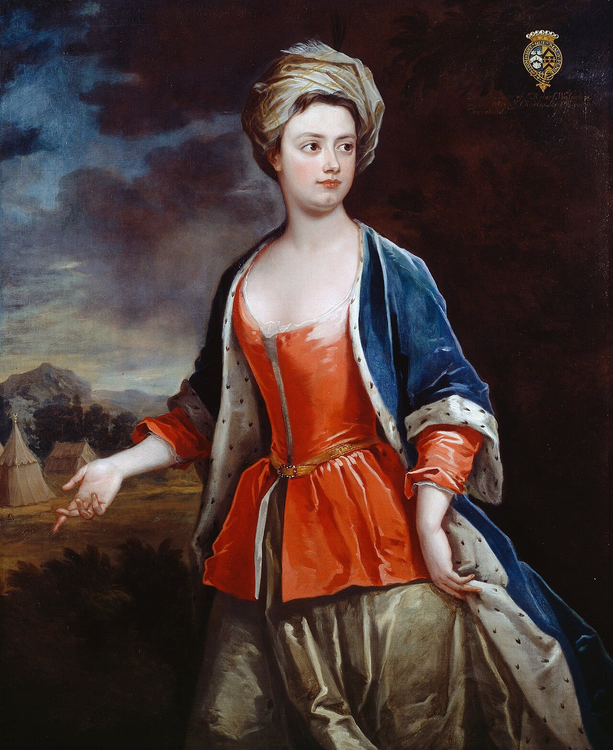
Legend has it that her husband learned of his wife's affair with Duke Philip Wharton and locked her in the rooms of Raynham Hall. Mary Wortley Montagu wrote that Dorothy was lured into a trap by the Countess of Wharton: she invited her to stay and would not let her leave, not even to her children. Dorothy died in 1726 of smallpox (according to Wikipedia).
The portrait and the empty eye sockets
In one of the estate's rooms hung a portrait of Dorothy. By day, the canvas showed a beautiful woman with kind eyes, but in the evening, by candlelight, the face turned into a pale mask with dark hollows. Guests recognized the ghost precisely by this portrait.
 © David from Colorado Springs, United States · CC BYPhoto: David from Colorado Springs, United States, CC BY (https://creativecommons.org/licenses/by/2.0), Wikimedia Commons
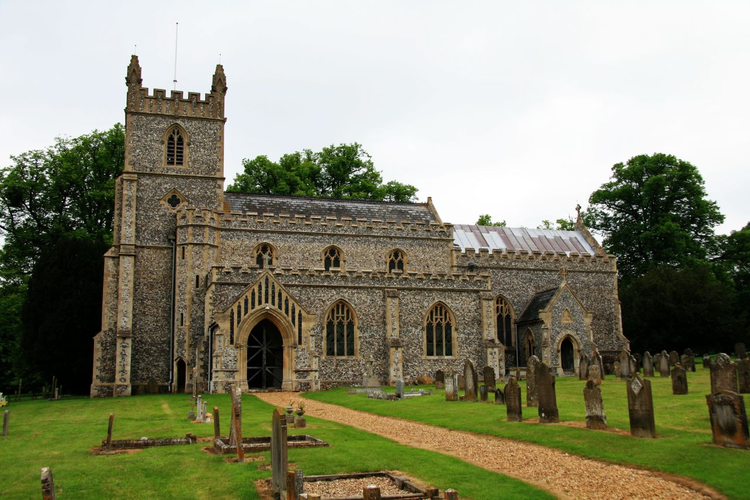
The first detailed account dates to 1835, around the Christmas holidays (according to Wikipedia). Colonel Loftus and his acquaintance Hawkins had gone to their separate bedrooms and saw a woman in a dress from the previous century. The next evening, Loftus encountered her again and remembered the empty eye sockets. After these events, some of the servants left the estate.
Captain Marryat's shot
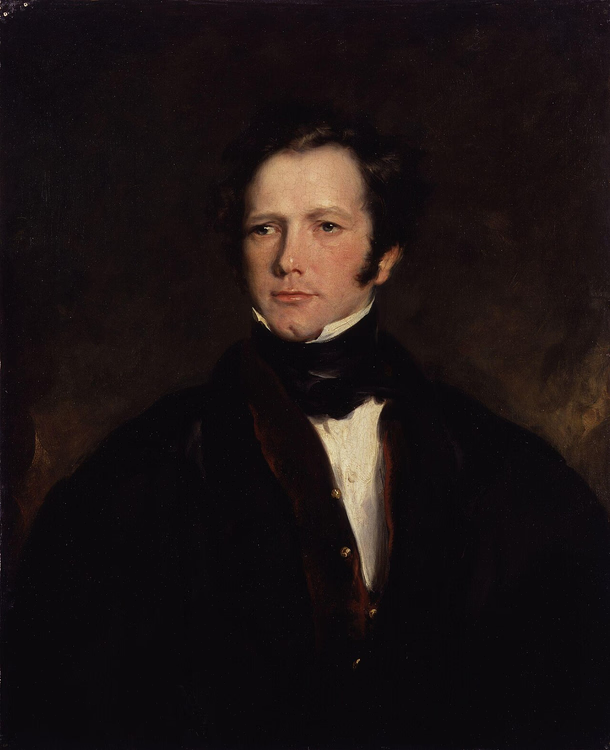
A year later, Captain Frederick Marryat, author of sea novels and a friend of Charles Dickens, stayed overnight at the house (according to Wikipedia). He did not believe in ghosts and thought that smugglers were moving through the dark corridors. The captain slept with a loaded revolver under his pillow.
On the third night, the captain was returning from the neighboring room when a figure floated toward him with a lamp in its hand. Marryat fired almost at point-blank range. The bullet passed through the door and lodged in a wooden panel, and the figure disappeared.
After the encounter with Captain Marryat, reports became noticeably fewer. The next notable appearance was recorded in 1926: Lady Townshend's son and his friend met a woman on the staircase (according to Wikipedia).
Architecture: Inigo Jones and William Kent
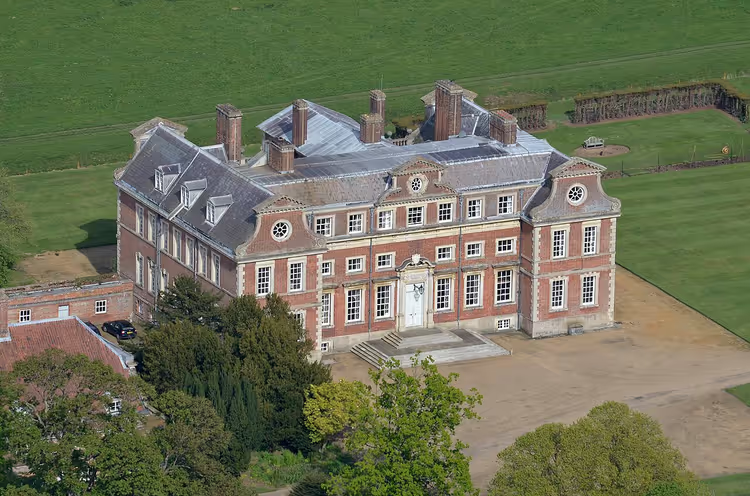
The stone core of the house was laid in 1619 under Sir Roger Townshend (according to the estate's official website). The owner was not a professional architect, but he drew on the early classical works of Inigo Jones and on his travels through the Netherlands. The work was carried out by master builder William Edge.
The building was ahead of its time by nearly a century. Ionic columns, a large Venetian window, and neat Dutch gables still define its appearance today. The surrounding park was laid out by Roger's son, Horatio Townshend, the first viscount.
In the early 18th century, the second viscount invited William Kent. He redid the interiors: a double-height Marble Hall, an unsupported grand staircase, and decoration in the early Georgian style appeared. Kent later repeated some of these solutions at Kensington Palace, and if you have seen the interiors there, some of the features will look familiar to you (according to the estate's official website).
Politics, scandal, and the Hellfire Club
Charles Townshend played a long game at court. He was dismissed, then brought back, and in 1720 he became Lord President of the Privy Council (according to Wikipedia).
Dorothy was counted among the romantic interests of Duke Philip Wharton. He became famous for the "Hellfire Club" with its drinking bouts and blasphemy. The club's activities are barely documented, but the scandal around the couple ended when her brother, Prime Minister Robert Walpole, broke up the gathering (according to Wikipedia). The viscount never forgave his wife and, according to legend, locked her in one of the rooms.
After that, the estate passed to heirs. The fourth viscount, George, fought in the Seven Years' War, and the title of Earl of Leicester was created for his son. Later, a separate family dispute arose over the titles and names, but the house remained in the family.
The estate today
Today Raynham Hall remains a private home and working estate: verified 09/15/2026 on the estate's official website. Visitors are only admitted with tickets on open days, which are announced in advance. Regular tours of the rooms are suspended, and the owners promise to bring them back in 2026.
 © John Fielding from Norwich, UK · CC BYPhoto: John Fielding from Norwich, UK, CC BY (https://creativecommons.org/licenses/by/2.0), Wikimedia Commons
The estate is being developed as a business: they offer glamping, opened a private restaurant called The Copse, and sell meat from their own herd of Aberdeen Angus (according to the estate's official website). The estate's address: Hall Farm, East Raynham, Fakenham, Norfolk NR21 7EE.
The North Norfolk coast is an easy drive there and back. Check the open day schedule on the official website, because it changes every season. That way you won't show up at locked gates.
Timeline: key dates
Year | Event | Source |
|---|---|---|
1619 | Construction of Raynham Hall begins | estate's official website |
1726 | Death of Dorothy Walpole | Wikipedia |
1835 | Colonel Loftus first sees the Brown Lady | Wikipedia |
1836 | Captain Marryat shoots at the ghost | Wikipedia |
1936 | Provand and Shira's photograph | Wikipedia |
⁉️🤔 Frequently asked questions
Does the Brown Lady actually exist?
There is no definitive answer. Accounts have been collected for almost two hundred years, and the main piece of evidence remains the 1936 photograph. Skeptics explain it as a double exposure or movement by the photographer himself, while supporters consider the image genuine. There is no scientific confirmation of the legend yet (according to Wikipedia).
Who was Dorothy Walpole?
Dorothy Walpole was born in 1686 and was the sister of Robert Walpole, the first Prime Minister of Great Britain. She became the second wife of Charles Townshend, 2nd Viscount Townshend. According to legend, her husband locked her in the estate, and in 1726 she died of smallpox (according to Wikipedia).
Can you go inside?
Yes, but only on open days. Raynham Hall remains a private home, so access inside is by schedule and tickets, which are announced in advance. Watch for announcements on the estate's official website.
Why is the ghost called the Brown Lady?
The nickname came from her clothing. Witnesses described a woman in a brown brocade dress from a previous century, the same dress worn by the figure in the portrait of Dorothy Walpole. That is where the name comes from, and it stuck after the 1936 photograph (according to Wikipedia).
Is the 1936 photograph genuine?
The image has been examined more than once. Researcher Harry Price interviewed both photographers and found no evidence of forgery, while skeptics point to double exposure and a resemblance to a church statue. There is no single verdict, but this image is considered the most famous ghost photograph (according to Wikipedia).
In short: is Raynham Hall worth visiting
Raynham Hall wins you over not with entertainment but with history: the house by Inigo Jones, interiors by William Kent, and the most famous ghost legend in England. Access inside is rare, so plan your trip around open days.
- If you love old architecture, come on an open day in the morning.
- If the mystical side matters to you, read the story of Dorothy Walpole first.
- If you are driving, combine the estate with the North Norfolk coast.
See also Mystical Whitby Abbey, England.

A small editorial team writing guides for independent travel. We travel ourselves, but we haven’t been everywhere, so we check prices, opening hours and how to get there against official sources.