













How to choose a tattoo studio in Kyiv: what to check before booking
A tattoo punctures the skin, so sterility matters more than style. According to IARC, a WHO agency, getting a tattoo carries a risk of hepatitis B and C infection if the tool has not been sterilized. Choosing a studio in Kyiv comes down to a few verifiable points.
Below we break down what to look for in the studio, what determines the cost of the work, and how to avoid picking the wrong artist. A safe studio opens needles in front of you and works by appointment. If supplies are not opened in front of you, the risk is higher.
What makes a studio safe
Safety is verified with your eyes, not with promises. The artist opens needles and supplies in front of you, not behind a screen. Another marker: the studio has an autoclave for reusable tools or works only with disposable modules.
💡 In short:
- Needles, caps, and films are opened in front of you.
- There is an autoclave or only disposable modules.
- The artist is vaccinated against hepatitis B.
- Infection control rules in studios: 10/2026, according to CDC.
According to CDC, studios with a low risk of infections operate under a written control plan. For you, this means one thing: the artist follows a set procedure, not improvisation. Ask directly how the work surface is treated and where used needles go. This question is appropriate at a consultation.
What to check in the studio itself
Start with the space. A separate room or an area separated from the entrance reduces contact with street dust. The treatment table and work table are covered with disposable film that is changed in front of you.
Inspect the tools. Needles and cartridges are in factory packaging, not lying on an open table. The artist puts on new gloves before each stage and disinfects surfaces between clients. Reusable grips are sterilized in an autoclave, not wiped with alcohol.
Ink is also regulated. In the EU, Regulation 2020/2081 has been in effect since January 4, 2022: it restricts harmful substances in pigments for tattoos and permanent makeup (EUR-Lex). Ask which inks the artist uses and whether the bottle lists the ingredients.
A good studio is not shy about showing how everything works. If you are refused a look at the room or told "don't worry," that is a reason to leave.
Example: Alliance studio in Kyiv
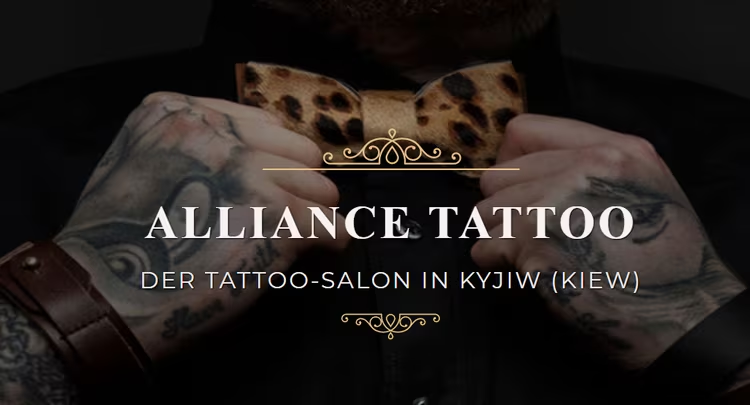
Alliance studio operates in Kyiv near Lybidska metro station and takes clients by appointment. This example is useful for the reader: it shows which conditions to clarify before paying, not after the session.
The tattoo studio in Kyiv Alliance describes its services and pricing on its website: the studio prices a large-format session at 200-250 €, the booking deposit is around 20 €, and it is open daily from 10:00 to 20:00. The company provides consultations free of charge (according to the studio's website, checked 10/2026).
Among its services, the studio lists not only new tattoos but also cover-ups of old work, corrections, and laser removal. This is a useful detail when comparing: not every studio takes on reworking someone else's piece. If you want to cover an old design, ask whether your artist does this and how much it costs. Also look at recent photos of healed work and reviews from several studios, not just one.
This is a specific case, not a guarantee. You should compare conditions at several studios: sterilization, portfolio, and payment terms differ among them.
What determines the cost of the work
Tattoo pricing is rarely calculated by the centimeter. The price is set by the time the work takes and the complexity of the design.
Factor | How it affects the price |
|---|---|
Size and detail | The more elements, the longer the session and the higher the price |
Artist's experience and workload | A well-known artist charges more for the same sketch |
Colored ink | A color design requires more time and different pigments |
Studio location | Rent in the city center raises the price |
The range in Kyiv is wide, so ask for an estimate in advance. Cheap work often means cutting corners on sterilization or on the artist's experience. First lock in the amount and scope, then sit in the chair. This way you avoid surprises at the end of the session.
Look at the overall level, not the lowest number. A below-market price almost always means saving on the artist's time or on materials. Ask whether the price includes a touch-up after healing: some studios offer it free, others charge for it.
How to choose an artist and style
Look not at the sign, but at the portfolio. Look for work in the style you want: realism, graphic, and minimalism are done by different hands.
Ask how long the artist has been working and what healed work looks like. Ask who draws the sketch: studios usually advertise custom projects for each client. Personal style does not save a weak line. Fine lines and color are best judged from fresh photos, not old screenshots.
Do not chase the most famous name. A busy artist charges more and will offer the next opening months away. Sometimes it is wiser to choose an artist with an open schedule who works in your style. Ask how many sessions the work will take and what the touch-up after healing looks like.
Common mistakes when choosing
- Choosing a studio based on price alone: a cheap price list often means saving on supplies.
- Going to an artist without a consultation and without examples: without a sketch, it is hard to know what to expect.
- Trusting only edited photos: look at fresh images of healed work.
- Not asking about the artist's vaccination status and the ink ingredients.
These points are checked before paying, not after the session. Write down your questions in advance so you do not forget anything on the spot.
What to ask at the consultation
A consultation is needed to resolve questions before the session. Come with a photo of an example you like.
Ask from this list:
- Which supplies are disposable?
- How is reusable equipment sterilized?
- Which inks and which brand does the artist use?
- How long does healing take?
- What is included in the price and what is not?
Bring a photo of an example and a list of questions to the consultation. A good artist will proactively warn you about contraindications: skin conditions, pigment allergies, medication use. If you are promised "any design in one session" without an examination, that is a red flag.
Aftercare is also discussed in advance: how to wash, what to apply, and when to see a doctor if redness appears. If the artist answers briefly and specifically, their work is usually fine.
⁉️🤔 Frequently asked questions
How do I know a studio is sterile?
Watch whether needles and films are opened in front of you. Disposable materials and sterile tools reduce the risk of infections. If you are not shown the packaging or are led into a separate room without explanation, it is better to find another studio.
How much does a tattoo cost in Kyiv?
The price depends on the size and the session time. For example, Alliance studio prices a large session at 200-250 € (according to its website, checked 10/2026). Smaller pieces cost less. Ask for an estimate in advance and clarify what is included in the price: sketch, session, touch-up.
Is getting a tattoo dangerous?
There is always a risk, but it can be reduced. IARC, the WHO agency for cancer research, links tattooing to a risk of hepatitis B and C when sterility is compromised. Disposable needles and sterile tools reduce this risk. Separately ask whether the artist is vaccinated against hepatitis B.
What should I do after the session?
Follow the artist's instructions: keep the area clean, do not pick the scab, and do not get it wet more than necessary. If you have severe redness, swelling, or a fever, see a doctor. Aftercare is discussed in advance, not after the work is done.
Do I need a consultation before booking?
Yes. At the consultation, you agree on the sketch, size, placement on the body, and price. Studios usually provide it free of charge, and the booking itself goes through the website or a messenger. This is cheaper than redoing work that did not suit you.
In short: how to choose a tattoo studio
There are three criteria: sterility, the artist's experience, and clear terms. Check whether supplies are opened in front of you and which inks are used. Compare portfolios in the style you want and lock in an estimate before the session. If you are unsure, start with a small piece and see how the studio behaves at the consultation.

A small editorial team writing guides for independent travel. We travel ourselves, but we haven’t been everywhere, so we check prices, opening hours and how to get there against official sources.