












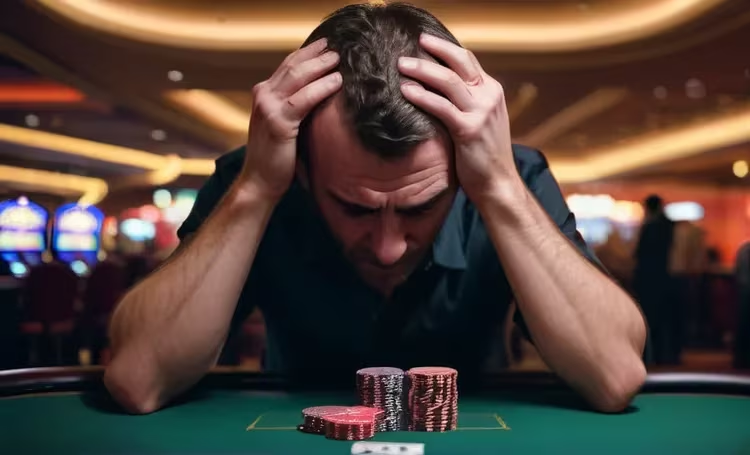
How to recognize gambling addiction and where to find support
Anyone can play for fun. The problem starts when a game stops being entertainment and becomes a way to deal with money and emotional issues. Gaming disorder is included in the International Classification of Diseases ICD-11 and in the DSM-5 alongside disorders caused by psychoactive substances (as of 10/2026, WHO). It is not a weakness of character, but a condition with specific signs. Below you will find what to look for, what reduces the risk, and where to turn for support.
Signs of gambling addiction
💡 In short:
- Gaming disorder is a loss of control over gambling despite debts and family problems.
- Warning signs: gambling under stress, hiding spending, trying to win back losses.
- Prevention relies on money and time limits and on refusing to gamble for income.
- Gaming disorder in disease classifications: 10/2026, according to the WHO.
The disorder is described through three pillars: impaired control over gambling, increasing priority given to gambling over other activities, and continued gambling despite harmful consequences.
Further signs are more specific: the constant urge to gamble persists even during financial difficulties. The extent of gambling is hidden from family, and attempts to reduce bets or stop end in relapse. Money intended for essential expenses goes to gambling.
A single episode proves nothing: concern is warranted when signs repeat over several months. If you recognize yourself in at least two points, take a closer look at your habits.
Where a hobby ends and addiction begins
The boundary is marked by three signs. Amounts and time spent gambling grow from month to month. Gambling becomes a way to relieve stress or cover a debt. Gambling is hidden from loved ones. Even one matching point indicates elevated risk.
A family history of addiction adds to the risk. If relatives had problems with gambling, keep your habits under control. The format also matters: fast online betting pulls people in more quickly than occasional visits to a club.
Gambling is available from age 18 and involves the risk of losing money.
Where to get help
Help for gaming disorder does not require public confessions. Germany has a free gambling addiction helpline at 0800 137 27 00 (as of 10/2026, BIÖG). The line also takes calls from loved ones who need advice.
A short online test is also useful: it shows whether you have reason to see a specialist, and only you see the result (as of 10/2026, check-dein-spiel.de).
Self-exclusion works separately: it is a voluntary block on access to gambling, and the application is free. In Germany it is handled by the unified OASIS system, and operators are required to check every player against this database (as of 10/2026, Glücksspielbehörde der Länder). In the original article, among the online resources on this topic, the site crash-gambling.de is named: according to that description, it covered self-exclusion from online casinos.
Loved ones need their own plan: do not cover the gambler's debts and do not fund the gambling. A calm conversation and a joint visit to a counselor work better than threats.
What reduces the risk: prevention
Prevention is built on several habits.
- Decide in advance how much money and time you will spend on gambling. Move the limit to the next day, not at the moment of losing.
- Do not gamble alone and do not gamble after stress or an argument.
- Treat gambling as entertainment, not as a way to fix your finances.
- Check the real odds of winning, not advertising promises.
Limits work better when you set them in advance, not after a major loss. Tell a loved one about your habits: external oversight cools impulsive bets.
The availability of gambling has grown with the rise of online betting and fast games. That is why it makes sense to review your limits when your rhythm of life changes. Moving, a new job, divorce, or a long sick leave raise the risk, and during such periods it is better to tighten your boundaries.
Gambling addiction in numbers
Official data show the scale of the problem: in Germany, 5.5% of adults show risky gambling behavior, and another 2.2% meet the criteria for gaming disorder (as of 10/2026, Datenportal Sucht und Drogen). These figures come from the Glücksspielsurvey 2025.
The difference between the two groups matters: risky behavior is not yet a diagnosis, but it is already a reason to slow down. The disorder is recorded more strictly and confirmed by a set of criteria.
The survey covers the adult population and takes into account age, income, and access to gambling. For you, your own pace of gambling matters more than national averages: the problem is more common than people tend to think.
How treatment works
Specialists work with gaming disorder: they use individual and group psychotherapy, addiction treatment programs, and support from specialized centers. The specific format is chosen based on the situation.
Seeking help early makes the path easier: while debts and conflicts have not piled up, recovery goes faster. At the first stage, it is enough to acknowledge the problem and want change.
After that, the work proceeds step by step: the person learns to recognize triggers, rebuilds relationships, and establishes financial boundaries. This path is rarely walked alone; group and counselor support helps people stay on track.
⁉️🤔 Frequently asked questions
How do I know that gambling is no longer entertainment?
Look at loss of control: you gamble longer and with larger amounts than planned, and you cannot stop. If gambling interferes with work, studies, or relationships and brings debts, take a self-check and seek counseling. Seeking help early makes recovery easier.
Where can I get help in Germany?
The free helpline 0800 137 27 00 takes calls from gamblers and their loved ones. In parallel, you can take an online self-check and apply for self-exclusion through the OASIS system. Counseling is provided by specialized centers, and seeking help does not require publicly admitting the problem.
What is self-exclusion and how does it work?
Self-exclusion provides a voluntary block on access to gambling. In Germany, the application is handled by the OASIS system, and operators are required to check every player against the database before play begins. Registration is free, and the block applies regardless of the venue where you gambled.
Can gambling addiction be cured?
Yes, specialists work with gaming disorder, and seeking help changes the situation. Psychotherapy and support programs are used, and early intervention makes the path easier. The sooner a person acknowledges the problem, the higher the chances of returning to normal life and rebuilding relationships.
How can I help a loved one with gambling addiction?
Support the person, but do not cover their debts and do not fund their gambling. Offer to seek counseling together and remove access to gambling. An open conversation without judgment helps the person decide to get help and not face the problem alone.
In short: how to protect yourself from gambling addiction
Gambling addiction develops gradually, and the first signs are visible long before serious debts. Set money and time limits in advance.
If gambling remains entertainment, keep your limits and do not gamble for income. If you gamble under stress: find other ways to relieve tension. If the signs repeat: take a self-check and seek counseling.
Start with an honest conversation about your habits with a loved one. That is the first step toward controlling your gambling.

A small editorial team writing guides for independent travel. We travel ourselves, but we haven’t been everywhere, so we check prices, opening hours and how to get there against official sources.