
















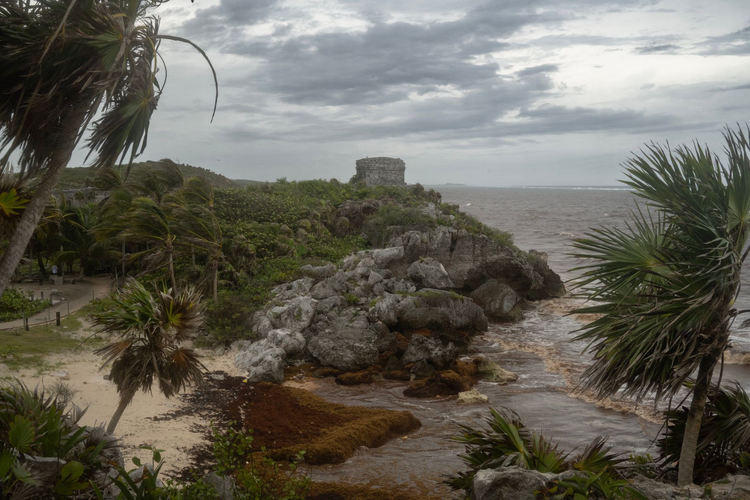
Mexico or Dominican Republic: what to choose for a Caribbean vacation in 2026
Warm sea and an All Inclusive hotel are what you get in both countries. The differences only become visible outside the hotel gates. Mexico adds Mayan pyramids, cenotes, colonial cities, and two different coastlines to the beach. The Dominican Republic is simpler: a long beach under palm trees, calm water behind the reef, and a vacation with almost no transfers.
In terms of getting there, the countries are equal. Condor flies direct from Frankfurt to both Cancun and Punta Cana, and both flights take just over 11 hours (as of 10/2026, Condor schedule). So decide based on your vacation plans, not the flight. A packed excursion itinerary favors Mexico, a quiet beach vacation favors the Dominican Republic. Below we compare the season, resorts, hotels, service, and costs.
Ad: this article contains affiliate links, we earn a commission if you book through them, at no extra cost to you.
Flights from Europe: how many hours in the air
💡 In short:
- Choose Mexico if you want excursions: Mayan cities, cenotes, colonial architecture.
- Choose the Dominican Republic if you want a beach, calm sea behind the reef, and a hotel with a large property.
- Plan your trip for the dry season from December to April: this rule applies to both countries.
- Buy tickets before the hotel: the flight remains the biggest expense.
- Entry rules and hurricane season: 10/2026, verified on the Auswärtiges Amt website
Criterion | Mexico | Dominican Republic |
|---|---|---|
Direct flight from Frankfurt | Cancun, about 11 hours 25 minutes (Condor, 10/2026) | Punta Cana, about 11 hours 10 minutes (Condor, 10/2026) |
Entry for German citizens | visa-free for up to 180 days, passport valid for at least 6 months (Auswärtiges Amt, 10/2026) | visa-free for up to 30 days, electronic E-Ticket form required (Auswärtiges Amt, 10/2026) |
Dry season | December-April | December-April |
Main resorts | Cancun, Riviera Maya, Acapulco | Punta Cana, Bavaro |
Strong suit | excursions and variety | beaches and calm sea |
Hotel format | large complexes, All Inclusive | bungalows and complexes, All Inclusive almost everywhere |
An ocean lies between Europe and Mexico, so there is one sensible way to get there: by plane. The main airport for a beach vacation is in Cancun, on the Caribbean coast. The direct Condor flight from Frankfurt takes about 11 hours 25 minutes and operates daily in the 2026/2027 season (as of 10/2026, Frankfurt-Cancun route page). A direct ticket is usually more expensive than a connecting one, but you don't lose a whole day in transit.
Connecting flights give you more dates and more departure cities. The layover is usually at a major airport in Europe or the US. The journey becomes many hours longer as a result. If you connect in the US, you additionally need transit authorization, so arrange it before buying the ticket. Compare both options by total travel time, not just price. A short layover at an unfamiliar airport increases the risk of missing your second flight.
Entry to Mexico for a tourist is straightforward. German citizens do not need a visa for trips of up to 180 days, and the passport must be valid for at least 6 months on the date of entry. The FMM tourist card is no longer filled out when arriving by plane (verified 03.10.2026 on the Auswärtiges Amt page for Mexico). When entering by land, the FMM card is still mandatory and paid. The actual length of stay is determined by the immigration officer, so keep your return ticket and hotel booking handy.
You fly to the Dominican Republic for almost the same amount of time. The direct Condor flight from Frankfurt to Punta Cana takes about 11 hours 10 minutes and also operates daily (as of 10/2026, Frankfurt-Punta Cana route page). The airport is right next to the resort area, so the trip to the hotel is short, and after a long flight that is a noticeable plus. In Mexico, the transfer to Riviera Maya resorts takes longer than to hotels in Cancun itself.
Connecting flights to the Dominican Republic also exist. They help you save on the ticket but make the journey noticeably longer. The second arrival airport is in the capital, Santo Domingo. It suits you if you start your trip with the colonial center rather than the beach. In that case, you spend the first days in the city and move to the coast later.
Before flying to the Dominican Republic, fill out the electronic E-Ticket form. Its QR code is often requested already at check-in at the departure airport. German citizens can stay visa-free for up to 30 days, the passport must be valid for the entire trip, and you need to show a return ticket at the border (according to Auswärtiges Amt for the Dominican Republic, 10/2026). A longer stay requires a paid extension on site. In practice this means: for a regular vacation, a passport, the form, and a return ticket are enough.
Best time to visit both countries
High season in Mexico starts in the first weeks of winter and lasts until mid-spring. During these months the weather is warm and dry without heavy tropical humidity. Resorts on the Caribbean Sea, the Pacific Ocean, and the Gulf of Mexico operate at full capacity. The water stays warm all season, and you can swim any day.
The summer months bring rain and storm winds to Mexico. A vacation at this time is possible, but the weather may disrupt some of your plans. So plan your trip for the period from December to April. Stable, moderate weather works for both the beach and long excursions to archaeological sites. In summer it is too hot at the pyramids to spend a whole day there.
The dry season has one catch: it is peak demand. Hotels and flights for Christmas holidays and Easter get more expensive, and the best rooms sell out first. Book accommodation several months in advance and compare options by resort and meal plan: such a filter is available in the search for Mexico hotels on Trip.com. Choose a rate with free cancellation if your dates are not final yet.
The Dominican Republic welcomes tourists year-round. The air temperature barely changes from month to month, and the sea is warm in both winter and summer. The only things that can ruin a trip to this Caribbean island are prolonged downpours and hurricanes. The period of such weather risks lasts from May through late October, and sometimes extends into November.
The most comfortable months for the Dominican Republic are December, March, and April. During this time, the weather is clear with no precipitation. You can spend the whole day on the beach, swim, and go on excursions without worrying about the forecast. January and February are also dry, but these are the most expensive weeks of the year. If your dates are flexible, choose March: the weather is the same, but demand is already lower.
Rainy and hurricane season. The tropical climate of Mexico and the Dominican Republic is divided into dry and rainy periods. In both countries, rains occur roughly from May through late October. This time is characterized by short heavy downpours, high humidity, and gusty winds. The heat persists both day and night.
Hurricane season is longer than the rainy season. In the Atlantic, it officially runs from June 1 to November 30, with the peak on September 10. On Mexico's Pacific coast, the season starts earlier, on May 15 (according to the US National Hurricane Center). This does not mean a hurricane will hit your specific resort. But from mid-August to mid-October, the risk of flight cancellations and closed beaches is highest.
The tourist infrastructure in both countries operates even in bad weather. Most precipitation falls in the late afternoon and at night, so you usually spend the morning on the beach in the sun. The greenery is especially vibrant at this time. The main argument for the rainy season is one: tours and hotels become noticeably cheaper. In practice, this means: book with free cancellation and check the forecast a few days before departure.
Mexico's and the Dominican Republic's main resort areas
Mexico's resorts are spread across three coastlines: the Pacific Ocean, the Caribbean Sea, and the Gulf of Mexico. The highest number of tourists go to Acapulco, Cancun, and the Riviera Maya. These areas have a well-developed hotel base and a dense entertainment program. Cancun and the Riviera Maya are on the Caribbean Sea, while Acapulco is on the Pacific side.
At Mexico's resorts, you will find a format for any vacation. Wide stretches of white sand with palm groves meet the clear water of the bays. Bars, high-category hotels, and shopping centers operate nearby. A separate argument: archaeological zones and nature reserves are close by. You can reach them in a day and return to your hotel in time for dinner.
Important: Mexico's coastlines differ in terms of safety. The German Foreign Office advises against travel to the state of Guerrero, with an exception made for Acapulco and Ixtapa-Zihuatanejo when arriving by plane (according to the German Foreign Office's page on safety in Mexico, 10/2026). There is no such warning for Cancun and the Riviera Maya. Tourists there are advised to register in the Guest Assist app. General cautionary rules apply throughout the country.
The Dominican Republic's main resorts are concentrated on the east side of the island. This coast is washed by both the Atlantic Ocean and the Caribbean Sea. The main destinations here are Punta Cana and Bavaro. Both resorts are small and built around the beach: hotels line the shore, and everything you need is on their grounds.
The Dominican Republic's resorts became famous for their beaches. The shore is covered with soft, clean sand, with coconut palms and mangrove forests growing along it. Coral reefs protect the beaches from strong currents and high waves. That is why both adults and children swim calmly in the ocean. Beachfront hotels come in two formats: small bungalows and large complexes. Compare them by distance to the sea before buying tickets: Punta Cana hotels in Trip.com search show the location on the map.
Entertainment at the resort and beyond
Mexico offers entertainment for active, extreme, and relaxed vacations. You can go diving and see underwater caves, coral reefs, and marine life. A second option: a sailing schooner trip along the bays. Water skiing, jet skis, and inflatable "bananas" are available on the beaches. The selection is large, and it is more than enough for a week of vacation.
In the evening, Mexico's resorts do not fall asleep. Restaurants, bars, and nightclubs stay open late, and many feature live Latin American music. This is an important point for you if you are traveling with a group and do not want to spend every evening at the hotel. Cancun is the loudest resort in the country in this regard. For quiet, head to the small towns of the Riviera Maya.
Mexico's cities are interesting even without the sea. Natural and architectural landmarks are worth including in your vacation itinerary. Mayan pyramids, Aztec structures, and colonial buildings from different eras have been preserved here. Set aside at least two days out of the week for them. Otherwise, you will only see the beach and the hotel grounds.
A vacation in the Dominican Republic means a lounge chair under a tall palm tree, the ocean, and a cocktail for many people. But the options are not limited to a lounge chair. The water activities here include diving to shipwrecks, surfing, fishing, canoeing, swimming with dolphins, and even with sharks. Hotel grounds have sports facilities, water parks, bars, and restaurants.
Those who prefer active recreation should venture beyond the resort. Cities with colonial architecture and natural attractions await you: national reserves, jungles, canyons, caves, and waterfall valleys. Theme parks are set up in the tropical thickets. There you can ride buggies or horses and zip-line over the jungle.
- The catch: outside the hotels, the selection of restaurants and evening venues in the Dominican Republic is more modest than in Cancun.
Excursions: Mayan cities or Santo Domingo
Excursions remain the main argument in favor of Mexico. Routes lead to nature reserves, national parks, archaeological zones, and historic cities in various states. Along the way, you see tropical forests, volcanoes, deserts, lakes, canyons, and waterfalls. Guides talk about the history, culture, and traditions of local people. Tours are conducted in several languages, so choose the language when booking.
 © Gage Skidmore · CC BY-SAPhoto: Gage Skidmore, CC BY-SA (https://creativecommons.org/licenses/by-sa/4.0), Wikimedia Commons
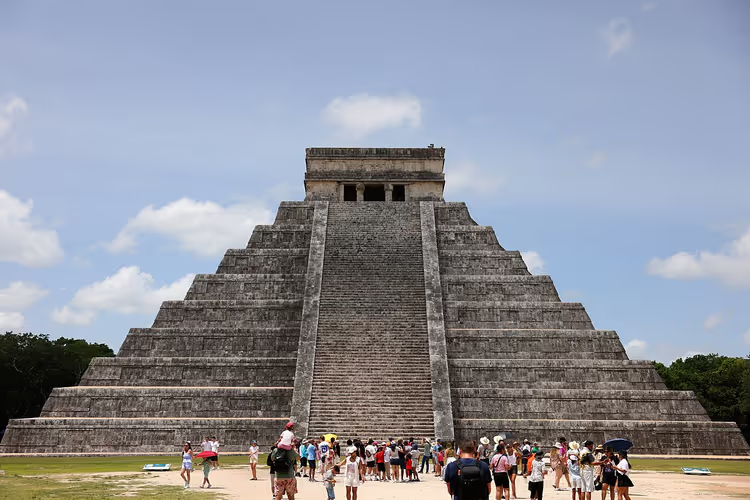
Most tourists are drawn to the Mayan cities: Chichen Itza, Tulum, Coba, and Uxmal. Fortress structures, temples, and tall pyramids have been preserved there. Chichen Itza and Uxmal are on the UNESCO World Heritage list. Tulum sits right on the seashore, so it is easy to combine with a beach day.
The Ik Kil cenote near Chichen Itza deserves special attention. A cenote is a natural freshwater well that goes deep into the ground. Swimming is allowed there, and many tours include this stop. Arrive in the morning: by midday, bus groups arrive here.
Excursions in the Dominican Republic are built around nature and local culture. Sightseeing tours fall into two directions: walks through historic cities and trips to national reserves with varied landscapes. Choose the program for your dates in advance. The GetYourGuide excursions catalog shows the guide's language and cancellation terms for each tour.
The main city excursion goes to the capital, Santo Domingo. There you see colonial architectural monuments and historic mansions. Trips into the island's interior are the most memorable. Mountain ranges, caves, hills, and waterfalls stand among mangrove thickets and palm forests. These places are explored on foot and by jeep.
Hotels in Mexico and the Dominican Republic
Mexico's hotels meet international standards. Resorts have hotels of various categories, from modest to five-star. Most complexes have spacious, well-maintained grounds, a private beach, and developed infrastructure. When choosing, look at three things: beachfront location, meal plan, and distance to the airport. The star category in Mexico does not always match the European one, so read the room description.
The Dominican Republic's hotels are designed for active, relaxed, and family vacations. They offer a standard set of services of decent quality. A typical complex consists of cottages or bungalows in a tropical forest near the shore. The green grounds include pools, restaurants, playgrounds, gyms, and hot tubs. You hardly need to leave the hotel, and for a family with children, this is the main advantage.
Hotel service and infrastructure
Mexico's resorts maintain a high level of service. Five-star hotels occupy large grounds with pools, kids' areas, restaurants, shops, water parks, sports facilities, and wellness centers. Rooms come equipped with everything you need: furniture, TV, air conditioning, refrigerator, minibar, and safe.
You'll have access to All Inclusive dining at the restaurants, free Wi-Fi, and a babysitter for your child. Hotel staff organize evening show programs and respond quickly to guest requests. Beaches are outfitted with loungers and umbrellas, and water sports rentals operate right there. Check before booking which services are included in the rate. Babysitting and some restaurants often cost extra.
The Dominican Republic's resorts also maintain a high standard of service. Hotel complexes occupy large, well-landscaped grounds amid exotic plants and palm trees. The hotel's park area is usually divided into two parts. The active side hosts events, while the quiet side lets you relax in seclusion. Choose your building based on this principle at the time of booking.
Almost all hotels in the Dominican Republic operate on an all-inclusive basis. You'll have access to pools, bars, sports facilities, kids' playrooms, water activities, nightclubs, saunas, and massage parlors. Concert venues host evening shows with dancing and live performances.
Restaurants adapt their cuisine to European tastes. Standard rooms have comfortable furniture, TV, telephone, minibar, kettle, and air conditioning. Sandy beaches are equipped with loungers and umbrellas. In terms of amenities, the Dominican Republic and Mexico are nearly equal. The difference is more about scale: Mexican resorts are larger and livelier.
How much the trip costs
A trip to either Mexico or the Dominican Republic is expensive. A significant portion of the cost is the flight across the ocean. So find your tickets first, and only then pick a hotel for those dates. Direct and connecting flights are easy to compare in one list: flight search on Kiwi.com does this. Exact amounts depend on the season and departure city, so check them on the date you buy.
You can save money in three ways. First: book early, several months ahead. Second: last-minute deals, if your dates are flexible. Third and most reliable: travel during the rainy season. Keep school holidays and public holidays in mind, prices always rise during those weeks. We don't list flight prices because they change every day.
All inclusive or breakfast only
The main hotel concept in the Dominican Republic and Mexico is called All Inclusive. It has clear advantages over a breakfast-only rate. The price includes three meals a day, snacks, and drinks throughout the day. It also covers the hotel's infrastructure and entertainment programs. You know your vacation budget in advance and don't pay on the spot for every lunch.
Guests are served breakfast, lunch, and dinner. The menu consists of international and American dishes with seafood, vegetables, and exotic fruits. You can grab a snack and a drink at the bar at any time. A breakfast-only rate makes sense in one case: you're out on excursions a lot and come back late. In Mexico, that scenario is more common than in the Dominican Republic.
Beaches in Mexico and the Dominican Republic
Mexico attracts visitors not only with its history but also with its variety of beaches. The sandy shores of popular resorts face the Caribbean Sea and the Pacific Ocean. The Caribbean side offers white sand and calm turquoise water. The Pacific side has stronger waves and suits surfing. The beaches have palm trees, activities, and all the conveniences for a full day by the water. Choose the Caribbean coast if you're traveling with kids.
The Dominican Republic is considered the country with the best-kept beaches in the Caribbean basin. The shores work for both secluded getaways and lively groups. Coconut palms, mangrove forests, hills, and cliffs shape the landscape beyond the sand line.
On the beach, you choose the pace of your day. You can sunbathe, swim calmly in the Caribbean Sea or the Atlantic Ocean, or take up water sports. The Atlantic side is windier, the Caribbean side calmer. For a vacation with small children, choose a shore protected by a coral reef.
⁉️🤔 Frequently asked questions
Which flight is longer: to Mexico or to the Dominican Republic?
There's almost no difference. A direct Condor flight from Frankfurt to Cancun takes about 11 hours 25 minutes, to Punta Cana about 11 hours 10 minutes (carrier's schedule, 10/2026). Flights with connections to either country are noticeably longer, so for a short vacation, take a direct flight.
When is the best time to visit Mexico and the Dominican Republic?
The best period for both countries falls in the dry season from December to April. During this time, the weather is clear without prolonged downpours or hurricanes. In the Dominican Republic, December, March, and April are especially comfortable. January and February are also dry, but they're the most expensive weeks of the year, so book them early.
Is it worth going during the rainy season?
Yes, if price matters to you and you're willing to accept the risk. Downpours usually come in the evening and at night, mornings stay sunny, and hotels and tours get cheaper. The Atlantic hurricane season runs from June to November, with the peak in September. Book a rate with free cancellation and watch the forecast before you fly.
Where is it better to vacation with kids?
For a family with small children, the Dominican Republic is more convenient. The coral reefs off Punta Cana and Bavaro protect the beaches from strong waves and currents, and the hotels are built as self-contained complexes with kids' rooms and pools. In Mexico, the Caribbean side suits families: Cancun and the Riviera Maya.
What should you choose for excursions?
Mexico. This is where you'll find the Maya cities of Chichen Itza, Tulum, Coba, and Uxmal, the Ik Kil cenote, colonial cities, and national parks. In the Dominican Republic, the excursion program is shorter: the capital Santo Domingo with its colonial architecture and trips to waterfalls, caves, and nature reserves. Two or three days will be enough for that.
In short: what to book
Mexico and the Dominican Republic are similar in flight length, season, and hotel standards. What sets them apart is what the vacation is about. Mexico suits you if you want to combine the beach with a full excursion program. Choose the Dominican Republic for a quiet seaside vacation at an all-inclusive hotel.
- If excursions and variety matter to you: choose the Riviera Maya or Cancun and set aside two or three days for the Maya cities.
- If you're traveling with kids for the beach: choose Punta Cana or Bavaro and a beachfront hotel.
- If budget is your main concern: consider the start of the rainy season and a booking with free cancellation.
Start with tickets, then pick accommodation to match your flight dates: hotel prices on Trip.com.

A small editorial team writing guides for independent travel. We travel ourselves, but we haven’t been everywhere, so we check prices, opening hours and how to get there against official sources.