















First time in New York: 13 mistakes that cost you dearly
New York punishes carelessness, not ignorance. A first trip to a city of more than eight million people almost always ends up more expensive and more hectic than expected.
The good news is that tourist mistakes are predictable, and almost all of them can be solved in advance, before you leave home. An OMNY ride costs $3 (as of 09/2026, MTA), and that is only the beginning of the list of expenses. Below, we look at where tourists overpay and how to avoid it.
Ad: this article contains affiliate links, we earn a commission if you book through them, at no extra cost to you.
1. Do not buy tickets from scalpers
💡 In short:
- Buy tickets for games and shows from the official seller, not from people outside the subway entrance.
- Calculate expenses in advance: transit, tips, hotels, and transfers eat through your budget faster than you think.
- Plan two or three sights per day, not ten, and leave time for unplanned walks.
- Transit and fares: 09/2026, verified on the official MTA website.
The most frustrating mistake in New York happens at the turnstile. Near Madison Square Garden, scalpers sell counterfeit tickets to Knicks and Rangers games, and telling a fake from a real one before you scan it is almost impossible. Buy tickets on official platforms like Ticketmaster: you can also catch remaining seats there right before the event starts. If someone offers you "half price" on the street, it is almost always a fake.
2. Walk on the right side and do not stand in the flow
New Yorkers live at a fast pace, and anyone who stops in the middle of the sidewalk gets in their way. If you need to check your route, step over to a wall instead of freezing in the center of the flow. The same rule applies on escalators: stand on the right, walk on the left. You will not have a line forming behind you, and no irritated remark will fly your way.
3. Do not buy a weekly pass in advance
The old MetroCard is on its way out: in 2026, payment is contactless through OMNY. A single ride costs $3 (as of 09/2026, MTA fares), and after that an automatic weekly cap kicks in. After a certain number of rides, you ride free, so there is no need to buy a weekly pass ahead of time. In New York, tourists walk more than they ride, and that is another reason not to buy a package blindly. For short trips, try NYC Ferry or Citi Bike: they are often faster and more pleasant than the subway.
4. Do not pack your itinerary to the brim
A packed schedule is the most common mistake on a first trip. First-timers put five museums and a bridge into one day, and by evening they no longer remember what they saw. Make it a rule to plan one or two major sights for half a day, plus one backup. That leaves you time to simply sit in Bryant Park or Central Park and watch the city live around you. Those pauses are exactly when New York becomes memorable.
5. Keep a rainy-day plan in mind
The weather here changes quickly, especially in fall and winter. If rain ruins your walk, you will be left without a route and start scrambling for a replacement, and last-minute tickets are always more expensive. Come up with at least a rough plan B at home: museums, galleries, indoor markets. That way bad weather will not cost you a day.
6. Bring broken-in shoes
New York is a city you cover on foot, and the distance adds up in kilometers. Sneakers that pinch at home will turn your walk into torture by day three. Bring a pair you have already worn for at least a month, and keep a second pair as a backup. Save the nice but stiff boots for the evening.
7. Put a power bank in your backpack
In New York, your smartphone works as a map, a ticket, and a camera all at once. With heavy photo use, the battery dies by midday, and you are left without navigation in an unfamiliar city. A power bank solves this problem for little money and is sold in any electronics store. Get a model with ten to twenty thousand milliamp-hours: it will give you two or three full phone charges.
8. Do not skimp on tips
Tipping in New York is not a formality; it is the main part of income for waiters and bartenders. In restaurants, it is customary to leave a fifth of the bill; in bars, add a dollar per drink; and give a hotel porter a bill per bag. If you pay by card, you write the tip amount on the check yourself. Do not treat tips as an optional extra: they are part of the local service culture.
9. Look for hotels in Queens, Brooklyn, and New Jersey
Manhattan is the most expensive part of the city, and a hotel in its center eats up half of your trip budget. Look at options across the river: Long Island City in Queens, Brooklyn, and New Jersey are noticeably cheaper. From Queens and Brooklyn, you can reach the center in a couple of subway stops, and from New Jersey on PATH trains. The difference in price per night often covers all your transit for the week.
A convenient way to compare options is Trip.com: see New York hotels on Trip.com. For quiet, choose a hotel in New Jersey near a PATH station or in Long Island City by the East River. If atmosphere matters more, pick Brooklyn near the subway. Check apartments in advance: the city has strict short-term rental rules.
10. Do not overpay for musical tickets
Broadway musicals are expensive, but discounts are available every day. If you want a specific show and specific seats, buy tickets in advance. If you have not chosen dates or a show yet, go to the TKTS booth at Times Square: they sell same-day tickets at discounts of up to 50% (as of 09/2026, TKTS and TDF). TKTS booths are located in several spots around the city, but the most famous one is under the red steps at Times Square. Get there at opening time, otherwise the line will eat up half your day. You can browse shows and tours in advance: New York tickets and shows on GetYourGuide.
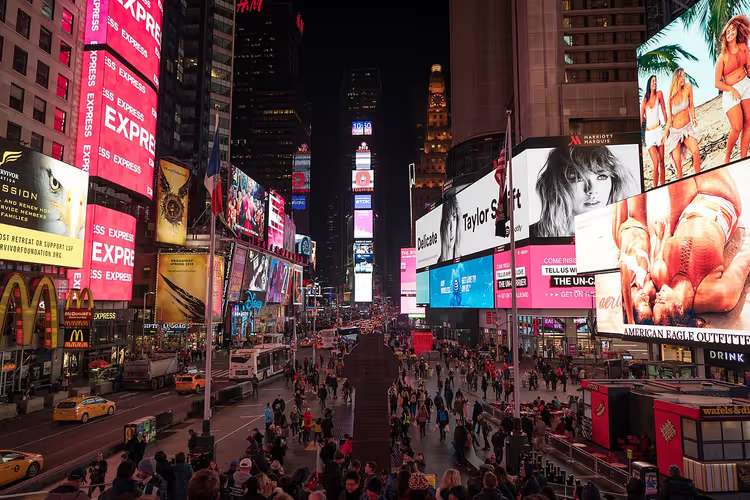 © Nan Palmero from San Antonio, TX, USA · CC BYPhoto: Nan Palmero from San Antonio, TX, USA, CC BY (https://creativecommons.org/licenses/by/2.0), Wikimedia Commons
11. Get beyond Manhattan
Manhattan has most of the landmarks, but the other boroughs are just as good and far less crowded. People often ask about safety in Harlem and the Bronx, and the answer is simple: you can walk around there, New York today is one of the safest large cities in the world. Take the free ferry to Staten Island and you will see Manhattan from the water (as of 09/2026, NYC DOT). Walk across the Brooklyn Bridge, relax in Brooklyn Bridge Park, or take the NYC Ferry to Queens and stop by Domino Park. The atmosphere there is completely different from the tourist center.
12. Take the subway and commuter rail from the airport
A taxi from JFK costs as much as half a night in a hotel, while the subway and commuter rail get you downtown for little money. From JFK, take the AirTrain to Jamaica or Howard Beach station, then continue on the subway or the LIRR. From LaGuardia, the Q70 bus to the subway is convenient, and from Newark the AirTrain and NJ Transit train go straight to Penn Station (as of 09/2026, Port Authority). The options differ in price and travel time, so choose based on your route and luggage.
Airport | Option | What to keep in mind |
|---|---|---|
JFK | AirTrain plus subway or LIRR | the AirTrain fare is paid separately |
LaGuardia | Q70 bus to the subway | travel time depends on traffic |
Newark | AirTrain plus NJ Transit | the train takes you to Penn Station |
If you do not want to deal with transfers and suitcases, compare JFK transfers.
13. Skip familiar restaurant chains
In New York, it is easy to spend dinner money on a burger from a chain you can find back home. That is the most pointless expense of the trip. Go where locals eat: food markets, small Queens diners, neighborhoods with Mexican, Korean, and Chinese food. Treat Shake Shack as a quick snack, not as the main culinary experience of the evening. The city feeds you with cuisines from around the world, and you should take advantage of that.
What else first-timers miss
Even with this list, some tourists step on the same rake. Some buy combined museum tickets and never get around to using them, others plan to go up to observation decks without a reservation and lose half a day in line.
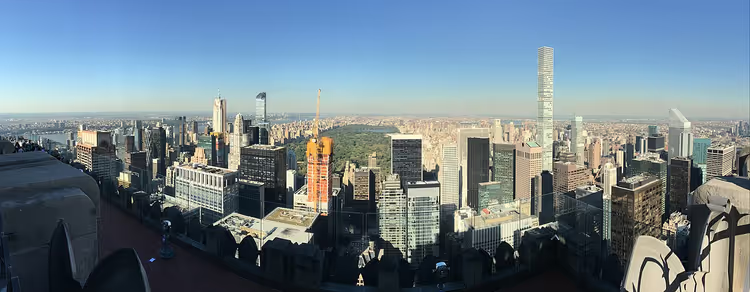 © Olivier Bruchez from Lausanne, Switzerland · CC BY-SAPhoto: Olivier Bruchez from Lausanne, Switzerland, CC BY-SA (https://creativecommons.org/licenses/by-sa/2.0), Wikimedia Commons
Book in advance only what you will definitely visit, and check opening hours before heading out: many museums have a closed day. It is a simple habit that saves both money and stress.
How to save money in New York
You can see New York without spending a lot. The Staten Island Ferry, a walk across the Brooklyn Bridge, and the city parks are free, and some museums have discounted admission hours. Theater tickets get cheaper on the day of the performance. Eat away from the tourist center and pay for transit contactlessly.
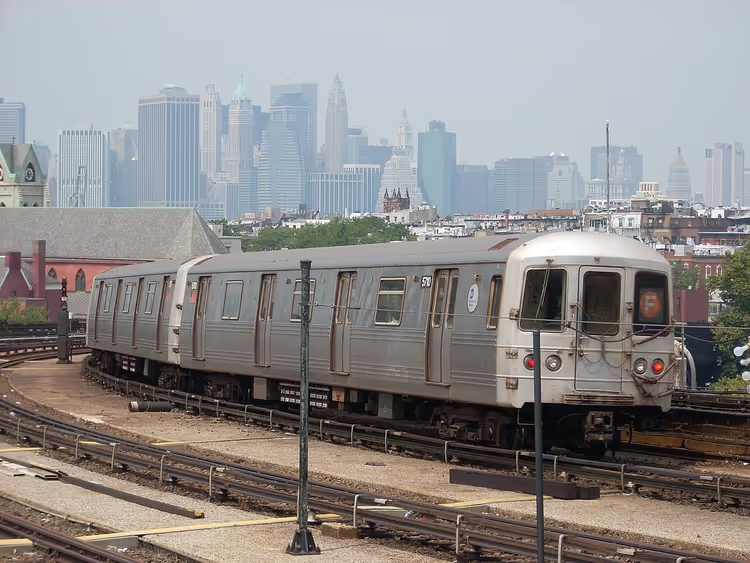 © Error46146 at English Wikipedia · CC BYPhoto: Error46146 at English Wikipedia, CC BY (https://creativecommons.org/licenses/by/3.0), Wikimedia Commons
The main savings come not from coupons, but from skipping tourist passes that end up unused. Count how many days you actually have and buy tickets for that period.
⁉️🤔 Frequently asked questions
How much does a subway ride cost and do I need a pass?
A ride with OMNY costs $3 (as of 09/2026, official MTA website), and after that an automatic weekly cap applies. Once you reach a certain number of rides, the rest are free, so you don't need to buy a separate weekly pass.
Where can I stay cheaper in New York?
Look at options outside Manhattan: in Long Island City, in Brooklyn, and in New Jersey along the PATH line. Check how long it takes to walk from the hotel to the nearest station: in the evening that matters more than the view from the window.
Is it safe to walk around Harlem and the Bronx?
Yes, you can walk there, and these are not the rough neighborhoods from the movies. If you're unsure about an area, stick to busy streets, don't wander into empty alleys at night, and use the subway the same way locals do.
How to get from JFK to Manhattan the cheapest way?
The cheapest way is the AirTrain plus the subway. From JFK, take the AirTrain to Jamaica or Howard Beach station, then continue on the subway. The LIRR train from Jamaica station also works, but it costs more than the subway. The AirTrain fare is paid separately, and the rate is listed on the airport website (as of 09/2026, Port Authority). This route costs several times less than a taxi, but with luggage it takes more time.
How much should I tip in New York?
In a restaurant, aim for a fifth of the bill; at a bar, add a dollar per drink; and give the hotel porter a bill per bag. At a takeout coffee shop, leaving some change in the jar by the register is enough.
In short: what to book
If you're visiting New York for the first time, book in advance only what you can't buy on the spot. If your dates are fixed and you want a specific musical, buy tickets ahead of time. If your itinerary is flexible, leave the show for the day you arrive and catch a discount at the TKTS booth. If the price of lodging matters, look at hotels in Queens, Brooklyn, and New Jersey: find a hotel in New York on Trip.com. Everything else in this city can be sorted out on the spot.

A small editorial team writing guides for independent travel. We travel ourselves, but we haven’t been everywhere, so we check prices, opening hours and how to get there against official sources.