
















Superstition Mountains in Arizona: gold, legends and trip planning
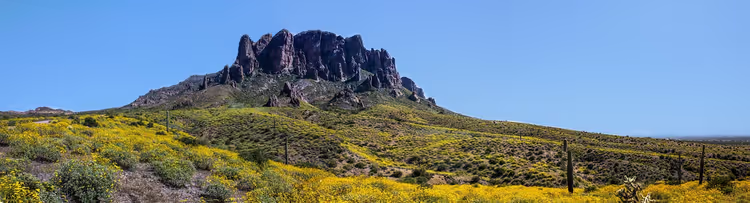
The Superstition Mountains look like a set piece from a Western. This is a mountain range in the Arizona desert east of Phoenix. For over a century, people have come here searching for gold that no one has ever found.
The road costs less than the legend. Entry to Lost Dutchman State Park is paid (Arizona State Parks), and the park is open year-round. Prices and hours are listed in the table below.
Below is verified information: where these mountains are located, what versions of the gold legend exist, and how to plan a trip through the desert.
Ad: this article contains affiliate links, we earn a commission if you book through them, at no extra cost to you.
Where the Superstition Mountains are and why they are called that
💡 In short:
- The range is about 65 km east of Phoenix (according to Deseret News).
- The nearest town with motels and car rentals: Apache Junction.
- The protected area around it covers about 160,000 acres (according to Visit Mesa).
- Prices and hours: 09/2026, verified on the park's official website.
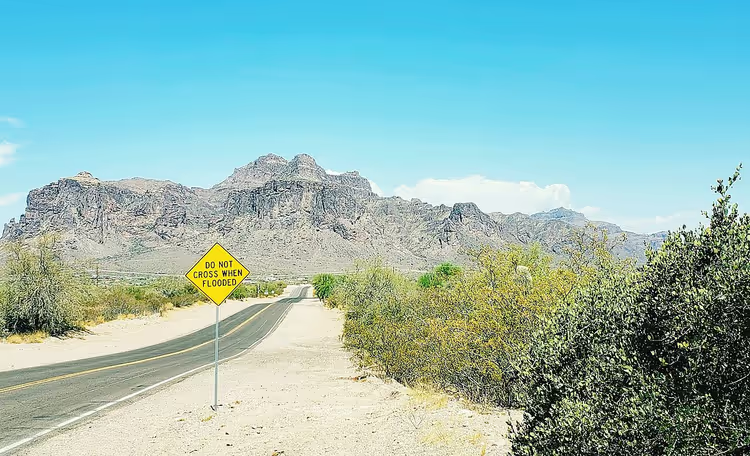
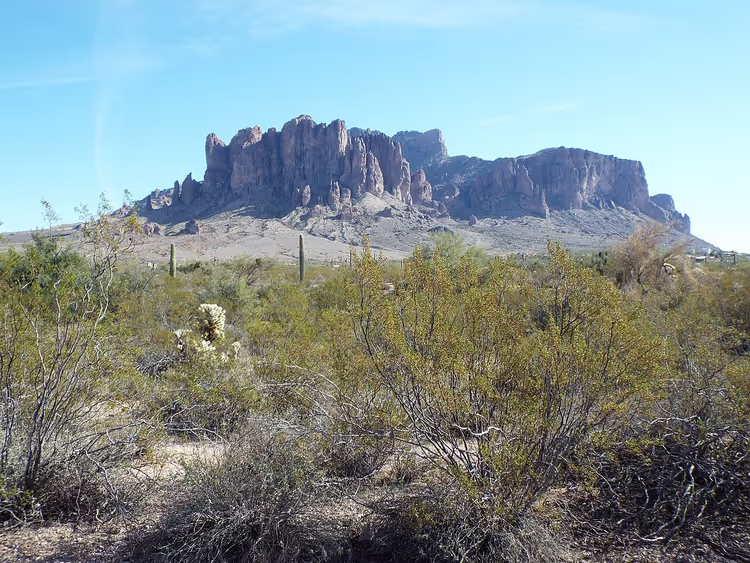
The Superstition Mountains lie in central Arizona, between Apache Junction and Gold Canyon. The range rises to about 1.9 km above sea level. In return, there are deep canyons, rock walls, and saguaro cacti standing along the trails.
The name came from fear. In the 19th century, people went missing in these mountains, and local lore gave the range a reputation as a cursed place. The English name Superstition Mountains literally means "Mountains of Superstition." It is not a poetic metaphor but a retelling of prospectors' stories.
 © Midget Skeeter · CC BY-SAPhoto: Midget Skeeter, CC BY-SA (https://creativecommons.org/licenses/by-sa/4.0), Wikimedia Commons
The legend draws tourists here, but the range itself is interesting even without it. Here you will see desert plants, rare animals, and traces of ancient settlements. For a quick introduction, one day and a car will be enough.
Legends of gold and the lost mine
The legend of the Lost Dutchman mine dates back to the 1870s. Its premise is simple. Somewhere in these mountains lies a rich gold vein that has been found several times and lost again each time.
The Spanish and Mexican trail. Tales of gold mines circulated among Spanish settlers since colonial times. The Peralta family, according to these stories, owned several workings in the mountains and knew the routes to them. No documents survive, so every version rests on words rather than paper (according to the park).
Jacob Waltz. The main character of the legend, a German named Jacob Waltz, supposedly found the mine in the 1870s with the help of a descendant of the Peralta family (according to the same source). He took the gold with him and never revealed the exact location.
 © Marine 69-71 · CC BY-SAPhoto: Marine 69-71, CC BY-SA (https://creativecommons.org/licenses/by-sa/4.0), Wikimedia Commons
A series of discoveries and disasters. People who claimed to have seen the mine rarely returned to it. According to the park, some could not find the way back, while others met with misfortune before registering a claim. These stories created the fame of the lost place.
There is no way to verify the legend. No gold find in these mountains has ever been documented in a way that could be confirmed today. For you, that means one thing: treat the story as part of local culture, not as a treasure map.
The searches after Waltz's death became a chapter of their own. Dozens of groups headed into the mountains, including women prospectors who followed clues from neighbors' stories. No expedition produced results, but each one added a new detail to the story.
Another version describes a grotto believed to be an entrance to the spirit world. The legend says the gold is guarded by Native American spirits. This cannot be verified, but such tales explain why the range got its name.
Look for gold only in the stories. The area around the range is governed by protected wilderness rules, so instead of digging you will get a fine. Bring a camera and plan your route along the trails.
What scientists and archaeologists found
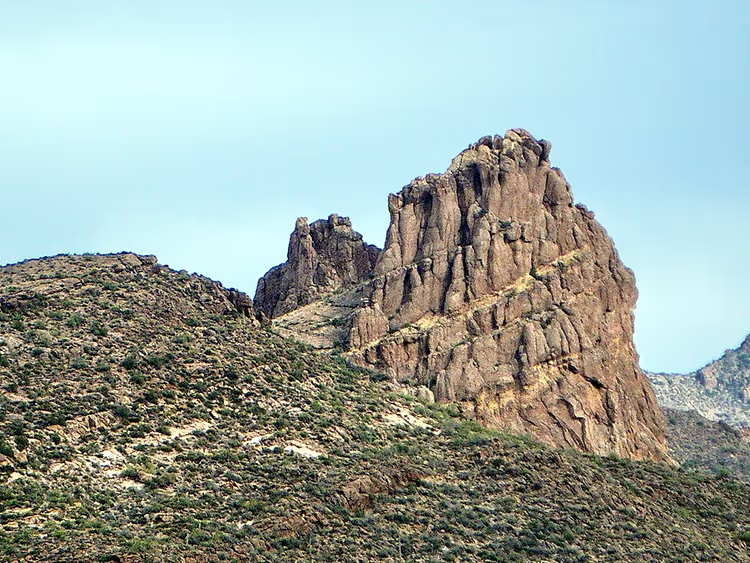
Legends do not get in the way of science. Geologists, archaeologists, and biologists have worked in the mountains for decades, and their findings are described on the park's page. The range is volcanic in origin and has been eroded by wind and water for millions of years.
People lived here long before the Spanish. The Hohokam people built an irrigation canal system that stretched for hundreds of kilometers, and parts of this network remained in use for centuries after them. Traces of settlements in these places, according to researchers' estimates, go back thousands of years.
 © Alan English CPA from Scottsdale, Arizona 85254, USA · CC BY-SAPhoto: Alan English CPA from Scottsdale, Arizona 85254, USA, CC BY-SA (https://creativecommons.org/licenses/by-sa/2.0), Wikimedia Commons
A modern mystery. That is what the story of July 2010 is called. Three men from Utah went looking for the mine and disappeared (according to Deseret News). In early 2011, their remains were found in one of the canyons. The causes of death were never definitively established, and this once again fed the old rumors.
The desert does not forgive mistakes. In summer, the Arizona heat is dangerous even for experienced hikers. That is why water and an early start are treated here as a rule, not a suggestion.
What people look for today. Instead of gold, people are drawn to petroglyphs, traces of settlements, rare cacti, and wildlife. Mountain lions, bears, and foxes live here. Observe them from a distance and never feed them.
Museum, trails, and the wilderness area today
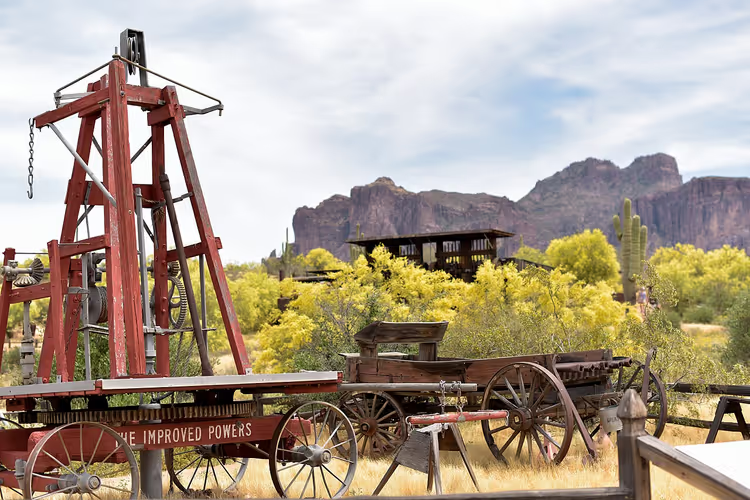
Tourist infrastructure appeared along with interest in the legend. At the foot of the range, the Superstition Mountain Lost Dutchman Museum operates. It is 15 acres of exhibits about the lives of early settlers, Native American culture, and the geology of the area (according to Visit Arizona).
The museum grounds include an old mill, ore carts, film set props, and a large model railroad. Tours and programs are run by the museum itself.
Nearby runs the Apache Trail, a scenic road along an old postal route. The section of SR 88 past Tortilla Flat has been closed since 2019 after a fire. You can drive from Apache Junction to Tortilla Flat. The range itself is officially protected as a wilderness area, so the landscape has barely changed in decades.
 © Rachelle Haun · CC BYPhoto: Rachelle Haun, CC BY (https://creativecommons.org/licenses/by/2.0), Wikimedia Commons
The trails suit both beginners and experienced hikers. Short routes take about an hour, while climbs to rocky overlooks require a full day and a supply of water. Ask for a map at the visitor center: staff will warn you about closed sections and the heat.
If you want to see the region with a guide, check out Arizona tours on GetYourGuide. This option is convenient if you arrive without a car or for just one day.
Tours and tickets
Guided tours, skip-the-line tickets and activities — most offers can be cancelled free of charge.
See offers on GetYourGuideThe widget loads once you give your consent.
How to get there and when to go
From Phoenix to the park entrance is about 65 km east (according to a Deseret News report). The road passes through the suburbs of Mesa. There is no public transportation to the trails, so take a car.
In summer, hikes are best postponed. From June through September, the desert heat becomes dangerous, and medical professionals advise starting the trail at dawn. The comfortable season runs from October through April.
Expense | As of | Source |
|---|---|---|
Entry, car with 1 person | $10 | Arizona State Parks |
Entry, car with 2-4 people | $20 | Arizona State Parks |
On foot or by bicycle | $5 | Arizona State Parks |
Trails | 6:00-20:00 | Arizona State Parks |
Visitor center and shop | 6:00-15:30 | Arizona State Parks |
All figures in the table were verified on 09/15/2026 on the Arizona State Parks website.
Practicalities. You will need a water supply for each person, closed-toe shoes, and a hat. Return to your car before the gates close. At overlooks, do not approach the edge: the rocks here crumble.
⁉️🤔 Frequently asked questions
Where are the Superstition Mountains?
The range is in central Arizona, east of Phoenix. The nearest town with hotels and car rentals: Apache Junction. Lost Dutchman Park is open year-round.
How much does entry to Lost Dutchman State Park cost?
Entry costs $10 per car with one person and $20 per car with 2-4 people (as of 09/2026, official website). Hikers and cyclists pay $5. Payment is at the entrance; camping is booked separately.
When is the best time to go to the Superstition Mountains?
Comfortable months for hiking: October through April. In summer, desert temperatures rise to dangerous levels, and trails are best tackled at dawn. In winter, days are cool but there are no crowds. Bring a layer: mornings and evenings in the mountains are noticeably colder.
Has gold been found in the Superstition Mountains?
No. The Lost Dutchman mine remains a legend: no find has ever been documented in a way that could be confirmed. The stories of Jacob Waltz and the Peralta family rest on accounts, not documents. Today the mountains are interesting for their science, trails, and museum.
What is there to see nearby?
At the foot of the range, a museum operates with 15 acres of exhibits about prospectors and Native Americans (according to the Arizona tourism office). Nearby runs the Apache Trail, drivable only as far as Tortilla Flat. Add a short trail in Lost Dutchman Park and an overlook to your trip.
In short: what to know before your trip
If you have one day: get an early start, buy a park pass, and take a short trail to an overlook. If you have two or three days: add the museum and the Apache Trail section to Tortilla Flat. If you are traveling with children: choose morning hours and routes without rock scrambling.
The main rule of the desert is simple. Water, an early start, and closed-toe shoes matter more than any legend. You will not find gold, but you will see a range that looks like it was painted for a movie.
If you want a guide to plan the route and stops, check out tour options on GetYourGuide.

A small editorial team writing guides for independent travel. We travel ourselves, but we haven’t been everywhere, so we check prices, opening hours and how to get there against official sources.