
















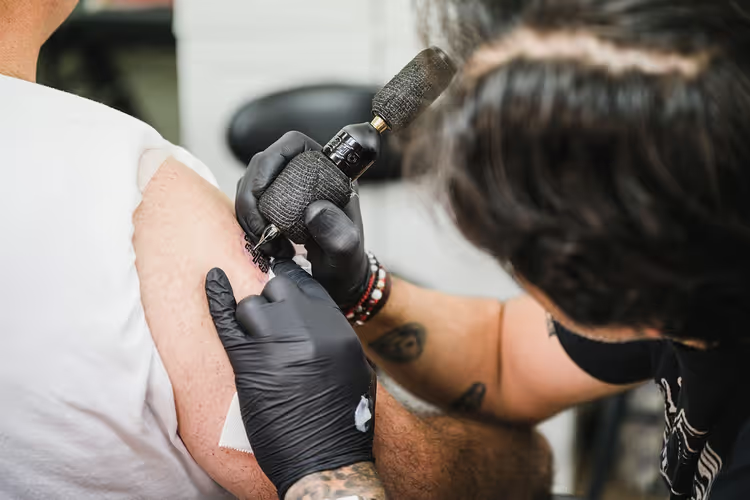
Sak Yant: meaning of the sacred tattoo and how to find a master in Thailand
Sak Yant is a sacred tattoo that is applied by hand, without a machine, in Thailand. The design is believed to protect its wearer and change their fate.
Want a tattoo like this? Then you need to understand three things: what the chosen symbol means, who has the right to apply it, and what rules you will have to follow afterward. Below we cover the history of the tradition, the application technique, colors, myths, and real prices charged by masters.
The main temple of the tradition, Wat Bang Phra, stands about 50 km west of Bangkok (as of 09/2026, Wat Bang Phra). Interest in the design grew after Angelina Jolie got her tattoo in Bangkok in 2003 (according to Hua Hin Today).
Ad: this article contains affiliate links. We earn a commission if you book through them, at no extra cost to you.
What the word "Sak Yant" means
💡 In short:
- Sak Yant is applied by hand, with a bamboo or steel rod, without a machine.
- It is done by monks in temples and by private masters called ajarns.
- Each design is chosen individually, and a mantra is recited over it.
The word "Sak Yant" consists of two parts. "Sak" translates as "tapping" or "tattooing," and "Yant" comes from the word "yantra," meaning a sacred diagram. Together they name a design built on a strict geometric scheme and read as a prayer, not as decoration.
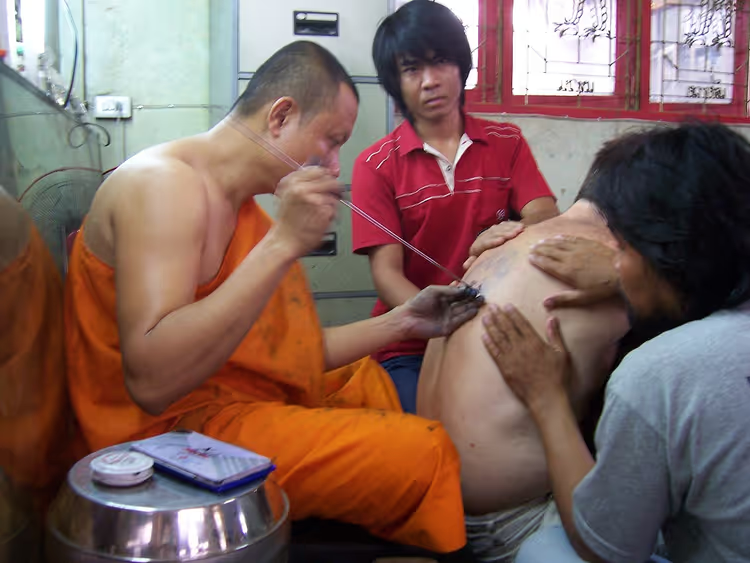
The rules depend on who holds the rod. Monks are forbidden to apply Sak Yant to women (according to ThaiBK). Private masters who are not monks can apply the design to a woman.
The prayers the master recites during the work are called Khata in Thai. They are also referred to as mantras. The tradition is more than two thousand years old: Yants were applied in Asia long before the design became popular with tourists. Masters pass the secrets of the design and the incantation only to their own students (according to the Sak Yant reference guide).
History of the tattoo in Asia
In Asia, Sak Yant has been done by warriors since ancient times. They believed the design would protect them from fatal wounds and help them survive in battle.
The design was consecrated by a shaman, who was also the master. He imbued the design with power that, according to belief, saved the wearer's life. Today Thais treat the application ritual as seriously as they did centuries ago.
The ritual is considered a serious responsibility for both sides: for the one who applies it and for the one who becomes the wearer. That is why masters do not treat the work as a formality and do not rush through it.
The meaning of Sak Yant
Sacred designs can be seen on the bodies of many Thais. They are convinced that the tattoo helps with illness and misfortune, and also protects against enemies.
Tourists started paying attention to Sak Yant long before the era of social media. The design is believed to bring luck and prosperity to its wearer. But if the tradition is disrespected, it can also bring misfortune.
Before the procedure, discuss the intended meaning of the tattoo with the master. Tell them about your plans, aspirations, and important details of your life. The ajarn needs to understand which design will suit you specifically.
The individual approach here is not a formality but part of the tradition. Try to be open with the master and do not hide small details. It is believed that a detail hidden from the ajarn will turn the power of the design against the wearer.
How Sak Yant is applied
The technique has barely changed over the centuries. The tattoo is applied with a bamboo or steel rod, not a machine.
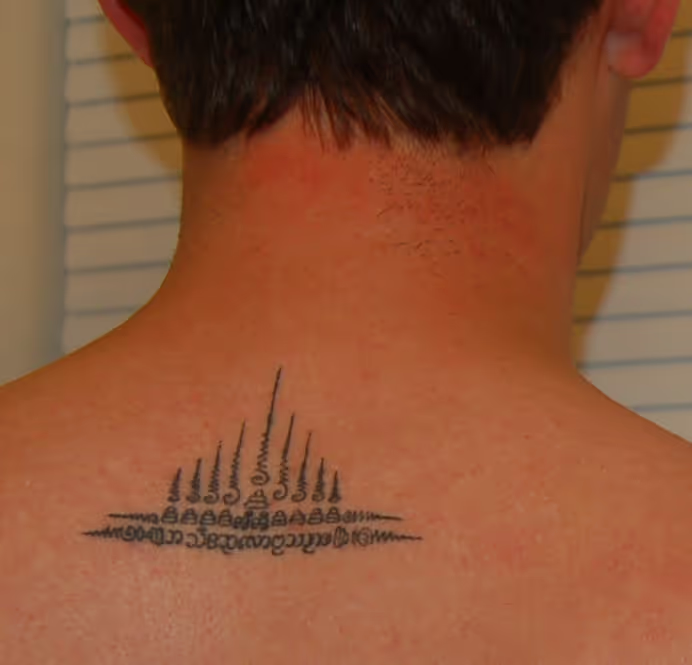 © Mikhailovich · CC BYPhoto: Mikhailovich, CC BY (https://creativecommons.org/licenses/by/3.0), Wikimedia Commons
Masters' tools are reusable, and this is a deliberate part of the ritual. Each rod is consecrated with Sanskrit prayers before its first use, just like the Sak Yant itself. Only alcohol is used for disinfection; other treatment methods are not accepted here. A reusable needle carries a risk of infection. So ask the master in advance to use a new needle for you.
Be prepared for the procedure to take varying amounts of time. A standard design takes the master about fifteen minutes, while complex work across several areas can stretch for hours, depending on the design (according to the official temple resource).
Precepts you must follow
At the end of the ritual, the master asks the wearer to observe the basic precepts of Buddhism. There are five: do not kill, do not steal, do not lie, do not commit adultery, and do not consume alcohol (according to the ThaiBK tradition overview).
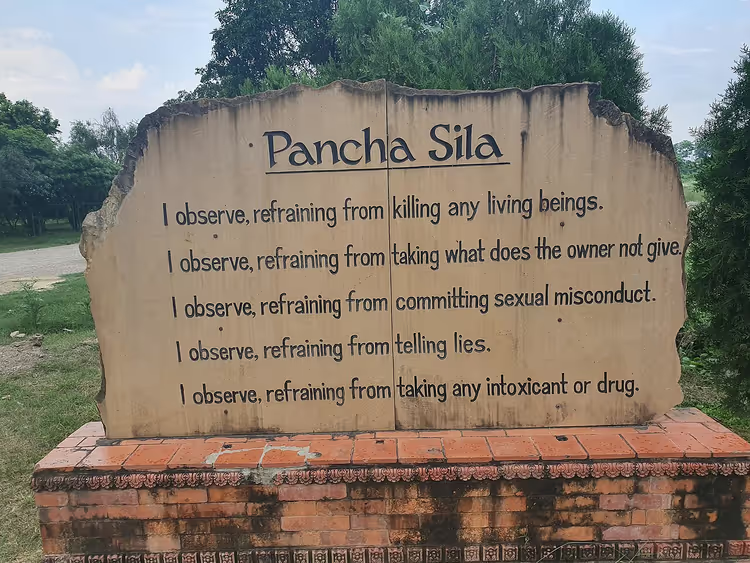 © Youb Raj Basnet · CC BY-SAPhoto: Youb Raj Basnet, CC BY-SA (https://creativecommons.org/licenses/by-sa/4.0), Wikimedia Commons
If the precepts are not observed, the magical power of the design disappears. Sometimes the master adds a personal condition, such as not wearing clothes of a certain color. Such requests are rare, but they are taken seriously.
Do not treat the list as a formality. For a practicing Thai, it is part of everyday life, not an item from a tourist brochure.
Myths about Sak Yant
Along with the popularity of Sak Yant came rumors. In Europe, stories long circulated that monks mix the ashes of the dead and blood into the ink.
In reality, such stories are unconfirmed. Masters have not confirmed them in conversations with journalists. The power of the design, according to tradition, lies in the design itself and in the inscriptions applied during the work.
The inscriptions are chosen individually for each person. During the process, the master recites a mantra that is not repeated for another person. That is why two outwardly identical tattoos can mean different things and work differently for their wearers.
What colors Sak Yant comes in
Sak Yant is done in three versions: black, red, and transparent.
Color | Who it's for | Visibility |
|---|---|---|
Black | the main choice for most people | visible to everyone |
Red | less common, by the wearer's choice | noticeable |
Transparent | women, children, government employees | almost invisible |
Black is chosen by the majority, red is noticeably less common. Transparent Sak Yant is applied with oil to children, government employees, and women. It cannot be seen, but its power is preserved.
The invisible version is believed to be equal in power to the black and red versions.
Where to find a Sak Yant master
A master who does Sak Yant is called an ajarn. In Thailand you can find one in a temple or in a private studio, but both paths take time.
 © กสิณธร ราชโอรส · CC BY-SAPhoto: กสิณธร ราชโอรส, CC BY-SA (https://creativecommons.org/licenses/by-sa/4.0), Wikimedia Commons
The most famous temple of the tradition, Wat Bang Phra, stands in Nakhon Pathom province west of Bangkok. People come there from all over the country, and a queue for a tattoo is not uncommon. If you plan to stay in the capital, our 2-day Bangkok guide will be useful.
Not far from Bangkok, in the city of Ayutthaya, lives Ajarn Kob. You can reach him in different ways. Some people hire a guide-interpreter who will drive them to the place. If you do not want to pay for transport, go yourself: from the famous Wat Maha That landmark, taxi drivers know where the master lives.
The ajarn may be busy, and this is worth considering in advance. Many people want a Sak Yant from a famous master, so you will have to wait your turn. Sometimes people sleep in a tent next to the master's house to wait for their time.
The house with turquoise walls, Ajarn Kob's work area. It is better to confirm the price in advance, before the trip.
Format | Who applies it | Queue | Booking |
|---|---|---|---|
Temple, e.g. Wat Bang Phra | monks | walk-in, no reservation | not needed |
Private ajarn master | layperson with initiation | depends on workload | by arrangement |
The price at private masters depends on the city and the complexity of the design.
City | Design by a private master |
|---|---|
Chiang Mai | from 2,000 baht (as of 09/2026, Sak Yant Chiang Mai) |
Bangkok | from 2,500 baht (as of 09/2026, Sak Yant Bangkok) |
Phuket, Krabi | noticeably more expensive due to demand |
Full-body work is priced in the tens of thousands of baht, but most visitors are satisfied with a single design. The ajarn's room usually has albums with ready-made design options and prices. The master may suggest their own version, which they consider more appropriate for you.
If the ajarn refuses to apply the design you like, do not insist. It is better to listen and choose what they consider suitable. To communicate with the master, you need Thai, an electronic translator, or the services of a guide-interpreter.
The main rule is this: Sak Yant is not a fashion statement. Thais treat the tradition with special reverence, so answer for yourself in advance why you want this design.
⁉️🤔 Frequently asked questions
Can a foreigner get a Sak Yant in Thailand?
Yes, foreigners get Sak Yant both in temples and from private masters. The most famous temple, Wat Bang Phra, welcomes visitors from all over the world. In a private studio it is easier to book in advance and discuss the design calmly. Tell the master right away that you do not speak Thai, and they will find a way to communicate.
Is getting a Sak Yant painful?
The procedure is usually tolerated calmly. The master works quickly with the rod, and the sensation is comparable to a series of short pricks. Large designs and work on the back are felt most strongly. If pain is a concern for you, choose a small design and discuss the session length with the ajarn in advance.
How much does a Sak Yant cost in Thailand?
The price depends on the city, the master, and the complexity of the design. At private masters in Chiang Mai, a design starts from 2,000 baht, in Bangkok from 2,500 baht (as of 09/2026, Sak Yant Bangkok price catalog). Full-body work is priced in the tens of thousands of baht. In a temple, the amount is usually left as a donation.
Can a woman get a Sak Yant?
Yes, but not from a monk. Monks are forbidden to apply Sak Yant to women, so women go to a lay master for the design. Women are often offered the transparent oil version: it is invisible, but its power is preserved by tradition. Discuss this option in advance so the master can prepare the right mixture.
Can you choose the design yourself?
You can show the master a design you like, but the final word belongs to the ajarn. Their albums contain ready-made options with prices. If they refuse to apply the chosen design, do not insist: the master selects the symbol for the person. An imposed design is believed to bring no benefit to the wearer.
In short: what to book
If you want a classic black design, start with Wat Bang Phra temple: the tradition is on full display there, and the queue itself sets the atmosphere. If quiet and a calm discussion of the design matter more, choose a private ajarn by appointment.
If you want to stay within budget, plan a trip to Chiang Mai: prices there are lower than in the capital. If you are willing to wait for a famous master, set aside a whole day for the visit.
Whatever you choose, first decide why you want the design and whether you are ready to follow the precepts. That is the main condition of the tradition.
If you are already planning a trip, compare flights to Bangkok on Kiwi.com.

A small editorial team writing guides for independent travel. We travel ourselves, but we haven’t been everywhere, so we check prices, opening hours and how to get there against official sources.