
















Why Thais welcome the year 2569: 10 details about Thailand
In Thailand right now it is the year 2569, not 2026. The Buddhist era runs 543 years ahead of our calendar, and the country officially counts years by it (Buddhist era calendar, as of 09/2026). The difference is visible everywhere: on tickets, banknotes, and signs at temple entrances.
Beyond that, there are details a tourist only notices on the ground. We collected ten facts about the country and checked each one against official statistics and open sources: how many temples there are, who is on the throne today, and why skyscrapers do get built in Bangkok after all.
1. It is the year 2569 in Thailand
💡 In short:
- Buddhist era: 2026 runs here as 2569, a difference of 543 years (date conversion, as of 09/2026)
- Since 1941 the year begins on January 1, but the traditional New Year is celebrated here in April.
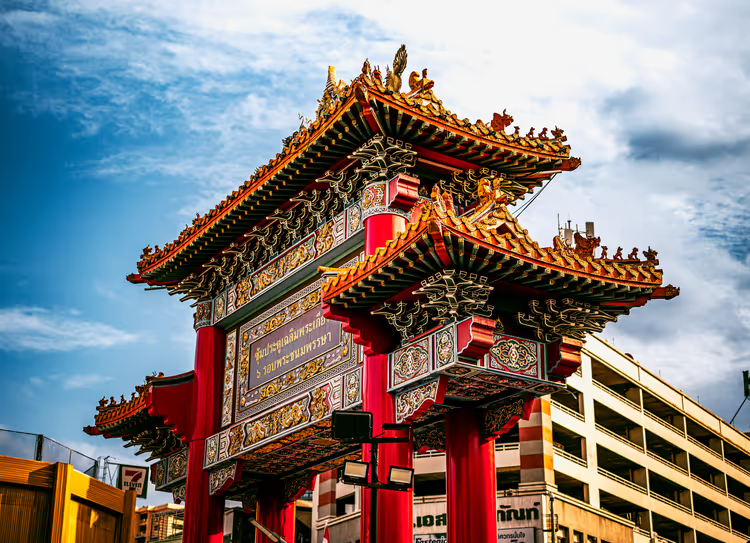
The Buddhist era (BE) is counted from the death of the Buddha and runs exactly 543 years ahead of our calendar (Thai solar calendar, as of 09/2026). Since 1941 the year here begins on January 1; before that it began on April 1. A bank receipt, local documents, and a sign at a temple all show 2569. For planning purposes this means one thing: January 1 is an official holiday here, but the traditional New Year is celebrated in April.
 © Preecha.MJ · CC BY-SAPhoto: Preecha.MJ, CC BY-SA (https://creativecommons.org/licenses/by-sa/4.0), Wikimedia Commons
2. "Land of the free": its own name and its own script
Thailand, known as Siam until 1939, became the only country in Southeast Asia that no European power managed to colonize (history of the country, as of 09/2026). The word Thailand means "land of the free," and the name was changed three times: to Thailand in 1939, back to Siam in 1945, and finally returned to the current version in 1949. Along with independence, the country preserved its own script: the Thai alphabet has 44 consonants, and the same syllable is pronounced with five tones, with the tone changing the meaning of the word (Thai script, as of 09/2026). You will not find colonial quarters here, as you do in neighboring countries: the built environment and the laws developed independently.
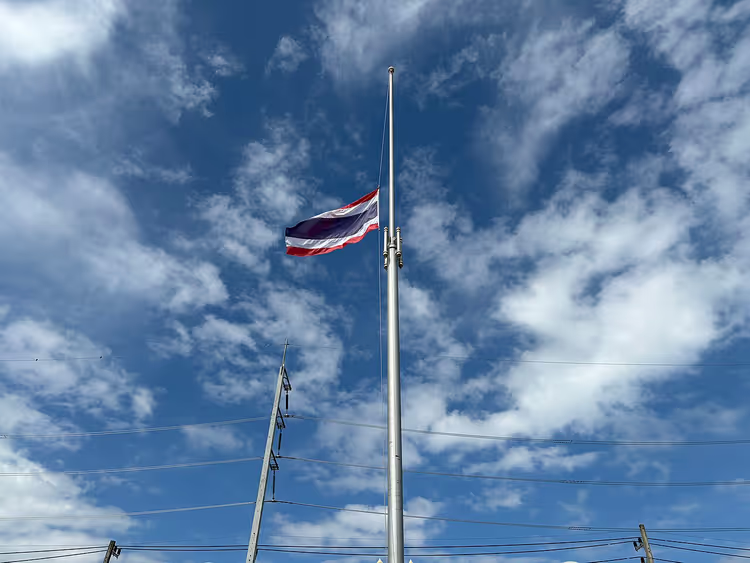 © Chainwit. · CC BYPhoto: Chainwit., CC BY (https://creativecommons.org/licenses/by/4.0), Wikimedia Commons
3. Temples and monks: 44,035 and 245,645
Official statistics for 2024 show 44,035 active Buddhist temples and 245,645 monks, plus 31,873 novices (temple and monk statistics, verified 09/15/2026 on the official statistics office website). A year earlier there were 256,984 monks, meaning the community shrank by almost 11,000 people in one year. Nearly every village has a wat, and each one enforces a dress code: shoulders and knees covered, shoes left at the entrance. Most temples are free to enter, but the main tourist sites charge admission, and you will see morning alms bowl processions even in central Bangkok if you leave your hotel before seven in the morning.
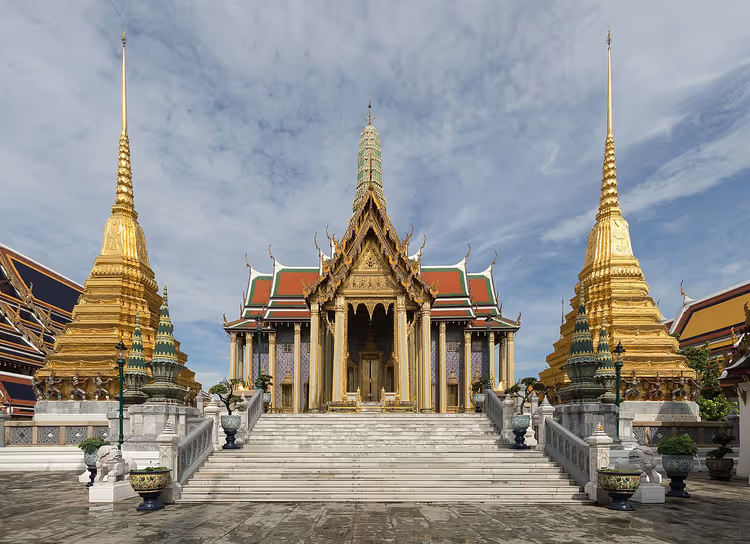 © Basile Morin · CC BY-SAPhoto: Basile Morin, CC BY-SA (https://creativecommons.org/licenses/by-sa/4.0), Wikimedia Commons
4. Rama IX: more than 70 years on the throne
Bhumibol Adulyadej, Rama IX, ruled from 1946 to 2016 and died on October 13, 2016 (King Bhumibol Adulyadej, as of 09/2026). He was born in Cambridge, Massachusetts, and spoke fluent English, which was rare for a monarch of that era. Bridges, hospitals, and parks across the country are named in his honor: you will encounter this name constantly.
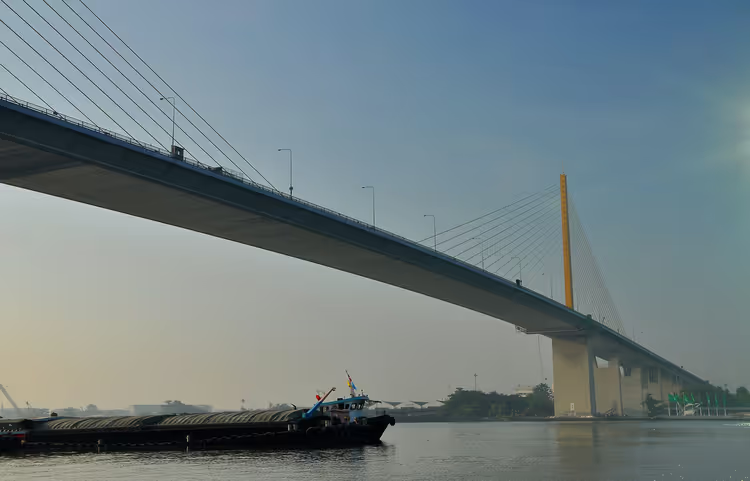 © Chalit Manipalviratn from Bangkok, Thailand · CC BY-SAPhoto: Chalit Manipalviratn from Bangkok, Thailand, CC BY-SA (https://creativecommons.org/licenses/by-sa/2.0), Wikimedia Commons
5. Rama X and royal assets
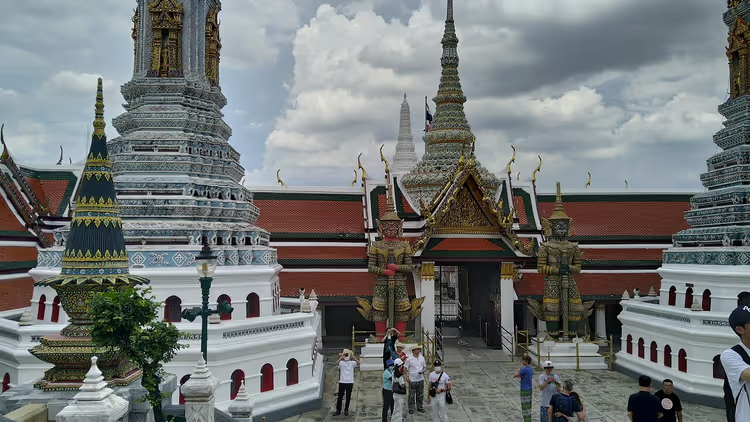
Since 2016, the throne has been held by Maha Vajiralongkorn, Rama X, the tenth king of the Chakri dynasty (King Rama X, as of 09/2026). Royal property is managed by the Crown Property Bureau, and this entity holds major stakes in Siam Commercial Bank and Siam Cement (royal property). Estimates of the family's wealth vary by tens of billions of dollars across different publications, so no one gives an exact figure. For you, this matters in one way: royal projects are visible around the city, and you will see portraits of the monarch in nearly every public place.
 © Jonashtand · CC BY-SAPhoto: Jonashtand, CC BY-SA (https://creativecommons.org/licenses/by-sa/4.0), Wikimedia Commons
6. Songkran: New year in April
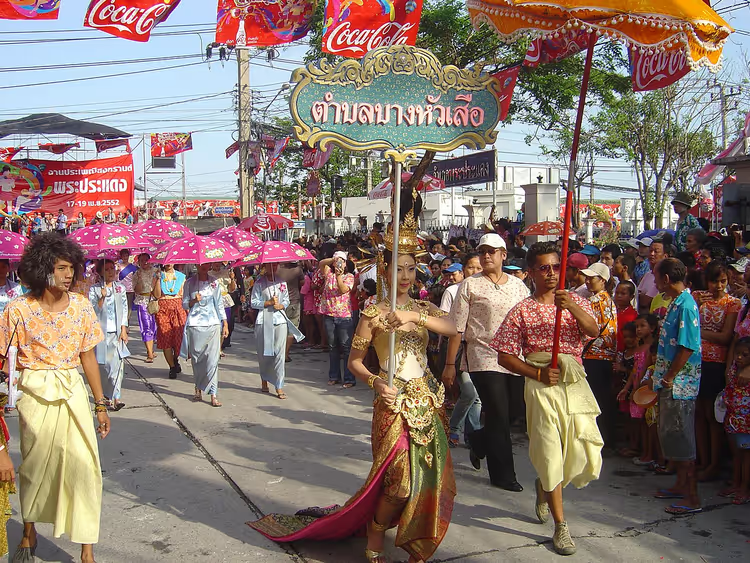
The traditional New Year Songkran falls on April 13-15 and is considered an official holiday (Thai New Year, as of 09/2026). On these days, streets turn into water fight zones, and Buddha statues are washed in temples. If you are planning a trip for these dates, book accommodation and intercity tickets in advance: transport is packed, and there are almost no vacant rooms left in resort towns.
 © Htawmonzel · CC BY-SAPhoto: Htawmonzel, CC BY-SA (https://creativecommons.org/licenses/by-sa/4.0), Wikimedia Commons
7. Medical tourism and plastic surgery
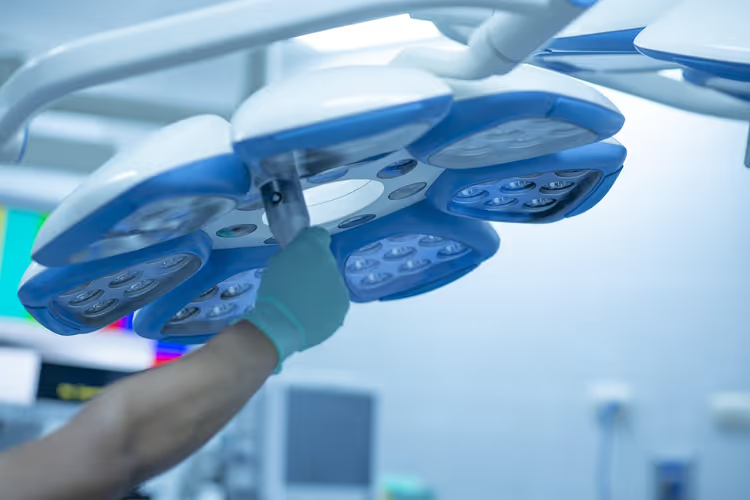
Thailand has long been one of the world's medical tourism hubs, and Bangkok clinics receive patients from Europe and Australia (medical tourism, as of 09/2026). A separate field, known far beyond the country, is gender reassignment surgery: transgender people are treated more calmly here than in most countries of the region (healthcare in Thailand). Tourists most often encounter this topic as part of everyday city life. If you are choosing a clinic, look at accreditation and reviews, not at hotel advertising.
8. Ancient City: Thailand in miniature
In Samut Prakan province, about 30 km south of Bangkok, you will find Muang Boran, also known as Ancient City (official park website). The park, covering more than 80 hectares, follows the outline of Thailand, and inside it contains copies and reconstructions of temples, palaces, and markets from across the country (Ancient City, as of 09/2026). You cannot cover this route on foot: rent a bicycle or an electric cart at the entrance. Arrive at opening time, because by midday the heat becomes oppressive.
 © Don Ramey Logan · CC BYPhoto: Don Ramey Logan, CC BY (https://creativecommons.org/licenses/by/4.0), Wikimedia Commons
9. Suvarnabhumi Airport built on a swamp
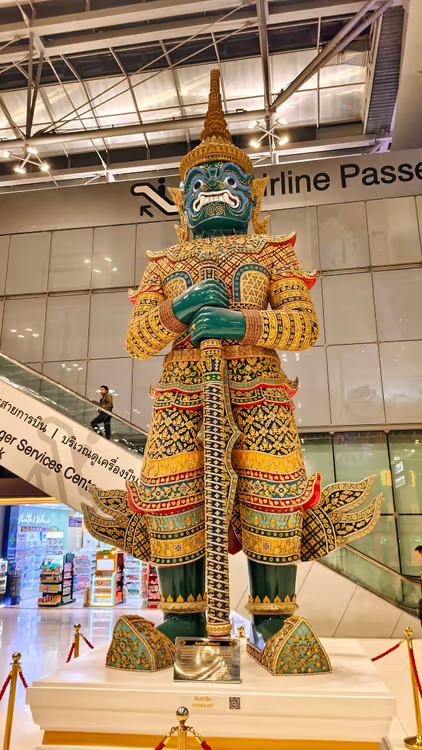
The country's main airport was built on the site of Nong Ngu Hao swamp, which locals called "Snake Swamp" (airport history, as of 09/2026). It opened in 2006: the terminal covers 563,000 m², and the control tower, at 132.2 m, was the tallest in the world until 2014. Almost every flight you take into the country passes through this terminal. Allow extra time: passport control and moving between zones take longer than the map suggests.
 © Suyash.dwivedi · CC BY-SAPhoto: Suyash.dwivedi, CC BY-SA (https://creativecommons.org/licenses/by-sa/3.0), Wikimedia Commons
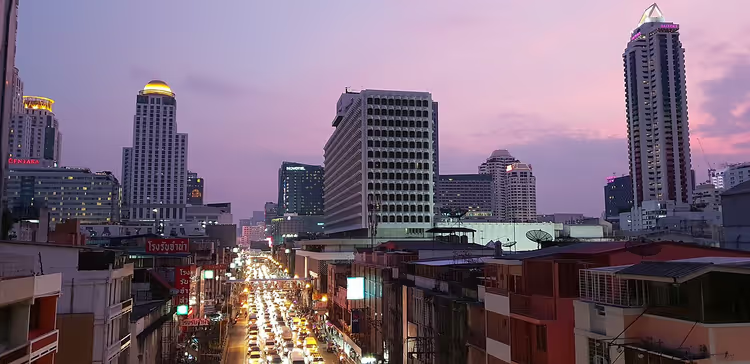
10. Bangkok: the longest city name
The full ceremonial name of the capital consists of dozens of words and is listed in the Guinness World Records as the longest city name in the world (Bangkok, as of 09/2026). Thais themselves say it short: Krung Thep. In bookings and on departure boards you will see three variants at once: Bangkok, Krung Thep, and the airport code BKK. Bangkok has two airports, BKK and DMK (Don Mueang). When buying a ticket, check which one you are flying into.
 © srihariyv · CC BY-SAPhoto: srihariyv, CC BY-SA (https://creativecommons.org/licenses/by-sa/4.0), Wikimedia Commons
⁉️🤔 Frequently asked questions
What year is it in Thailand now?
The calendar shows 2569 (Buddhist era and Gregorian year, as of 09/2026). Local documents and banknotes in 2026 are dated 2569, while the Western year appears mostly in tourist brochures. For hotel and ticket bookings the difference doesn't matter: systems run on the international standard.
How many Buddhist temples are there in Thailand?
According to official statistics for 2024, the country has 44,035 active temples and 245,645 monks (temple and monk data, as of 09/2026). Most wats are open to visitors free of charge, but the dress code applies everywhere. Come in the morning: before the midday heat you can comfortably visit two or three temples.
When is Thai New Year?
Songkran is celebrated on April 13-15, and those are official public holidays (Songkran dates, as of 09/2026).
Who is the king of Thailand now?
Since 2016 the country has been ruled by Maha Vajiralongkorn, Rama X (change of monarch in 2016, as of 09/2026). You will see portraits of the royal family in banks, cinemas, and on the streets: treat these images with the same respect as temples.
Is it true that buildings in Thailand can't be taller than palm trees?
No. The country has skyscrapers: King Power Mahanakhon in Bangkok rises to 314 m (King Power Mahanakhon, as of 09/2026). The tallest building in the country is now Magnolias Waterfront Residences, around 318 m. Height restrictions apply selectively, in historic districts near temples. The palm tree myth lives on in old guidebooks and tourist retellings.
Do you need covered clothing in temples?
Yes, and this is the main practical rule. Shoulders and knees must be covered, you leave your shoes at the entrance, and you take off your hat inside. In tourist areas, wraps are sold and handed out at the entrance, but it's more reliable to bring a light long-sleeved shirt. Women should not touch monks.
In short: what's worth booking
If you're visiting for the first time and want to see the whole country, set aside two days for Bangkok and one more for Ancient City: they're close, and the park showcases all the regions at once. If festivals and living culture matter more to you, plan your trip around Songkran in April. If you're traveling with children, add the evening markets: the heat subsides and food costs less. Make it a rule to check dates, prices, and opening hours against primary sources before your trip: we update temple, airport, and royal calendar data every season.

A small editorial team writing guides for independent travel. We travel ourselves, but we haven’t been everywhere, so we check prices, opening hours and how to get there against official sources.