
















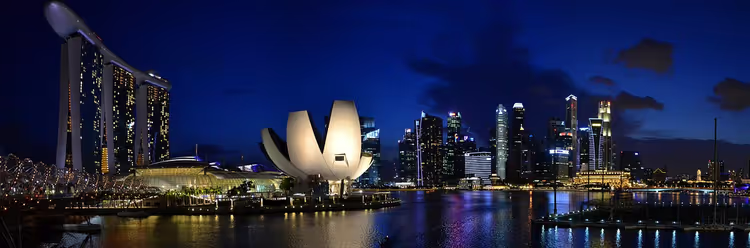
Singapore: 7 places worth seeing
Singapore is genuinely doable in three days. The city is compact, and you can reach the main sights by metro in 15-25 minutes.
Below are seven places worth putting on your itinerary. These include the Gardens by the Bay, the Skypark on top of Marina Bay Sands, the observation wheel, hawker centers with street food, the rainbow houses of Katong, Little India, and Sentosa Island. For each spot you'll find tickets, hours, directions, and an honest catch.
Ad: this article contains affiliate links, we earn a commission if you book through them, at no extra cost to you.
What to see in Singapore: a quick plan
💡 In short:
- Plan for three days: that's enough for the center, the waterfront, and Sentosa.
- Get around on the MRT; a car in the center just gets in the way.
- Book conservatories and observation decks with a time slot in advance, especially on weekends.
- Prices and hours: as of 09/2026, verified on the official Gardens by the Bay website.
Singapore grew from a trading port into one of the densest cities in Asia, and there's been no open land here for a long time. The state puts roads underground, greens rooftops, and builds new districts on reclaimed land. For travelers, that's convenient: the main sights are clustered together, so you spend your time on them rather than on getting between neighborhoods.
Start your day early. By midday the heat intensifies, and the conservatories or observation decks become the best refuge. Leave the evening for the Marina Bay waterfront and the light show at the supertrees.
Place | What to see | How much time | Tickets |
|---|---|---|---|
Gardens by the Bay | conservatories and supertrees | half a day | |
Marina Bay Sands | observation deck, casino, shops | two to three hours | prices at the hotel |
Singapore Flyer | observation wheel and Time Capsule | about an hour | |
Hawker centers | street food and local classics | an hour to an hour and a half | free |
Katong | shophouses and Peranakan cuisine | two to three hours | free |
Little India | Serangoon Road and the temple | two hours | free |
Sentosa | beaches and amusement park | a full day |
1. Gardens by the Bay
 © Shiny Things . · CC BYPhoto: Shiny Things ., CC BY (https://creativecommons.org/licenses/by/2.0), Wikimedia Commons
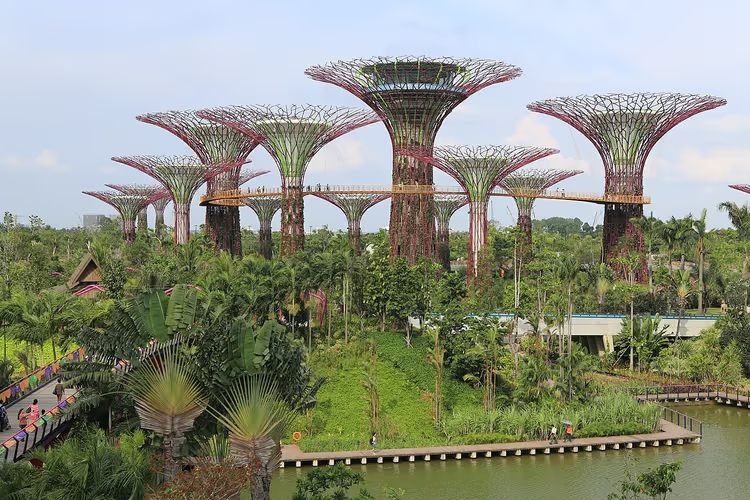
Gardens by the Bay was laid out on reclaimed land between the dam and the Marina Bay skyscrapers. The new urban district was announced in 2005, and since then the garden has become the country's main green space (as of 09/2026, park page and opening hours).
Walking through the park and around the Supertrees is free. Entry to the conservatories is paid, and you should buy tickets in advance: weekend slots sell out quickly (as of 09/2026, tickets and opening hours).
Supertrees: a forest on steel supports
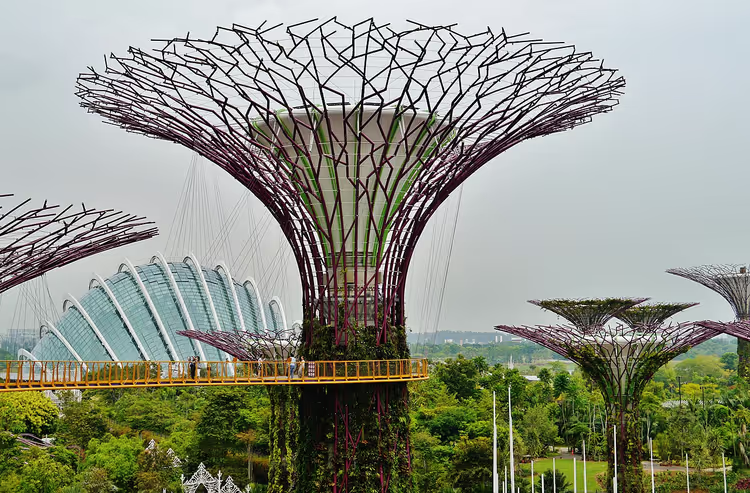
The Supertrees rise to 50 meters, and their frames support more than 700 species of orchids, ferns, and bromeliads (as of 09/2026, Supertrees page). The plants grow without soil: rainwater and supports are enough for them. Eighteen towers collect moisture, provide shade, and work as solar panels.
 © Zairon · CC BY-SAPhoto: Zairon, CC BY-SA (https://creativecommons.org/licenses/by-sa/4.0), Wikimedia Commons
In the evening, music and lighting are switched on, so the trees draw crowds. The show is easy to watch from the ground, and you can get up to the canopies via the Skywalk or from the Supertree Observatory viewing deck. Check the lighting times on the official website page.
Cloud Forest: a waterfall under a glass mountain
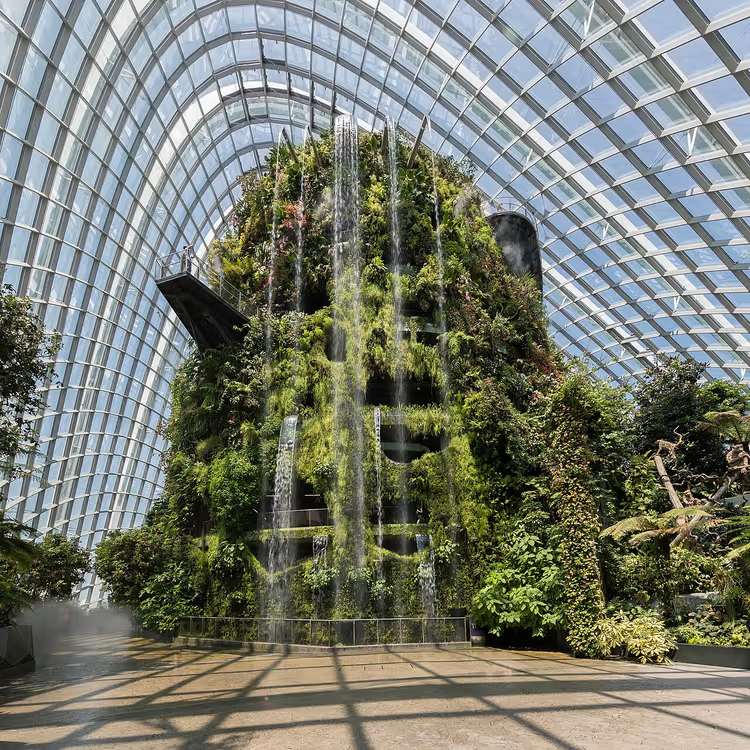
In Cloud Forest, you're greeted by a mountain with a 35-meter waterfall (as of 09/2026, Cloud Forest page). The Skywalk trail spirals around the greenery, and the humid mist is refreshing after the outdoor heat. Mini orchids and stalactites are arranged here in separate gardens.
 © Basile Morin · CC BY-SAPhoto: Basile Morin, CC BY-SA (https://creativecommons.org/licenses/by-sa/4.0), Wikimedia Commons
Flower Dome: a glass garden under a dome
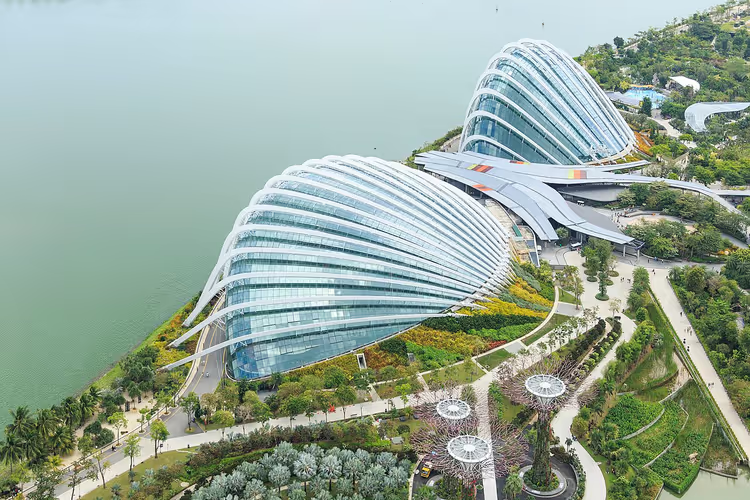
Flower Dome maintains a mild and dry climate, so baobabs, cacti, and olive trees grow under the dome. The field in the center of the conservatory is changed every season and themed around a different country.
 © CEphoto, Uwe Aranas · CC BY-SAPhoto: CEphoto, Uwe Aranas, CC BY-SA (https://creativecommons.org/licenses/by-sa/3.0), Wikimedia Commons
Floral Fantasy: flowers on the ceiling and walls
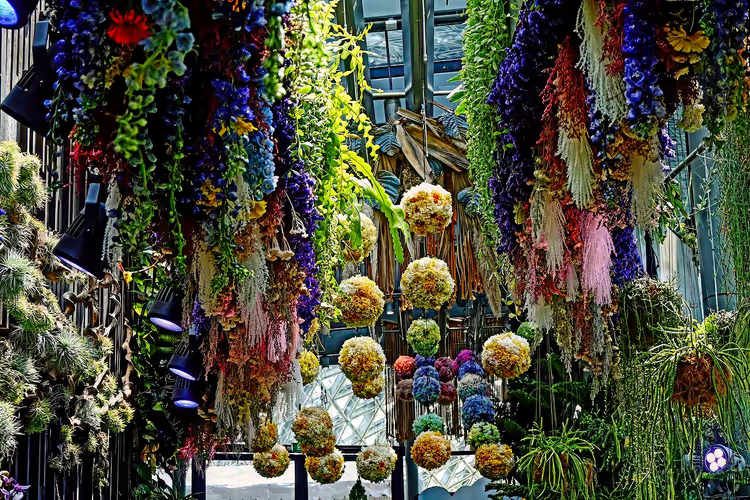
Floral Fantasy is divided into four worlds, with flowers decorating the ceiling, walls, and floor. Some of the displays move to music, so linger here for a couple of loops.
- Tickets: entry to the conservatories is paid, the park and supertrees are free (as of 09/2026, tickets and hours).
- Getting there: the nearest MRT station is Bayfront, from there you follow the signs to the entrance.
- Who it's for / Not for: for those who love plants and cool air; if you only want city panoramas, a free walk through the park is enough.
- The catch: during the day there is almost no shade on the open paths, so plan the conservatories for the hottest hours.
2. Marina Bay Sands: Skypark over the bay
 © Tony Hisgett from Birmingham, UK · CC BYPhoto: Tony Hisgett from Birmingham, UK, CC BY (https://creativecommons.org/licenses/by/2.0), Wikimedia Commons
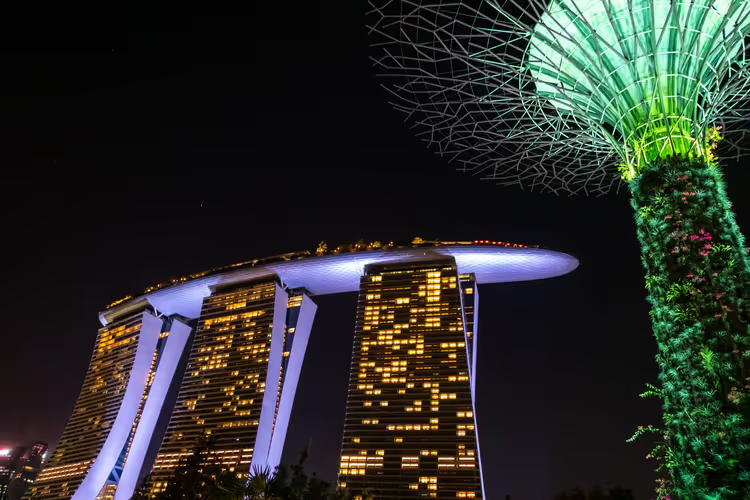
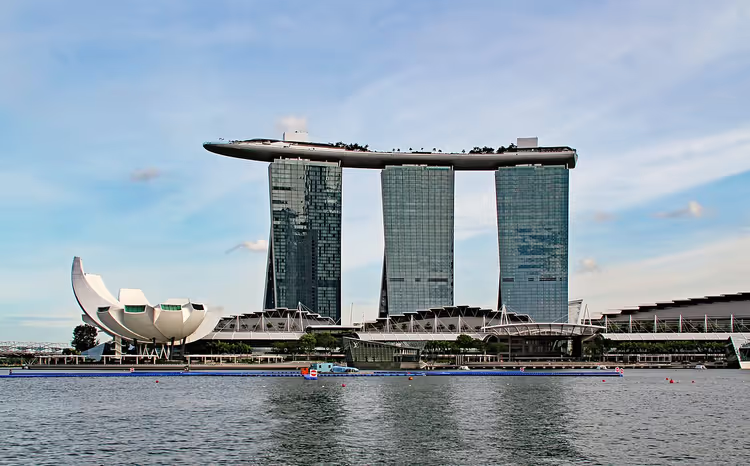
Marina Bay Sands consists of three hotel towers connected by a ship-shaped platform. Israeli architect Moshe Safdie based this form on a deck of cards. Inside there is a casino, a shopping mall, and restaurants, and on top is the Skypark.
The observation deck on the top floor of the tower is open to everyone and offers the best view of the bay. If you want to compare room rates, check out options at Marina Bay Sands on Trip.com.
- Location: on the shore of Marina Bay, next to Bayfront MRT station and Gardens by the Bay.
- Who it's for / Not for: for those who want a panorama and a casino; the hotel is not suitable for a budget trip.
- The catch: the rooftop pool is only open to hotel guests.
3. Singapore Flyer: half an hour above the city
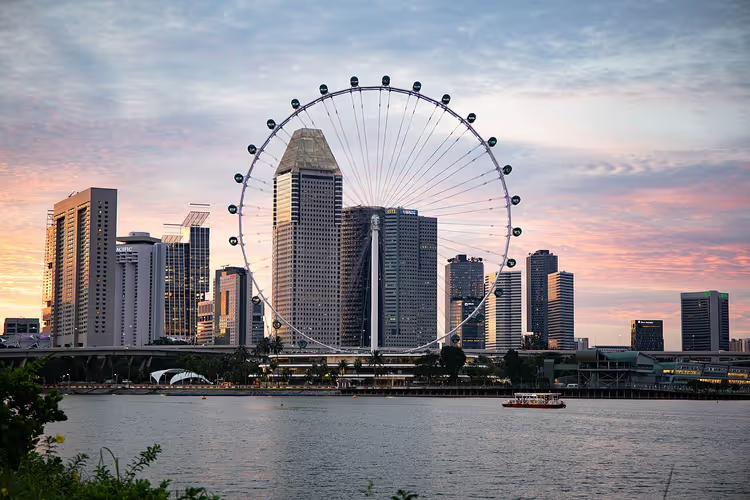 © Dikaiosp · CC BY-SAPhoto: Dikaiosp, CC BY-SA (https://creativecommons.org/licenses/by-sa/4.0), Wikimedia Commons
One rotation of the Singapore Flyer takes about 30 minutes, and the capsule rises 165 meters above the ground (as of 09/2026, official Singapore Flyer website). On a clear day you can see not only the city center but also Malaysia and Indonesia.
All 28 capsules are air-conditioned, so the heat inside is not a problem. After each rotation, condensation is drained from the capsules, so you look at the city through clean glass. Check the schedule on the tickets page: flights are suspended in bad weather.
- Tickets: buy only on the official website or from authorized sellers.
- Who it's for / Not for: for a relaxed view of the city; if you want a panorama with a pool, this is not the place.
- The catch: during a thunderstorm the flight is canceled, but the ticket remains valid for another 30 days (as of 09/2026, wheel terms and rules).
4. Hawker centers: Singapore street food
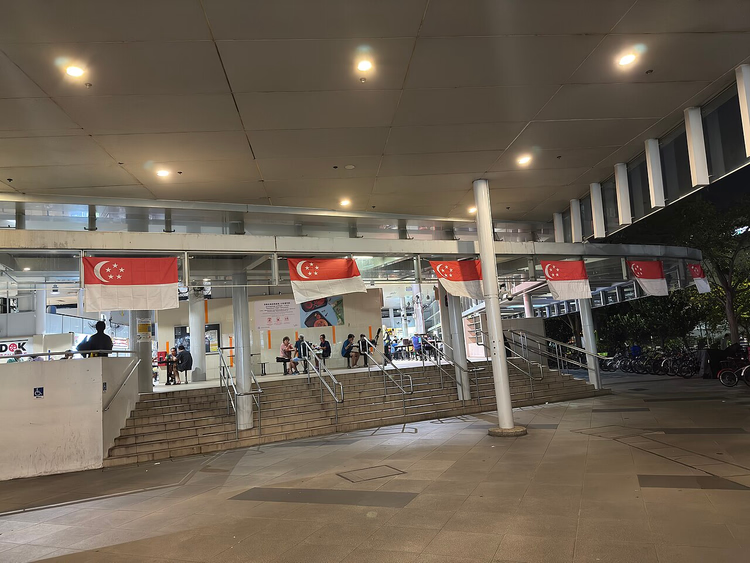 © LN9267 · CC BY-SAPhoto: LN9267, CC BY-SA (https://creativecommons.org/licenses/by-sa/4.0), Wikimedia Commons
Hawker centers work like covered food courts where dozens of stalls prepare Asian classics. The first halls appeared back in the middle of the last century, when street vendors were moved off the roads and given water and electricity. Today it is the cheapest way to eat in the city.
Two hawker stalls have gone down in gastronomic history. Hill Street Tai Hwa Pork Noodle and Liao Fan Hong Kong Soya Sauce Chicken Rice & Noodle received a Michelin star in 2016, and the second one was called the cheapest Michelin-starred food in the world at the time (as of 09/2026, CNN Travel). You'll see the line at the soy sauce chicken stall from far away.
A portion usually costs less than six euros, and that's the main argument against restaurants in the center. Quality isn't checked only by the lines: the stalls have official ratings that are displayed prominently.
How to eat at a hawker center
The process is simple. First, grab a table and leave a napkin or umbrella on it: the local custom called chope means the spot is yours. Then go to the stalls for food; when ordering, you may be asked for your table number. Since 2021, you're required to return trays and dishes yourself; failing to do so results in a fine.
If you want to sit at someone else's table, ask permission first. In Singapore, sharing tables is normal, but politeness is valued. While you're at it, compare Singapore food tours on GetYourGuide: a guide will show you stalls you wouldn't find on your own.
- The catch: at lunchtime there are almost no free tables, so come before noon or after two.
- Who it's for / Not for: for those who want to try a lot for little money; if you need a quiet dining room with a waiter, this isn't the place.
5. Katong shophouses: rainbow facades
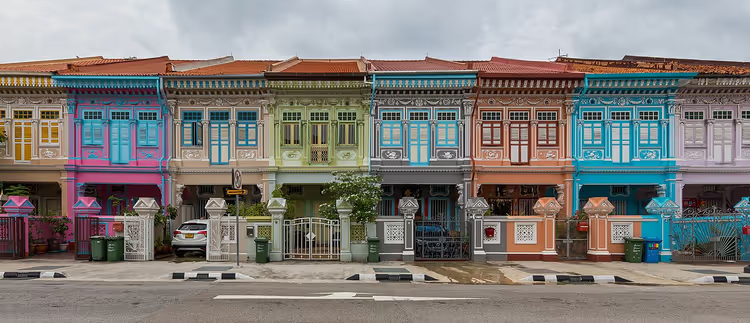 © Basile Morin · CC BY-SAPhoto: Basile Morin, CC BY-SA (https://creativecommons.org/licenses/by-sa/4.0), Wikimedia Commons
The city center is growing upward, but the Katong district has preserved two-story shophouses with carvings, shutters, and ornamentation. The most famous address here is Koon Seng Road: that is where the facades are painted pink, green, and red. These houses were built for the Peranakan Chinese community, descendants of settlers from the Malay Peninsula.
The neighborhood's history began with traders who came here several centuries ago, and a large wave of migration arrived in the 19th century. The street is also lovely in the evening: shop window lighting flatters the stucco work.
You will not go hungry: Peranakan cuisine is served at Old Bibik's and Guan Hoe Soon, where recipes blend cooking from different regions. The Intan Museum, a small house packed with objects and paintings, tells the story of the community's daily life and crafts.
- Getting there: Katong lies about 7 km northeast of the center; from the MRT you walk along a straight street.
- Who it's for / Not for: for those tired of glass and concrete; if you only need the business district, there is no need to come here.
- The catch: Katong sits apart from the other stops on the route, so it takes a separate half day.
6. Little India: Serangoon Road and the temple
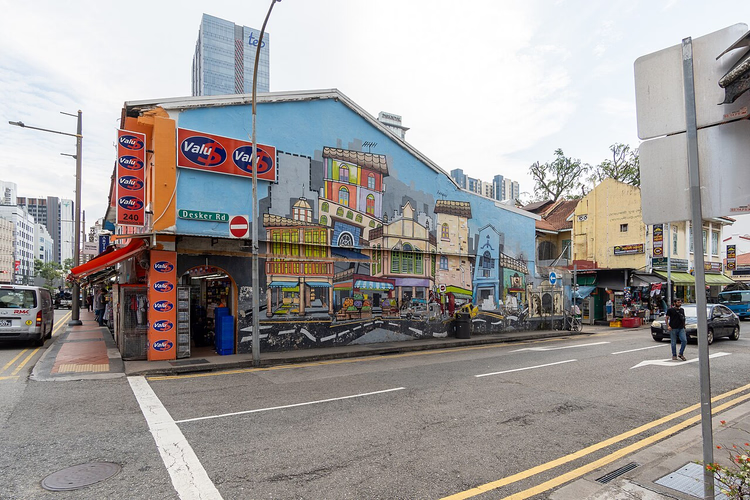 © Rainer Halama · CC BY-SAPhoto: Rainer Halama, CC BY-SA (https://creativecommons.org/licenses/by-sa/4.0), Wikimedia Commons
British colonizer Stamford Raffles divided the city into quarters for different communities in the early 19th century. That is how the Colonial District, Chinatown, and the Tamil Kampong Chulia came to be.
The rigid boundaries have long since faded, but the culture remains. Along Serangoon Road, vendors make roti prata and serve curry, and at The Banana Leaf Apolo and Mustard you sit down at a table and order traditional dishes.
Streets decorated with garlands lead to the Sri Veeramakaliamman Temple. It is dedicated to the goddess Kali, who embodies the fight against evil, and remains a place of strength for the city's Indian community. The houses here look like postcards: the colors of Tan Teng Niah House are visible even under clouds, and the villa itself was built in the early 20th century for the wife of a Chinese merchant.
- Getting there: Little India and Farrer Park MRT stations bring you right to Serangoon Road.
- Who it's for / Not for: for those who want to see a different Singapore; if you only want glass panoramas, it will feel stuffy here.
- The catch: on Serangoon Road people mostly eat on the go or at a counter; quiet dining rooms are few.
7. Sentosa: beaches and amusement parks
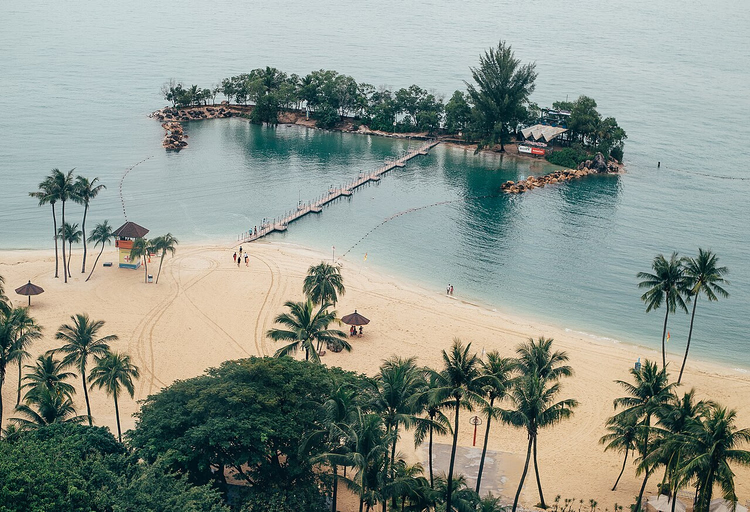
Sentosa grew out of a British military fortification and now carries the nickname "State of Fun." The choices here are vast: aquariums, amusement parks and water parks, cinemas, cable cars. Visitors can try surfing, a climbing wall, bungee jumping, and even indoor skydiving.
The beaches continue the theme. Palawan Beach has an inflatable playground, and a suspension bridge leads to a tiny islet marked as the southernmost point of continental Asia (as of 09/2026, Sentosa). Tanjong Beach is noticeably quieter, and there you simply lie by the water.
Beach access is free, but check conditions before your trip.
- Getting there: you reach the island by cable car, monorail, or on foot along the Sentosa Boardwalk.
- Who it's for / Not for: for families and those who want a beach; if you want museums and the old town, stay on the mainland.
- The catch: on weekends beach access may require reservations; on weekdays the island is calmer.
Getting there and what to consider before your trip
 © Takeshi Aida from Hong Kong, Hong Kong · CC BY-SAPhoto: Takeshi Aida from Hong Kong, Hong Kong, CC BY-SA (https://creativecommons.org/licenses/by-sa/2.0), Wikimedia Commons
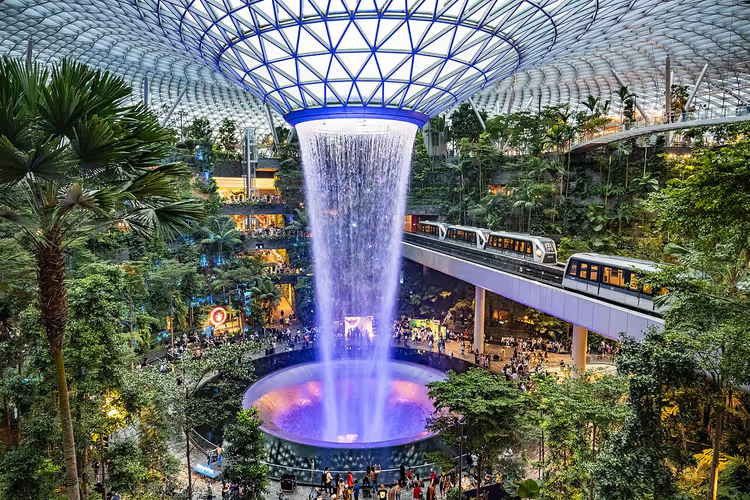
The country's main airport is Changi Airport, with flights to destinations around the world. The terminals themselves are worth seeing: Jewel Changi with its waterfall, tropical trees, and rooftop garden. You reach the center by MRT or taxi.
Within the city, the easiest way to get around is the MRT. A single ride costs less than two euros, and a one-day Tourist Pass from S$17 (as of 09/2026, Tourist Pass fares on the operator's website) removes the ticket question entirely: it covers the metro and buses. Taxis are more expensive, and at rush hour a car can sit in traffic longer than an MRT ride takes.
The climate here is hot and humid year-round: temperatures stay around thirty degrees, and rains are heavier from November to January. March through September is drier, but a downpour can hit on any day. Keep an umbrella and a bottle of water in your bag.
Free Wireless@SG is available on many busy streets, but for maps and messaging a Singapore eSIM is more reliable: it connects before departure and works during your trip with no extra charges.
Tours and tickets in Singapore
Guided tours, skip-the-line tickets and activities — most offers can be cancelled free of charge.
See offers on TiqetsThe widget loads once you give your consent.
⁉️🤔 Frequently asked questions
How many days do you need in Singapore?
Three days are enough for the center and Sentosa: Gardens by the Bay, the observation deck, the Ferris wheel, hawker centers, and beaches. If you want to add the zoo and Katong without rushing, plan four days. A fifth day only makes sense for a trip to a neighboring island.
Do EU citizens need a visa?
No visa is needed for a trip of a couple of weeks: EU citizens enter with a passport. The visa-free stay is usually limited to three months. Check the exact conditions on the embassy website before departure, and your passport should remain valid for several months after your return.
When is the best time to visit Singapore?
There is no distinct season here; the heat lasts all year. From March to September there is less rain, and from November to January downpours are more frequent. Consider holidays: during Chinese New Year hotels are more expensive and some shops are closed.
What to do in Singapore in the rain?
During a downpour, go to the Gardens by the Bay conservatories, the Sentosa aquarium, or a hawker center. Downpours are short: they usually end within half an hour to an hour, and the city dries quickly. Take an umbrella and do not cancel your plans.
How much does it cost to go up to the Marina Bay Sands observation deck?
Check the observation deck price on the hotel's website: it depends on the day of the week and the season. A sunset ticket costs more, but you get both panoramas at once.
In short: what to book
Singapore requires preparation: conservatories, observation decks, and the Ferris wheel are cheaper online, and weekend hotels sell out months in advance. If you are on a short trip, stay near Marina Bay: from there you can walk to the gardens, the wheel, and a hawker center.
- If you have three days: a base in the center and conservatory tickets in advance.
- If you are traveling with kids: Sentosa for a full day instead of a second museum.
- If you want street food: hawker centers in Chinatown near the MRT station.
- If the panorama matters: Skypark at Marina Bay Sands or a Singapore Flyer capsule at sunset.
You can book a hotel in Singapore on Trip.com.

A small editorial team writing guides for independent travel. We travel ourselves, but we haven’t been everywhere, so we check prices, opening hours and how to get there against official sources.