
















Hakone in one day from Tokyo: loop route and what you can actually fit in 2026
Hakone starts about 1 hour 45 minutes from Shinjuku on the Romancecar. After that, you get Lake Ashi, red torii gates in the water, the volcanic Owakudani valley, and views of Fuji if the weather cooperates. The classic loop through the area is doable in one day. The main risk is not the distance, it's the schedule: trains, boats, and the ropeway run less frequently than in Tokyo. Below, we break down the route step by step, route options, and prices. You'll see what to book in advance and where to build in extra time.
Ad: this article contains affiliate links, we earn a commission if you book through them, at no extra cost to you.
Is Hakone worth a day trip from Tokyo
💡 In short:
- Hakone is doable in a day if you leave Tokyo on the first train around 5:30.
- The loop includes Hakone Shrine, the boat across Lake Ashi, Owakudani, and the open-air museum.
- The 2-day Hakone Freepass costs 7,100 yen for an adult and 1,600 yen for a child (as of 09/2026, Odakyu fares).
- Prices and hours: 09/2026, verified on the official Hakone Open-Air Museum website.
Hakone is a change of scenery after Tokyo: lakes, mountains, forest trails, and hot springs instead of neon. The trip from Shinjuku on the Romancecar takes about 1 hour 45 minutes, so an early start solves almost everything. In one day you can cover the main sights, but not the entire area.
Weather and season affect the experience more than the route does. In summer, after 11:00 a crowd gathers at the Heiwa torii gate, and Fuji hides in the haze. On a clear morning, your chances of seeing the mountain are higher: get there for the first boats. If you only have a week in Japan, we suggest saving Hakone for a trip with an overnight stay.
 © Maarten Heerlien from Voorschoten, The Netherlands · CC BYPhoto: Maarten Heerlien from Voorschoten, The Netherlands, CC BY (https://creativecommons.org/licenses/by/2.0), Wikimedia Commons
How to get from Tokyo to Hakone: comparing options
Four routes lead from Tokyo to Hakone: the Odakyu train, the shinkansen, regular commuter trains, and the bus. The difference is not just price, but also the number of transfers. Times and surcharges below are checked against the Odakyu timetable (as of 09/2026).
Option | Time | Price | Best for |
|---|---|---|---|
Odakyu Romancecar | about 1 hr 45 min to Hakone-Yumoto Station | Freepass plus a 1,200 yen seat surcharge (as of 09/2026, Odakyu fares) | those who want no transfers |
Shinkansen to Odawara | about 35 minutes plus a transfer | the most expensive option | JR Pass holders |
Regular commuter trains | 1 hr 20 min to Odawara, then a bus | cheaper than the rest | budget trips |
Bus from Shinjuku | over 2 hours | almost the same as the train | those heading to Gotemba |
Romancecar train: direct route to Hakone-Yumoto Station
The Romancecar is like a mini shinkansen. Seats are reserved, the chairs are soft, and there are no transfers along the way. The train runs directly to Hakone-Yumoto Station, which is the start of the classic loop. You spend about 1 hour 45 minutes in transit. The seat surcharge is 1,200 yen on top of the Freepass (as of 09/2026, official Odakyu website). Buy your ticket in advance: in high season, cars fill up by the evening of the previous day. Reserve a seat on morning departures together with the pass, because separate tickets for the time you need may sell out.
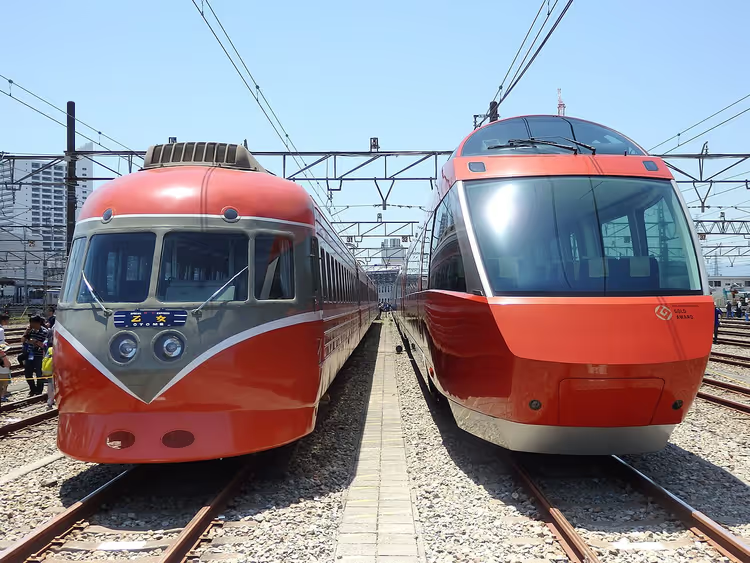
Panoramic windows and a seat on the left give you mountain views even before Odawara. There is usually one car with a panoramic cabin per train, and it fills up first. For a family of four, this is the best way to avoid dragging suitcases through transfers. The catch: this route costs more than a regular commuter train.
Shinkansen to Odawara: fast but expensive
The shinkansen gets you from Tokyo Station to Odawara in about 35 minutes. That's where the speed ends: at Odawara you transfer to a local train or bus to Hakone. The transfer eats up part of the time savings, and once you're there you still transfer again.
We recommend this option only for JR Pass holders, regional or nationwide. With the pass, the trip costs nothing extra, and you save time. If you don't have a pass, the surcharge isn't worth it. The catch: the ticket is more expensive than all other options, and it only takes you as far as Odawara.
Regular Odakyu and JR commuter trains: the budget option
Regular commuter trains cost less than the rest, and seats are not reserved. From western Tokyo, Odakyu is more convenient: from Shinjuku or Yoyogi-Uehara Station, the express runs to Odawara in about 1 hour 20 minutes. From eastern Tokyo, take the JR Tokaido Line from Tokyo, Shimbashi, or Shinagawa Station; the time is about the same.
At Odawara, transfer to a bus or the Hakonetozan line to Hakone itself. Regular Odakyu trains are included in the Hakone Freepass, so no extra payment is needed for them. Train tickets across Japan are easy to find on Trip.com. The catch: during rush hour, the cars are packed and there is nowhere to sit.
Bus from Shinjuku via Gotemba
The bus departs from the Busta terminal at Shinjuku and takes over two hours to reach Hakone. Travel time depends heavily on traffic, so the schedule here is not a guarantee. The route passes through Gotemba and Sengokuhara, then stops at Hakone-en.
It makes sense if you want to combine shopping in Gotemba with one or two spots in Sengokuhara. For a straightforward trip to Hakone, the bus loses to the train: tickets cost almost as much as the train, and you lose an extra hour on the road. The catch: you travel longer, and everything depends on highway traffic.
Tour from Tokyo: when it pays off
An organized tour departs from Shinjuku or Tokyo and lasts about 10 hours. The itinerary usually covers three or four main spots: Lake Ashi, Owakudani, and Hakone Shrine. They often add locations near the Fuji Five Lakes, such as Oshino Hakkai or the Chureito Pagoda. Getting there on your own is difficult, and that is the main advantage of a tour. The catch: there is almost no flexibility, you follow someone else's schedule. We have collected Hakone tour options on GetYourGuide.
A private tour with a driver costs more per person, but you set the route yourself. The driver picks you up from your hotel in Tokyo and brings you back after sightseeing. For a group of three or four people, the total often comes close to the sum of tickets and taxis within Hakone. If you value your time, this option is worth comparing with the train.
Hakone loop: a one-day route
The loop is called a loop because you circle the area's main sights. Start and finish: Odawara or Hakone-Yumoto station. We recommend going clockwise. Morning light is better for views of Fuji across the lake, and you reach Hakone Shrine before the crowds.
The first Odakyu expresses leave Tokyo just before 5:30 and arrive in Odawara around 7:00 (as of 09/2026, Odakyu timetable). JR Tokaido trains start about 45 minutes later and arrive by 7:40. You need that time buffer: the loop is spread out, and travel takes longer than it looks. In the morning the line for the first boats is shorter, and the observation deck at Owakudani is almost empty.
Plan the day with slack. Distances in Hakone look short on the map, but every transfer takes ten to twenty minutes. If you start after 9:00, you will have to cut the loop short and save some sights for next time.
If you go counterclockwise, keep the boats in mind. On the return leg they take longer, go along the western part of the lake, and make an extra stop at Hakonemachi-ko before returning to Motohakone-ko. For a single day that is an extra half hour you will miss later.
 © Joli Rumi · CC BY-SAPhoto: Joli Rumi, CC BY-SA (https://creativecommons.org/licenses/by-sa/4.0), Wikimedia Commons
From Odawara to Hakone Shrine
A bus will take you to Motohakone, for example route Z03. Get off at the lake and turn right onto Jinja-Dori. Part of the way can be walked along the water, but then you will miss the large torii gates along the road.
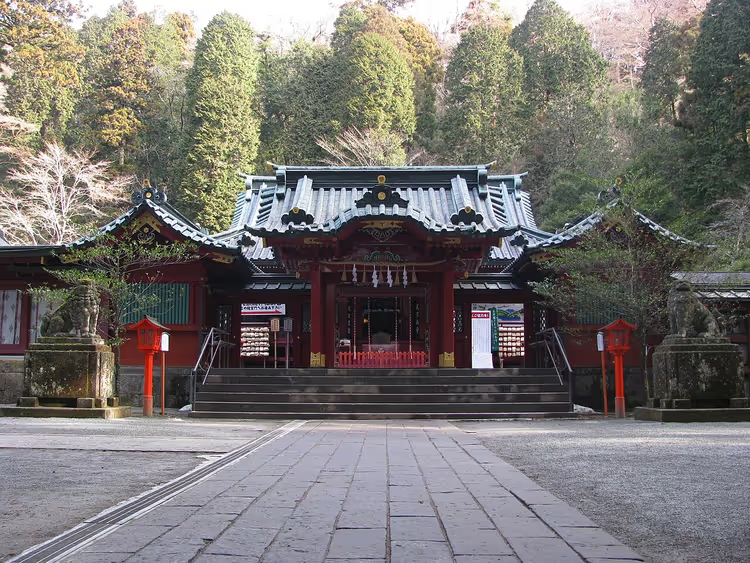 © Aimaimyi · CC BY-SAPhoto: Aimaimyi, CC BY-SA (https://creativecommons.org/licenses/by-sa/3.0), Wikimedia Commons
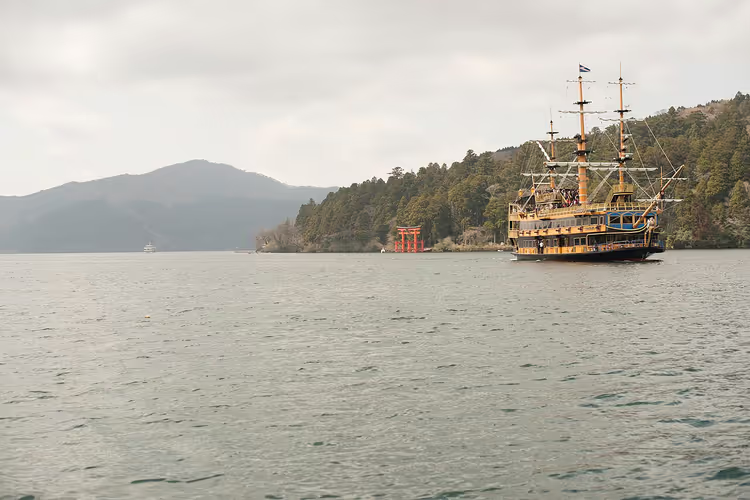
Keep right until a narrow path on the left descends to the Heiwa torii. You have probably seen these gates in the water in every other photo of Lake Ashi. From here it is worth making a short detour of a couple dozen meters to the left, to the shrine's boat shed: a red bridge awaits you there for a photo.
Then climb the steps to Hakone Shrine itself. It was founded back in the Nara period and is one of the area's main sights. In the morning the staircase is quiet; by midday you can barely get through. Allow about two hours for this whole section.
Pirate boat across Lake Ashi to Togendai
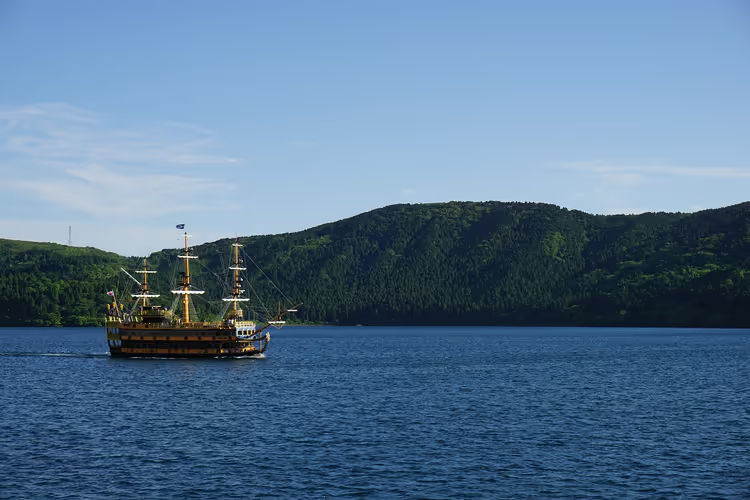
Walk back down to Jinja-Dori and follow the shore to Motohakone-ko pier. From there the Hakone Sightseeing Cruise boat goes to Togendai pier at the upper end of the lake. The ride takes about 35 minutes, but boats run only once or twice an hour.
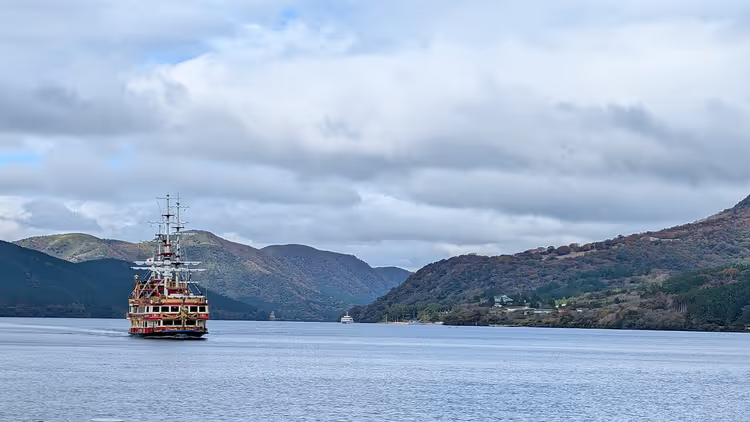 © Joli Rumi · CC BY-SAPhoto: Joli Rumi, CC BY-SA (https://creativecommons.org/licenses/by-sa/4.0), Wikimedia Commons
While you wait for the boat, check out the free observation deck or stop by the Narukawa Art Museum. Another option: a walk along the old Tokaido road with its pines and stone markers. The ticket is included in the Freepass; a separate ride is bought at the ticket office. Check times using Hakone Navi boat information (as of 09/2026).
The area's boats differ in decor, but they share a schedule, and it does not affect the route. Tickets are bought at the office on the day of travel, so do not be late for the last departure.
Grab a spot on deck right away: the cabin has few windows, and the Fuji views open up precisely from the water.
Owakudani and black eggs
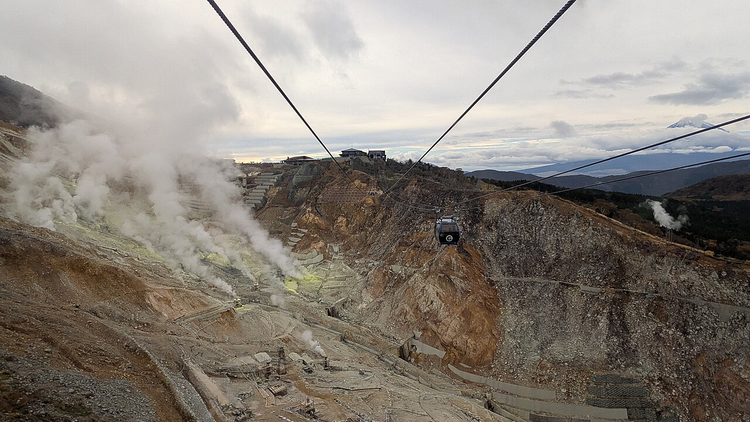
The ropeway terminal is right at Togendai pier. A Hakone Ropeway ticket lets you get off at Owakudani station. Here you try the black eggs, browse the souvenir shop, and climb to the observation deck.
The valley used to be called hellish, and the slopes really do look Martian: gray rocks and jets of steam. About 30 minutes is enough for this part of the loop. In high season a line forms for the cabins, so do not plan exact timing. Next up is the upper station at Sounzan.
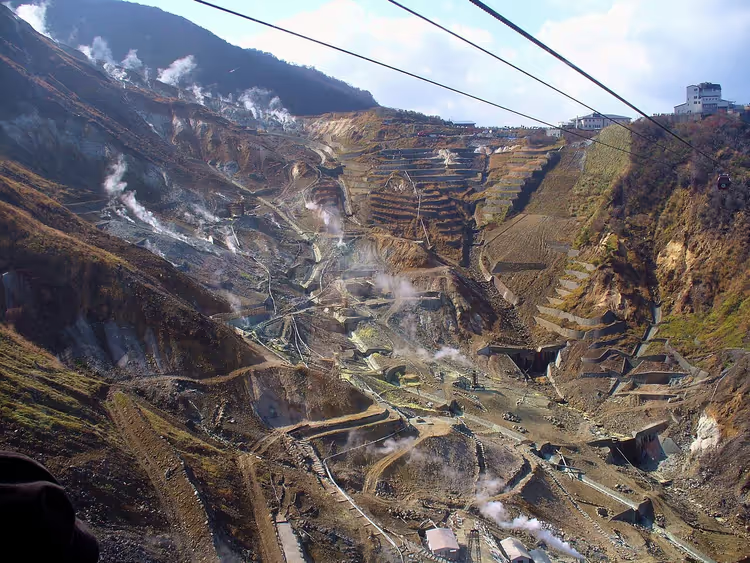 © ohkubo · CC BY-SAPhoto: ohkubo, CC BY-SA (https://creativecommons.org/licenses/by-sa/3.0), Wikimedia Commons
Down to Gora: funicular and lunch
Get back on the Ropeway to Sounzan station. There is a free foot bath by the station: bring your own towel, otherwise there is nothing to dry your feet with. Then the Tozan cable car takes you down to Gora; the ride takes about 10 minutes.
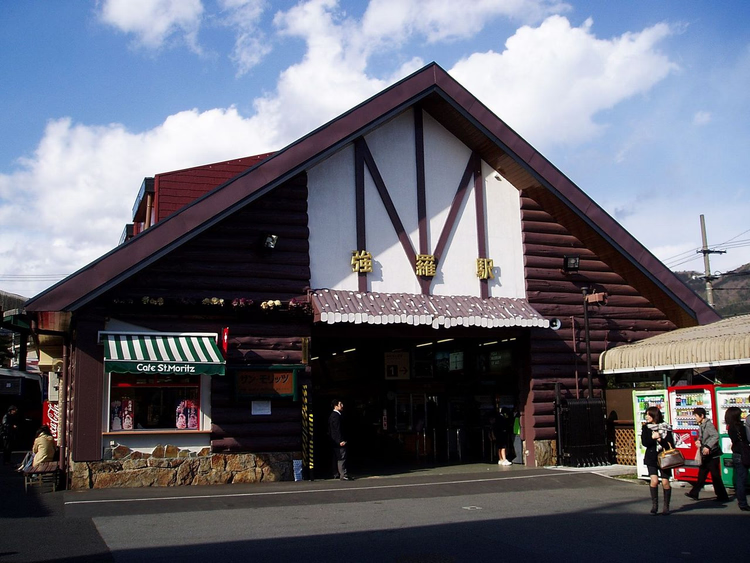
Gora, one of the local areas with restaurants and museums, works well for a lunch break. For something special, go to Kaiseki Ryori Kadan or Itoh Dining by Nobu: lunch there is noticeably cheaper than dinner, but still top-tier pricing. Simpler options: Gora Brewery and Grill, Tamura Ginkatsu Tei, and Gyoza Center, all well reviewed. You can grab a quick bite at any coffee shop.
If you did not plan a separate onsen for this day, do not stretch lunch out: the museum and the trip back are still ahead.
Open-air museum near Gora station
Hakone Open-Air Museum is a 15-minute walk from Gora station or one stop on the Hakonetozan line to Chokoku-no-Mori. Allow at least an hour and a half.
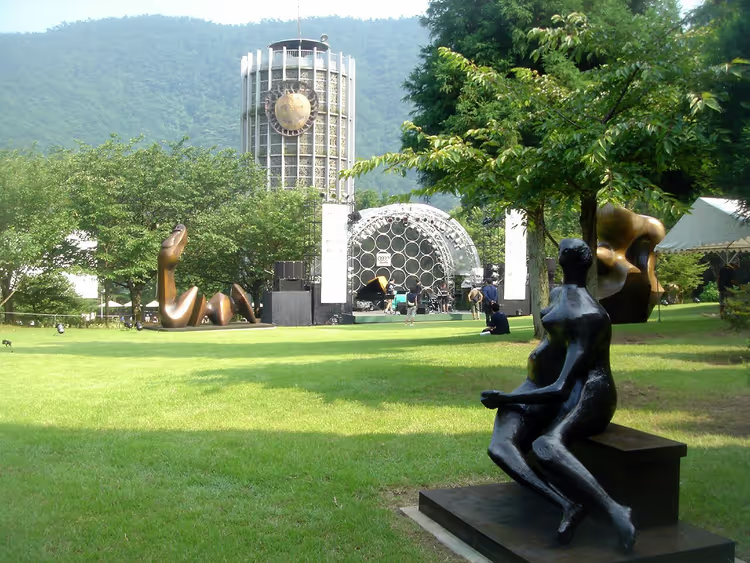 © leon&mae · CC BYPhoto: leon&mae, CC BY (https://creativecommons.org/licenses/by/2.0), Wikimedia Commons
Inside you will find sculptures, gardens, interactive exhibits for children, and the Picasso pavilion. The museum is open from 9:00 to 17:00 every day year-round; adult admission costs 2,000 yen, and an online ticket is 200 yen cheaper (as of 09/2026, official website). Last entry is half an hour before closing.
If the weather is bad, switch to the Pola Museum of Art: it is indoors, about 20 minutes by bus from Gora. With children, the open-air museum usually wins: you can walk through it at any pace.
Return to Tokyo and an evening onsen
By evening you head back toward Tokyo. From Gora or Chokoku-no-Mori the Hakonetozan line takes you back to Hakone-Yumoto station. At Kowakidani station you can transfer to bus J04 and ride directly to Odawara station.
If you still have energy and time, stop by a public onsen in Yumoto, such as Tenseien with indoor and outdoor baths. Another option: Odawara Castle, the closest example of traditional Japanese castle architecture to Tokyo, especially beautiful in cherry blossom season.
An overnight stay in Hakone pays off with evening baths and a relaxed morning view of Fuji: Hakone hotels on Trip.com.
Tickets and opening hours (as of 09/2026)
Attraction | Ticket | Hours | Closed |
|---|---|---|---|
Hakone Freepass, 2 days from Shinjuku | 7,100 yen adult, 1,600 yen child (Odakyu fare page) | valid from the start date | no days off |
Hakone Open-Air Museum | 2,000 yen, 1,800 yen online (museum website) | 9:00-17:00, last entry 16:30 | open year-round |
Hakone Ropeway | included in Freepass, separate ticket at the counter (Hakone Navi on the ropeway) | 9:00-16:45 in season | stops in strong winds |
Hakone Sightseeing Cruise | included in Freepass (Hakone Navi on the cruise) | one or two departures per hour | depends on weather |
Gora Park | paid entry, free with Freepass | daytime | check on site |
The Freepass is the main way to save money: it covers eight types of transport, including the ropeway, the boat, and buses (as of 09/2026, Freepass terms on Odakyu). There is no one-day version, the minimum is two days. For the route in this article you still make it pay for itself on the round trip: separate tickets for each ropeway and the boat cost more than the pass. The Romancecar is not included, you pay extra for a seat.
Museum tickets are easier to buy in advance: on weekends the ticket office gets a line. We check slots and combined offers in Hakone on Tiqets, where you can also see what is closed for maintenance on your dates.
Keep cash on you. At small ticket counters near the piers, cards do not always work, and you will not find an ATM in the mountains. The museum ticket is cheaper online, and you can see that difference on the official website. During the rainy season some observation decks close without notice, so check the status of attractions in the morning.
If you are heading to Fuji after Hakone, look at the Fuji Hakone Pass: it combines both areas. For one day in Hakone, that pass is overkill.
Tours and tickets in Hakone
Guided tours, skip-the-line tickets and activities — most offers can be cancelled free of charge.
See offers on GetYourGuideThe widget loads once you give your consent.
Common mistakes on a day trip to Hakone
A late start costs you a whole stop on the route: every hour of delay removes one attraction from the list. The second mistake is trying to cram both the loop and a distant museum into one day. Count the travel time: getting between attractions takes longer than the map shows. Many people count on Fuji, even though the mountain is not visible every day and in cloudy weather you cannot see it at all. And finally: the ropeway stops in strong winds. Do not make it your only plan for getting back.
Museums and gardens in Hakone
The loop takes almost the whole day, but it is worth setting aside a couple of hours for museums. In Gora Park you will find a small garden with a fountain in the center and roses. Hakone Museum of Art maintains a Japanese garden: small, but one of the most beautiful in the area. Further on are the Hakone Venetian Glass Museum and the small temple Sotoshuryukozanchoan. Pick one museum per day, otherwise you will not make it back for the return train.
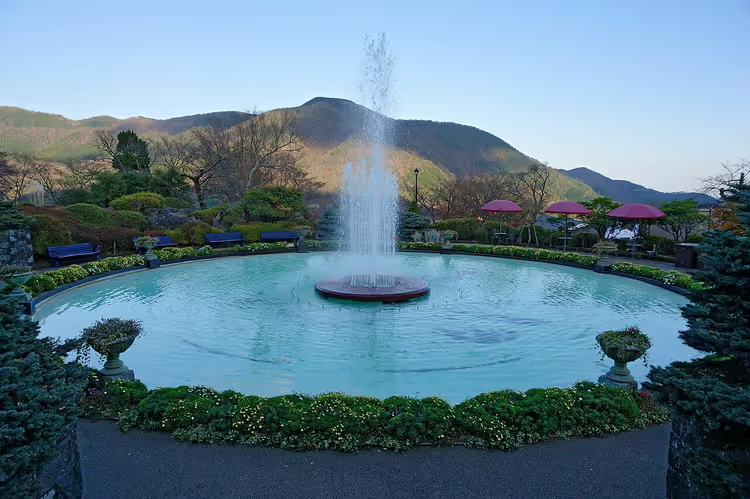 © 663highland · CC BY-SAPhoto: 663highland, CC BY-SA (https://creativecommons.org/licenses/by-sa/4.0), Wikimedia Commons
⁉️🤔 Frequently asked questions
Is Hakone worth a day trip from Tokyo?
Yes, if you plan the day in advance and are realistic about time. For a first introduction to Japan, it is a gentle entry into the local nature and onsen culture. The trip from Shinjuku on the Romancecar takes about 1 hour 45 minutes. An early start gives you the whole loop, a late one leaves only two or three sights from the list.
Can you do Hakone in one day?
Not the whole area, but you will see the main sights. Hakone is about 1 hour 45 minutes from Shinjuku on the Romancecar, and the loop fits into a day if you leave in the morning. Allow time between sights: buses, the boat, and the ropeway run on schedules. This is not Tokyo, where trains come every couple of minutes.
Does the Hakone Freepass pay off for one day?
The Freepass is designed for at least two days, there is no one-day version. If you add up round-trip tickets, the ropeway, the boat, and buses, you roughly break even or come out ahead. The point of buying it is also that you do not need a separate ticket for each leg. A seat on the Romancecar costs extra.
Which is better, Hakone or Mount Fuji?
We think Hakone has more substance. You get views of Fuji, plus shrines, museums, and volcanic landscape nearby. Typical Fuji spots, such as Fujikawaguchiko, mostly offer views of the mountain, and they are often closed in by clouds. So for a single day, choose Hakone.
What is the fastest way to get from Tokyo to Hakone?
The fastest is the shinkansen from Tokyo or Shinagawa Station to Odawara, but it is also the most expensive route. It only makes sense with a JR Pass. The most convenient is the Odakyu Romancecar: shinkansen-level comfort and a direct route to Hakone-Yumoto Station with no transfers. You spend about 1 hour 45 minutes in transit.
In short: what to book
If you have one day and no desire to figure out transfers, take the Romancecar and the Freepass. On a tight budget, take a regular Odakyu train from Shinjuku; tickets are easy to get on Trip.com. For a large group, it is better to take an organized tour: transfer, admission, and timing are already handled. If staying overnight, look at hotels in Hakone; an evening onsen and a morning view of Fuji are worth the extra cost. The one rule: leave Tokyo early, and the loop will fit into daylight hours.

A small editorial team writing guides for independent travel. We travel ourselves, but we haven’t been everywhere, so we check prices, opening hours and how to get there against official sources.