
















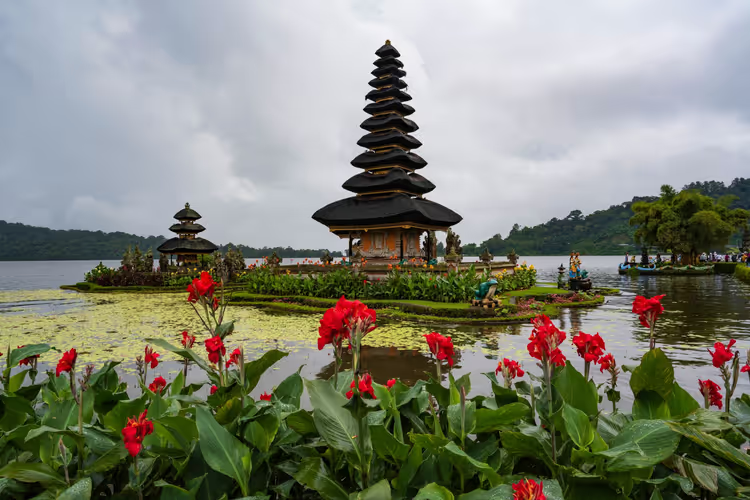
Ulun Danu Temple on Lake Beratan: tickets, best time and how to avoid the crowd
Ulun Danu Temple stands on the water of Lake Beratan, in the cool highlands of Bali. Its multi-tiered pagoda is recognizable from photos even to those who have never been to Indonesia. But by midday, tour buses arrive here, and instead of quiet you'll find a line at the ticket office.
We've gathered the essentials for you: how much admission costs, when to go, what to see on the grounds, and how to get to Bedugul. The adult ticket for foreign visitors costs 100,000 rupiah as of July 1, 2026 (as of 06/2026, Dewata News). Arrive at opening time: the ticket office will be empty, and the lake in the morning mist is calm.
Ad: this text contains affiliate links. We earn a commission from them, and the price stays the same for you.
Ulun danu temple on lake beratan
💡 In short:
- What it is: a Balinese water temple in the Bedugul area, in the center of the island.
- Adult admission for foreigners: 100,000 rupiah from July 1, 2026 (as of 06/2026, Dewata News).
- Best time: early morning, before the bus groups arrive.
- Prices: 06/2026, according to Dewata News.
 © Konstantinos Trovas · CC BY-SAPhoto: Konstantinos Trovas, CC BY-SA (https://creativecommons.org/licenses/by-sa/3.0), Wikimedia Commons
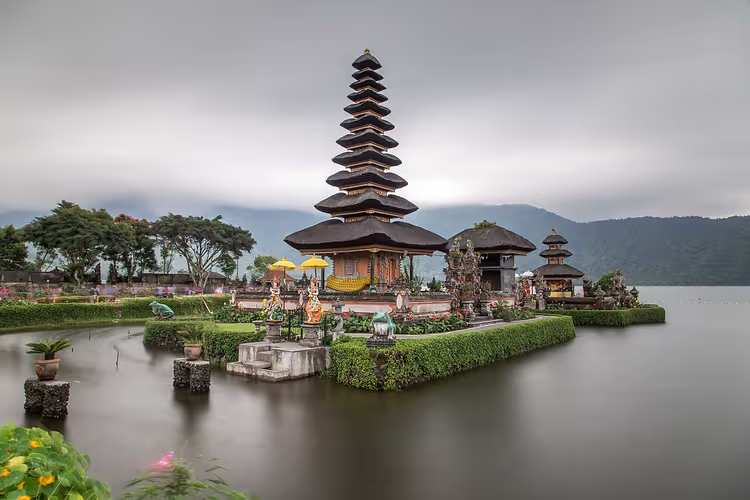
Pura Ulun Danu, or Ulun Danu Beratan, is dedicated to the water goddess Dewi Danu. The temple stands on the northwestern shore of the lake, at the foot of Mount Catur, surrounded by tropical forest. The cool air and frequent mists are loved by those who are tired of the heat on the coast.
The pagoda was featured on the 50,000 rupiah banknote of the 2005 series. It's no longer on the current bill. The temple is still recognizable, so both tourists and pilgrims come here, and the entrance is almost always crowded.
History of ulun danu temple
 © CEphoto, Uwe Aranas · CC BY-SAPhoto: CEphoto, Uwe Aranas, CC BY-SA (https://creativecommons.org/licenses/by-sa/3.0), Wikimedia Commons
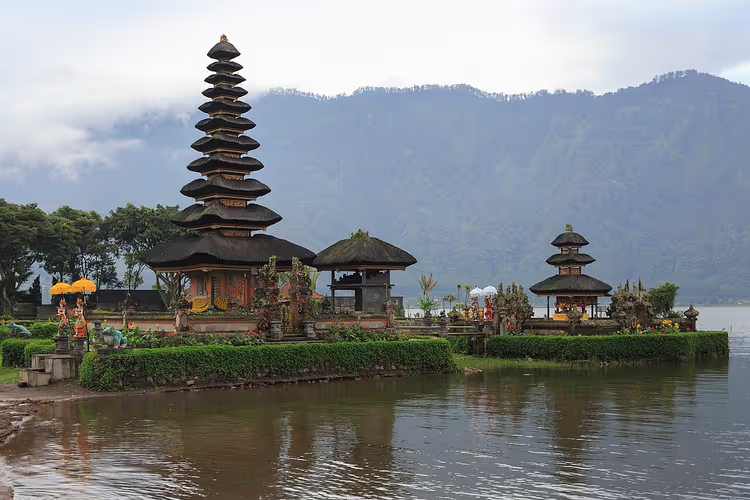
The temple was built in the 17th century by order of the King of Mengwi. The builders are believed to be local blacksmiths: they forged magical swords and daggers for the nobility, and they were also commissioned to build the shrine. As a reward, the craftsmen received the right to live on the land next to the temple.
The shrine is considered one of the most important on the island. Its image has appeared in guidebooks around the world, and the 50,000 rupiah banknote of the 2005 series made the temple recognizable even to those who had no plans to visit Bali.
Architecture of the Balinese Pagoda
 © CEphoto, Uwe Aranas · CC BY-SAPhoto: CEphoto, Uwe Aranas, CC BY-SA (https://creativecommons.org/licenses/by-sa/3.0), Wikimedia Commons
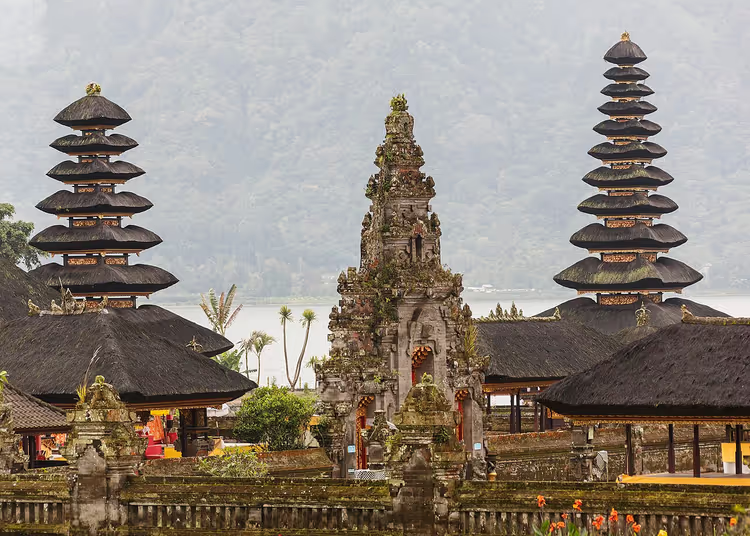
The main pagoda consists of eleven tiers, and each roof rises a step higher than the previous one. The roofs are covered with sugar palm leaves and sealed with black resin. The walls are built from volcanic stone, which makes the structures look heavy and monolithic.
The temple is dedicated to the god Shiva and the goddess of primordial water, Dewi Danu. According to legend, the mistress of the lake liked the pagoda so much that she raised the water level and took part of the structures for herself. Hence the feeling that the temple is floating on the lake.
The explanation is simple: when the water rises, the base gets flooded. In September and October, the water recedes, and then you can see the small island on which the shrine stands. The best shots come out in these months.
Grounds and Park
 © Anandajoti · CC BY-SAPhoto: Anandajoti, CC BY-SA (https://creativecommons.org/licenses/by-sa/4.0), Wikimedia Commons
Around the temple there is a well-kept park with neat paths, shrubs, and flowers. On the sacred grounds there are several separate pagodas with different numbers of tiers: some structures stand on the shore, some on islands in the lake. Each shrine is dedicated to its own deity, and the whole complex is connected with the triad of gods: Vishnu, Shiva, and Brahma.
Here you’ll see pavilions with carved gates, colonnades, and stucco work. The banyan tree deserves special attention: Balinese people consider it sacred, and offerings from local residents lie at its trunk.
The park is filled with sculptures of mythical spirits and figures of dragons, elephants, tigers, bears, and birds. Kids enjoy looking at them, while adults find good photo spots with the water in the background.
Lake Beratan, the sacred lake
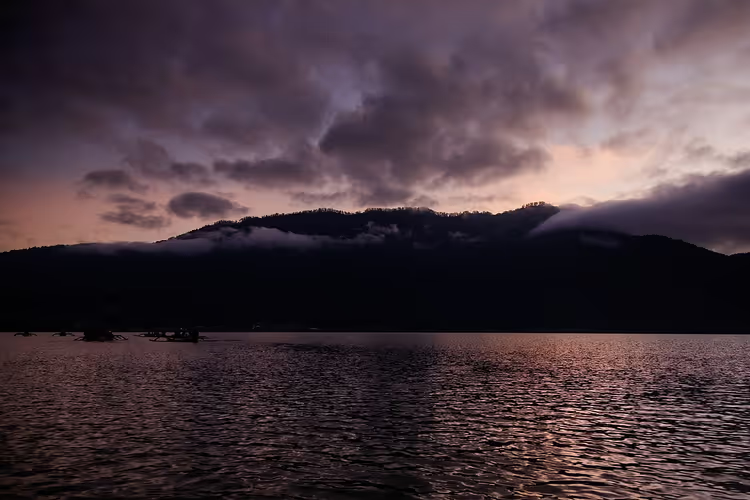 © Enrico Strocchi from Forlì, Italy · CC BY-SAPhoto: Enrico Strocchi from Forlì, Italy, CC BY-SA (https://creativecommons.org/licenses/by-sa/2.0), Wikimedia Commons
Lake Beratan lies in the crater of the extinct Catur volcano. For locals, it’s not just a beautiful place but a water source: the lake irrigates rice fields and supplies water for gardens, coffee, and cocoa.
The lake water is considered sacred. Every day, residents come to the shore with offerings to Dewi Danu, asking for a good harvest and prosperity for their land.
Fishing is allowed in the lake, so many people combine a temple visit with relaxing by the water. The water temperature stays around twenty-two degrees. There’s a pier with boats near the shore: you can take a ride on the lake and see the pagodas from the water.
Tips before visiting
The temple sits in the mountains, where it’s noticeably cooler than on the coast. Bring something warm even in the dry season: mornings here are damp and windy, and you’ll quickly get cold in light clothing.
The weather is changeable. Heavy rain or thick fog can roll in within a minute, so plan your day with extra time and keep a raincoat handy. It gets dark early in the mountains, so don’t leave your visit for the evening.
A sarong isn’t required for walking around the park grounds; modest clothing is enough. Guests aren’t allowed into the central part of the shrine: ceremonies take place there.
- Who it's for: those who want to see a temple on the water and take a break from the coastal heat.
- Not for: those who expect quiet in the middle of the day.
- The catch: fog can hide the lake, and rain can ruin your shots, so allow extra time.
The temple is very popular with organized tour groups. To see the pagodas without crowds, arrive at opening time or after lunch, when the buses leave.
Tickets and opening hours
Prices were updated on July 1, 2026, so old figures from guidebooks no longer apply. The current rates are as follows:
- Foreign adults: 100,000 rupiah (as of 06/2026, Dewata News).
- Foreign children: 75,000 rupiah (as of 06/2026, Dewata News).
- Local adults: 50,000 rupiah (as of 06/2026, Dewata News).
- Local children: 25,000 rupiah (as of 06/2026, Dewata News).
Before the increase, an adult ticket for foreigners cost 75,000 rupiah (as of 06/2026, Dewata News). You pay at the ticket office past the parking area, where rupiah and bank cards are accepted.
Ticket offices are open daily. Check the exact schedule at the entrance: on ceremony days, the temple may close earlier.
Tours and tickets in Bali
Guided tours, skip-the-line tickets and activities — most offers can be cancelled free of charge.
See offers on GetYourGuideThe widget loads once you give your consent.
Where it is and how to get there
Ulun Danu Temple is located in the village of Bedugul, in Tabanan Regency, in central Bali. You can get here from anywhere on the island by taxi or tour bus.
It’s about sixty kilometers from Denpasar to Bedugul. The road is winding but very scenic: the switchbacks pass through rice terraces, mountain villages, and plantations. If you’re driving a rental car, allow more time than the map shows: it’s slow in the mountains and often foggy.
⁉️🤔 Frequently asked questions
How much does temple admission cost?
From July 1, 2026, an adult ticket for foreign visitors costs 100,000 rupiah, a child ticket 75,000 rupiah (as of 06/2026, Dewata News publication). Prices are lower for locals. Payment is on site, in rupiah or by card. Before your visit, check the schedule at the entrance: changes are possible on ceremony days.
Do you need a sarong to visit?
A sarong is not required for the park area; covered clothing is enough. See the "Tips before visiting" section for details.
When are there the fewest tourists here?
Arrive at opening time: there is almost no one at the ticket office, and mist still hangs over the water. By midday, bus groups arrive and the walkways get crowded. A second quiet window comes after lunch, when organized tours leave.
How do you get to Ulun Danu on your own?
The easiest way is by taxi or rental car. The route is described in the "Where it is and how to get there" section.
Is it true that the temple is depicted on money?
The pagoda was depicted on the 50,000 rupiah banknote of the 2005 series. It is not on the current banknote.
In short: what's worth booking
Ulun Danu can be seen in two to three hours. Early morning gives you an empty park, calm water, and soft light for photos.
- If you only have the morning: arrive at opening time and make it around the pagodas before the buses come.
- If you're traveling through Bedugul: allow a couple of hours for the complex and combine it with a walk through the park.
- If you want to see the temple from the water: take a boat from the pier.
Look for tours to Lake Beratan and other places in central Bali on GetYourGuide. Plan your trip for the morning and bring warm clothing.

A small editorial team writing guides for independent travel. We travel ourselves, but we haven’t been everywhere, so we check prices, opening hours and how to get there against official sources.