
















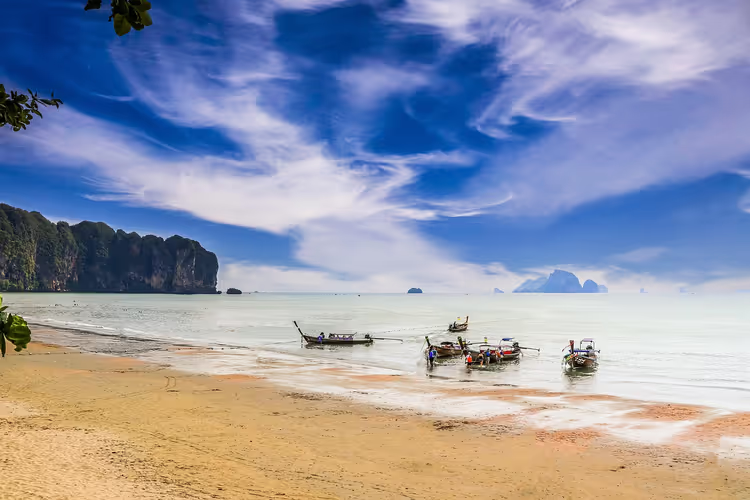
Where to stay in Krabi: 6 areas from Ao Nang to Krabi Town
Krabi is often thought of as a single point on the map of Thailand. In reality, it's a stretched stretch of Andaman Sea coastline with a dozen different bases: from a lively beach town to a quiet river province.
Choosing the area changes your trip more than choosing a hotel. Nopparat Thara Beach lies just 1.5 km from Ao Nang (according to Thailand Life), yet in the evening you'll find yourself in a completely different atmosphere.
We've put together six areas of Krabi: three beach bases, a wild peninsula, a premium beach near a national park, and the town itself. For each, we give the area's character, transport, honest catches, and specific hotels.
Ad: this article contains affiliate links, we earn a commission if you book through them, at no extra cost to you.
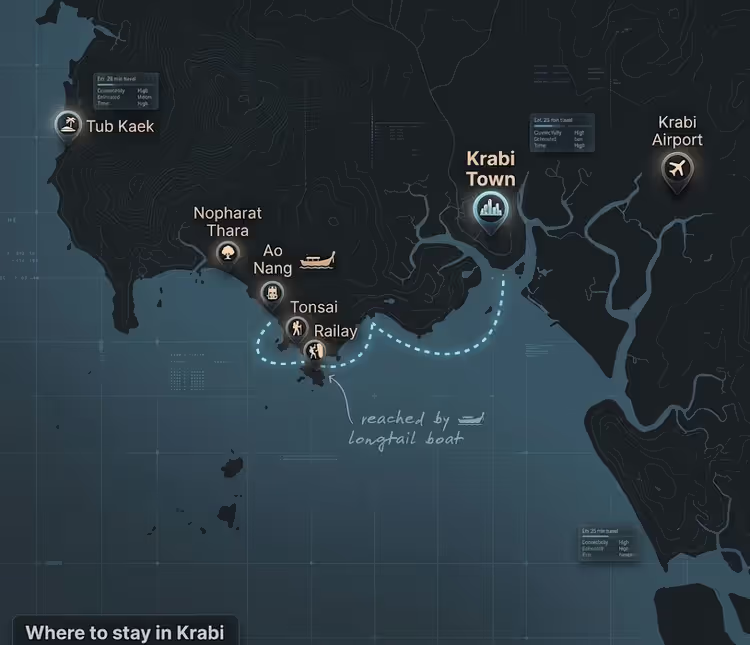
A quick guide to Krabi's areas
💡 In short:
- Krabi's areas break down into five beach bases and the town: Ao Nang, Nopparat Thara, Railay, Tonsai, Tub Kaek, and Krabi Town.
- Pick your base by trip goal: parties and logistics, quiet, rock climbing, or local life.
- Access and transfers between beaches: 09/2026, according to Thailand Life.
Area | Character | Who it suits | Best hotel |
|---|---|---|---|
Ao Nang | Lively tourist hub | Those who want everything at hand and nightlife | K-Bunk Ao Nang Center |
Nopparat Thara | Quiet neighbor of Ao Nang | Independent travelers and families | Centara Anda Dhevi Resort |
Railay | Peninsula with no roads | Those coming for the cliffs and postcard views | Railay Great View Resort |
Tonsai | Wild climbers' beach | Those ready for minimal comforts | Tonsai Bay Resort |
Tub Kaek | Secluded premium beach | Couples and those seeking peace | Tup Kaek Sunset Beach Resort |
Krabi Town | Authentic river town | Those who want to escape the crowds | The Brown Hotel |
1. Ao Nang: a lively backpacker base
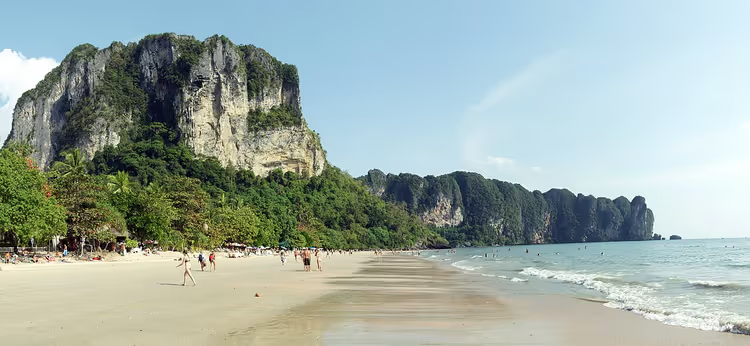
Ao Nang is a classic base for those who want to live in the middle of the action. By day you head out to the islands or explore the mainland on a scooter, and by evening you land at one of Thailand's main party scenes.
 © kallerna · CC BY-SAPhoto: kallerna, CC BY-SA (https://creativecommons.org/licenses/by-sa/3.0), Wikimedia Commons
The area's pluses: developed infrastructure, plenty of boat tours, and vibrant nightlife. The catches are honest too: overtourism, crowding, and noise at night.
What to expect
Ao Nang is one hundred percent geared toward tourists. The streets have turned into a dense maze of hotels, cafes, restaurants, souvenir shops, and massage parlors. Walking down the street without being offered a tour, taxi, or massage is almost impossible.
But everything is at hand. You can easily compare prices for boats to Railay, Phi Phi, Koh Hong, or the popular four-island tour. Rental and tour prices around town stay at the same level, so you don't need to depend on a specific hotel.
Ao Nang is also the area's transport hub. Boats to the islands and Railay leave from here, and most tours start here too. If you're planning a lot of trips by water, this is the most convenient place to stay.
The beach itself is busy: long-tail boats depart constantly. The northern part is narrow and runs along the main road, while the southern end looks nicer. Swimming is better further south, where there are fewer boats and shelters.
Nightlife and noise
At night Ao Nang really comes alive. You can grab a drink at a beach bar, watch a fire show, and later move on to clubs and dance until morning.
There's a price for this: loud music in some blocks and tipsy tourists. The town stretches along the main road that slopes down to the sea. Nightlife is concentrated on the street parallel to the beach.
The higher up the hill you go, the quieter it gets, but that's not a guarantee. Before booking, check recent reviews about noise. Remember: living uphill means walking up from the beach every time.
- Who it's for: those who care about parties, tours, and all the infrastructure within steps.
- Not for: those coming for quiet and local atmosphere.
- How to get there: from Krabi airport by taxi or minivan.
- The catch: noise, crowds, and constant offers of services on the street.
1. K-Bunk Ao Nang Center: a party hostel
 © ::::=UT=:::: · CC BY-SAPhoto: ::::=UT=::::, CC BY-SA (https://creativecommons.org/licenses/by-sa/3.0), Wikimedia Commons
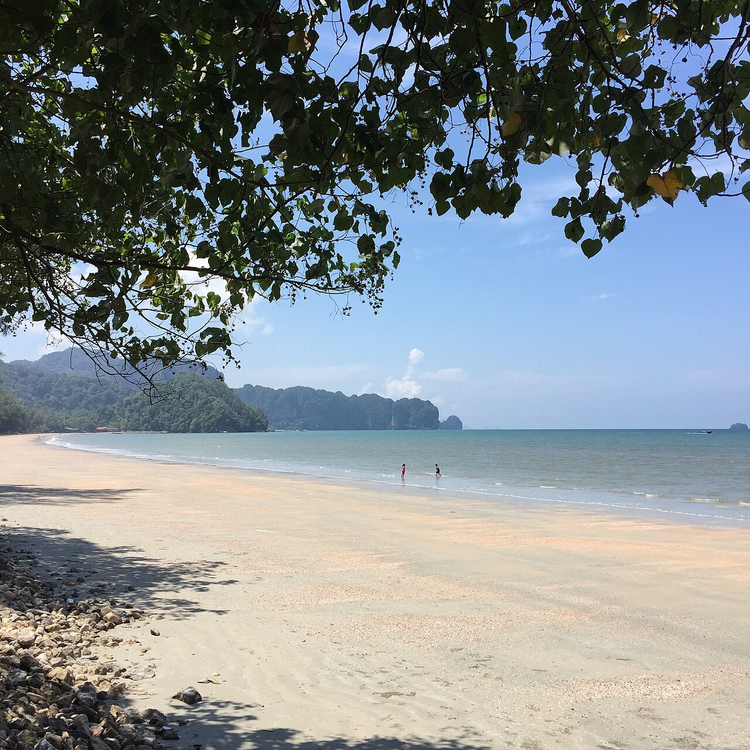
By day life here revolves around the pool, and in the evening organized activities take over: pub crawls and quizzes. Music is turned off at 11:00 PM so guests move on to local bars.
The hostel sits slightly up the slope and away from the main bar street, so the chance of getting sleep before a morning tour is higher. Earplugs will still come in handy.
- Who it's for: sociable backpackers who want to find company fast.
- Price: budget format, check the exact rate on Trip.com.
2. Anawin Bungalows: old-Thailand bungalows
 © kallerna · CC BY-SAPhoto: kallerna, CC BY-SA (https://creativecommons.org/licenses/by-sa/3.0), Wikimedia Commons
If you want to stay in the center of Ao Nang but without the noise, this is your option. The bungalows are tucked away on a quiet side street two steps from the beach, in a lush garden.
The place is run by French owners, and the atmosphere is family-style. The style is rustic, like the good old Thailand.
Important: don't expect luxury. The cottages are simple and already have history. Because of the dense tropical greenery, you'll most likely share the space with geckos and insects. For some that's part of the charm, for others a dealbreaker.
- Who it's for: those who value peace and quiet, a garden, and a family atmosphere.
- Price: mid-range budget, check the exact cost on Trip.com.
- The catch: simple old bungalows and insects nearby.
2. Noppharat Thara: the quiet side of Ao Nang
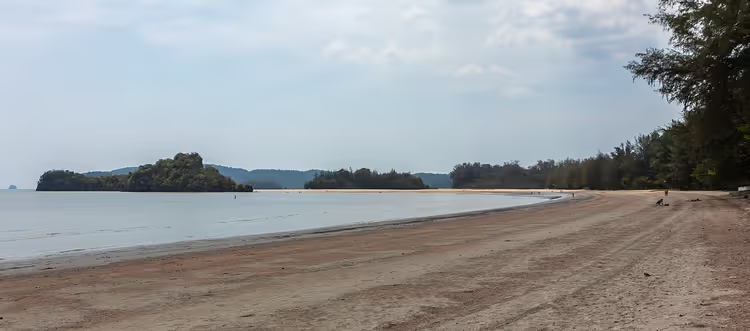
Noppharat Thara is the neighboring beach, noticeably quieter than its famous sibling. At the same time, it is still part of Ao Nang: there is a wide choice of accommodation and resorts here, including good budget options.
Pros of the area: a spacious beach, a calm atmosphere, a night market, resorts, and Muay Thai stadiums. Cons: the development is spread out, and some parts feel remote.
 © Stefan Fussan · CC BY-SAPhoto: Stefan Fussan, CC BY-SA (https://creativecommons.org/licenses/by-sa/3.0), Wikimedia Commons
Everything you need is here, but the layout is more stretched out than in Ao Nang. Depending on the hotel, walking to central Ao Nang takes a noticeable amount of time, so most tourists take a tuk-tuk.
Why you should stay here
The main draw is the beach itself. It is wider, more spacious, and noticeably less crowded than Ao Nang, so it works better for longer stays.
The atmosphere is calm. Fewer vendors will approach you, and that gives you quiet without a sense of isolation. You relax by the sea and still do not feel cut off from town.
In the evening, life centers on the Ao Nang Landmark night market. People pick up street food, drinks, and souvenirs here.
Nightlife is more relaxed, and bars close earlier than in Ao Nang. On the other hand, the louder parties are only a few minutes away.
For Muay Thai fans: two stadiums are nearby. Pickup trucks with loudspeakers advertising the evening fights drive through the streets, so they are hard to miss.
Two parts of Noppharat Thara
Two zones are convenient for travelers:
- Southern curve: on the hill where the road turns toward Ao Nang. Accommodation is close to the action, but thanks to the elevation it stays quiet here.
- Near the night market: the center with the highest concentration of shops, bars, and restaurants. Flat ground right by the sand.
1. Whoopers Hostel: budget-friendly for backpackers
 © Stefan Fussan · CC BY-SAPhoto: Stefan Fussan, CC BY-SA (https://creativecommons.org/licenses/by-sa/3.0), Wikimedia Commons
A strong budget option for backpackers: a good balance of price and location, just a few minutes from the beach and the night market.
The design is unusual, inspired by the series Money Heist. The dorms have capsule beds with privacy curtains, and downstairs there is a small bar with music until 11:00 PM.
In high season the dorms get a bit cramped, but for this price and location it is hard to find better. You wake up next to the beach and the market.
- Who it's for: solo travelers and backpackers.
- Price: budget format. Check prices on Trip.com
- The catch: in peak season the dorms are packed.
2. Doo Dee Boutique Resort: tropical bungalows
 © Dirk Enthoven · CC BYPhoto: Dirk Enthoven, CC BY (https://creativecommons.org/licenses/by/3.0), Wikimedia Commons
A short walk from the center, this budget resort has a jungle atmosphere. The heart of the property is a spacious pool surrounded by palms and small bungalows with semi-open bathrooms.
The brick finish is rustic and simple, but this is an affordable oasis for those who want a resort experience without the resort price tag. You do not have to pay for a lobby and concierge.
- Who it's for: those who want greenery, a pool, and a moderate budget.
- Price: mid-range. Rooms at Doo Dee on Trip.com
3. Centara Anda Dhevi Resort: convenient for families
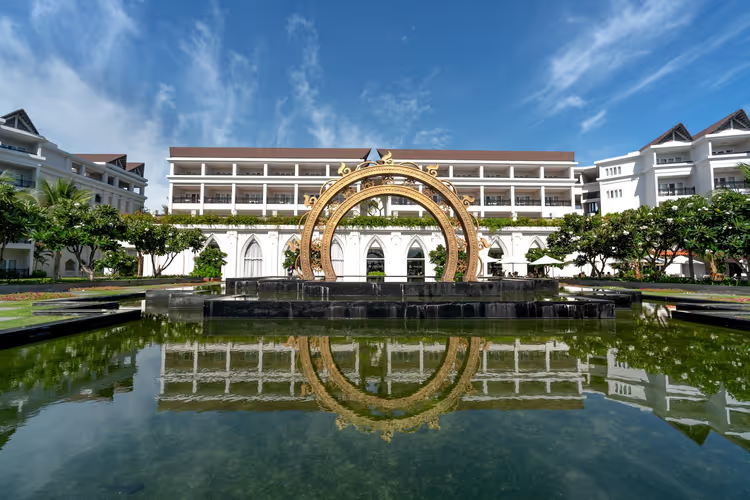
This resort sits closer to the border with Ao Nang and holds a higher standard, closer to a classic hotel. It is an excellent position for those who want to walk between the two beaches.
It is convenient for families: a large pool with a slide, a pool bar, a gym, and even a Starbucks on the property. The rooms are spacious and clean, with dark wood finishes. Suites with bunk beds suit families with children.
- Who it's for: families with children and those who value service.
- Not for: those looking for a hostel atmosphere and minimal spending.
- Price: above average. Compare prices on Trip.com
3. Railay: cliffs, beaches and crowds
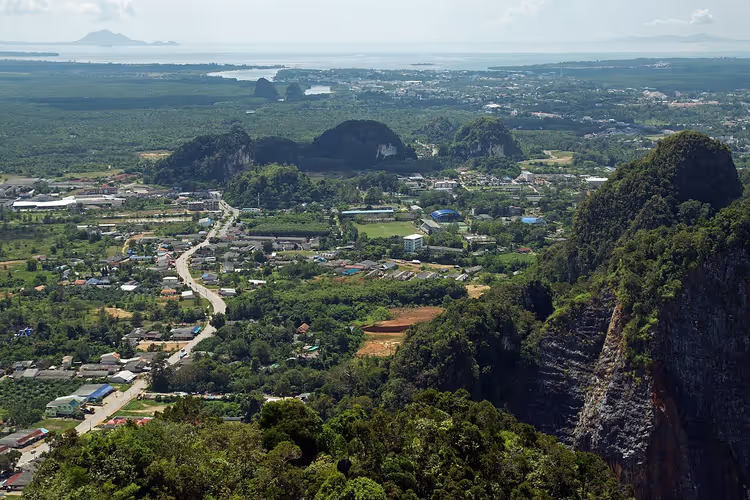
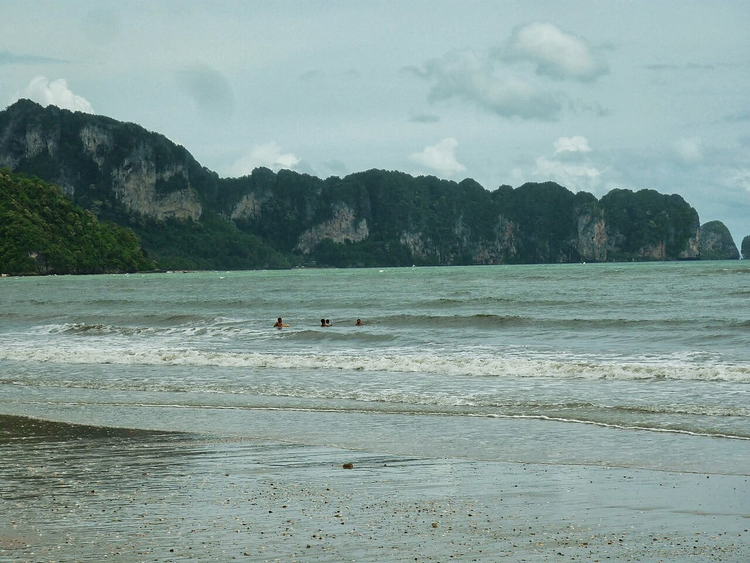
Railay's beaches are considered some of the most beautiful on mainland Thailand. Emerald water is framed by tall, colorful karst cliffs, and the view seems unreal.
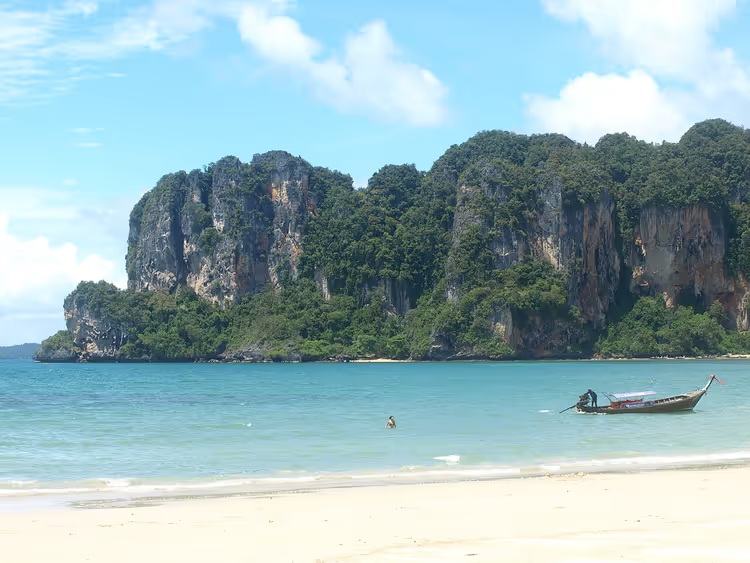 © Wendy Harman · CC BYPhoto: Wendy Harman, CC BY (https://creativecommons.org/licenses/by/2.0), Wikimedia Commons
The peninsula is cut off from the mainland by these cliffs, so you can only get there by water. That is exactly what creates the feeling of remoteness.
The area's pluses: dramatic scenery and some of the best beaches in the region. The catches: expensive, heavily built up, lots of day-trippers, and access only by water.
Railay consists of two main parts: the western side with open sea and the eastern side with mangroves. You can walk between them in a few minutes. There are no roads here, so people get around only on foot or by boat, and cars and motorbike taxis do not enter the area.
The water here is clear even near the shore, and the cliffs shelter the bay from waves. Swimming is almost always calm, so Railay works well for both swimming and snorkeling near the rocks.
What Railay looks like today
Experienced travelers recall that twenty years ago people stayed here for weeks in simple bamboo huts right on the sand. Today the reality is sharply different: Railay is heavily built up, and almost every free meter is taken.
In high season the density is hard to imagine. Several strips of sand receive thousands of guests, and hundreds of day-trippers who come for a few hours are added to that. You will feel it immediately if you arrive at the peak of the season.
In the mornings and evenings the beaches are almost empty, while during the day boats with tourists arrive. If you are staying here, the best hours are early morning and the time after the day groups depart.
The sheer limestone walls long ago made Railay a base for rock climbers. Even if you do not climb, go up the trails for the view of the bay from above.
Tip: Railay is best seen in the low season, from May to October. The weather there is less predictable, but you will see the scenery almost without crowds.
Is it worth staying overnight
Some travelers stay for one night to catch the quiet hours: early morning and late evening, when the day-trippers have left.
Most accommodation is squeezed into a narrow strip between the western and eastern parts of Railay. The slope north of the eastern part is much nicer: quieter, greener, and with dramatic views from above.
Staying in Railay is worth it only in the low season. We do not recommend booking in advance: the weather is unpredictable. It is better to decide on the spot, when you are already in Krabi and can see the forecast.
Exception: for rock climbers, Railay's limestone walls are the reason to come here specifically, and staying on the peninsula gives you more time for routes.
The catches of staying here
- Expensive: rooms and food come with a markup.
- Cramped: you are limited to a small area with few paths.
- Logistics: moving luggage becomes an ordeal. You often need to jump off the boat into knee-deep water and carry your bags across the sand. With heavy suitcases, think twice and take a backpack.
1. Blanco Hideout Railay: for socializing
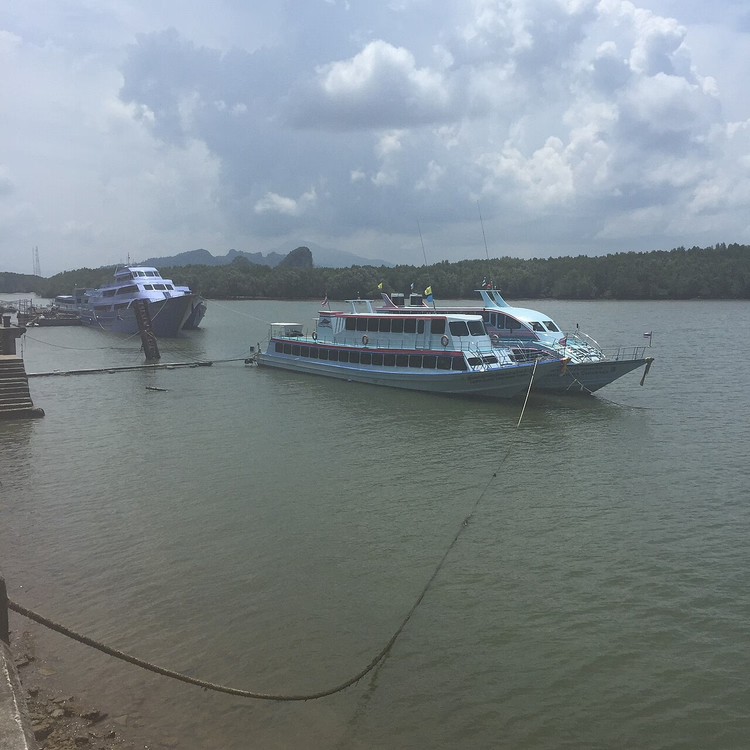 © ::::=UT=:::: · CC BY-SAPhoto: ::::=UT=::::, CC BY-SA (https://creativecommons.org/licenses/by-sa/3.0), Wikimedia Commons
One of the most affordable options on the peninsula: simple bungalows and a social atmosphere. The location is above the eastern shore, where it is noticeably calmer than in the center.
There are lots of backpackers here, and the place works as the main hub for young travelers. You quickly find company for dinner or for the climbing wall.
Important: there is an age limit, up to 35.
- Who it's for: young travelers who want company.
- Price: the most budget segment. Prices at Blanco Hideout on Trip.com
- The catch: the age limit cuts out some guests.
2. Railay Great View Resort: jungle and sea
At the far northeastern end of the walking trail, this option is hidden. The resort is carved into a green slope and recalls what Railay looked like ten years ago. Monkeys sometimes show up here.
This is a more luxurious stay: wooden bungalows, a private beach, sea views, a restaurant, a spa and a quiet pool. You will not have to look for seclusion, it is already around you.
- Who it's for: couples and travelers who are willing to pay for views and peace.
- Price: mid-range and up. See rooms on Trip.com
- The catch: you have to walk along a trail to reach the hotel, which is inconvenient with large luggage.
How to get to Railay
Go to the wooden ticket booth in the southern part of Ao Nang Beach, where the road meets the shore. The boat leaves when eight passengers have gathered.
Tip: buy a round-trip ticket. On the way back, the wait can drag on because only one company operates from Railay.
The crossing takes about 15 minutes (according to Thailand Longtail, 09/2026).
Depending on the tide, boats depart from the beach or from the neighboring pier, where you are taken by pickup truck. Most boats drop you off on the western side of Railay. Private boats sometimes go to the pier on the eastern side. For the return trip, boats wait in the southern part of the western beach. Sometimes you have to wait a long time for a boat, so do not plan your transfer too close to your departure.
4. Tonsai: the wild alternative to Railay
On the way to Railay, the boat passes Tonsai, where there are usually far fewer tourists. This is an ideal alternative if you want to see the same scenery without mass tourism.
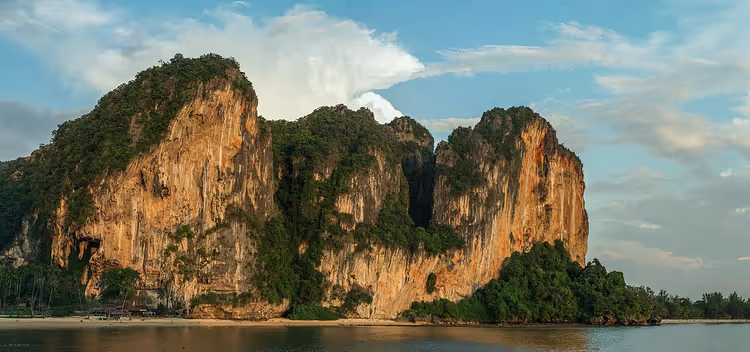 © Nata Mostova · CC BY-SAPhoto: Nata Mostova, CC BY-SA (https://creativecommons.org/licenses/by-sa/4.0), Wikimedia Commons
In many ways, time has stopped here. There are simple huts and a few relaxed restaurants, although modern resorts have also appeared in recent years.
It sounds almost perfect for slow days of reading, swimming, kayaking or rock climbing. Plus there is a jungle trail that connects Tonsai with Railay and gives you more freedom.
But there is a catch: power outages, weak Wi-Fi, few food options and lots of insects. At night it is very quiet, and at low tide the beach is too rocky for swimming. Getting here is also quite an adventure.
- Who it's for: those who are ready for simplicity and want quiet.
- Not for: families with children and those who need comfort.
- The catch: weak infrastructure and a rocky shore at low tide.
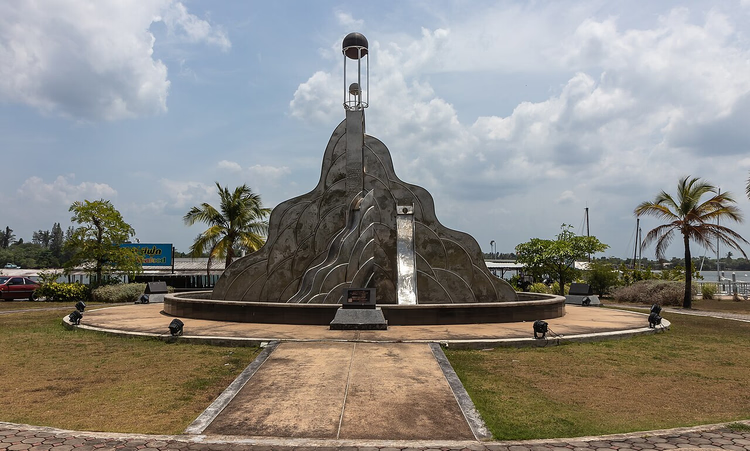
1. Chill Out Bar and Bungalows: barefoot through the jungle
 © Stefan Fussan · CC BY-SAPhoto: Stefan Fussan, CC BY-SA (https://creativecommons.org/licenses/by-sa/3.0), Wikimedia Commons
An absolute budget option for those who want full immersion in nature. The simple huts have no air conditioning or hot water, and electricity is available only at night, when the generator runs.
This is the atmosphere of the good old days of backpacking in Thailand, and it fits wild Tonsai perfectly. A solution for those who are ready for a rustic stay and do not expect amenities.
- Who it's for: low-maintenance travelers and backpackers.
- Price: minimal budget. Prices at Chill Out on Trip.com
- The catch: no air conditioning or hot water, electricity only at night.
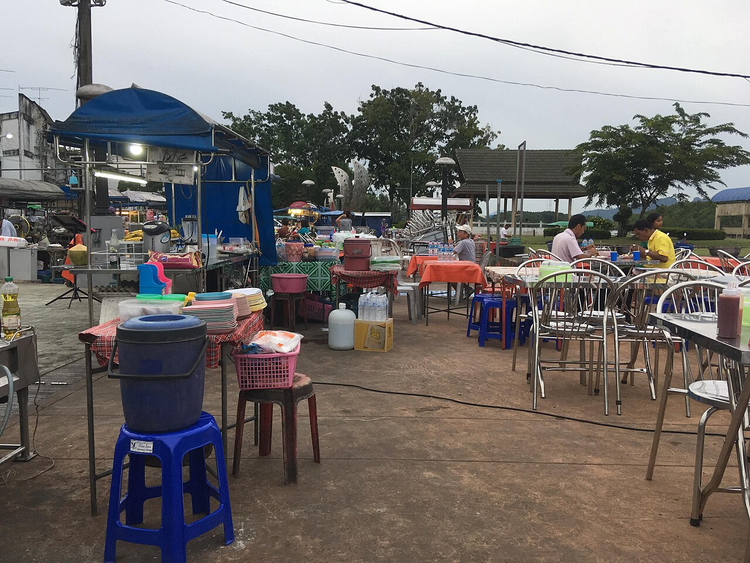
2. Tonsai Bay Resort: a base for climbers
 © Christophe95 · CC BY-SAPhoto: Christophe95, CC BY-SA (https://creativecommons.org/licenses/by-sa/4.0), Wikimedia Commons
For a more comfortable stay, this is a modern resort in the greenery near the beach. The place is secluded, and local monkeys often drop by.
You can choose affordable rooms or separate bungalows with a veranda, and the second option is clearly better. Everything is clean and convenient, and against the backdrop of a wild area you get a small taste of luxury.
- Who it's for: climbers and those who want comfort in a wild place.
- Price: mid-range. Rooms at Tonsai Bay on Trip.com
Boat to Tonsai
Tickets are bought at the same booth in Ao Nang as for Railay. The procedure is the same, but there is one important difference: boats go directly to Tonsai only at high tide.
Tip: always check the tide schedule before heading out. Otherwise a long walk awaits you.
At low tide the water is too shallow, and the boat cannot dock at Tonsai. Then you will be dropped off on the western side of Railay, and you will have to walk through the jungle or over the rocks for about twenty minutes.
5. Tub Kaek: a quiet beach getaway
The farther north you go from Ao Nang, the quieter the coast gets. This is where you'll find a handful of dream resorts built for escaping the crowds and tourist hubs.
If your goal is simply to switch off and relax by the sea, this is the right place. There are options around Klong Muang Beach, but the Tub Kaek area looks more appealing.
Pros: a secluded beach, nature, a clean shoreline. Cons: remoteness, few restaurants, high prices.
 © Владимир Е · CC BY-SAPhoto: Владимир Е, CC BY-SA (https://creativecommons.org/licenses/by-sa/3.0), Wikimedia Commons
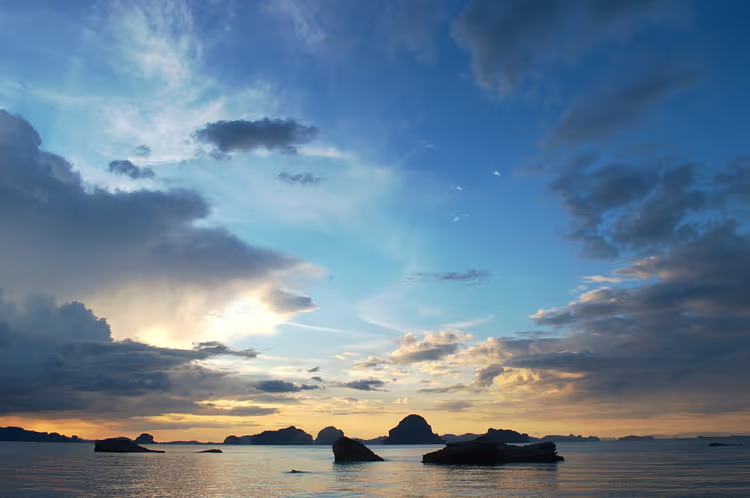
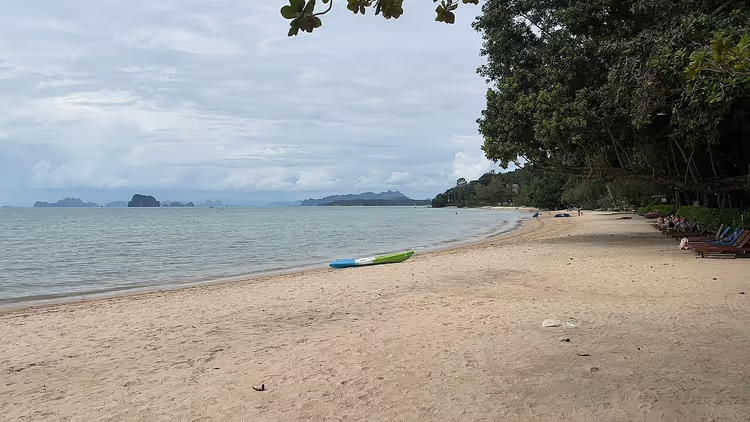
Tub Kaek sits at the very end of the coastal road and is literally hugged by a national park, which makes it feel even more secluded. The sand is soft, and the shore is beautifully lined with trees that provide natural shade. You lie in the shade rather than under the scorching sun.
The main catch is just one: remoteness. There are few hotels and restaurants, and the area is geared toward premium travel, which shows in the prices. Without your own transport, you'll have to rely on taxis (Grab or Bolt) or tuk-tuks. The drive to Ao Nang takes about twenty minutes.
Klong Muang is a more lived-in part of the coast: it has more hotels, cafes, and shops, and life is busier. If you want amenities close at hand, look closer to Klong Muang; if you want quiet, choose Tub Kaek.
The beach borders national park land, so development is limited and the surrounding nature remains untouched. The sunsets here are among the best on the Krabi coast: the sun drops straight into the sea, and by evening people come out onto the sand for the view.
The road here runs along the coast, with views of the sea and islands along the way. If you're on your own scooter, the route itself becomes part of the experience.
Stay at Tup Kaek Sunset Beach Resort
 © Stefan Fussan · CC BY-SAPhoto: Stefan Fussan, CC BY-SA (https://creativecommons.org/licenses/by-sa/4.0), Wikimedia Commons
Bungalows with palm-thatched roofs blend beautifully into the landscape. Some rooms face the pool, others sit right on the sand. The beach bungalows offer the best views of the sea and the sunsets people come here for.
There's not much to do here, and that's the whole charm: you relax on a lounger under the trees or cool off in the pool. For the restless, there are kayaks and paddleboards. In the evenings, guests gather on the sand to watch the sunset, and that's the area's main entertainment.
- Who it's for: couples and anyone seeking peace and sunsets.
- Not for: those who want bars, tours, and activity nearby.
- Price: premium segment. Check prices on Trip.com
- The catch: without your own transport, the area is isolated.
6. Krabi Town: an authentic base
Krabi Town is a calm alternative to the tourist beach towns. It's a town for those who want to escape the crowds and see local life.
Pros: the riverfront promenade, a relaxed atmosphere, great street food, night markets, and mangrove tours. Cons: no beach, urban views, and little nightlife.
After hearing about the crowds in Ao Nang and Railay, many people choose Krabi Town as their base. The pace here is laid-back: dinners at local markets and sunset walks along the promenade.
The main plus: the beach is only thirty minutes away by songthaew or twenty by scooter, so you don't miss out on anything.
The evening market in the center is a reason to visit on its own. Locals cook local dishes here, and prices are noticeably lower than at the beach. Take a walk along the riverfront promenade: in the evening, families stroll along it, and the light reflects on the water.
Krabi Town is small, and its center is walkable. Hotels, cafes, and markets are concentrated within a few blocks, so you don't need transport for evening walks.
The town is a convenient base for day trips. The bus station and minivan station are nearby, so getting deeper into the province takes less time than from Ao Nang.
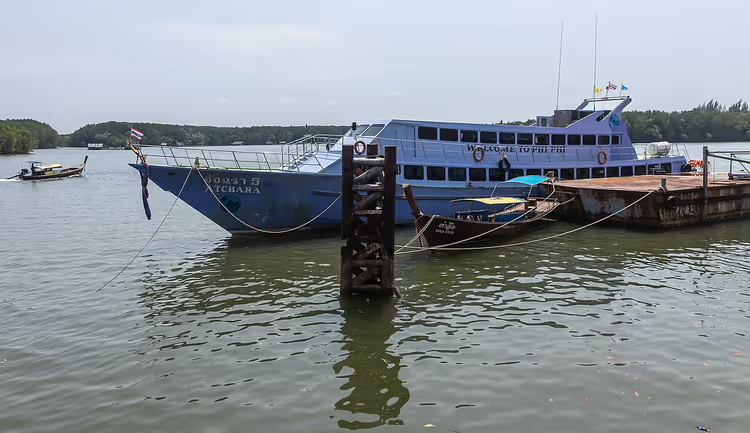 © Stefan Fussan · CC BY-SAPhoto: Stefan Fussan, CC BY-SA (https://creativecommons.org/licenses/by-sa/3.0), Wikimedia Commons
Why it's worth staying here
Life here gives you the best of both worlds. You get the conveniences of a small town: plenty of food spots, lively markets, and local shops, plus massage places and travel agencies. And all of it is cheaper than at the beach. You spend less on food, accommodation, and massages, but you get more local character.
Then there's nature. Across the river, the landscape changes completely: almost no houses, just green hills. From the pier you can spot herons, kingfishers, and mudskippers on the banks.
For a deeper look, we recommend a kayak tour through the mangroves. It's a great way to see monkeys, lizards, and even snakes in their natural habitat.
Finally, Krabi Town is strategically located: closer to the bus station and minivan station. From here it's easy to reach attractions deeper in the region, such as Wat Tham Suea temple in the limestone cliffs (according to the official Thailand tourism guide, 09/2026). Another nearby destination is the Emerald Pool (Sa Morakot) in the jungle.
1. Leisure Hostel: a backpacker classic
One of the best options for backpackers in Krabi Town. The hosts make you feel at home from the first minutes. Convenient location: street food and the promenade are within walking distance.
The building has an open layout that lets the breeze through. There are comfortable and affordable dorms and private rooms. The downstairs lounge and rooftop bar are great spots for meeting people after sunset.
- Who it's for: backpackers and sociable travelers.
- Price: budget segment. Leisure Hostel prices on Trip.com
2. The Brown Hotel: for couples and a quiet stay
For those who want more comfort, The Brown Hotel is an excellent choice. A cozy atmosphere and stylish modern interior, perfect for recovering after a long day.
The hotel is located in the center, a few minutes' walk from the city's best cafes and restaurants. They also serve a good breakfast on site if you want a slow morning.
- Who it's for: couples and those who value quiet and comfort.
- Not for: those looking for a hostel atmosphere and socializing.
- Price: mid-range segment. See rooms on Trip.com
⁉️🤔 Frequently asked questions
Which area of Krabi should I choose for a first trip?
For a first trip, Ao Nang is the easiest option: it's central, easy to walk around, and tours and food are close by. From there it's easy to get to both Railay and the islands. If you want more local life and fewer crowds, go with Krabi Town.
Can you reach Railay and Tonsai by land?
No. The Railay peninsula is cut off from the mainland by limestone cliffs, and Tonsai is separated by a difficult-to-cross stretch. Both beaches are only accessible by water from Ao Nang. The exception is the jungle trail between Railay and Tonsai, but it won't get you to the mainland.
How do I get from Krabi Airport to Ao Nang?
Taxis, minivans, and buses run from Krabi Airport (KBV) to Ao Nang. The trip takes about an hour. Grab and Bolt work, but at the airport you may have to wait for a car. For Railay and Tonsai, you need one more step: a boat from the southern end of Ao Nang Beach.
Where is the quietest place in Krabi?
The calmest options are Nopparat Thara, Tub Kaek, and Tonsai. Tub Kaek is the most secluded, but also the most expensive. Nopparat Thara offers quiet while staying close to Ao Nang. Tonsai is quiet, but with minimal infrastructure.
Is it worth going to Krabi in the rainy season?
Yes, if you're ready for changeable weather. From May to October, Railay and Tonsai have significantly fewer people, and the scenery looks just as spectacular. Rain showers are usually short. The one catch: some boats and tours operate depending on the weather, so keep your plans flexible.
Find hotels in Krabi
Compare prices across booking sites and filter for rooms with free cancellation.
Compare prices on Trip.comThe widget loads once you give your consent.
In short: what to book
The decision matrix is simple. If you want parties, tours, and everything close at hand, go with Ao Nang. If you want a quiet beach near the action, Nopparat Thara fits. People head to Railay for postcard views and cliffs, and to Tub Kaek for peace and sunsets.
For budget and socializing, choose Krabi Town or the hostels of Ao Nang. For families, Centara Anda Dhevi with its pool and slide is the best bet.

A small editorial team writing guides for independent travel. We travel ourselves, but we haven’t been everywhere, so we check prices, opening hours and how to get there against official sources.