
















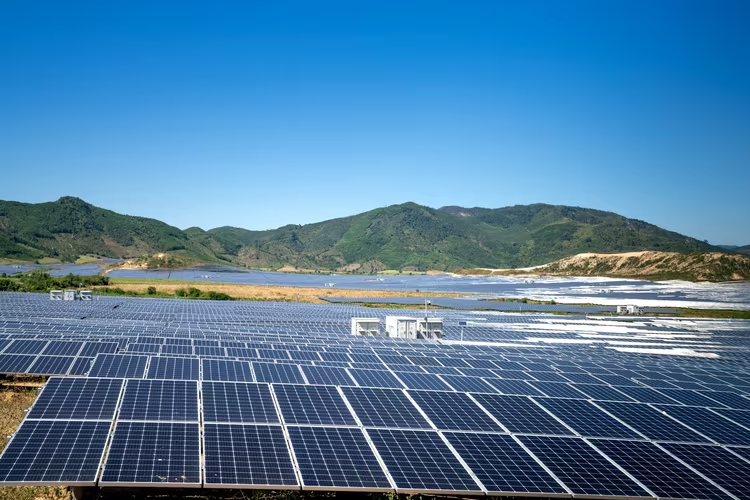
Wholesale photovoltaic supplier PVhurt: how to choose a distributor
The wholesale photovoltaic market in Europe is growing, but so is the number of intermediaries. For an installation company, the choice of supplier affects timelines, warranty, and the final project price. A good distributor keeps stock in the warehouse and ships it in batches of any size. In 2025, the EU installed 65.1 GW of new solar capacity, 0.7% less than the 65.6 GW a year earlier (as of: SolarPower Europe, 12/2025). Demand is high, which means you should choose a supplier based on availability and documentation, not just price.
What a photovoltaic distributor is
A photovoltaic distributor operates as a wholesale intermediary: it buys modules, inverters, and mounting systems from manufacturers and sells them to installers, engineering firms, and B2B clients. It does not manufacture equipment itself, but it is responsible for the warehouse program, logistics, and the documentation package. For an installation crew, the benefit is that the entire kit arrives as one shipment rather than ten packages from different stores.
💡 In short:
- A distributor covers the full kit: modules, inverters, storage systems, and mounting hardware.
- You choose one based on availability, delivery times, warranty, and documentation.
- Equipment must be certified to IEC 61215 and IEC 61730 standards.
- Wholesale module prices in Europe are holding in the range of 0.11-0.14 €/Wp (as of: 07/2026, PV Europe).
Warehouse availability matters more than a discount. If a supplier ships modules only on order, the project timeline stretches by weeks. Ask directly which items are in stock right now and which are being brought in for a specific client.
PVhurt: a wholesale photovoltaic supplier
PVhurt operates as a photovoltaic distributor for installers, engineering firms, and B2B clients across Europe. The company combines wholesale and direct sales, so it handles both single orders and container-sized batches. According to its website (checked 10/2026), the PVhurt catalog includes modules from 400 to 800 W, grid-tied, hybrid, and off-grid inverters, energy storage systems, mounting systems, and ready-made kits. Brands in the catalog include JA Solar, LONGi Solar, Trina Solar, Jinko Solar, Canadian Solar, Sungrow, Huawei, and SMA Solar Technology.
PVhurt claims its own warehouses in Europe and short delivery times within the EU. The company is a useful example of a modern wholesaler: a broad warehouse program, wholesale and direct sales, and technical project support. To compare prices, request a price list and clarify delivery terms on a per-request basis.
Which components and brands are kept in stock
Modules differ by technology, power class, and warranty period. Below are typical items that distributors in this segment cover (based on the PVhurt catalog, checked 10/2026):
Manufacturer | Technology | Power class | Warranty |
|---|---|---|---|
JA Solar | Mono PERC | 400-555 W | 12-25 years |
LONGi Solar | Hi-MO | 410-545 W | 12-25 years |
Trina Solar | Vertex S | 405-500 W | 15-25 years |
Jinko Solar | Tiger Neo | 415-545 W | 12-25 years |
Canadian Solar | TopCon / Mono | 420-555 W | 12-25 years |
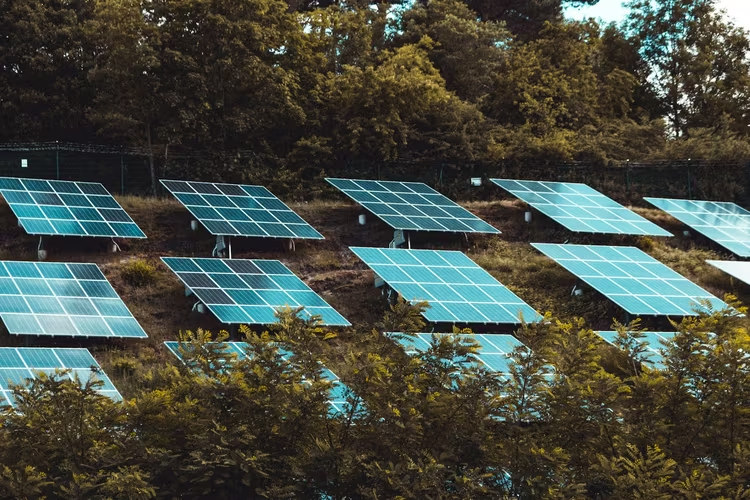
Inverters convert the modules' direct current into alternating current for the grid. A distributor carries three classes: string inverters for private homes and small commercial properties, central inverters for large plants, and hybrid inverters with a built-in battery port. The converter's performance and maximum power point tracking (MPPT) function are tested to the European standard EN 50530. A well-chosen inverter can boost a plant's annual output by several percent.
Along with modules and inverters come the small parts without which the system cannot be assembled: DC cables with MC4 connectors, fuses and surge protection, mounting rails, roof hooks, and monitoring systems. It is more cost-effective to get everything in one shipment: less risk that a part will not fit the connector or will arrive later than the rest.
What to look for when choosing a supplier
Before your first purchase, check five points. They affect timelines and the final cost per kilowatt.
Criterion | What to look at | Why it matters |
|---|---|---|
Warehouse | which items are in stock right now | project timeline |
Documentation | IEC 61215 and IEC 61730 certificates | grid access and insurance |
Warranty | period on the module and on the inverter | replacement at the supplier's expense |
Logistics | warehouse in the EU and shipping time | delivery without customs |
Assortment | modules, inverters, and mounting from one source | fewer suppliers in the project |
A typical beginner mistake is choosing a supplier based only on price per watt. A cheap module without a full certificate package may fail approval with the grid operator, and you will lose time on replacement. The second mistake is assembling the kit from different places: mounting hardware arrives with one delay, the inverter with another, and installation sits idle. Ask for the warranty period and the claims procedure in writing before paying.
Mounting systems by roof type
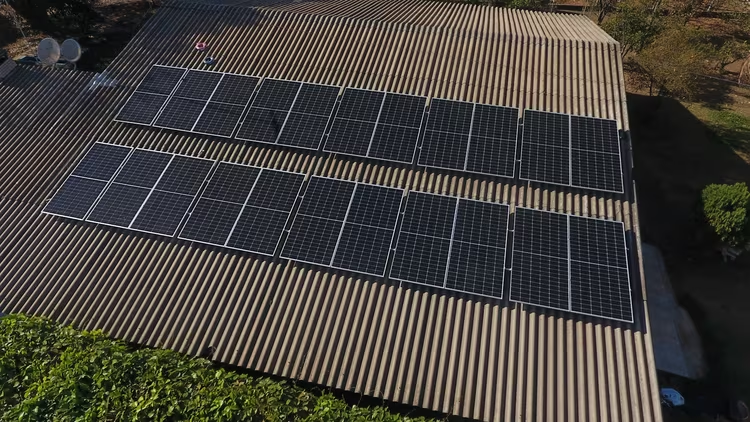
Mounting hardware is selected for the base surface. For a pitched roof, use aluminum rails and hooks; for a flat roof, a ballasted system without penetrating the membrane; for an open ground site, piles and frames. Below are service life benchmarks (based on mounting system manufacturers' specifications).
Site | System type | Advantage | Service life |
|---|---|---|---|
Pitched roof | aluminum rails | easy installation, flexibility | over 25 years |
Flat roof | ballasted system | no roof penetration | over 20 years |
Open ground site | piles and frames | high rigidity for large plants | over 30 years |
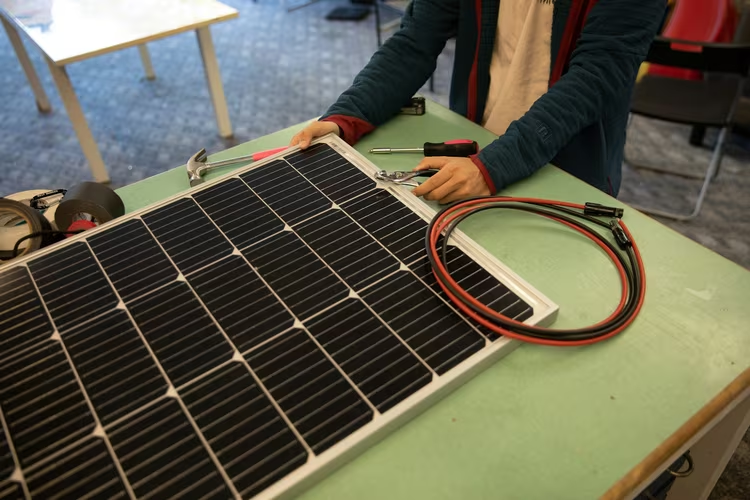
Before installation, check the snow and wind loads for your region. Mounting hardware designed for a mild winter will not withstand a heavy snow load, and you will get a claim from the client. Use systems certified to European standards and check the completeness of the delivery.
How to place an order and check the terms
Ordering from a wholesaler goes through four steps. First, you check availability and request a price list. Then you agree on the volume and shipping date. After that, you receive an invoice and confirm the delivery address. At the last step, you check the documents upon receipt.
- Availability. Ask which items are in stock and which are on order.
- Price. Request a price list and terms for your volume.
- Contract. Check the warranty, delivery time, and claims procedure.
- Receipt. Verify the part numbers, quantity, and batch certificates.
Place the order and make payment through the company's official channel, not through messenger correspondence. That way you keep your right to warranty and to a return in case of defects.
⁉️🤔 Frequently asked questions
What is a photovoltaic distributor?
A photovoltaic distributor sells modules, inverters, and mounting hardware wholesale. It buys equipment from manufacturers and keeps it in stock, so it ships both small kits and container-sized batches. Unlike a retail store, it works with engineering firms and installers and offers wholesale terms.
Which components are usually in stock?
The basic set includes solar modules, grid-tied and hybrid inverters, energy storage systems, cables with MC4 connectors, surge protection, mounting rails, hooks, and monitoring systems. A broad supplier covers the entire kit from one source.
What should you look for when choosing a supplier?
Check product availability, warranty period, a full certificate package, and shipping time. Separately confirm whether there is a warehouse in Europe: this shortens delivery and removes customs formalities. Price matters, but not on its own.
Which standards should the equipment meet?
Modules for the European market undergo qualification to IEC 61215 and IEC 61730: the first tests structural durability and power retention, the second covers electrical safety. For inverters, conversion efficiency is tested to the EN 50530 standard.
Does PVhurt work with small orders?
Yes. The company states flexible terms: it accepts both individual modules for a small installation and container-sized batches for large projects. Confirm the exact volume and price by request on its website.
In short: how to choose a photovoltaic supplier
Choosing a distributor comes down to four things: warehouse availability, equipment documentation, warranty, and logistics within the EU. Price per watt matters, but it does not replace IEC 61215 and IEC 61730 certificates.
- If you have a small installation for a private home, choose a supplier with flexible batch sizes.
- If you are running an industrial project, look for a warehouse with central inverters and mounting hardware.
- If you are just starting out, compare at least two price lists and warranty terms.
Before paying, review the contract: delivery time, warranty, and claims procedure. That is cheaper than looking for replacement equipment on the job site.

A small editorial team writing guides for independent travel. We travel ourselves, but we haven’t been everywhere, so we check prices, opening hours and how to get there against official sources.