
















Dangerous delicacies of the world: 10 dishes with real health risks
Exotic cuisine is tempting, but sometimes it works against you. Some delicacies around the world carry official warnings from regulators. This is not about scare stories, but about specific substances: tetrodotoxin, cyanide, hypoglycin A.
We have collected ten of the riskiest dishes and products. For each one, you will see exactly what the danger is, how locals work around it, and what you should know before your first taste.
We checked the facts against agency documents, not rumors. The FDA has dedicated pages on hypoglycin A in ackee fruit and on amygdalin in apricot kernels. You will find a source for every figure below.
What makes a delicacy dangerous
💡 In short:
- The danger comes from a substance: tetrodotoxin in fugu, cyanide in cassava and kernels, hypoglycin A in unripe ackee.
- Some dishes are legal under supervision, some are banned: casu marzu has no approval in the EU.
- Often the risk comes not from poison, but from contamination or choking: raw shellfish and live octopus.
- As of 09/2026, according to FDA and WHO.
1. Fugu and tetrodotoxin
 © Raita Futo from Tokyo, Japan · CC BYPhoto: Raita Futo from Tokyo, Japan, CC BY (https://creativecommons.org/licenses/by/2.0), Wikimedia Commons
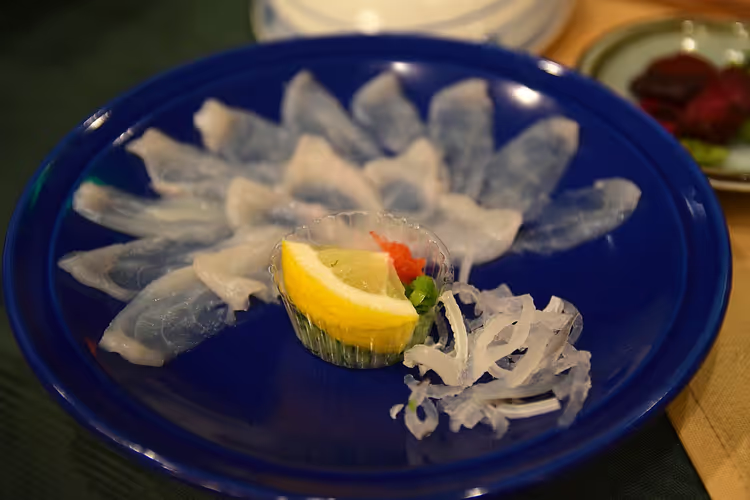
In Japan, fugu is prepared only by licensed chefs. The poison tetrodotoxin sits in the liver, roe, and internal organs. There is no antidote; only emergency resuscitation can save you.
In licensed restaurants, fatal cases are rare. More often, people who prepare fugu at home get poisoned: poisonings and deaths are recorded specifically after home preparation. You order the fillet raw, fried, or in broth. Serving fugu liver is banned in Japanese restaurants: that is where the poison concentration is highest.
- The catch: there is no antidote for tetrodotoxin.
2. Ackee from Jamaica
 © Jerome Walker · CC BY-SAPhoto: Jerome Walker, CC BY-SA (http://creativecommons.org/licenses/by-sa/3.0/), Wikimedia Commons
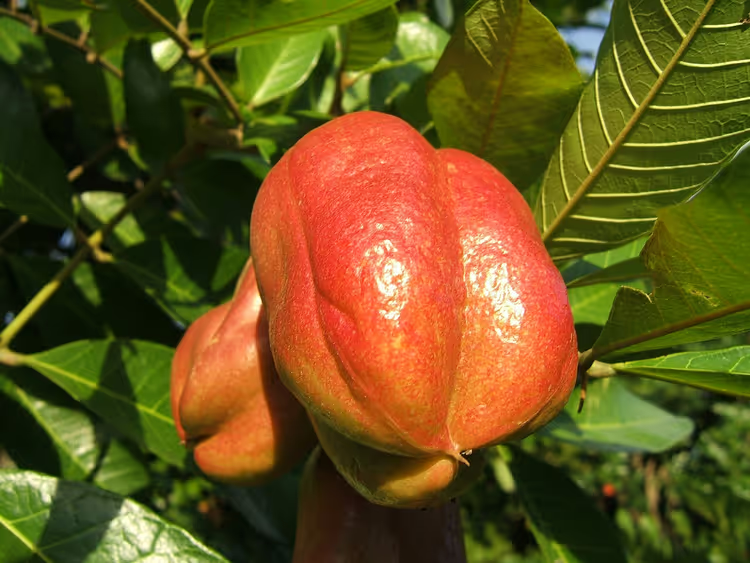
Unripe ackee accumulates hypoglycin A. It crashes your blood sugar level, causing vomiting and seizures. In the US, the FDA has a dedicated page on this toxin (FDA page, as of 09/2026).
A ripe fruit that has opened on the tree by itself is safe and rich in protein and vitamins. In Jamaica, it has been cooked for centuries using the same method: only opened fruit is picked, and the water is discarded after boiling. You should try this dish only in a trusted kitchen.
- The catch: unripe fruit is dangerous even in small amounts.
3. African bullfrog in Namibia
 © Steven G. Johnson · CC BY-SAPhoto: Steven G. Johnson, CC BY-SA (https://creativecommons.org/licenses/by-sa/3.0), Wikimedia Commons
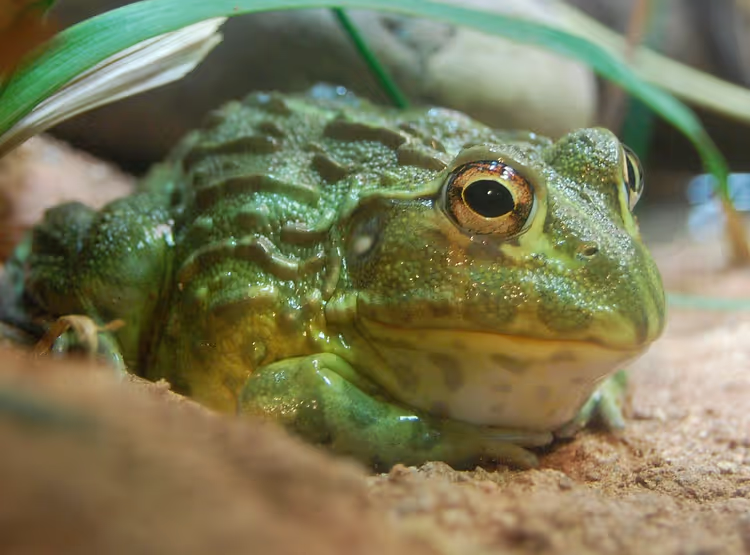
The African bullfrog is considered one of the largest frogs in southern Africa. In Namibia, it is cooked whole: fried or stewed. Unlike in France, where only the legs are used, here the whole animal ends up on the table.
Local tradition forbids eating this frog before the "third rain," meaning before the breeding season. Meat eaten before that time can cause kidney failure. If you order this dish, choose a place that has been preparing it for years.
- The catch: frog eaten before the "third rain" is linked to kidney failure.
4. Sannakji from Korea
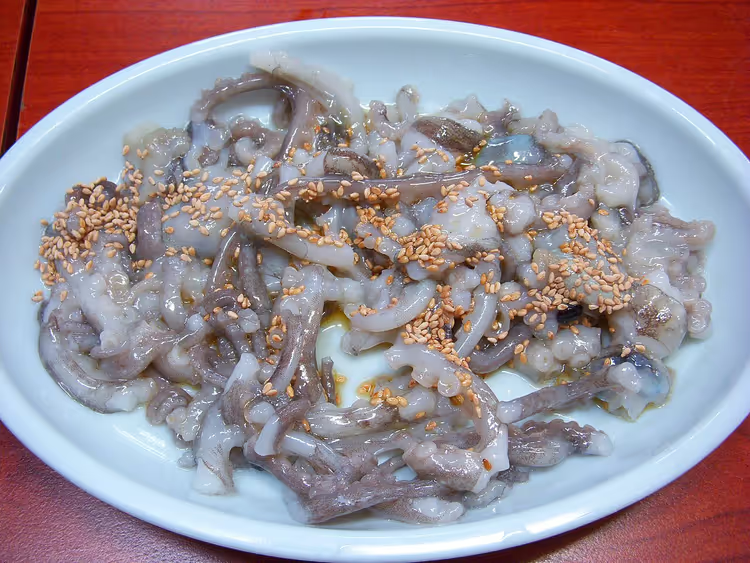 © by LWY at flickr · CC BYPhoto: by LWY at flickr, CC BY (https://creativecommons.org/licenses/by/2.0), Wikimedia Commons
Sannakji is made from live octopus: the tentacles are cut and seasoned with sesame oil. There are no toxins in the dish, but the tentacles are still moving. The suction cups can stick to your throat.
In Korea, this is a common snack, and tourists order it for the thrill. There is one rule: chew thoroughly and slowly, do not swallow pieces whole. If you are not confident, start with a small portion.
- The catch: a swallowed piece with a suction cup can block your airway.
5. Apricot and cherry kernels
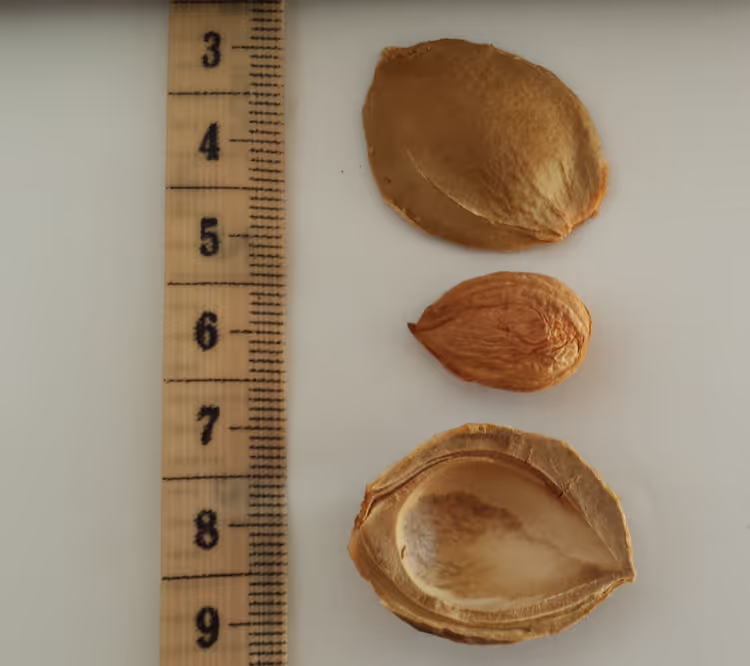 © Iulian.serbanoiu · CC BY-SAPhoto: Iulian.serbanoiu, CC BY-SA (https://creativecommons.org/licenses/by-sa/3.0), Wikimedia Commons
Apricot, cherry, peach, and plum kernels contain amygdalin. In the body, it breaks down into cyanide.
Bitterness indicates a high amygdalin content. The FDA specifically warned about bitter apricot kernels sold as a supplement (FDA warning, as of 09/2026). Don't eat them by the handful and don't use them as a substitute for medication.
- The catch: "healthy" kernels are sold as a supplement, even though they are a source of cyanide.
6. Cassava and cyanide
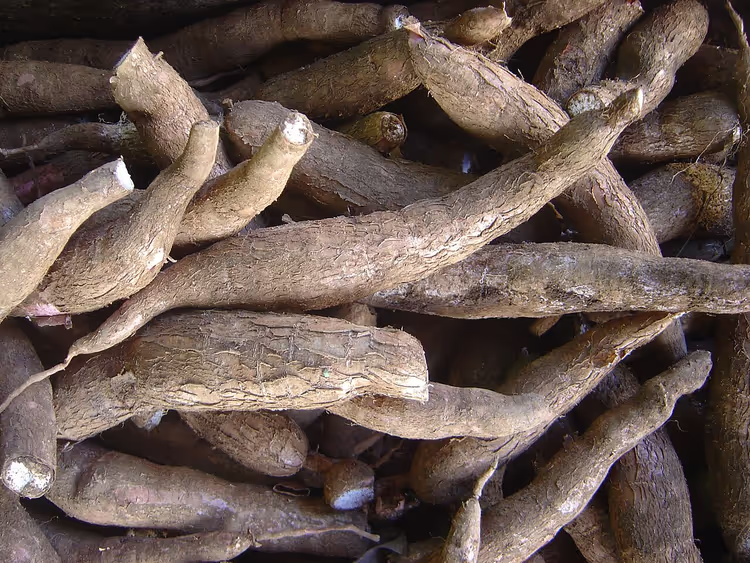 © David Monniaux · CC BY-SAPhoto: David Monniaux, CC BY-SA (http://creativecommons.org/licenses/by-sa/3.0/), Wikimedia Commons
Cassava is eaten in Africa and South America, but the raw root and leaves contain cyanogenic glycosides. Without proper processing, they release cyanide. The WHO maintains a separate fact sheet on this substance (WHO fact sheet, as of 09/2026).
The risk is confirmed in practice. In western Uganda in 2017, 98 people were poisoned and two died: the cause was flour made from a wild cassava variety with a high cyanogen content (CDC report, as of 2019).
Proper processing removes almost all of the danger. The root is soaked, grated, and boiled, and the water is drained. This mass is used to make flour and a drink called piwarry. Buy processed cassava and boil the finished dish thoroughly.
- The catch: a short recipe without soaking leaves cyanide in the dough.
7. Casu marzu from Sardinia
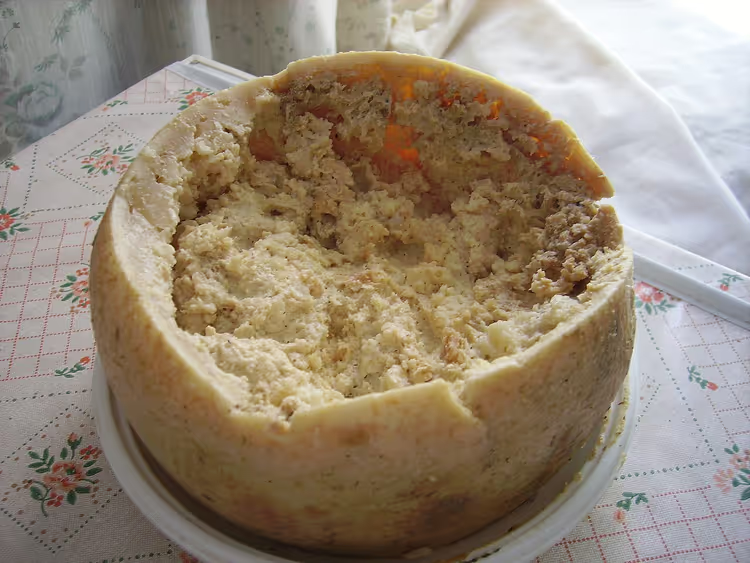 © Shardan · CC BY-SAPhoto: Shardan, CC BY-SA (https://creativecommons.org/licenses/by-sa/2.5), Wikimedia Commons
Casu marzu is made from sheep's milk cheese in Sardinia. Cheese fly larvae are introduced into it, and they break down the fat. The cheese becomes soft and very sharp, with live larvae remaining inside.
Formally, the cheese is not approved in the EU and is sold only unofficially, even in Sardinia. Locals eat it in small portions and only when fresh.
- The catch: you can't legally buy casu marzu, even in Sardinia.
8. Elderberry and its berries
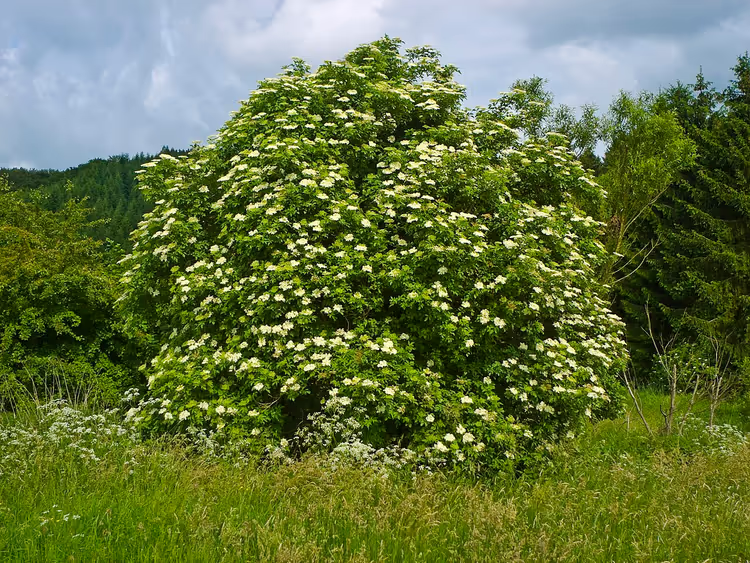 © Willow · CC BYPhoto: Willow, CC BY (https://creativecommons.org/licenses/by/2.5), Wikimedia Commons
Elderberry grows throughout Europe, and its berries are used in jams and syrups. The danger comes from unripe berries, as well as the leaves and stems. They contain a glycoside that releases cyanide.
Fully ripe berries are safe after cooking, which is why recipes always boil them. Raw green fruit can cause nausea and digestive upset. If you pick elderberries yourself, take only dark, ripe clusters.
- The catch: raw unripe berries and green parts must not be eaten.
9. Blood clams from China
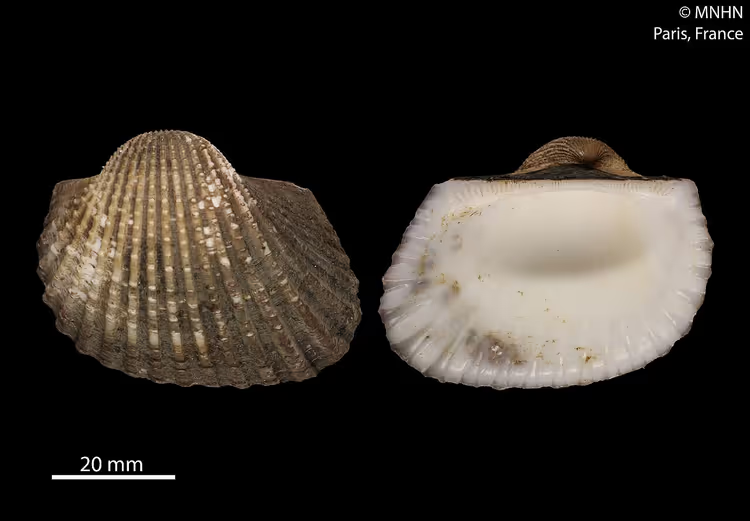 © Marie HENNION · CC BYPhoto: Marie HENNION, CC BY (https://creativecommons.org/licenses/by/4.0), Wikimedia Commons
Blood clams are popular in southern China and are often eaten almost raw. Along with them, the hepatitis A virus enters the body, which the clams pick up from contaminated water.
The risk is not imaginary. In 2026, the CDC and FDA investigated a hepatitis A outbreak linked to raw and undercooked clams (CDC materials, as of 09/2026). Thorough cooking kills the hepatitis A virus. So choose only fully cooked clams.
- The catch: raw clams are directly linked to hepatitis A.
10. Fast food and McDonald's
 © Dirk Tussing from Chicago IL, United States · CC BY-SAPhoto: Dirk Tussing from Chicago IL, United States, CC BY-SA (https://creativecommons.org/licenses/by-sa/2.0), Wikimedia Commons
Formally, fast food is not classified as a delicacy, but the list would be incomplete without it. McDonald's operates worldwide, and its products are regularly studied. The danger here is not in a single item but in the habit.
Large portions, sugar in drinks and sauces, and high amounts of salt and saturated fat shift the entire diet. Fast food is linked to obesity, high cholesterol, and heart disease. For you, this means one thing: the more often you go, the higher the accumulated risk.
- The catch: the damage to the body accumulates over years.
⁉️🤔 Frequently asked questions
Is fugu really deadly?
Yes, if prepared by a non-specialist. The first signs of poisoning are tongue numbness and breathing weakness. They develop quickly, so if you have these symptoms, call an ambulance immediately.
Can you eat unripe ackee?
No. Poisoning manifests as vomiting, seizures, and loss of consciousness. Both the fruit itself and the water it was boiled in are dangerous.
Is live octopus in Korea dangerous?
Yes, but not because of poison. The danger comes from the moving tentacles with suction cups. Don't rush to order more, and finish one portion completely.
Why is casu marzu sold illegally?
The cheese has not passed the safety assessment that the EU requires for new products. Live larvae and hygiene requirements don't fit into the general regulation. That's why you can't legally buy it, even in Sardinia.
Is store-bought cassava dangerous?
Usually not. Industrial flour undergoes processing that removes cyanogens. The risk arises with wild varieties and homemade recipes without soaking.
In short: what to avoid
Ten delicacies have one thing in common: the risk comes from a substance or a technique, not the taste itself. Some dishes are safe in licensed hands, others are banned by law. If you want minimal risk, choose thoroughly cooked foods and avoid raw clams. If you're looking for thrills, choose fugu at a licensed restaurant, not home experiments.
For a long drive to places like these, it helps to prepare some entertainment in advance: check out 10 movies worth watching before a trip to Europe.

A small editorial team writing guides for independent travel. We travel ourselves, but we haven’t been everywhere, so we check prices, opening hours and how to get there against official sources.