
















11 Vilnius attractions: opening hours and what is free
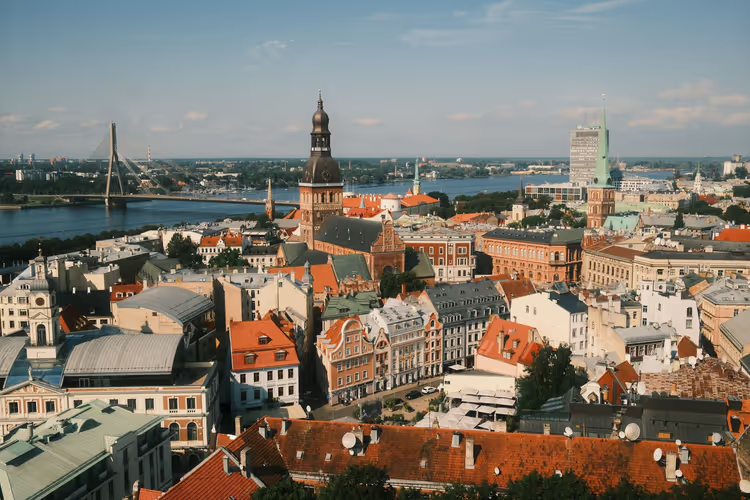
Vilnius Old Town can be covered on foot in one day. The main sights are compactly located, and most of them are free to enter. This is a rare case where a capital city doesn't empty your wallet.
We've put together 11 places worth seeing first. For each place, we've noted whether entry is paid and suggested how to get there. Where prices change, you'll find a link to the official source.
One trip can cost almost nothing. Churches are free to enter, and you'll mainly pay for the TV tower and a few museum exhibitions.
Ad: this article contains affiliate links, we earn a commission if you book through them, at no extra cost to you.
What to see in Vilnius
💡 In short: Vilnius is easy to explore on foot. Eleven main sights lie within a couple of kilometers of each other, and half of them are free.
- The Gate of Dawn, Vilnius Cathedral, and Užupis are a 15-20 minute walk from each other (on the map).
- Paid: Vilnius TV Tower, the art museum, and the National Museum of Lithuania.
- TV tower prices and hours: 09/2026, verified on the official TV tower website. Sources for other places are listed in their sections.
The table below will help you plan your walking route and avoid wasting time on closed doors.
# | Place | Entry | When to go | Closed |
|---|---|---|---|---|
1 | Gate of Dawn | free | in the morning, before mass | none |
2 | Vilnius Cathedral | free | on a weekday | none |
3 | Užupis | free | during the day | none |
4 | Vilnius TV Tower | paid | in clear weather | none |
5 | Art museum | paid | on a weekday | Monday |
6 | Church of the Holy Spirit | free | before noon | none |
7 | Customs museum | free | on a weekday | weekends |
8 | Amber museum | free | any day | none |
9 | Police museum | free | on a weekday | weekends |
10 | Church of St. Francis and St. Bernard | free | during the day | Sunday |
11 | National Museum of Lithuania | paid | May to October | Monday, and Tuesday in winter |
Below we'll go through each place in order, with photos, hours, and directions.
1. Gate of Dawn
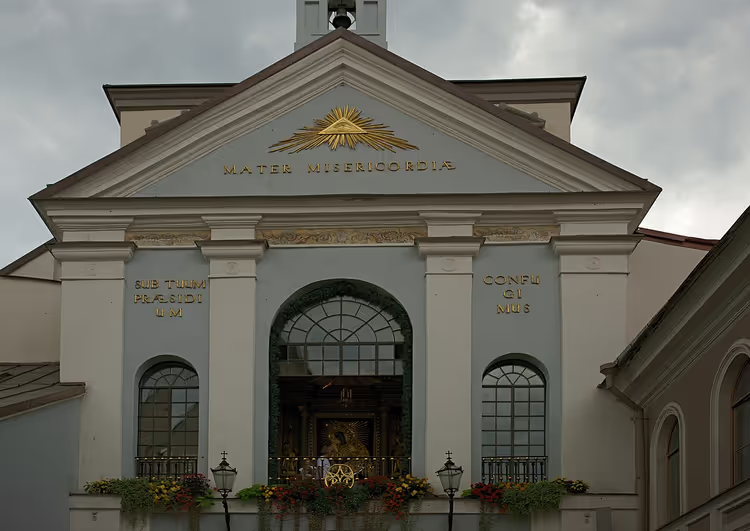
The Gate of Dawn is also called the Sharp Gate. It's the only surviving part of the old city wall, and it takes you straight into the Old Town. The building has three floors, and its facade is decorated with griffins, a symbol of Lithuanian state power.
Above the arch stands a chapel with the icon of the Vilnius Madonna. Catholics from different countries come to see it, and the icon itself is known far beyond Lithuania. The chapel is open daily 7:00-19:00, entry is free (as of: 09/2026, Gate of Dawn website). Photography is allowed, but during mass the chapel gets very crowded. On the Feast of the Mother of God, a procession walks to the gate, and the whole city celebrates the day. You can walk through the arch at any time of day or night, the gate is never closed.
- How to get there: buses 13, 31, 34, 74, and 88 go directly to the gate.
- Cost: entry is free.
- Who it's for: those walking into the Old Town who want to start with the oldest site.
- Not for: those seeking quiet at midday, when a line forms at the icon.
- The catch: on weekends the flow of pilgrims is noticeably larger.
2. Vilnius Cathedral
 © PIERRE ANDRE LECLERCQ · CC BY-SAPhoto: PIERRE ANDRE LECLERCQ, CC BY-SA (https://creativecommons.org/licenses/by-sa/4.0), Wikimedia Commons
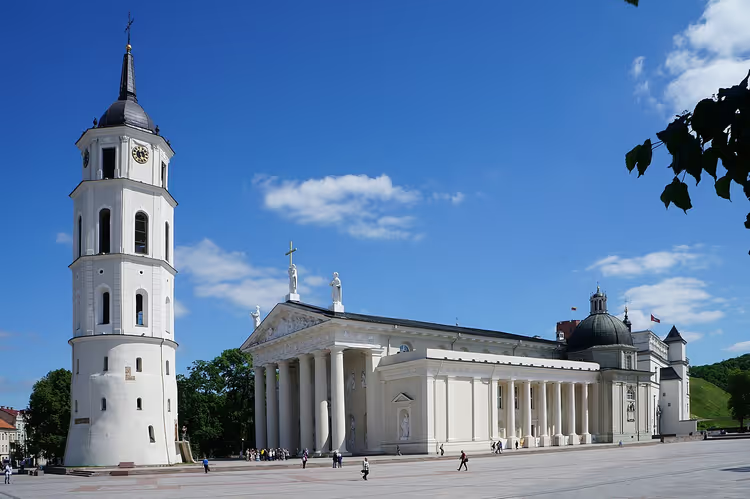
Vilnius Cathedral was built in the 14th century on the site of a pagan shrine. Over the centuries it survived fires, floods, and reconstructions, and today it holds the title of basilica. The facade resembles an ancient Greek temple, crowned with sculptures of Saints Stanislaus, Casimir, and Helen. A separate bell tower stands nearby.
Inside you'll see marble, frescoes, and paintings, with 11 chapels in total. The most beautiful of them bears the name of Saint Casimir and holds his sarcophagus. The cathedral also contains an urn with the heart of King Władysław Vasa and a small museum of pagan artifacts.
Entry is free, and you can also enter during mass without a ticket. Visitors are allowed to stand even behind the altar, which is rare for a Catholic church. On holidays the organ plays here, and the music fills the entire nave. The cathedral stands on the main square, and the pedestrian street into the Old Town starts from it. You only pay for the bell tower and the crypt, and it's convenient to get tickets in advance: bell tower and crypt tickets.
- How to get there: buses 2, 3, 4, 5, 14, 17, and 88 to the Karaliaus Mindaugo stop.
- Cost: entry to the cathedral is free, the bell tower and crypt are paid.
- The catch: on Sunday mornings the cathedral is occupied with masses, and sightseeing interferes with the service.
3. Užupis
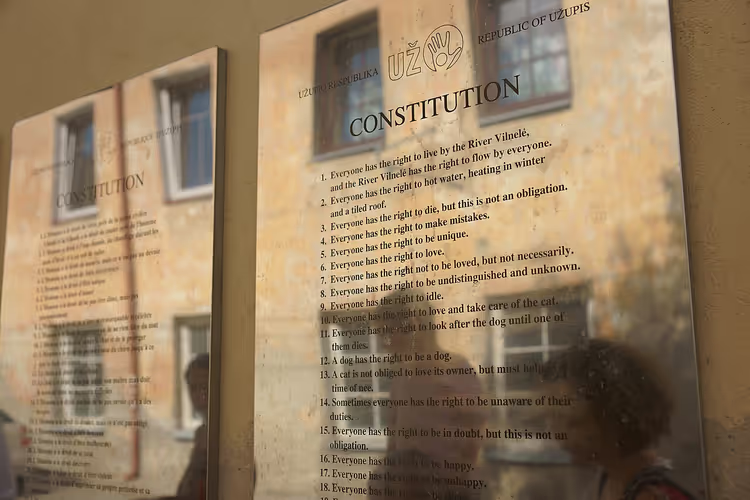
Užupis began as the poorest district of the city. Artists and writers decorated it themselves with graffiti, drawings, and sculptures, and the neglected corner became a landmark. Today it's a peaceful place for a walk along the Vilnia River.
The district's main joke is that in 1997 it was declared the Independent Republic of Užupis. At the entrance, the mermaid Undine greets you under the bridge, and a bronze angel stands in the main square. There are fewer tourists here than in the Old Town, so your walk will be calmer. Gediminas Tower serves as your landmark. Gradually, the district's dilapidated buildings are being demolished and replaced with homes of well-off residents.
- How to get there: buses 10, 33, and 88 to the Dailės akademija stop.
- Cost: entry is free, the district is open around the clock.
- Who it's for: lovers of street art, quiet courtyards, and an informal atmosphere.
- Not for: those who came for museums and timed-entry tickets.
- The catch: the district is small, it won't take up a whole day.
4. Vilnius TV Tower
 © Darius Smalskys · CC BY-SAPhoto: Darius Smalskys, CC BY-SA (https://creativecommons.org/licenses/by-sa/3.0), Wikimedia Commons
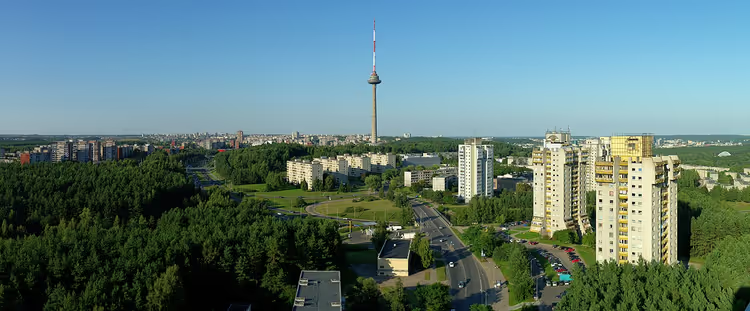
The Vilnius TV Tower remains the tallest building in the country, standing at 326.4 m (as of 09/2026, Vilnius tourism portal). It houses television and radio broadcasting centers. Visitors can access an observation deck at 170 m, offering views of the entire city.
The revolving restaurant "Paukščių Takas" mentioned in older guidebooks no longer operates in the tower. Today, the top level is home to the TOLIAI bistro with a coffee bar (as of 09/2026, official website). On clear days, the deck offers views of even distant suburbs. On the ground floor, you'll find an exhibition about the January events of 1991. People died at the tower then, and photographs and documents here serve as a reminder. On New Year's Eve, the tower is decorated with colorful lights, and the deck stays open in the evening.
Tickets to the observation deck are paid, with discounts for children and free entry for toddlers. Current prices and opening hours were verified on 14.09.2026 on the official website.
- Getting there: bus 2G or trolleybus 16.
- Cost: the observation deck is paid, the TOLIAI bistro operates on the top level.
- The catch: in fog, all you see from the deck is a gray haze.
5. Lithuanian national museum of art
 © Naujausia Informacija · CC BY-SAPhoto: Naujausia Informacija, CC BY-SA (https://creativecommons.org/licenses/by-sa/4.0), Wikimedia Commons
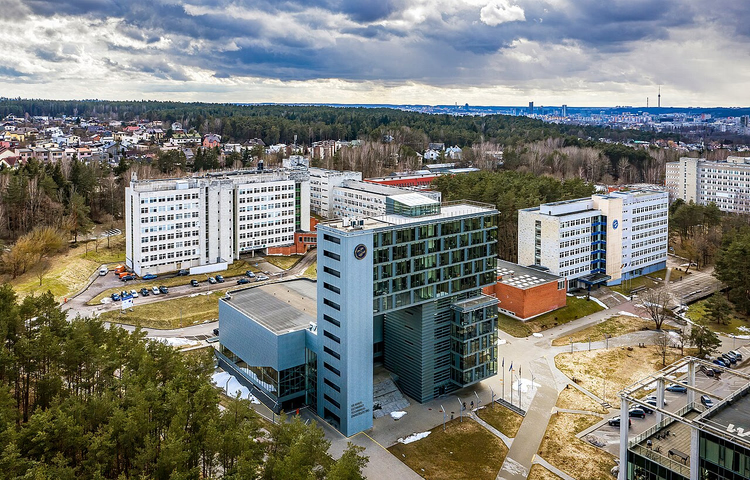
The Lithuanian National Museum of Art brings together several branches. Its main one, the Vilnius Picture Gallery, stands in the Old Town on Didžioji Street. Here you can trace the history of Lithuanian art through painting, graphic art, and sculpture. The gallery is closed on Mondays: Tue 10:00-20:00, Wed-Sat 10:00-18:00, Sun 11:00-17:00 (as of 09/2026, official website).
Other branches house interior items from the Palace of the Grand Dukes, clocks from the 16th-19th centuries, medals, fans, and caskets. A separate gallery holds around five hundred works by the expressionist Pranas Domšaitis, the largest such collection in the world. It displays works by both Lithuanian and foreign artists. In summer, flower beds shaped like sundials bloom in the museum courtyard, next to an actual sundial. Admission is paid; check the official website for exact prices.
- Getting there: buses 10, 33, and 88 go to Didžioji Street, then walk.
- Cost: admission is paid, children usually get a discount.
- The catch: all branches are closed on Mondays.
6. Church of the Holy Spirit
 © Diliff · CC BY-SAPhoto: Diliff, CC BY-SA (https://creativecommons.org/licenses/by-sa/3.0), Wikimedia Commons
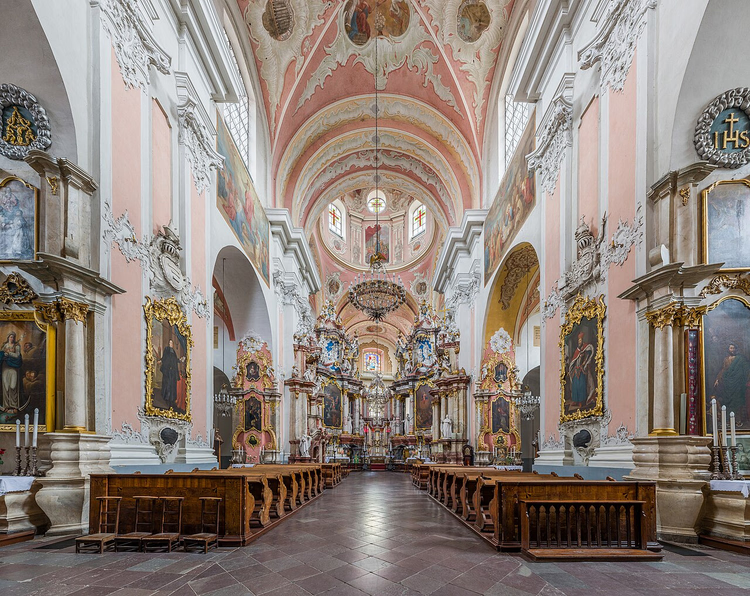
The Church of the Holy Spirit stands in the Old Town. From the outside it is a modest cross-shaped building, but inside the architectural monument opens up. The first wooden church was built here back in the 14th century, and a Dominican monastery later grew up next to it. Inside you will count 16 altars.
The vaults, frescoes, and old portraits are well preserved. Light from the small windows makes the interior quiet and cozy. Beneath the church lie nine cellars with a labyrinth, but tours are not currently offered there, so you won't be able to check the old legends. Even with a large flow of people, you will feel at ease inside. Admission is free; in winter the church is open for shorter hours than in summer.
- How to get there: bus 88 to the Vokiečių st. stop.
- Cost: admission is free.
- The catch: you won't be able to see the closed cellars with the labyrinth.
7. Customs Museum
 © VietovesLt · CC BYPhoto: VietovesLt, CC BY (https://creativecommons.org/licenses/by/3.0), Wikimedia Commons
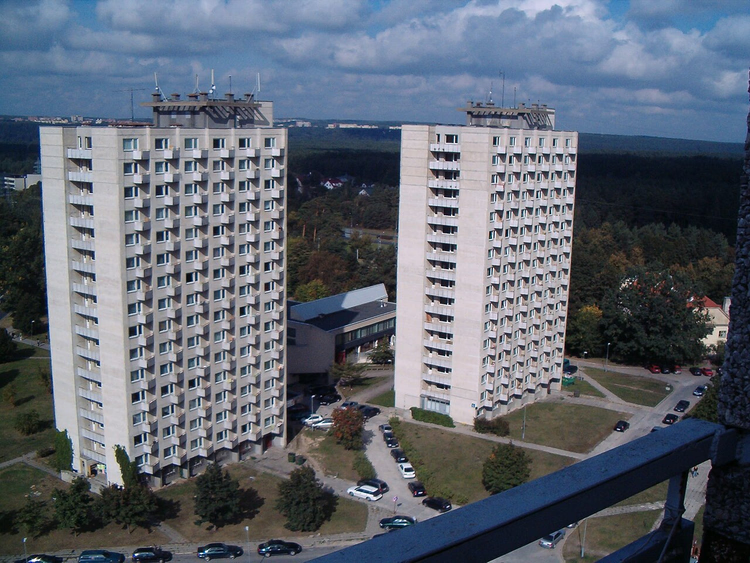
The Customs Museum opened in 1994 for students of the customs school and later became open to everyone. The building is small, but the exhibition is dense. What interests tourists most here is the contraband hall: alcohol with snakes, rare animal skins, insects from someone's collections. Tours are offered in Russian, Lithuanian, and English, and you choose the language yourself.
A separate hall is dedicated to the work of customs officers; some staff died while intercepting dangerous cargo. You will trace the history of the service from the 11th century to the present day. The exhibition is equipped with projectors and audiovisual technology, so the story is presented visually. The customs service of Uzbekistan gave the museum gold-embroidered robes, which are also shown to visitors. The museum occupies the north of the city, a bit far from the center. Admission is free; it is open on weekdays.
- How to get there: bus or taxi from the center, the trip takes about half an hour (on the map).
- Cost: admission is free.
- Not for: those who came for two days, traveling that far is not always convenient.
- The catch: the museum is closed on weekends.
8. Amber Museum
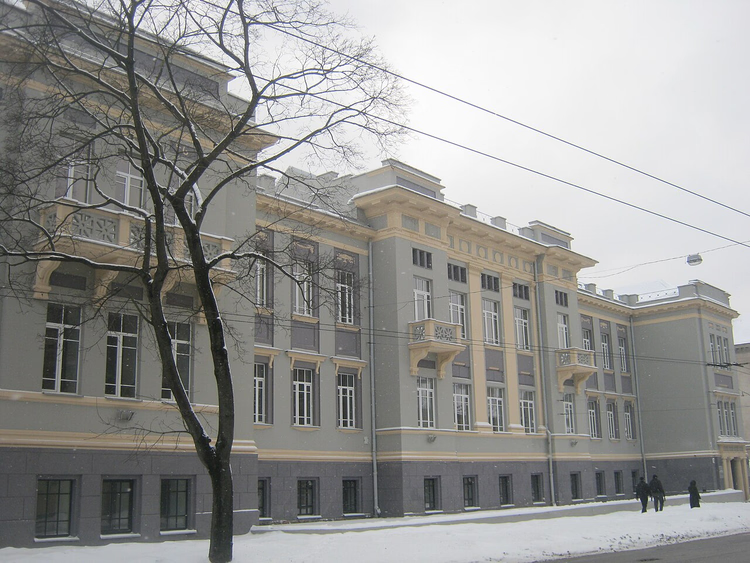 © Bearas · CC BY-SAPhoto: Bearas, CC BY-SA (https://creativecommons.org/licenses/by-sa/3.0), Wikimedia Commons
Amber is called Lithuanian gold, and it is the only precious stone mined here. The Amber Museum on Šv. Mykolo Street has operated since 1988 and is considered the largest in the country. The building is about six centuries old and has retained Renaissance and Baroque features (as of 09/2026, official website).
In the display cases you will see stones of whimsical shapes, as well as insects, plants, and even lizards frozen in resin millions of years ago. The collection from archaeological excavations is considered one of the oldest in the world, and the largest stone weighs about four kilograms. The museum shop sells jewelry by Lithuanian artisans; some pieces come with a certificate of authenticity confirming that the stone is genuine. Admission is free, no fee is required to view the exhibition.
- How to get there: bus 8 to the Šv. Mykolo gatvė stop.
- Cost: admission is free, the museum is open daily.
- Who it's for: those looking for an inexpensive souvenir and a clear exhibition.
- The catch: there are not many halls, an hour is enough for a visit.
9. Police Museum
 © Ajuntament de Sabadell · CC BYPhoto: Ajuntament de Sabadell, CC BY (https://creativecommons.org/licenses/by/2.0), Wikimedia Commons
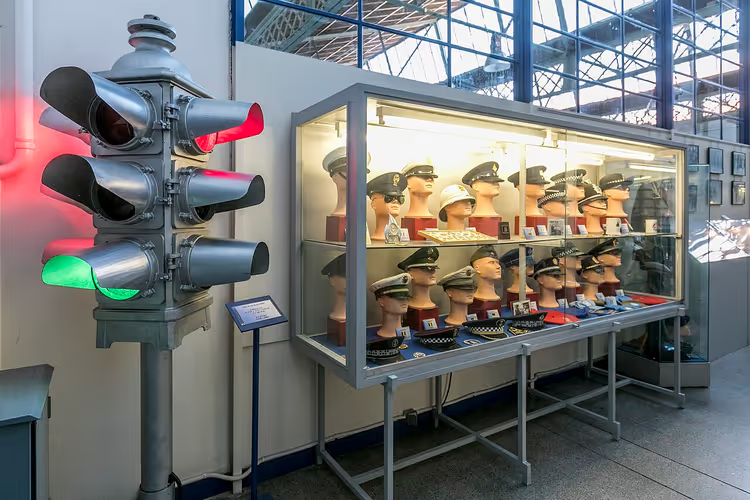
The Police Museum tells the story of one of the most difficult professions. The exhibitions introduce you to police work before 1940: badges, uniforms, headgear from different countries, and models of service vehicles. Artists and designers worked on the presentation, so the halls look modern. Here you will find stories of the most high-profile solved cases and an exhibition of officers' achievements. A separate section tells about police work from the inside.
- How to get there: the museum is within the city limits, the most convenient way is by bus.
- Cost: admission is free.
- The catch: it is open only on weekdays; on Saturday and Sunday the doors are closed.
10. Church of Saints Francis and Bernard
 © Jodkovska · CC BY-SAPhoto: Jodkovska, CC BY-SA (https://creativecommons.org/licenses/by-sa/4.0), Wikimedia Commons
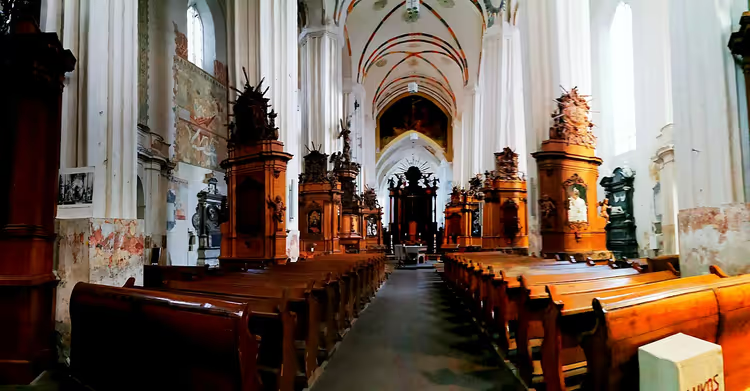
The Church of Saints Francis and Bernard stands in the Old Town next to St. Anne's Church. It is a huge red-brick building in the Gothic style, one of the largest in the country. The church was built as a defensive structure, so from the outside it seems modest.
Inside you will find three stone and eleven wooden altars, as well as the most famous sculptural crucifix in Lithuania. The church has a large organ and old icons. The monastery runs a library with old manuscripts and statutes of Lithuania, collected by monks over centuries. The church holds a collection of photographs showing the history of the church's life. Together with St. Anne's Church they form a single complex. Admission is free; the church is open on weekdays and Saturday, but the schedule changes, so it is best to check the hours before your visit.
- How to get there: bus 88 to the Old Town.
- Cost: admission is free.
- The catch: on Wednesday and Saturday the church opens later than neighboring churches.
11. National Museum of Lithuania
 © Augustas Didžgalvis · CC BY-SAPhoto: Augustas Didžgalvis, CC BY-SA (https://creativecommons.org/licenses/by-sa/4.0), Wikimedia Commons
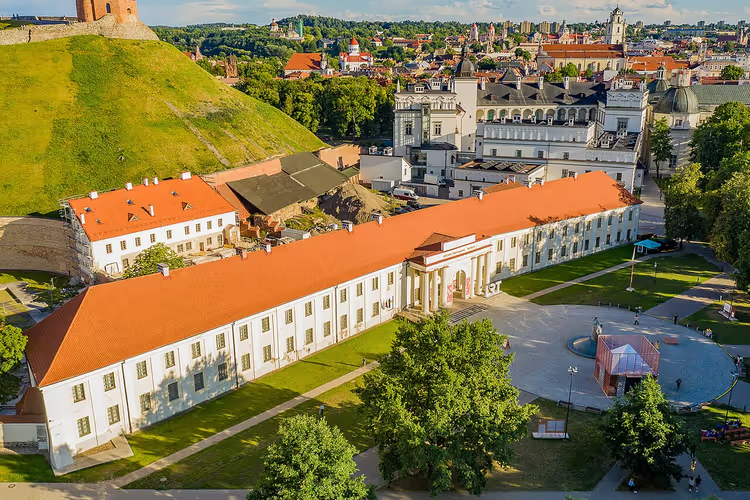
The National Museum of Lithuania holds more than one and a half million exhibits across eleven branches (as of 09/2026, official website). The main exhibitions take place in the New Arsenal at the foot of the castle hill. Here you will trace the entire history of the country, from household items to icons and coins. The collection keeps growing, so the exact number of exhibits cannot be stated.
The halls are divided by theme: ethnic culture, iconography, numismatics, and archaeology. You will see bronze objects, weapons, coats of arms, Egyptian figurines, and old textiles of different peoples. The collection is based on tools, ancient clothing, old coins, paintings, and icons. Some halls are given over to temporary exhibitions, and a restoration hall operates nearby.
The ticket is paid, and an audio guide costs less than a guide. From May to October the museum welcomes guests from Tuesday to Sunday; in winter a second day off is added, so check the schedule in advance (as of 09/2026, schedule and tickets). It is convenient to buy tickets to the city's museums in advance: tickets to Vilnius museums on Tiqets.
- How to get there: trolleybuses 2, 3, 4, 10, 17, and 20 to Karaliaus Mindaugo tiltas.
- Cost: the ticket is paid, children and audio guides are cheaper.
- The catch: the exhibition is large, you cannot cover it in one visit.
Tours and tickets in Vilnius
Guided tours, skip-the-line tickets and activities — most offers can be cancelled free of charge.
See offers on TiqetsThe widget loads once you give your consent.
⁉️🤔 Frequently asked questions
How much money do you need for Vilnius?
You'll have to pay for the TV tower, the art museum, and the National Museum. If you're walking and skip the paid exhibitions, the city will cost you almost nothing. Set aside money for transport, cafes, and amber souvenirs.
What can you see in Vilnius for free?
All the Old Town churches, the Gate of Dawn with its chapel, Užupis, the Amber Museum, the Customs Museum, and the Police Museum are free to visit. In one day you can cover almost the entire list without buying tickets.
How much time do you need to see Vilnius?
Two days is enough for all 11 main sights. On the first day, walk through the Old Town: the Gate of Dawn, the Cathedral, the churches, and Užupis. Leave the second day for the TV tower and the museums. The sights in the center are a 15-20 minute walk from each other, according to the map.
Where should you go with kids?
Kids usually enjoy the Vilnius TV Tower with its observation deck and the Police Museum with its model cars. At the Amber Museum, it's fun to look at insects trapped in resin. Plan your outing for the first half of the day, when you and the kids are less tired.
Do you need a visa and insurance for Lithuania?
Lithuania is part of the Schengen Area, so a valid Schengen visa will work. EU citizens don't need a visa at all. Medical insurance is arranged separately, so compare policies from different providers before your trip.
In short: what's worth booking
You can see Vilnius with almost no tickets. Paid sights are best planned in advance so you don't waste time at the ticket office.
- If you have one day: walk through the Old Town and go up the TV tower at sunset.
- If you have two days: add the art museum and the National Museum, and choose accommodation in the center.
- If you're traveling with kids: start with the TV tower and the Police Museum.
Book sightseeing tours of Vilnius and a central hotel on Trip.com.

A small editorial team writing guides for independent travel. We travel ourselves, but we haven’t been everywhere, so we check prices, opening hours and how to get there against official sources.