
















25 Museums in Vilnius: what to see and when Vilnius Pass is worth it
Vilnius has more than two dozen museums, and almost all of them are in the old town. The distances here are such that you can easily walk to several of them in one day. But each one has its own opening hours, and admission is not paid everywhere.
If you plan to see a lot, it is more cost-effective to get a Vilnius Pass. The card gives you entry to more than thirty museums and galleries.
Ad: this article contains affiliate links, we earn a commission if you book through them, at no extra cost to you.
Tickets, opening hours and the Vilnius Pass
💡 In short:
- choose several museums in advance and check their closed days;
- work out what is cheaper: individual tickets or the city card;
- keep in mind that some museums are closed on Monday or Tuesday;
- Prices and opening hours: 09/2026, checked on the MO page.
There is no single ticket for all Vilnius museums. Each museum sells its own tickets, and prices vary severalfold. Small museums are cheaper, and some collections can be viewed for free.
If you plan to visit many museums, consider the city card. Prices for all card options are listed in the table below. The card gives free entry to more than thirty museums and galleries.
The Vilnius Pass pays off if you go to several paid museums in one day. For one or two visits, it is easier to buy tickets on the spot. Museums have different closed days: MO is closed on Tuesdays, while state museums are more often closed on Mondays. Check the day before your trip.
Card option | Duration | Price | What it gives |
|---|---|---|---|
Vilnius Pass | 24 hours | 39 € | entry to more than thirty museums |
Vilnius Pass with transport | 24 hours | 46.50 € | museums and public transport |
Vilnius Pass | 48 hours | 53 € | entry to more than thirty museums |
Vilnius Pass | 72 hours | 64 € | entry to more than thirty museums |
Prices in the table: as of 09/2026, govilnius.lt.
1. Radziwill Palace
The Radziwill Palace is one of the city's and the country's landmarks. The building was constructed in the late Renaissance style, and on its site there previously stood a wooden palace that suffered from fires. In the mid-17th century it was rebuilt by the architect Jan Ulrich.
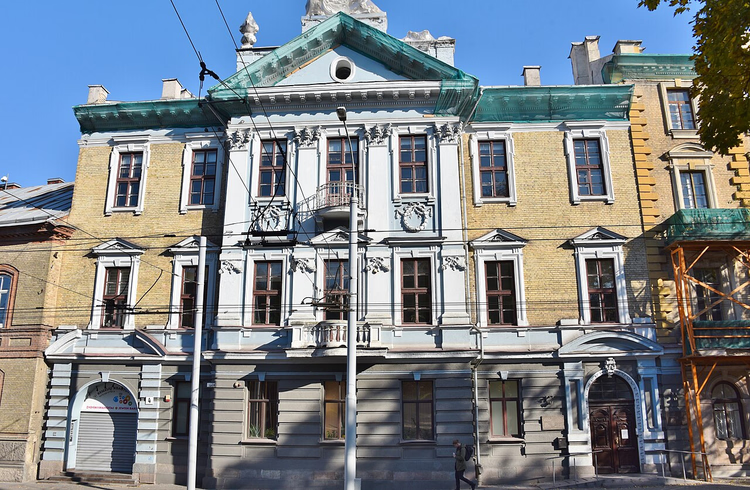 © Christian Michelides · CC BY-SAPhoto: Christian Michelides, CC BY-SA (https://creativecommons.org/licenses/by-sa/4.0), Wikimedia Commons
In 1807 the building was handed over to the Philanthropic Society. Since then it has been repaired many times, some wings collapsed, and new ones appeared in their place. Today, the northern and eastern wings and a pavilion survive from the palace ensemble. In 1990 the building was restored and given to a division of the Lithuanian Art Museum.
Inside you will see paintings by masters from Germany, Austria, Russia, France, Holland and Poland. A separate exhibition is dedicated to the Radziwill family: family portraits and photographs, icons, archaeological finds. One of the wings houses the art of East Asian peoples.
- Who it's for: those interested in painting and the history of aristocratic families.
2. Vilna Gaon State Jewish Museum
Lithuania is not limited to old castles. The Vilna Gaon State Jewish Museum brings together three different organizations into one cultural space. These are the Litvak Culture and Art Center, the Tolerance Center, and the Holocaust exhibition.
 © Naujausia Informacija · CC BY-SAPhoto: Naujausia Informacija, CC BY-SA (https://creativecommons.org/licenses/by-sa/4.0), Wikimedia Commons
The first branch opened in 1913. It housed Jewish relics, privileges granted to Jews by local princes, and charters. With the outbreak of World War I the museum temporarily closed, and work resumed in 1919 in a new building. The building was destroyed in World War II, and reconstruction began in 1949. The collections were dispersed among various institutions, and reassembling them took great effort.
The museum fully resumed operations only in 1989. Today it houses documents, photographs from the Holocaust period, and testimonies of surviving witnesses. A separate exhibition is dedicated to Jewish daily life in the late 19th and early 20th centuries.
- Who it's for: those who want to understand the history of Vilnius's Jewish community and the tragedy of the Holocaust.
3. National Museum of Lithuania
 © Augustas Didžgalvis · CC BY-SAPhoto: Augustas Didžgalvis, CC BY-SA (https://creativecommons.org/licenses/by-sa/4.0), Wikimedia Commons
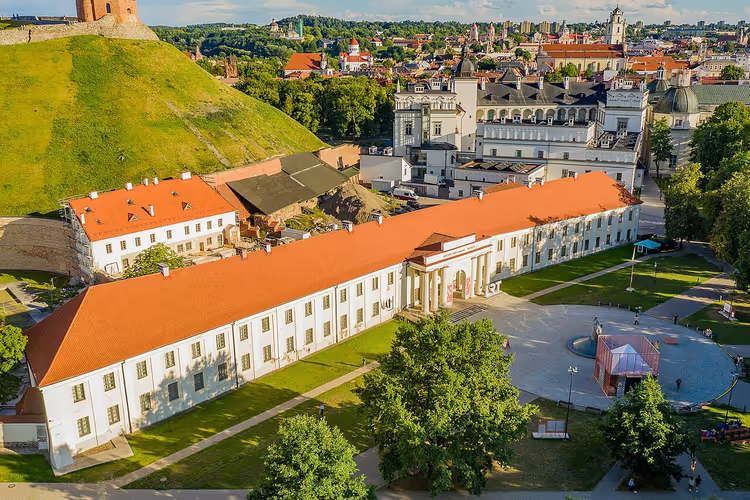
The National Museum of Lithuania is one of the country's largest collections of cultural heritage. It was founded in 1855 on the initiative of Count Eustachy Tyszkiewicz, an avid collector of antiquities. The museum is located near the Neris River, in the very heart of the capital.
After opening, the place became a cultural and scientific center. It brought together the intelligentsia and nobles who were engaged in educational and scholarly work. Their goal was to shape historical self-awareness. The museum's activities were interrupted several times, and it only became fully operational in 1952.
Today the museum's holdings include more than a million exhibits. There are departments of numismatics, archaeology, iconography and ethnic culture. Virtual exhibitions about national figures and documentary photography are regularly held here. On Thursdays the museum holds open meetings where you can get to know the history and culture of Lithuania more closely.
- Who it's for: those who want to see the history of Lithuania from the Middle Ages to the present day.
4. Energy and Technology Museum of Lithuania
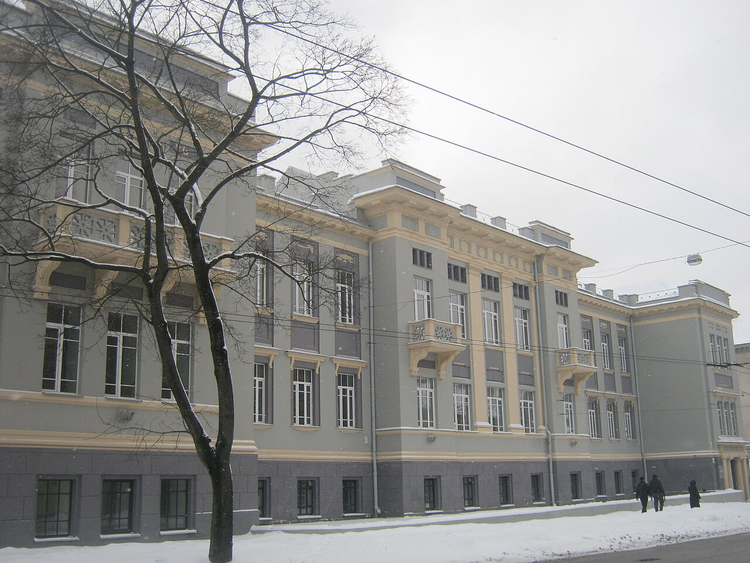
The Energy and Technology Museum will appeal to those who love history and technology. Its building stands opposite Gediminas Hill, on the bank of the Vilnia River. For a long time the building stood empty, and only in 2003 was the first exhibition opened here.
 © Bearas · CC BY-SAPhoto: Bearas, CC BY-SA (https://creativecommons.org/licenses/by-sa/3.0), Wikimedia Commons
It was timed to coincide with the centenary of the country's first power station. The exhibits tell the story of electricity. The institution gradually added new exhibitions. Children can take a tour of the old power station: some of the mechanisms have been replaced with models that simulate the working process.
On one of the floors there is a collection of vintage cars and motorcycles, including models nearly a century old. A separate hall displays items from medieval and Soviet-era workshops. Most exhibits can be touched, and for lovers of modern technology there is an interactive exhibition.
- Who it's for: families with children and anyone interested in technology.
5. Church Heritage Museum
 © Bažnytinio paveldo muziejus · CC BY-SAPhoto: Bažnytinio paveldo muziejus, CC BY-SA (https://creativecommons.org/licenses/by-sa/4.0), Wikimedia Commons
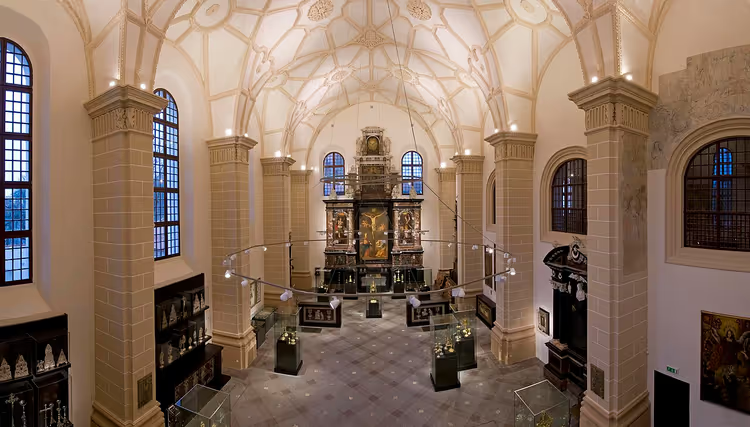
Originally there was a monastery with a church here, built on the order of the Lithuanian hetman Lew Sapieha. The crypt of the church was intended to serve as a family burial vault. The best Lithuanian and Polish architects worked on the construction and decoration. Sapieha gave one of his palaces for the monastery.
The church was rebuilt several times, and features of Gothic and Renaissance styles can be discerned in it. Services ceased here back in the last century. In 1970 a museum of church art opened inside. Many of the items were made by Western European masters of the 18th and 19th centuries.
Here you will see reliquaries for relics, church utensils, pectoral crosses, gold and silver vessels for holy water, precious chalices and icon covers, and icons. A large collection of bells is assembled in the courtyard. The church altars are made of alabaster and multicolored marble, and every object has its own story.
- Who it's for: those interested in sacred art and jewelry craftsmanship.
6. Lower Castle
 © Augustas Didžgalvis · CC BY-SAPhoto: Augustas Didžgalvis, CC BY-SA (https://creativecommons.org/licenses/by-sa/4.0), Wikimedia Commons
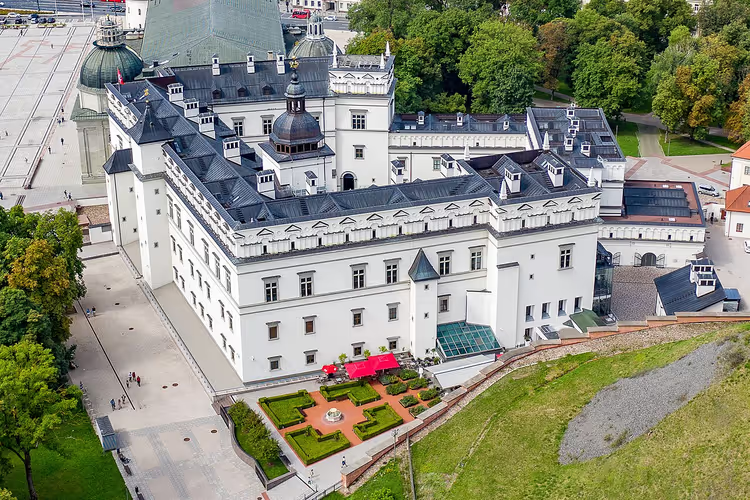
Immediately after construction, the Lower Castle was part of a complex that included the Cathedral, palace services and utility buildings. The complex was built at the foot of Castle Hill. Construction began in the first half of the 14th century, and by the middle of the century the palace had become the residence of the Lithuanian prince.
In the 16th century the Grand Palace was built in the Renaissance style. During the war with the Muscovite state the complex was badly damaged, and during the city's expansion in the 18th century it was almost completely destroyed. The palace was recreated only in 2002. Today the new building houses a museum with historical artifacts.
The western tower remains from the old complex. A bell tower with an observation deck was built on its foundation. From the top there is a view of the city's landmarks and landscape. At the palace's opening, it was visited by the leaders of fifteen countries.
- Who it's for: those who want to see the palace of the grand dukes and the panorama of the old town.
7. Museum of applied art
 © Zairon · CC BY-SAPhoto: Zairon, CC BY-SA (https://creativecommons.org/licenses/by-sa/4.0), Wikimedia Commons
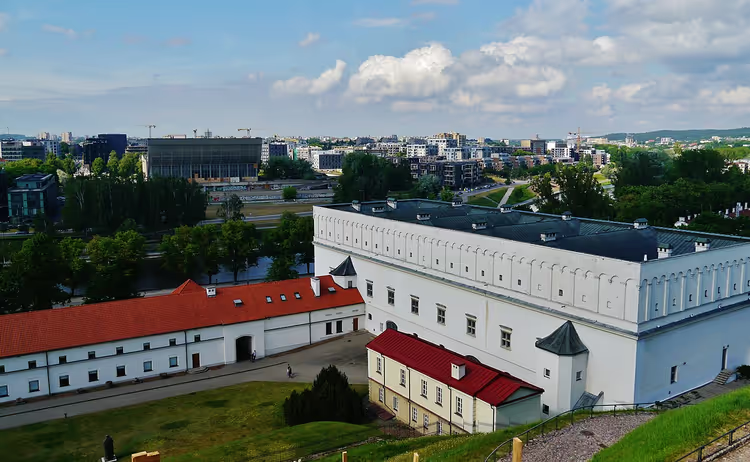
The Museum of Applied Art occupies the building of the old Arsenal. It was built on the ruins of a 14th-century defensive complex. Only the walls and foundation remained from the earlier structures, and they were used as the base. For two centuries the building was used to store weapons and ammunition.
After the city was rebuilt, the Arsenal ended up on a central street. It was not demolished; instead, Italian architects were brought in to redesign it. That is how a warehouse became a palace. After the country was partitioned, the Arsenal was forgotten. It was partially restored only in the 19th century and fully renovated in 1972.
Today the Museum of Applied Art operates here. From time to time, exhibits from Europe and the US are brought in. You will see antique household items, furniture, jewelry, dance cards, jewelry boxes, and clothing. The collected artifacts were made between the 13th and 20th centuries. A workshop has been preserved on the grounds, and visitors are allowed inside.
- Who it's for: anyone interested in decorative and applied art.
8. MO Museum of Modern Art
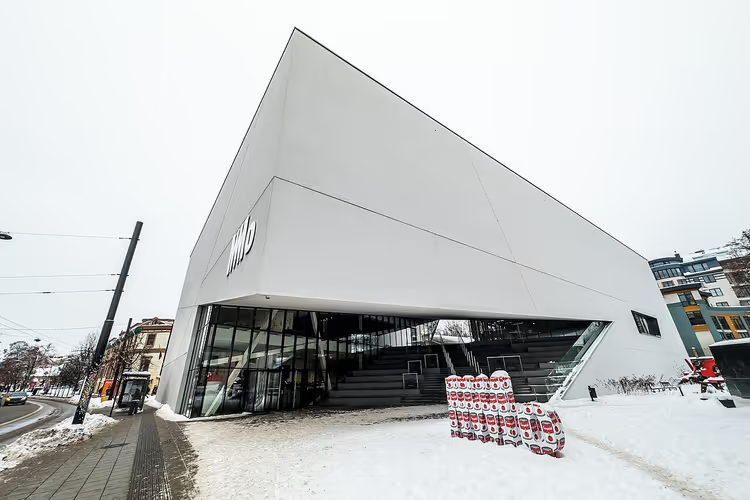 © Felix Winkelnkemper · CC BYPhoto: Felix Winkelnkemper, CC BY (https://creativecommons.org/licenses/by/2.0), Wikimedia Commons
The MO Museum of Modern Art opened in 2018, and the building itself was completed a year earlier. The private museum was built on the site of a cinema. It is funded by businessmen Viktoras Butkus and Danguolė, and the layout was designed by architect Daniel Libeskind. The building has three floors.
The ground floor has lockers, a bookshop, a multipurpose hall, and a cafe. The second floor houses a small exhibition hall, administrative offices, and a reading room, while the third floor is given over to a large exhibition hall. There is an open terrace on the roof, and a small park next to the building. Exhibitions and cultural and educational events are held here regularly.
The MO team prepares creative projects for the city, and more than a hundred contemporary artists collaborate with the museum. The MO team has published a guide to Vilnius sculptures, and it is also the only traveling museum that tours schools across the country. An adult ticket costs €11, a family ticket €22 (as of 09/2026, tickets on the MO website). The museum is closed on Tuesdays.
- Who it's for: anyone interested in contemporary art and architecture.
9. Lithuanian museum of theatre, music and cinema
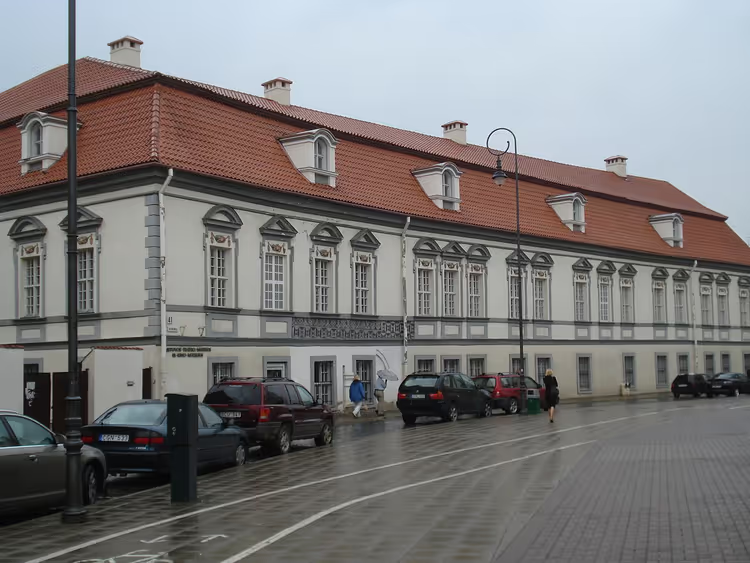
The museum occupies one of the old Radziwiłł mansions. The building has seen many balls and receptions. Its architecture retains traces of Renaissance, Baroque, and Neoclassical styles. It was home to the first private Lithuanian theater, which belonged to local magnates.
Later the palace stood empty, then it was divided into apartments and rented out. After World War II, the building served as a utility space for the capital's theater. The mansion was fully restored only in 1996.
Today it houses artifacts about the development of cinema and theater in the country. Some exhibits were moved to Kaunas, the former capital of Lithuania, during the war. Some items were collected again, but part of the collection is lost forever. The exhibition consists of four sections. You will see tickets, set design models, costumes, posters and scripts, antique puppets, paintings, and musical instruments.
- Who it's for: anyone interested in the history of theater and cinema.
10. Lithuanian Railway Museum
Every country has its own railway history. The idea of creating a museum that would introduce visitors to the life of railway workers appeared back in 1966. That is when it opened. The museum assembled a large photo archive about the daily life of railway staff, as well as models.
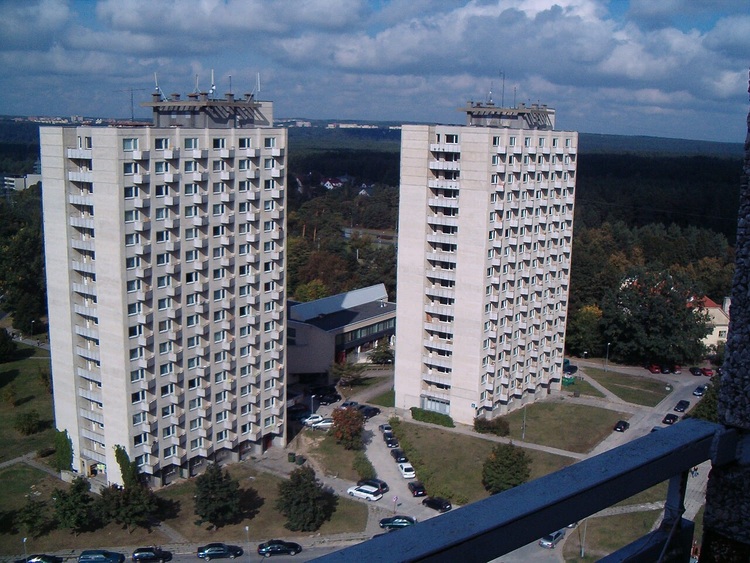 © VietovesLt · CC BYPhoto: VietovesLt, CC BY (https://creativecommons.org/licenses/by/3.0), Wikimedia Commons
In 2010 the institution closed for reconstruction. Today the exhibition occupies several halls and is divided into three zones. The first zone hosts events and displays model trains, and there is a children's corner for visitors with kids.
The second part of the exhibition is outdoors. Steam locomotives, electric locomotives, diesel locomotives, and maintenance equipment stand there. You will see the first Soviet train "Sergo Ordzhonikidze" and German TE-52 series locomotives. Nearby are retro departure boards that once announced train arrivals and departures. The outdoor line is rarely opened: the last time it was used was in 2017 for a fashion show and design exhibition.
- Who it's for: families with children and technology enthusiasts.
11. Museum of Genocide Victims
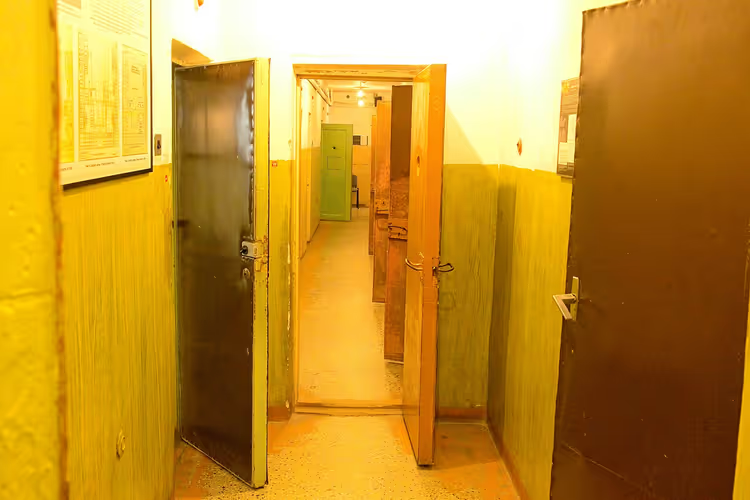 © dave massie · CC BYPhoto: dave massie, CC BY (https://creativecommons.org/licenses/by/2.0), Wikimedia Commons
During wartime, crimes against individual nations were commonplace. Decades later, they are remembered through the testimony of surviving witnesses, photo archives, and documents. The walls of this building have seen many terrible pages of history. The house was built in the 19th century for the court chamber.
Later it housed a conscription office, and then a revolutionary tribunal prison. In 1920 the owners changed, and after the partition of Lithuania the building went to Polish courts. In 1940 the house belonged to the NKVD, during the war it was occupied by the Gestapo, and after the war the KGB operated there for a long time. This history made the building one of the darkest in the country.
The genocide exhibitions are located in the basement. Many exhibits tell about different periods of the country's history. On the second floor you will learn about the deportations of Lithuanians, KGB activities, and civil resistance. Samples of listening devices are on display here. The internal KGB prison has been preserved nearby.
- Who it's for: anyone who wants to understand the tragedy of the Soviet occupation of Lithuania.
- Not for: those who find topics of repression and violence difficult to handle.
12. Art Museum
The Art Museum was founded in 1933, and today it unites several branches. Cultural and historical treasures and works by Lithuanian and foreign masters are exhibited here.
The halls contain parts of palace interiors. In the miniature arts branch you will see fans, bead embroidery, purses, and boxes.
- Who it's for: anyone who wants to cover several collections under one roof.
13. House of the Signatories
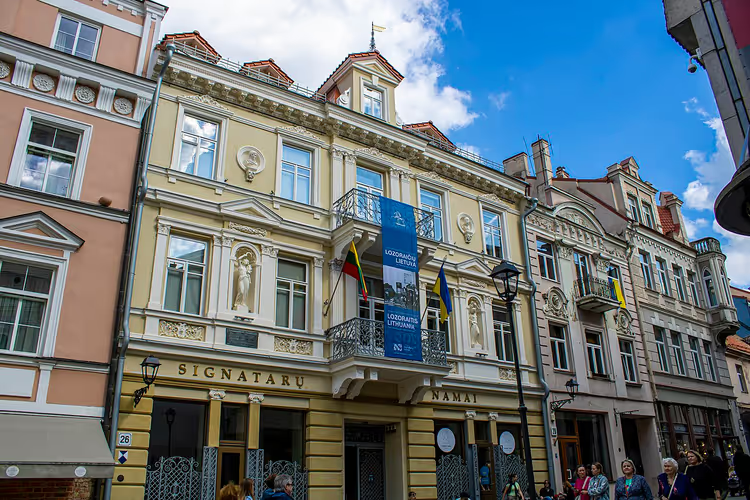 © Terminator216 · CC BY-SAPhoto: Terminator216, CC BY-SA (https://creativecommons.org/licenses/by-sa/4.0), Wikimedia Commons
In 1917-1918 the House of the Signatories belonged to the Council of Lithuania. It was here that the document restoring the country's independence was signed. The exhibition occupies a separate room and tells the story of national revival and the establishment of statehood. It houses belongings of the signatories, who later became diplomats.
In 1795 most of the country became part of the Russian Empire, and Lithuania disappeared from world maps for many years. The country regained independence only during the occupation of its territory by Kaiser Germany. The museum's central exhibit shows the long road of Lithuanians to independence.
The building is classified as an architectural and cultural monument of the state; it was built in 1645. The owners changed constantly, and the building was repaired. At first the house was two stories high, but after fires, another floor was added during restoration. In the 19th century, neo-Renaissance features appeared in the exterior. On the main facade you will see sculptures in niches and busts of men.
- Who it's for: anyone interested in the political history of Lithuania.
14. Toy Museum
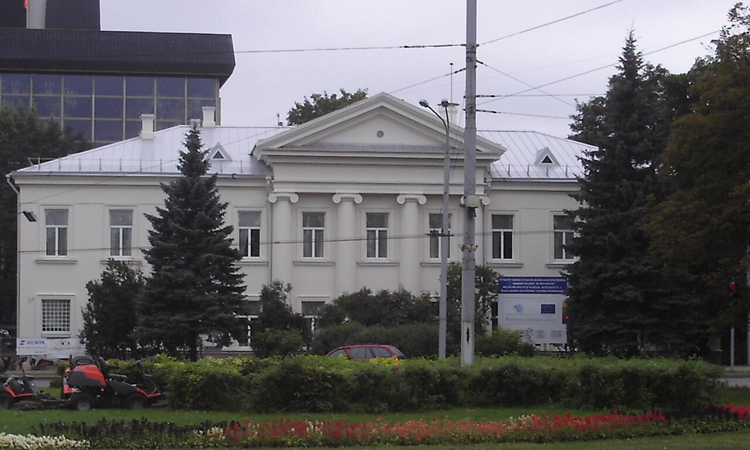
The Toy Museum's exhibition is assembled from archaeological finds, private collections, and gifts from visitors. It is interesting for both children and adults. Stone Age and medieval toys found by archaeologists during excavations deserve special attention.
Children can touch high-quality replicas of these objects. The halls display models of dolls, balls, and board games of nobles. A separate section introduces children's toys and games from the 14th to 18th centuries found in the country. Next to many exhibits you will see fragments of paintings by famous artists where the toy is shown in use. Scenes of old children's games appear in works by Jan van Eyck, Bosch, and Pieter Bruegel.
Besides antique objects, there are modern high-tech amusements. Collections of toy soldiers, dolls, and arcade machines from the 1970s and 1980s are assembled here. Classes are often held in a separate workshop: museum staff talk about the history of wax and the first toys and run a hands-on workshop.
- Who it's for: families with children.
15. Vytautas Kasiulis art museum
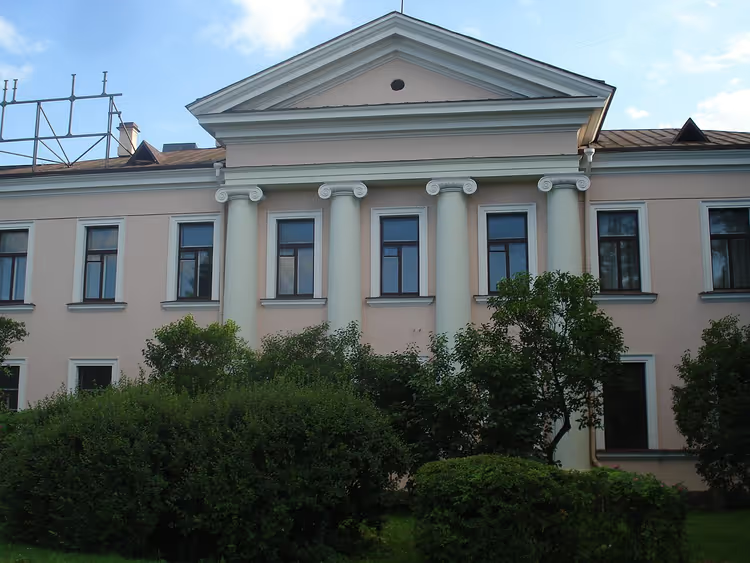 © Alma Pater · CC BY-SAPhoto: Alma Pater, CC BY-SA (https://creativecommons.org/licenses/by-sa/3.0), Wikimedia Commons
Vytautas Kasiulis is a renowned Lithuanian artist whose work is known far beyond the country's borders. Critics place him among the representatives of the French school of painting. Over his lifetime, Kasiulis created numerous oil paintings, lithographs, pastels, and gouaches, all of which hold value for world art.
The gallery displays a large portion of his canvases. The works were painted in different periods, which is evident from the variety of colors and subjects. The defining feature of the paintings is their vividness: they contain both real scenes and fantastical lines. Works from all stages of the artist's life are gathered here.
In addition to paintings, the museum houses Kasiulis's personal belongings, donated by his widow. The gallery is located in a neoclassical palace built in the early 20th century. Besides the exhibition, the palace also houses a library, an archive, and meeting rooms. In 2012, the building was renovated with funds from the European Regional Development Fund.
- Who it's for: those who love painting and bright colors.
16. Money museum of the bank of Lithuania
The exhibition belongs to the Lithuanian state bank. The exhibits are arranged in five halls across two floors. They tell the story of how money emerged in the country. Here you'll find means of payment used for goods before money existed: sable pelts, pieces of silver, and bronze.
Each collection shows how money evolved, from barter to modern payment methods. The museum holds rare coins prized by numismatists. The most valuable exhibit is a set of gold ducats minted during the reign of the Grand Duke of Lithuania Sigismund Vasa. The bank purchased the coins from a private collector.
Besides coins, you'll see interesting paper banknotes, household items decorated with coins, hoards found within the country, and banknote counting machines from different eras. Selected documents tell the story of the development of banking in Lithuania.
- Who it's for: numismatists and those interested in economic history.
17. Gediminas Tower
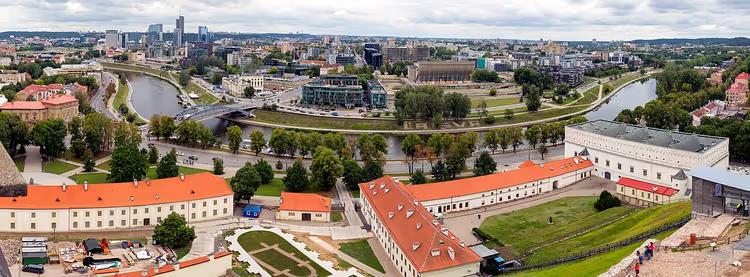 © Hans Brian Brandsberg Berg from Kalmar, SWEDEN · CC BYPhoto: Hans Brian Brandsberg Berg from Kalmar, SWEDEN, CC BY (https://creativecommons.org/licenses/by/2.0), Wikimedia Commons
For a defensive complex, it would have been hard to find a better location than Castle Hill. The hill is surrounded by rivers on all sides, and the first settlements appeared here as early as the Neolithic period. Around the 11th to 13th centuries, the first fortifications and a wooden castle were built on its slopes, and later the Upper Castle was constructed in its place.
When the Gediminid dynasty came to power, the Upper Castle became the main political center of the Grand Duchy of Lithuania. The complex included the Crooked, Lower, and Upper castles and repeatedly repelled attacks by the Teutonic Order. In 1419, a fire destroyed the castle. It was rebuilt, but stone and brick were used instead of wood. Today, only the western tower remains of the entire complex.
The tower houses a museum with models of Vilnius castles, archaeological finds, knightly armor, and weapons. Climbing to the observation deck, you'll see a panorama of the old town. Part of the Upper Castle walls remains nearby.
- Who it's for: those who want to see the best panorama of Vilnius.
18. Vilnius university science museum
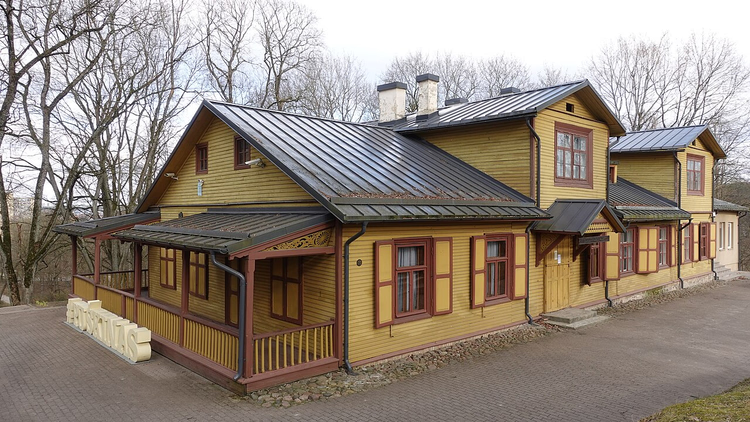 © Dekle MK · CC BY-SAPhoto: Dekle MK, CC BY-SA (https://creativecommons.org/licenses/by-sa/4.0), Wikimedia Commons
Vilnius University has a very long history. It was founded by the Polish king Stephen Báthory in the 16th century. For the Republic of Lithuania, it is one of the main institutions of higher education. The university holds not only historical value: it is part of the architectural ensemble of the old town.
The institution consists of thirteen buildings and thirteen courtyards. When foreign heads of state visit, the university is a mandatory stop for the delegation. Its grounds include a church and several museums with paintings, sculptures, numismatics, rare philosophy books, and old editions of the Bible. The buildings were constructed at different times, so Gothic and Baroque stand side by side here.
The Science Museum is located in the Chapel of Saint Anne. The Church of Saints Johns was originally built in the Gothic style, but after restoration it acquired Baroque features. The interior holds many valuable pieces, and the decor is strikingly elegant. You'll also see the university ensemble itself, which is worth exploring separately.
- Who it's for: those who want to see the university courtyards and old collections.
19. A.S. Pushkin Literary Museum
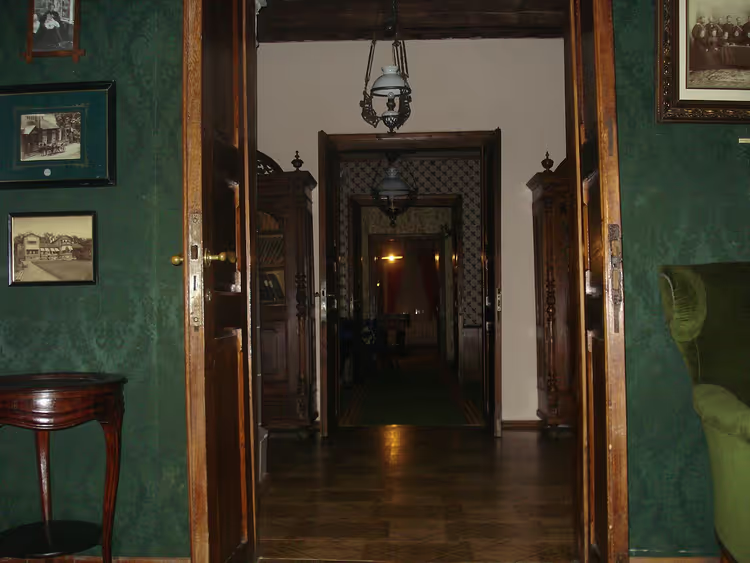 © Alma Pater · CC BY-SAPhoto: Alma Pater, CC BY-SA (https://creativecommons.org/licenses/by-sa/3.0), Wikimedia Commons
Pushkin never visited Lithuania, but there are more than enough reasons to open a museum here. The institution is located in the former mansion of General Melnikov, who distinguished himself in the wars of the early 19th century. The estate was inherited by the general's daughter.
After an unsuccessful marriage, she moved to Saint Petersburg and there met the poet's younger son. The couple soon married. They spent some time in Markučiai and then settled in the family estate Mikhailovskoye, where they lived for just over five years. In 1899, the estate was sold to the Academy of Sciences, and the couple returned to Markučiai.
The poet's son, Grigory Alexandrovich, devoted the rest of his life to studying his father's legacy. He inherited the poet's personal belongings, manuscripts, family relics, and drawings. After his death, his widow hosted poetry evenings in the house, and before her passing she bequeathed the estate to the Vilnius authorities. In 1940, a literary museum opened here. The exhibition consists of three parts: the poet's life, his personal belongings, and drawings.
- Who it's for: those interested in Russian literature and memorial apartments.
20. Museum of Illusions
The Museum of Illusions is a place where the whole family can have fun. The halls occupy several rooms, and a friendly atmosphere created by the staff prevails here. Different programs are available for children of various ages, teenagers, and adults.
The permanent exhibition is built on scientific inventions, physics, and optics. You'll see unusual works of art and puzzles. Thanks to interactive technology, you can draw with light, create shadows, and turn familiar things upside down. A separate collection called "Absurd" consists of ridiculous and useless inventions. The second exhibition is dedicated to things without which modern life is unimaginable.
Photography is allowed during the tour, and guides will tell stories about the objects and about art. Each year, the collections are expanded with new exhibits, and the museum team works on new solutions and research. Every visitor will find something interesting here, and the technology helps make sense of it all.
- Who it's for: families with children and fans of optical puzzles.
21. Amber Museum
The Baltic Sea gave Lithuania a unique stone: amber. This warm, sun-colored stone has been prized for many centuries. There is evidence that it was shipped by sea to the court of Roman emperors. The museum occupies a small house built around the 17th century. It was originally the mansion of a wealthy Lithuanian merchant.
When Baroque came into fashion, the house was slightly remodeled. Gothic elements remain on the facade, but Baroque details are more numerous. Guides introduce visitors to local legends, amber fairy tales, and amusing stories. The largest stone found in the country weighs almost four kilograms. There are stones with inclusions: a prehistoric mosquito, small flies, a grasshopper's leg.
Another collection consists of rare colored stones, and in total the museum holds hundreds of specimens found during excavations. The vaulted cellar with its ancient masonry and the medieval kiln for firing ceramic tiles are also of value. On the upper floor, a shop sells souvenirs made of natural amber, and each item comes with a certificate of authenticity.
- Who it's for: those looking for souvenirs and those interested in Baltic amber.
22. Adam Mickiewicz Museum
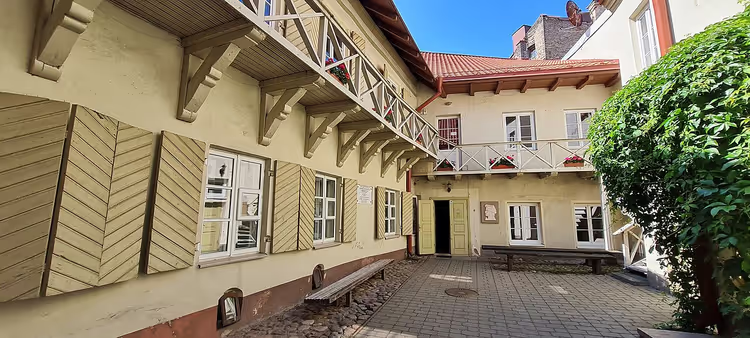 © Derbrauni · CC BYPhoto: Derbrauni, CC BY (https://creativecommons.org/licenses/by/4.0), Wikimedia Commons
The Adam Mickiewicz Museum is part of the architectural complex of Vilnius University. It is a 17th-18th century architectural monument that was originally a merchant's house. In the 19th century, the building was owned by Zhitsky, and Mickiewicz rented an apartment on the ground floor. It was here that the poet worked on his poem "Grażyna."
This house was the meeting place of the Society of Friends of Science, and in 1911 one of its members bought the building. The mansion was restored, and a museum was set up in the rooms where Mickiewicz had lived. In the late 1930s, the building was transferred to the Department of Classical Philology of Stefan Batory University. The museum operated until the start of World War II.
During the occupation, some of the exhibits were lost forever. In 1955, Mickiewicz's memorial apartment was restored and opened to visitors, timed to coincide with the centenary of the poet's death. You will see the poet's personal belongings, the armchair he loved to sit in, a table, manuscripts, medals, first editions of his works, letters, sculptures, and portraits.
- Who it's for: those interested in poetry and literary museums.
23. Samuel Bak Museum
Samuel Bak was born in 1933 in Vilnius, and his artistic talent showed from early childhood. His first works saw the light of day in the Vilnius ghetto, when the boy was only nine years old. After his father was shot, he and his mother found shelter in a Benedictine monastery, where nun Maria Mikulska agreed to help them.
In 1944, the Soviets liberated Jews from the camps. Samuel, his mother, and other Jews left the territory of the Soviet Union. Until 1948 they lived in Germany, in displaced persons camps, and it was during this period that the painting "Mother and Son" was created. In Munich, Bak studied painting, and later the family moved to Israel, where he graduated from the Bezalel Academy of Arts.
The Samuel Bak Museum is the only place entirely dedicated to the artist's work. The exhibition opened in 2017, and Bak himself, who lives in the US, came to the opening. More than fifty works were donated to the complex. After the gallery opened, the artist held a painting master class, and in the future there are plans to expand the exhibition space here.
- Who it's for: those interested in 20th-century art and the history of the Holocaust.
24. Vilnius Picture Gallery
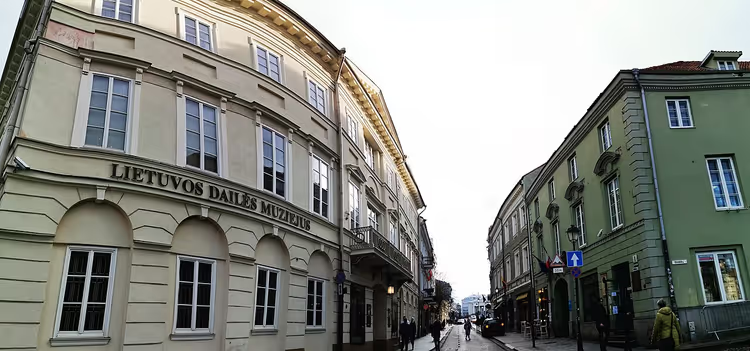 © Jodkovska · CC BY-SAPhoto: Jodkovska, CC BY-SA (https://creativecommons.org/licenses/by-sa/4.0), Wikimedia Commons
The Vilnius Picture Gallery will surprise you with a collection spanning more than four centuries. It is located in the old estate of the Chodkiewicz family, one of the oldest aristocratic families in Europe. Among the family members were many military commanders, cultural figures, diplomats, and scholars.
Their estates and palaces could be found in many European countries, but the Vilnius residence was considered the most beautiful in terms of architecture. It was built in the late Neoclassical style. Today, a picture gallery operates within the walls of the residence, and the exhibition occupies four floors of the palace. Many rooms have preserved ceiling moldings, expensive parquet flooring by renowned craftsmen, and tiled stoves.
The paintings are divided by theme: portraits of aristocrats are displayed separately, while landscapes and genre painting are in another hall. Many masterpieces of Lithuanian painting were scattered across private collections, and it was only recently that they were brought together. Some of the works belong to masters who studied in Germany and Italy and fulfilled church commissions.
- Who it's for: those who want to see Lithuanian painting in historic interiors.
25. Artillery bastion of the city defensive wall
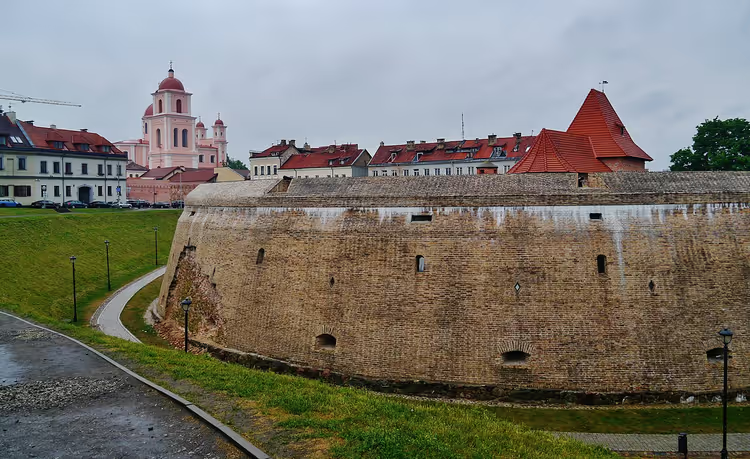 © Zairon · CC BY-SAPhoto: Zairon, CC BY-SA (https://creativecommons.org/licenses/by-sa/4.0), Wikimedia Commons
The artillery bastion was built at the request of the townspeople under Lithuanian Prince Alexander. In 1506, construction of the wall was fully completed. The structure was needed because of the large number of external enemies and the threat of invasion.
In the 17th century, the wall was reinforced with a basteja, a fortification made of brick and earth. In essence, it was a fortification structure with a watchtower, an artillery section, and tunnels. During the war with the Grand Duchy of Moscow, the basteja was heavily damaged. In the 19th century, it was covered with earth, and the surrounding area was turned into a city dump. The bastion was restored again by the Germans during World War I.
They reinforced the vaults, concreted the floor, and installed ventilation. During World War II, the structure served as an air-raid shelter and weapons depot. The walls were fully reconstructed in 1965-1970, and a weapons exhibition was installed in the rooms. Today you will see the original 16th-century tower, the wall, cannon rooms, and a corridor connecting the structures.
- Who it's for: those interested in fortification and military history.
If you want to get museum tickets in advance, check out the options below.
Tours and tickets in Vilnius
Guided tours, skip-the-line tickets and activities — most offers can be cancelled free of charge.
See offers on TiqetsThe widget loads once you give your consent.
All museums from the list are marked on the map below.
Vilnius museums on the map
Museums of Vilnius
Places on the map
- 1Radziwiłł Palace European painting and an exhibition on the Radziwiłł family
- 2Vilna Gaon State Jewish Museum Tolerance Centre and a Holocaust exhibition
- 3National Museum of Lithuania Over a million exhibits, archaeology and ethnography
- 4Lithuanian Energy and Technology Museum History of electricity, vintage cars and interactive exhibits
- 5Church Heritage Museum Reliquaries, church vessels and a collection of bells
- 6Lower Castle Recreated palace of the grand dukes with a museum
- 7Applied Art and Design Museum Antique furniture, jewellery and clothing from the 13th-20th centuries
- 8MO Museum Private museum by architect Daniel Libeskind
- 9Lithuanian Theatre, Music and Cinema Museum Costumes, posters and antique dolls
- 10Lithuanian Railway Museum Steam and diesel locomotives displayed outdoors
- 11Museum of Genocide Victims Former KGB building, exhibition on deportations
- 12Art Museum Combines several branches and galleries
- 13Signatories' House Lithuania's act of independence was signed here
- 14Toy Museum Toys from the Stone Age and the Middle Ages
- 15Vytautas Kasiulis Art Museum Paintings by a Lithuanian artist of the French school
- 16Money Museum of the Bank of Lithuania From barter to gold ducats
- 17Gediminas' Tower Castle models, armour and an observation deck
- 18Vilnius University Science Museum Located in the Chapel of St Anne
- 19Alexander Pushkin Literary Museum Former estate of the poet's son in Markučiai
- 20Museum of Illusions Exhibition on physics and optical puzzles
- 21Amber Museum Stones with prehistoric insect inclusions
- 22Adam Mickiewicz Museum Memorial apartment of the poet in a 17th-century house
- 23Samuel Bak Museum The only museum dedicated to artist Bak's work
- 24Vilnius Picture Gallery Portraits and landscapes in the Chodkiewicz estate
- 25Bastion of the Vilnius City Wall Artillery bastion with a weapons exhibition
⁉️🤔 Frequently asked questions
How many museums are there in Vilnius?
The capital of Lithuania has dozens of museums: from large state collections to small private galleries. Our list includes twenty-five places worth considering first. Most of them are in the old town and near Castle Hill, so you can visit several in one day. Some museums are closed on Mondays and Tuesdays, so check the day of your visit in advance.
How much does admission to Vilnius museums cost?
Prices vary greatly. The MO Museum of Modern Art charges €11 for an adult ticket and €22 for a family ticket (as of 09/2026, MO tickets). Admission to smaller museums is cheaper, and some collections are open for free. If you are visiting several paid museums, consider the Vilnius Pass: card prices are in the table above.
What is the Vilnius Pass and is it worth buying?
The Vilnius Pass is the official city card that gives free entry to more than thirty museums, galleries, and tours. Options are sold for 24, 48, and 72 hours, and a separate version includes public transport. The card pays off if you plan to visit several paid museums in a day. For one or two visits, it is easier to buy regular tickets on site.
Which Vilnius museum should I choose for a first visit?
If you are in the city for the first time, start with Gediminas Tower and the Lower Castle: from there you get a panorama and a clear sense of the city's history. After that, it makes sense to visit the National Museum of Lithuania and the Museum of Applied Arts. Painting lovers should choose the Vilnius Picture Gallery, and families with children the Energy and Technology Museum.
Are there museums for children in Vilnius?
Yes, the city has several interactive museums. At the Energy and Technology Museum, children are shown an old power plant and are allowed to touch the exhibits. The Museum of Illusions is built on optical puzzles, and at the Toy Museum you can touch replicas of old toys. Science and railway museums are good options for schoolchildren.
In short: what to book
Vilnius is convenient because the museums are close together, and you can see several in a day. If you have only one day, go for the old town and Castle Hill. If you are traveling with children, choose interactive museums. If you are interested in painting, plan for the Vilnius Picture Gallery and the MO Museum.
To avoid standing in line, book tickets and accommodation in advance:

A small editorial team writing guides for independent travel. We travel ourselves, but we haven’t been everywhere, so we check prices, opening hours and how to get there against official sources.