
















Maldives atolls: 15 destinations for recreation and diving
The Maldives has 26 atolls and 1,192 islands (as of 09/2026, Visit Maldives). Fewer than two hundred of them are inhabited; the rest are given over to resorts and birds (as of 09/2026, Wikipedia).
The difference between atolls is bigger than photos suggest. Each has its own reef, its own transfer, and its own nightly rate. Choose not by the picture but by the route: speedboat, seaplane, or domestic flight determines how many hours you'll spend getting there.
Below are fifteen destinations with a breakdown: how one differs from its neighbor, how to get there, and who this kind of vacation won't suit.
Ad: this article contains affiliate links, we earn a commission if you book through them, at no extra cost to you.
How to choose an atoll for your trip
💡 In short:
- Define the purpose of your trip: diving, snorkeling, beach, or a quiet honeymoon.
- Count the transfer together with accommodation: a seaplane and a domestic flight change the budget more than the hotel does.
- Check the season: the wet monsoon arrives in the south and north of the archipelago in different weeks.
- Transfers and travel season: 09/2026, verified on the official Visit Maldives website
Then look at two numbers: travel time from Velana Airport and the number of hotels on the island. These two points explain almost the entire price difference between atolls.
Atoll | Main thing | Trip from Male |
|---|---|---|
South Male | diving near the capital | speedboat |
North Male | airport and resorts | speedboat and ferry |
Ari | largest resort atoll | seaplane |
Lhaviyani | deserted reefs | seaplane |
Dhaalu | ancient ruins | seaplane |
Maafushi (Kaafu) | guesthouses | ferry and speedboat |
Meemu | strong currents | seaplane |
Vaavu (Felidhoo) | small district | speedboat |
Faafu | villas over the lagoon | seaplane |
Baa | UNESCO biosphere reserve | seaplane and domestic flight |
Raa | one resort for everyone | seaplane |
Rasdhoo Island | tiny island | ferry |
Addu | southern archipelago | domestic flight |
Gaafu | surf and quiet | domestic flight |
Laamu | caves and grottoes | domestic flight |
1. South Male (Kaafu)
South Male is separated from North Male by the Vaadhoo Channel, so it's a separate resort zone with its own set of islands. There are only a handful of inhabited islands here; the rest of the land is taken up by resorts and dive centers.
Divers come here for the Guraidhoo Kandu and Embudhoo Kandu marine reserves: channels, vertical walls, and dense schools of fish right by the shore. A separate item on the agenda is the Kuda Giri wreck. It was where regular wreck diving in the Maldives began.
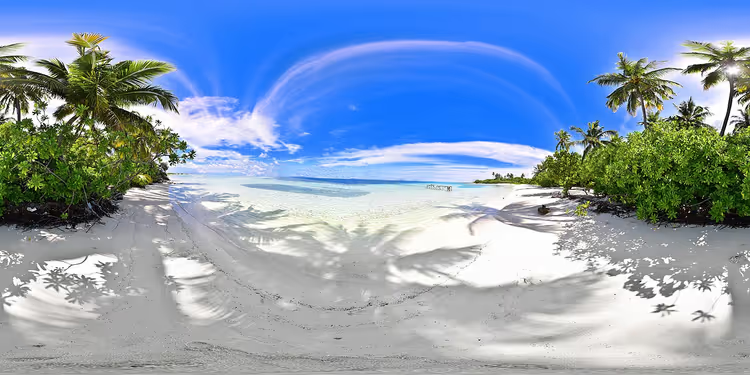 © Ibrahim Asad · CC BYPhoto: Ibrahim Asad, CC BY (https://creativecommons.org/licenses/by/3.0), Wikimedia Commons
The speedboat from Velana Airport takes less than an hour to the resorts. Choose this atoll if you want a short trip after your flight and aren't willing to spend the night in Male.
- How to get there: speedboat from Male, less than an hour.
- Who it's for: divers and couples who value proximity to the capital.
hotels in South Male on Trip.com
2. North Male (Kaafu)
The capital Male and the country's main airport are located here, and fishing islands sit side by side with resort islands. Male's sandy streets are narrow and crowded, but within two blocks you'll find cafes, a market, and shops.
Around Male there are plenty of islands for every taste. Villingili wins with beaches and clear water, Baros and Ihuru have long operated as house reefs for snorkeling, and on Huraa Island there's a real village with guests.
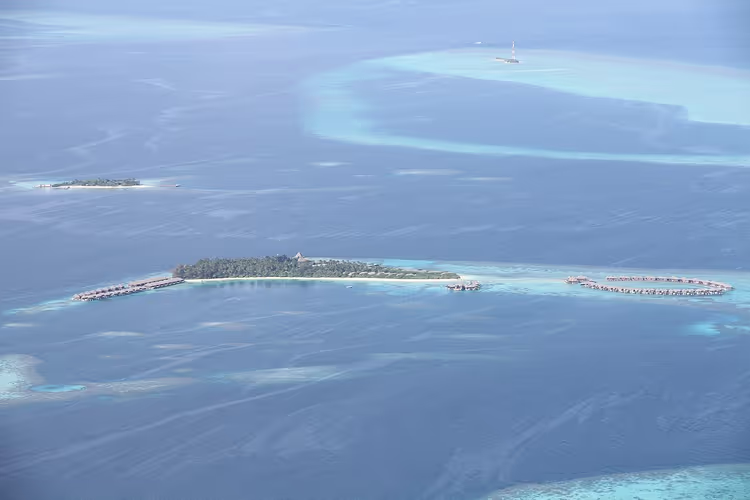 © 7777777kz · CC BYPhoto: 7777777kz, CC BY (https://creativecommons.org/licenses/by/3.0), Wikimedia Commons
The airport sits on Hulhule Island, with its runway stretching straight into the ocean. From the terminal you're taken by speedboat or ferry, so it's best not to plan a packed first day.
- How to get there: speedboat or ferry from Hulhule Airport, from 15 minutes.
- Who it's for: those who don't need complete silence: the capital and air traffic are nearby.
- The catch: hotel prices are higher than the archipelago average.
hotels in North Male on Trip.com
3. Ari (Alifu)
Ari stretches for dozens of kilometers and holds the reputation of being the most resort-heavy atoll in the Maldives. The beaches here are wide, there are many hotels, and the conditions for water sports are considered among the best in the country.
On Nalaguraidhoo Island there are sports facilities, a golf course, and equipment rental. Kuramathi is loved by windsurfers: the wind there is steady. Norwegian explorer Thor Heyerdahl conducted excavations on the local islands and searched for traces of an ancient culture.
Resorts like Nika and Dhoni Mighili sell seclusion: guests have their own stretch of beach, and a boat with a driver is provided for excursions. The Rangali and Halaveli dive sites deliver that signature underwater world with manta rays and reef sharks.
- How to get there: seaplane from Male, about half an hour.
- Who it's for: couples and divers who want a wide choice of hotels.
hotels on Ari Atoll on Trip.com
4. Lhaviyani
Lhaviyani consists of a scattering of tiny islands, and most of them are uninhabited. That's exactly why the reefs here are in good shape: fewer people, less pressure on the corals.
Underwater you'll find glassfish, angelfish, moray eels, and several species of sharks. Divers also come for two shipwrecks that are already covered in coral.
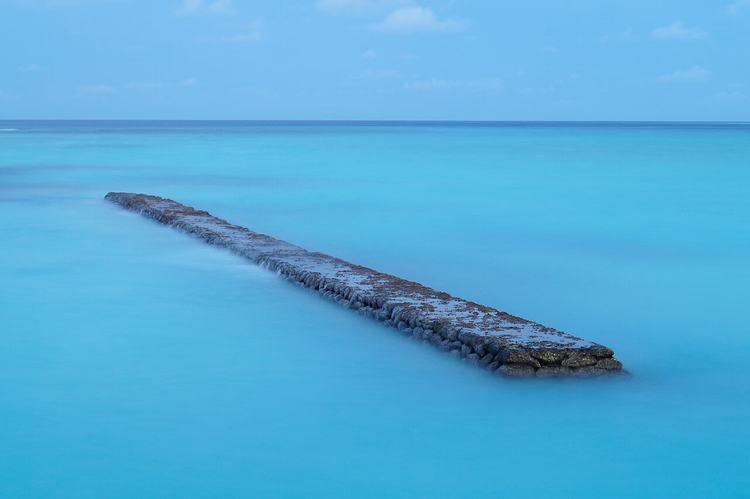 © Romain Pontida · CC BY-SAPhoto: Romain Pontida, CC BY-SA (https://creativecommons.org/licenses/by-sa/2.0), Wikimedia Commons
A sandbank rises above the reef. In the evening, the water near the sandbank glows with plankton, and locals play barefoot soccer there. Snorkeling on the shallow reefs is accessible even to beginners. Popular souvenirs here include pearl and coral jewelry.
- How to get there: seaplane from Male.
- The catch: few hotels, limited choice of accommodation, book in advance.
hotels on Lhaviyani on Trip.com
5. Dhaalu
Dhaalu lies just a few kilometers from Faafu, but it has a life of its own. Most of the islands are uninhabited, and tourist spots are concentrated in the northern part of the atoll.
History lovers head to the ruins of Buddhist monasteries and to an old mosque built from coral stone. The central island of Kudahuvadhoo, with a population of about fifteen hundred, has shops, a school, and a port.
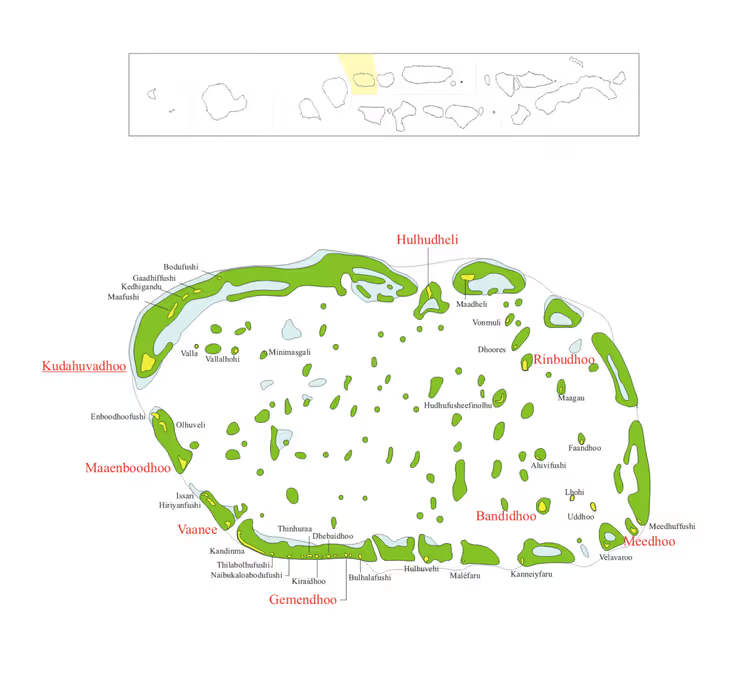 © helix84 · CC BY-SAPhoto: helix84, CC BY-SA (http://creativecommons.org/licenses/by-sa/3.0/), Wikimedia Commons
The second most important island, Velavaru, is known as turtle island. A coral reef rings the entire island, so dives start just a few meters from the beach. Besides diving, there's windsurfing, fishing, catamarans, and beach volleyball.
- How to get there: seaplane from Male.
- Who it's for: those who want both a beach and ancient ruins nearby.
6. Maafushi and the local islands of Kaafu
In Kaafu, besides North and South Male, there are about a dozen more inhabited islands. The most famous of them, Maafushi, lives on guests: guesthouses are cheap, and a regular ferry runs to Male.
Kaashidhoo is the fifth largest island in the archipelago, with a permanent population of about two thousand. Coconuts hang right overhead, and a strip of soft sand runs along the entire coast.
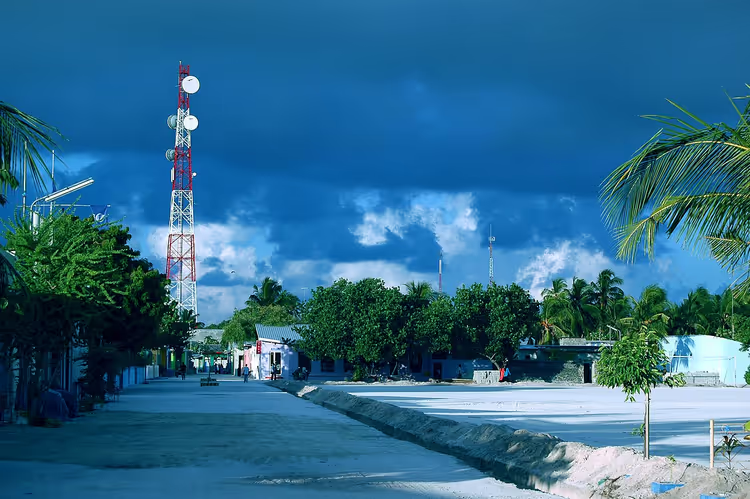 © Nattu from Male', Maldives · CC BYPhoto: Nattu from Male', Maldives, CC BY (https://creativecommons.org/licenses/by/2.0), Wikimedia Commons
Maafushi is famous for its two beaches and affordable prices. Swimsuits are allowed only on designated beaches here. On other parts of the local islands, it's customary to enter the water in light clothing. Gaafaru Atoll to the east encloses a large lagoon, and people go there for the underwater world.
- How to get there: ferry and speedboat from Male.
- The catch: swimming in swimsuits only on designated beaches.
- Who it's for: budget travelers.
guesthouses and hotels in Kaafu on Trip.com
7. Meemu
Meemu stretches out in a narrow ribbon and is surrounded by a bright blue lagoon. Inside this lagoon lie small islands, and only some of them are inhabited.
Tourists discovered the atoll late, only in the late nineties. Hotels, dive centers, and equipment rental points now operate here, so you won't need to bring your own mask and fins.
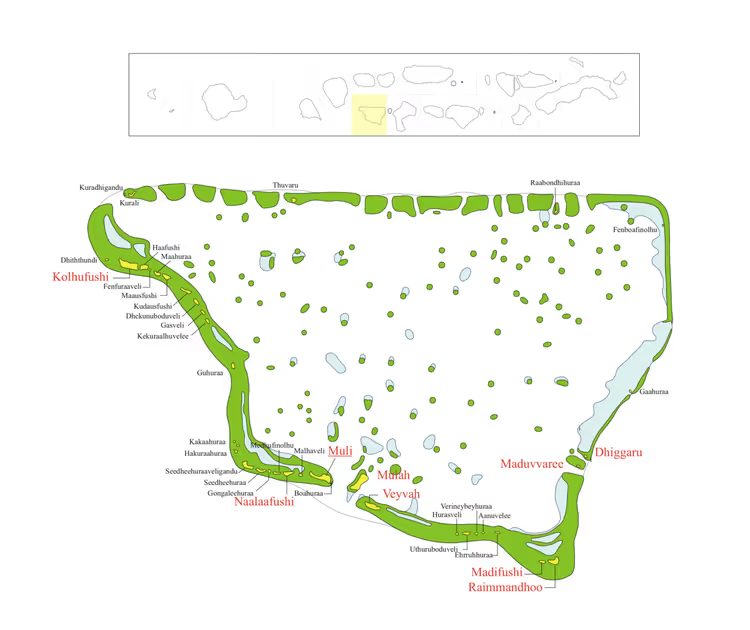 © helix84 · CC BY-SAPhoto: helix84, CC BY-SA (http://creativecommons.org/licenses/by-sa/3.0/), Wikimedia Commons
The atoll's shape resembles open jaws, and you'll like that coincidence: reef sharks hang out in the depths here. The Shark Tongue dive spot is accessible only to experienced divers due to strong currents.
- How to get there: seaplane from Male.
- The catch: one of the spots is closed to beginners, you need experience and certification.
- Who it's for: intermediate divers and above.
8. Vaavu (Fulidhoo)
Vaavu is a scattering of coral islands that belongs to two atolls at once, one large and one small and round. Fulidhoo is one of the islands in this district. There are few inhabited islands, so the district is considered the smallest in the country.
The best dive site, Fotteyo Kandu reef near Diggiri Island, is almost untouched, and many divers from across the archipelago come here.
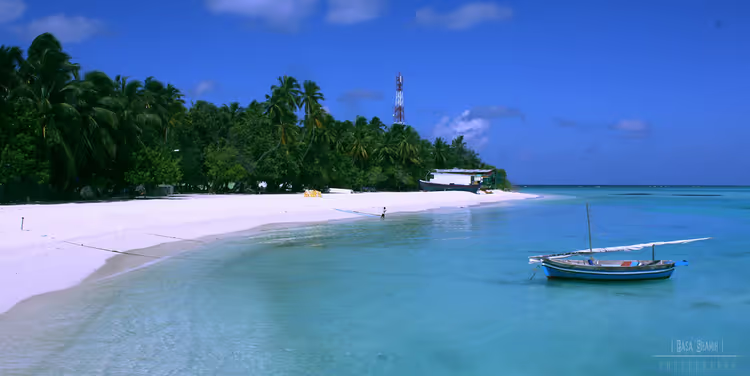 © Easa Shamih (iZZo) | P.h.o.t.o.g.r.a.p.h.y · CC BYPhoto: Easa Shamih (iZZo) | P.h.o.t.o.g.r.a.p.h.y, CC BY (https://creativecommons.org/licenses/by/2.0/), Flickr
Families with children choose Alimatha Island for its shallow lagoon and calm water. Even in the rainy season there are plenty of tourists here: the downpours are short and do not change the water temperature. The beaches of the inhabited islands are covered with fine coral sand, and loungers and umbrellas are usually included in the cost of accommodation.
- How to get there: speedboat or seaplane from Male.
- Who it's for: divers and families with children.
hotels in Fulidhoo on Trip.com
9. Faafu
Faafu lies about one hundred and twenty kilometers from Male, and this is already seaplane territory. The atoll comprises two dozen islands, only six of which are inhabited.
Thor Heyerdahl excavated on Nilandhoo Island: the digs uncovered traces of an ancient pagan culture. The atoll's main resort, Filitheyo, has placed villas with thatched roofs among the palm trees and on stilts directly above the lagoon.
Snorkeling starts right at your pontoon, and a dive center takes it from there. Guests have access to beach and water activities, a spa, a fitness center, and internet. If you want overwater villas and quiet, take a close look at this atoll.
- How to get there: seaplane from Male.
- Who it's for: couples who want a villa over the lagoon and few neighbors.
10. Baa
Baa is more than fifty reef islands and one of the main marine reserves in the Indian Ocean. The atoll has been part of a UNESCO biosphere reserve since 2011 (verified on September 15, 2026 on the UNESCO website).
The main spot is Hanifaru Bay. From June to November, manta rays and whale sharks come here: they feed on plankton brought in by the monsoon (according to UNESCO, 09/2026). The southern island of Olhugiri is covered with rare vegetation and is the only place where great frigatebirds nest.
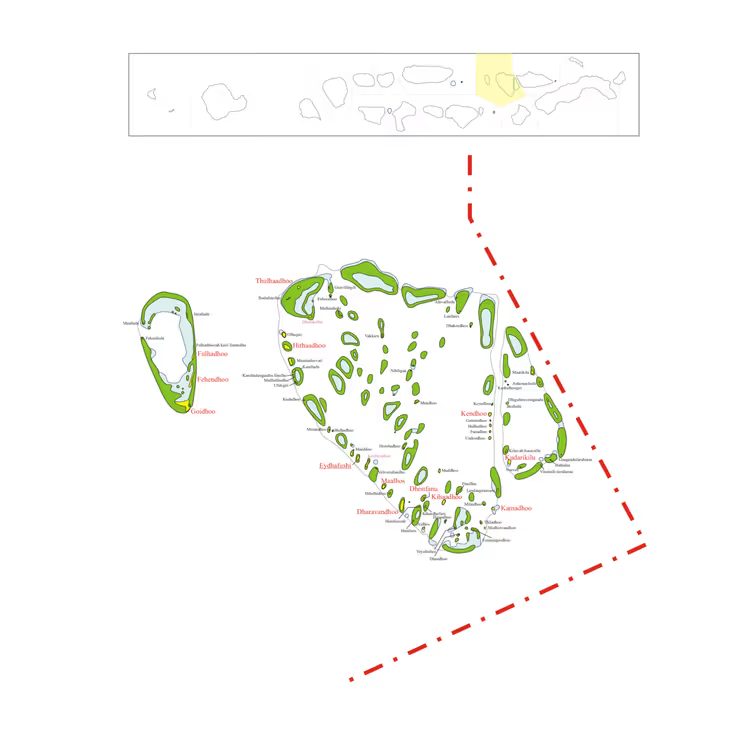 © Map originally vector'ed by Hassan Waheed, Aabaadhuge of Thinadhoo island.. Note: This section of map was extracted and · CC BY-SAPhoto: Map originally vector'ed by Hassan Waheed, Aabaadhuge of Thinadhoo island.. Note: This section of map was extracted and, CC BY-SA (http://creativecommons.org/licenses/by-sa/3.0/), Wikimedia Commons
Local islands produce lacquer miniatures: souvenirs from Baa are taken home more often than anything else from the archipelago. Divers choose resorts like Soneva Fushi because of the dolphins and sharks on the outer reef.
- How to get there: seaplane from Male or a domestic flight to Dharavandhoo Island.
- Who it's for: divers and snorkelers who want a protected reef.
11. Raa
Raa is almost untouched by civilization, with about fifteen inhabited islands. They cluster along the eastern side of the archipelago, while the ring of reefs encloses the lagoon from within.
Divers come here for the corals, sponges, and underwater grottoes. Reef sharks and parrotfish are common at Kakani Thila and Digali Haa, while black corals and manta rays are found at Madi Finolhu. The currents here are weak, so even beginners can dive.
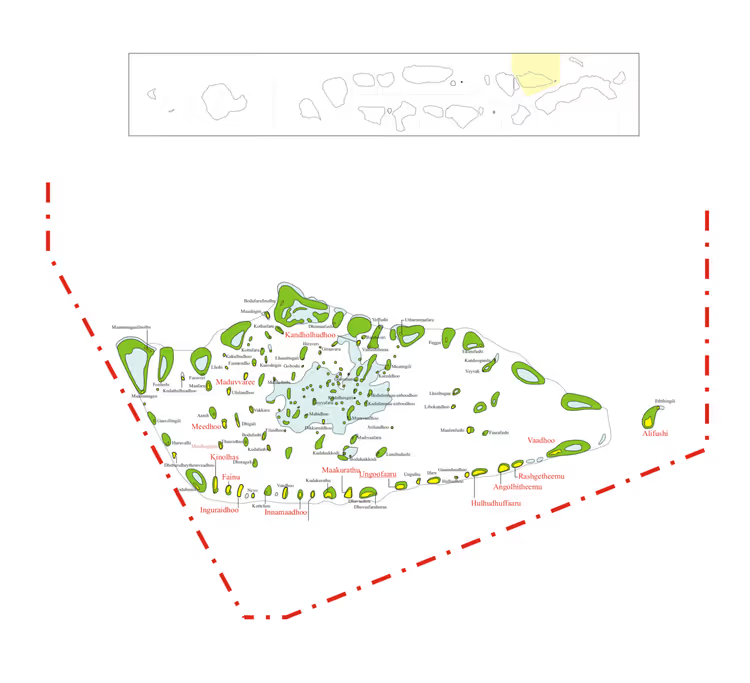 © helix84 · CC BY-SAPhoto: helix84, CC BY-SA (http://creativecommons.org/licenses/by-sa/3.0/), Wikimedia Commons
Dhoni boats are built on Alifushi, so here you will see a working shipyard, not a stage set. The western island of Kandholhudhoo was resettled after 2004.
- How to get there: seaplane from Male Airport, about forty minutes.
- The catch: there are few resorts, and the choice of accommodation across the whole atoll is limited.
12. Rasdhoo Island
Rasdhoo is a tiny island: about six hundred meters long and five hundred meters wide. Around one and a half thousand people live on it, but you will not feel crowded: the island is neatly built up.
Three dive centers operate here with experienced instructors and modern equipment. The reef starts almost at the shore, so dives are planned around the tides, and it is best to check the schedule on site.
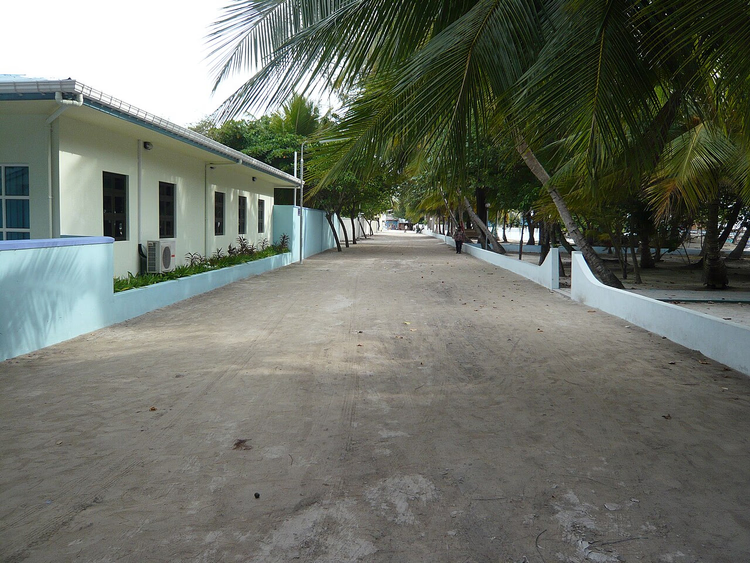 © georama · CC BYPhoto: georama, CC BY (https://creativecommons.org/licenses/by/3.0), Wikimedia Commons
The beach is clean, the sand is soft, with no coral rubble. There is some seaweed near the shore, but it doesn't cause any discomfort, and palms and loungers provide shade from the sun. Underwater you'll find cuttlefish, turtles, sharks, and giant manta rays.
- How to get there: ferry from Malé; boats to the neighboring uninhabited islands run daily except Friday.
- The catch: swimsuits are prohibited on the public beach, but you can swim on private beaches at guesthouses.
guesthouses on Rasdhoo and hotels on Trip.com
13. Addu
Addu lies in the south of the archipelago and consists of two dozen islands stretched out in a horseshoe shape. A ring of coral reefs protects the lagoon from storms, so the water inside is always calm.
Gan Island has an international airport. It was built on the site of a former British Royal Air Force base, which significantly changed the local infrastructure.
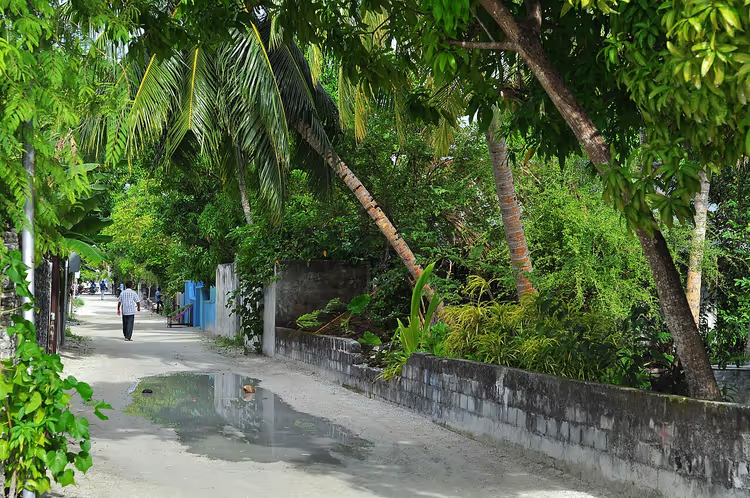 © Ibrahim Asad · CC BYPhoto: Ibrahim Asad, CC BY (https://creativecommons.org/licenses/by/3.0), Wikimedia Commons
In places, the reefs come close to the surface, so beginner divers feel confident. On neighboring islands you'll find the ruins of an old temple and fruit groves with mangoes and pineapples. If you want the south, calm water, and a view of the equator, take a look at Addu.
- How to get there: domestic flight from Malé to Gan, just over an hour.
- Who it's for: those who combine beach time with exploring inhabited islands.
14. Gaafu
Gaafu is divided into two administrative zones and is one of the country's most remote atolls. There are few inhabited islands; the rest are uninhabited, and packages cost less because of the distance from the center.
The main transport is domestic flights from Malé. Seaplanes generally don't fly here. The journey is long, so allow extra time for connections.
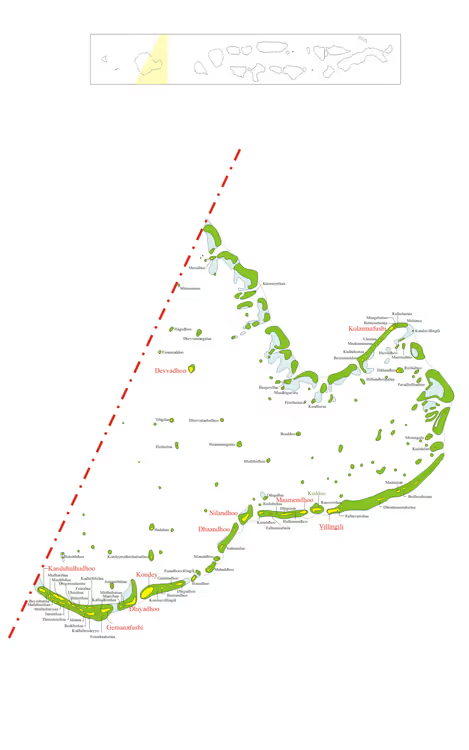 © helix84 · CC BY-SAPhoto: helix84, CC BY-SA (http://creativecommons.org/licenses/by-sa/3.0/), Wikimedia Commons
Western winds raise high waves here, and surfers from all over the world come specifically for that. Everyone else gets swimming, walks through palm groves, and water excursions. Underwater you'll encounter octopuses, angelfish, turtles, manta rays, and bioluminescent jellyfish.
- How to get there: domestic flight from Malé.
- The catch: the journey takes half a day, and flights depend on the weather.
- Who it's for: surfers and travelers who want peace and quiet.
15. Laamu
Laamu is oval-shaped and is known not for its hotels but for its nature. The resort infrastructure here is weaker than in Ari, but that hardly affects beach holidays.
The underwater terrain is made interesting by caves, narrow grottoes, and steep walls. Diving here is valued for depth changes and fish density, while the shallow reefs are also suitable for simple snorkeling.
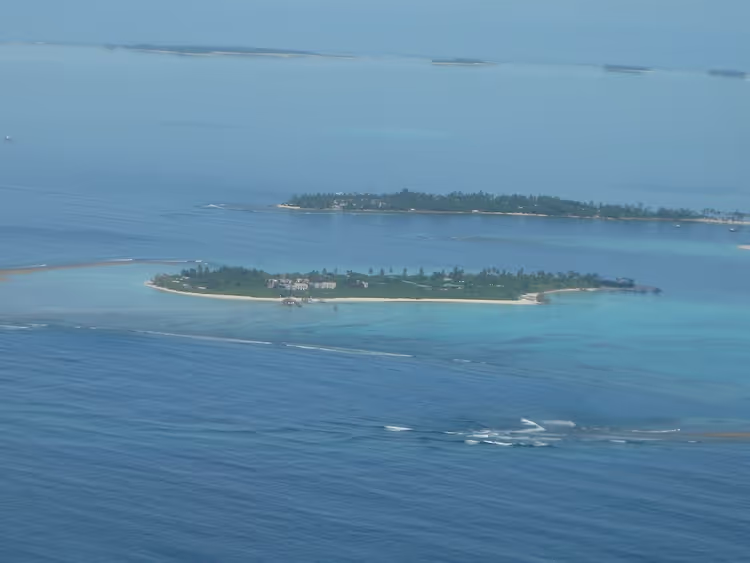 © jfdebon · CC BYPhoto: jfdebon, CC BY (https://creativecommons.org/licenses/by/3.0), Wikimedia Commons
The twelve inhabited islands have guesthouses, cafés, and rental shops. The water temperature stays steady year-round, so you can swim in any month.
- How to get there: domestic flight from Malé and a speedboat from the airport.
- The catch: the infrastructure is more modest than on the well-known atolls.
Maldives atolls on the map
Below is an interactive map of the atolls. Open it and check how long the transfer between your chosen islands takes.
Atolls of the Maldives
Places on the map
- 1South Malé Diving near the capital, the sunken wreck of Kuda Giri
- 2North Malé Capital Malé and the country's main airport on Hulhulé Island
- 3Ari The largest resort atoll, with Thor Heyerdahl's excavation sites
- 4Lhaviyani Uninhabited islands, pristine reefs and shipwrecks
- 5Dhaalu Ruins of Buddhist monasteries and turtle island Velavaru
- 6Kaafu Guesthouses on Maafushi, affordable prices
- 7Meemu Lagoon atoll with reef sharks at the Shark Tongue dive spot
- 8Fulidhoo The smallest atoll, Fotteyo Kandu reef near Dhigurah Island
- 9Faafu Overwater villas, Thor Heyerdahl's excavations on Nilandhoo
- 10Baa UNESCO biosphere reserve, manta rays in Hanifaru Bay
- 11Raa Weak currents, Milaidhoo reef and a dhoni boatyard
- 12Rasdhoo Tiny island with three dive centres right by the reef
- 13Addu Horseshoe-shaped southern archipelago, airport on Gan Island
- 14Gaafu Remote atoll, surfing on the western swells
- 15Laamu Underwater caves and caverns, limited resort infrastructure
⁉️🤔 Frequently asked questions
Which Maldives atoll should I choose for a first trip?
Start with South or North Malé. The journey from the airport takes less than an hour, there are many resorts, and dive sites start right off the shore. If you want to save money, choose Maafushi with its guesthouses.
How much does a transfer to an atoll cost?
The price depends on the distance and the type of transport. The ferry is the cheapest, a speedboat is more expensive, and a seaplane or domestic flight is the most expensive. Check exact rates on the official Visit Maldives website.
Can I swim in a swimsuit on local islands?
There are no restrictions on resort islands. On inhabited local islands, it's customary to enter the water in light clothing, and swimsuits are allowed only on designated beaches and private beaches at guesthouses. For example, Maafushi and Rasdhoo have such areas. Check the rules on site.
When is the best time to go to the Maldives?
The archipelago lives by the monsoons, and the wet season arrives at different atolls in different weeks. Short downpours don't change the water temperature, so you can swim year-round. For diving, visibility and currents matter more; for the beach, wind. Check the forecast before your trip.
Where is the best diving in the Maldives?
For mantas and whale sharks, people head to Baa, to Hanifaru Bay; the season runs from June to November. Reef sharks and currents await you in Meemu, black corals in Raa, and Fotteyo Kandu near Fulidhoo remains untouched. Beginners are well suited to the reefs of Rasdhoo right by the shore.
In short: what's worth booking
Choose an atoll based on two things: travel time and the type of vacation. If you're on a short trip, go with South or North Male. If your budget is tight, look at guesthouses on Maafushi or Rasdhoo. If you're coming for the underwater world, plan for Baa, Meemu, or Fulidhoo. For a honeymoon, Faafu and Ari with overwater lagoon villas are a good fit.
Compare accommodation options on Trip.com for your chosen atoll and factor the transfer into your overall budget.

A small editorial team writing guides for independent travel. We travel ourselves, but we haven’t been everywhere, so we check prices, opening hours and how to get there against official sources.