
















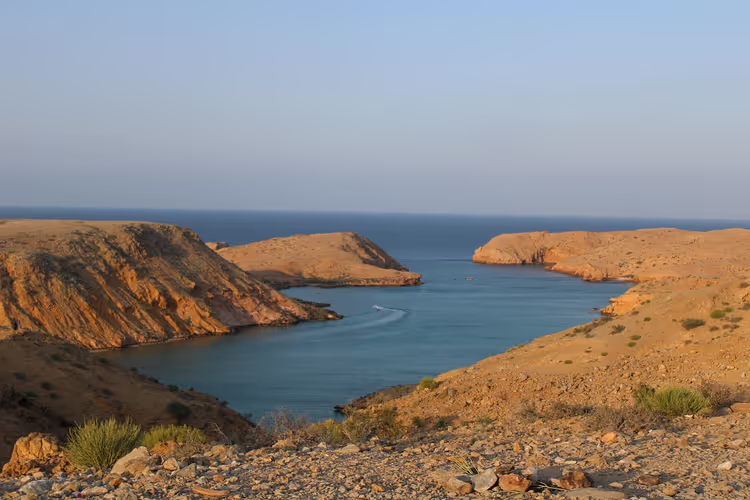
Muscat: 11 top things to do, beaches and hotels on the coast
Muscat stretches along the Gulf of Oman as a long chain of neighborhoods. There is no single center here, and a highway always lies between any two points.
We've gathered the essentials for a first trip: eleven places, ways to get around, six restaurants, and five hotels with honest pros and cons. We verified hours and admission on 09/15/2026 on official websites.
Ad: this article contains affiliate links: we earn a commission if you book through them, at no extra cost to you.
What to see in Muscat
💡 In short:
- The city's main points: the Royal Palace, the Sultan Qaboos Grand Mosque, and the Mutrah Souq.
- By car you can cover the city faster; the bus only runs along the main corridors.
- Prices and hours: 09/2026, verified on the mosque's official website and the National Museum website.
The eleven places below lie along two stretches. The old center runs along Mutrah, while Qurum gathers the opera house, beaches, and hotels. You're always driving between them, so the table will help you set priorities.
Place | What it is | Admission |
|---|---|---|
Royal Palace | the Sultan's residence | free from outside |
Sultan Qaboos Grand Mosque | the country's largest mosque | free |
Al Jalali and Al Mirani forts | 16th-century fortresses | no entry inside |
National Museum of Oman | the country's history | ticketed |
Royal Opera House | concert hall | ticketed |
Qurum and Azaiba beaches | city swimming | free |
Mutrah Souq | spices and souvenirs | free |
Mutrah Corniche | view of the gulf | free |
Fish market | morning trading | free |
Boat trip | snorkeling and dolphins | ticketed |
Omani Heritage Gallery | local crafts | free |
1. Royal Palace
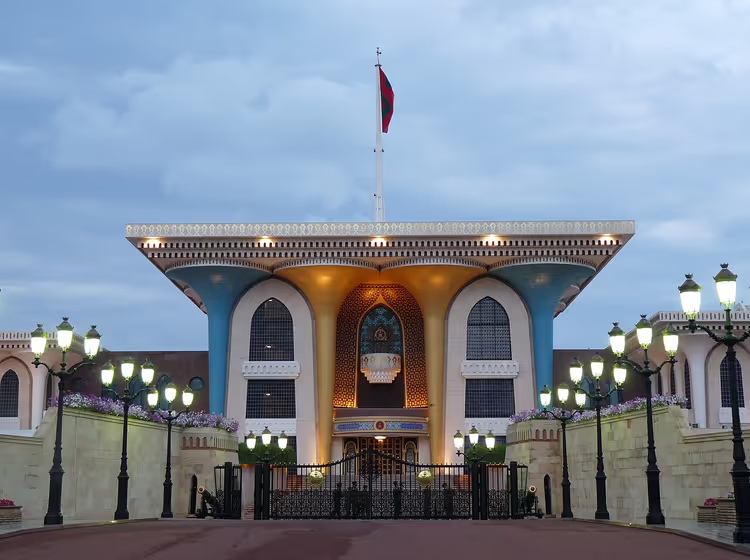 © Ji-Elle · CC BY-SAPhoto: Ji-Elle, CC BY-SA (https://creativecommons.org/licenses/by-sa/3.0), Wikimedia Commons
The Royal Palace, or Qasr Al Alam, was built in the 1970s and serves as the Sultan's official residence. The Sultan himself does not live here, but he receives distinguished guests. The building combines modern and traditional elements, and its gardens open directly onto the sea.
Tourists are not allowed inside, so your visit won't take long. Look at the facade from the square side and at the gardens along the water. This is the first point of old Muscat if you're coming from Mutrah.
- Admission: you can't go inside; free from outside.
- How to get there: a few minutes by car from Mutrah (per the map).
- Open on the map
2. Sultan Qaboos Grand Mosque
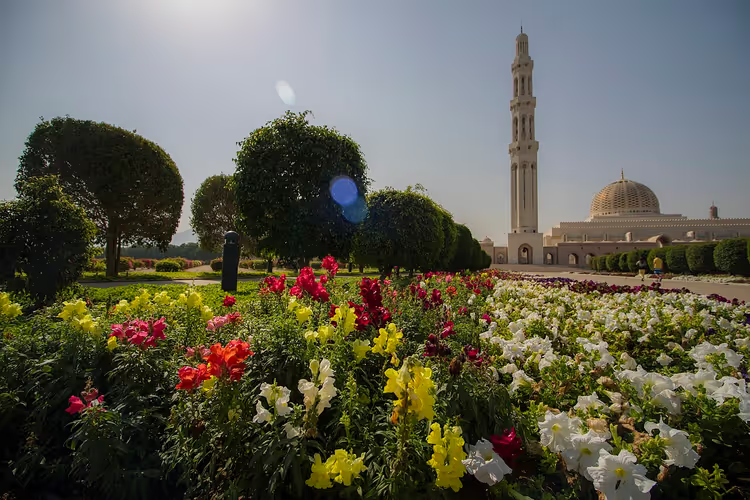 © Mostafameraji · CC BY-SAPhoto: Mostafameraji, CC BY-SA (https://creativecommons.org/licenses/by-sa/4.0), Wikimedia Commons
The Sultan Qaboos Grand Mosque holds the status of the largest in the country. It took six years to build, and today it accommodates 20,000 worshippers (as of 09/2026, mosque's official website). The five minarets symbolize the five pillars of Islam.
Inside lies a hand-woven carpet covering 4,200 square meters and weighing 21 tons (as of 09/2026, mosque website). Nearby hang stained glass windows and a chandelier, which are exactly what people come here for. Admission for non-Muslims is free, but the visiting window is narrow.
- Visitor hours: 8:30 AM to 11:00 AM, except Fridays (as of 09/2026, mosque schedule).
- Admission: free. Women must cover their hair, and clothing must cover shoulders and knees.
- The catch: by eleven you'll be asked to leave, so there's little time to look around.
- Open on map
3. Al Jalali and Al Mirani forts
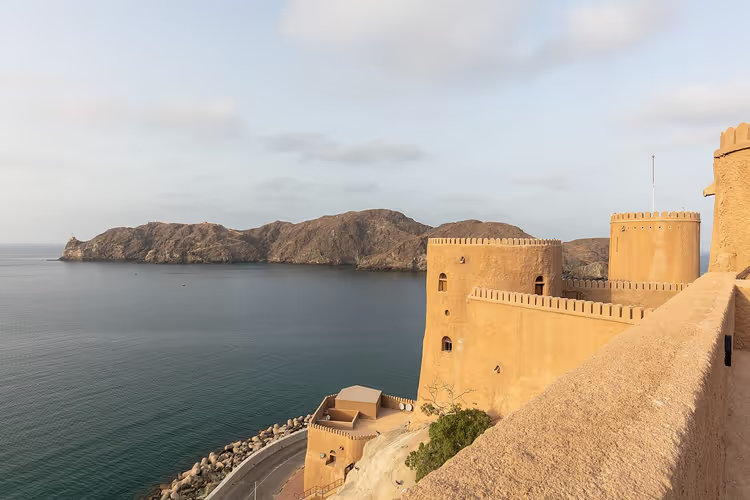 © Diego Delso · CC BY-SAPhoto: Diego Delso, CC BY-SA (https://creativecommons.org/licenses/by-sa/4.0), Wikimedia Commons
Two 16th-century fortresses stand on headlands on either side of the harbor. The Portuguese built them to defend the city, and today they serve as a landmark for anyone looking out to sea. Al Jalali was once a prison; now it houses a private museum.
The viewpoints offer views of the port and the old city. Tourists are not allowed inside either fort, so you explore them from the outside. The best shot is from the Mutrah Corniche at sunset.
- Admission: no entry inside, viewing from outside is free.
- Open on map Al Jalali
- Open on map Al Mirani
4. Muscat museums
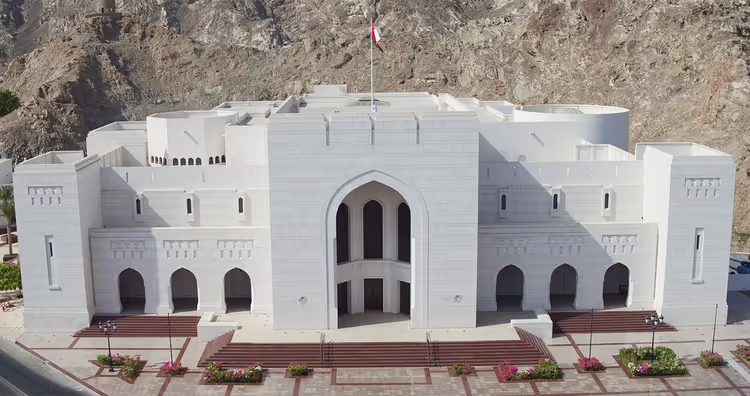 © Mohammedkhamisnasserkhamis · CC BY-SAPhoto: Mohammedkhamisnasserkhamis, CC BY-SA (https://creativecommons.org/licenses/by-sa/4.0), Wikimedia Commons
The National Museum of Oman is considered the city's main museum, with a collection of more than ten thousand items. The building itself is also worth a look.
Nearby, Bait Al Zubair and Bait Al Baranda showcase Omani daily life and trade. There's also a museum of Franco-Omani relations. If you have one free day, start with the National Museum and add the others as time allows.
- Hours: daily from 10:00 AM to 5:00 PM, ticket office closes at 4:30 PM (as of 09/2026, museum schedule).
- Open on map
5. Royal Opera House
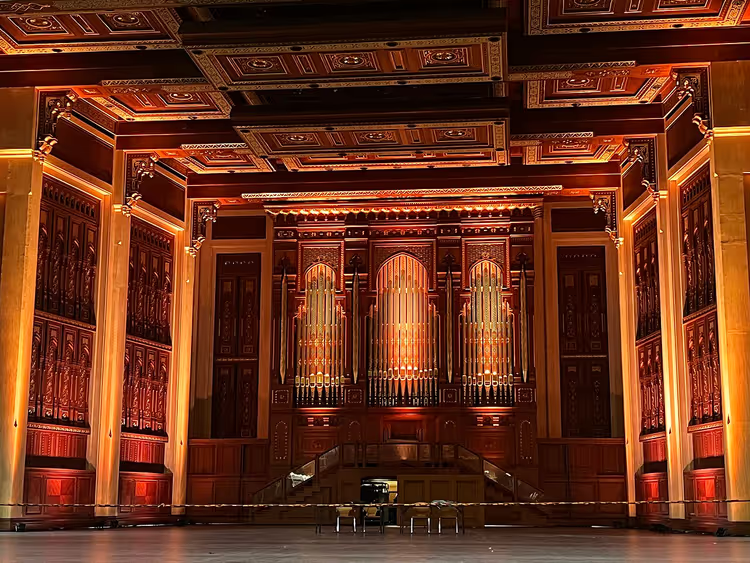 © Batoul84 · CC BY-SAPhoto: Batoul84, CC BY-SA (https://creativecommons.org/licenses/by-sa/4.0), Wikimedia Commons
The Royal Opera House Muscat opened more than ten years ago and has become the city's cultural center. The hall seats more than a thousand people, and the surrounding grounds feature a garden with shops and cafes. The program mixes opera, jazz, and Arabic music.
You can see the building without attending a performance, but it's better to take a tour or buy a ticket for an evening show. Dress neatly; an evening concert here is an occasion to dress up. While you're waiting for the show to start, stop by the cafe in the garden.
- Tickets: tickets and tours to the Royal Opera House.
- The catch: on performance days you won't get inside without a ticket.
- Open on map
6. Muscat beaches
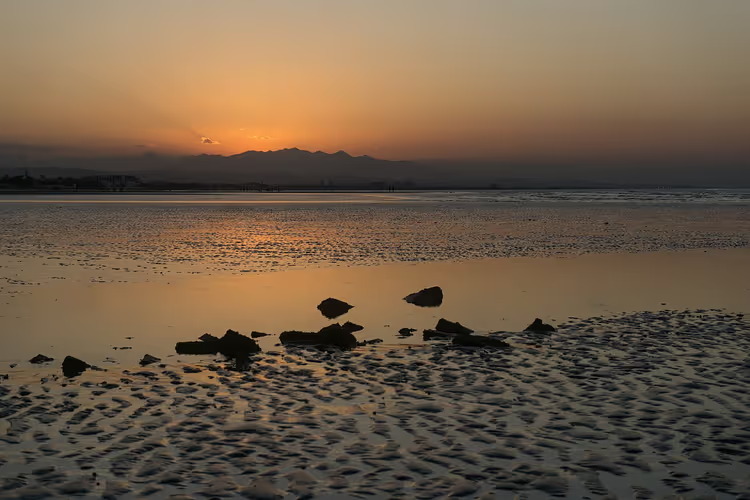 © Alexey Komarov · CC BY-SAPhoto: Alexey Komarov, CC BY-SA (https://creativecommons.org/licenses/by-sa/4.0), Wikimedia Commons
Qurum Beach is the most accessible because it lies right in the city, near the corniche and cafes. Azaiba Beach is quieter and works well if you're staying in the northern districts. For seclusion, people head to Yitti Beach or the Daymaniyat Islands.
Swimming is comfortable in the cool season; in summer the water is as warm as fresh milk. The Daymaniyat Islands are reached by boat, and that's a separate half-day trip. Bring water and sunscreen, there's little shade on the beaches.
- Entry: city beaches are free.
- Getting there: Qurum and Azaiba are within the city, Yitti and Daymaniyat are outside the city, only by car or boat (see map).
- Open on map (Qurum Beach)
7. Mutrah Souq
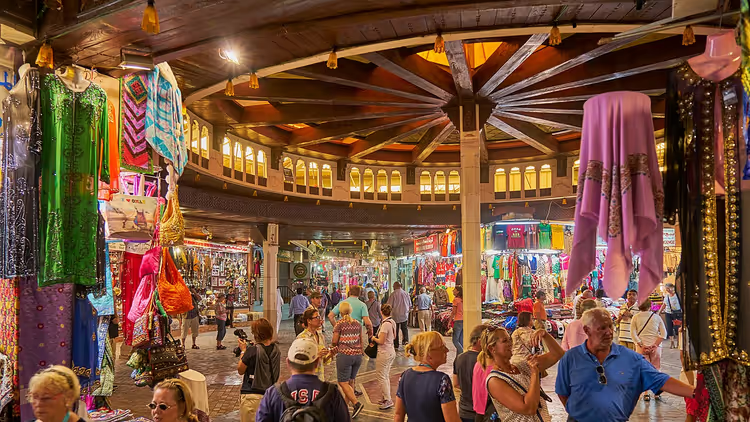 © Georg Karl Ell · CC BY-SAPhoto: Georg Karl Ell, CC BY-SA (https://creativecommons.org/licenses/by-sa/4.0), Wikimedia Commons
Mutrah Souq is considered one of the oldest in the Arab world, and spices, frankincense, fabrics, and souvenirs are still traded here. Look up at the ceilings: the carving and painting here are part of the merchandise. Bargaining is appropriate, but with a smile.
The souq sits right next to the corniche, so it's easy to combine a visit with a stroll. Come in the evening, when the heat subsides and the shop windows light up. While you're here, buy some frankincense or halva to take home.
- Hours: daytime until late evening, check exact times on site.
- The catch: the narrow lanes get stuffy during the day.
- Open on map
8. Mutrah Corniche
 © Andrew Moore · CC BY-SAPhoto: Andrew Moore, CC BY-SA (https://creativecommons.org/licenses/by-sa/2.0), Wikimedia Commons
Mutrah Corniche runs along the bay and connects the souq with the fish market. In the evening families stroll here, and the sun sets right behind the port forts. It's worth setting aside a few minutes for a cafe with mint lemonade.
People come here specifically for the sunset. Arrive an hour before sunset to get a spot by the water. From there you can walk to the forts and back to the souq.
- Getting there: on foot from Mutrah Souq, along the water (see map).
- Open on map
9. Fish market
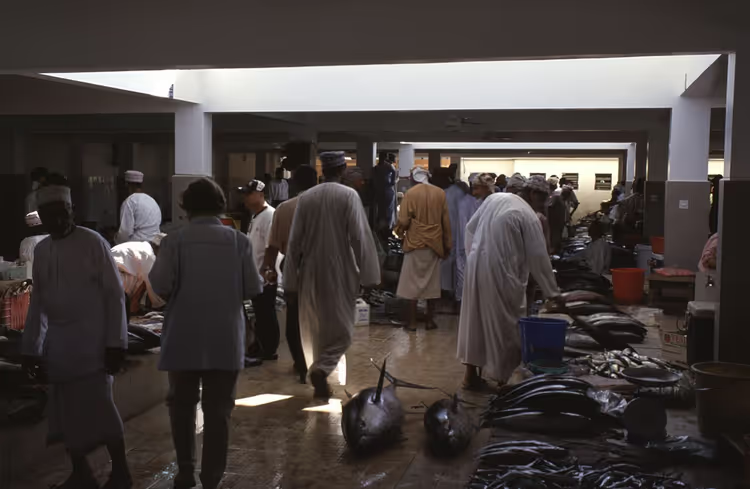 © Bernhard Dunst · CC BY-SAPhoto: Bernhard Dunst, CC BY-SA (https://creativecommons.org/licenses/by-sa/4.0), Wikimedia Commons
Mutrah Fish Market operates from the morning, when fishermen lay out their catch and the trading begins. The atmosphere is lively, and the noise and smell here are part of the experience. The market canopy was designed by Scandinavian architects, and its shape echoes Arabic calligraphy.
Come early in the morning; by midday the market empties out. Look at the catch and note the prices if you want to compare them with restaurants. From there you walk straight out to the corniche.
- Hours: from early morning until midday, best to arrive at opening.
- Open on map
10. Boat trip
 © Diego Delso · CC BY-SAPhoto: Diego Delso, CC BY-SA (https://creativecommons.org/licenses/by-sa/4.0), Wikimedia Commons
The Gulf of Oman is worth seeing from the water: snorkeling around the Daymaniyat Islands, dolphins, and sunset boat trips. The tour lasts a few hours, and during that time you'll get to swim in crystal-clear water. Gear is usually included in the price.
Take a morning departure, while the sea is calmer and the sun isn't directly overhead. A towel, water, and sunscreen will come in handy on board. If you want peace and quiet, pick a weekday.
- Tickets: boat trip and snorkeling.
- Getting there: departure from the marina, usually with hotel transfers (see map).
11. Omani Heritage Gallery
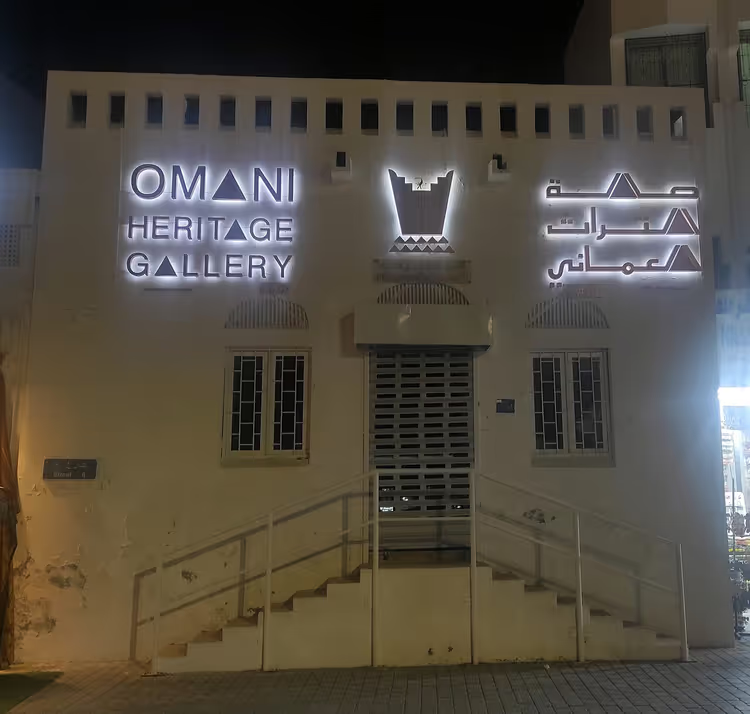 © Alaa Najjar · CC BY-SAPhoto: Alaa Najjar, CC BY-SA (https://creativecommons.org/licenses/by-sa/4.0), Wikimedia Commons
Omani Heritage Gallery brings together work by local artisans: ceramics, wool weaving, perfume, and jewelry. Here you buy an object with a story, not a mass-produced souvenir. Prices are above market, but the quality is predictable.
The gallery is convenient at the end of the day, when you have already walked through the souq and the corniche. The staff will tell you about techniques and the artisans. A pleasant option if you are looking for a gift to take home.
- Admission: free.
- Open on map
Tours and tickets in Muscat
Guided tours, skip-the-line tickets and activities — most offers can be cancelled free of charge.
See offers on GetYourGuideThe widget loads once you give your consent.
Getting around Muscat
Muscat does not have a single center. It is a chain of districts along the bay, connected by highways, and between points you always drive rather than walk. Below is a breakdown of options so you do not waste time on the road.
A rental car covers almost the entire route. The highways are smooth, signs are duplicated in English, and parking at malls and beaches is usually free. The distance between Qurum, Mutrah, and Al Mouj is considerable, so a car saves you hours.
Taxis and ride-hailing apps help in the evening and for trips to the airport. It is better not to hail a car on the street, or the price will turn out to be a tourist rate. The app shows the cost in advance, and you pay exactly that amount. A screenshot of the pickup point helps at large malls with several identical exits.
Mwasalat red line buses run along the main corridors: airport, Ruwi, Qurum. The interior is clean and air-conditioned, but the route does not always match your plans. Keep small change and bring a light jacket, the air conditioning runs at full blast.
Walking is realistic in two places: the Mutrah corniche and the museum quarter in the old city. You will not cross multi-lane highways, and in summer any daytime walk is exhausting. Walk early in the morning or at sunset.
Tours and private drivers are worthwhile for longer trips: wadis, the forts in Nizwa and Bahla, the coast at Sur. With a driver you do not look for parking and you fit more into the day. Ask the driver to confirm that fuel and toll roads are included in the price.
Parking and fuel are almost never a problem. Parking is free at malls, supermarkets, and beaches, while in the old quarters near the Mutrah souq spaces fill up by evening. Fuel is cheap, there are plenty of stations, and card payment works almost everywhere.
Where to eat in Muscat
Food in Muscat mixes Omani cuisine, Arab grills, and seafood. Below are six places worth going to in the evening. For each we have noted what to order and how to get there.
Bait Al Luban
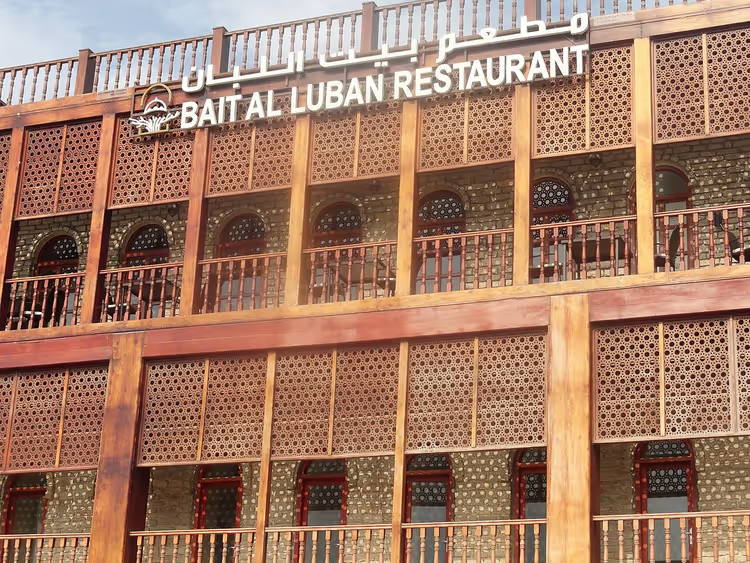 © Fabio Achilli · CC BYPhoto: Fabio Achilli, CC BY (https://creativecommons.org/licenses/by/2.0), Wikimedia Commons
Bait Al Luban occupies an old house above the Mutrah corniche. It serves home-style Omani cuisine under brass lamps, with a view of the bay and the souq. Order shuwa, mashuai, and date pudding.
- What to order: shuwa, mashuai, date pudding.
- Closest to: the Mutrah souq and forts.
- How to get there: a taxi from Qurum takes about fifteen minutes (on the map).
Green Cafe
Green Cafe hides in a green courtyard among string lights. The menu is mixed: Omani and Arab dishes, kebabs, and desserts. Families love the place, so it gets crowded in the evening.
- What to order: shuwa roll, kebabs, lemon with mint, saffron honey cake.
- Closest to: the Qurum strip and Shati.
Al Angham
Al Angham stands by the Royal Opera House and suits a formal dinner. The interiors are rich, and national dishes are served in a refined version. The place is easy to combine with a concert.
- What to order: harees or kabuli, fish platter, coffee with halwa.
- Closest to: the Royal Opera House.
Turkish House
Turkish House operates as a simple eatery with a strong kitchen. You choose the fish, it is grilled over charcoal, and it comes with garlic sauce. Portions are large, so order for the table.
- What to order: grilled hammour or sea bream, calamari, fattoush, flatbread.
- Closest to: Al Khuwair.
The Beach Restaurant
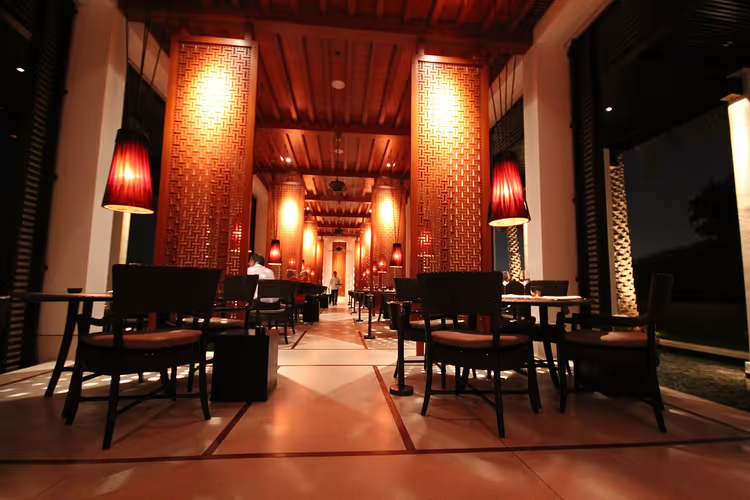 © https://www.flickr.com/photos/130649623@N05/ · CC BY-SAPhoto: https://www.flickr.com/photos/130649623@N05/, CC BY-SA (https://creativecommons.org/licenses/by-sa/2.0), Wikimedia Commons
The Beach Restaurant operates at The Chedi hotel and opens directly onto the sea. Tables sit under lanterns, and the plates feature seafood. This option suits a special evening.
- What to order: Omani lobster, tuna tartare, citrus desserts.
- Closest to: the Azaiba and Al Ghubrah coast.
Al Mouj Marina Strip
Al Mouj Marina Strip gathers Lebanese grills, Italian pizza, sushi, and coffee along one promenade. It is convenient when your group cannot agree on one place. You can also stroll along the marina.
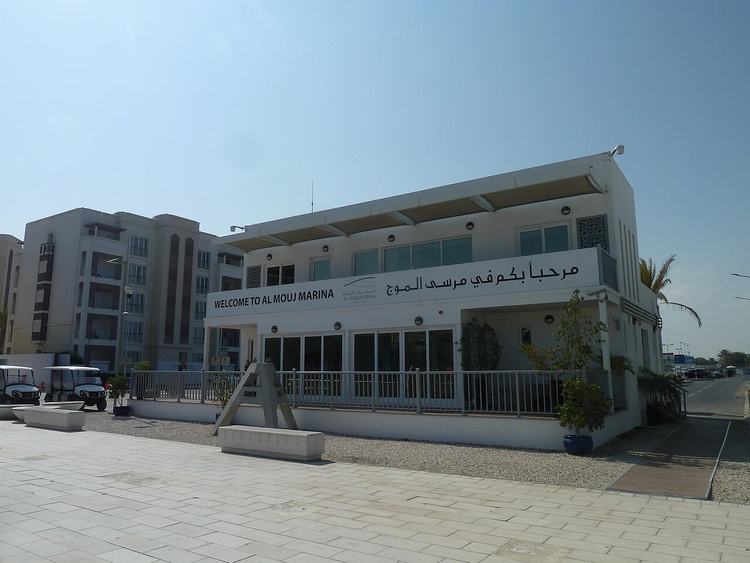
- What to order: mezze platter, wood-fired pizza, pistachio gelato.
- Closest to: Kempinski in Al Mouj.
- How to get there: about fifteen minutes by taxi from the terminal (on the map).
Where to stay in Muscat
Muscat hotels are mostly located on the coast. Below are five options at different levels, from a design resort to a city hotel by the opera house. We give approximate price levels, while exact rates you check in search.
The Chedi Muscat
 © Gary Denham · CC BY-SAPhoto: Gary Denham, CC BY-SA (https://creativecommons.org/licenses/by-sa/2.0), Wikimedia Commons
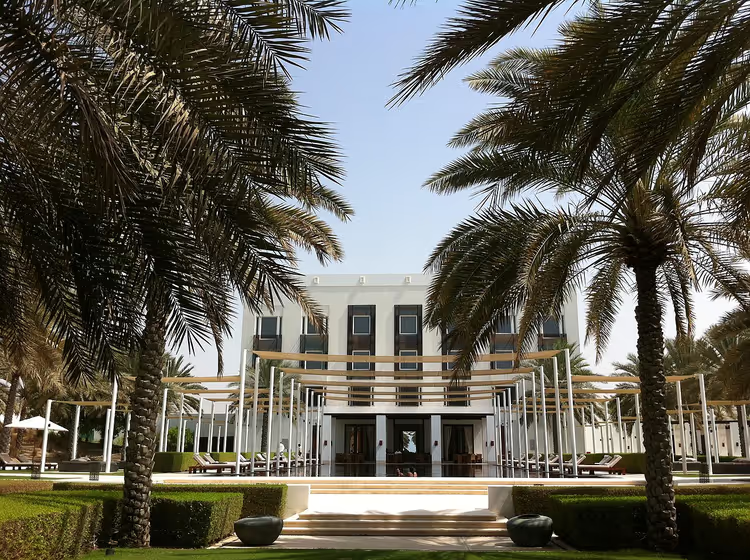
The Chedi Muscat sits on the first line in the northern part of Al Ghubra. It is a design resort with pools and a calm atmosphere, without loud entertainment programs. Guest ratings stay above nine out of ten (Booking, 09/2026).
- Who it's for: couples and anyone looking for quiet.
- Location: about fifteen minutes from the airport (according to the map).
- Price: high-end, prices at The Chedi Muscat on Trip.com.
Kempinski Hotel Muscat
 © Safa.daneshvar · CC BY-SAPhoto: Safa.daneshvar, CC BY-SA (https://creativecommons.org/licenses/by-sa/4.0), Wikimedia Commons
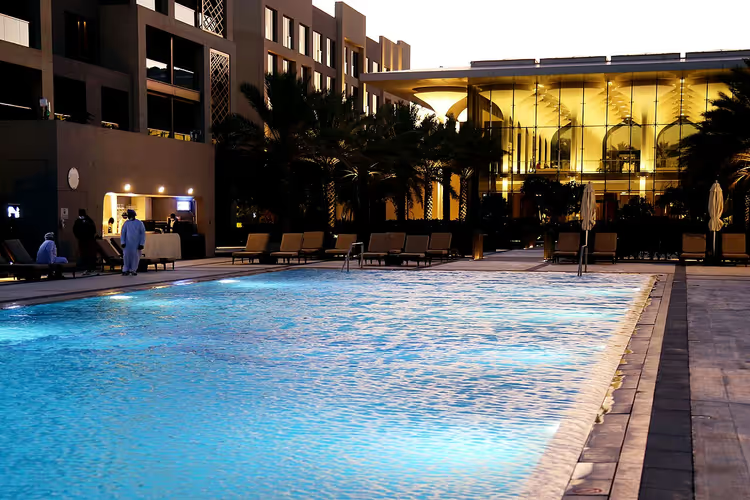
Kempinski is located in the Al Mouj area, next to the marina and restaurants. People come here for the beach and a lively neighborhood in one place. Guest rating is also above nine out of ten (Booking, 09/2026).
- Who it's for: families and groups who want a beach and cafes nearby.
- Location: Al Mouj marina and waterfront within walking distance (according to the map).
- Price: high-end, prices at Kempinski Muscat on Trip.com.
Jumeirah Muscat Bay
Jumeirah Muscat Bay sits in Bandar Jissah bay between the mountains and the sea. It's a secluded spot for the beach and a quiet getaway. Guest rating is the highest in this selection (Booking, 09/2026).
- Who it's for: those who want beach, mountains, and quiet.
- Location: about fifteen minutes south of the center, forty minutes from the airport (according to the map).
- The catch: you'll need to drive to the city's attractions.
- Price: high-end, prices at Jumeirah Muscat Bay on Trip.com.
Al Bustan Palace
 © Christoph Strässler · CC BY-SAPhoto: Christoph Strässler, CC BY-SA (https://creativecommons.org/licenses/by-sa/2.0), Wikimedia Commons
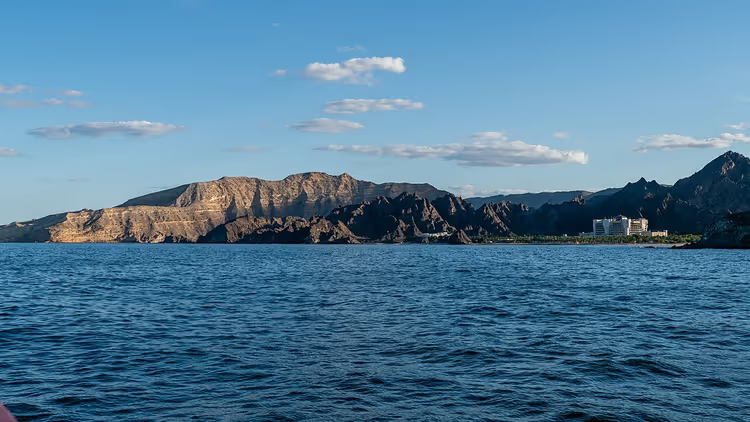
Al Bustan Palace sits in Al Bustan bay south of Old Muscat and looks like a palace complex. A classic large resort for a full-scale vacation. Guest rating is above nine out of ten (Booking, 09/2026).
- Who it's for: those who want a large resort and a grand atmosphere.
- Location: Al Bustan bay south of Old Muscat (according to the map).
- Price: high-end, prices at Al Bustan Palace on Trip.com.
Mandarin Oriental Muscat
Mandarin Oriental is located in the Shati Al Qurum area on the shore. You can walk to Qurum Beach, and the Royal Opera House is about an eighteen-minute stroll away. Guest rating is above nine out of ten (Booking, 09/2026).
- Who it's for: those who want to combine city and beach.
- Location: Qurum Beach nearby, the opera within walking distance (according to the map).
- Price: high-end, prices at Mandarin Oriental Muscat on Trip.com.
Find hotels in Muscat
Compare prices across booking sites and filter for rooms with free cancellation.
Compare prices on Trip.comThe widget loads once you give your consent.
⁉️🤔 Frequently asked questions
How much does it cost to enter the Sultan Qaboos Mosque?
Entry is free for non-Muslims, but you can go inside from 8:30 to 11:00 and only not on Fridays (as of 09/2026, mosque information). Arrive at opening time, because by eleven visitors are asked to leave. Women need to cover their hair, and clothing must cover shoulders and knees.
Can you go inside the Royal Palace?
No, the Royal Palace is closed to tourists. It is a working residence of the Sultan, and only official delegations are allowed inside. You view the facade and gardens from outside, from the square side. The visit takes no more than twenty minutes.
When is the best time to visit Muscat?
The most comfortable time is the cool season, from late autumn to early spring. In summer the heat and high humidity make walking during the day difficult. If you are traveling in the heat, plan outings for morning and evening, and spend the day in museums and malls.
How do you get around Muscat without a car?
Without a car, you use taxi apps and Mwasalat buses along the main corridors. Taxis help in the evening, but trips between districts add up quickly in price. For distant spots, hire a driver or take a tour. Walking is realistic only in the old town and along the Mutrah corniche.
Where can you try Omani cuisine?
Start with Bait Al Luban on the Mutrah corniche, where they serve shuwa and mashuai. For a special dinner, Al Angham near the Royal Opera House works well. Al Mouj Marina Strip is good if your group wants different cuisines in one place.
In short: what to book
- If it's your first visit: start with the Sultan Qaboos Mosque and the Mutrah souq.
- If you're traveling with family: book the Kempinski in Al Mouj or Jumeirah Muscat Bay.
- If you want quiet and design: look at The Chedi Muscat.
Eleven places cover the essentials of Muscat, and the remaining time goes to food and getting around. Check the mosque hours before heading out and keep a buffer for the heat. Compare dates and prices in search: find a hotel in Muscat.

A small editorial team writing guides for independent travel. We travel ourselves, but we haven’t been everywhere, so we check prices, opening hours and how to get there against official sources.