
















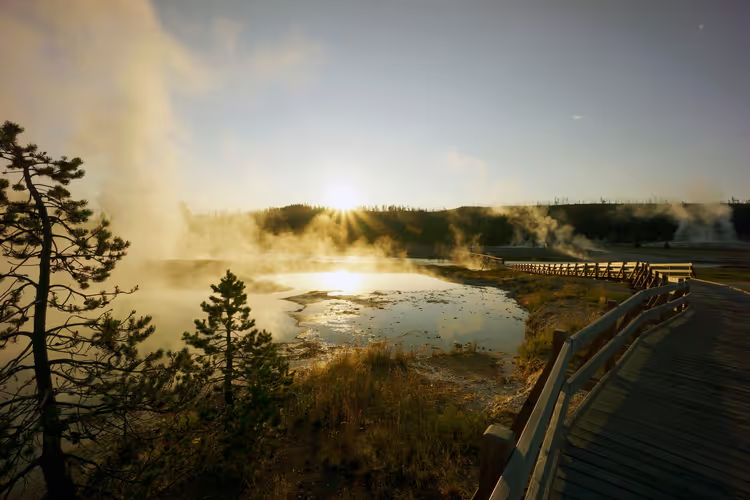
Thermal springs of Italy: 17 places for bathing and healing
Thermal springs in Italy operate year-round. Many of them are open free of charge and without a ticket. Entry to the Cascate del Mulino waterfalls is free, and the water stays around 37.5 °C even in January (as of 09/2026, Cascate del Mulino). Expensive spa parks with treatments, mud therapy, and hotels can be found in Abano Terme, Montecatini Terme, and Sicily. We have gathered 17 of the country's best thermal spots, from alpine Bormio to Sorgeto Bay on the island of Ischia.
Ad: this article contains affiliate links, we earn a commission if you book through them, at no extra cost to you.
Thermal springs in Italy: our picks
💡 In short:
- You can bathe for free at Cascate del Mulino, Bagni San Filippo, Carletti pools, Sorgeto Bay, and the Nymph Grottoes.
- Paid complexes with treatments, mud therapy, and spa hotels await you in Abano Terme and Montecatini Terme.
- The best months for open-air springs are May-June and September-October, when there is no exhausting heat.
- Most natural thermal baths have free entry; you only pay for spa and therapeutic procedures.
- Prices and opening hours: 09/2026, verified on the Tuscany thermal portal
Below we have organized the places by type of vacation. This way you will quickly understand what to book in advance and where you can go without a ticket.
Your situation | What to choose | Region |
|---|---|---|
I want it free | Cascate del Mulino, Bagni San Filippo | Tuscany |
I need treatment and mud therapy | Abano Terme, Montecatini Terme | Veneto, Tuscany |
Vacation with kids | Masse Thermal Baths, Nymph Grottoes | Lazio, Calabria |
Mountains and skiing | Bormio and Bormio thermal baths | Lombardy |
Sea nearby | Sorgeto Bay, Granata-Cassibile Thermal Baths | Ischia, Sicily |
1. Montecatini Terme
Montecatini Terme is considered the oldest balneological resort in Tuscany. A convenient way to start exploring is a ride through the Old Town in an open carriage: you will pass Art Nouveau houses with plaques of celebrities who were treated here. The main street is named after the composer Verdi, and nearby you will find a park, a theater, and the Town Hall building.
Several springs bubble up within the city limits, and most of them are for drinking. The water helps with liver, kidney, and gastrointestinal diseases. Year-round balneotherapy is provided by the Grocco Institute: hydrotherapy, massages, and mud therapy. The La Salute and Tettuccio baths welcome guests from May to late autumn, while in winter the indoor Excelsior facility handles thermal bathing. You can stay at Mediterraneo or Michelangelo & SPA; the latter is 400 meters from Terme Tettuccio park.
- Who it's for: if you need a full course of drinking therapy and a dietary menu in nearby hotels.
- Not for: if you want to bathe in hot water outdoors all year round.
- Where to stay: Mediterraneo and Michelangelo & SPA are a 10-minute walk from the springs.
- The catch: some baths are open only from May to October.
2. Abano Terme
 © Paolobon140 · CC BY-SAPhoto: Paolobon140, CC BY-SA (https://creativecommons.org/licenses/by-sa/4.0), Wikimedia Commons
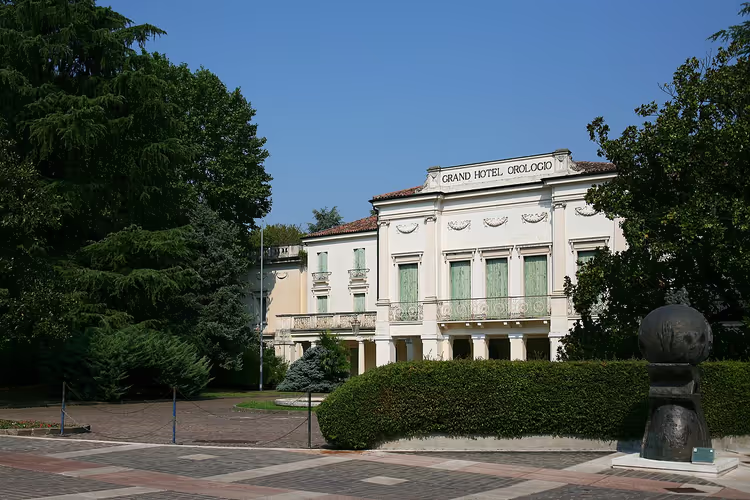
Abano Terme lies in northeastern Italy and is considered one of the largest balneological resorts in Europe. There are over a hundred hotels here, and almost every one has its own wellness center. You are not coming to a single hotel but to an entire treatment town: thermal water and mud are everywhere.
The local springs are rich in potassium, calcium, iodine, and bromine, and the water is very hot. This water is beneficial both for drinking and for baths. They treat respiratory organs, joints, skin, and metabolism here. Between procedures, it is worth strolling through the Square of the Sun and Peace, designed as a giant sundial, and visiting the Montironi art gallery. Among the old churches, see the Church of Madonna della Salute and the Cathedral of St. Lawrence.
- Who it's for: if you need a long treatment course with a doctor, mud procedures, and insurance included in the package.
- Not for: if you are coming for a couple of days and just want to take a dip.
- How much time: the course usually takes from one to two weeks; shorter is not cost-effective.
- The catch: without a treatment package the trip loses its point, and it is designed for a week and a half.
3. Fiuggi
 © pietro scerrato · CC BYPhoto: pietro scerrato, CC BY (https://creativecommons.org/licenses/by/3.0), Wikimedia Commons
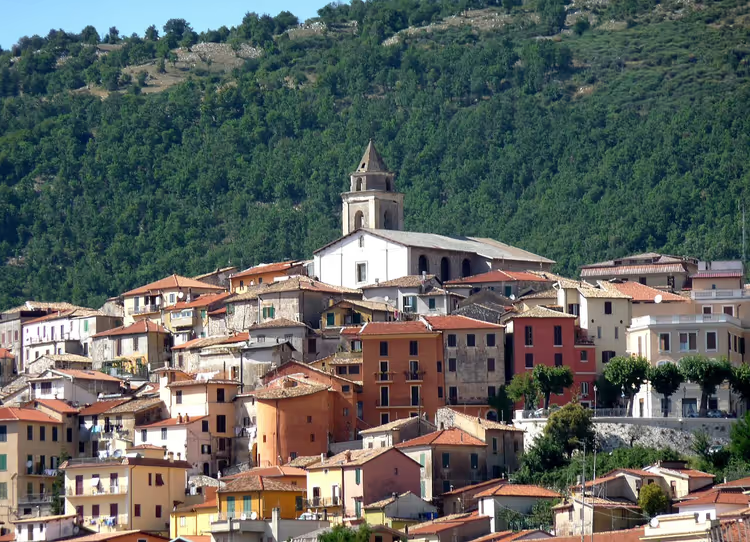
Fiuggi is located halfway from Rome to Naples, at the foot of Mount Ernici. It is a small hill town surrounded by oak and chestnut groves, and one of the country's best balneological resorts. The local mineral water contains minimal salts, so it has a gentle effect on the kidneys and urinary tract, and helps with gout and arthritis.
The two main hydrothermal complexes here differ in their specialties. Bonifacio VIII treats urological diseases, while Anticolana specializes in otolaryngology. Both are equipped with modern facilities and are accessible for people with disabilities. If you just need to relax, look for a hotel with a sauna, pool, and spa. Around Fiuggi, it is worth walking through the Selva di Paliano nature reserve with swans and cranes, and fishing in the forest lake Canterno.
- Who it's for: if you need gentle drinking water for the kidneys and urinary tract.
- Not for: if you want to bathe a lot outdoors: here they primarily treat with water taken internally.
- Where to eat: try local cheeses, sausages, trout, and Cesanese Piglio wine.
- The catch: most of the treatment takes place in clinics, not in natural baths.
4. Bormio
 © Sauro Sisti · CC BY-SAPhoto: Sauro Sisti, CC BY-SA (https://creativecommons.org/licenses/by-sa/4.0), Wikimedia Commons
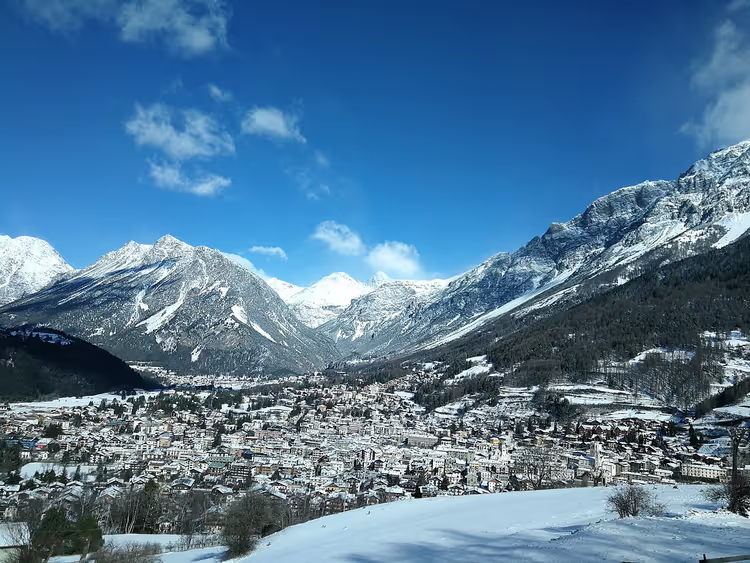
Bormio in Lombardy is called a universal resort. It sits among the Alpine mountains and is known for both its springs and first-class ski slopes. Several thermal springs bubble up in the town and its surroundings, and the water temperature changes with the seasons: in winter the water is warmer than in summer. You can ski in the morning and warm up in a thermal pool in the evening.
The local water treats digestive organs, the urogenital system, and the musculoskeletal system. The water is also effective for metabolic disorders: it improves the condition of diabetes and restores the skin. You can bathe for free in the Leonardo pool, which stands in the forest. Near the thermal baths there are more than thirty 4- and 5-star hotels, many with their own wellness centers. After the procedures, try local herbal drinks, grappa, and beer.
- Who it's for: if you want to combine skiing, golf, and horseback riding with water treatment.
- Not for: if you are looking for a quiet beach vacation by the sea.
- Where to stay: there are more than thirty 4- and 5-star hotels near the thermal baths.
- The catch: in summer the water in the springs is cooler than in winter, and the ski season is closed.
5. Monsummano Terme
 © User:Fluctuat · CC BYPhoto: User:Fluctuat, CC BY (https://creativecommons.org/licenses/by/2.5), Wikimedia Commons
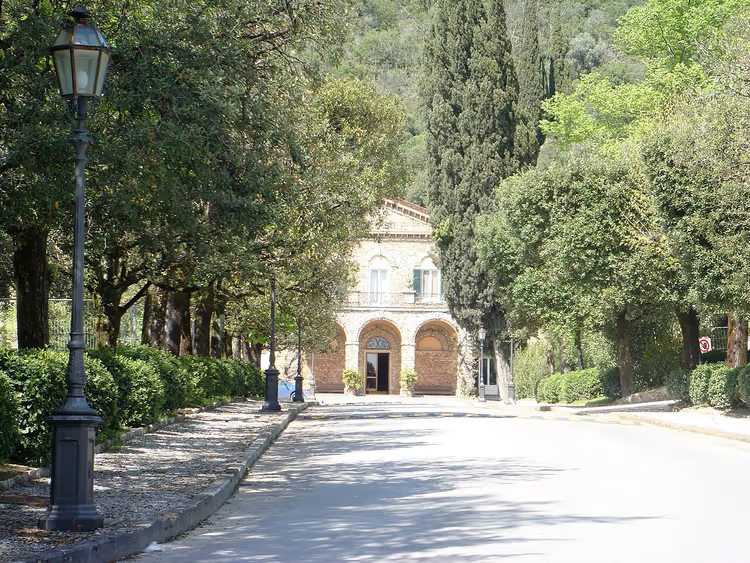
Monsummano Terme became famous in the 19th century when the poet Giuseppe Giusti found a healing grotto with stalactites and an underground thermal lake on his estate. The grotto is divided into three zones: hell with humidity close to one hundred percent, purgatory with the warm Lake Limbo, and paradise. For divers, this is a rare chance to dive into a warm lake and meditate underwater.
The grotto's microclimate together with the water helps with asthma and bronchitis, as well as joint, skin, and heart diseases. Next to the spring stands the Grotta Giusti hotel, and in some rooms the bathtubs are filled with thermal water. The hotel maintains a large spa center with diagnostics, dietetics, therapeutic massage, and oriental medicine. It is the hotel that arranges free access to the springs in the grotto for its guests. After the procedures, you can ride a bike, play tennis, or take a trip to nearby Lucca, Pisa, Florence, and Carrara.
- Who it's for: if you need a rare experience: an underground lake, diving, and asthma treatment.
- Not for: if you cannot tolerate humidity and enclosed spaces.
- Where to stay: Grotta Giusti, in some rooms bathtubs with thermal water.
- The catch: the high humidity in the grotto area is not suitable for everyone.
6. Bormio thermal baths
The Bormio thermal baths are three spa complexes, and they are especially pleasant to visit after skiing. They are called Vecchi, Nuovi, and Terme, and each one covers its own relaxation scenario.
 © kallerna · CC BY-SAPhoto: kallerna, CC BY-SA (https://creativecommons.org/licenses/by-sa/4.0), Wikimedia Commons
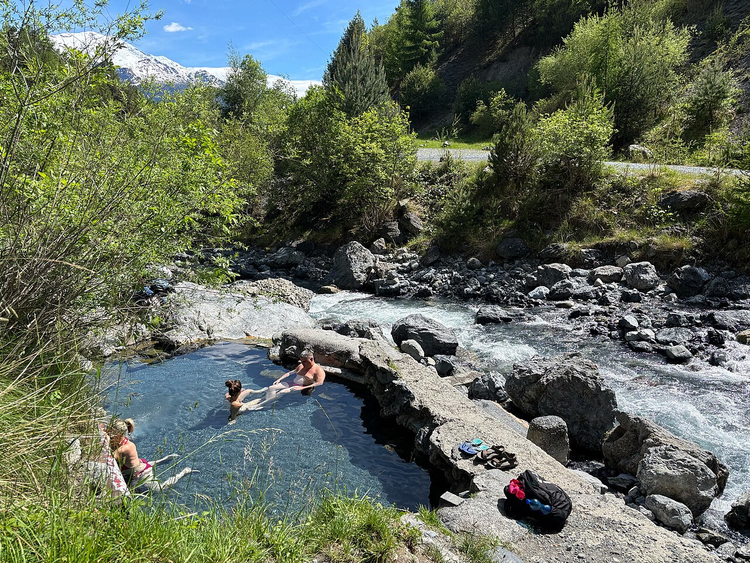
The Bagni Vecchi grew out of bathing pools built by the ancient Romans. Today there is a year-round outdoor pool with mountain views, baths dating back to the time of the archduchess, and the Grotto of San Martino, cut into the rock. It is a tunnel with a Turkish bath and a bathing pool where water fountains directly out of the rock. The Bagni Nuovi is a modern complex with a wide range of treatments, four zones, and outdoor pools that operate in winter too. There are massages, mud masks, and scrubs. The Terme complex is located within the town and is convenient for an evening visit: a children's pool with slides, steam rooms, Turkish baths, a hydromassage pool, and a beauty salon.
- Who it's for: if you want to choose between historic baths and a modern spa.
- Not for: if you came only for free natural hot springs.
- Tip: after skiing, go to Vecchi for the outdoor pool with mountain views.
- The catch: you have to pay to enter all three complexes.
7. Saturnia thermal baths
 © Raimond Spekking · CC BY-SAPhoto: Raimond Spekking, CC BY-SA (https://creativecommons.org/licenses/by-sa/4.0), Wikimedia Commons
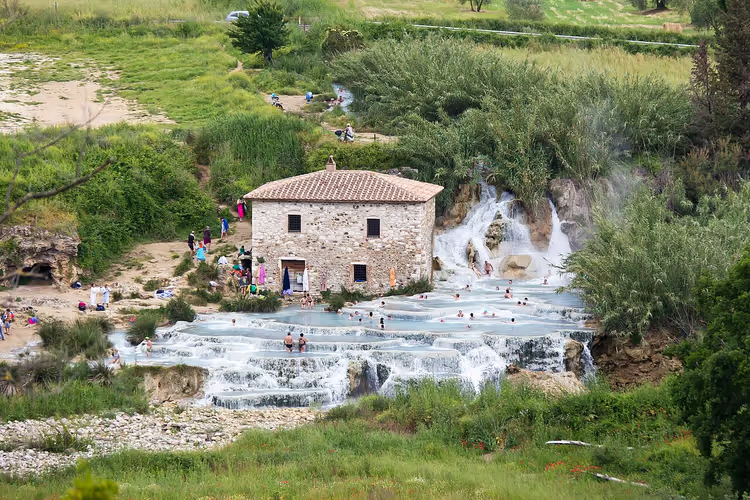
The Saturnia thermal baths in southern Tuscany are among the best thermal complexes in Italy. Already from the road you will see the famous hot waterfalls of Mulino, also known as the mill falls. Saturnia is known as the largest thermal baths with free entry. The mineral-rich sulfate-alkaline water with hydrogen sulfide rises from a depth of about two hundred meters and stays at around 37.5 °C (as of 09/2026, Mulino waterfalls).
Bathing in the waterfalls and the hot Stellata river comes with a natural hydromassage from the strong current. The water is beneficial for joint, stomach, intestinal, circulatory, and respiratory conditions. For qualified treatment, people go to the paid Terme di Saturnia complex with its institute of thermal medicine, spa, and hotel. For hotel guests, a treatment package is included in the stay; everyone else can buy a day pass. Bathing here continues year-round.
- Who it's for: if you want to bathe for free in hot waterfalls at any time of year.
- Not for: if you need an indoor pool, loungers, and a doctor on hand.
- Cost: entry to the waterfalls is free, a day pass to Terme di Saturnia is paid (as of 09/2026, official website).
- The catch: treatments at the complex are paid unless you are a hotel guest.
8. Petriolo thermal baths
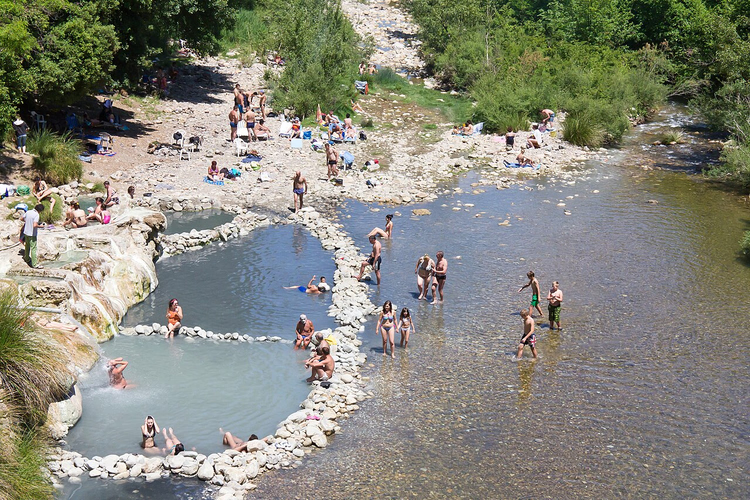
The Petriolo thermal baths lie in a Tuscan valley near the Merse and Farma rivers, on the grounds of an old park covering more than one hundred hectares. The panoramas of the Maremma hills and the hot springs create the feel of a resort far from the noise. Come here for peace and quiet, not for loud entertainment.
 © Raimond Spekking · CC BY-SAPhoto: Raimond Spekking, CC BY-SA (https://creativecommons.org/licenses/by-sa/4.0), Wikimedia Commons
The main therapeutic component is the local mineral water, which improves respiratory health, the heart, blood vessels, and the nervous system. It has antiseptic properties and speeds up wound healing. The special feature of Petriolo is that the Farma river flows nearby, so you can quickly switch from hot water to cold. The temperature contrast is good for circulation and makes the skin more elastic. The resort's paid spas and mud therapy centers offer inhalations, hydro- and aeromassage, breathing exercises, and rejuvenation programs.
- Who it's for: if you want the contrast of hot and cold water and respiratory treatment.
- Not for: if you want a long urban walking route: the resort is designed for a quiet rest.
- How much time: set aside a full day for treatments and walks in the park.
- The catch: treatment and care are concentrated in paid facilities.
9. Bagni San Filippo
 © Marco Usan · CC BYPhoto: Marco Usan, CC BY (https://creativecommons.org/licenses/by/3.0), Wikimedia Commons
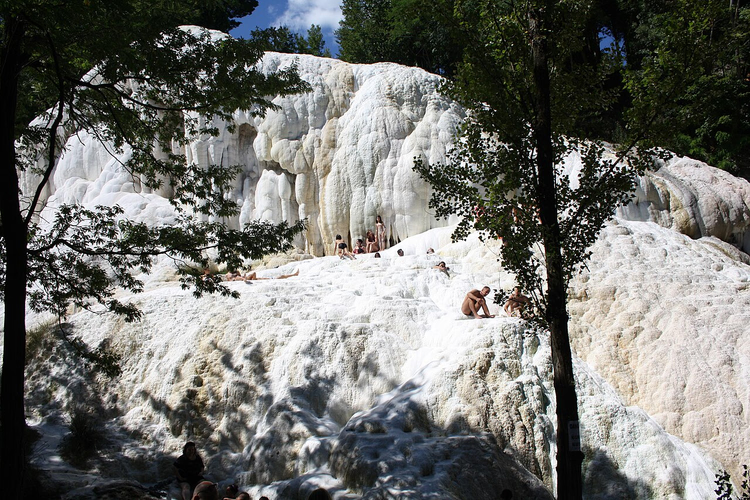
Bagni San Filippo belongs to the municipality of Castiglione d'Orcia on the edge of the Val d'Orcia valley. Tourists call this place magical because of the solidified limestone waterfall that looks like a snowy mountain. The petrified flow is called the white pit or the white whale waterfall, and the Orcia castle stands next to it.
A chain of hot springs forms pools with milky-turquoise flowing water. The water contains sulfur, magnesium, and calcium and helps with many conditions, which is why Bagni San Filippo is among the best thermal baths with free entry. The flowing Fosso Bianco pools are open year-round and free (as of 09/2026, official website). Paid medical and cosmetic services are offered by the San Filippo spa complex with a thermal pool, hotel, and wellness center. Local mud and mineral water are used for treatments here.
- Who it's for: if you want to bathe for free at a spectacular white waterfall.
- Not for: if you need loungers, changing cabins, and full service right by the water.
- How to get there: buses run to Bagni San Filippo from Chianciano Terme.
- The catch: the free part is a wild place, all amenities are only in the paid spa.
10. Masse di San Sisto thermal baths
The Masse thermal baths made the small town of San Sisto near Viterbo famous. The complex serves guests with an annual membership card, and it is one of the cheapest ways to bathe in thermal water every day. The baths are kept clean and in good technical condition, which is why regular visitors keep coming back.
There are two pools with sulfur-rich water: a large warm one and a small cool one. The temperature contrast is good for circulation and skin. The complex has showers, toilets, changing rooms, parking, and wi-fi, as well as a bar with herbal drinks and children's playrooms. You can come with the whole family; children won't be bored here.
- Who it's for: if you want to bathe in thermal water often and cheaply.
- Not for: if you need a large spa center with treatment programs.
- Entry: with an annual membership card, about €35 per year (as of 09/2026, greenMe).
- The catch: there is no single-day ticket, you have to pay for an annual card.
11. Bagnaccio thermal baths
The Bagnaccio thermal baths are located near Viterbo, next to a lake of volcanic origin. Thousands of years ago, the baths of the Roman Aquae Passeris stood here. The local springs are rich in spring and lava muds that mature naturally over hundreds of years. The water combines calcium salts, magnesium, and sulfur.
Among the green pools you will find basins with different temperatures, from warm to very hot. The equipped thermal baths offer good conditions for treatment, and entry is inexpensive. There are two large pools for bathing: a deep one for adults and a shallow one for children. The local water and muds help with skin conditions and muscle pain, and they strengthen and rejuvenate the body.
- Who it's for: if you want to spend a whole day in warm water for little money.
- Not for: if you need a modern spa complex with treatments and a doctor.
- Entry: natural baths with a small ticket, check the price on the official website (as of 09/2026, Il Bagnaccio).
- The catch: some of the pools are natural pits, with minimal amenities.
12. Carletti pools
 © Angelmanxego · CC BY-SAPhoto: Angelmanxego, CC BY-SA (https://creativecommons.org/licenses/by-sa/4.0), Wikimedia Commons
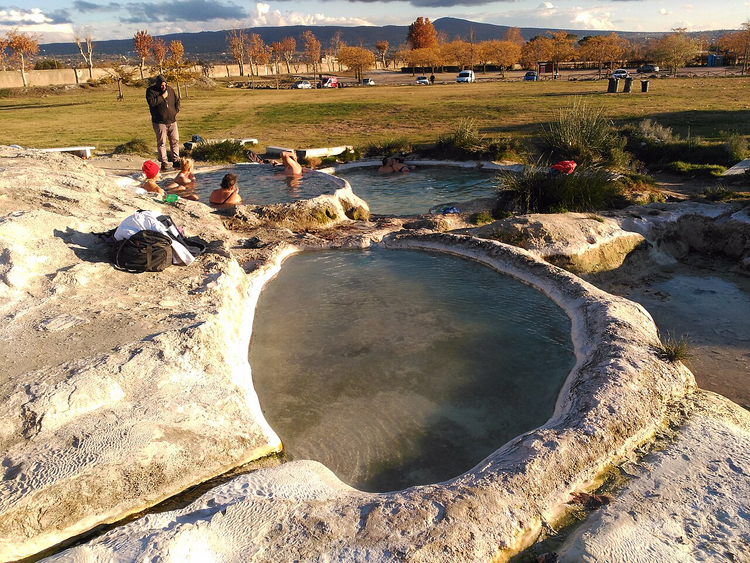
The Carletti pools occupy a scenic plain near Viterbo in the Lazio region. These are natural basins saturated with mineral salts, and entry is free. The water varies in temperature: you choose which pool to soak in.
The Carletti hot springs have two drawbacks, but they barely affect their popularity. At night the area is poorly lit, so it's best to swim before dusk. And the surroundings aren't always perfectly clean, because entry is free. The most beautiful scenery here is in spring and autumn: the heat subsides and the effect of the baths is stronger.
- Who it's for: if you're looking for free natural pools with no formalities.
- Not for: if you need amenities and lighting in the evening.
- Cost: entry is free, the area has no developed services (as of 09/2026, Viterbo thermal portal).
- The catch: it's dark at night, and how clean the area is depends on visitors.
13. Sorgeto thermal bay
 © Sailko · CC BYPhoto: Sailko, CC BY (https://creativecommons.org/licenses/by/3.0), Wikimedia Commons
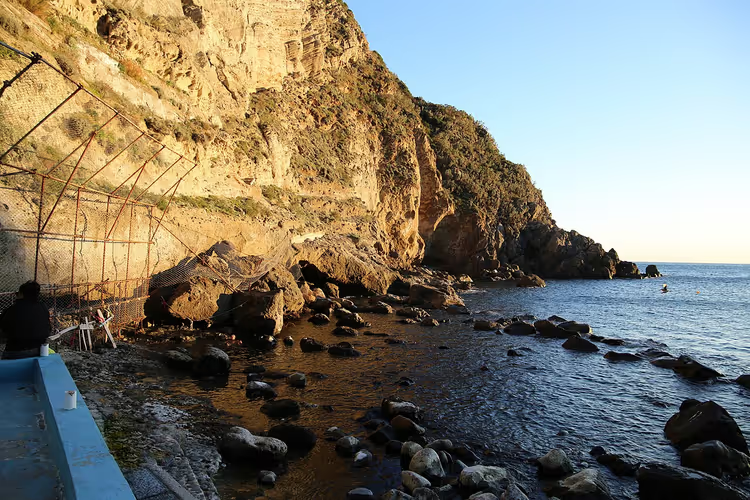
Sorgeto Bay near the village of Sant'Angelo on the island of Ischia is a free thermal park that operates year-round. Sea water and mineral water mix in the bay, and the spring runs very hot. The water is rich in bromine, sodium, iodine and sulfur and helps with respiratory conditions, rheumatism, arthritis and skin diseases.
The bay's distinctive shape shelters the area from winds, so swimming is comfortable even when there are waves. During the day the sun keeps you warm, and in the evening a moonlit path adds romance. One thing requires caution: the water is so hot that it's easy to get burned at low tide. You'll have to walk down a long stone staircase to reach the water, and in summer the steps get very hot. In high season, water taxis run from the village to the bay.
- Who it's for: if you want to swim in hot sea water for free year-round.
- Not for: if walking down a long staircase in the heat is difficult for you.
- How to get there: in high season, a water taxi runs from Sant'Angelo.
- The catch: the descent down a long stone staircase, and the steps are hot in summer.
14. Nymph Grottoes (thermal baths in Cerchiara)
The town of Cerchiara di Calabria is known for the Nymph Grottoes hidden in the rocks. A small canyon contains a natural pool with healing sulfurous water. This is a free body of water created by nature, and its water stays the same even in the cold season. In summer, when everything around is scorching, the grotto shelters you from the blazing sun.
The bathing areas here are enclosed by a low fence, and inside there are two sunbathing platforms. People lie on them covered in therapeutic mud. There are showers with mirrors and barrels of healing mud. After showering, visitors immerse themselves in a large pool of milky-blue running water. It has a powerful anti-inflammatory effect. The pool is divided by a partition, behind which there is a shallow section for children to bathe. The thermal baths have a bar, changing rooms and toilets.
- Who it's for: if you want to combine free bathing with mud sunbathing areas.
- Not for: if you're not ready to drive along a mountain switchback road.
- How to get there: a mountain switchback road leads from the town to the baths, a car is more convenient.
- The catch: the road to the baths follows a narrow mountain switchback.
15. Caronte thermal baths
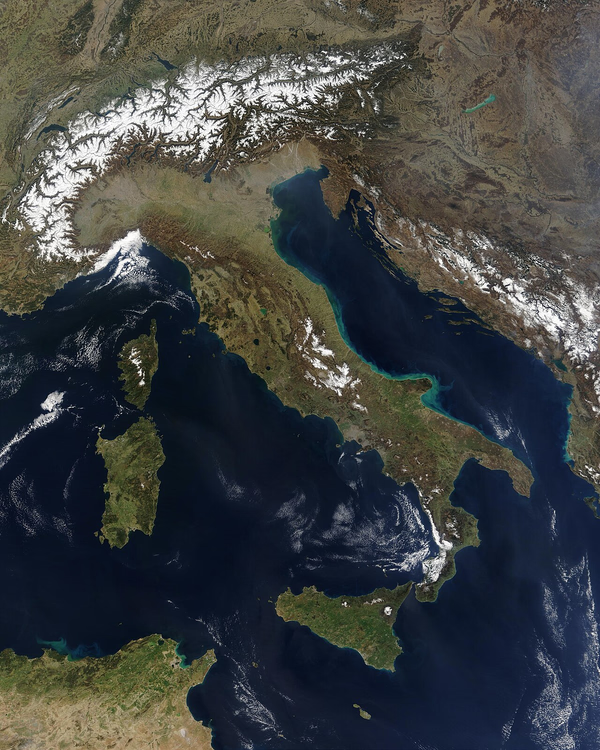
The Caronte thermal baths are famous for their exceptionally high-quality water. They lie in southern Italy, in the Calabria region, at the foot of Mount Reventino. Their healing properties have been used for more than two thousand years. The alkaline-earth sulfite and sulfate water with arsenic is used at the wellness center, which stands in a scenic park.
The water is used for respiratory conditions, musculoskeletal disorders, skin diseases and gynecological issues. Mud treatments and massages here help with body contouring and cellulite reduction. Programs include baths, hydromassage, inhalation therapy, ozone therapy and other treatments. The free thermal baths are narrow, small pools at the foot of the mountain, filled with warm volcanic water. Next to one pool, a waterfall of cold river water cascades down: the contrast refreshes the body and strengthens the immune system.
- Who it's for: if you want the contrast of a hot pool and a cold waterfall.
- Not for: if you want a large, well-equipped resort with full service.
- Cost: the natural pools are free, the treatment center is paid (as of 09/2026).
- The catch: in summer the natural thermal baths are not particularly clean, so it's better to go in the low season.
16. Acireale thermal baths
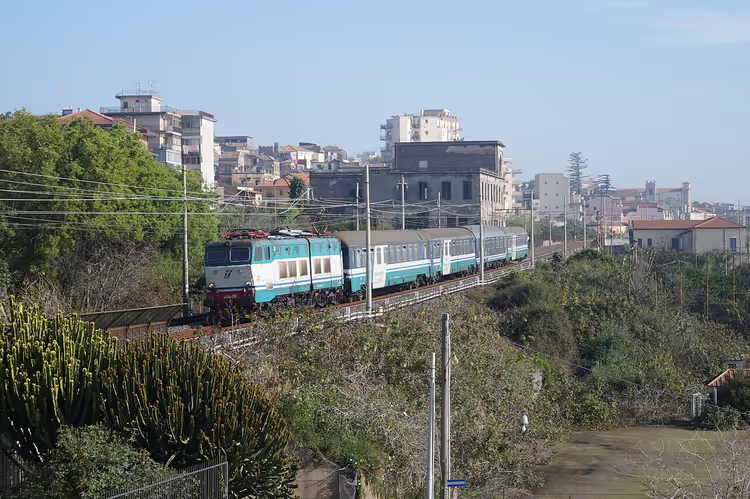 © Patrick1977Bln · CC BY-SAPhoto: Patrick1977Bln, CC BY-SA (https://creativecommons.org/licenses/by-sa/2.0), Wikimedia Commons
The Acireale thermal baths are located on the island of Sicily, on the Ionian Sea coast, on the Timpa plateau. Their main treasure is ancient springs of volcanic origin mixed with underground sea water. The resort is known for its plant-mineral muds made from volcanic clay that matures in sulfate water. The southern edge of the town is notable for the neoclassical complex "Terme di Santa Venera" with an English-style garden.
The healing water contains sulfur, bromine, iodine and mineral salts. The second springs flow in the village of Santa Caterina and are called the Baths of Saint Catherine of Alexandria. A wide range of conditions were treated here: ENT, dermatological, cardiovascular, gynecological and rheumatic. Treatments included balneological baths, hydromassage, mud wraps, aerosols and inhalation of sulfur water vapors. The "Terme di Santa Venera" has been closed for a long time now, so you can't take a treatment course here.
- Who it's for: if you're interested in neoclassical thermal baths and an English-style garden.
- Not for: if you're coming for a doctor-supervised treatment course.
- Where to stay: the resort is convenient as a base for the Ionian Sea beaches.
- The catch: the main thermal complex is currently closed.
17. Granata-Cassibile thermal baths
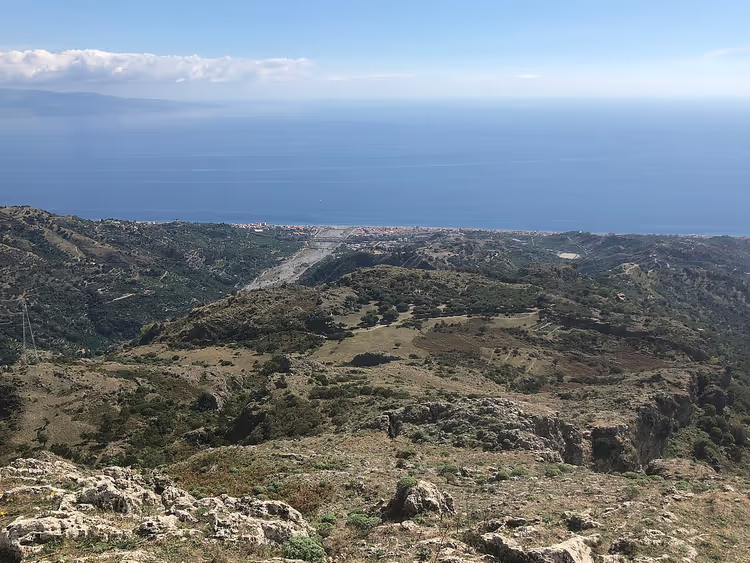 © Davide Mauro · CC BY-SAPhoto: Davide Mauro, CC BY-SA (https://creativecommons.org/licenses/by-sa/4.0), Wikimedia Commons
In Sicily, on the Ionian Sea coast, stands the ancient town of Alì Terme, surrounded by gardens and citrus groves. It was made famous by the Granata-Cassibile thermal baths right on the seashore. Saline-iodine-bromine sulfite water rises from underground springs. By composition, the local water is considered the best in Europe for treating respiratory organs, muscles, rheumatism, joints and allergies.
Good results are also achieved here in gynecology, dermatology and cellulite treatment. The modern treatment complex includes balneotherapy, mud therapy, inhalation therapy, massages and hydrotherapy. After just a few sessions, the condition improves, and cosmetic procedures with water and mud transform your appearance. The thermal baths have a children's department, so families come with kids. Treatment is easy to combine with a beach vacation: the sea is right there.
- Who it's for: if you want to treat respiratory and joint conditions right by the sea.
- Not for: if you're looking for mountain air and lakes: this resort is on the coast.
- With kids: the thermal baths have a children's department.
- The catch: the thermal baths operate as a treatment center, not a water park.
Popular thermal resorts
Nature has blessed Italy with thermal springs from Tuscany and Lombardy to Sicily and Basilicata. More than 400 resorts have grown up around them (according to Federterme, 09/2026). These are wellness complexes with spa hotels and sanatoriums: you can both improve your health and see famous sights. This format is convenient if you want to combine treatment with a regular tourist itinerary.
Best hotels with thermal springs
 AIIllustrative image: AI-generated
A hotel stay is the best way to enjoy the benefits of thermal waters and muds without any extra hassle. Below are nine spa hotels that sit right at the springs or run their own thermal center. You can take treatments in the morning and spend the afternoon exploring the surrounding area.
Bagni Di Pisa 5*
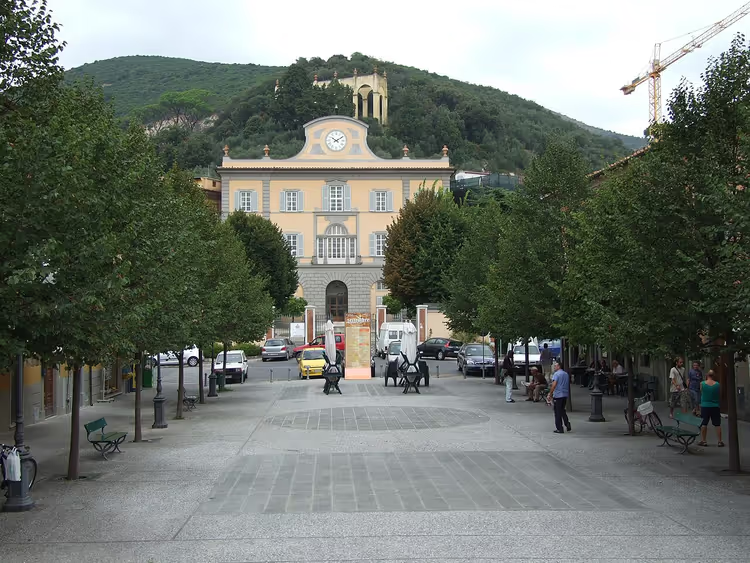 © Roberto Narducci · CC BY-SAPhoto: Roberto Narducci, CC BY-SA (https://creativecommons.org/licenses/by-sa/2.0), Wikimedia Commons
Hotel Bagni di Pisa is located in San Giuliano Terme, a few kilometers from Pisa, next to San Rossore Park. The historic building houses spacious rooms with painted ceilings, and some rooms offer views of the Leaning Tower of Pisa. The hotel's main asset is its spa center with a steam bath, saunas, massages, and mud treatments. Massage jets run along the inner perimeter of the pools.
At check-in, guests receive a spa kit with a robe, towel, slippers, and cap. In the morning, the hotel runs fitness sessions in an open rotunda on the hill. The Dei Lorena restaurant serves traditional Tuscan cuisine and prepares vegetarian and diet dishes for special dietary needs.
- Who it's for: if you want a historic hotel with a large spa near Pisa.
- Location: San Giuliano Terme, next to San Rossore Park.
- Price: check dates and rates on Trip.com: Bagni di Pisa rates on Trip.com
Terme di Saturnia Spa & Golf Resort 5*
 © Mattze77 · CC BY-SAPhoto: Mattze77, CC BY-SA (https://creativecommons.org/licenses/by-sa/4.0), Wikimedia Commons
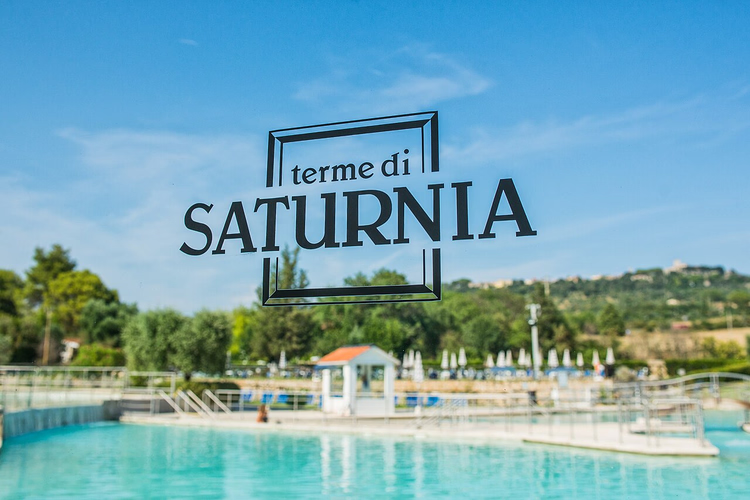
The Terme di Saturnia resort hotel sits on the site of a volcanic crater near the village of Saturnia. Here the water rises from the volcano to the surface crystal clear. The spa hotel and golf club's rooms feature modern interiors. The hotel's highlight is its travertine-clad spa with a sulfur-water pool, Roman and Turkish baths, a sauna, a hydromassage tub, and natural swimming pools.
After sessions in the thermal baths, skin conditions heal, weight drops, and vascular problems clear up. You can extend the pleasure on a lounger in the subtropical garden. A bar by the pool serves refreshing vitamin drinks, and the restaurant offers a Mediterranean menu. A stay here is easy to combine with trips to Lake Bolsena and the beaches of Monte Argentario.
- Who it's for: if you want a spa hotel and golf right at the hot springs.
- Location: near the village of Saturnia, in southern Tuscany.
- Price: check dates and rates on Trip.com: Terme di Saturnia rates on Trip.com
Adler Spa Resort Thermae 5*
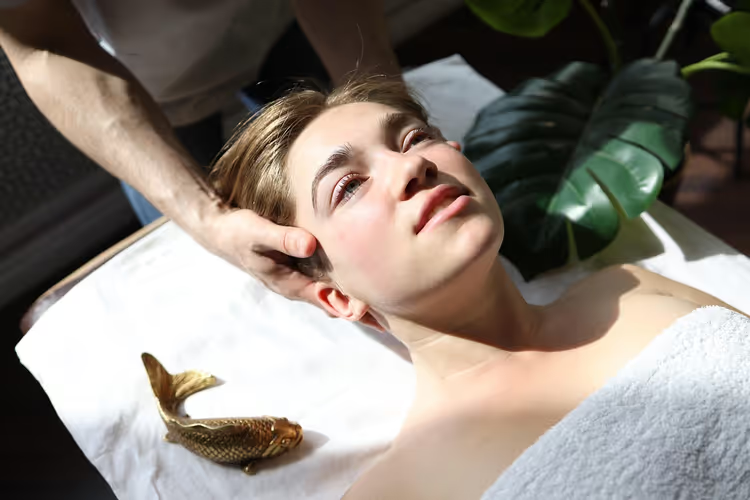
Adler Thermae is located in the town of Bagno Vignoni and is considered one of Tuscany's resort gems. Rooms with comfortable living areas offer views of the picturesque Tuscan countryside. The main reason people come here is the large outdoor thermal-water pool and the spa center's pools with massage jets. The wellness department restores you with a Finnish sauna, Turkish bath, and herbal caldarium.
For treatments in the spa complex, guests receive a kit with a robe, slippers, and towel. The large gym energizes you with workouts and panoramic views. Guests especially praise the restaurant with its retractable glass roof: at breakfast, lunch, and dinner you breathe fresh air here. Access to the pools, saunas, and gym, afternoon snacks at the bar, and wi-fi are included in the room rate.
- Who it's for: if you want a modern wellness resort with pools and saunas included.
- Location: Bagno Vignoni, Tuscany.
- Price: check dates and rates on Trip.com: Adler Thermae rates on Trip.com
Abano Grand Hotel 5*
The five-star Abano Grand Hotel is considered one of the most expensive in Padua. The Venetian-style building is clad in white marble. Guests of the grand hotel receive first-class service and have access to the fitness center, golf club, and solarium. The hotel garden features pools that have a beneficial effect on the skin and calm the nervous system.
At the grand hotel's wellness center, you recharge your health in a variety of saunas, baths, and hydromassage pools, as well as with mud wraps. The spa salon offers several types of spa programs with massage and cosmetic treatments. The hotel restaurant delights guests with refined cuisine, fresh-squeezed juices, and good wine. A modern gym and a tennis court help you stay in shape.
- Who it's for: if you need a status hotel with golf and a large wellness center.
- Location: Abano Terme, Veneto.
- Price: check dates and rates on Trip.com: Abano Grand rates on Trip.com
Etruria Resort & Natural Spa 4*
The Etruria Resort & Natural Spa is housed in a historic 19th-century building in the center of Montepulciano. Stylish rooms are finished with local natural materials: wooden floors, decor made of wood, stone, and brick, and distinctive ceilings. Guests enjoy the services of the Perla spa, relaxing in the sauna, Turkish bath, and hydromassage tub. The gym offers a wide range of the latest exercise equipment.
A clean outdoor pool with warm water and sunbathing terraces are open in the warm season. The La Corte di Bacco restaurant delights guests with Tuscan cuisine, and the wine cellar offers a large selection of Italian and international wines. Two bars always have a wide assortment of snacks and drinks. The hotel is a convenient base for excursions to Pienza and Chianciano Terme.
- Who it's for: if you want a hotel in the historic center with its own spa.
- Location: Montepulciano, Tuscany.
- Price: check dates and rates on Trip.com: Etruria Resort rates on Trip.com
Hotel Terme Mioni Pezzato & Spa 4*
The elegant Terme Mioni Pezzato hotel catches the eye in the center of the Abano Terme resort. This historic hotel has been renovated inside to the most modern standards. Every room has a balcony overlooking the garden. Indoor and outdoor thermal water pools, spa salon cosmetic services, and a wellness center with mud and water treatments create the conditions for effective therapy.
In the evenings, the pools are lit up with colorful lights. Breakfast in the restaurant is served buffet style, and at other times a traditional regional menu is offered. Leisure options include parties, concerts, local wine tastings, and excursions to Montegrotto Terme and Vicenza.
- Who it's for: if you want a hotel in the center of Abano Terme with pools and treatments.
- Location: center of Abano Terme, Veneto.
- Price: check dates and rates on Trip.com: Terme Mioni Pezzato rates on Trip.com
Grotta Giusti 4*
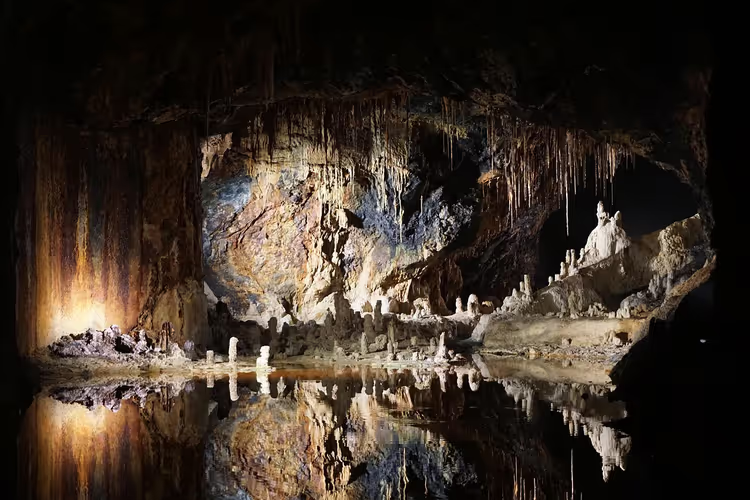
The Grotta Giusti spa hotel is located in an elegant 19th-century villa surrounded by a park, near the Monsummano Terme resort. Guests are offered comfortable rooms with a spa kit and access to the wellness center. Bathrooms in the rooms are finished in marble. Where the tubs fill with thermal water, there is a panoramic window overlooking the park. The hotel has direct access to the natural pool in the grotto.
The complex also includes a golf club with the open-air Bioaquam center. It features a pool with a cascading waterfall, high-pressure hydromassage showers, and a steam bath in a natural cave. The spa salon has built a strong reputation for professional massages and rejuvenating detox programs. The La Veranda restaurant serves buffet breakfasts in the morning.
- Who it's for: if you want a spa hotel with direct access to a natural grotto.
- Location: Monsummano Terme, Tuscany.
- Price: check dates and rates on Trip.com: Grotta Giusti rates on Trip.com
Grand Hotel Terme di Riolo 4*
The Grand Hotel Terme di Riolo is housed in a historic building from 1870, surrounded by a private park. The lobby retains its Art Nouveau decor, while the guest rooms feature modern design with a full range of amenities. The hotel has a modern spa center, a Jacuzzi pool, and a gym. Next to the building, you can relax on a lounger on the sunny terrace after a swim in the hydromassage pool.
Guest treatments are provided at the Terme Redi wellness complex, located 750 meters from the hotel (as of 09/2026, Trip.com). The package includes a doctor's consultation, a drinking course, mud wraps, and thermal baths with massages. Guests dine at the hotel restaurant: buffet breakfast, lunch and dinner from an Italian menu. Vegetarian and gluten-free dishes are prepared on request, and there is a children's corner.
- Who it's for: if you want a classic medical spa hotel with a full board of treatments.
- Location: Riolo Terme, Emilia-Romagna.
- Price: check dates and rates on Trip.com: rates at Grand Hotel Terme di Riolo on Trip.com
Calidario Terme Etrusche 3*
 © LepoRello · CC BY-SAPhoto: LepoRello, CC BY-SA (https://creativecommons.org/licenses/by-sa/3.0), Wikimedia Commons
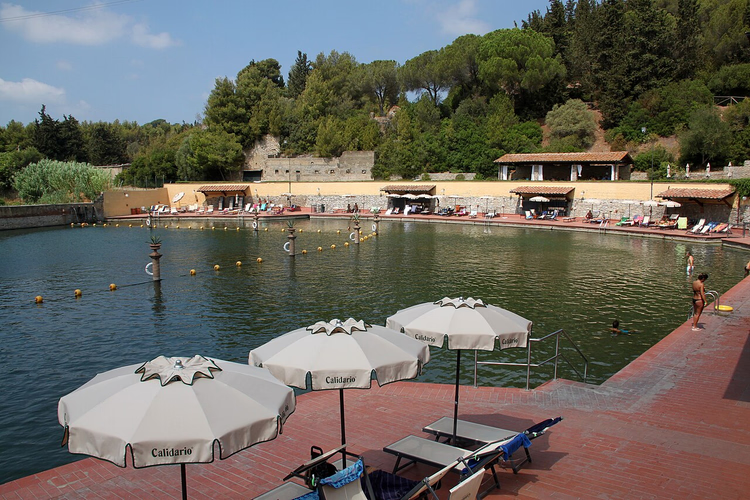
Hotel Calidario Terme Etrusche sits on top of a scenic hill near the town of Venturina Terme, not far from Follonica. A quiet natural spring with a waterfall and a natural bathing pool draws guests for a wellness stay surrounded by nature. The small hotel has sixteen rooms with elegant design, a balcony, and modern furniture. The panoramic outdoor pool and indoor pool operate seasonally.
The wellness center offers year-round services including a sauna, Turkish bath, hydromassage and thermal baths, and reflexology massage. Dining at the Sottobosco and Calidario Ristorante restaurants focuses on local cuisine made from organic ingredients. Between treatments, you can vary your leisure time with table tennis, darts, and bike rides.
- Who it's for: if you want a small, quiet hotel with a natural spring nearby.
- Location: Venturina Terme, Tuscany.
- Price: check dates and rates on Trip.com: rates at Calidario Terme on Trip.com
Thermal springs in Italy on the map
We put all the places from this guide on one map. Open it when you plan your route between Tuscany, Lazio, and southern Italy.
Thermal Springs in Italy
Places on the map
- 1Montecatini Terme Tuscany's oldest spa resort, drinking springs
- 2Abano Terme Europe's largest spa resort, hot water and mud treatments
- 3Fiuggi Mild mineral water for the kidneys and urinary tract
- 4Bormio Alpine resort with springs and ski slopes
- 5Monsummano Terme A healing grotto with stalactites and an underground thermal lake
- 6Bormio Thermal Baths Three spa complexes - Vecchi, Nuovi and Termo - after a day of skiing
- 7Saturnia Hot Springs Free hot Mulino waterfalls, water at about 37.5 °C
- 8Petriolo Hot Springs A park with hot springs by the rivers Siena and Farma
- 9Bagni San Filippo A frozen limestone waterfall, free Fosso Bianco pools
- 10Terme Masse (San Sisto) Two sulphur-water pools, by an annual membership card
- 11Bagnaccio Springs Pools of varying temperature by the volcanic Lake Viterbo
- 12Carletti Pools Free natural pools with mineral salts
- 13Sorgeto Thermal Bay Sea and mineral water together, the island of Ischia
- 14Caves of the Nymphs A free natural pool with sulphurous water in Calabria
- 15Terme Caronte Narrow pools at the foot of Mount Reventino, a cold waterfall
- 16Terme di Acireale Volcanic springs in Sicily, mud from volcanic clay
- 17Terme Granata-Cassibile Salt-iodine-bromide water right on the seashore
- 18Bagni di Pisa A historic hotel with a spa centre near Pisa
- 19Terme di Saturnia Spa & Golf Resort A hotel and golf club on a volcanic crater near Saturnia
- 20Adler Spa Resort Thermae A wellness resort with an outdoor thermal pool in Bagno Vignoni
- 21Abano Grand Hotel A five-star Venetian-style hotel in Abano Terme
- 22Etruria Resort & Natural Spa A spa hotel in a historic building in central Montepulciano
- 23Hotel Terme Mioni Pezzato & Spa A hotel in the centre of Abano Terme with indoor and outdoor pools
- 24Grotta Giusti A 19th-century villa with direct access to a natural grotto
- 25Grand Hotel Terme di Riolo A historic 1870 building with a wellness complex nearby
- 26Calidario Terme Etrusche A small hotel by a natural spring with a waterfall in Tuscany
⁉️🤔 Frequently asked questions
Which thermal springs in Italy are free?
Free entry is available at Cascate del Mulino in Saturnia, Fosso Bianco in Bagni San Filippo, the Sorgeto coves on Ischia, the Carletti pools, and the Grotte delle Ninfe in Calabria. These are natural baths with no ticket and no services, so bring your own footwear and towel. Some of these springs have a paid spa nearby, but you can still bathe for free.
Where in Italy are thermal springs with medical treatment?
Full treatment programs are available in Abano Terme, Montecatini Terme, and at the Granata-Cassibile springs. They have doctors on site and offer mud wraps, inhalation therapy, and balneotherapy. Packages are usually sold for one or two weeks with accommodation and meals. For a short trip, booking treatment isn't worth it.
When is the best time to visit Italy's thermal springs?
Open-air natural springs operate year-round. The most comfortable bathing is in May-June and September-October: no heat and fewer people. In summer, free springs get crowded, and the rocks and steps heat up significantly. In winter, Bagni Vecchi in Bormio is a good choice, where the outdoor pool operates year-round.
Can you bathe in thermal springs in winter?
Yes, many natural springs stay open in winter. The water at Cascate del Mulino remains warm even in January, and in Bormio it's warmer in winter than in summer. Choose springs with a high water flow, where the temperature is more stable. In severe frost, it's better to go to an indoor spa complex.
Which region of Italy should you choose for thermal springs?
The easiest starting point is Tuscany: Saturnia, Bagni San Filippo, and Petriolo are close to each other there. For free springs, people head to Lazio; for seaside treatment, to Sicily and Ischia; and for mountains and skiing, to Lombardy. Choose the region based on the season and the type of vacation you want.
In short: what to book
If you just want to bathe: head to Tuscany and Lazio, where entry to natural springs is free. If you need medical treatment with a doctor: book a package in Abano Terme or Montecatini Terme. If you're planning a week-long vacation: stay at a spa hotel by the springs to combine pools, mud treatments, and sightseeing.
Spa hotels at the springs should be booked in advance, especially in season: prices for hotels near Italy's thermal springs on Trip.com.

A small editorial team writing guides for independent travel. We travel ourselves, but we haven’t been everywhere, so we check prices, opening hours and how to get there against official sources.