
















Two days in Rome: an itinerary from the Colosseum to Villa Borghese
Two days in Rome can easily turn into an endless sprint between postcard sights. We've broken the city into two relaxed walking routes and show what you can actually cover without rushing. Day one goes to the center and Pincio Hill, day two to ancient Rome.
How to get from Fiumicino Airport is below. In the morning you'll have time to check in and be out on the first route by lunch.
Ad: this article contains affiliate links, we earn a commission if you book through them, at no extra cost to you.
What to see in Rome in two days: the plan
💡 In short:
- Day 1: Villa Borghese, the viewpoint on Pincio Hill, Piazza del Popolo, the Spanish Steps, Trevi Fountain, the Pantheon, Castel Sant'Angelo, and the Umberto I Bridge.
- Day 2: the Colosseum, the Arches of Constantine and Titus, the ancient forums, the Capitoline Museums, and Piazza Venezia.
- Book Colosseum tickets and Capitoline Museums online in advance: morning slots go first.
- Prices and opening hours: 09/2026, verified on the Colosseum ticket portal and the Trenitalia website.
Distances in Rome are deceptive. The center looks compact, but climbs and lines eat up time. We measure the route on the map and allow a realistic buffer for each sight, so you don't end up galloping between hills. Below you'll find two days that connect on foot.
How to get from the airport to the center
Fiumicino Airport lies far outside the city limits. The Leonardo Express runs nonstop to Termini station: 32 minutes, departures every 15 minutes, tickets from €14 (as of 09/2026, Trenitalia). The cars have luggage racks, and from Termini you can reach the metro in five minutes.
A taxi to the center costs more than the train, so for a couple or family the railway is the better value. If you arrive at night or are carrying a lot of luggage, a transfer is more convenient: the car takes you straight to your hotel, with no metro changes. You can compare cars in the form below.
Tours and tickets in Rome
Guided tours, skip-the-line tickets and activities — most offers can be cancelled free of charge.
See offers on KiwitaxiThe widget loads once you give your consent.
Day one: the center and Pincio Hill
Day one starts high up, at Villa Borghese, and leads down through the entire historic center. You'll walk about six kilometers, but with stops it's an easy route. Start in the morning while the park is quiet, and by evening you'll reach Castel Sant'Angelo and the Ponte Umberto I.
Villa Borghese
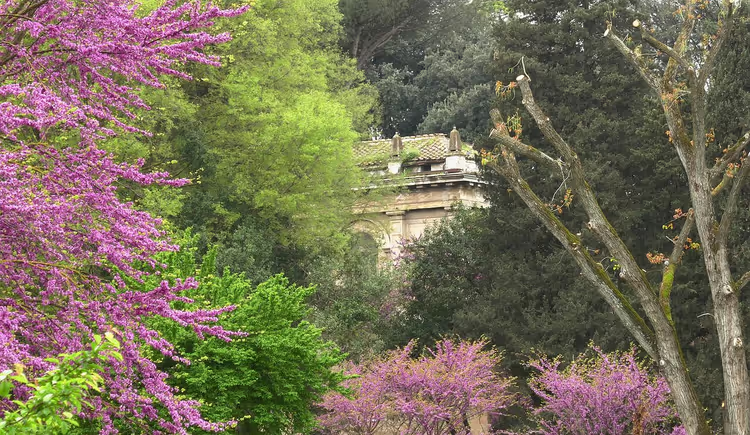
Villa Borghese Park spreads across the slopes of Pincio Hill and, by area, amounts to a small forest in the middle of the city. You can walk here for free from morning until dark, but the gallery inside the villa only admits visitors at scheduled times. The villa was established in the early 17th century for Cardinal Scipione Borghese, and these avenues have remained the green heart of Rome ever since.
The Galleria Borghese houses Caravaggio, Raphael, Titian, and Veronese, with sculptures by Bernini and Canova standing in the halls. Beyond the paintings, you'll see frescoes, painted ceilings, and floors of rare marble. Tickets are sold exclusively online for a specific slot with a two-hour entry window (as of 09/2026, Galleria Borghese page). Available windows sell out days in advance, so book early.
- How to get there: walk up about a kilometer from Piazza di Spagna, or take the metro to Spagna and continue on foot.
- Who it's for: those who want to see Bernini and Caravaggio in just a few halls in a single visit.
- The catch: without a prior reservation, you can't get inside the villa even in low season.
If you don't get inside, a walk through the park will still take up half your day: there's a pond, panoramic terraces, and shady avenues.
Pincio Hill viewpoint
 © Krzysztof Golik · CC BY-SAPhoto: Krzysztof Golik, CC BY-SA (https://creativecommons.org/licenses/by-sa/4.0), Wikimedia Commons
At the top of the hill, a panorama of the entire center opens up: domes, tiled roofs, and the square right below. Nearby, in a small tower in the middle of the pond, stands an unusual water clock. Come here in the morning, while the sun is low and there are few people at the railing.
From the terrace you can see how the city stacks in layers: first the rooftops of Piazza del Popolo, then church domes and spires beyond the Tiber. It's a good place to check your route and decide what you want to fit in before evening.
- The catch: during the day there's always a crowd at the railing, and almost no shade.
Piazza del Popolo
 © DellaGherardesca · CC BYPhoto: DellaGherardesca, CC BY (https://creativecommons.org/licenses/by/4.0), Wikimedia Commons
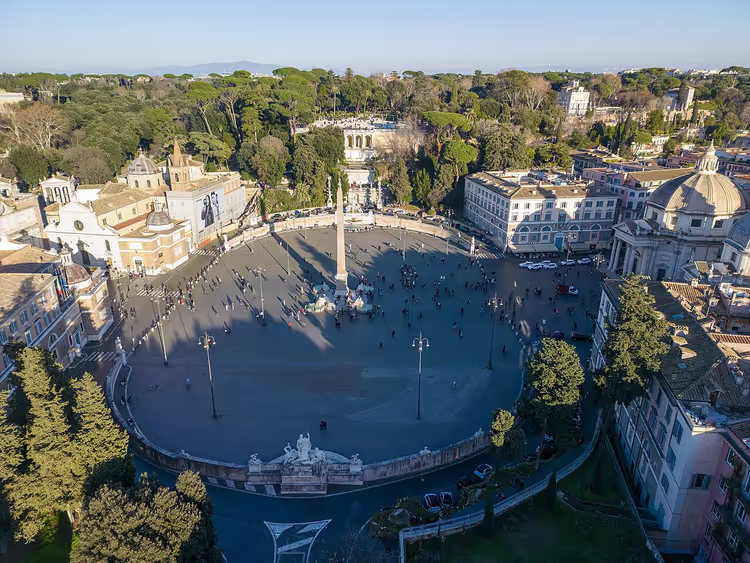
Piazza del Popolo served as the city's main gate, where the major roads began. The name translates as "the people": townspeople once gathered here for trade and important decisions.
In the center of the square stands an Egyptian obelisk brought from the temple of the sun god Ra. Along the edges rise twin churches that frame the entrance to Via del Corso. The square is adorned with the sculptural group "The Seasons," and cafes and shops operate on the ground floors of the buildings. According to the Rome tourist office (as of 09/2026, Rome tourist office), the ensemble took shape from buildings of different eras and the old city wall.
- How to get there: Flaminio metro station, exit directly onto the square.
- Who it's for: a relaxed start to the day without lines and crowds.
- The catch: there are few benches on the square itself; it's better to rest in the park above.
Piazza di Spagna
 © Fred Romero from Paris, France · CC BYPhoto: Fred Romero from Paris, France, CC BY (https://creativecommons.org/licenses/by/2.0), Wikimedia Commons
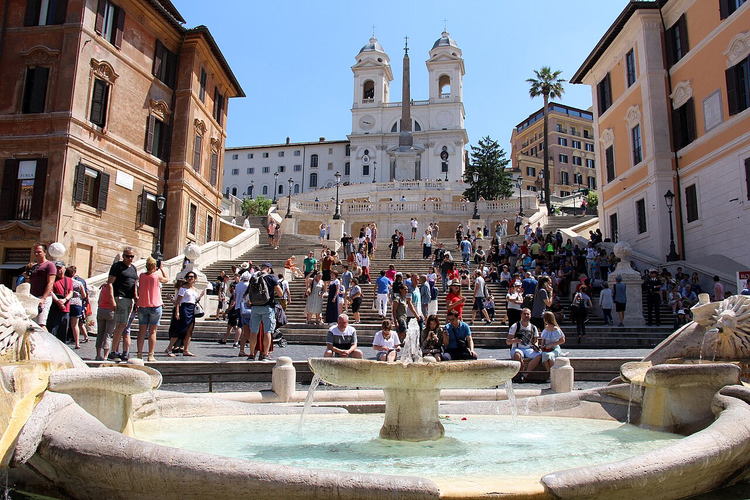
Piazza di Spagna got its name from the Spanish embassy, which settled in the Palazzo Monaldeschi. In the center, the Barcaccia Fountain flows in the shape of a half-sunken boat of white marble. It was built in memory of a great flood, and on its sides you can see bees and the sun from the Barberini coat of arms.
Nearby stands the church of Trinità dei Monti, built in the 16th century, where services are still held in French. According to legend, the ghost of Cagliostro's beloved, Lorenza Feliciani, wanders the square at night.
- The catch: the square is packed with tourists all day; calm photos only come early in the morning.
Spanish Steps
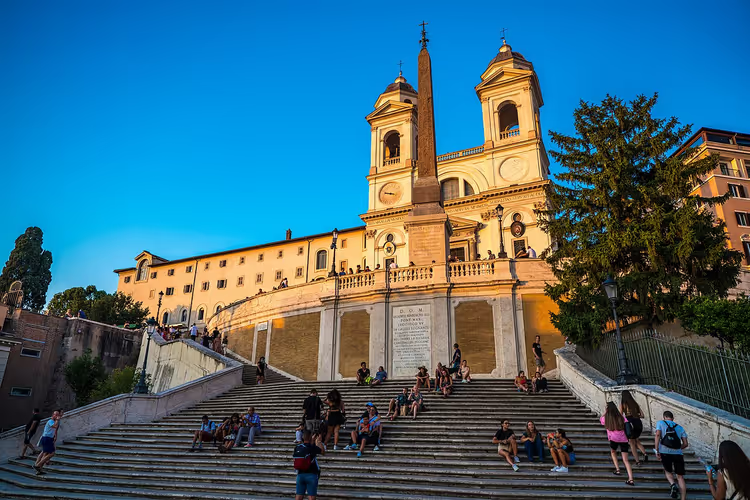 © Nan Palmero from San Antonio, TX, USA · CC BYPhoto: Nan Palmero from San Antonio, TX, USA, CC BY (https://creativecommons.org/licenses/by/2.0), Wikimedia Commons
The Spanish Steps lead from Piazza di Spagna up to the church of Trinità dei Monti. There are 138 travertine steps (as of 09/2026, official Turismo Roma portal), and the upper flights are noticeably wider than the lower ones, which makes the staircase look like a wave. From the top you get a view of the dome of St. Peter's Basilica.
In spring the steps are decorated with blooming azaleas, and at Christmas a nativity scene is set up here. Fashion designers have held runway shows on the steps, and filmmakers shot a scene from "Roman Holiday" here. So there's no shortage of people trying to recreate the shot in any season.
- How to get there: Spagna metro station, exit right at the foot of the steps.
- The catch: sitting on the steps is not allowed; the police enforce this.
Trevi Fountain
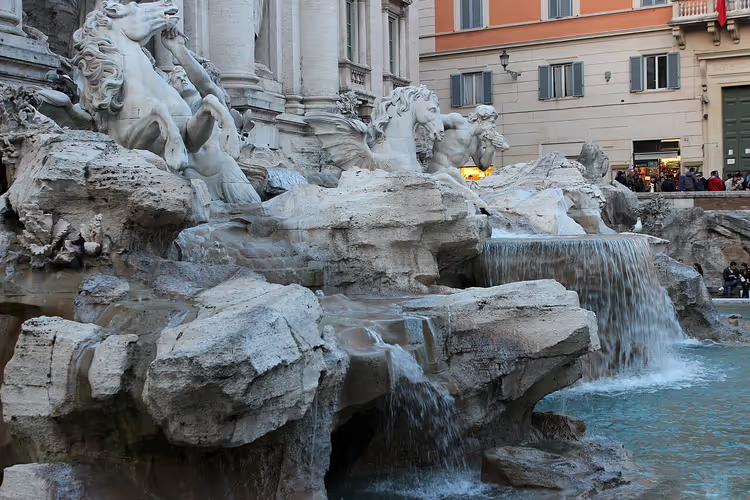 © Miguel Hermoso Cuesta · CC BY-SAPhoto: Miguel Hermoso Cuesta, CC BY-SA (https://creativecommons.org/licenses/by-sa/4.0), Wikimedia Commons
The Trevi Fountain is pressed against the facade of Palazzo Poli, and together they form a single ensemble. Ocean rides out on a shell pulled by tritons and sea horses. The fountain is 26 meters high and 49 meters wide (as of 09/2026, Rome tourist office website). In the evening the lights come on, and the jets become especially striking.
The fountain was created in the mid-18th century, and a scene from the film "La Dolce Vita" was shot at the basin. Around it there are steps shaped like an ancient amphitheater, and they are almost always occupied. Nearly everyone here tries tossing a coin and making a wish.
- How to get there: about a five-minute walk from Barberini metro station.
- The catch: during the day you can't get close to the basin, come after sunset.
Pantheon
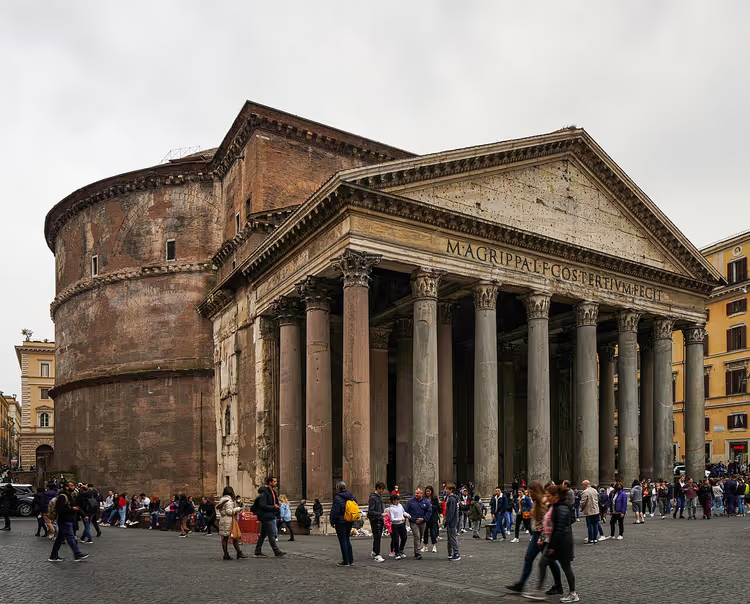 © NikonZ7II · CC BY-SAPhoto: NikonZ7II, CC BY-SA (https://creativecommons.org/licenses/by-sa/4.0), Wikimedia Commons
The Pantheon was built more than two thousand years ago as a temple to all gods, and later it became a Christian church. The dome with a round opening in the middle still amazes engineers: light falls directly onto the marble floor. The walls are up to six meters thick in places, and above the entrance an inscription dedicated to Agrippa has survived.
Raphael and the first kings of unified Italy are buried in the Pantheon. A ticket costs 7 €, and on the first Sunday of the month entry is free (as of 09/2026, Pantheon page on the city portal). When it rains, drops fall through the opening in the dome onto the floor, and that sight is worth seeing on its own.
- Hours: daily 9-19, last entry at 18:30 (as of 09/2026, Rome tourist portal).
- The catch: in high season you can lose half an hour in the entry line.
Castel Sant'Angelo
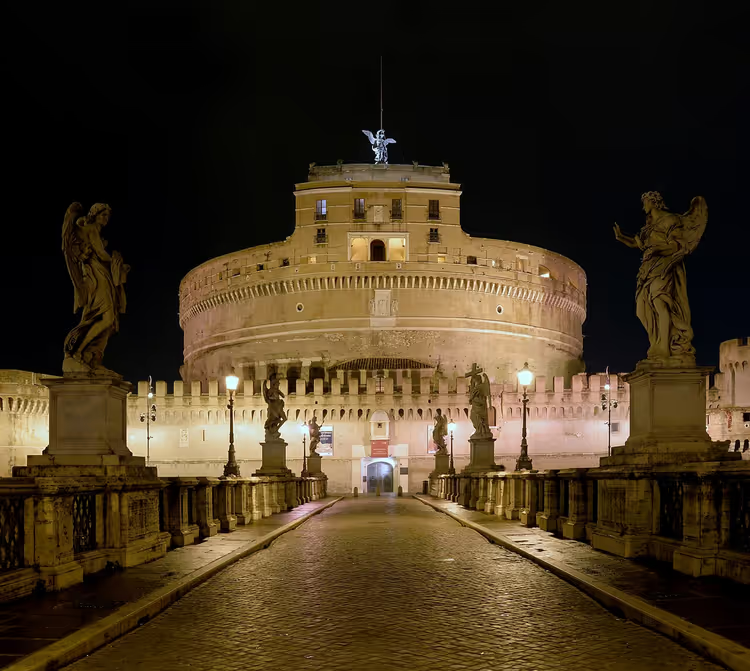 © Livioandronico2013 · CC BY-SAPhoto: Livioandronico2013, CC BY-SA (https://creativecommons.org/licenses/by-sa/4.0), Wikimedia Commons
Castel Sant'Angelo began as the mausoleum of Emperor Hadrian, and in the Middle Ages it became a papal fortress. The name is linked to a legend about the Archangel Michael, who, according to tradition, stopped a plague epidemic at the end of the 6th century. From the Angel terrace there is a panorama of the entire city.
Inside, see the Courtyard of the Savior, where the condemned spent their final hours, and the treasury with the apartments. Through the Courtyard of the Angel with the bath of Giovanni da Udine you will pass into a covered gallery with the halls of Perseus and the armory. The pedestrian Ponte Sant'Angelo leads from the castle toward the center. On it stand statues by Bernini: the master made two of the ten himself, and entrusted the rest to his pupils. In each angel's hands are instruments of the Passion of Christ, and lines from Scripture are carved on the pedestals.
- The catch: entry is paid, and opening hours change by season, so check them before your visit.
Ponte Umberto I
 © Girolamus · CC BY-SAPhoto: Girolamus, CC BY-SA (https://creativecommons.org/licenses/by-sa/4.0), Wikimedia Commons
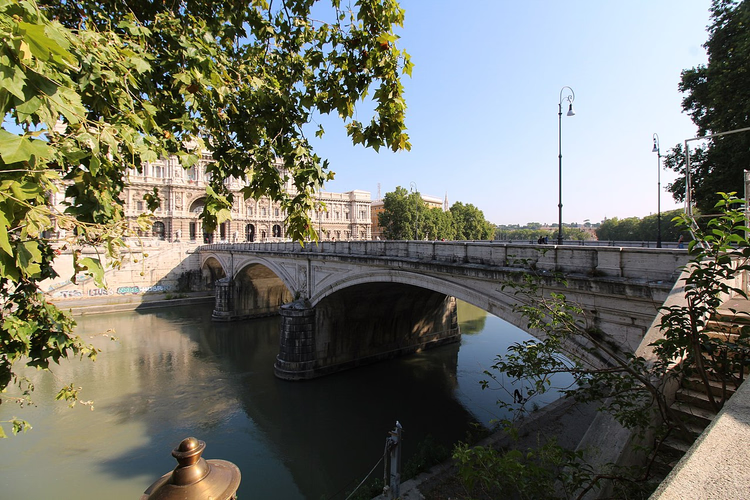
Ponte Umberto I connected the city center with the Palace of Justice. It was built at the end of the 19th century, is about one hundred meters long, and King Umberto I attended the opening with his wife Margherita of Savoy. The bridge offers one of the best views of St. Peter's Basilica and the old pedestrian Ponte Sant'Angelo.
- The catch: traffic is heavy, the sidewalk is narrow, so early morning is best for photos.
Day two: the Colosseum and the ancient forums
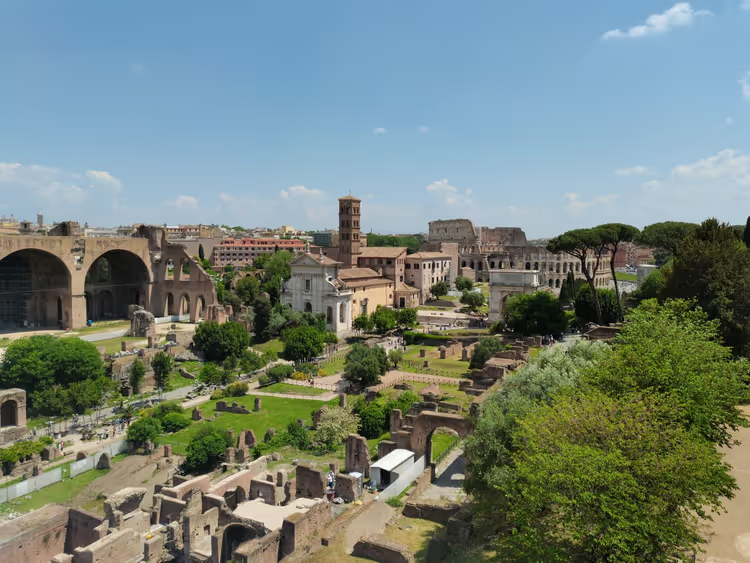
Day two is all about ancient Rome. Start with the Colosseum and the arches, then walk through the Roman Forum to the Capitoline Museums and finish at Piazza Venezia. Lines are shorter in the morning, and in summer the shade of the forums is easier to handle than the open arena.
The Colosseum
 © Jon Gudorf Photography · CC BY-SAPhoto: Jon Gudorf Photography, CC BY-SA (https://creativecommons.org/licenses/by-sa/2.0), Wikimedia Commons
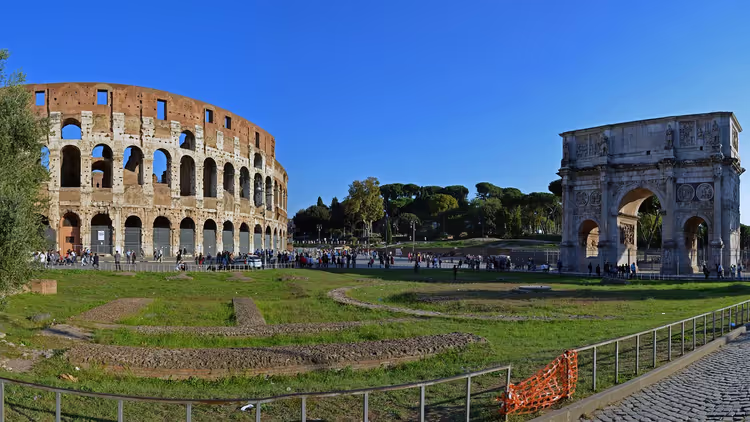
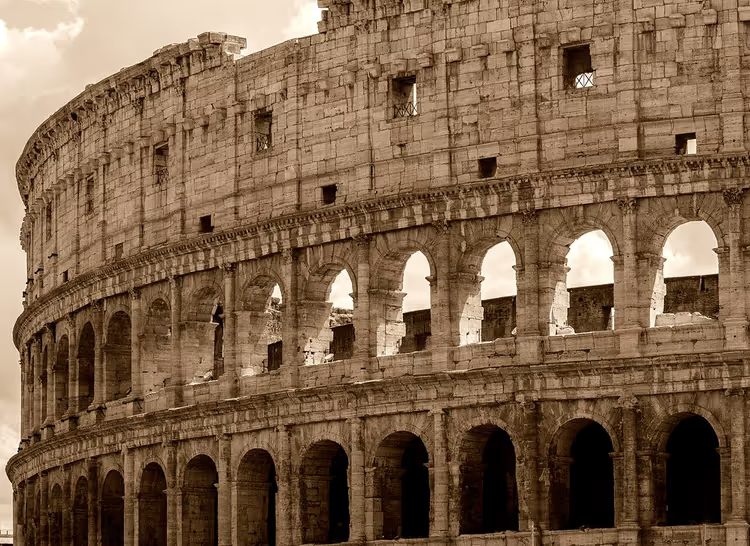
The Colosseum was the largest amphitheater in the empire: it hosted gladiator fights and animal hunts. It was built on the site of a pond from Nero's palace, and its opening was marked with games that lasted nearly a hundred days. A full ticket costs 18 € and includes one entry to the Colosseum plus the Roman Forum and Palatine Hill (as of 09/2026, official Colosseum ticket portal).
The underground chambers and part of the third tier survive inside, and concerts are sometimes held by the ancient walls. Morning time slots go first, so book ahead and arrive at opening time. The ruins have been a UNESCO World Heritage site since the 20th century.
- Timed tickets: Colosseum tickets on Tiqets
- Getting there: metro B, Colosseo station, the exit leads right to the arena.
- The catch: in summer there is almost no shade in the sun, bring water and a hat.
Arch of Constantine
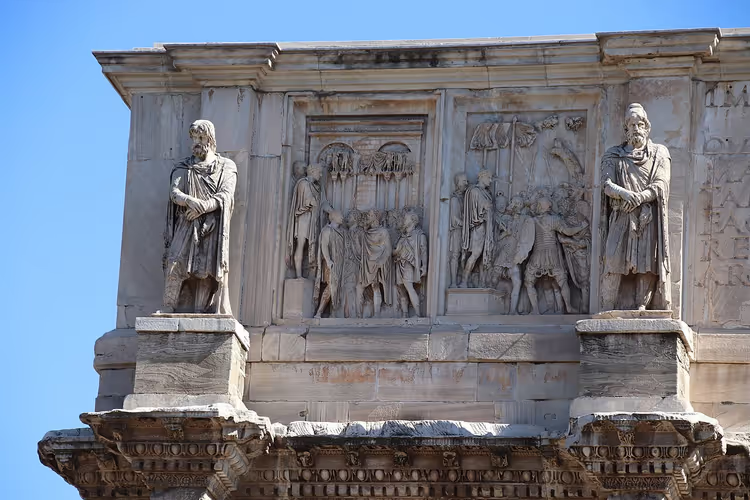
The Arch of Constantine was erected in the early 4th century to commemorate the emperor's victory at the Milvian Bridge. It stands about twenty meters tall, and to decorate it the builders took reliefs from older structures and replaced the faces of earlier rulers with images of Constantine. The arch is visible right from the Colosseum, and no separate ticket is needed.
According to tradition, before the battle Constantine saw a cross in the sky and heard the words "In this sign you will conquer." He defeated Maxentius and embraced Christianity, which is why the arch is seen as a boundary between two eras. The half-columns, statues, and reliefs were assembled from various monuments of Rome.
- Getting there: between the Colosseum and the Arch of Titus, on the way to the forum.
- The catch: in the morning the arch is in shadow, so midday is better for photos.
Arch of Titus
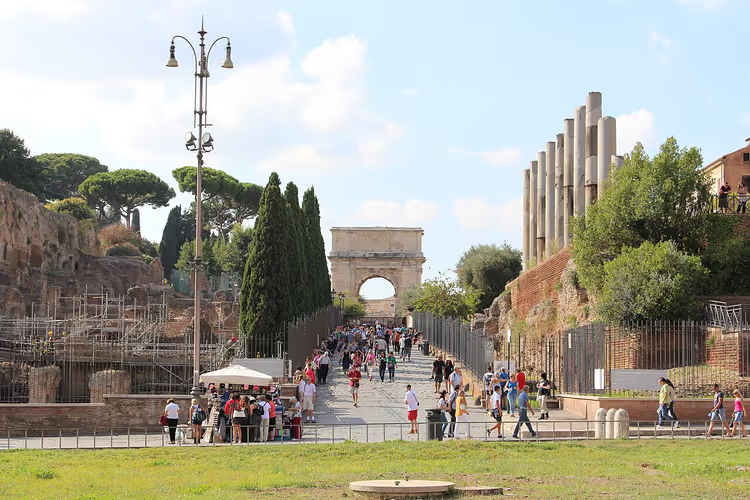 © tiger rus · CC BYPhoto: tiger rus, CC BY (https://creativecommons.org/licenses/by/3.0), Wikimedia Commons
The Arch of Titus stands on the Sacred Way and commemorates the capture of Jerusalem. It was built in the late 1st century and is about fifteen meters tall. The inner reliefs show a procession carrying trophies from the destroyed temple, and an inscription about the war survives above the archway.
The corners of the arch are decorated with figures of winged Victories, and the half-columns are made of Pentelic marble. From one side of the arch you can see the Colosseum, from the other the Roman Forum, so it is a convenient spot to plan the rest of your route. The arch was once topped with a statue of Titus in a chariot drawn by four horses.
- Getting there: at the top of the Sacred Way, above the Colosseum.
- The catch: the area is narrow, and tour groups block the passage.
Roman Forum
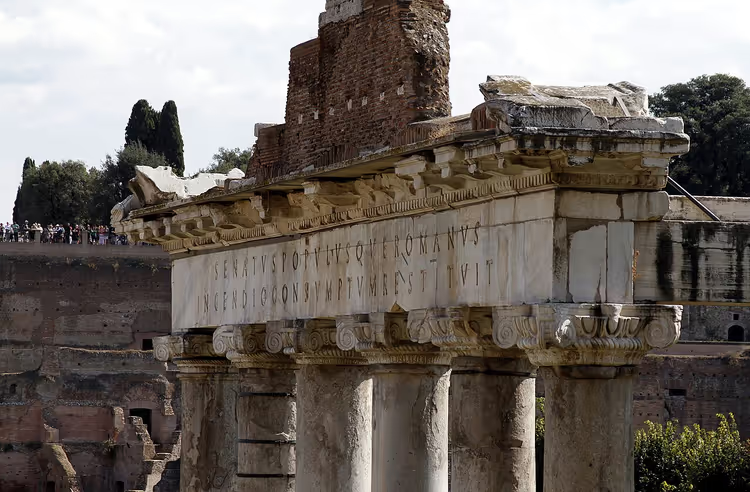 © José Luiz · CC BY-SAPhoto: José Luiz, CC BY-SA (https://creativecommons.org/licenses/by-sa/4.0), Wikimedia Commons
The Roman Forum was the political and religious heart of the empire. Triumphal processions of generals, court proceedings, and trade all passed through this valley between the hills. The marsh was drained back in the time of King Tarquinius, for which a sewer was dug and a road was packed down.
After the fall of the empire, the buildings were dismantled and buried, and for a long time the forum was called the "cow field." Excavations only began in the 19th century. Today the ruins lie about ten meters below Via dei Fori Imperiali, and some structures are still hidden under the road. Entry is included in the Colosseum ticket, so get the combined ticket in advance.
- Getting there: on foot from the Colosseum along the Sacred Way.
- The catch: everything is outdoors, and in the heat there is almost no shelter.
Forum of Nerva
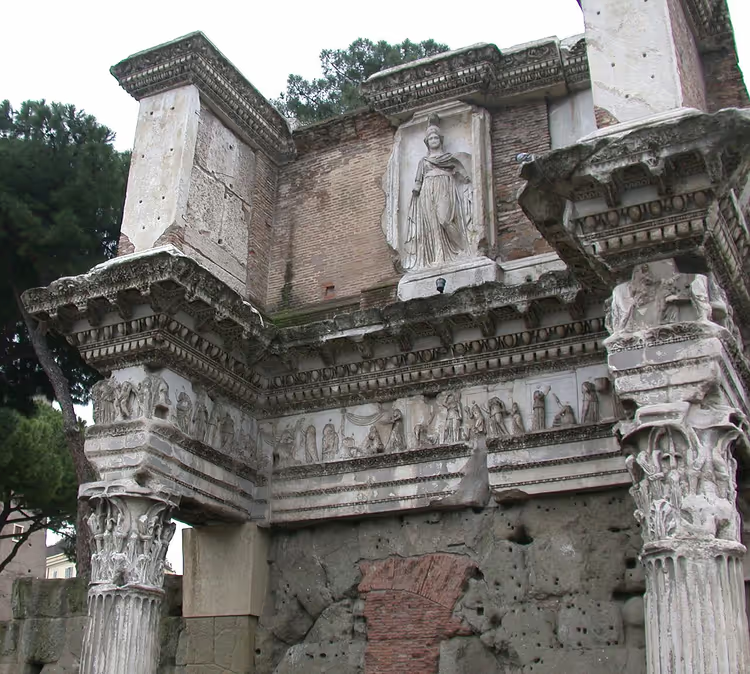 © it:User:MM · CC BY-SAPhoto: it:User:MM, CC BY-SA (http://creativecommons.org/licenses/by-sa/3.0/), Wikimedia Commons
The Forum of Nerva was the narrowest of the imperial forums, and its second name was the "Transitory Forum." It connected the Roman Forum with the Argiletum district and was adorned with a temple to the goddess Minerva. The sanctuary was dismantled in the early 17th century by order of Pope Paul V.
Two white marble columns and part of the facade with a depiction of Minerva survive to this day. Stone from here was used for the Acqua Paola fountain and the Borghese chapel, and the rest is hidden under the Avenue of the Imperial Forums. A decorated frieze from the ancient forum has also survived.
- Getting there: between the forums of Augustus and Vespasian, on the way to Trajan's Forum.
- The catch: there is almost nothing to see, so only stop by if you are passing through.
Forum of Augustus
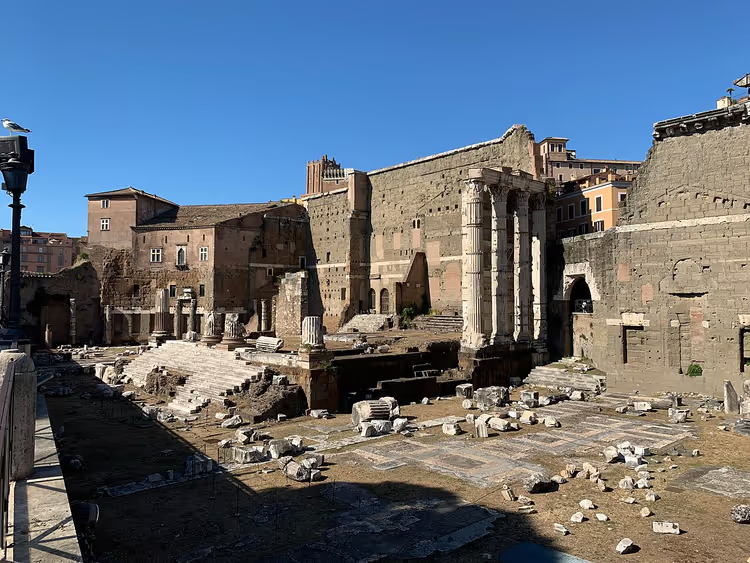 © Chabe01 · CC BY-SAPhoto: Chabe01, CC BY-SA (https://creativecommons.org/licenses/by-sa/4.0), Wikimedia Commons
The Forum of Augustus grew up next to the Roman Forum after Octavian Augustus's victory at Philippi. The main structure was the Temple of Mars the Avenger, whose facades were decorated with statues of Venus and Caesar. Three columns, part of the wall, a staircase to the altar, and niches survive, hinting at the former scale.
After the adoption of Christianity, the forum fell into neglect, and its stone was dismantled for building churches. A collection of found artifacts is now displayed here in the open air.
- Getting there: right after the Forum of Nerva, along the avenue.
- The catch: the ruins are partly covered by the avenue, and some are only visible from above.
Trajan's Forum
 © Bgabel · CC BY-SAPhoto: Bgabel, CC BY-SA (https://creativecommons.org/licenses/by-sa/3.0), Wikimedia Commons
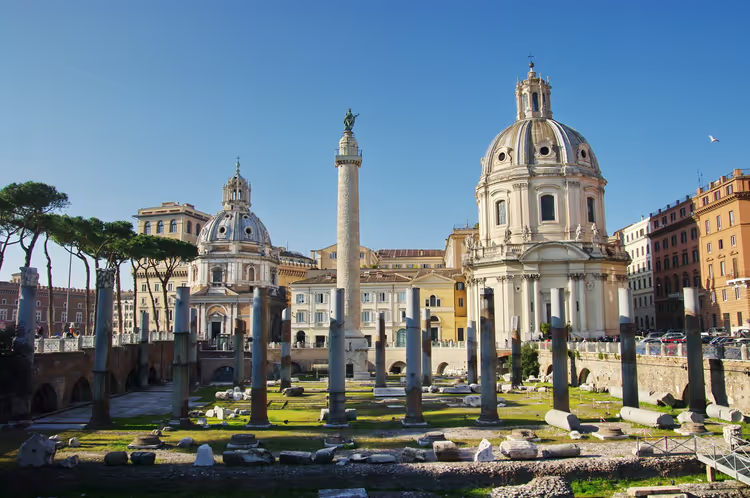
Emperor Trajan ordered the Forum of Trajan to be built in honor of his victory over the Dacians. The project was designed by the architect Apollodorus of Damascus, and the forum itself was cut into the Quirinal Hill. In the center stands Trajan's Column, about forty meters high: its spiral relief tells the entire story of the campaign.
The column is hollow inside, a spiral staircase leads to the top, and at the base were kept urns with the ashes of the emperor and his wife Pompeia Plotina. The column is made of large blocks of Carrara marble and serves as Trajan's tomb. It's hard to examine the reliefs from the ground, so it's easier to view them from a distance.
- How to get there: opposite the Capitoline Hill, along Via dei Fori Imperiali.
- The catch: you can't make out the relief details without optics.
Capitoline Museums
 © Tournasol7 · CC BY-SAPhoto: Tournasol7, CC BY-SA (https://creativecommons.org/licenses/by-sa/4.0), Wikimedia Commons
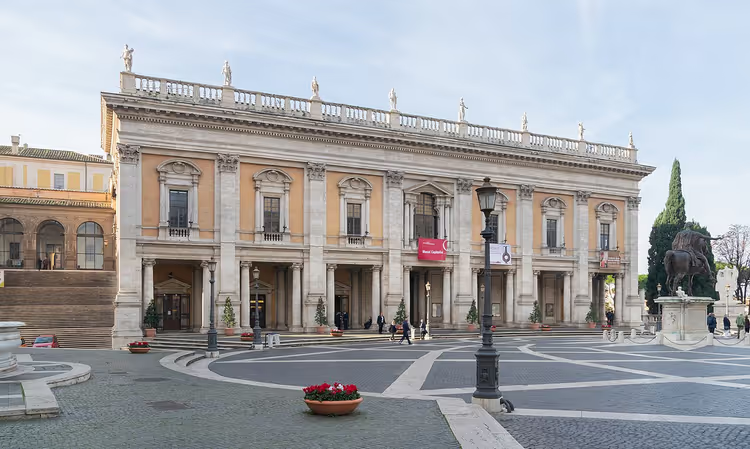
The Capitoline Museums are considered the oldest public museum in the world, and their palaces stand on the Capitoline Hill next to the Roman Forum. The ensemble consists of three palaces around Piazza del Campidoglio, connected by underground passages. Some of the palaces were rebuilt according to Michelangelo's design. Museum admission starts at 15 € (as of 09/2026, official museum website).
In the center of the square stands the equestrian statue of Marcus Aurelius, the only ancient equestrian statue to survive the Middle Ages. Inside are the Capitoline Wolf, the Dying Gaul, and the Capitoline Brutus. Through the underground tunnels you'll reach the Lapidary Gallery with ancient inscriptions.
- Tickets with a guide: tours of Rome's museums on GetYourGuide
- The catch: it's better to buy tickets online, there can be a line at the ticket office.
Monument to Victor Emmanuel II
 © Alvesgaspar · CC BY-SAPhoto: Alvesgaspar, CC BY-SA (https://creativecommons.org/licenses/by-sa/4.0), Wikimedia Commons
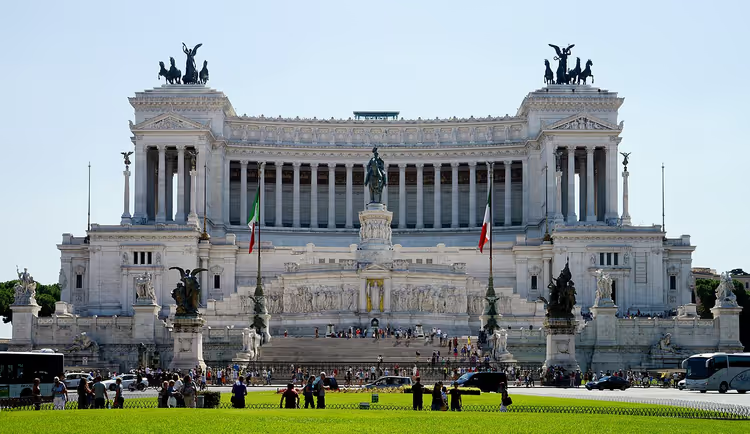
The Vittoriano was built in honor of the first king of a united Italy. The snow-white monument at the foot of the Capitoline Hill took almost thirty years to build, and some old buildings were demolished to make room for it, including the Arch of San Marco. In the center is the Altar of the Fatherland with an eternal flame, and by the portico stand statues representing the regions of Italy.
Victor Emmanuel II accepted the title of king following a vote in the mid-19th century. The monument celebrates the era of the Risorgimento, the struggle for a unified state. A guard of honor stands at the monument in memory of the unknown soldier.
- How to get there: at the end of Via del Corso, near Piazza Venezia.
- The catch: access to the observation deck is paid, while entry to some halls is free.
Piazza Venezia
 © Zavijavah · CC BY-SAPhoto: Zavijavah, CC BY-SA (https://creativecommons.org/licenses/by-sa/3.0), Wikimedia Commons
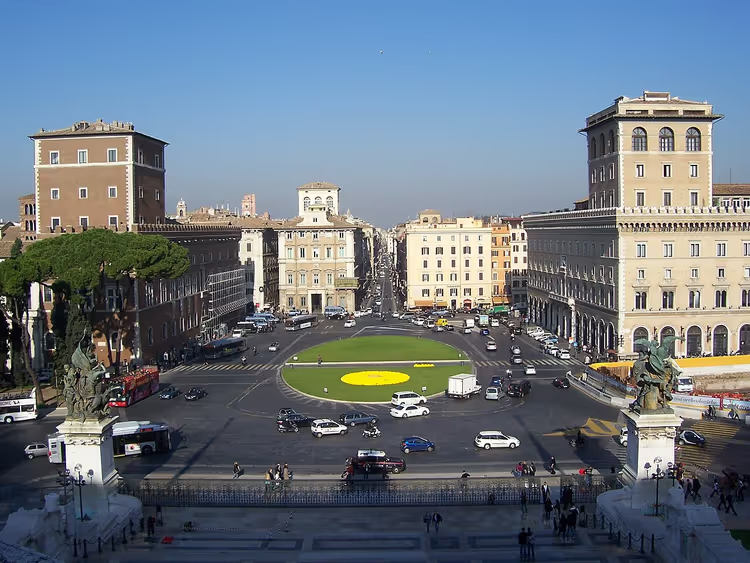
Piazza Venezia grew up around a palace that the future Pope Paul II built in the second half of the 15th century from stone taken, among other sources, from the Colosseum. Via dei Fori Imperiali starts here, leading straight to the Colosseum, which is why the square is often called the geometric center of the city.
The palace now houses the Museum of Venice, and the square features the Fountain of the Pinecone, found during excavations. In a corner hides the "talking" statue Madama Lucrezia: people used to attach notes criticizing the authorities to it, but that's now prohibited. You can also take a look at the neighboring Renaissance sculptures.
- How to get there: Colosseo metro station or tram to the Venezia stop.
- The catch: the square is overloaded with traffic, and crossing it during the day is not easy.
Tours and tickets in Rome
Guided tours, skip-the-line tickets and activities — most offers can be cancelled free of charge.
See offers on GetYourGuideThe widget loads once you give your consent.
Tips for travelers
A few simple rules will save you time and money in Rome.
- Start your day early: lines at the main sights grow by the hour.
- Drink from the city's nasoni fountains: the water is free and safe to drink.
- Churches don't allow bare shoulders and knees, so bring a light scarf.
- Between nearby sights in the center, walking is faster than waiting for a bus.
- Eat away from Piazza Navona and the Trevi Fountain: prices are higher and portions smaller right next to them.
- Buy groceries at the Campo de' Fiori market in the morning, and the Porta Portese flea market is open on Sundays.
- Carry some cash: small cafes and markets don't always accept cards.
- If you're planning lots of museums and trips, do the math on the Roma Pass: sometimes it pays for itself by the third sight.
Keep in mind that taxis have two rates: inside the ring road and beyond it. Ask about the fare before you start, so you avoid an argument at the end. On the metro and buses, you need to validate your ticket, otherwise it's considered invalid.
Bring broken-in shoes: the cobblestones in the historic center are hard, and there are plenty of climbs. In summer, plan long walks before midday, and after lunch head into museums that have air conditioning. In winter and spring the days are shorter, so save daylight hours for the forums and streets. Coffee at the bar counter is always cheaper than at a table, and it's a good way to rest between sights.
2-Day Rome itinerary on the map
The Most Interesting Places in Rome
Places on the map
- 1Villa Borghese Park on the slopes of the Pincio, a gallery with works by Caravaggio and Bernini
- 2Pincio Terrace Panorama of the whole centre, domes and tiled roofs
- 3Piazza del Popolo Egyptian obelisk and twin churches at the entrance to Via del Corso
- 4Piazza di Spagna The Barcaccia Fountain shaped like a half-sunken boat
- 5Spanish Steps 138 travertine steps up to the church of Trinità dei Monti
- 6Trevi Fountain Neptune on a shell, 26 metres high, lit up at night
- 7Pantheon Temple of all the gods, later a Christian church, a dome with an oculus
- 8Castel Sant'Angelo Formerly Hadrian's mausoleum, a papal fortress, panorama from the terrace
- 9Ponte Umberto I View of St Peter's Basilica and the Sant'Angelo bridge
- 10Colosseum The largest amphitheatre of the empire, gladiator fights
- 11Arch of Constantine Early 4th-century arch honouring the victory at the Milvian Bridge
- 12Arch of Titus Commemorates the fall of Jerusalem, reliefs with the spoils
- 13Roman Forum The political and religious heart of the empire
- 14Forum of Nerva The narrowest of the imperial forums, the temple of Minerva
- 15Forum of Augustus Temple of Mars the Avenger, three columns survive
- 16Trajan's Forum Trajan's Column, about forty metres high
- 17Capitoline Museums The world's oldest public museum, the Capitoline She-wolf
- 18Victor Emmanuel II Monument The Vittoriano with the Altar of the Fatherland and the eternal flame
- 19Piazza Venezia Palace of Cardinal Paul II, the Fountain of the Pinecone
All route points are marked on the map: Villa Borghese, the center, the Colosseum, and the ancient forums. Open it on your phone to check distances as you walk and avoid backtracking.
If you want to follow the same route in a navigation app, copy the points into your own app. That way you can change the order of sights depending on the weather and your mood.
⁉️🤔 Frequently asked questions
How much does a Colosseum ticket cost?
A full ticket costs €18 and includes one entry to the Colosseum, plus the Roman Forum and Palatine Hill (as of 09/2026, official Colosseum website). The ticket is valid for 24 hours, so it makes sense to leave the Forum for the same day.
Do I need to book the Pantheon in advance?
Yes, entry is by ticket for €7, and in high season the line grows quickly (as of 09/2026, Pantheon page). Tickets are sold online and at the entrance, and on the first Sunday of the month entry is free.
Can the whole route be done on foot?
Yes, both days are walkable. You'll climb to Villa Borghese from Piazza di Spagna, about a kilometer uphill. Allow five to six hours per day with coffee stops.
How much money should I budget for two days?
Count the entry tickets: Colosseum €18, Pantheon €7, Capitoline Museums from €15 (as of 09/2026, Capitoline Museums ticket page). The Borghese Gallery is booked separately. Add a buffer for food and transport; prices are higher in the center.
What to do in the rain?
Move museums to bad weather: the Capitoline Museums, Borghese Gallery, and Pantheon are open in any weather. The open-air forums are less crowded in the rain, but slippery. Bring a compact umbrella.
In short: what's worth booking
If you're going for antiquity, get a Colosseum ticket for the morning, before the arena gets hot and crowded. If you want to see Bernini and Caravaggio, book the Borghese Gallery for a specific time. For a family with kids, it's easier to take a guided tour so the child doesn't get tired of long descriptions.
It's convenient to put the trip together in advance: find Rome tours on GetYourGuide and compare central hotels on Trip.com.

A small editorial team writing guides for independent travel. We travel ourselves, but we haven’t been everywhere, so we check prices, opening hours and how to get there against official sources.