
















20 Museums in Singapore: what to see and how to buy tickets
Singapore is usually thought of as a city of skyscrapers and shopping. In reality, much of its history is tucked away in museums. Some tell the story of war and occupation, others of the Peranakans, and still others of design and science. We have put together 20 museums worth adding to your trip, and for each one we list admission, directions, and what we actually checked ourselves. Some museums are free, while tickets to popular ones are worth booking in advance. Some museums change their hours on public holidays, so check the schedule before you head out, and buy tickets online to avoid waiting in line at the ticket counter.
Ad: this article contains affiliate links. We earn a commission if you book through them, at no extra cost to you.
What to know about Singapore's museums
💡 In short:
- Most of the city's museums are open from morning to evening, and some have late nights on Fridays.
- For popular museums, it is better to buy tickets in advance: on weekends the ticket counter line is longer.
- The Navy Museum, Fort Siloso, and the Buddha Tooth Relic Temple and Museum are free. Admission to the Changi Chapel and Museum is by voluntary donation.
- Prices and hours: 09/2026, verified on the official National Museum website.
Most of Singapore's museums are concentrated in three areas: the Civic District in the center, the Marina Bay waterfront, and Sentosa Island. The Changi Chapel in the east and the Science Centre in Jurong stand apart, and getting to them takes longer. It makes more sense to split your visits by day and avoid wasting time on travel. The center is home to history museums, Marina Bay to natural science museums, and Sentosa to entertainment-focused ones. These areas are easy to divide like this: you can cover the center and Marina Bay on foot, and set aside a separate day for Sentosa.
Tickets to Singapore's museums are sold online and at the door. Online is more convenient: you pick a time slot in advance and skip the line, and on weekends available slots may run out. For Singapore citizens and permanent residents, admission to permanent galleries is free at many museums, and students and seniors often get a discount with ID. The most popular slots go on weekends, so tickets to the National Museum and the National Gallery are best booked a couple of days ahead.
If you want | Go to |
|---|---|
To understand the country's history | National Museum of Singapore |
Free admission | Navy Museum and Fort Siloso |
Eye-catching photos for social media | Museum of Illusions |
1. Battlebox
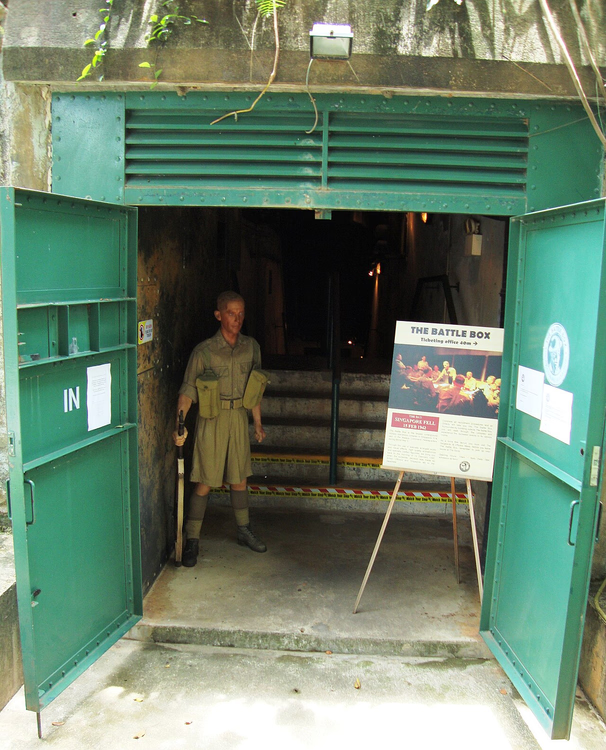
The Battlebox underground bunker was built by British engineers in 1936 at Fort Canning (Battlebox). The structure goes 9 m underground, and the walls are up to 1 m thick. In February 1942, the decision to surrender Singapore to Japan was made here. Inside, 26 rooms are set up, and wax figures recreate the scene on the eve of the capitulation. The guide speaks only English, but the installation itself is vivid.
- Cost: visits are only available as part of a paid tour; book your slot online in advance (as of 09/2026, official website).
- Getting there: Fort Canning Park, 2 Cox Terrace, on foot from Dhoby Ghaut MRT station.
- The catch: tours are in English only.
2. The Intan
The Intan houses businessman Alvin Yapp's private collection of Peranakan culture. The Peranakans, descendants of immigrants and local women, blended Chinese, Malay, and European traditions. This is one of the most extensive private collections in Singapore: the house is filled with Peranakan clothing, shoes, tableware, and furniture. The owner often greets guests himself and leads tours, which makes the visit feel intimate.
- Cost: admission is paid; check the price with the museum.
- The catch: tours are in English only.
3. ArtScience Museum
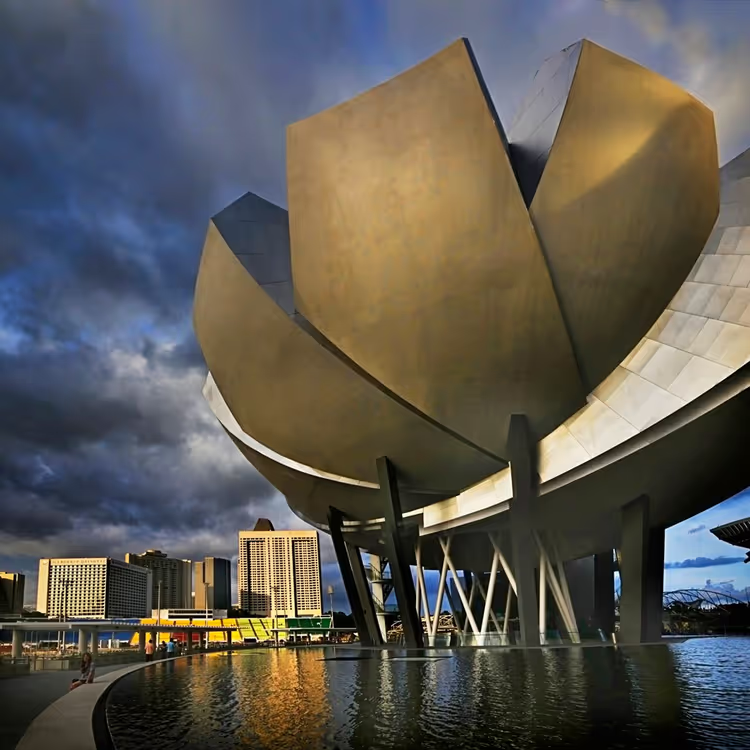 © William Cho · CC BY-SAPhoto: William Cho, CC BY-SA (https://creativecommons.org/licenses/by-sa/2.0), Wikimedia Commons
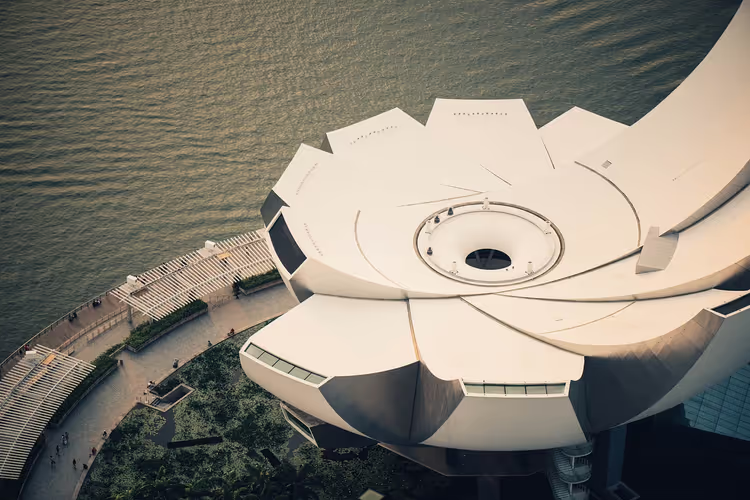
The ArtScience Museum stands at Marina Bay and has become one of the district's most recognizable buildings. From the outside it resembles an open palm or a lotus flower, and next to it there is a pond with live lotuses and fish. On the roof there is a tank that collects rainwater: it flows down as a waterfall and is then pumped back up. Windows in the petals bring light into the galleries and retain heat, so the structure saves electricity. The exhibitions are divided into permanent and temporary, and some of the galleries are interactive.
- Cost: admission is paid; check prices and time slots on the official website.
- The catch: the permanent collection changes, and you may not always catch some exhibitions.
4. National Museum of Singapore
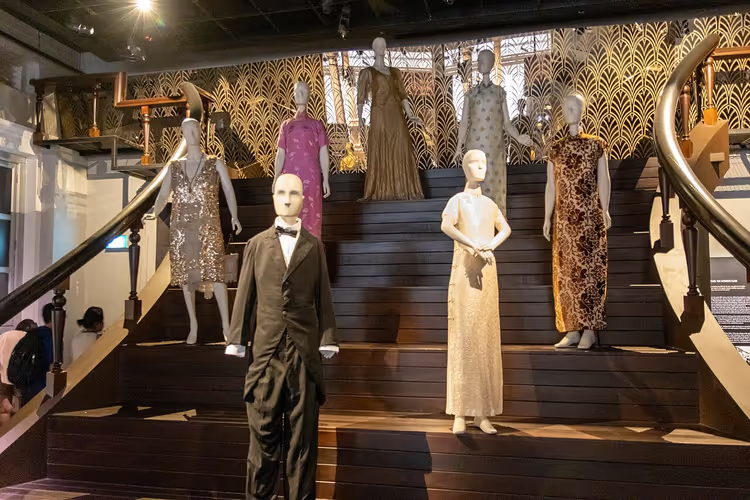 © Photograph by Mike Peel ( www.mikepeel.net ). · CC BY-SAPhoto: Photograph by Mike Peel ( www.mikepeel.net )., CC BY-SA (https://creativecommons.org/licenses/by-sa/4.0), Wikimedia Commons
The National Museum of Singapore is the country's oldest museum and the best starting point for getting to know its history. The 19th-century building was rebuilt from the inside so that the artifacts read well in a modern space. It displays national costumes, spices, and props from the first film studios. Many items were donated by private collectors, and themed lectures cover contemporary art in the region.
- Hours: daily from 10:00 to 19:00 (as of 09/2026, official website).
- Cost: admission is paid; permanent galleries are free for citizens and permanent residents of Singapore.
- The catch: ticket counters get crowded on weekends, so buy your ticket online.
If you want to explore the museums with a guide, check out Singapore museum tours on GetYourGuide.
5. Asian Civilisations Museum
 © Jnzl's Photos · CC BYPhoto: Jnzl's Photos, CC BY (https://creativecommons.org/licenses/by/2.0), Wikimedia Commons
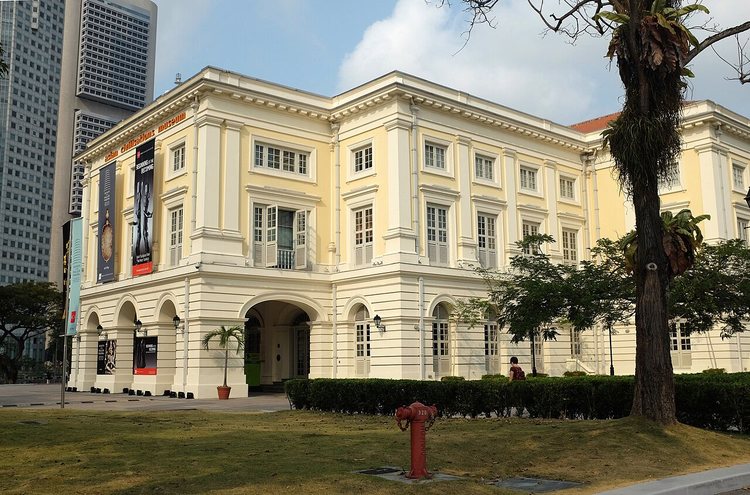
The Asian Civilisations Museum occupies a former courthouse on the waterfront. The collection was initially small and focused on Peranakan daily life, but after it expanded, the museum moved into the historic courthouse building. Today the galleries are organized by region: Vietnamese, Thai, Malay, and Chinese. In the Vietnamese gallery, take time to see the bronze statue of the Goddess of Mercy and the display about the ancient kingdom of Champa. In the Thai gallery, visitors linger at the jewelry cases, and in the Chinese gallery they study the porcelain. All rooms are equipped with interactive monitors: you can listen to information about each exhibit, and tours are conducted in English.
- Cost: admission is paid; tours are conducted in English.
6. Peranakan Museum
 © GoAheadFan95 · CC BY-SAPhoto: GoAheadFan95, CC BY-SA (https://creativecommons.org/licenses/by-sa/4.0), Wikimedia Commons
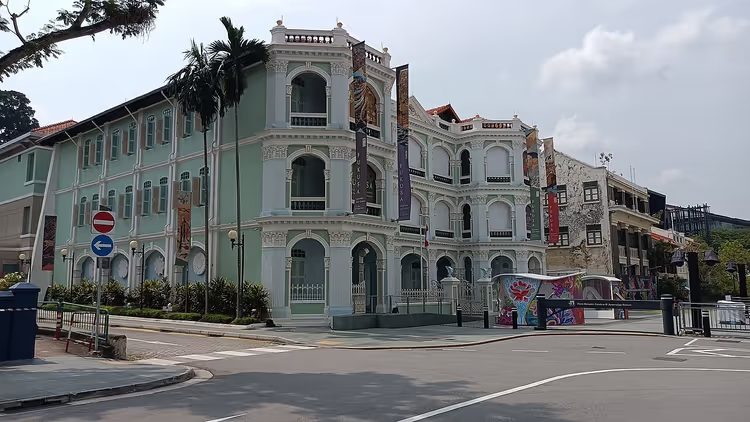
The Peranakan Museum is dedicated to Peranakan culture, with an emphasis on those of Chinese descent. The exhibition explores traditions in detail: wedding ceremonies, cuisine, and daily life. A Peranakan wedding lasts many days, and a separate gallery is devoted to it. Another room tells the story of Lee Kuan Yew, Singapore's first prime minister. After your visit, stop by the cafe to try local dishes, and pick up handmade souvenirs in the shop.
- Hours: daily from 10:00 to 19:00, open later on Fridays (as of 09/2026, official website).
- Cost: admission is paid for foreign visitors; entry is free for citizens and permanent residents of Singapore.
7. Art Museum
 © ProjectManhattan . · CC BY-SAPhoto: ProjectManhattan ., CC BY-SA (https://creativecommons.org/licenses/by-sa/3.0), Wikimedia Commons
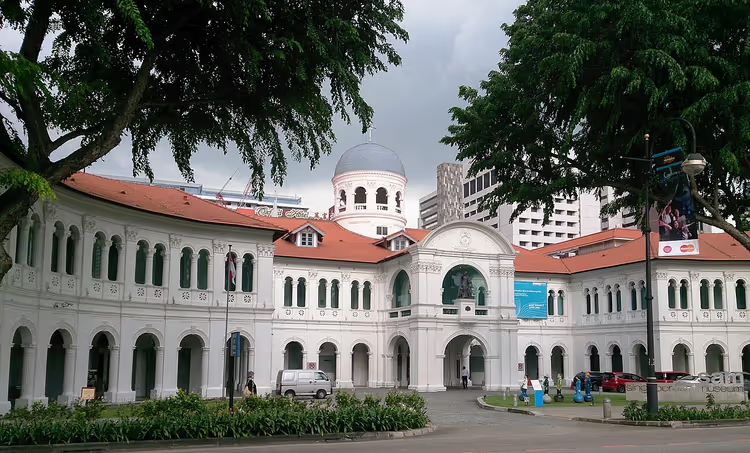
The Art Museum showcases contemporary sculpture, painting, and unexpected installations made from everyday materials. The building spans several floors, and you can take the elevator to the floor you need. There are several entrances, but the central one provides a free map showing the exhibition layout. The exhibitions are divided into permanent and thematic ones, and the administration regularly refreshes the lineup to keep things interesting for visitors. The museum occasionally hosts free evenings; on other days a ticket is required.
- Cost: a ticket is required; the museum occasionally hosts free evenings.
- The catch: exhibitions change frequently, so you may not see everything described here.
8. Red Dot Design Museum
 © JudiciousGoat · CC BY-SAPhoto: JudiciousGoat, CC BY-SA (https://creativecommons.org/licenses/by-sa/4.0), Wikimedia Commons
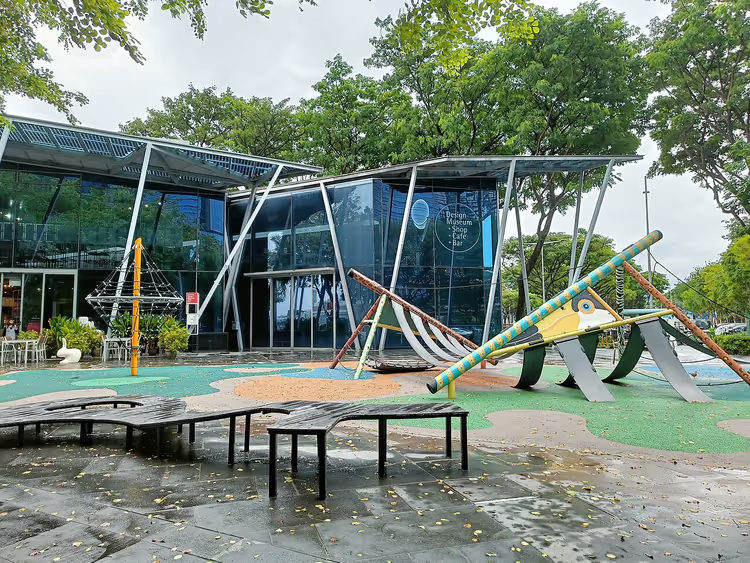
The Red Dot Design Museum grew out of an industrial design award and displays objects that make everyday life more convenient. The award was established in the mid-20th century, and there are only two permanent exhibitions in the world: the other one operates in Germany. The building is painted a deep red, so it's hard to miss. Some exhibits are for sale, so you can buy something you like. Once a month on Fridays, the museum hosts evening designer showcases.
- Cost: admission is paid; evening showcases are sometimes free.
- The catch: the collection is compact, so treat the museum as an add-on to a walk.
9. Naval museum
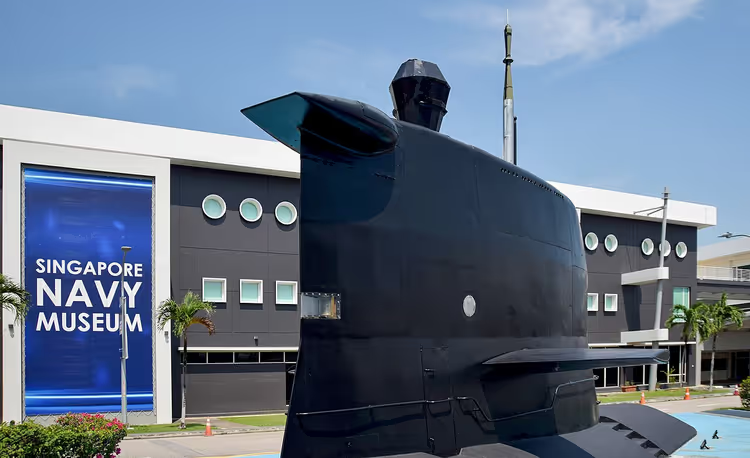 © Photographer: Mosbatho · CC BYPhoto: Photographer: Mosbatho, CC BY (https://creativecommons.org/licenses/by/4.0), Wikimedia Commons
The naval museum stands next to the naval base and tells the story of Singapore's navy. The displays feature ship models, naval weapons, official documents, and personal belongings of sailors and officers. All ship models are built to scale and sit in a pool that simulates the ocean. Full-size cannons are on display in front of the building.
- Cost: free admission.
- Hours: open daily during the day, check the schedule in advance.
- The catch: it is on the outskirts, so it takes longer to get to than the museums downtown.
10. MINT Museum of Toys
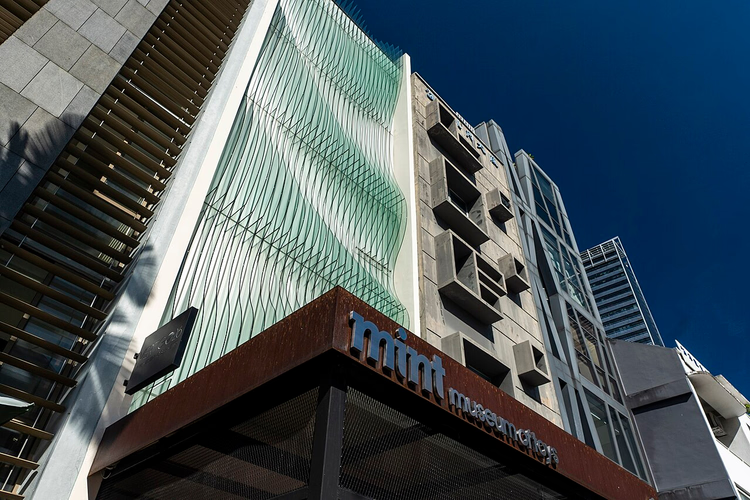
The MINT Museum of Toys showcases a private collection assembled over many years by Chang Yang Fa. The name stands for Moment of Imagination and Nostalgia with Toys. The collector spent his whole life gathering toys and only decided to show them to the public later in life. The displays include rare 19th-century toys, Chinese dolls, mechanical toys from Germany and Japan, cartoon character figurines, and old comics. After your visit, you can relax in the cafe or wine bar, and pick up toy replicas in the gift shop.
- Cost: paid admission, children's tickets are usually cheaper than adult tickets.
- The catch: the collection is private and small, so it appeals mainly to toy enthusiasts.
11. Museum of optical illusions
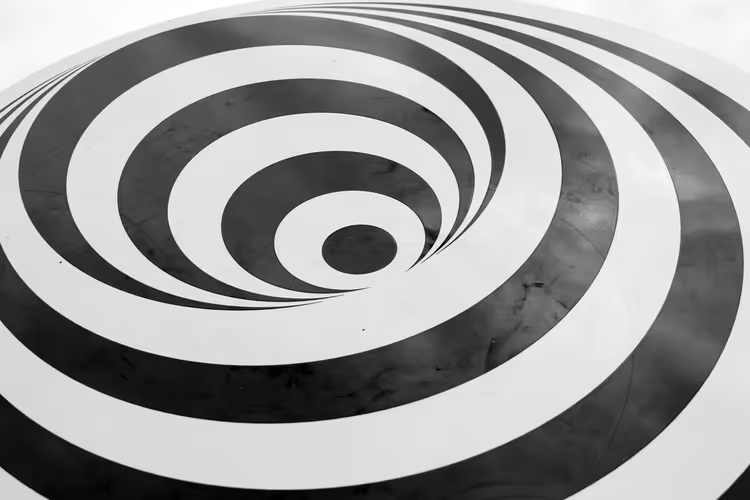
The Museum of Illusions on Sentosa consists of 3D paintings you can touch and photograph. The more unusual your pose, the more interesting the shot, so people come here for photos. The rooms cover different themes: animals, underwater scenes, classic optical illusions. Some exhibits are interactive, which makes the museum appealing to families with children as well as adults looking for unusual photos. Tech enthusiasts will also find the visit interesting.
- Cost: paid admission, online tickets are usually cheaper.
- The catch: it gets crowded on weekends, so arrive at opening time for a good shot.
12. Singapore Philatelic Museum
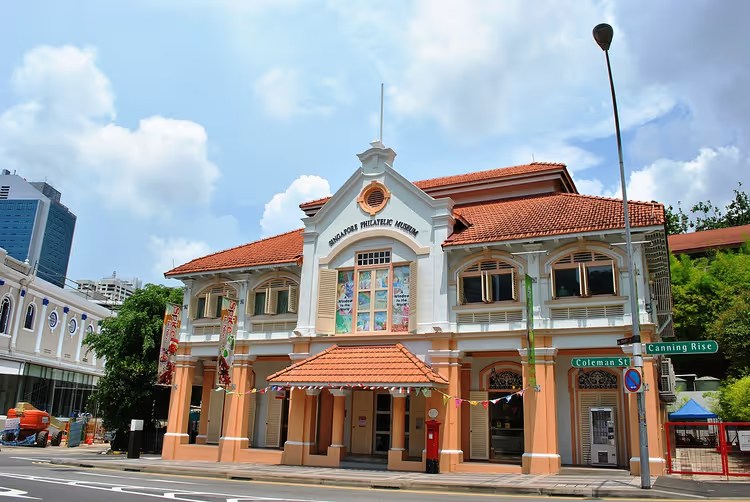 © Elisa.rolle · CC BY-SAPhoto: Elisa.rolle, CC BY-SA (https://creativecommons.org/licenses/by-sa/4.0), Wikimedia Commons
The Singapore Philatelic Museum occupies an early 20th-century building that previously housed a school and later a library. Since 2022, the museum has operated as the Children's Museum Singapore, so check the current exhibition before your visit. The permanent collection is divided into three sections: the British colonial period with stamps from the 19th and first half of the 20th century, the independence era with regular and rare issues, and the modern period. The museum also organizes themed exhibitions and lectures, and private collectors donate their collections to the museum. The museum shop sells souvenirs.
- Cost: paid admission.
- Hours: open almost daily, opens later on Mondays.
- The catch: the subject is niche and appeals mainly to collectors.
13. Baba House Peranakan museum
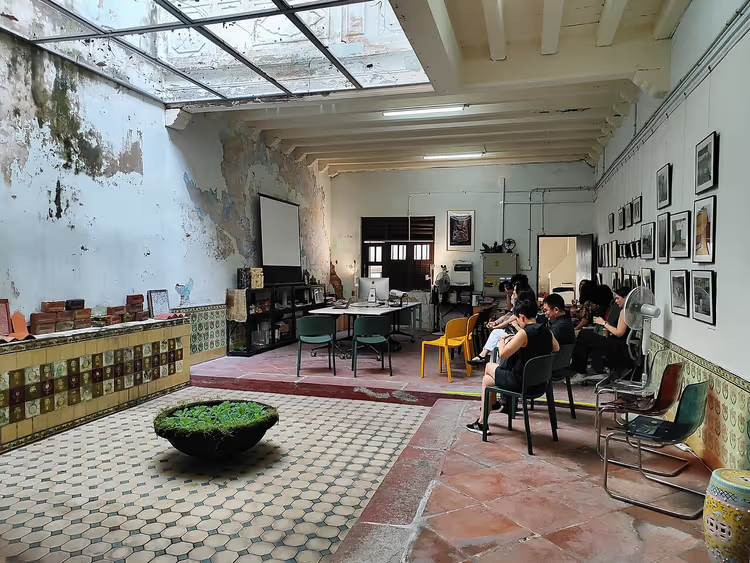 © ZKang123 · CC BY-SAPhoto: ZKang123, CC BY-SA (https://creativecommons.org/licenses/by-sa/4.0), Wikimedia Commons
Baba House preserves the look of a Peranakan family home built almost a century ago. The interiors remain almost unchanged, so you can see how a wealthy family lived: carved furniture, tableware, and family photographs. The last owner donated the house to the state along with its furnishings. Visitors tour all three floors, and visits must be booked in advance.
- Cost: paid admission, advance booking required.
- The catch: you cannot get in without a reservation, there is no walk-in admission.
14. National Gallery
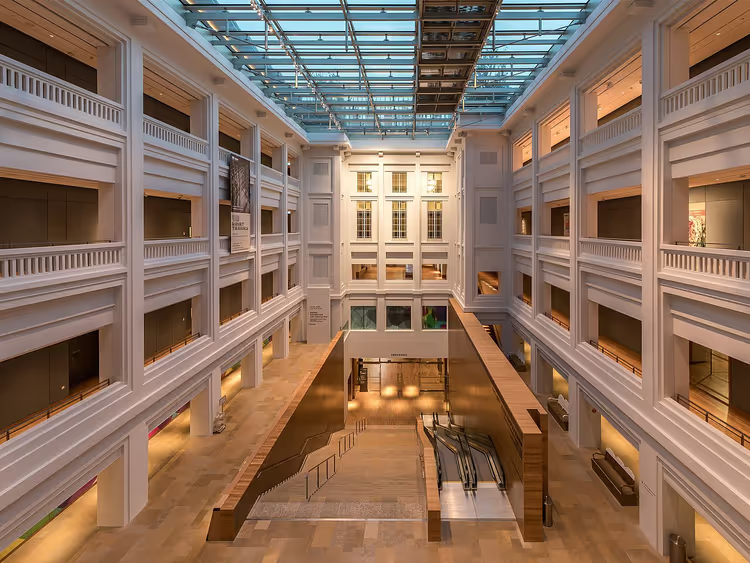 © Basile Morin · CC BY-SAPhoto: Basile Morin, CC BY-SA (https://creativecommons.org/licenses/by-sa/4.0), Wikimedia Commons
National Gallery Singapore occupies two adjacent buildings, the former city hall and the former supreme court. Restoring the two buildings cost the state a substantial sum, but the result is one of the leading collections of Southeast Asian art. The gallery houses works from the 19th and 20th centuries by artists from Singapore and other countries. In addition to the permanent collection, themed exhibitions are held regularly, and the research galleries explore the work of local painters.
- Hours: daily from 10:00 to 19:00 (as of 09/2026, official website).
- Cost: paid admission, with separate terms for Singapore citizens and permanent residents.
If you want to book a timed ticket in advance, check out Singapore museum tickets on Tiqets.
15. Changi Chapel and Museum
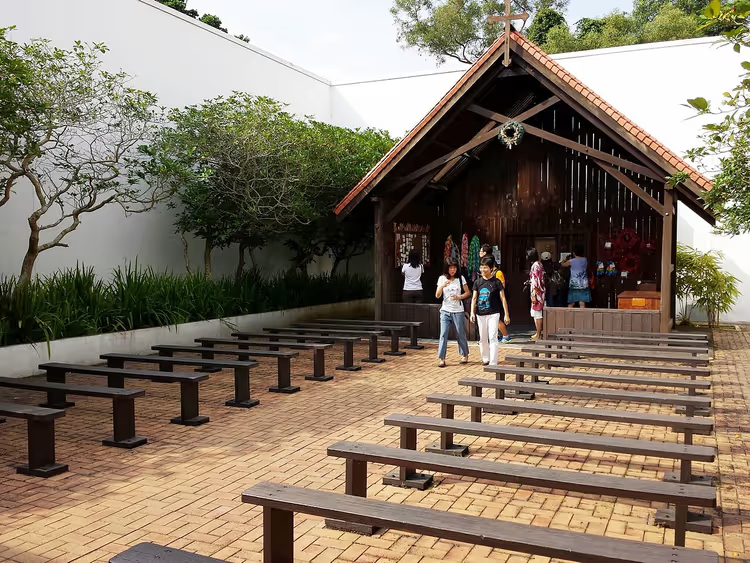 © Paul Ng · CC BY-SAPhoto: Paul Ng, CC BY-SA (https://creativecommons.org/licenses/by-sa/3.0), Wikimedia Commons
Changi Chapel and Museum is one of the country's most somber exhibitions. The museum is located in the east of the city. During World War II, this site housed a Japanese prisoner-of-war camp where thousands of people were held. The museum displays prisoners' personal belongings and tells a little-known chapter of Singapore's history. A small open-air chapel with a crucifix is part of the complex, and admission here is by voluntary donation.
- Hours: open from morning to evening, check exact hours.
- The catch: the subject is heavy, and the exhibition is aimed more at adults.
16. Madame Tussauds wax museum
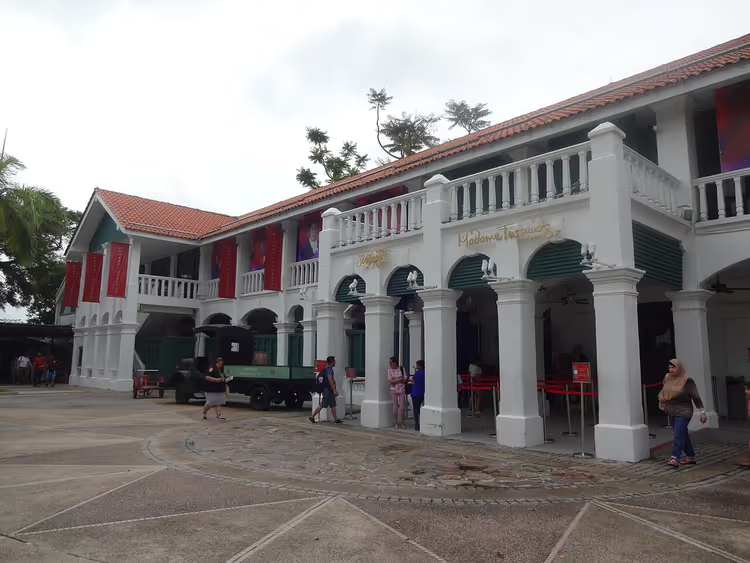 © PatTag2659 · CC BY-SAPhoto: PatTag2659, CC BY-SA (https://creativecommons.org/licenses/by-sa/4.0), Wikimedia Commons
Madame Tussauds Singapore is located on Sentosa and is divided into themed zones: film, sports, music, and Singapore history. In the film section, the figures are enhanced with spotlights and flashes; in the sports section, they hold balls and rackets. You can touch and photograph the figures, including with flash, so the pictures come out almost lifelike. At the end, they show how wax figures are made: it is a realistic spectacle. In the party zone, music plays and lights flash.
- Hours: daily from 10:00 to 18:00, last entry at 17:00 (as of 09/2026, official website).
- Cost: paid ticket, usually cheaper online.
- The catch: the final section on figure making looks too realistic.
If you are going with family, book Madame Tussauds tickets on GetYourGuide in advance.
17. Buddha tooth relic temple and museum
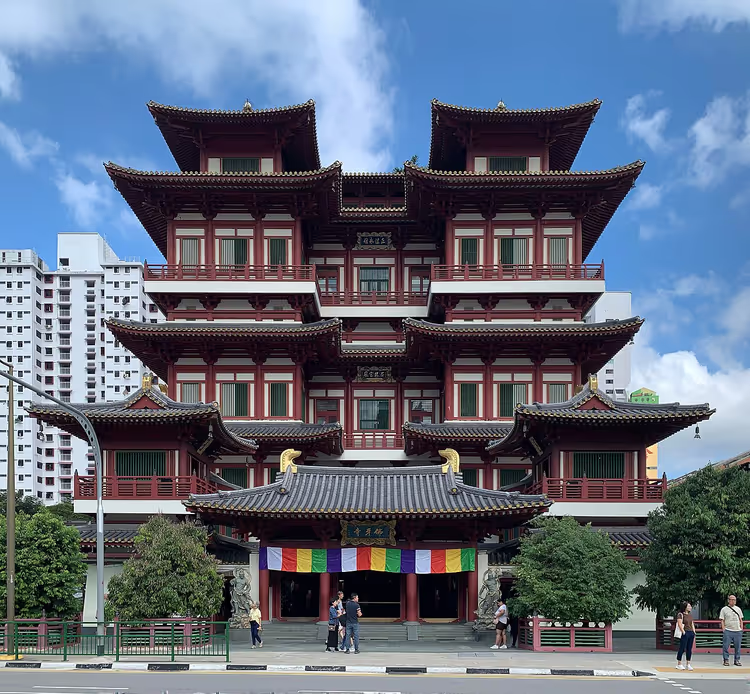 © Chainwit. · CC BYPhoto: Chainwit., CC BY (https://creativecommons.org/licenses/by/4.0), Wikimedia Commons
Buddha Tooth Relic Temple was built in the Tang dynasty tradition for a single relic, a tooth of the Buddha. According to legend, the relic was found in Myanmar when the abbot was restoring a destroyed Buddha statue, and it was later given to the Singapore authorities. The relic itself is kept in a separate hall that only monks may enter. Visitors are shown a golden stupa with precious stones. Inside there are elevators to the upper floors, a cinema, and a vegetarian dining hall, and the interiors are decorated so brightly that your eyes cannot take it all in.
- Hours: from morning to evening, tours are booked in advance.
- Cost: free entry for everyone.
18. Science Centre
Science Centre Singapore was created to showcase scientific achievements in various fields. It has chemistry and physics laboratories, and the observatory is located close to the equator, so stars from both hemispheres are visible. The halls with prehistoric animals are popular: they show how living organisms developed on the planet. Anatomy enthusiasts examine models of human organs, and you can even look inside a model of a stomach. When you get tired, you can sit in a cafe and try local cuisine.
- Hours: daily, during the day.
- Cost: paid ticket.
19. Fort Siloso
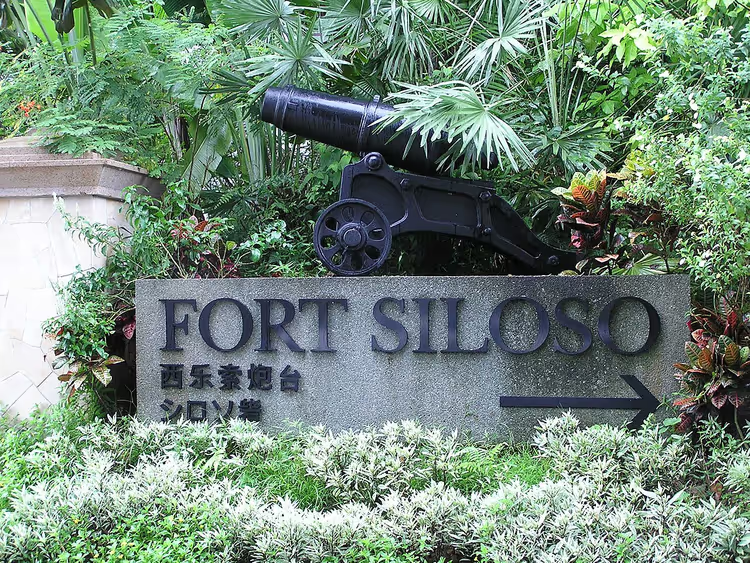 © Masteraah at de.wikipedia. · CC BY-SAPhoto: Masteraah at de.wikipedia., CC BY-SA (https://creativecommons.org/licenses/by-sa/2.0/de/deed.en), Wikimedia Commons
Fort Siloso was built on Sentosa in 1876 as a fortress to protect the island from sea raiders (Sentosa). The garrison controlled Keppel Harbour, and in the early 20th century the fortifications were modernized. In 1942 the fort was surrendered to Japanese forces, and later it housed a military prison for Australians and British. After the war the fortress was returned to Singapore, and in the late 1980s it was turned into an open-air museum where memorial ceremonies for the fallen are held.
- Cost: free entry.
- How to get there: on Sentosa Island, then on foot or by local bus.
20. Singapore history and culture museum
 © Moheen Reeyad · CC BY-SAPhoto: Moheen Reeyad, CC BY-SA (https://creativecommons.org/licenses/by-sa/4.0), Wikimedia Commons
The Singapore History and Culture Museum suits those visiting the city for the first time. The presentation is visual: installations made from ordinary objects, life-size wax figures, and interactive screens. The events are divided into three parts: the first settlers and British colonization, the Japanese occupation, and the traditional festivals of the Indian and Chinese communities. A separate hall is dedicated to cuisine: local dishes are prepared in front of visitors and offered for tasting, so in one visit you get both history and food.
- Hours: daily, during the day.
- Cost: paid ticket.
- The catch: as in most museums, tours are in English.
Singapore museums on the map
Museums of Singapore
Places on the map
- 1Battlebox Underground bunker from 1936 in Fort Canning, the decision to surrender
- 2Intan Museum Private collection on Peranakan culture
- 3ArtScience Museum ArtScience Museum at Marina Bay, lotus-shaped building
- 4National Museum of Singapore The country's oldest museum, national costumes and props
- 5Asian Civilisations Museum Former courthouse building, galleries by Asian regions
- 6Peranakan Museum Peranakan traditions, wedding ceremony, hall on Lee Kuan Yew
- 7Singapore Art Museum Contemporary sculpture, painting, installations
- 8Red Dot Design Museum Industrial design award, some exhibits for sale
- 9Navy Museum History of Singapore's fleet, scale model ships
- 10MINT Museum of Toys Private collection of toys from the 19th century onward
- 11Museum of Optical Illusions 3D pictures on Sentosa, can be touched and photographed
- 12Singapore Philatelic Museum Stamps from three periods of Singapore's history
- 13Baba House Home of a Peranakan family from almost a century ago, visit by appointment
- 14National Gallery Singapore Former city hall and courthouse, Southeast Asian art
- 15Changi Chapel and Museum Japanese wartime prison for POWs
- 16Madame Tussauds Sentosa, cinema, sports and music zones
- 17Buddha Tooth Relic Temple and Museum Working temple with a relic, golden reliquary
- 18Science Centre Singapore Science Centre, chemistry and physics labs
- 19Fort Siloso 1876 fortress on Sentosa, open-air museum
Use the map to group your route by neighborhood: the central museums are close to each other, and the Sentosa museums are all on one island. Open a pin and plan your route for the day so you don't return to the same blocks twice. That way you save travel time and fit more in.
Tours and tickets in Singapore
Guided tours, skip-the-line tickets and activities — most offers can be cancelled free of charge.
See offers on TiqetsThe widget loads once you give your consent.
⁉️🤔 Frequently asked questions
How much does it cost to enter museums in Singapore?
The price depends on the museum and who you are. For foreign visitors, tickets to major museums are paid. The Navy Museum, Fort Siloso, and the Buddha Tooth Relic Temple and Museum are free. The Changi Chapel and Museum has a voluntary donation entry. Before your visit, check the price and time slots on the official website of the museum you choose.
Which day should I pick for museums?
Weekdays are less crowded than weekends. On Mondays some museums are closed or open later, so check the schedule in advance. If you want to take photos without crowds, come at opening time or on late Friday evenings.
Can you see all 20 museums in one day?
No, in one day you can realistically cover two or three museums, and only in one area. Most museums are spread between the Civic District, Marina Bay, and Sentosa, and getting around takes time. Split your visits over several days and group museums by neighborhood.
Where do you need a time slot or advance booking?
Battlebox and Baba House require advance booking, with entry by time slots and groups. For popular museums like the National Museum or the National Gallery, it's also better to buy tickets online. That way you don't stand in line at the ticket office on a weekend.
Is one ticket enough for several museums?
No, each museum has its own ticket. Combos usually apply within a single complex, for example across several ArtScience Museum exhibitions. For separate museums, buy a ticket for each visit.
In short: what's worth booking
Singapore's museums are worth setting aside two or three days for. Split your visits by neighborhood: see history in the center, science at Marina Bay, entertainment on Sentosa. Buy tickets to popular museums and the Battlebox tour online in advance.
If you have | Go with |
|---|---|
One free day | National Museum of Singapore and National Gallery |
A family with kids | Science Centre and Madame Tussauds |
An interest in war history | Battlebox, Changi Chapel, and Fort Siloso |
Museum tickets with a time slot are easier to get in advance: see Singapore museum tickets.

A small editorial team writing guides for independent travel. We travel ourselves, but we haven’t been everywhere, so we check prices, opening hours and how to get there against official sources.