
















Museums in Tallinn: 20 places to go for history and art
Tallinn is compact, and it seems like you could visit all of its museums in a single weekend. In reality, twenty collections are scattered from Kalamaja to Rocca al Mare, and some of them are closed on Mondays.
We've put together a list of Tallinn museums that are worth your time. For each one, you'll find the admission price, closed days, and a short explanation of what sets it apart from the others on the list. We checked prices and opening hours on official websites in September 2026.
Ad: this article contains affiliate links, we earn a commission if you book through them, at no extra cost to you.
Tickets and opening hours: how to save
💡 In short:
- Monday is a closed day at Kumu and the Health Museum. The City Museum is closed on Mondays only from October through April. Plan these visits for Tuesday or later.
- At the Seaplane Harbour, school and university students pay roughly half the adult price.
- Prices and opening hours: 09/2026, verified on the official Tallinn Card website
The city's main museums are part of Tallinn Card: with the card you don't pay for admission to the Seaplane Harbour, Fat Margaret, and most branches of the Art Museum of Estonia (as of 09/2026, Tallinn Card). The card is valid from 24 hours, so three paid museums in a day usually pay for it.
Buy individual tickets online in advance. Ticket offices stop selling 30 minutes before closing, and lines are shorter in the morning. At Vabamu, it makes sense to get a combined ticket: joint admission to the Museum of Occupations and the KGB Prison Cells costs €22, while two separate tickets would cost €25 (as of 09/2026, Vabamu rates).
Keep seasonality in mind. In summer, some museums are open seven days a week; in winter, schedules shrink to Wednesday through Sunday. If you're arriving in October or later, check the museum's website on the day of your visit.
1. Estonian Maritime Museum
 © Photograph by Mike Peel ( www.mikepeel.net ). · CC BY-SAPhoto: Photograph by Mike Peel ( www.mikepeel.net )., CC BY-SA (https://creativecommons.org/licenses/by-sa/4.0), Wikimedia Commons
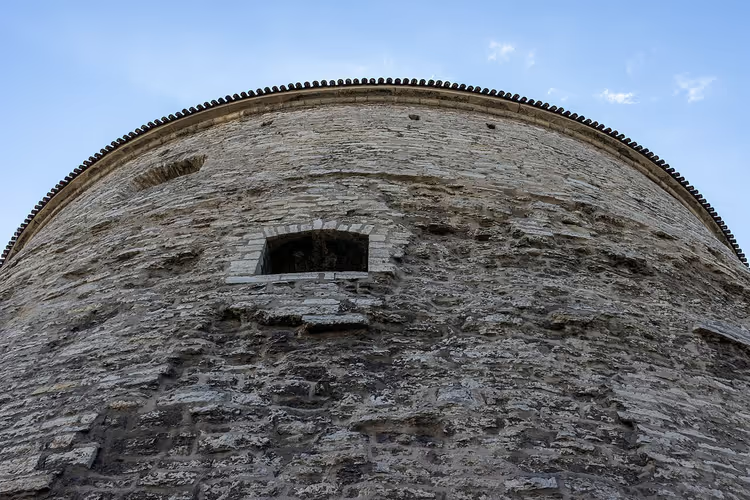
The museum grew out of an initiative by sailors and captains and opened in the mid-1930s. It got its permanent home in the Fat Margaret cannon tower, which is more than five centuries old.
The museum's second site operates in former seaplane hangars in Kalamaja. The "Sea of Interest" exhibition fills the entire hangar: inside you'll see the Lembit submarine, a Short 184 seaplane, naval mines, and a collection of ship cannons.
Next to it stands the century-old icebreaker Suur Tõll, and tours are also offered on its decks. School groups are brought here by the class, and adults should get an audio guide: without explanations, some of the equipment looks the same.
- Cost: €22 for adults and €11 for children aged 9 to 18 (as of 09/2026, meremuuseum.ee).
- Combined ticket: Seaplane Harbour and Fat Margaret together cost €30, children under eight enter free (as of 09/2026, meremuuseum.ee).
- Getting there: Vesilennuki 1, about two kilometers from Town Hall Square, toward the seaport.
- The catch: the audio guide costs extra, €5 (as of 09/2026, meremuuseum.ee).
2. Kumu Art Museum
 © FrDr · CC BY-SAPhoto: FrDr, CC BY-SA (https://creativecommons.org/licenses/by-sa/4.0), Wikimedia Commons
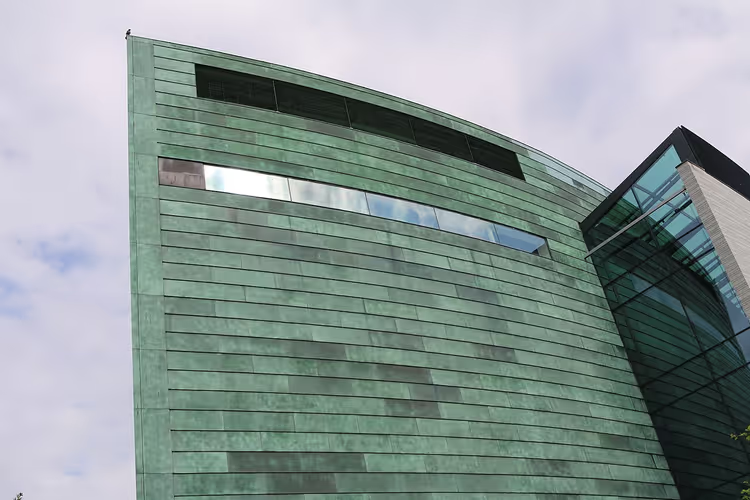
Kumu houses Estonian art from the late 18th century to the present day. The copper-paneled building sits on the edge of a cliff, and many people come just for the architecture itself.
The National Gallery's exhibitions are divided by era and age group: from socialist realism to unofficial art and computer installations. The museum won the European Museum of the Year award, partly because of how it explains complex works.
It's easy to spend three hours here: the permanent exhibition spans several floors, and temporary exhibitions change every season. Come on Thursday evening, when the galleries are already half empty.
- Cost: 16 € for a full ticket and 11 € for a reduced ticket (as of 09/2026, Art Museum of Estonia).
- Hours: Tuesday-Sunday 10:00-18:00, Thursday until 20:00, closed Monday (as of 09/2026, kumu.ekm.ee).
- Address: Weizenbergi 34, in Kadriorg.
- Who it's for: for those who want to understand Estonian art in a single visit.
3. Vabamu museum of occupations and freedom
 © Kenny McFly · CC BY-SAPhoto: Kenny McFly, CC BY-SA (https://creativecommons.org/licenses/by-sa/3.0), Wikimedia Commons
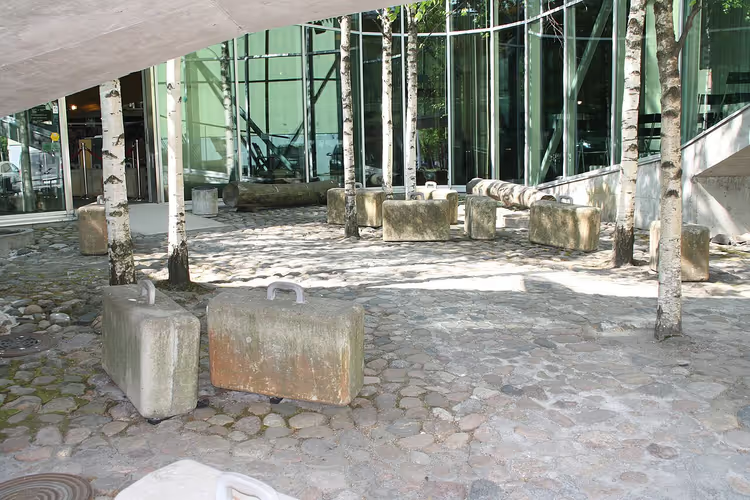
Vabamu tells Estonia's recent history through personal stories: occupations, deportations, resistance, and survival. The permanent exhibition is divided into five parts, from "Soviet Estonia" to "In Exile."
The museum occupies a building in the Old Town. A multilingual audio guide is already included in the ticket, so you don't need to pay extra for it.
The exhibition is built on authentic memories, so you read not dates but people's fates. The same team's second museum, KGB Prison Cells, is nearby and works on the same ticket at a discount.
- Cost: 15 € for a full ticket, 10 € for a reduced ticket, 30 € for a family ticket (as of 09/2026, official Vabamu website).
- Hours: daily 10:00-18:00 from May to September, Wednesday-Sunday 11:00-18:00 in winter.
- Address: Toompea 8b, near Toompea Castle square.
- Not for: families with preschoolers, the subject matter is too heavy.
4. Health Museum
 © Ruutjuur · CC BYPhoto: Ruutjuur, CC BY (https://creativecommons.org/licenses/by/4.0), Wikimedia Commons
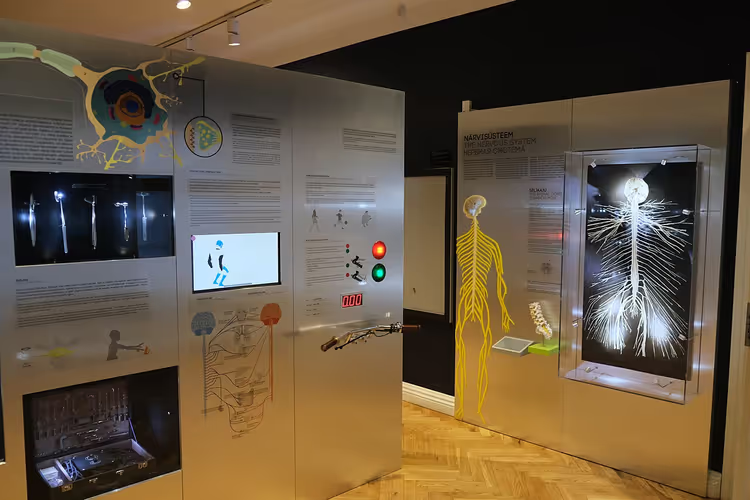
The museum occupies two floors of old houses in the Old Town, and its collection includes more than twenty thousand exhibits. The permanent exhibition "Frankly About Your Body" explains how organs work and why it's worth taking care of your health.
Each organ has its own room with interactive exhibits you can touch. The tour starts with a skeleton: you determine yourself where the heart, liver, and lungs are located.
The entertainment here is educational too: you can test your reaction and see yourself with a different hairstyle on screen. School groups come here for classes, and adults are often surprised by how many myths the exhibition debunks.
Bright displays cover the history of medicine in Estonia, from folk remedies to modern research. If you're going with children, start on the lower floor: it's the easiest place to hold their attention.
- Hours: Tuesday-Sunday 10:00-18:00, closed Monday (as of 09/2026, tervisemuuseum.ee).
- Address: Lai 30, a short walk from Town Hall Square.
- Who it's for: for families with children and for anyone who loves interactive museums.
5. Estonian History Museum
 © Borodun · CC BY-SAPhoto: Borodun, CC BY-SA (https://creativecommons.org/licenses/by-sa/4.0), Wikimedia Commons
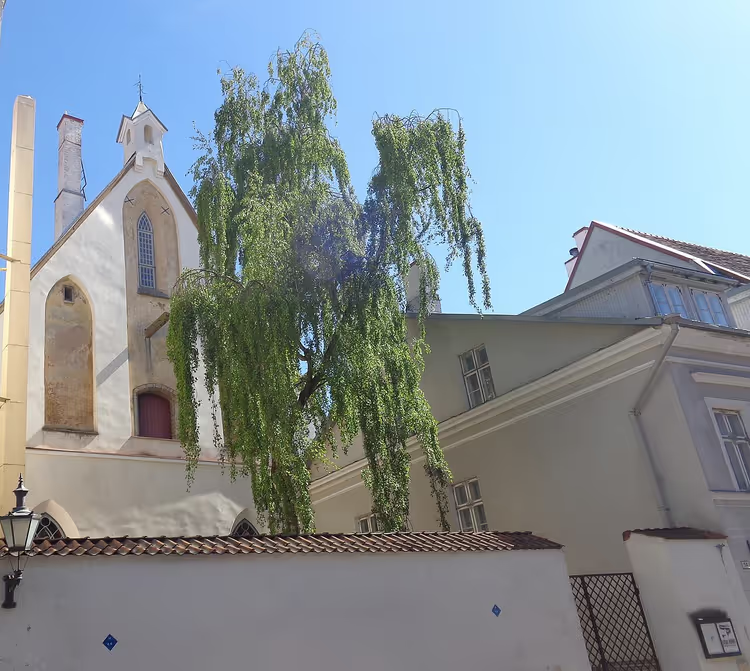
The History Museum presents eleven thousand years of Estonian history in the Great Guild Hall. The collection began with the antiquities assembled by pharmacist Johann Burchardt, who lived in Tartu in the early 19th century.
Interactive screens, quizzes, and films in Estonian and English hold the attention of both children and adults. In the weapons hall you'll see firearms from different eras, and on interactive devices you can assemble your own version of events.
The main exhibitions are called "Spirit of Survival" and "Eleven Thousand Years of Estonian History." Part of the collection has moved to Maarjamäe Palace, where a branch of the museum is open.
- How to find it: the Great Guild Hall in the Old Town, next to Town Hall Square.
- Good to know: an audio guide in six languages is available with a deposit, which is refunded when you return it.
- Who it's for: for schoolchildren and for those who want to see the country's history in two hours.
6. Estonian open air museum
 © SofiRussia · CC BY-SAPhoto: SofiRussia, CC BY-SA (https://creativecommons.org/licenses/by-sa/4.0), Wikimedia Commons
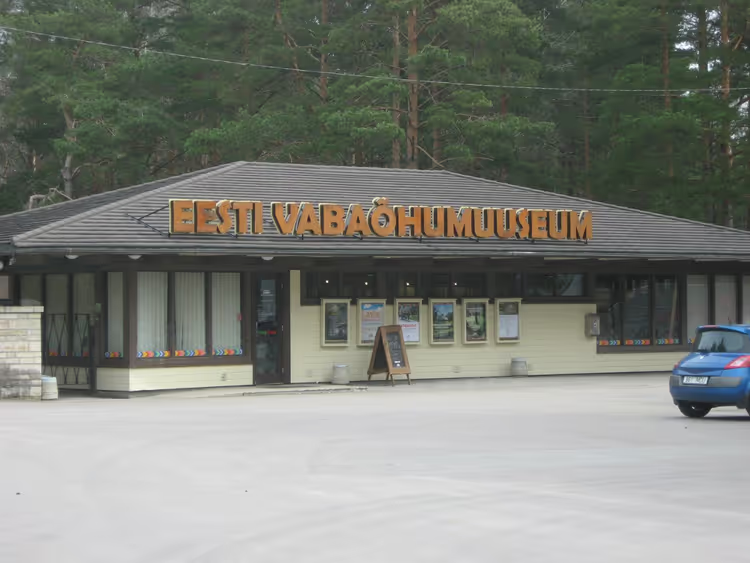
Rocca al Mare brings together dozens of wooden buildings from all over Estonia: fourteen farmsteads, a church, chapels, taverns, windmills, and fishermen's houses. Inside you'll see furniture, household items, tools, jewelry, and clothing from past centuries.
In summer all the houses are open, and staff in national costumes greet you at each one. In winter only the Kuie school and Kolu tavern are open, so it's best to plan your visit for the warm season.
You can get around the grounds by horse-drawn carriage or sleigh. From central Tallinn it's a 15-minute drive (according to Visit Tallinn).
- Tickets: prices depend on the season, a summer ticket costs more than a winter one (as of 09/2026, evm.ee).
- Getting there: bus to the Rocca al Mare stop or by car, about a quarter of an hour from the center.
- Who it's for: families with children, there's plenty of room for a walk and a snack.
7. Marzipan museum
 © cremona daniel · CC BYPhoto: cremona daniel, CC BY (https://creativecommons.org/licenses/by/2.0), Wikimedia Commons
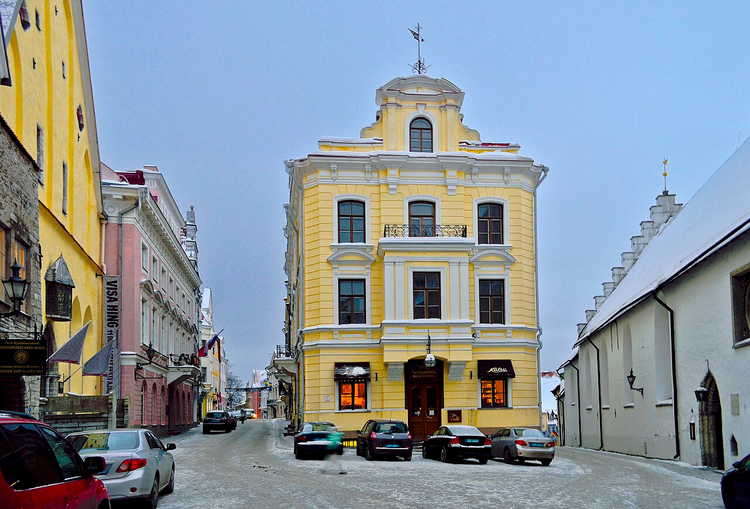
Marzipan in the Baltics began as a pharmacy sweet sold as medicine. The marzipan room at Tallinn's oldest cafe, Maiasmokk, continues that story: here you'll see hand-painted figurines and candy boxes from years past.
The displays feature almost lifelike flowers, animals, three-dimensional portraits, and cakes as tall as a person. At a workshop, you mold a figurine yourself and paint it to your own taste.
- Where: the marzipan room and cafe in the Old Town, Pikk Street (as of 09/2026, Visit Tallinn).
- What to get: a box of figurines as a gift, they don't spoil in transit.
- Who it's for: those strolling through the Old Town who want a coffee break.
8. Nuku doll museum
 © Liilia Moroz · CC BY-SAPhoto: Liilia Moroz, CC BY-SA (https://creativecommons.org/licenses/by-sa/4.0), Wikimedia Commons
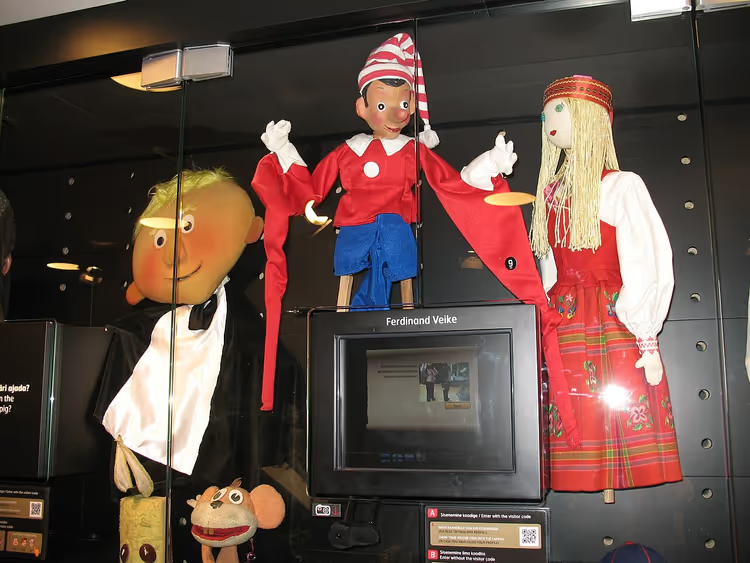
This is not just a collection of dolls from different nations. Here you'll see characters that performed on the stage of the Estonian Puppet Theatre: the oldest doll in the collection is over eighty years old.
The galleries occupy a historic building in the center of the Old Town on Nunne Street, with part of the exhibition extending into the basement. The "Room of Fear" brings together fairy-tale characters that adults enjoy examining too.
Not everyone dares to walk across the glass bridge above the halls. In the workshops, you'll learn to make a finger puppet, a marionette, and a shadow-theater character.
- Where: Nunne Street in the Old Town, a few minutes' walk from the train station.
- Who it's for: families with children aged five and up, and anyone who remembers puppet shows.
- The catch: young children can feel uneasy in the "Room of Fear."
9. Maarjamäe
 © MoonDragon79 · CC BY-SAPhoto: MoonDragon79, CC BY-SA (https://creativecommons.org/licenses/by-sa/4.0), Wikimedia Commons
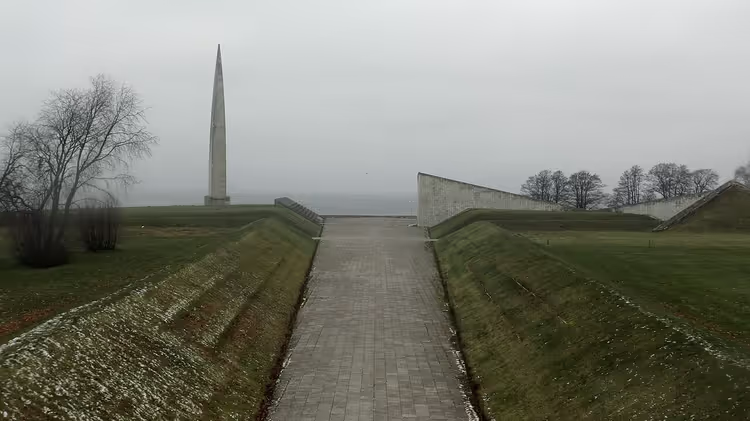
Next to Maarjamäe Castle stands a memorial complex. The Square of Reconciliation commemorates the Ice Campaign, and the Military Cemetery holds German, Soviet, and Estonian soldiers.
The first monument appeared on the hillside in the 1960s: an obelisk thirty-five meters high. Nearby are the sculpture "Eternal Flame" and the bronze and dolomite composition "Dying Seagulls."
The newer part of the ensemble opened in the late 2010s and is called "The Path and the Garden." Two black walls form a corridor with twenty-two thousand names carved into them, and at the end of the tunnel an apple orchard is planted as a symbol of memory of home.
The castle itself houses a branch of the History Museum with an exhibition about the early 20th century. The adjacent park contains monuments to politicians of Estonia's Soviet period.
- Tip: allow time for the park around the castle; the walk from Kadriorg takes about half an hour on foot.
- Who it's for: those interested in 20th-century history.
- Not for: young children, the memorial's subject matter is too heavy.
10. Kadriorg Art Museum
 © Ivo Kruusamägi · CC BY-SAPhoto: Ivo Kruusamägi, CC BY-SA (https://creativecommons.org/licenses/by-sa/3.0), Wikimedia Commons
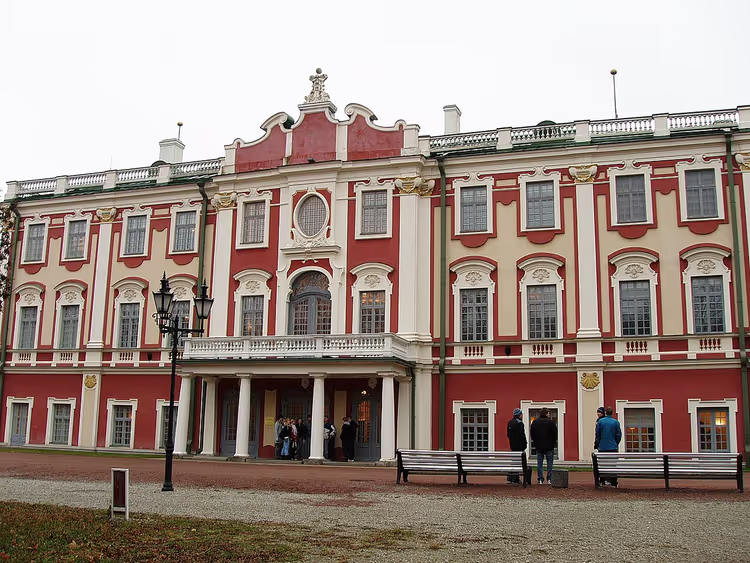
Kadriorg Palace was built for Peter I, and the museum opened here in the late 1920s. After restoration, the halls regained their former splendor, and today they house the country's largest collection of Western European and Russian art.
A separate exhibition is dedicated to the Johannes Mikkel collection: paintings, sculptures, graphic art, porcelain, and applied art objects. Next to the palace lies a park that's pleasant to walk through after the galleries.
From May through September, the museum is also open on Mondays, while from October through April it's closed at the start of the week. Wednesday has become a long day, with the halls open until eight in the evening.
- Hours: Tuesday-Sunday 10:00-18:00, Wednesday until 20:00, Monday open only from May through September (as of 09/2026, Art Museum of Estonia).
- Address: Weizenbergi 37, in Kadriorg.
- Who it's for: those who want to see European painting without queues.
11. Museum of the Bank of Estonia
 © Diego Delso · CC BY-SAPhoto: Diego Delso, CC BY-SA (https://creativecommons.org/licenses/by-sa/3.0), Wikimedia Commons
This is the only place in the country where you can still exchange Estonian kroons for euros. It's also where you can buy commemorative coins and exchange damaged banknotes.
The exhibition explains how money appeared in Estonia and how the central bank works. You'll play interactive games about asset management and learn the signs that distinguish a genuine banknote from a counterfeit.
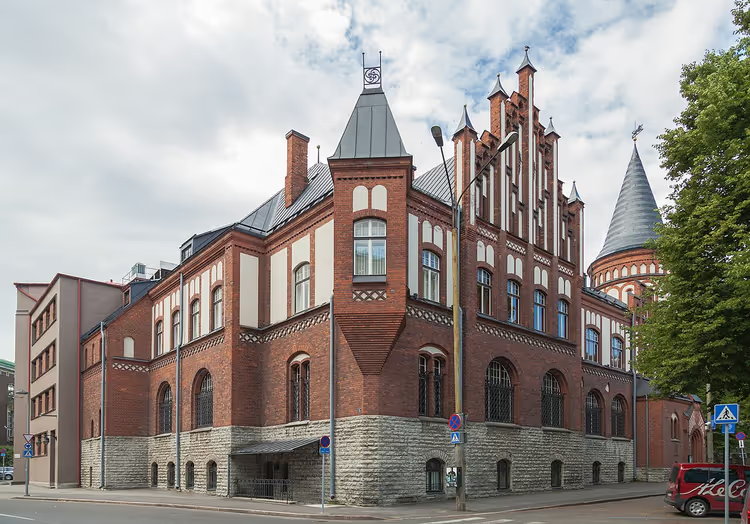
The halls occupy a historic building of the nobility's credit society with a red-brick corner tower. Admission is free with the Tallinn Card, and collectors come here for coins.
- Landmark: the red brick tower in the city center, entrance from the inner courtyard.
- Who it's for: those interested in finance, and numismatists.
- Tip: bring your passport if you plan to exchange old banknotes.
12. Estonian museum of natural history
 © Jüri Lõun · CC BY-SAPhoto: Jüri Lõun, CC BY-SA (https://creativecommons.org/licenses/by-sa/4.0), Wikimedia Commons
The natural history museum stands next to the Fat Margaret tower. You'll find the main entrance with the Loodusmuuseum sign in the inner courtyard, reached through a prominent archway.
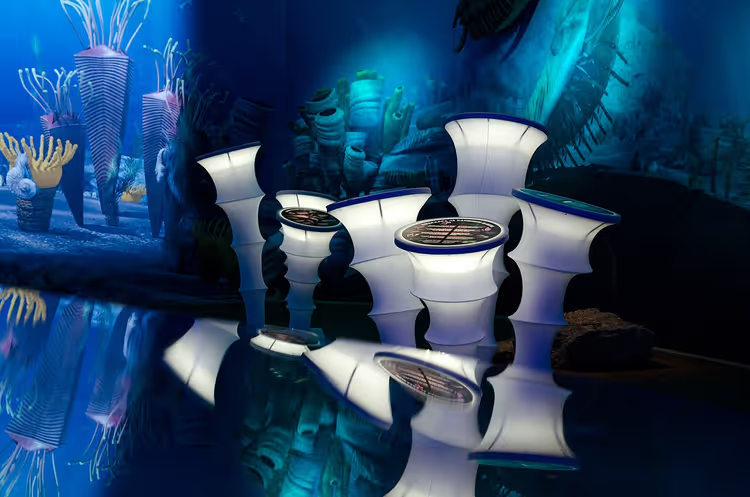
Three floors tell the story of Estonia's geology, landscapes, bogs, and forests. The taxidermy mounts are life-size, so bears, moose, wolves, and foxes look as they do in the forest, not in a display case.
Estonia was one of the first countries to establish tourist routes through bogs, and a separate display is devoted to this topic. Every autumn, a mushroom exhibition takes place here, where schoolchildren learn to tell the death cap from the russula.
- Good to know: the audio guide works in four languages, including Estonian, Finnish, English, and Russian.
- Who it's for: families and those who want to understand the country's nature in one hour.
- Tip: after the museum, walk down to the port; from there you can see the whole harbor.
13. Niguliste Museum
 © Radosław Botev · CC BYPhoto: Radosław Botev, CC BY (https://creativecommons.org/licenses/by/3.0/pl/deed.en), Wikimedia Commons
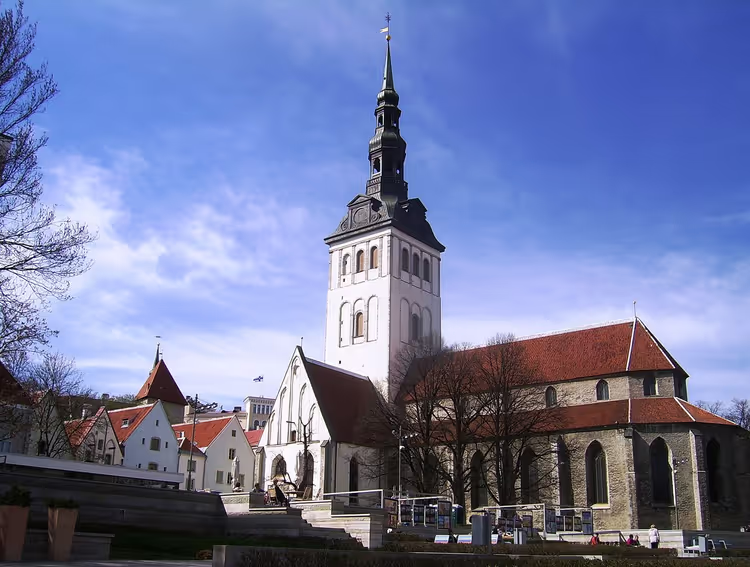
The museum occupies St. Nicholas' Church in the western part of the Old Town. Since the mid-1940s, it has housed church art: old altars, tombstones, and a silver chamber with works by master craftsmen.
The museum's main treasure is a fragment of Bernt Notke's "Dance of Death." A section with thirteen figures survived from the huge painting: a chain of people from the pope to an infant, and dancing figures of Death pulling them along.
The church's acoustics allow concerts to be held here, and music changes the impression of the halls. In 2025, the Art Museum of Estonia welcomed 388,600 visitors, so it's not only tourists who come here (as of Art Museum of Estonia).
- Hours: the schedule changes by season, check it on the museum's website before your visit (as of 09/2026, nigulistemuuseum.ekm.ee).
- Address: Niguliste 3, near Town Hall Square.
- Tip: go up to the tower's observation deck, the elevator there is glass.
14. Estonian museum of contemporary art
 © Ivo Kruusamägi · CC BY-SAPhoto: Ivo Kruusamägi, CC BY-SA (https://creativecommons.org/licenses/by-sa/4.0), Wikimedia Commons
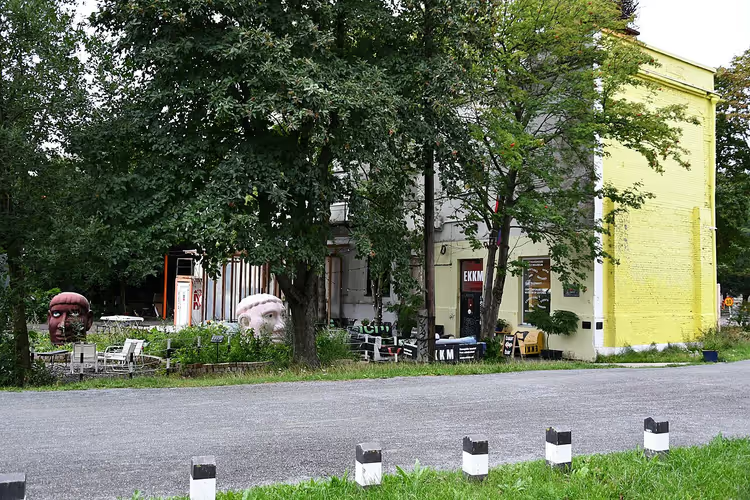
Contemporary art in Estonia often occupies spaces that were not built as museums. One such venue operates in an old boiler house and looks more like an exhibition workshop than halls with labels.
Exhibitions are held here, experimental films are screened, and an art fair takes place. Seminar topics deal with how politics and climate influence art, so the program changes frequently.
There is a cafe next to the halls, and tickets are usually cheaper than at the city's larger museums. If you want to see what Estonian art is doing right now, start here.
- Who it's for: those who have already seen Tallinn's classics.
- Not for: those who expect a museum with historical exhibits and labels for every work.
15. Tallinn City Museum
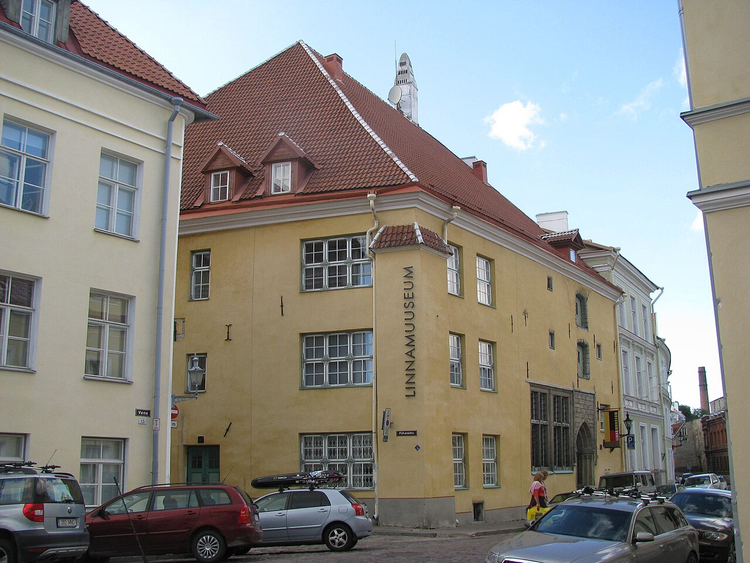
The City Museum shows how Tallinn lived in different centuries. The exhibition occupies a former trading house on Vene Street, and the cellars still contain a salt storage room and old structures.
 © Oop · CC BY-SAPhoto: Oop, CC BY-SA (https://creativecommons.org/licenses/by-sa/3.0), Wikimedia Commons
The collection includes almost 150,000 items, and the permanent exhibition is called "The City That Will Never Be Finished" (as of 09/2026, linnamuuseum.ee). On the upper floors, displays cover wars, occupation, and the restoration of independence.
Since the beginning of last year, the museum was closed for major renovations and reopened at the end of 2025, so the halls look refreshed. The museum oversees ten sites, including children's galleries, city fortifications, and a tunnel with an exhibition of decorative stones.
The museum's online section features 3D tours and old photographs, which you can explore before your trip. The display on the restoration of independence stands separately from the main exhibition.
- Cost: 10 € for a full ticket (as of 09/2026, linnamuuseum.ee).
- Hours: from October to April, closed on Mondays; in summer, the museum is open every day.
- Address: Vene 17, Old Town.
16. Estonian Museum of Architecture
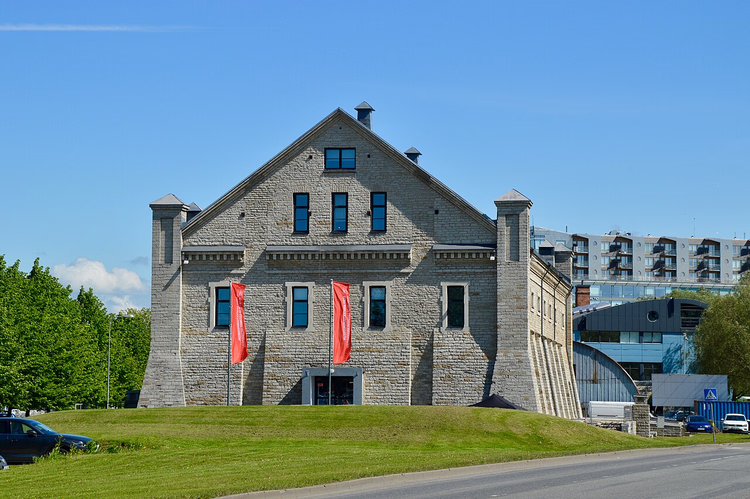
The museum shows how buildings were constructed in Estonia: building models, blueprints, and diagrams of famous structures. Some halls are dedicated to new materials and trends in architecture.
 © VargaA · CC BY-SAPhoto: VargaA, CC BY-SA (https://creativecommons.org/licenses/by-sa/4.0), Wikimedia Commons
The venue operates in a former Rotermann salt warehouse, and the museum began in the medieval Loewenschede Tower. Five years after opening, the exhibition moved to the warehouse, where it remains today.
Art exhibitions are held here regularly, and the halls are designed using modern methods. This is worth visiting if you're interested not in the city's history, but in how it is built.
- Who it's for: those interested in architecture and the urban environment.
- Tip: combine your visit with a walk through the Rotermann Quarter; there are many cafes and shops nearby.
17. Estonian Firefighting Museum
 © Jarmo kauge · CC BY-SAPhoto: Jarmo kauge, CC BY-SA (https://creativecommons.org/licenses/by-sa/3.0/ee/deed.en), Wikimedia Commons
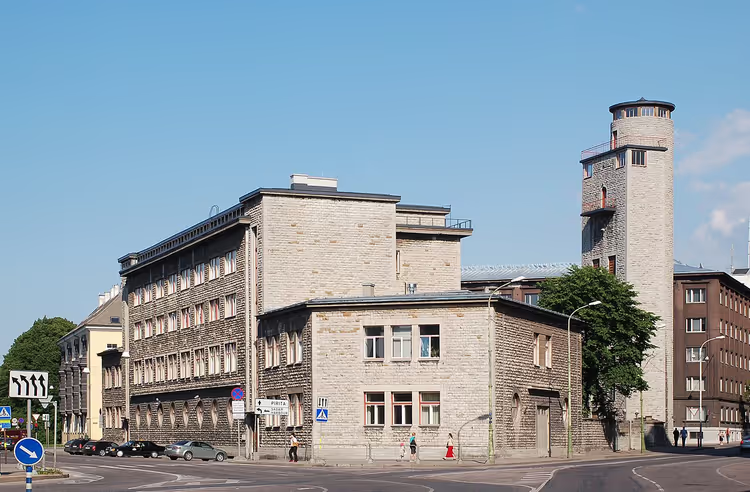
The museum occupies a fire station building designed by architect Herbert Johanson. The thirty-two-meter tower was used for drying fire hoses.
In the halls, you'll see rescue workers' protective suits, a hand pump, and old equipment like buckets and fire hooks. The main exhibit for children is a model of a residential building during a fire: light bulbs show twenty-seven places where fires most often break out.
Children are allowed to sit behind the wheel of a real fire truck, and school tours are offered by appointment. Adults will find the historical equipment and the history of the city's fire service more interesting.
- Who it's for: families with children and anyone who loves machinery.
- Good to know: book the tour in advance, otherwise you may find the halls occupied.
18. Peter the Great House Museum
 © Erko · CC BY-SAPhoto: Erko, CC BY-SA (https://creativecommons.org/licenses/by-sa/4.0), Wikimedia Commons
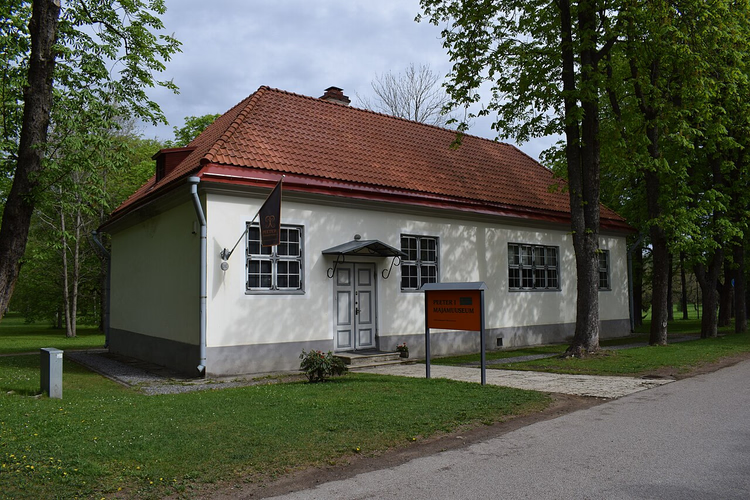
This small house in Kadriorg is tied to the history of the entire local residence. Peter I stayed in Reval eleven times, and in the early 18th century he bought a modest building here to watch ships in the harbor.
The house was later called the "old palace of Peter I." The museum was opened by decree of Alexander I, and it is the oldest Peter I museum in Tallinn.
Inside, you'll see a bedroom, dining room, and living room with furniture and belongings of the royal family. Later, a cellar and attic were added to the house, and today the halls host small events.
- Address: Mäekalda, in Kadriorg, not far from the palace.
- Who it's for: those interested in Peter I and the history of Kadriorg.
- Tip: both Kadriorg museums are close to each other, so it's convenient to plan a visit for one day.
19. Museum of Applied Arts
 © Epp · CC BY-SAPhoto: Epp, CC BY-SA (https://creativecommons.org/licenses/by-sa/3.0), Wikimedia Commons
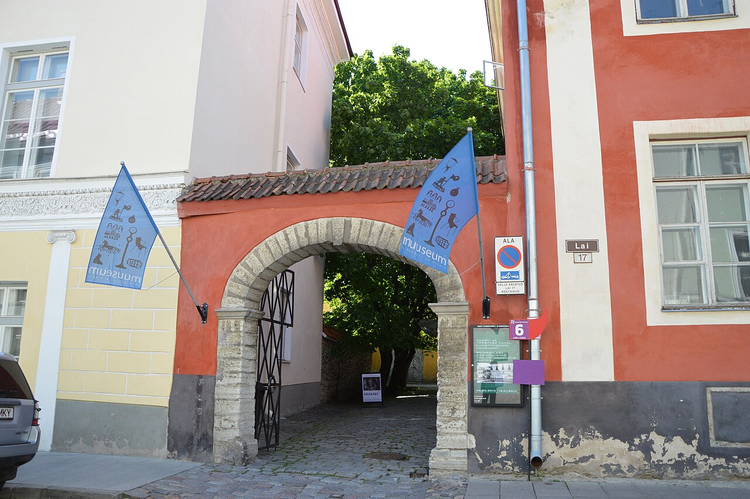
The museum is housed in a former three-story grain warehouse near Town Hall Square. The late 17th-century building was considered one of the largest utility structures in the city.
It holds more than fifteen thousand exhibits: ceramics, glass, metal, jewelry, and old books. Separate collections include photographs, negatives, and slides, and a library operates nearby.
Since the 1980s, the museum has occupied this building and regularly displays applied art from Western Europe of the 18th and 19th centuries. If you're interested in crafts and design, this is the place to start exploring Estonian art.
- Address: Lai Street, near Town Hall Square.
- Who it's for: those who love crafts, jewelry, and old books.
- Tip: combine your visit with the Health Museum, which is on the same street.
20. Kiek in de Kök
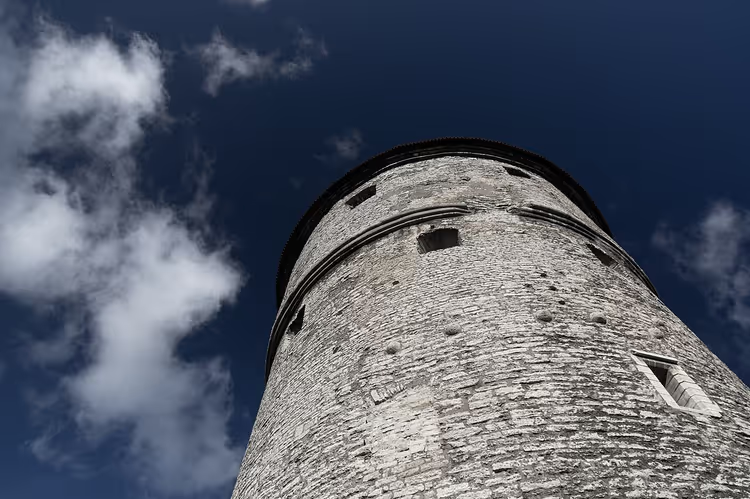 © Bjørn Erik Pedersen · CC BY-SAPhoto: Bjørn Erik Pedersen, CC BY-SA (https://creativecommons.org/licenses/by-sa/4.0), Wikimedia Commons
The tower's name translates from Low German as "peek into the kitchen." It got this name because from its windows you could spy on what was being cooked in neighboring houses.
Today it is a fortification museum: the artillery tower and underground bastions are connected into a single route. Inside, you'll see knights' armor, cannons, real cannonballs, and ovens used to heat cannonballs before firing.
Secret passages are open in the underground tunnels, and guides tell stories about battles fought near the tower. Nearby stand the Gate Tower and the Stable Tower, and the Maiden Tower houses a cafe with views of the Old Town.
The tower route takes about two hours, so wear comfortable shoes: there are many steps, and the tunnels are cool even in summer.
- Getting there: from Town Hall Square, walk up through the Old Town streets; the climb takes about ten minutes.
- Who it's for: those who want to see the underground part of Tallinn.
- Tip: leave time for coffee in the Maiden Tower; from there you can see the rooftops of the Old Town.
⁉️🤔 Frequently asked questions
What is the Tallinn Card and is it worth buying?
It's a city card that gives you free entry to museums and attractions, as well as free rides on public transport. Before buying, check the list of participants; some smaller museums are not included.
Which Tallinn museums are closed on Mondays?
Kumu and the Health Museum are closed on Mondays. The City Museum is closed on Mondays only from October to April. In summer, some of these venues are open: Kadriorg Palace is open on Mondays from May to September. Plan such visits for Tuesday or later, and check the museum's website for opening hours on the day of your trip.
How much does entry to Tallinn museums cost?
Tickets to the city's main museums cost roughly 10 to 22 €, with discounted tickets cheaper (as of 09/2026, Vabamu ticket page, Seaplane Harbour prices).
Where to go with children?
The best options for children are the Health Museum, the Museum of Natural History, the Firefighting Museum, and the Nuku Doll Museum. There, you can touch exhibits, sit behind the wheel of a real fire truck, and walk across a glass bridge. At the Marzipan Museum, sign up for a workshop: children paint figurines themselves.
How much time do you need for Tallinn museums?
In two days, you can visit four or five museums if you don't stretch each visit into a full day. The Old Town is walkable: Vabamu, the Health Museum, and Niguliste are within half an hour's walk of each other. Plan two hours for large museums and leave small ones for the evening.
Tallinn museums on the map
To avoid wandering around the Old Town, open the map: we've marked all twenty museums from the list on it. The points are grouped by district, so you can put together a day's route in a couple of minutes. Start with the Old Town, then head down to Kalamaja and finish in Kadriorg.
Museums of Tallinn
Places on the map
- 1Estonian Maritime Museum Seaplane harbour with the submarine Lembit and icebreaker Suur Tõll
- 2Kumu Art Museum Estonian art from the late 18th century, a building of copper panels
- 3Vabamu Museum of Occupations and Freedom Personal stories of occupation and resistance in the former KGB building
- 4Health Museum Interactive exhibition "Frankly About Your Body"
- 5Estonian History Museum Eleven thousand years of history in the Great Guild Hall
- 6Estonian Open Air Museum Wooden buildings from all over Estonia in Rocca al Mare
- 7Marzipan Museum Marzipan figurines at Tallinn's oldest café, Maiasmokk
- 8Nuku Puppet Museum Puppets of the Estonian Puppet Theatre, the "Room of Fear"
- 9Maarjamäe Memorial complex with an obelisk and a military cemetery
- 10Kadriorg Art Museum Peter the Great's palace, the largest collection of Western European art
- 11Museum of the Bank of Estonia History of Estonian money in a building with a corner tower
- 12Estonian Museum of Natural History Geology, landscapes and life-size taxidermy animals
- 13Niguliste Museum Church art, a fragment of Bernt Notke's "Dance of Death"
- 14Estonian Museum of Contemporary Art Exhibitions and films in an old boiler house
- 15Tallinn City Museum City history in a former merchant house on Vene Street
- 16Estonian Museum of Architecture Building models and drawings in the former Rotermann salt storage
- 17Estonian Fire Fighting Museum Fire station building, a model of a house during a fire
- 18Peter the Great House Museum Modest cottage where Peter the Great stayed in Kadriorg
- 19Museum of Applied Art and Design Ceramics, glass and jewellery in a former grain warehouse
- 20Kiek in de Kök Gun tower and underground bastions, a fortification museum
Before your trip, check whether the museums you picked are open on the day you need: summer hours are longer, winter hours are shorter. The map shows that Kalamaja and the Old Town are about a half-hour walk apart, while Kadriorg is best reached by tram.
Tickets to the most popular museums are easier to get in advance so you don't have to stand in line at the ticket office in the morning: Tallinn museum tickets on Tiqets.
Tours and tickets in Tallinn
Guided tours, skip-the-line tickets and activities — most offers can be cancelled free of charge.
See offers on TiqetsThe widget loads once you give your consent.
In short: what to book
If you're going to Tallinn for a weekend, start with the Seaplane Harbour and Vabamu: these are the city's two strongest museums, and it's best to get tickets for them in advance. After that, choose based on your interests.
- If you have two days: Seaplane Harbour, Kumu, Vabamu, and Niguliste.
- If you're traveling with kids: the Health Museum, the Museum of Natural History, and the Firefighting Museum.
- If you want to save money: get a Tallinn Card.
- If you like quiet: come to Kumu on Thursday after 5 pm, the galleries are almost empty.
Hotels near the Old Town are easy to compare on Trip.com: from there you can walk to half the museums on this list.

A small editorial team writing guides for independent travel. We travel ourselves, but we haven’t been everywhere, so we check prices, opening hours and how to get there against official sources.