

















Souvenirs from Hungary: 20 purchases people bring home from Budapest
Edible souvenirs survive travel better than porcelain. A bottle of pálinka or a bag of paprika will ride fine in your checked luggage, but crystal has to be packed separately.
PICK Szeged has been making winter salami using Márk Pick's unchanged recipe since 1869 (as of 09/2026, brand history on the official website). Besides that, Budapest sells Herend porcelain, thermal water soap, and marzipan from Szentendre. Some purchases arrive intact, others need rigid packaging.
We put together 20 Hungarian gift purchases, organized them by category, and added prices where the manufacturer publishes them. You'll find both lightweight souvenirs and things people keep for decades.
How to choose a souvenir from Hungary
💡 In short:
- Buy edible gifts at grocery stores and the Central Market: paprika, salami, and marzipan will survive in your luggage.
- Buy porcelain, crystal, and soap at brand boutiques, where they also provide rigid packaging for transport.
Hungary lives on exports, so the souvenir market here is straightforward. The state supports old production facilities, and the buyer gets predictable quality: paprika is packaged to a standard, porcelain is hand-painted, wine is aged for years in cellars.
Prices in Budapest vary more than they seem. The same salami set at the Central Market and at a brand store can cost different amounts, so compare two locations before buying. Buy expensive brands only from an official seller: fake porcelain with someone else's painting will show up on tourist streets more often than you'd like.
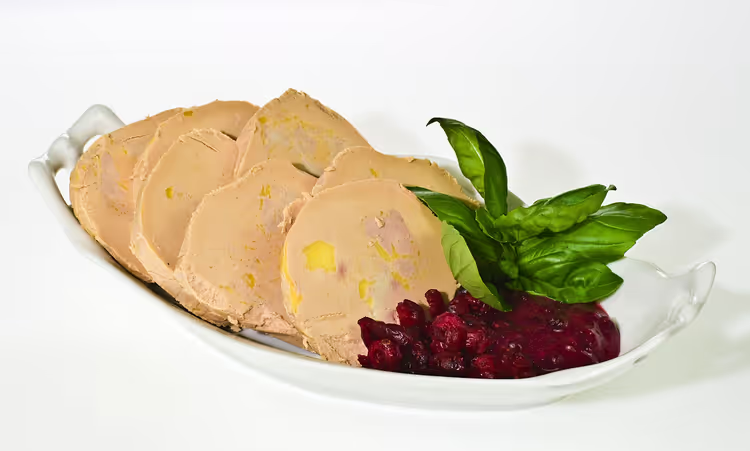
1. Foie gras
 © Nikodem Nijaki · CC BY-SAPhoto: Nikodem Nijaki, CC BY-SA (https://creativecommons.org/licenses/by-sa/3.0), Wikimedia Commons
Foie gras in Hungary is sold not only in restaurants but also in tin cans. This pâté survives travel without refrigeration, so people put it in a suitcase without worry.
The product is made from goose or duck liver. Hungarians adopted the special bird-fattening technique from the ancient Egyptians, and today the requirements for raw materials, packaging, and labeling are set by law. You won't find a spoiled can at the market.
For home, get the version with whole liver pieces. It costs more than pressed mince, but the taste resembles a delicacy rather than supermarket pâté.
Foie gras is served with Tokaji wine, fruit, or onion confit. Hungarians don't shy away from chocolate either. Manufacturers don't publish can prices, so check the price tag on site. The airport has a narrower selection, so buy the can in the city.
- Who it's for: those who like rich meat appetizers.
- Not for: vegetarians.
2. Paprika
 © Christine Zenino from Chicago, US · CC BYPhoto: Christine Zenino from Chicago, US, CC BY (https://creativecommons.org/licenses/by/2.0), Wikimedia Commons
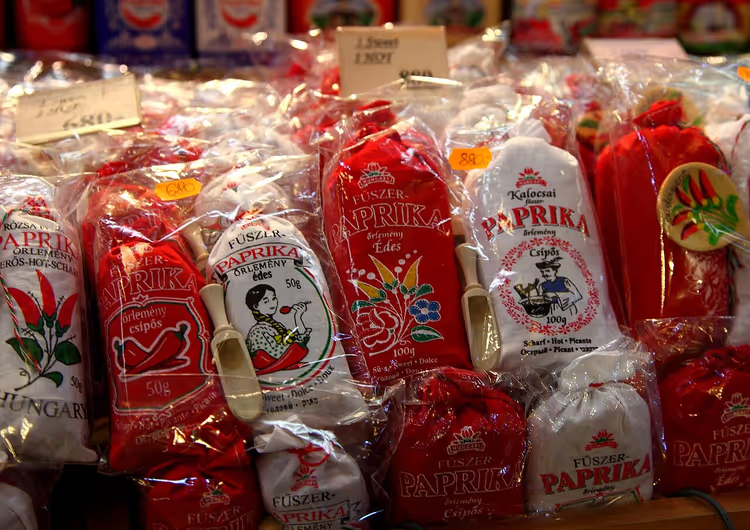
For a Hungarian, paprika is not a spice but part of the cuisine. Ground pepper here is sorted by heat level, and the store shelf holds not one jar but several.
You can tell the heat levels apart by the name on the package. Édesnemes gives a sweet taste with a slight kick, Rózsa adds a fruity aroma, Különleges is considered a delicate variety, and Erős hits the tongue without warning. The rule is simple: the paler the powder, the hotter the pepper.
Hungarians don't just dry paprika. They smoke it and pickle it, producing paprika savanyúság, a side dish for dinner. For a gift, get a tin or a linen pouch with an ornament, they'll arrive without losses. A bag of powder tears more often in transit, and the pepper gets all over everything.
- Who it's for: those who cook goulash and paprikash at home.
- The catch: hot varieties won't suit children or those with a sensitive stomach.
3. Tihany cheese
Tihany competes with French soft cheeses and costs less. The Hungarian version is made from natural milk without colorants, so the taste is clean, milky, with a slight sharpness.
 © Dennis G. Jarvis · CC BY-SAPhoto: Dennis G. Jarvis, CC BY-SA (https://creativecommons.org/licenses/by-sa/2.0), Wikimedia Commons
The manufacturer flavors many varieties with local herbs. You'll find options with onion, garlic, and greens, and each one is served with white wine.
The cheese got its name from the Tihany Peninsula on Lake Balaton. The abbey stands there, along with a monument to King Andrew I and his wife Anastasia, daughter of Yaroslav the Wise. The peninsula is known for the echo heard near the walls of the old church. Local gourmets compare the cheese's aftertaste to it.
- Who it's for: lovers of soft cheeses with white mold.
- The catch: the product is perishable, you can only transport it cold.
4. Pick salami
 © mararie · CC BY-SAPhoto: mararie, CC BY-SA (https://creativecommons.org/licenses/by-sa/2.0), Wikimedia Commons
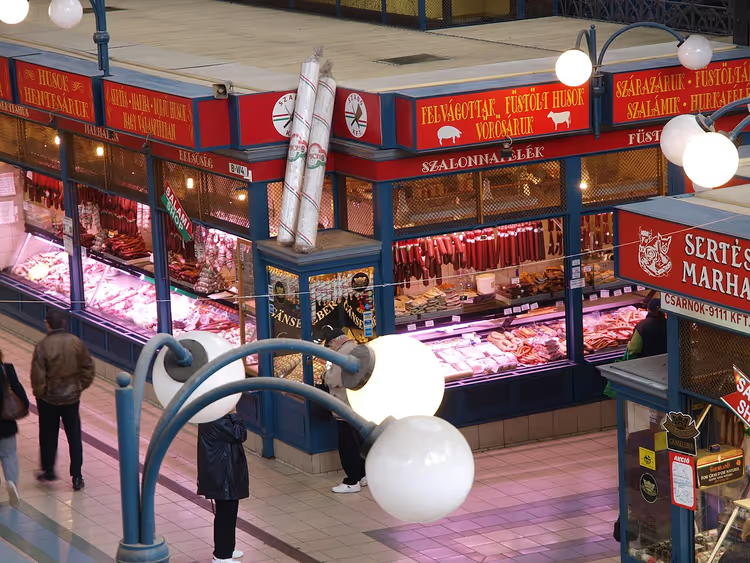
PICK Szeged winter salami has been produced for over 155 years (as of 09/2026, PICK Szeged). The brand was founded by butcher Márk Pick: he took out a loan, invited Italian masters, and built a large meat plant in Szeged. The bet on local raw materials paid off, and the recipe hasn't changed since.
Real winter salami differs from cheap sausages with the same name. The base here is lean pork, fat, and hot pepper. After smoking, the loaves mature in cellars for several months and develop a noble white mold.
You'll bring it home without problems: the product doesn't spoil even in summer heat. Hungarians keep the spices secret, and the authenticity of the loaf is confirmed by a medallion on the casing. Check it before buying at a tourist shop.
- Who it's for: those bringing meat appetizers to pair with wine.
- The catch: smoked sausage smells, keep it in a separate bag.
5. Marzipan
 © MOs810 · CC BY-SAPhoto: MOs810, CC BY-SA (https://creativecommons.org/licenses/by-sa/4.0), Wikimedia Commons
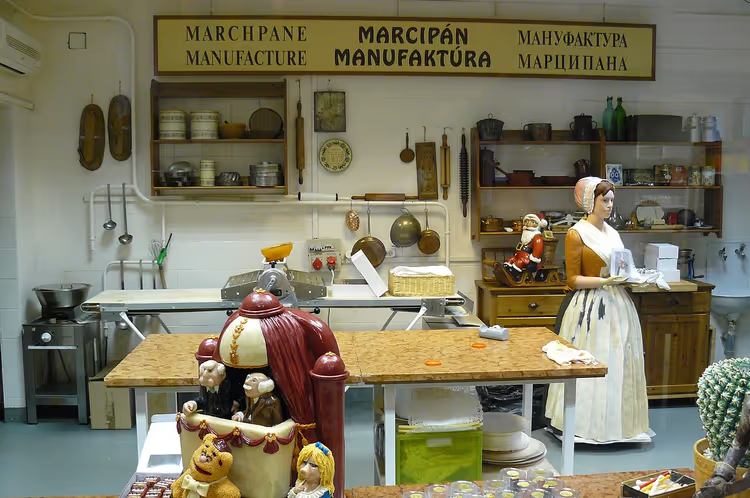
Marzipan in Hungary is sold both as a souvenir and as a treat for children. Szamos and the Karoly Szabo marzipan museum in Szentendre belong to different brands. Szamos confectioneries and shops operate in Budapest, and the factory also produces chocolate.
If you go to Szentendre, a small town in the suburbs of Budapest, you can visit the marzipan museum (as of 09/2026, Szentendre tourism website). The display figures there are made from sweet marzipan paste and chocolate: fairy-tale characters, politicians, celebrities, and even Cinderella's carriage.
The production process is a separate attraction. Only glass separates the craftspeople from visitors, so you can see the entire shaping process with your own eyes. The brand shop at the exit sells marzipan paste, so you can make the same figures at home.
- Who it's for: children and anyone bringing gifts to colleagues.
- The catch: marzipan doesn't handle heat well, so bring a cooling pack if you're traveling in July.
6. ChocoMe chocolate
 © Globetrotter19 · CC BY-SAPhoto: Globetrotter19, CC BY-SA (https://creativecommons.org/licenses/by-sa/3.0), Wikimedia Commons
ChocoMe makes handmade chocolate in small batches. The brand is young, but its bars are already sold in Switzerland and Monaco, where it's hard to impress anyone with sweets.
The brand was founded by Gabor Meszaros, an economist by training. He changed careers and put together a team of chocolatiers who take each bar from mixing the ingredients to packaging. The fillings include nuts, flowers, berries, grains, and gold flakes, so every batch has its own flavor.
Choosing just one bar will be difficult. If you're buying a gift, look at the combined toppings: coarse sea salt next to nuts and flower petals works best. Buy the original at brand shops in Budapest; the risk of counterfeits is higher at markets.
- Who it's for: anyone looking for an unusual sweet gift.
- The catch: the bars are fragile, so it's best to keep them in a box in your suitcase.
7. Esterhazy torte
 © Magellan · CC BY-SAPhoto: Magellan, CC BY-SA (https://creativecommons.org/licenses/by-sa/3.0), Wikimedia Commons
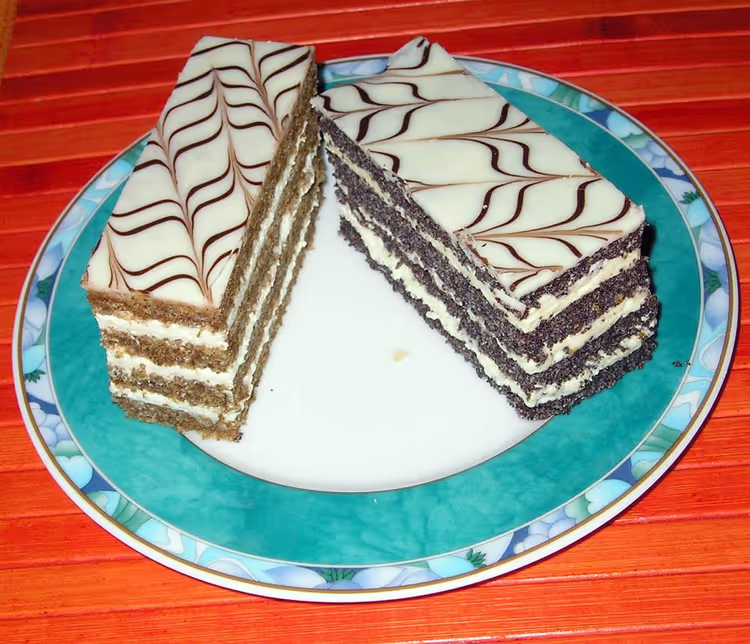
The Esterhazy torte was invented in the Austro-Hungarian era and named after a prince from an ancient family. The prince served in the army, was involved in politics, and was known for his love of food, so the name on the cake seems fitting.
You'll recognize the classic version by its appearance. Meringue layers are joined with buttercream flavored with cognac, topped with sugar glaze and a chocolate lattice pattern.
There are many recipes, but a proper torte is made only from natural ingredients. In Budapest it's served in old confectioneries, and a boxed torte is sold as a gift. This souvenir travels worse than chocolates, so buy it on the last day of your trip.
- Who it's for: anyone who loves nut desserts.
- The catch: a cream-filled torte can't be transported in warm luggage.
8. Zwack Unicum liqueur
 © Christine Zenino from Chicago, US · CC BYPhoto: Christine Zenino from Chicago, US, CC BY (https://creativecommons.org/licenses/by/2.0), Wikimedia Commons
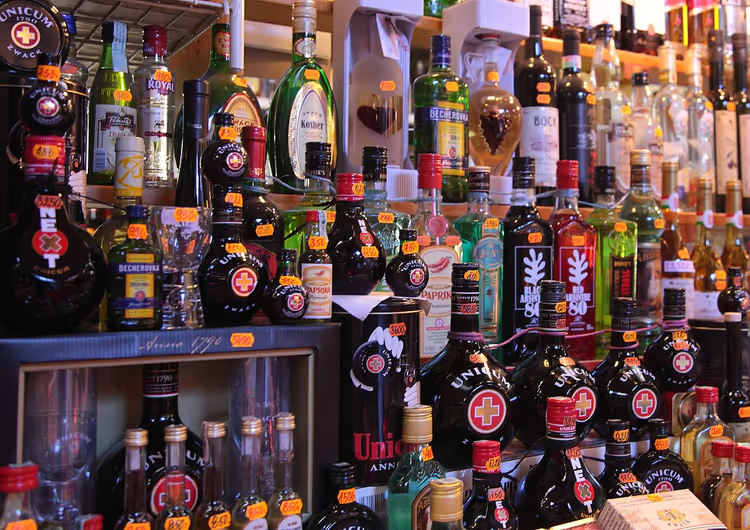
Unicum has been made for more than two centuries using a recipe with several dozen herbs (as of 09/2026, Zwack Unicum). The drink was created by the court physician of the Austrian emperor, and for a long time the bitter liqueur was consumed only within the Habsburg family.
Today the brand produces several versions of the drink, including plum and orange variants. All of them have a bitter, herbal taste, and in Hungary the liqueur is traditionally served after a heavy dinner. People may tell you German Jägermeister is a relative, but it is a different drink, even though both are built on herbs.
Genuine Unicum is bottled in a spherical bottle: the thick glass protects the liqueur from light. You can put such a bottle on a shelf as a souvenir.
Budapest is home to the Unicum Ház museum, where you can see the old distillery and taste the drink. An adult ticket costs 4,200 forints (as of 09/2026, official Unicum House website). The tasting tour takes about an hour, and it is best to book in advance.
- Who it's for: those who drink bitter herbal liqueurs.
- Not for: those who dislike bitterness in drinks.
9. Pálinka
 © T.MESE · CC BY-SAPhoto: T.MESE, CC BY-SA (https://creativecommons.org/licenses/by-sa/4.0), Wikimedia Commons
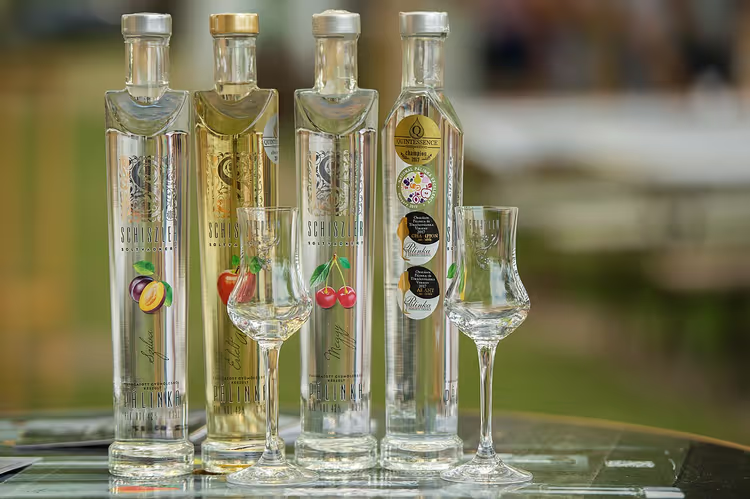
Hungarians call pálinka the national drink. Formally it belongs to the fruit brandy category, and comparing it to vodka offends locals: the taste depends on the raw material, and each region has its own.
Apricot pálinka is the most popular. There are also versions made from grape pomace, pear, plum, and cherry, and the drink's strength is regulated by law, so the alcohol content on the bottle is always roughly the same.
Neighboring countries also make fruit distillates, but Hungarians are convinced their pálinka tastes different. Under the Habsburgs the drink was served at court, and today a bottle is placed on the holiday table next to wine.
After distillation, pálinka is aged in wood for several months. For a gift, choose a bottle with a local label: the bottle shapes vary widely, from classic to whimsical, and Hungarians consider the bottle part of the souvenir.
- Who it's for: those who drink spirits and appreciate fruit flavor.
- The catch: the drink is strong, so it is not suitable for children or drivers.
10. Törley sparkling wine
Törley is one of the leading sparkling wine producers in Hungary (as of 09/2026, official Törley website). The company was founded by József Törley, a member of an old Austrian family who chose winemaking over a military career. He registered his business in 1882 (as of 09/2026, company page).
 © I would appreciate being notified if you use my work outside Wikimedia. More of my work can be found in my personal gall · CC BYPhoto: I would appreciate being notified if you use my work outside Wikimedia. More of my work can be found in my personal gall, CC BY (https://creativecommons.org/licenses/by/3.0), Wikimedia Commons
He adopted the French champagne production method but added his own techniques. The wines are aged in the cellars of Budafok, a district of Budapest, and blended from different grape varieties. The winery produces sparkling wine using two methods: secondary fermentation in the bottle and in large tanks.
You can buy a bottle in a regular grocery store, and the winery has a visitor center with tastings. For a gift, choose a dry sparkling wine in a box, as it travels better than a dessert wine.
- Who it's for: those bringing alcohol as a gift.
- The catch: the bottle can only be transported in checked baggage.
11. Tokaji wines
 © Michal Osmenda · CC BY-SAPhoto: Michal Osmenda, CC BY-SA (https://creativecommons.org/licenses/by-sa/2.0), Wikimedia Commons
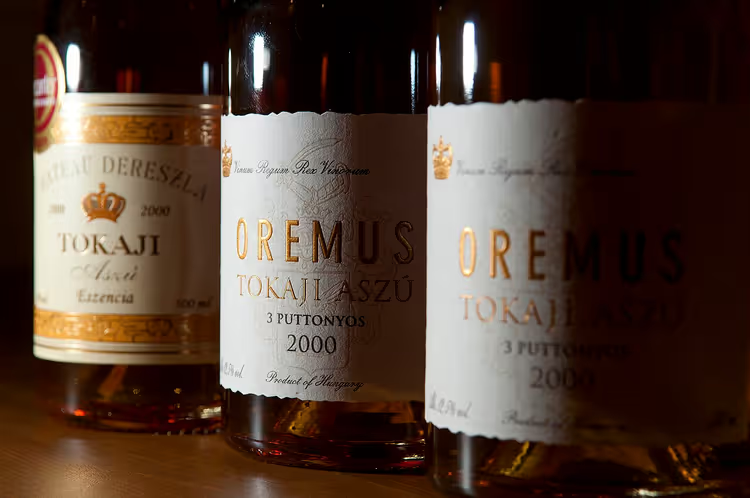
Tokaji wines are made only as white wines; there are no reds among them. The name comes from the Tokaj region in northeastern Hungary, where vineyards cover the slopes of volcanic hills.
The law allows producers to use several grape varieties, but most of the wine is made from Furmint. Tokaji also comes in several types: Szamorodni is made from whole clusters, which gives the wine a dense character, while Száraz Tokaji is left dry. For sweet Aszú, the berries are picked one by one, and only those with noble rot may be used.
The wine's sweetness is indicated on the label by the number of puttonyos, wooden measures for grapes. The more puttonyos listed on the label, the sweeter the wine. For a gift, choose a sweet Aszú in a small bottle and pack it in checked baggage.
- Who it's for: those who love dessert wines.
- Not for: those who prefer dry drinks.
12. Zsolnay and Herend porcelain
 © Szeder László · CC BY-SAPhoto: Szeder László, CC BY-SA (https://creativecommons.org/licenses/by-sa/4.0), Wikimedia Commons
Hungarian handmade porcelain appeared in the first half of the 19th century. At first, craftsmen copied European designs, and later they began making tableware for royal houses and collectors.
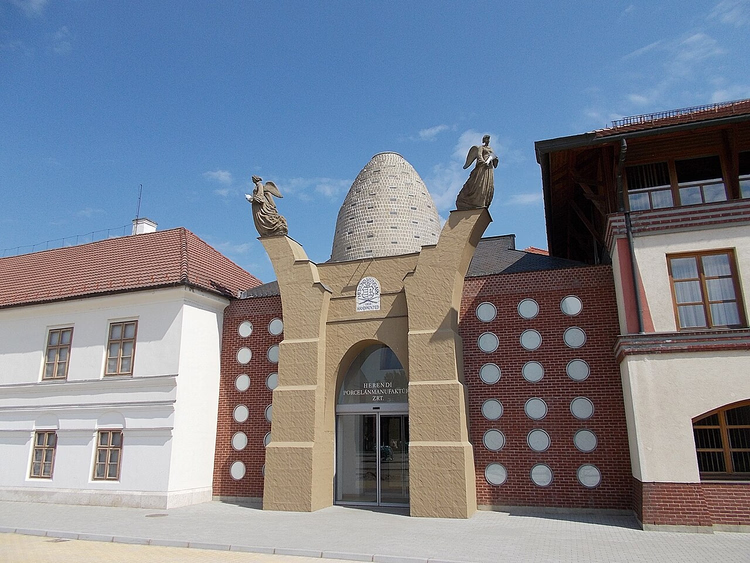
The Zsolnay manufactory has operated in Pécs since the Austro-Hungarian era. Its craftsmen do not limit themselves to tableware: you will find vases, figurines, and interior accessories. Another brand, Herend, stays true to tradition and is recognized for its tableware with butterflies, flowers, birds, and gilding. Its pieces are bought by politicians and collectors, and are recognized even in Asia, where Japanese porcelain is considered the benchmark.
If you go to the village of Herend, you'll find a porcelain manufactory with a museum and visitor center (as of 09/2026, Herend Porcelain). They show how artists paint cups and sell pieces firsthand.
- Who it's for: a gift for parents and for collectors.
- The catch: porcelain breaks, so you need to carry it in hand luggage with rigid packaging.
13. Ajka Crystal
Ajka Crystal is made by hand, so you're unlikely to find two identical vases. Craftsmen work with clear and colored molten glass, and the pattern is cut into each piece without a template.
Processing techniques have become more precise over recent decades, but the principle remains the same. The brand's pieces stand in royal palaces and collectors' villas, yet a glass or decanter also fits a home table.
- Who it's for: those looking for a gift for a collector.
- The catch: a heavy and fragile souvenir, you need a rigid box for air travel.
14. Miska kancsó ceramic jugs
 © tuskestibor · CC BYPhoto: tuskestibor, CC BY (https://creativecommons.org/licenses/by/3.0), Wikimedia Commons
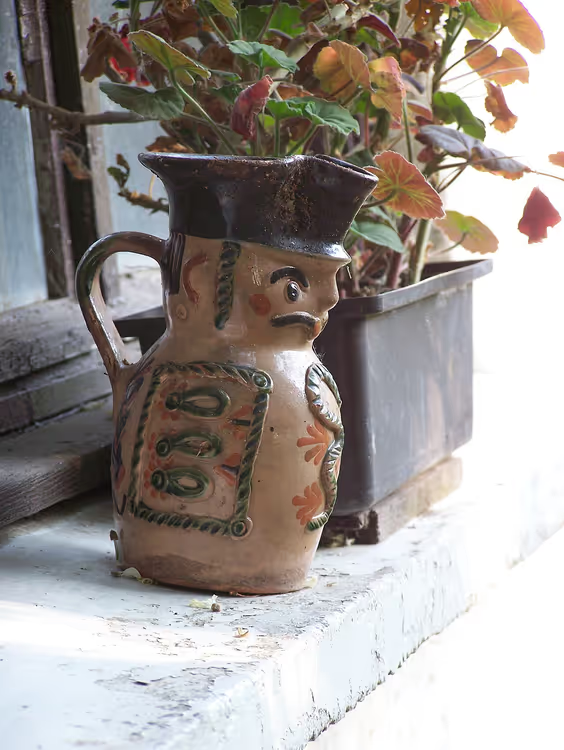
Miska kancsó jugs are recognizable by their shape: a clay figure of a shepherd or hussar with a lid. Inside there's a cavity for wine, and some models also have a small opening for notes.
The pieces are molded by hand and painted with proverbs or folk sayings. A snake is often painted on the jug. The hint is clear to locals: wine from such a vessel is good for you, but only in moderation.
In Hungary, these jugs are bought for family events: christenings, weddings, the birth of a child. For a tourist, it's a practical souvenir you can put on a table or give as a gift with a note inside.
- Who it's for: those who love ceramics and folk crafts.
15. Rubik's Cube
 © 多多123 · CC BYPhoto: 多多123, CC BY (https://creativecommons.org/licenses/by/4.0), Wikimedia Commons
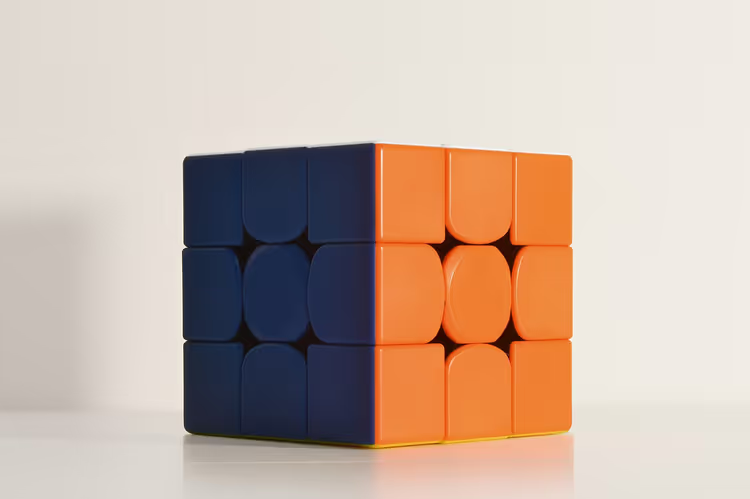
The Rubik's Cube was invented in Budapest by architect Ernő Rubik. The puzzle appeared in 1974, when the teacher was looking for a way to explain three-dimensional planning to students (as of 09/2026, official Rubik's Cube history).
The first version was made of wooden cubes with multicolored faces. The internal mechanism came later, and after the patent, the teaching aid turned into a toy. The cube became the world's best-selling puzzle, and millions of units are still sold today.
In Budapest you'll find versions of all sizes, from compact to large, as well as keychains and desktop versions. The original stands out for its smooth face movement; a cheap copy jams after a few turns.
- Who it's for: children and adults who love puzzles.
- The catch: cheap copies loosen up quickly.
16. Marbushka board games
Marbushka board games are made from eco-friendly materials and meet European requirements for children's toys. The brand was created by Beatrix Bohonyi and László Zöld, and their daughter inspired the ideas for the first sets.
The games are designed for the family: there are few rules, so both children and adults end up at the table. Through cards, a child gets to know professions, holidays, animals, and machines, while logic and imagination work on their own.
The box is easy to take on a trip or give to a family with children. Compact sets weigh little, so they take up almost no space in a suitcase.
- Who it's for: families with children.
17. Viktoria Minya perfumes
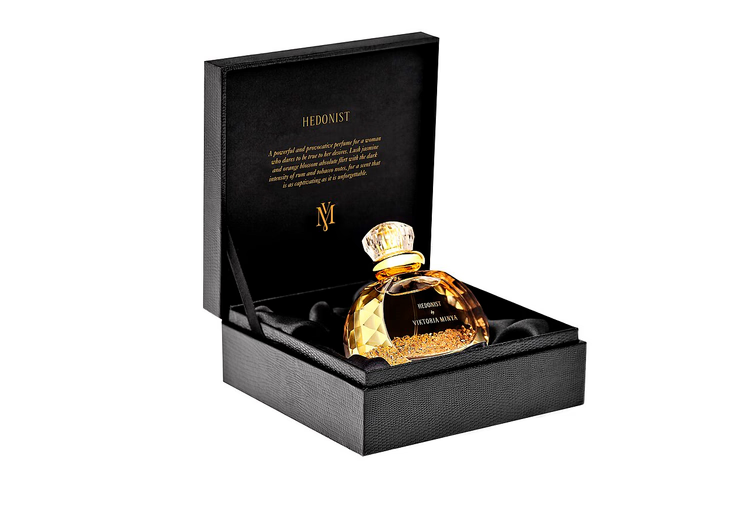 © Miggy25111 · CC BY-SAPhoto: Miggy25111, CC BY-SA (https://creativecommons.org/licenses/by-sa/3.0), Wikimedia Commons
Viktoria Minya perfumes are created by a Hungarian perfumer who doesn't believe in universal scents. Her compositions blend woody, floral, coniferous, and wine notes, with oriental spices and incense playing the leading role.
The brand is called Parisian because the workshop operates in France. But the originals are sold in Budapest, and you can choose a fragrance on the spot rather than relying on an online description.
Viktoria designs the bottles herself: crystals sparkle inside, and the boxes are wrapped in natural snakeskin. This set looks like jewelry and makes a good gift for someone who collects perfumery.
- Who it's for: those who collect niche fragrances.
- Not for: those looking for a mass-market scent from the supermarket.
18. Omorovicza cosmetics
Omorovicza builds its skincare line on Budapest thermal water. The brand's creams and serums are based on water from the city's springs, which is used in Hungary's therapeutic baths.
The manufacturer combines the water with mineral complexes so that active ingredients reach the deeper layers of the skin. The products are sold in spas at upscale hotels, so a set of two bottles looks like a gift for someone who cares about skincare.
The brand is young, but recognition came quickly: the sets are sold in Europe and the US, and Budapest's baths remain part of its story.
If you're taking a set on a trip, put it in checked luggage: liquids in carry-on baggage are subject to volume restrictions.
- Who it's for: those who keep up with skincare.
19. Zador soap
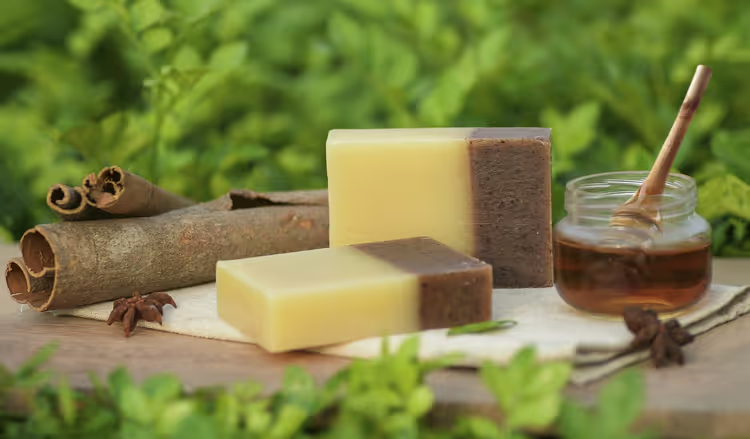
Zador soap is made in a village near Zador Castle, hence the name. The manufactory occupies an old Hungarian house where the furniture and shelves are made of wood, and the workshop is full of light.
The raw materials here are organic, and water from the thermal lake Hévíz is added to the soap-making water. The craftsmen use tools almost identical to those used in France several centuries ago, and the triple-milling technique was adopted from there.
The scents depend on seasonal ingredients: flowers, herbs, berries, and fruit from the castle's surroundings. Using this soap is a pleasure, and as a gift it works even for those who don't like souvenirs with inscriptions.
The soap is packaged in plain paper and wooden boxes, so it will travel home safely without impact protection. The manufacturer doesn't publish prices, and on the market the price depends on the size of the bar.
- Who it's for: those looking for a practical gift made from natural materials.
20. Lavender
 © ИринаЯ · CC BY-SAPhoto: ИринаЯ, CC BY-SA (https://creativecommons.org/licenses/by-sa/4.0), Wikimedia Commons
Dried lavender is considered a practical souvenir. A sachet of flowers hung in a wardrobe repels moths and mosquitoes while freshening the room's scent.
The sachets are sewn from natural fabric and decorated with embroidery, so they work as gifts for both colleagues and relatives. Budapest also sells lavender essential oil in unusually shaped bottles.
Lavender is used here to make soap, shampoos, handmade candles, as well as honey, syrup, and tea. Hungarian producers combine old recipes with modern processing so the oil retains its beneficial properties. You can put together a bath set like this at any market.
Lavender is convenient for travel because it doesn't break and weighs almost nothing. Tuck the sachet between your clothes, and wrap the oil bottle separately so it doesn't stain your clothing.
- Who it's for: those looking for a lightweight souvenir made from natural materials.
- The catch: essential oil in carry-on baggage is only allowed in bottles up to 100 ml.
⁉️🤔 Frequently asked questions
What should I bring from Hungary on a small budget?
Paprika in a sachet, marzipan, Zador soap, and a lavender sachet. These gifts fit in carry-on luggage and cost less than porcelain. Buy food items with a comfortable shelf life, and carry lavender in a sealed bag so the scent doesn't soak into your clothes.
Can I take pálinka and Tokaji wine on a plane?
Check spirits and wine in your luggage: carry-on baggage has liquid volume restrictions. Wrap the bottle in clothing and place it in the center of your suitcase so it survives loading. Exact limits depend on the airline and destination country.
Where in Budapest can I buy Herend and Zsolnay porcelain?
Official brand boutiques operate in the city center, near the tourist streets. At a brand store you'll get a receipt and packaging for transport, while at a market you risk buying an item with someone else's painting.
How much does a tour of the Unicum Ház museum cost?
An adult ticket costs 4,200 forints, with tasting included in the program (as of 09/2026, tickets and programs at the Unicum house). It's best to book tickets in advance, as the rooms are small.
What shouldn't I bring from Hungary?
Perishable cheeses and cream cakes if you have a long flight with a layover ahead. Cheap porcelain copies and Rubik's Cube knockoffs only look good on the shelf.
In short: what's worth booking
If you need an edible gift, go for PICK Szeged salami, paprika, and sweet Aszú. For those bringing a souvenir meant to last for years, Herend porcelain, Ajka Crystal, and Zador soap fit the bill. A lightweight gift for colleagues: marzipan from Szentendre and a lavender sachet.
Start at the Central Market: there you can compare prices and gather half your gifts in one stop. Buy the rest at brand boutiques, where they provide packaging for transport.

A small editorial team writing guides for independent travel. We travel ourselves, but we haven’t been everywhere, so we check prices, opening hours and how to get there against official sources.