
















Nine practical rules for a trip to Italy
The first day in Italy goes to everyday logistics, not the Colosseum.
Pharmacies, charging, the midday break, tips, and drinking water eat up time if you don't know local habits. Shops close in the middle of the day, and restaurants add a coperto charge to the bill.
We've put together nine practical topics: from first-aid kits and connectivity to tours and sales. Each topic covers a specific action worth taking before you fly or on your first day.
Ad: this article contains affiliate links, we earn a commission if you book through them, at no extra cost to you.
First-aid kit and medications
💡 In short:
- Pack a first-aid kit at home: bring enough of any regular medications for the entire trip.
- Bring your EU health insurance card if you live in the European Union.
- Note the addresses of pharmacies near your hotel and remember the green cross on the sign.
Italian pharmacies accept prescriptions from EU doctors. A prescription from outside the EU is not valid here, and they won't sell you the medication.
So bring any medications you take regularly in their original packaging. A copy of the prescription with the international name of the active ingredient will help if you see a local doctor.
Look for a pharmacy by the green cross and the word farmacia. At night, duty pharmacies are open; their list is usually posted on the door of a regular pharmacy or published by the local health authority.
Mild fever reducers, sunscreen, and cosmetics are also sold at parafarmacia and in large supermarkets. From our travel experience: in a resort town, the same tablets cost noticeably more than in a big-city supermarket.
Language and connectivity
English in Italy works at the airport, at hotels, and in major museums. In small towns and family-run restaurants, don't count on it.
The menu may be Italian only, and the waiter doesn't always speak English. Download an offline translator and learn a few words: buongiorno, grazie, il conto.
Signs and menus are easy to translate with your phone camera. In old neighborhoods the signal is weak, so an offline dictionary is more reliable than an online service.
Connectivity solves two problems: translation and maps. You can buy a local SIM at a phone shop or a store near the train station, but there's an option without waiting in line: eSIM for Italy on Yesim. Check that your phone supports eSIM and activate it before you fly.
- The catch: in mountain villages and on islands the signal drops, so keep offline maps ready.

Outlets and charging
In old buildings and apartments you'll find the Italian type L outlet with three holes in a line. The flat Europlug charger fits without an adapter. You'll need an adapter for the thicker Schuko plug.
Newer hotels often have universal outlets, and the front desk will lend you an adapter. Sometimes it's free, sometimes they ask for a deposit.
It's more reliable to buy an adapter at home. In high season, the model you need may not be available at the nearest store, and you'll spend half a day looking for one.
Keep a power bank in your carry-on. It won't be accepted in checked baggage at the airport, and without a charge you'll be left without maps and a translator.
Tips and the restaurant bill
You are not required to tip in Italy. Service is often already included in the bill, especially in tourist areas.
Look for the coperto line on the menu. It's a cover charge, it's per person, and it noticeably changes the final total.
If you liked the waiter's service, round the bill up or leave some coins. Nobody expects more than that here.
Keep some cash on hand. Small family-run places don't always accept cards, especially in small towns.
Larger amounts are easier to pay by card: your bank's fees and exchange rate are visible in the app, and the receipt is always at hand.
Midday break and opening hours
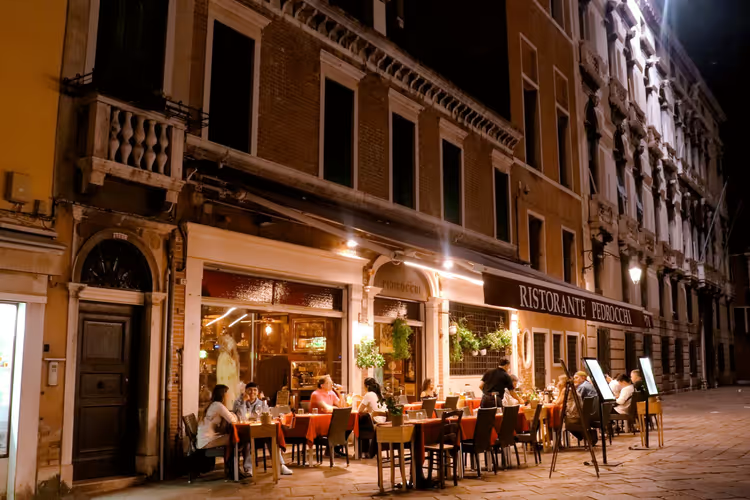
Schedules in Italy follow habit. In the middle of the day, life pauses: shops close and reopen closer to evening.
On Sundays almost everything is closed except train stations, shops in tourist areas, and large shopping centers. Plan your shopping in advance.
Restaurant kitchens also rest between lunch and dinner. A late lunch may not work out: at four in the afternoon, hot food is usually not served.
In August, some shops and workshops go on vacation. The closure lasts a week or more, so it's better to check the store you need in advance.
We recommend checking hours on the spot: schedules change by season. The general rules are described in the practical section of the Italy tourism office.
- The catch: the midday break eats up the middle of the day, so morning plans are more reliable than evening ones.
Safety and documents
Italy's major cities are not dangerous, but wallets and phones disappear quickly. The main spots: train stations, the metro, and tourist squares.
Keep your bag in front of you, don't leave your phone on a cafe table, and don't carry all your bank cards with you. Leave some in the hotel safe.
It's also better to leave your original passport in the safe and carry a copy or a photo of the document on your phone.
Drivers should study ZTL zones in advance. These are historic centers with restricted access; entry is recorded by cameras, and the fine arrives later through the rental company.
The single emergency number is 112 (as of 09/2026, practical information from the Italy tourism office). For your trip, it's worth comparing options for medical insurance.
Water and drinking fountains
Tap water in Italy is safe to drink. The quality is good, especially in the northern regions, where water comes from Alpine springs.
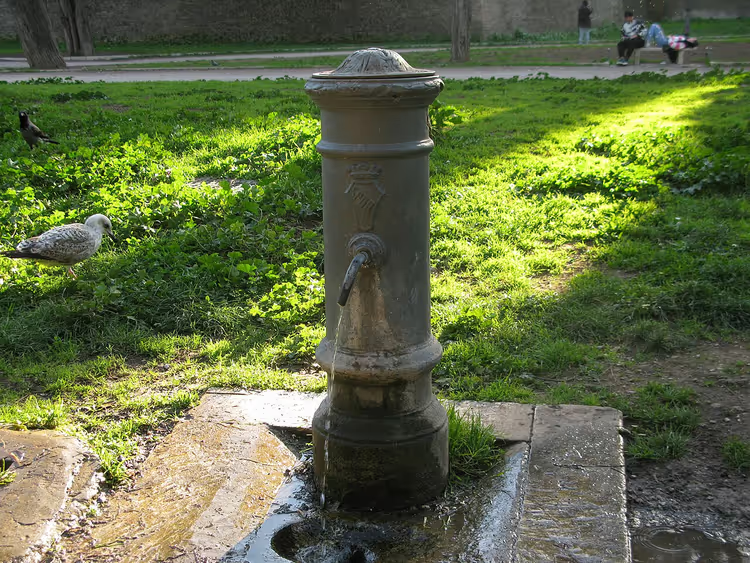
In Rome and other cities, drinking fountains let you fill your bottle for free. Bring a reusable bottle: it saves money and creates less waste.
In restaurants, ask for acqua del rubinetto if you don't want to pay for a bottle. Not everyone agrees, in which case it's easier to get a carafe of water for a small amount.
Cities are adding machines with purified water. They're convenient, but they're not everywhere, so a bottle is still useful.
 © Dieterdreist · CC BYPhoto: Dieterdreist, CC BY (https://creativecommons.org/licenses/by/4.0), Wikimedia Commons
Tours and museums
Free walking tours from locals exist in almost every major city. You only pay a tip to the guide, and even that is optional.
Tickets to popular museums sell out in advance. In high season, the time slot you want for the Colosseum or the Uffizi Gallery is gone several days ahead.
A Colosseum ticket starts at €18 (as of 09/2026, official Colosseum ticket office). The savings start with the time slot: you arrive at your time and don't stand in line.
Once a month, state museums open their doors for free, usually on the first Sunday. Check the date on the specific museum's website, because the list of participants changes.
Tourist cards pay off if you visit several museums in one day. For a single gallery visit, the card is usually not worth it.
If you want to see the city with a guide, tours and activities on GetYourGuide will come in handy.
- The catch: free tours have large groups, and in a noisy city center you won't hear the guide completely.
Tours and tickets
Guided tours, skip-the-line tickets and activities — most offers can be cancelled free of charge.
See offers on GetYourGuideThe widget loads once you give your consent.
Shopping and sales
The sale season in Italy comes in two waves: from January to March and from July to August. Outside these periods, discounts happen but are rarer and smaller.
The rest of the time, store hours are short. Large shopping centers stay open until eight or nine in the evening, while shops in the center close earlier.
You'll always find souvenirs, but clothes and shoes are better to buy during the sale season.
Tax free is available only to residents of non-EU countries, such as Switzerland. If that's your case, process large purchases as tax free. In the store, ask for the tax refund form and keep the receipt until you fly, otherwise you won't get your money back.
 AIIllustrative image: AI-generated
⁉️🤔 Frequently asked questions
Do I need to carry my passport with me in Italy?
Keep a copy or a photo of the document with you, and leave the original in the hotel safe. By law you must have an identity document, so keep the photo on your phone offline. If you're renting a car, you'll need the original passport and driver's license when picking it up.
Can I drink tap water?
Yes, tap water in Italy is safe, especially in the north of the country. In Rome and other cities, drinking fountains are available, so a reusable bottle saves your budget. In restaurants, ask for acqua del rubinetto if you don't want to pay for a bottle, but not all places agree.
What should I do if I need a pharmacy in Italy?
Look for the green cross and the word farmacia. During the day, go to the nearest pharmacy; at night, duty pharmacies are open, and their list is posted on the door of a regular pharmacy or published by the local health authority. A prescription from outside the EU is not valid, so bring your regular medications with you.
When are the sales in Italy?
The main discounts run from January to March and from July to August. On Sundays and during the midday break, shops are closed, and late August is considered a dead season for shopping. Souvenirs are sold year-round, while clothes and shoes are better to buy during the sale season.
Are museums open on Mondays?
Many state museums are closed on Mondays, so it's worth planning that day for parks and walks. Popular sites require a timed ticket, and it's better to book in advance. Once a month, entry to state museums is free, usually on the first Sunday, but check the date on the museum's website.
In short: what to book
Build your trip from proven solutions, not random links.
If you're traveling around the country by train, get train tickets for Italy in advance: on popular routes, prices rise closer to the date.
If you're traveling by car, compare car rental options and stay away from ZTL zones in historic centers.
If you're still choosing where to stay in a major city, check hotel prices in Italy.

A small editorial team writing guides for independent travel. We travel ourselves, but we haven’t been everywhere, so we check prices, opening hours and how to get there against official sources.