












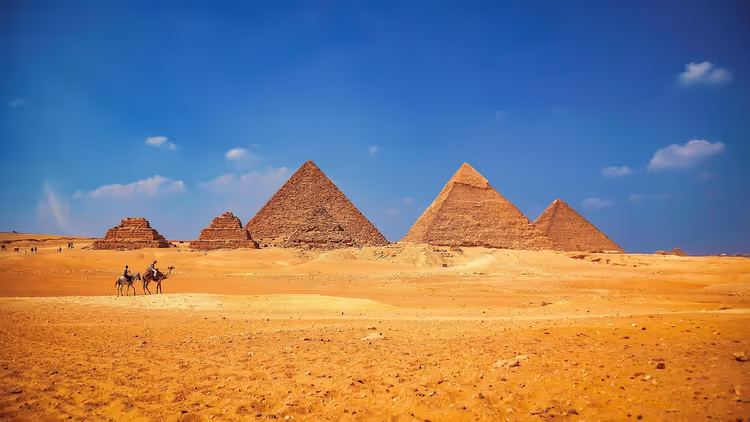
Giza pyramids on your own: tickets from 700 Egyptian pounds, camels, scams and photo spots
The Pyramids of Giza only disappoint the unprepared. The heat, the traffic out of Cairo, pushy camel drivers and fake "guides" eat up half a day if you turn up without a plan. An entry ticket to the plateau costs a foreign visitor 700 Egyptian pounds, and going inside the pyramids is paid for separately (as of 09/2026, Egyptian Ministry of Tourism and Antiquities).
Below is everything you need for an independent visit: visa and money, tickets and opening hours, getting there from Cairo, time of day, camels, the scams at the pyramids and the best photo spots. Each section ends with a practical takeaway so you can put your own plan together quickly.
Ad: this article contains affiliate links; we earn a commission on them, and the price for you stays the same.
What to know about Egypt before you go
💡 In short:
- Get your e-visa in advance: applications must be submitted at least 7 days before departure.
- Withdraw Egyptian pounds from ATMs at the airport, as you usually can't buy them at home beforehand.
- Tickets to the Giza Plateau are sold on site; check online offers from third-party websites especially carefully.
- Arrive at opening time or in the afternoon, and bring water, a hat and closed shoes.
- Prices and opening hours: 09/2026, checked on the official website of the Ministry of Tourism and Antiquities
Egypt is not a difficult country to travel independently. But it plays by its own rules. It's best to think through your visa, cash, clothing and tips while you're still at home. That way your first hours after landing won't turn into a hunt for an ATM, an argument with a taxi driver and a queue at the wrong window.
This section covers the whole trip, not just the pyramids. If you're flying to Cairo for the first time, read it before you book your flights. If you've already been to Arab countries, skip ahead to the part about Giza.
Egypt visa: online or at the airport
Citizens of most EU countries need a tourist visa for the trip. You can get one in two ways: in advance through the official portal or on arrival at the airport.
The e-visa is issued through the Visa2Egypt portal. A single-entry tourist visa costs $30 and a multiple-entry one $65, paid by card right on the site (as of 09/2026, official e-Visa portal). Your passport must be valid for at least six months from the date of arrival. The system asks you to apply at least 7 days before departure (as of 09/2026, Visa2Egypt).
For the application you'll need a scan of your passport and a passport-style photo. A reply often comes within a couple of days, but allow a week. Print the finished visa and keep it with your passport.
Important: the web is full of intermediary sites with a similar design. They charge double or simply vanish with your money. Enter your details only on the visa2egypt.gov.eg domain.
With an e-visa you go straight to passport control. The border officer will take the printout and stamp your passport. From then on, whenever someone in the country asks to see your visa, that stamp is what they mean.
A visa on arrival is also possible. According to the Auswärtiges Amt, it costs $30 (as of 09/2026). The visa window operates like a bank counter and sits before the passport control area. Don't look for an immigration office, look for a bank sign. Bring US dollars in cash: in practice they often accept neither other currencies nor cards.
In practice this means: if you land at night and don't like queues, get the e-visa. You'll save time and won't depend on having dollars in cash.
The Egyptian pound: cash and ATMs
Egypt's currency is the Egyptian pound (EGP, or LE in everyday use). You usually can't buy pounds in advance in Germany, Italy or the UK: exchange offices in Europe hardly ever stock this currency.
The easiest option is to withdraw money from an ATM. At Cairo airport there are ATMs both in the arrivals area and outside the terminal. Take out enough for the first few days in one go: taxis, tips, water and small purchases in Egypt are often cash only.
Keep small notes separately. At the pyramids, people are reluctant to give change for a large note, or they "forget". You can bring in large sums, but there is a threshold: foreign currency above $10,000 must be declared on entry (as of 09/2026, Auswärtiges Amt travel advice).
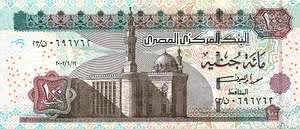
Paying by card in Egypt is convenient in hotels, larger restaurants and shopping centres. At the ticket offices of the sights the rules keep changing, so carry both a card and cash. That way a terminal failure won't leave you without a ticket.
Clothing, smoking and local etiquette
Egypt is a Muslim country. It is noticeably more liberal than many of its neighbours, but in the cities it's better to dress modestly. This applies especially to Islamic Cairo, the old quarters and Alexandria.
The practical minimum is simple: covered shoulders and knees. Women will find a light scarf handy for covering their head when entering a mosque. Men shouldn't walk around town in beach shorts.
People smoke almost everywhere in Egypt, including in cafés and restaurants. Many places have a non-smoking room. If tobacco smoke bothers you, ask for a table there as soon as you walk in.
Photography and medication: where it's easy to get into trouble
Street photography in Cairo calls for caution. Photographing military and police sites, equipment and personnel without permission is prohibited. Offenders can have their camera confiscated and be detained (as of 09/2026, Auswärtiges Amt on safety in Egypt). The rule also covers historic buildings that now house government services.
Don't point your lens at people in uniform. Ask permission before taking close-ups of local people. It's best not to bring a drone to Egypt without a special permit.
Drugs are no joking matter in Egypt. Even a small amount can mean real prison time. The restrictions also cover some medicines that are sold on prescription in Europe.
If you take strong painkillers, sleeping pills or ADHD medication, check the rules with the Egyptian embassy in advance. Bring a doctor's prescription in English. Keep all tablets, even ibuprofen, in their original packaging and separate from your other things: the security check will go faster.
Tickets and student discounts
At many of Egypt's monuments, tickets are sold at a ticket office by the entrance. A genuine Ministry of Tourism and Antiquities ticket carries a hologram, which is how you tell it from a fake.
Tour operators sometimes include tickets in the price of an excursion. But this isn't an e-ticket: the guide pays for your entry at the ticket office on the day of the visit. That's a perfectly normal arrangement, just confirm it in advance.
Students get a discount of around 50% on entry to most monuments. To get it you need an ISIC international student card.
The catch: in practice, ticket offices often turn down older students. Travellers regularly report that a postgraduate's card isn't accepted beyond a certain age, even though it is valid under ISIC rules. The rules vary from monument to monument: some places take the card without question, while the Egyptian Museum or Luxor may refuse it. Have money for a full-price ticket ready just in case.
Uber and Careem in Cairo
Uber and Careem operate in Cairo, Alexandria and Hurghada. They are the simplest way to get around without haggling: the price is shown in the app and the route is recorded. For a trip to the pyramids from central Cairo, this is the best option for most visitors.
There is one common trick. A driver accepts your request while very far away and makes their way to you slowly. After a few minutes of waiting, cancelling becomes chargeable, and the driver gets paid even if they never show up.
The fix is simple. Check in the app where the car is and how long it will take. If the waiting time keeps growing and the car isn't moving, cancel straight away while it's still free. Report drivers like this to support through the app.
Tipping in Egypt: how much and to whom
Tips, known locally as baksheesh, are part of everyday life in Egypt. They're expected for opening a car door, for toilet paper, for a "tour" you never asked for. A temple attendant will point at a carving on the wall and ask for a coin.
That doesn't mean you have to hand out money to everyone. It's your call. If a service was forced on you, a polite but firm "la, shukran" (no, thank you) works better than a long argument.
For small services, people usually give small notes worth a few dozen pounds. A driver or guide who has spent half a day or a full day with you gets noticeably more, on top of the price of the service. Keep small change in a separate pocket so you don't have to open your wallet in public.
Some Egyptians themselves consider asking for a tip outright to be rude. Others have no qualms about asking and complaining that they got too little. Don't take it to heart: a calm refusal is normal here.
Is it safe to travel to Egypt right now
Almost everyone planning a trip asks this. The short answer: the main tourist sites of Cairo and Giza are well guarded. The Auswärtiges Amt describes the overall situation as stable and calm, but warns of a continuing risk of terrorist attacks throughout the country (as of 09/2026, German Federal Foreign Office).
There are metal detectors and bag checks at the entrances to the pyramids, museums and large hotels. Police are on duty on the plateau at all times. For the average visitor, the main risks here are everyday ones: the heat, petty scams and chaotic traffic.
Before you fly, check the current advice from your own country's foreign ministry. Stay away from demonstrations and large gatherings after Friday prayers. And save the number of your consulate in Cairo on your phone.
Map of the Giza necropolis
The Giza Plateau is often called the Giza necropolis. Three great pyramids stand on it: the Pyramid of Cheops (Khufu), the Pyramid of Chephren (Khafre) and the Pyramid of Mycerinus (Menkaure). The Great Sphinx lies nearby.
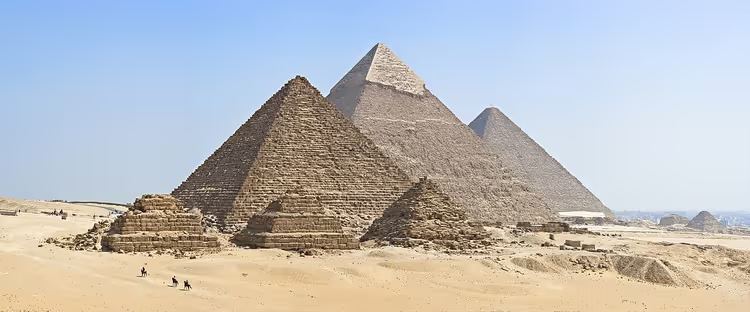 © KennyOMG · CC BY-SAPhoto: KennyOMG, CC BY-SA (https://creativecommons.org/licenses/by-sa/4.0), Wikimedia Commons
Besides these, the complex includes the small queens' pyramids, two cemeteries of the nobility, valley and mortuary temples and the causeways between them. A paper map is hard to find on site. Download a plan to your phone in advance and mark the entrance, the pyramids, the Sphinx and the viewpoint on it: you'll save time and energy in the heat.
The Pyramids of Giza: the history in five questions
You don't need to know the history to see the pyramids. But with it, a walk around the plateau makes more sense. You'll understand why the pyramids stand exactly where they do, what a mortuary temple is and why a boat was buried next to the tomb.
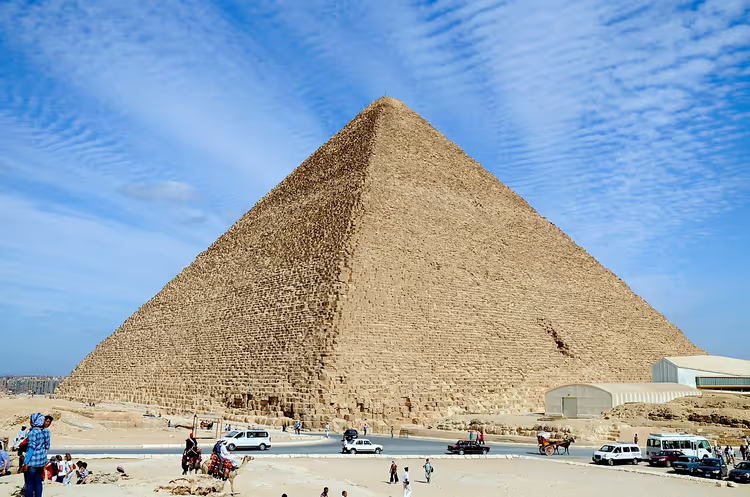 © mayanming · CC BY-SAPhoto: mayanming, CC BY-SA (https://creativecommons.org/licenses/by-sa/3.0), Wikimedia Commons
Here are the five questions guides on the plateau get asked most often. The answers are short, but they're enough to keep you from getting lost among the signs and the souvenir sellers' stories.
When were the Pyramids of Giza built
The Pyramids of Giza date from the Fourth Dynasty, which ruled Egypt in roughly 2613-2494 BC. The Great Pyramid was built for the pharaoh Khufu, known to the Greeks as Cheops. He reigned in roughly 2589-2566 BC (according to the Giza Plateau page on the ministry's website).
The other two great pyramids belong to his son Khafre (Chephren) and grandson Menkaure (Mycerinus). Khufu's pyramid is the oldest and largest of the three. According to the ministry, a taller building appeared only 3,800 years later.
Why did the Egyptians build pyramids
The Pyramids of Giza are neither the first nor the only ones in Egypt. Rather, they are the peak of a long tradition of royal tombs. Earlier pyramids stand further south, in the necropolises of Saqqara and Dahshur, and you can visit those on a day trip from Cairo too.
The main purpose of the pyramids was religious. The ancient Egyptians believed in an afterlife. They held that after a king's death his life force, the "ka", remained tied to the body.
So the body and the "ka" had to be protected. That was the job of mummification and of the tomb, which held everything the king would need in eternity. The pyramid was the grandest answer to that task: a huge, protected burial place for the pharaoh and his family.
Each pyramid was only one part of a complex. According to the ministry, around it stood small queens' pyramids, a symbolic "satellite" pyramid, tombs of the nobility, boat pits and a pair of temples linked by a causeway. In the mortuary temple beside the pyramid, priests maintained the cult of the dead king and brought him offerings.
Why is a pyramid shaped the way it is
Scholars have no single answer. One accepted hypothesis links the shape of the pyramid to the sacred benben stone. This pointed stone was kept in the temple of the sun god Ra at Heliopolis.
The benben symbolised the sun's rays falling to earth. A stone of the same shape, the pyramidion, was placed at the top of pyramids and obelisks. Egyptian guides sometimes tell a more poetic version as well: that the pyramid echoes the shape of a sand dune. There is no scientific evidence for it, but at sunset it's easy to believe.
Who built the pyramids
For a long time it was believed that slaves built the pyramids. Modern excavations paint a different picture. They were most likely built by hired Egyptian workers who lived in a settlement next to the plateau and received rations.
The remains of that settlement and the builders' cemetery can be seen on the plateau today. You need a separate ticket to go in.
The road to the "perfect" pyramid was a long one. The first is considered to be the Step Pyramid of the pharaoh Djoser at Saqqara. In essence it is several mastabas stacked on top of one another. Later, the Pink (Red) Pyramid appeared at Dahshur: the first with smooth sides, named after the colour of its stone.
The experience gained from these experiments, together with a huge organised workforce, made Khufu's Great Pyramid possible. It is the peak of Old Kingdom funerary building, and it was never surpassed afterwards.
How were the pyramids built
More than 4,500 years have passed since the first blocks were raised on the plateau. Engineers and historians are still debating the technique. To many it seems so complex that there are even theories about aliens.
But the Egyptians needed no outside help. Scholars have two main explanations for how the blocks were lifted:
- Wooden lifting devices. Ancient authors write about methods of this kind, but there is no solid archaeological evidence.
- Ramps. This is the most popular explanation. It was strengthened by a find at the Hatnub quarry: archaeologists uncovered a ramp with steps and post holes that is dated to the time of Khufu (History.com).
The ramp discovery explains a lot. But puzzles remain. People still argue about how the Egyptians worked hard stone such as granite so precisely and how they lifted blocks to the final courses near the top.
For you on site, this comes down to something simple. Walk up to the base of Khufu's pyramid and look at the size of the lower blocks. Many of them are taller than a person. After that, the question "how?" stops being abstract.
How much does it cost to enter the Giza Plateau
The prices below are in Egyptian pounds for foreign visitors. They are revised regularly, so check the official website before your trip.
What | Adult | ISIC student | Source |
|---|---|---|---|
Entry to the Giza Plateau | 700 EGP | 350 EGP | |
Entry inside the Pyramid of Khufu | 1,000 EGP | 500 EGP | |
Entry inside the pyramids of Khafre and Menkaure | separate ticket | ISIC discount | check the price at the ticket office |
Tomb of Meresankh III | separate ticket | ISIC discount | check the price at the ticket office |
Builders' settlement and cemetery | separate ticket | check on site | check the price at the ticket office |
Entry by car or taxi | 25 EGP | none |
As of 09/2026. The basic plateau ticket does not include entry inside the pyramids of Khufu, Khafre and Menkaure, the tomb of Meresankh III or the builders' cemetery (according to the ministry's website on the Giza necropolis). To enter the Pyramid of Khufu you need a plateau ticket as well.
Decide first whether you're going inside. Entry to the Great Pyramid costs more than the ticket to the plateau itself. If you're claustrophobic or don't cope well with heat, save that money and spend it on a guide or on the Grand Egyptian Museum.
How to get to the Pyramids of Giza
The Giza Plateau lies on the edge of the Western Desert, on the south-western outskirts of sprawling Cairo. On the map it's about 20 km from the city centre to the pyramids. That sounds close, but traffic decides the journey time.
The map above shows the Great Pyramid and its surroundings. Save the location in your offline maps: mobile internet works at the plateau, but it sometimes slows down in the crowds.
From Cairo by Uber or Careem
The drive from central Cairo takes anywhere from 40 minutes early in the morning to an hour and a half or more at rush hour. The most convenient way to get there is Uber or Careem. You see the price in the app before you order, and there's no need to haggle.
A regular taxi is also an option, but agree on the price before you get in. Ask to be taken to a specific entrance, not "to the pyramids". Otherwise the driver may drop you at a friend's stable, where they'll start selling you a camel ride.
If you want to be on the plateau at opening time, stay overnight in Giza itself. Then Cairo's morning traffic doesn't affect you, and you're among the first at the ticket office.
The new entrance on the Fayoum road side
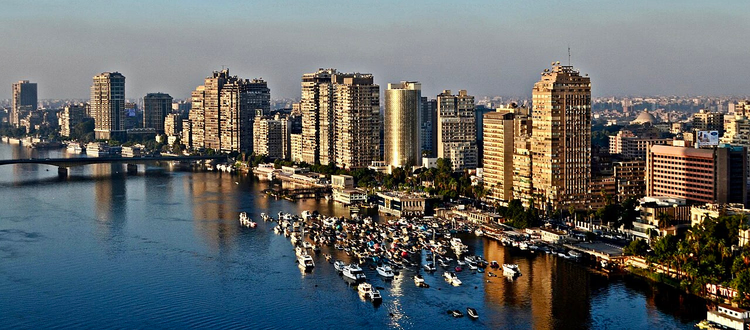
The plateau has been substantially reorganised in recent years. The main entrance was moved from the old gate by the Marriott Mena House hotel to a new visitor centre on the Cairo-Fayoum road, on the southern side of the plateau (Ahram Online).
 © Tanya Dedyukhina · CC BYPhoto: Tanya Dedyukhina, CC BY (https://creativecommons.org/licenses/by/4.0), Wikimedia Commons
Private cars and tour buses now have restricted access to the plateau itself. Electric buses run a loop around the site with stops at the main points. This arrangement caused controversy among local guides and transport operators, so the details may still change.
For you it means one thing. Before you go, check which entrance your driver or tour operator is taking you to. The entrance by the Sphinx, on the Nazlet el-Samman village side, also exists, but the rules for it have changed over time. If in doubt, tell the driver to go to the new visitor centre on the Fayoum road.
A layover in Cairo: making it to the pyramids between flights
A long layover in Cairo gives you the chance to see the last surviving wonder of the ancient world. But going from the airport to Giza on your own for a few hours is risky. The route from the airport across the whole city is long, and the traffic is unpredictable.
Egypt takes some getting used to. The noise, the haggling and the persistent offers wear you out within the first hour. If you're short on time, it's less stressful to take an organised tour with transfers from and back to the airport.
Tours like these usually include a pick-up in the arrivals hall, a car with a driver, an Egyptologist on the plateau and a return in time for check-in. Look in the description for who pays for the tickets and how much time is allowed for the drive. You can pick an option to match the length of your layover among the tours with transfers on GetYourGuide.
Important: leave a margin of at least three hours before your flight. Check in advance whether you need a visa to leave the airport during your layover.
Where to stay in Giza
One or two nights in Giza make a visit to the pyramids much more relaxed. You don't depend on traffic, you can arrive at opening time and you can go back to the hotel for the hottest hours.
Many of Giza's hotels are close to the plateau, in the Nazlet el-Samman area. If you're going without a guide, this is the simplest option: you can walk to the entrance or get there by car in a few minutes.
The choice here is straightforward. There are a few upmarket hotels and a great many small mid-range and budget hotels and guesthouses. The main selling point of the latter is the rooftop view of the pyramids.
Marriott Mena House: a classic right by the pyramids
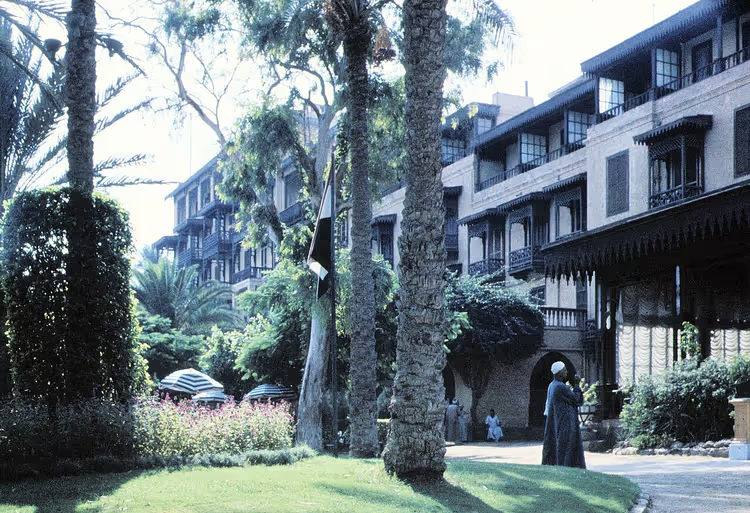
The best-known hotel by the pyramids is the Marriott Mena House. The five-star hotel stands at the foot of the plateau, and the Great Pyramid can be seen from many of its rooms and balconies.
 © Gerhard Haubold · CC BY-SAPhoto: Gerhard Haubold, CC BY-SA (https://creativecommons.org/licenses/by-sa/3.0), Wikimedia Commons
This option is for those who want five-star standards and a view of the pyramids from the window. Prices here are noticeably higher than at the guesthouses in Nazlet el-Samman. Guest reviews of the service are mixed, so read recent ratings before you book. You can check the availability of rooms with a view on the Marriott Mena House page on Trip.com.
- Who it's for: travellers who care about seeing the Great Pyramid right from their room.
- The catch: the nightly rate is several times higher than at the guesthouses next door.
Budget hotels with a view of the pyramids
If your budget is tight, you don't have to give up the view. Nazlet el-Samman has dozens of small hotels with a rooftop terrace. Many of them serve breakfast directly facing the pyramids.
When choosing a hotel, look at the terrace photos in the reviews, not just the promotional shots. Ask whether there's air conditioning and whether the room is quiet. And check how recently the hotel changed owners: guesthouses in this area often close down or change hands.
 © Daniel Mayer · CC BY-SAPhoto: Daniel Mayer, CC BY-SA (https://creativecommons.org/licenses/by-sa/4.0), Wikimedia Commons
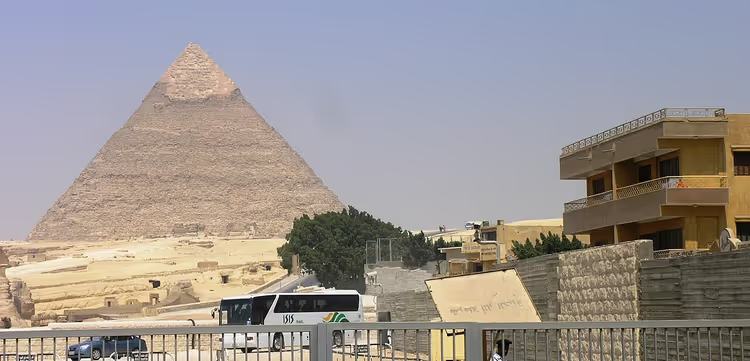
One option with a view of the plateau is Dima Plaza Pyramids View. The guesthouse is in Nazlet el-Samman, and its terrace offers a similar view of the pyramids. You can check available dates and prices on the Dima Plaza Pyramids View page on Trip.com.
Many travellers call a rooftop breakfast overlooking the Great Pyramid the best morning of their trip. Juices, pastries, cheese, eggs and tea are served right on the terrace. And the pyramids are visible in full, from base to summit.
Small guesthouses in Giza often offer an airport transfer. Sometimes it's included in the price when you book several nights. For a night-time arrival this is very convenient: the driver meets you in the arrivals hall, and you don't have to look for a taxi at two in the morning.
Confirm the transfer terms in writing before you travel. Ask where the driver will be waiting, how to recognise them and whether waiting time is charged if the flight is delayed. It's customary to tip a driver who has helped with your luggage.
Hotels on the edge of Nazlet el-Samman have one more bonus. From their rooftops you can see the evening Sound and Light show on the plateau. With a favourable wind you can hear the music and the narrator's voice too. So you get to see the show for free, right from the hotel terrace.
- Who it's for: independent travellers who want a view and an early start on the plateau for a moderate price.
- The catch: the quality of the guesthouses varies widely, and owners and names change often here.
Opening hours and tickets for the Giza necropolis
The Giza Plateau is open daily from 8:00 to 16:00 (as of 09/2026, official ministry website). Opening times may shift slightly from season to season, and during Ramadan the hours are often shortened. Check the hours on the official website a day or two before your visit.
Tickets are sold at the ticket offices by the entrance to the plateau. That's also where you buy the separate tickets for going inside the pyramids. If going inside matters to you, come at opening time: the pyramids are at their busiest around midday.
Look carefully at offers of "pyramid tickets online" from unknown websites. The most reliable options are the on-site ticket office or a tour where the entry cost is stated clearly in the description. In the second case the guide buys the tickets at the ticket office for you, and you simply pay for them together with the tour.
Take your passport to the ticket office, and your ISIC card too if you're claiming the discount. Keep your ticket until you leave: it's checked at several points, including at the entrance to the pyramids.
In practice this means: get to the ticket office 15-20 minutes before opening. Buy all the tickets you need at once so you don't have to walk back across the whole plateau to the entrance later.
Morning or afternoon: when is the best time to visit the pyramids
Almost everyone asks this, and the answers online are usually vague. In reality both options have their pros and cons. Three things decide it: the crowds, the heat and how clear the air is.
In short, it goes like this. The morning gives you fewer people and cooler air, but there's a risk of haze. The afternoon gives you soft light and an emptying plateau, but it's harder going in the heat. Below we look at both options in more detail so you can choose what suits your aims.
The pyramids early in the morning
Early in the morning there are noticeably fewer people on the plateau. The coaches bringing groups from Cairo are still stuck in traffic, and the vendors are only just taking up their spots. If you want photos without the crowds, this is your time.
But the morning has a catch. The view of the pyramids is often veiled in haze. It comes from the wind off the Sahara, which carries dust, and from the smog of sprawling Cairo. On a clear morning the pyramids stand out sharp, like on a postcard. On a murky morning you have to wait a couple of hours for the air to clear.
Check the forecast and the air quality index the evening before. If a dust storm or strong wind is forecast, move your visit to another day or to the afternoon.
Another advantage of the morning is the temperature. Even in the warm months, the first hours after opening are easy to handle. In the hottest months it's the only comfortable time for a walk around the plateau at all.
The pyramids in the afternoon
The afternoon is good too, but for different reasons. The main drawback is the heat and the harsh light. The sun beats down on the faces of the pyramids, the shadows turn hard and the stone heats up.
The advantages show up closer to closing time. The crowds thin out as the groups leave for lunch and the museums. The sun drops lower and the light turns warm and soft. It's a good time for a photo of the Sphinx with the pyramids behind it.
Most visitors don't go further than the Sphinx. That's where the crowd is thickest. The areas around the pyramids, on the other hand, are often almost empty after lunch, and you can wander along the tombs for a long time without any bustle.
Bear the closing time in mind. The plateau closes at 16:00, and the guards start ushering visitors out ahead of time (as of 09/2026, opening hours on the ministry's website). Arrive at least two to three hours before closing, or you'll only manage to see part of the complex.
In practice this means: if you want photos without people and cooler air, go in the morning. If you want soft light and a quiet walk around the pyramids, go in the afternoon. In the hot months, choose the morning only.
Can you go inside the pyramids
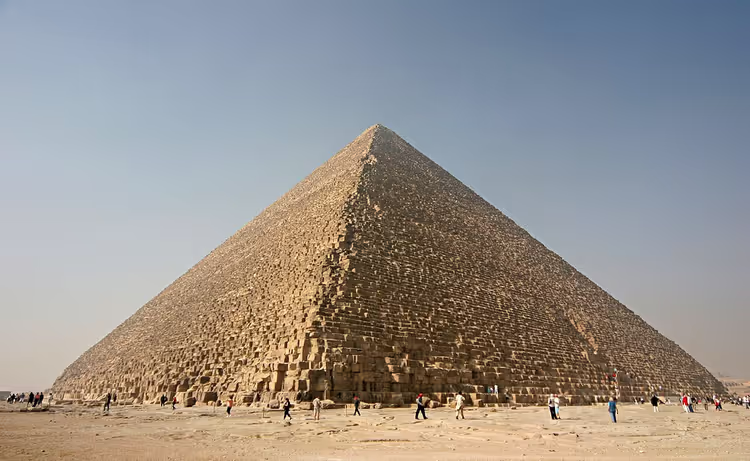
Yes, you can go inside some of the pyramids. For many people it's the highlight of the trip. But before you buy a ticket, answer a few questions honestly.
 © Nina · CC BYPhoto: Nina, CC BY (https://creativecommons.org/licenses/by/2.5), Wikimedia Commons
Important: if you have claustrophobia or heart, blood pressure or breathing problems, it's better not to go inside. The passages are long and narrow, and help is hard to get in there. You won't be able to get out quickly, because other visitors are coming the other way.
The pyramids were built for the dead, not the living. It's hot and stuffy inside, and air is brought in from outside by ventilation. In the descending passages you have to walk bent over in places. Tall people and anyone with a bad back will find it hard.
The burial chambers themselves are almost empty. Don't expect paintings and gold: there are bare walls and an empty sarcophagus, or the spot where one once stood. The value of the visit lies in the sheer feeling of being inside a structure more than 4,500 years old.
Your guide usually doesn't come in with you and waits at the entrance. Photography inside is often restricted, and you may be asked to leave a large bag outside. Take water and leave everything you don't need at the hotel.
Some travellers admit they felt uneasy inside. Not because of the cramped space, but because of the sense of intruding on someone else's tomb. That's a normal reaction. If you share those thoughts, you can stick to viewing from outside: the pyramids are no less impressive.
How much does it cost to go inside a pyramid
The plateau ticket does not include entry inside the pyramids; the prices are in the table above.
The most expensive is entry to the Great Pyramid of Khufu. Entry to the pyramids of Khafre and Menkaure costs noticeably less, but they are sometimes closed for restoration in turn.
Other necropolises near Cairo have their own rules. At Saqqara and Dahshur you can also go down inside the pyramids, and the crowds there are far smaller. Ask at the ticket office which pyramids are open on the day of your visit and what your ticket covers.
Who it's for: those who cope well with cramped spaces and want the full immersive experience. Not for: people with claustrophobia or back problems, and those who don't handle heat well.
Can you get right up to the Sphinx
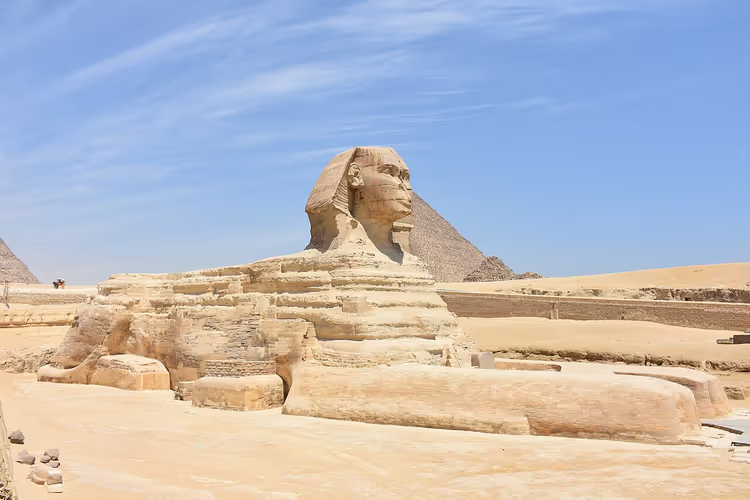
In theory you can approach the Sphinx. In practice you can't. The area around the Great Sphinx is fenced off, and access beyond the barrier is closed.
 © MusikAnimal · CC BY-SAPhoto: MusikAnimal, CC BY-SA (https://creativecommons.org/licenses/by-sa/3.0), Wikimedia Commons
When people talk about "going in to the Sphinx", they usually mean the area between its paws. That's where the Dream Stele of Thutmose IV stands. Visitors used to be allowed up to it; today that section is closed.
The closest you'll get is the viewing terrace by the Sphinx Temple. From there the statue is a few metres away. That's enough to make out the face and the marks left by centuries of erosion on the stone.
From time to time there are reports of private visits beyond the barrier. Such permits are granted rarely, mostly to official delegations and researchers. Buying a visit like that online as an ordinary tourist product is practically impossible.
Since you can't walk up to the Sphinx, take a good photo from a distance. A zoom lens or a good phone camera with optical zoom will come in handy. Look for an angle where the Pyramid of Khafre is visible behind the Sphinx's head: everyone recognises that shot.
Can you climb the pyramids
No. Climbing any of the pyramids is banned by the Egyptian authorities. Offenders face a fine or detention.
Everyone who works on the plateau knows about the ban. But at the foot of the Great Pyramid you will almost certainly be offered the chance to "climb a couple of rows for a photo" for money.
Don't agree. It's not only about the fine. The pyramids are tombs more than 4,500 years old and a World Heritage monument. Every such "climb for a photo" wears away stone that has survived forty-five centuries.
For a striking photo, it's enough to stand at the base and shoot yourself against the face of the pyramid from below. The scale of the blocks will come across just as well, and you'll have no trouble with the police.
A camel ride at the pyramids: is it worth it
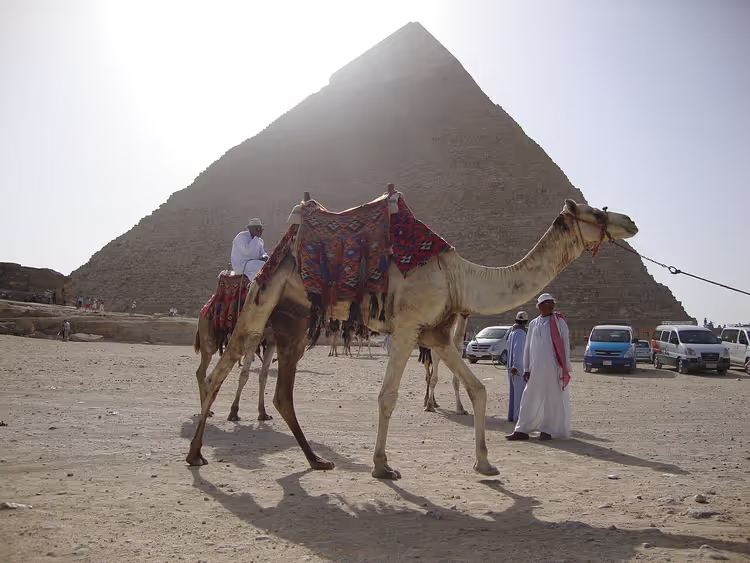
You can ride a camel at the pyramids. But stay alert. More scams revolve around the rides than anything else, and by no means all the animals here are kept in decent conditions.
 © Maurizio Ceol · CC BYPhoto: Maurizio Ceol, CC BY (https://creativecommons.org/licenses/by/3.0), Wikimedia Commons
For many people the camel ride becomes a highlight of the trip. What's more, some of the panoramic spots in the desert are easiest to reach that way. So if you decide to go for it, choose your camel driver carefully: look at the animals, not just the price.
The rules on the plateau have been changing in recent years. The authorities are developing electric transport and limiting the zones where camel drivers work. In 2026 the media reported plans to gradually phase out camel and horse rides in the area around the pyramids (IOL). Ask on site where rides are currently allowed.
Is it ethical to ride a camel
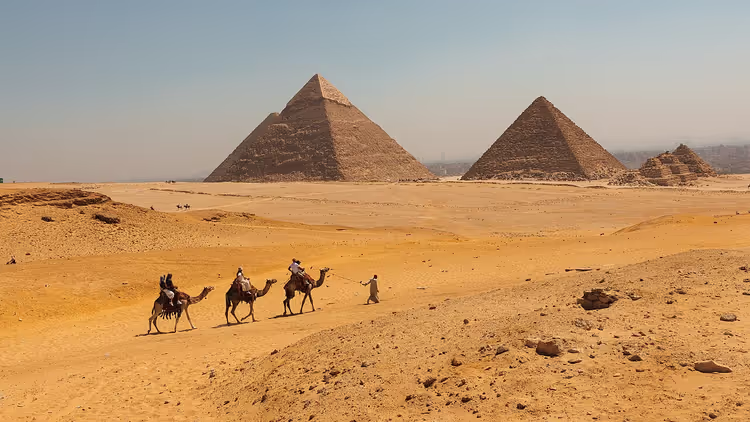
For centuries camels served Egyptians as desert transport. Even today they help patrol the desert areas around Giza and carry loads over short distances. The problem isn't the camel itself but the working conditions.
 © Ludovic Delot · CC BYPhoto: Ludovic Delot, CC BY (https://creativecommons.org/licenses/by/4.0), Wikimedia Commons
Most camels on the plateau today work solely for tourists. Some of them stand in the sun all day without water or shade. Animal welfare organisations have been writing about the poor treatment of animals at Giza for years.
Many travellers who are normally against riding animals still decide to take a short ride. And afterwards they admit to having doubts about their choice. If you have doubts too, say no. You can get a photo with a camel without riding one.
How to tell whether a camel is treated properly
Proper treatment means simple things. The animal doesn't work all day in the sun, and it has water, food and shade. After each ride the camel gets a rest.
Look for the signs before you agree:
- The animal's condition. The camel shouldn't be emaciated, with harness sores or rubbed-raw flanks.
- Shade and water. There should be a shelter and a water trough next to the stand.
- The driver's behaviour. A good camel driver doesn't hit the animal with a stick or force it to jerk to its feet.
- Duration. A short ride is better for the animal than a route lasting several hours in the heat.
Not all camel drivers are the same. There are families who have kept camels for generations and look after them. People like that will usually show you their animals without fuss and won't rush your decision.
Fixed-price rides
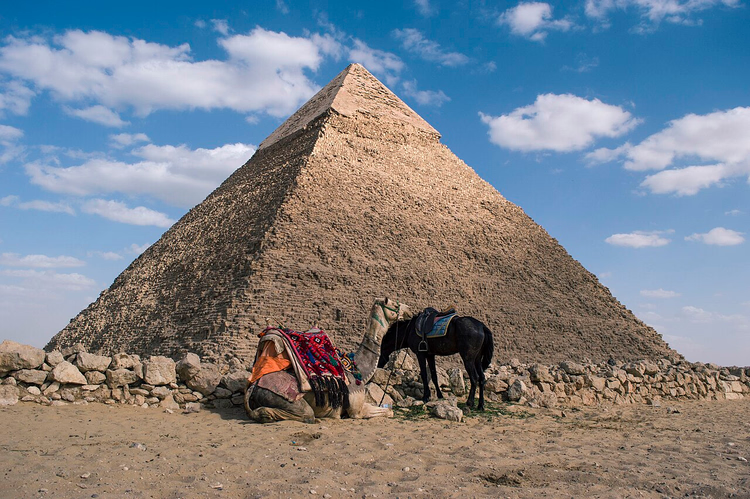
There have also been regulated camel stands with fixed rates on the plateau. They were marked with blue signs not far from the Sphinx. A ride there costs more than with a random driver, but there's minimal haggling, and the route and duration are clear in advance.
 © Mohamed Abdelrahim · CC BY-SAPhoto: Mohamed Abdelrahim, CC BY-SA (https://creativecommons.org/licenses/by-sa/4.0), Wikimedia Commons
You can see the difference in the animals themselves. The camels at these stands usually look healthier than their neighbours. If you find an official stand, make your arrangements only there and ask the price before you get on.
Agree on three things up front: how long the ride lasts, how far you're going and whether photos are included in the price. Hand over the money at the end, not at the start. That way you won't be left in the middle of the desert facing a demand to pay extra for "getting off the camel".
The catch: even a regulated ride doesn't guarantee ideal conditions for the animal. The decision is yours.
Guided tour or independent visit
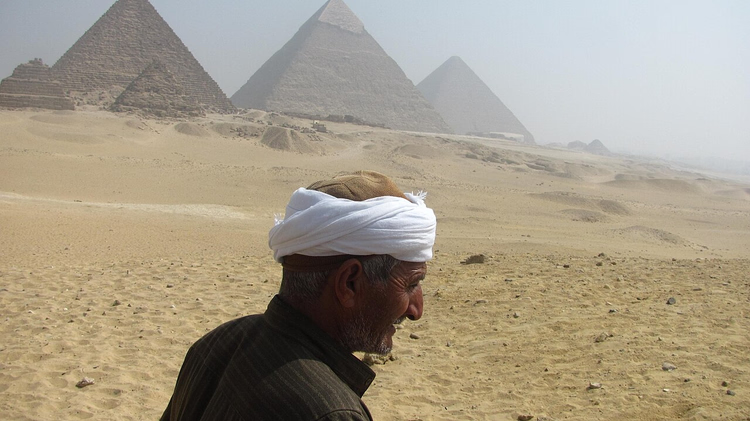
Both options work well; it all depends on you. Weigh up how much you know about the necropolis and how calmly you deal with pushy vendors.
 © Amany Fahmy · CC BY-SAPhoto: Amany Fahmy, CC BY-SA (https://creativecommons.org/licenses/by-sa/3.0), Wikimedia Commons
A tour suits you if you know next to nothing about the pyramids and want to understand what you're looking at. The guide takes care of tickets, transport and vendors. This is especially useful if you're travelling alone or it's your first time in an Arab country.
An independent visit gives you freedom. You decide how long to stand at the Sphinx, where to go and when to take photos. Nobody hurries you on to the next stop or into the "papyrus factory" of the guide's friend.
Travellers' reviews of independent visits are often better than expected. Many brace themselves for constant pressure from vendors, but in reality they only encounter the camel drivers and a couple of persistent "helpers" at the Great Pyramid. A firm "no" and a confident stride settle most situations.
There's a middle way too: hire an Egyptologist for two or three hours, then explore on your own. You get the context and keep your freedom. Tours with an Egyptologist, transfers and a stop at Saqqara or Dahshur are easy to compare by reviews and duration:
Tours and tickets in Giza
Guided tours, skip-the-line tickets and activities — most offers can be cancelled free of charge.
See offers on GetYourGuideThe widget loads once you give your consent.
When choosing a tour, look at whether the price includes tickets to the plateau and for going inside the pyramids. Check whether the itinerary includes shopping stops. And ask about the group size: in a small group the guide has time to answer your questions.
What to wear to the pyramids
The dress code at Giza is more relaxed than in the mosques and old quarters of Cairo. There are a great many tourists here, and the strict rules of Islamic sites hardly apply on the plateau. But it's still a Muslim country, so a basic level of modesty in dress is appropriate.
The main factor is the weather. It's hot in Giza during the day, and in summer the heat becomes exhausting. In spring and autumn, early mornings can be surprisingly chilly, especially with a wind off the desert. On an April morning many visitors need a light jacket, and by lunchtime they're already looking for shade.
Dress in layers. A jacket or scarf in the morning, light clothing in natural fabrics during the day. It's best to cover your shoulders not only out of respect for local customs but also against the sun: there's almost no shade on the open plateau.
10 things worth taking to the pyramids
- A hat or cap. Under the Egyptian sun you'll overheat quickly without something on your head. A wide brim protects both your face and your neck.
- Loose cotton or linen clothing. You'll sweat a lot on the plateau, especially after lunch. Long skirts, light trousers and long-sleeved shirts all work. Jeans are best left at the hotel: in the heat they stick to your legs.
- Shorts under a dress. If you plan to get on a camel, wear light shorts under your dress. The camel blanket is coarse and can chafe your skin.
- A light scarf. In the morning it's handy for shielding your shoulders from the wind. During the day it protects your head, eyes and mouth from sand and dust.
- Comfortable closed shoes. The ground around the pyramids isn't soft sand but stones and rubble from the excavations. In trainers or hiking boots you won't burn your feet on hot sand or twist an ankle.
- A bottle of water. Water isn't on sale everywhere on the plateau, and prices there are higher than in town. Bring water with you. If you're staying for the whole day, allow 2-3 litres per person, or dehydration will set in by lunchtime.
- Small Egyptian pound notes. Tips for a photo with a camel, for help or for the toilet are paid in cash. Small notes will spare you arguments over change.
- A crossbody bag. A small zipped bag is safer for your documents and phone. A backpack in the heat turns your back into an oven.
- Refreshing wipes or a small towel. They help you cool down and wipe the dust off your face and hands.
- A snack that doesn't melt. If you're staying on the plateau for a long time, bring nuts, crackers or dried fruit. Chocolate will turn to mush in the heat.
Add sunscreen, sunglasses and a spare power bank for your phone to your bag. The camera drains the battery faster than usual in the heat.
Where to eat near the pyramids
There are plenty of restaurants near the pyramids, but inside the necropolis itself the choice is modest. Keep that in mind before you go in. It's best to have a proper meal before or after your visit and to bring a snack and water onto the plateau.
It's hard to go wrong with Egyptian food. Koshari, falafel (ta'ameya), ful, flatbread with sesame paste and fried chicken are on offer in almost any local café. Portions are big, and prices in simple places are noticeably lower than in hotel restaurants.
If you'd like a special dinner, consider 139 Restaurant at the Marriott Mena House hotel. It belongs to the five-star hotel at the foot of the plateau, from where you can see the pyramids. Book an evening table in advance.
The most unexpected "restaurant with a view" at the pyramids is Pizza Hut. It stands opposite the Sphinx, on the Nazlet el-Samman village side. From the first-floor windows you can see the Sphinx and the pyramids in full.
There's a KFC in the same building. It also has an upstairs dining room with a similar view. The food is ordinary chain fare, but the view makes up for everything. Many visitors drop in just to have a cola and wait out the heat by the window.
In practice this means: for dinner with a view, book the hotel restaurant. For a quick bite with a view of the Sphinx, the upper floor of the chain café opposite will do. For real Egyptian food, walk a couple of streets deeper into Giza.
The solar boat of Khufu: where to see it now
While preparing for your trip you've no doubt come across mentions of the Solar Boat Museum beside the Pyramid of Khufu. That information is out of date. The boat has been moved, and you now have to go elsewhere to see it.
What is the solar boat
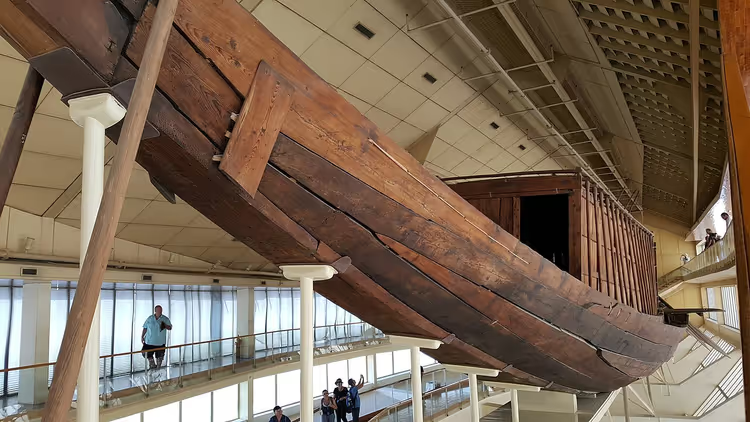
In 1954, archaeologists found a dismantled wooden ship at the foot of the Great Pyramid. It was reassembled, and the result was a vessel about 42 metres long. The boat belonged to the pharaoh Khufu and was buried beside his tomb (according to Smithsonian Magazine).
 © Ovedc · CC BY-SAPhoto: Ovedc, CC BY-SA (https://creativecommons.org/licenses/by-sa/4.0), Wikimedia Commons
The name "solar boat" comes from the ship's ritual role. The Egyptians believed that after death the king sailed across the sky with the sun god Ra. The boat may have been meant for precisely this journey through eternity.
But the hypothesis has a weak point. The wood shows marks suggesting the vessel had been in water after all. Perhaps it carried the pharaoh's body during the funeral and was then buried with him. Scholars are still arguing about it.
Where the boat was moved to
For a long time the boat stood in its own pavilion on the south side of the Great Pyramid. The photo above was taken back there. In 2021 the vessel was moved whole, without being dismantled, to the Grand Egyptian Museum (GEM). The operation took 48 hours (according to the Smithsonian Magazine article on the boat's move).
The old pavilion by the pyramid no longer operates as a boat museum. If you see a separate ticket "to the Solar Boat Museum on the plateau" in old guides, don't go looking for that ticket office.
Is the Grand Egyptian Museum worth visiting for the boat
Yes. Khufu's boat is considered one of the oldest and best-preserved ships in the world. You'll see almost nothing like it anywhere else.
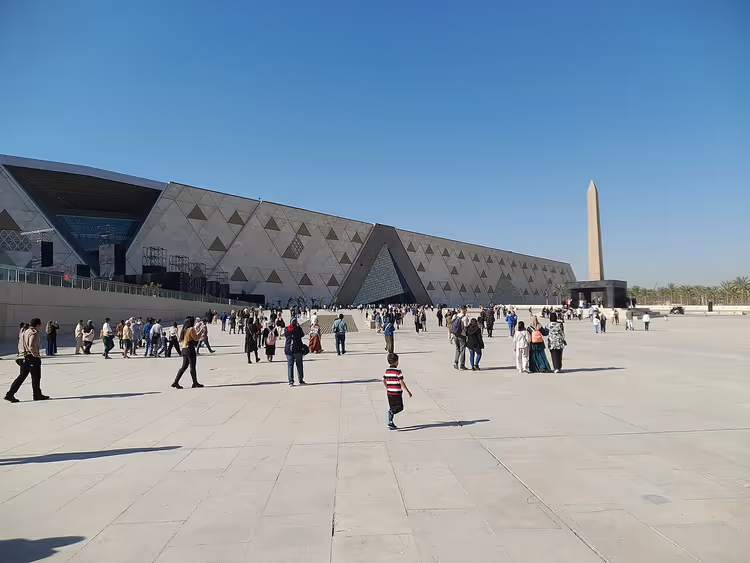
At the Grand Egyptian Museum it has a hall of its own, the Khufu's Boats Museum. The museum is not far from the Giza Plateau, so it's easy to combine with the pyramids on consecutive days. Besides the boat, the treasures of Tutankhamun and thousands of other objects are on display there.
For tickets, opening hours and entry rules, see the official GEM ticketing website. Allow at least half a day for the museum: the collection is enormous, and in an hour you'll see only a small part.
Who it's for: anyone interested in Egypt's history, and families with children who find it hard to walk around the plateau in the heat for long. Not for: those who have only one day in Cairo and whose aim is to see the pyramids alone.
The Sound and Light show at the pyramids
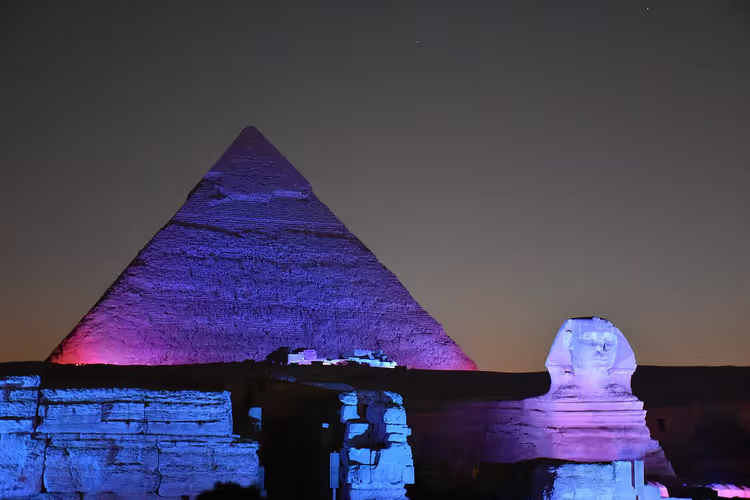
The Sound and Light show takes place in the evening right by the Sphinx. A narrator's voice, in the solemn style of old historical films, retells the story of Ancient Egypt and its pharaohs. Images are projected onto the Sphinx and the pyramids, and their faces are lit up in different colours.
 © MusikAnimal · CC BY-SAPhoto: MusikAnimal, CC BY-SA (https://creativecommons.org/licenses/by-sa/3.0), Wikimedia Commons
Visitors' opinions of the show are divided. Some find it naive and old-fashioned, while others are thrilled by the illuminated pyramids at night.
If your hotel is on the edge of Nazlet el-Samman, you can watch the show from the roof for free. The sound carries too when the wind is right. But if you enjoy the genre of historical spectacle, go to the seating area by the Sphinx: up close it makes a stronger impression.
How much does the Sound and Light show cost
Tickets are sold by a private operating company and can be bought online. A regular ticket costs $20, a child ticket for ages 6-12 costs $11 and a VIP ticket $26 (as of 09/2026, official show website). The same site sells tickets for similar shows at Karnak Temple and Abu Simbel.
According to the operator, the show runs in 10 languages. Tickets bought on the website get priority seating. The on-site ticket offices are open too, but on popular evenings seats can sell out.
What time does the show start
The schedule of showings depends on the season and the language. The operator warns that dates may change and that the second showing of the evening only goes ahead with a minimum number of spectators (as of 09/2026, show operator's schedule and rules).
The show is sometimes cancelled at short notice: because of private events at the venue or the weather. Check the schedule on the day of the show and save the operator's contact details. If you're in Giza for just one evening, keep a backup plan in mind.
Scams at the pyramids and how to avoid them
An independent visit to Giza gives you freedom, but it doesn't protect you from scammers. Without a guide, you're a visible target. Below are the three most common schemes travellers report.
Let's be clear about the difference first. A vendor who simply offers you a souvenir or a ride is not a scammer. A scammer is someone who tries to take your money by deception. Against the latter, knowing the script helps.
The "your guide is waiting downstairs" scam
This one looks innocent. In the morning, while you're having breakfast at the hotel, a member of staff comes up to you with a phone. They say your guide is already waiting downstairs. The person on the phone knows your name and that you have a tour "to the pyramids" today.
The catch is in the details. The call comes to the hotel's phone, not yours. The time doesn't match what you agreed. And the "guide" talks about the trip vaguely and doesn't name specific places: Saqqara, Dahshur or Giza.
Travellers describe cases like this in hotels that sell tours themselves. The aim is simple: to lure a customer away from another tour operator to their "own" guide. Sometimes the tourist is simply put in a different car and notices the switch too late.
What to do in this situation
- Contact your tour operator directly. A genuine company usually messages you on WhatsApp or calls your mobile, not the front desk. Message your guide and ask where they are.
- Ask specific questions. Ask exactly where you're going, what time the meeting was set for and what the guide's name is. A scammer will quickly start getting muddled.
- Don't share more than necessary about your plans. Even the receptionist doesn't need to know who you're going with or where.
- Don't get into the car until you're completely sure. Especially if you're travelling alone, and especially if you're a woman travelling solo.
The "change some money for me" scam
This scheme crops up all over Egypt, and especially often at the pyramids. Someone comes up to you, usually a camel driver or vendor, and asks where you're from. You name your country.
In response they pull out notes in euros or another currency and ask whether they're used where you live. Then they ask you to exchange them for Egyptian pounds: foreign money, they say, is awkward for them. Naturally, the rate they offer will be in their favour. Sometimes the notes turn out to have been withdrawn from circulation altogether.
The best reply is polite and brief. Say you need your pounds for the trip yourself and can't change any. Don't take out your wallet to "see what you've got".
The "climb the pyramid, I'll keep watch" scam
At the foot of the Great Pyramid, the offer to climb usually goes like this: "Go on, climb up, I'll make sure nobody's coming."
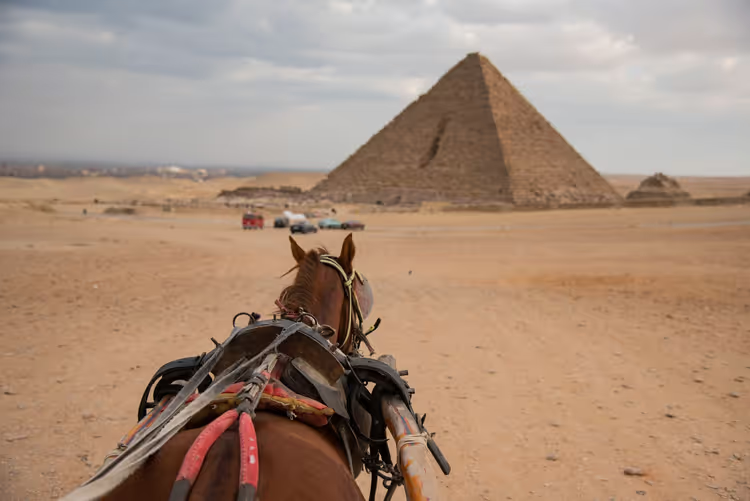
The people making the offer know the rules perfectly well. They'll ask for money for their "help": supposedly for distracting the police and turning a blind eye to the offence.
Sometimes the plateau's own attendants are in on the scheme. The tourist pays, climbs a couple of rows and risks a fine or, at worst, detention. Don't agree, even if it seems that "everyone does it".
Dos and don'ts at the pyramids
There are many rules of conduct at the pyramids. To make them easy to remember, we've boiled the essentials down to two short lists of five points each. Let's start with the don'ts.
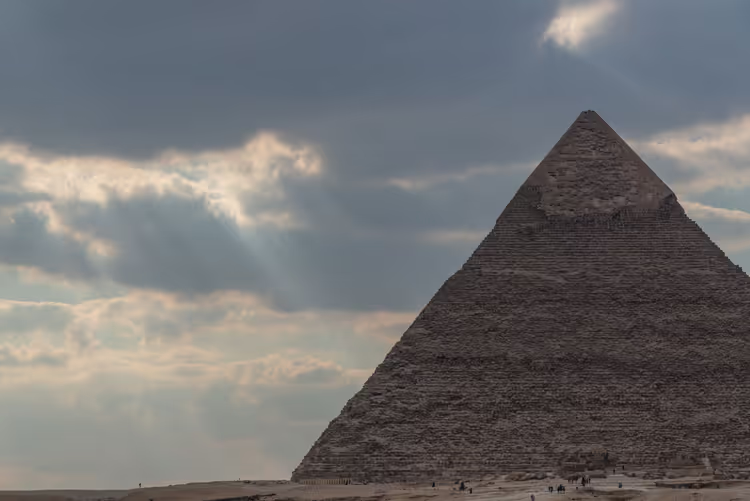
What not to do
- Climb the pyramids. If not for the sake of preserving the monument, then at least for your own: you can be detained for it.
- Pay people who help you break the rules. It rewards pushiness and reinforces the myth that "a tourist equals an ATM".
- Take stones and fragments from the plateau. Even a small stone is part of the monument, and taking antiquities out of Egypt is prohibited.
- Ride with drivers who mistreat their animals. Your money supports exactly that practice.
- Be rude to the people who work on the plateau. Not every vendor is a scammer; many are simply feeding their family. A firm "no" is enough.
What you should definitely do
- Take your time. For many people this is the trip of a lifetime. Don't try to cram everything into a single day: the pyramids deserve your attention.
- Focus on what matters. Egypt has its share of everyday hassles. If you don't dwell on them, the visit will bring you more joy.
- Take photos. Shoot not only the postcard views but also the details: blocks, inscriptions, people's faces (with their permission).
- Learn something new. You don't have to know everything about the pyramids. Pick one topic, such as Khufu's boat or the builders, and get to grips with it.
- Explore. You can't climb the pyramids, but you can walk around their perimeter and take a look at the tombs of the nobility. There are far fewer tourists there.
The best photo spots at the Pyramids of Giza
The pyramids look impressive from any angle. But if you're after a particular shot, work out where to go in advance. Below are the four spots photographers choose most often.
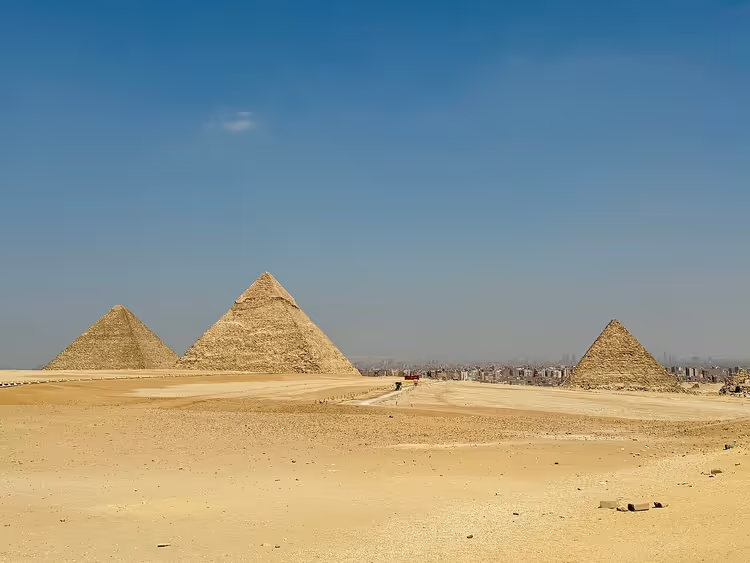 © Slyronit · CC BY-SAPhoto: Slyronit, CC BY-SA (https://creativecommons.org/licenses/by-sa/4.0), Wikimedia Commons
- The six-pyramid panorama. From this spot in the desert, six pyramids fit into the frame at once: the three great ones and the small queens' pyramids. There are noticeably fewer people here. Walking there is usually not allowed for safety reasons, so people get there by camel with a driver or according to whatever rules are in force on the plateau on the day of the visit.
- The Panorama Viewpoint. The best-known and most crowded spot. Buses pull up here, including the plateau's new electric shuttles. Come at opening time, or you won't get a shot without people.
- The frontal view of the Sphinx and the Great Pyramid. For this shot you need a wide-angle lens to fit both the Sphinx and the pyramid into the frame. The area in front of the Sphinx is partly fenced off, and access depends on the guards. Don't pay people out of uniform for a "special pass".
- The classic "kissing the Sphinx" shot. This one is taken from the side walkway above the Sphinx Temple. Stand so that your face in the photo lines up opposite the statue's face, and ask your companion to catch the angle.
One rule applies to all the spots. The light is better in the morning or close to closing time; in the middle of the day the shadows are harsh and the sky washes out. Bring a spare memory card: you'll take more shots than you plan to.
Important: the prices and opening hours in the image are out of date. For current information, see the table above and the ministry's Giza Plateau page. The packing list and the tips on when to visit still hold.
⁉️🤔 Frequently asked questions
How much does it cost to enter the Pyramids of Giza?
An adult foreign visitor pays 700 Egyptian pounds to enter the plateau (as of 09/2026, Ministry of Tourism and Antiquities). Going inside the pyramids is paid for separately; all the prices are in the table above.
What time does the Giza Plateau open?
According to the ministry's official website, the plateau is open daily from 8:00 to 16:00 (as of 09/2026). The hours may change during Ramadan and on public holidays. Arrive at opening time to see the pyramids without the crowds and before the worst of the heat, or two to three hours before closing.
Can you see the solar boat at the Pyramid of Khufu?
No, it's no longer on the plateau. In 2021 Khufu's boat was moved whole to the Grand Egyptian Museum. It is now displayed in a hall of its own, the Khufu's Boats Museum. Museum tickets are sold on the official GEM website, and the old pavilion by the pyramid no longer operates as a museum.
Do you need a guide to visit the pyramids?
No, you can see the pyramids on your own. A guide is useful if you know little about the history of the necropolis, don't want to deal with vendors yourself or are travelling alone. A handy compromise: an Egyptologist for two or three hours, then a walk at your own pace. Check whether tickets are included in the tour price.
Is it safe to ride a camel at the pyramids?
The ride itself is usually safe, but there are many scams around it. Agree on the price, duration and route before you get on, and pay at the end. Look at the animal's condition: an emaciated camel with harness sores is a reason to say no. The rules for rides on the plateau keep changing, so check them on site.
Can you watch the Sound and Light show for free?
Partly, yes. From the rooftops of hotels on the edge of Nazlet el-Samman the illumination of the pyramids is clearly visible, and the sound carries when the wind is right. For the full experience, buy a ticket for the seating area by the Sphinx: a regular ticket costs $20 (as of 09/2026, official show website).
In brief: what to book for the Pyramids of Giza
The Pyramids of Giza are easy to see on your own if you settle three things in advance. The first is a night's stay near the plateau, so you don't lose the morning in traffic. The second is the format of your visit: on your own or with an Egyptologist. The third is the time of day and whether to go inside a pyramid.
Choose according to your situation:
- If you have a layover in Cairo: take a tour with an airport transfer and a time buffer before your flight.
- If it's your first time in Egypt: hire an Egyptologist for the first two or three hours, then explore on your own.
- If you want photos without the crowds: stay overnight in Nazlet el-Samman and be at the ticket office at opening time.
- If you love history: add Saqqara, Dahshur and the Grand Egyptian Museum with Khufu's boat.
- If your budget is tight: choose a guesthouse with a terrace and watch the Sound and Light show from the roof.
Start with accommodation: it determines whether you'll make it to the plateau by opening time. Find a hotel in Giza on Trip.com. Once your dates are set, compare tours of the pyramids with an Egyptologist on GetYourGuide.

A small editorial team writing guides for independent travel. We travel ourselves, but we haven’t been everywhere, so we check prices, opening hours and how to get there against official sources.