
















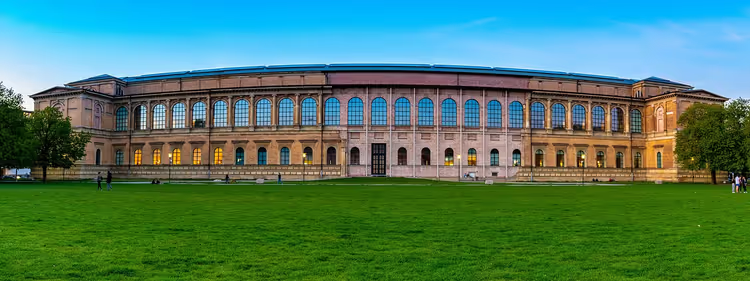
25 Munich museums: tickets, opening hours and what is closed for renovation
Munich has more than a hundred museums. You won't even cover Kunstareal, the compact museum quarter around Königsplatz, in a single trip.
This is where technical giants, the old Pinakotheks, and small private collections sit side by side. Some museums are closed for years-long renovations: Neue Pinakothek has been closed to visitors since 2019 (as of 09/2026, renovation plan and timeline).
We've put together Munich's museums with prices, opening hours, addresses, and honest catches. Closed galleries are noted separately.
Ad: this article contains affiliate links, we earn a commission if you book through them, at no extra cost to you.
What to know before you visit
💡 In short:
- Tickets: most museums charge 3 to 10 € per adult, Deutsches Museum costs 16 €, and on Sundays the Pinakotheken houses let you in for 1 € (as of 09/2026, Pinakotheken rates).
- Neue Pinakothek and Münchner Stadtmuseum are closed for renovation, so plan around other galleries.
- Everything in Kunstareal is close together: Pinakothek der Moderne, Alte Pinakothek, and Königsplatz are all within walking distance.
- Prices and opening hours: as of 09/2026, verified on the official Pinakotheken website.
How much tickets cost. An adult ticket at most city museums costs 3-10 € (as of 09/2026, museum tickets and discounts). On Sundays, the Bayerische Staatsgemäldesammlungen houses charge 1 € for entry: this applies to Pinakothek der Moderne, Sammlung Schack, and Museum Brandhorst (as of 09/2026, Pinakotheken rates). Children and teens under 18 get free admission to many museums.
What's closed. Neue Pinakothek has not accepted visitors since January 2019, with reopening planned for around 2030 (as of 09/2026, renovation news). Münchner Stadtmuseum is closed for a full-scale renovation and will return around 2031 (as of 09/2026, Stadtmuseum full-scale renovation). Part of the collections are on display at neighboring museums.
How to save time. Kunstareal is compact, but lines get long in summer. Pick two or three museums per day and arrive at opening time. Many museums are closed on Mondays, so check schedules in advance.
1. Deutsches Museum
 © Burkhard Mücke · CC BY-SAPhoto: Burkhard Mücke, CC BY-SA (https://creativecommons.org/licenses/by-sa/4.0), Wikimedia Commons
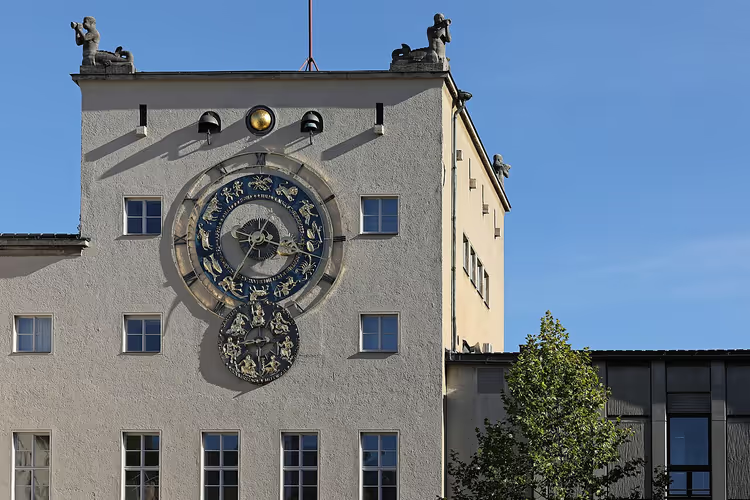
The world's largest science and technology museum occupies an entire island, Museumsinsel, on the Isar River. It was founded on the initiative of Oskar von Miller in 1903, and the first exhibition opened in 1906. It houses around 100,000 objects: airplanes, ships, lunar rovers, and a nuclear reactor.
The museum is being renovated in stages, so check the list of open galleries before your visit.
Besides cars and airplanes, there is also a planetarium, a DNA lab, and a large science library. The exhibits bring together inventions from about fifty scientific fields, from physics and chemistry to medicine and astronomy. Separate sections are devoted to ships, seafaring, and space technology. The collection grew out of the physics and mathematics holdings of Bavaria, which were first shown to the public in the early 20th century, and today it is one of the largest technology collections in the world. Seeing the entire complex will take a whole day, so choose two or three favorite sections in advance and don't try to see everything at once.
- Ticket and hours: €16 for adults, daily from 9 to 5 (as of 09/2026, museum website).
- Getting there: by subway, tram, or bus to the Museumsinsel stop.
- Who it's for: families with children and anyone who loves technology.
- The catch: some halls are still closed, and you can't cover the whole museum in one day.
2. Spielzeugmuseum im Alten Rathausturm
 © piaitsch · CC BY-SAPhoto: piaitsch, CC BY-SA (https://creativecommons.org/licenses/by-sa/4.0), Wikimedia Commons
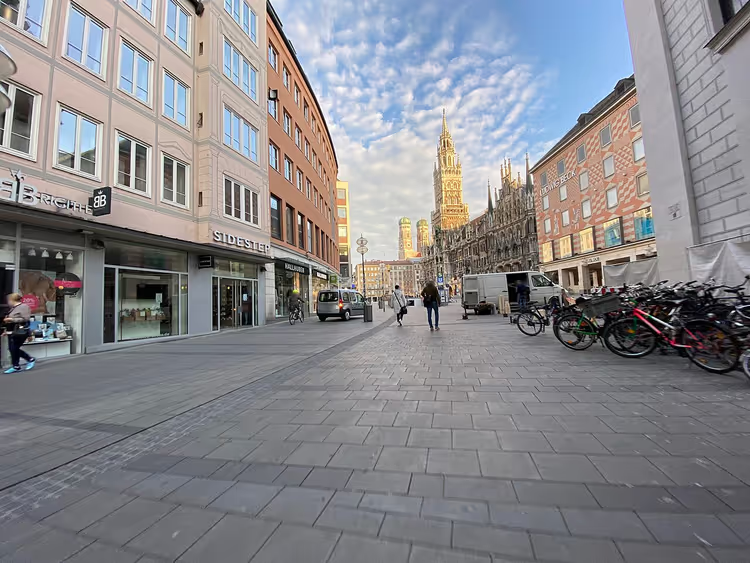
The Toy Museum occupies four floors of the Old Town Hall tower right on Marienplatz. The core of the collection was established by the writer Ivan Steiger, and it was later expanded with toys from around the world. On the first floor you are greeted by dolls made of wood, porcelain, and wax, along with a large collection of Barbie dolls.
The oldest exhibits are more than three hundred years old: plush, tin, and paper toys, model steam locomotives, and ships. Among the rarities are dolls made of bird feathers and a wartime collection of toys made from bread. A shop selling reproductions operates next to the ticket desk.
- Where to find it: the Old Town Hall tower on Marienplatz.
- Who it's for: families with children and toy collectors.
- The catch: the rooms are small, and the exhibition is designed for a short visit.
3. Pinakothek der Moderne
 © Rufus46 · CC BY-SAPhoto: Rufus46, CC BY-SA (https://creativecommons.org/licenses/by-sa/3.0), Wikimedia Commons
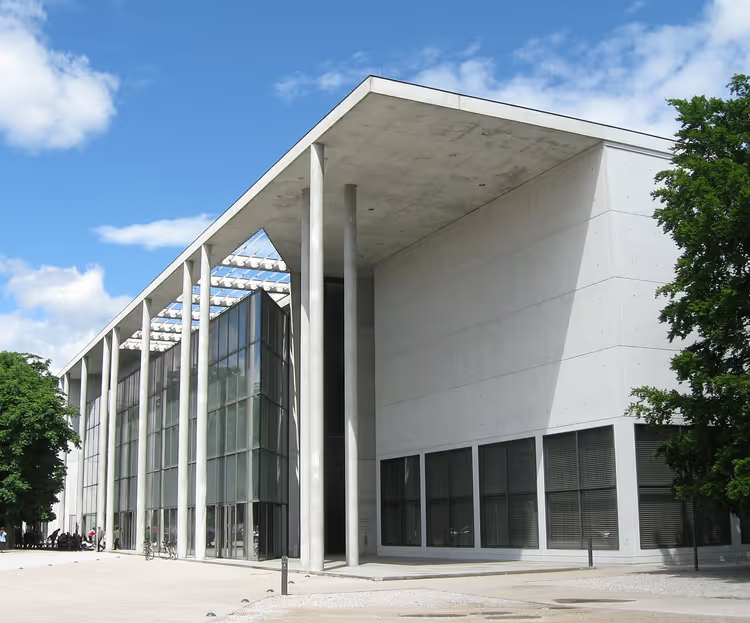
One of Europe's largest museums of modern art opened in 2002 in a building by the architect Stephan Braunfels. Four museums are gathered under one roof: painting and graphic art, architecture, design, and the graphic collection. You will see works from the 20th and 21st centuries, from classical modernism to contemporary artists.
The museum is open Tuesday through Sunday from 10 to 6, on Thursdays until 8, and is closed on Mondays. An adult ticket costs €10, a reduced ticket €7, and on Sundays €1 (as of 09/2026, official website). Children under 18 enter free.
- Ticket and hours: €10, reduced €7, on Sundays €1; Tuesday through Sunday from 10 to 6 (as of 09/2026, museum website).
- Getting there: subway to Odeonsplatz, then on foot or by bus.
- Who it's for: those who love 20th-century art and design.
- The catch: the collection is large, and you can't cover everything in one visit.
4. Bayerisches Nationalmuseum
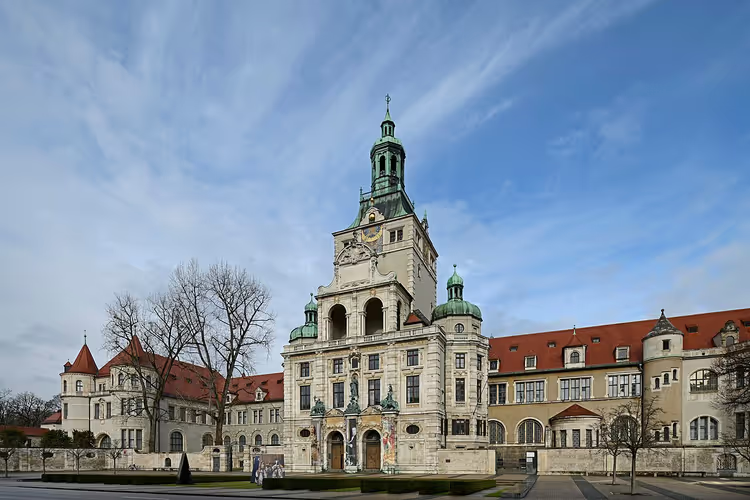
The Bavarian National Museum is called the treasury of the Wittelsbachs. It has been operating since 1855, and the current building on Prinzregentenstraße was designed by the architect Gabriel von Seidl in the late 19th century. An equestrian statue of Prince Leopold stands at the entrance.
Inside you will find stained glass, porcelain, silver, and ivory, as well as the world's largest collection of nativity scenes. The first floor displays the Seeon Madonna and sculptures by Bavarian masters. The museum is closed on Mondays.
- What to see: nativity scenes and decorative arts.
- Address: Prinzregentenstraße, Lehel district.
- Who it's for: lovers of crafts, porcelain, and sculpture.
- The catch: the museum is closed on Mondays.
5. Archäologische Staatssammlung
 © Burkhard Mücke · CC BYPhoto: Burkhard Mücke, CC BY (https://creativecommons.org/licenses/by/4.0), Wikimedia Commons
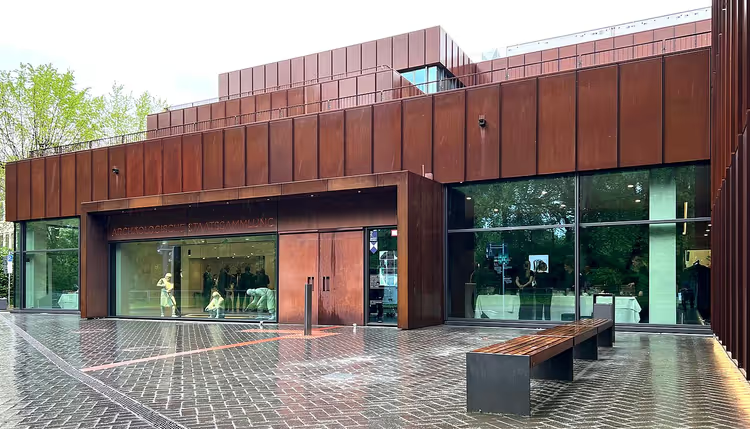
The Bavarian archaeological collection holds finds spanning 120,000 years of history (as of 09/2026, archaeologie.bayern). After eight years of renovation, the museum reopened in April 2024. It has sections on the Neolithic, the Bronze Age, and the Celts, as well as a collection of coins and weapons.
The numismatics section displays rare coins, and the "Age of the Celts" hall tells the story of ancient European tribes. Temporary exhibitions and meetings with conservators are held frequently.
- What to see: finds from the Stone Age to the Middle Ages.
- Address: Lerchenfeldstraße, Maxvorstadt district.
- Who it's for: families and history lovers.
- Plus: new permanent exhibition halls opened after the renovation.
6. Museum Fünf Kontinente
 © Burkhard Mücke · CC BY-SAPhoto: Burkhard Mücke, CC BY-SA (https://creativecommons.org/licenses/by-sa/4.0), Wikimedia Commons
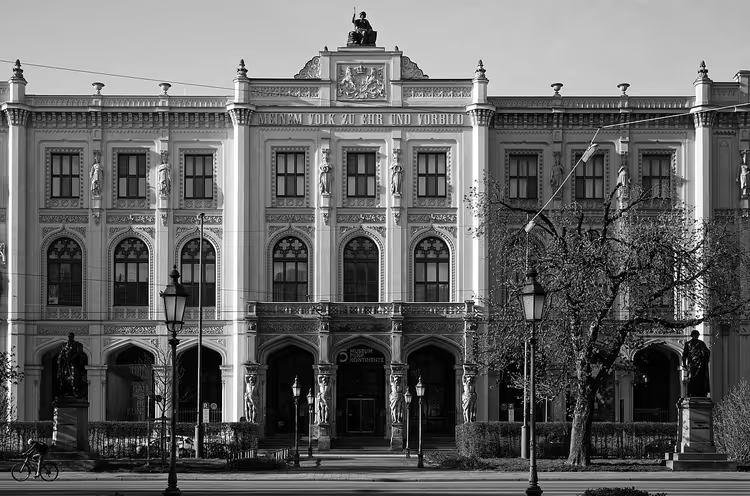
The city's second-largest museum grew out of the Wittelsbach collection. It houses art and everyday objects from the peoples of Africa, Asia, the Americas, and Oceania. You'll see masks, weapons, Indigenous jewelry, and statues of Buddha, Krishna, and Vishnu.
The collection is divided into six areas, including dedicated galleries for North America and Asia. The museum takes particular pride in its collection of East Asian calligraphy from ancient books and scrolls. The museum is closed on Mondays.
- What to see: art of Indigenous peoples from five continents.
- Address: Maximilianstraße, Altstadt district.
- Who it's for: anyone interested in ethnography and crafts.
- The catch: closed on Mondays.
7. BMW Museum
 © Diego Delso · CC BY-SAPhoto: Diego Delso, CC BY-SA (https://creativecommons.org/licenses/by-sa/3.0), Wikimedia Commons
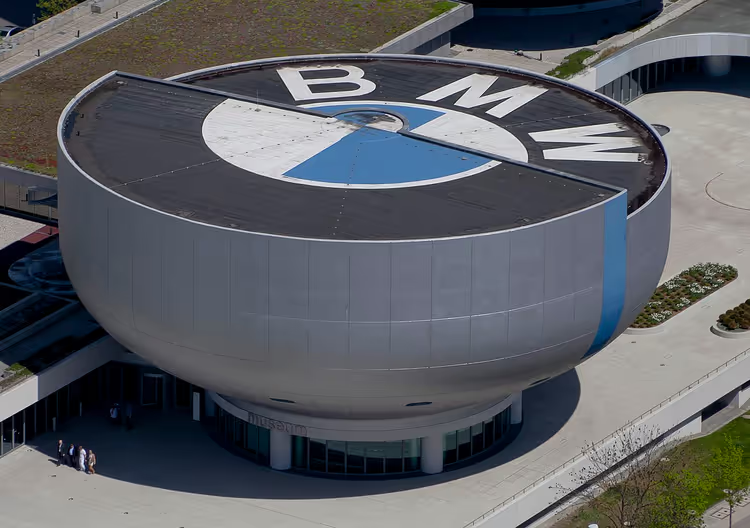
The BMW Museum opened for the Olympics in a building shaped like a four-cylinder engine. Next to it stand the headquarters tower and the BMW Welt complex. Locals call the bowl with the emblem the "soup bowl."
Inside, you'll see sedans, roadsters, early motorcycles, and the egg-shaped Isetta microcar. There are models from James Bond films and hydrogen-powered prototypes. The museum is closed on Mondays.
- What to see: classic BMWs, motorcycles, and engines.
- Address: Am Olympiapark, next to the Olympic Park.
- Who it's for: car enthusiasts and teenagers.
- The catch: closed on Mondays.
8. Staatliches Museum ägyptischer Kunst
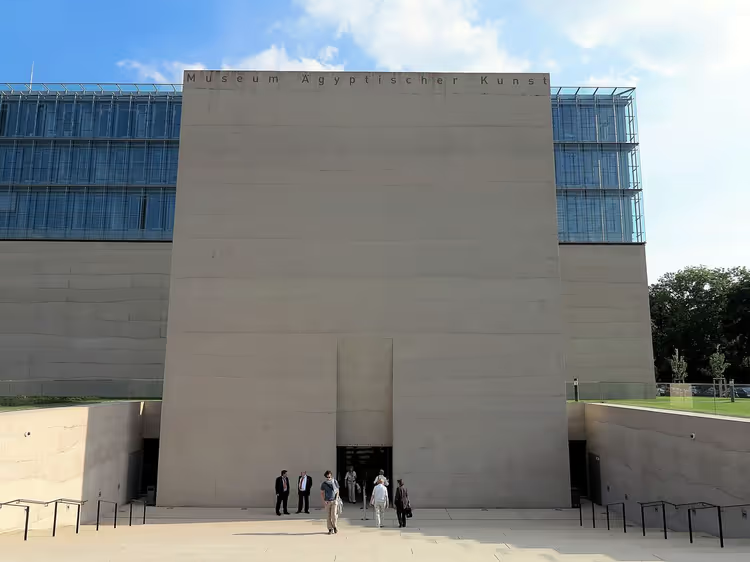 © Bbb-Commons · CC BY-SAPhoto: Bbb-Commons, CC BY-SA (https://creativecommons.org/licenses/by-sa/3.0), Wikimedia Commons
The Egyptian art museum moved into a new building in 2013. Its collection grew out of Duke Albrecht V's holdings and includes around eight thousand exhibits. It displays sculptures, sarcophagi, and everyday objects from ancient Egypt.
An audio guide is included with your ticket and helps you make sense of the exhibition. Lectures, film screenings, and temporary exhibitions are held regularly. The museum occupies a building on Gabelsbergerstraße next to the Kunstareal.
- What to see: Egyptian sculptures and sarcophagi.
- Address: Gabelsbergerstraße, next to the Kunstareal.
- Who it's for: families and fans of ancient history.
- The plus: audio guide included in the ticket price.
9. Münchner Stadtmuseum
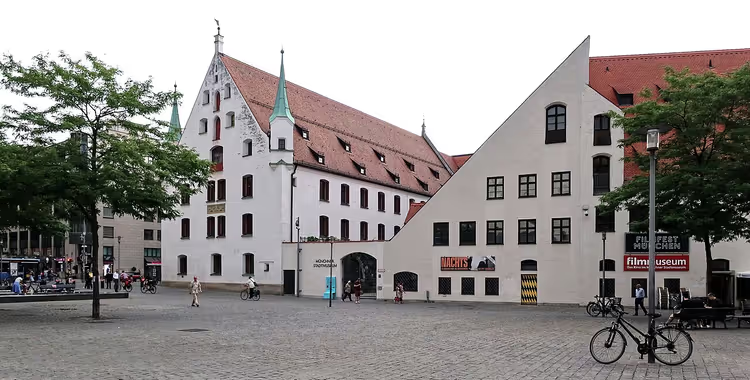 © Burkhard Mücke · CC BY-SAPhoto: Burkhard Mücke, CC BY-SA (https://creativecommons.org/licenses/by-sa/4.0), Wikimedia Commons
The Munich City Museum occupied the historic arsenal on Sankt-Jakobs-Platz. It housed a collection of musical instruments, puppet theater marionettes, tens of thousands of portraits, and the "Moorish dancers" figures from the Old Town Hall ballroom.
The holdings included costumes, furniture, graphic art, paintings, and photographs. The puppet theater collection filled a huge hall with marionettes, and tens of thousands of portraits hung in the galleries. On the ground floor, bronze sculptures from the plague column on Marienplatz, Munich's historic coat of arms, and a wooden model of the city were on display. The museum occupied the old arsenal and the neighboring wing built as medieval stables, so you could easily spend half a day here.
Since 2024 the museum has been closed for a major renovation and is expected to reopen around 2031 (as of 09/2026, Stadtmuseum renovation). In the meantime, pick other museums from this list.
- Status: closed for renovation until 2031 (as of 09/2026, museum website).
- Address: Sankt-Jakobs-Platz, next to Viktualienmarkt.
- The catch: the museum is completely closed, you can't visit it right now.
10. Paläontologisches Museum
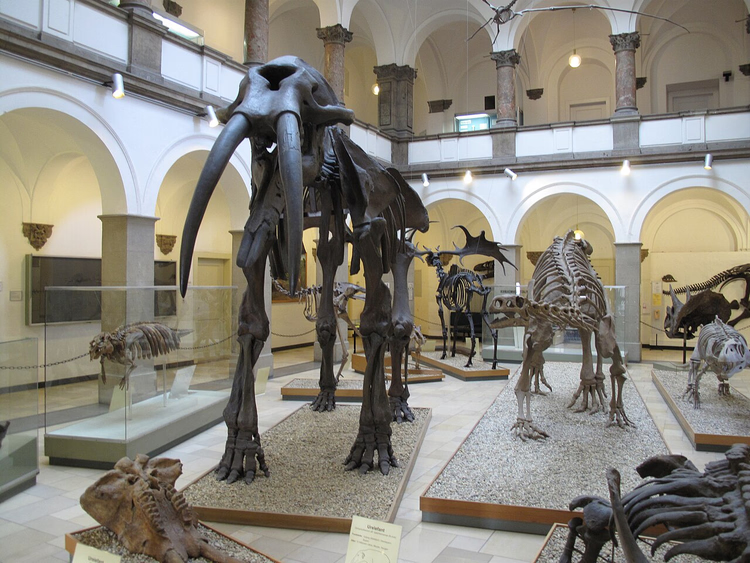 © Schlaier · CC BYPhoto: Schlaier, CC BY (https://creativecommons.org/licenses/by/3.0), Wikimedia Commons
The paleontology museum tells the story of life on Earth. The first exhibition was held at the University of Munich back in the 19th century, and today the collection holds over a million fossils. The displays show skeletons of animals and plants from different eras.
The building once belonged to a school of applied arts, which is evident from the facade with craft motifs. The main hall sits under a glass arcade vault, giving you a clear view of the entire space.
- What to see: fossils and skeletons of prehistoric animals.
- Address: Richard-Wagner-Straße, Maxvorstadt district.
- Who it's for: a good fit if you're traveling with kids and enjoy natural history.
11. Museum Brandhorst
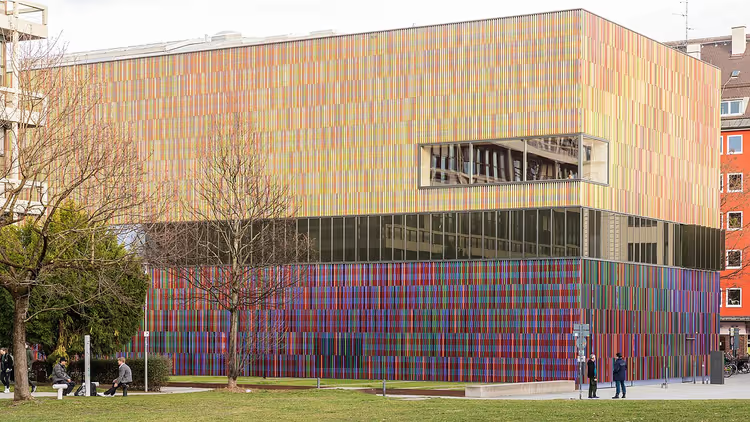 © Raimond Spekking · CC BY-SAPhoto: Raimond Spekking, CC BY-SA (https://creativecommons.org/licenses/by-sa/4.0), Wikimedia Commons
The Brandhorst Museum shows contemporary art from the collection of Annette and Udo Brandhorst. Around one hundred and sixty of the donated paintings are on permanent display; the rest are too large for the galleries. Here you'll see works by Warhol, Beuys, Hirst, and Polke.
The museum opened in 2009 and is closed on Mondays; on Sundays admission costs €1 (as of 09/2026, Museum Brandhorst prices).
- What to see: pop art and contemporary painting.
- Address: Theresienstraße, in the Kunstareal quarter.
- Who it's for: anyone who loves art from after 1945.
- The catch: closed on Mondays.
12. Museum Mensch und Natur
The Museum of Humankind and Nature operates in the northern part of the Nymphenburg palace park. It covers the history of the planet, minerals, and evolution. Science here is presented through interactive installations with audio and video rather than dry display cases.
A real Mesosaurus skeleton stands right at the entrance. Eight scientific fields are organized into separate halls, so you and your kids won't get bored here.
- What to see: the Mesosaurus skeleton and interactive halls.
- Address: on the grounds of Schloss Nymphenburg.
- Who it's for: families with children.
13. Staatliche Antikensammlungen
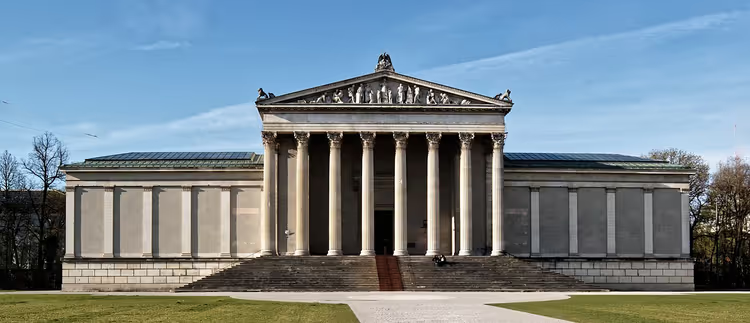 © Burkhard Mücke · CC BY-SAPhoto: Burkhard Mücke, CC BY-SA (https://creativecommons.org/licenses/by-sa/4.0), Wikimedia Commons
The State Collections of Antiquities showcases the art of the Greeks, Romans, and Etruscans. It occupies a temple-style building on Königsplatz, built in the first half of the 19th century. The core of the collection came from the Wittelsbach ceramics holdings.
It houses one of the largest collections of Greek vases, along with the gold crown from Armento and the Cologne cup. Your ticket is also valid at the neighboring Glyptothek, so you can see two museums in one visit.
- What to see: Greek vases and ancient sculpture.
- Address: Königsplatz, Maxvorstadt district.
- Who it's for: fans of antiquity.
- The plus: combined ticket with the Glyptothek.
14. Deutsches Jagd- und Fischereimuseum
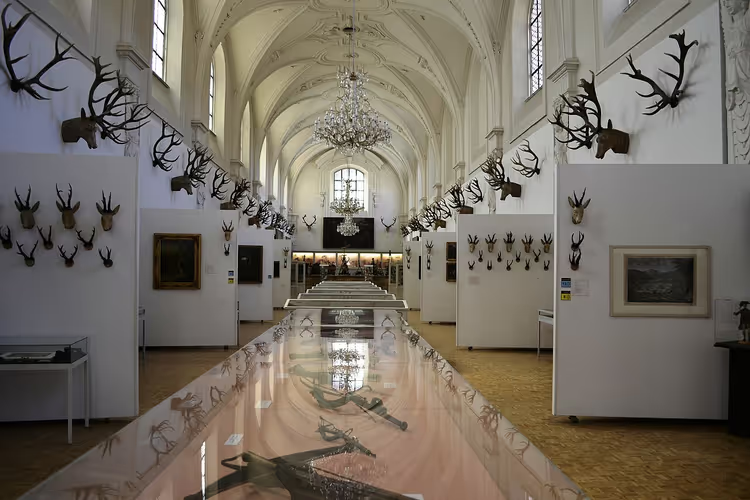 © High Contrast · CC BYPhoto: High Contrast, CC BY (https://creativecommons.org/licenses/by/3.0/de/deed.en), Wikimedia Commons
The Hunting and Fishing Museum occupies a former Augustinian church in the very center of the city. Its walls are decorated with paintings by Pisanello, Rubens, and Snyders on hunting and fishing themes. It holds over a thousand taxidermied animals.
A bronze boar by sculptor Martin Mayer stands at the entrance. Local tradition says you should rub its snout to make a wish, and you can do the same.
The core of the collection came from antlers the city purchased from Count Arco-Zinneberg. The halls inherited vaulted ceilings and old murals from the church.
- What to see: the weapons collection, trophies, and the bronze boar.
- Address: Neuhauser Straße, in the pedestrian zone.
- Who it's for: families and hunters.
15. Bier- und Oktoberfestmuseum
 © Burkhard Mücke · CC BY-SAPhoto: Burkhard Mücke, CC BY-SA (https://creativecommons.org/licenses/by-sa/4.0), Wikimedia Commons
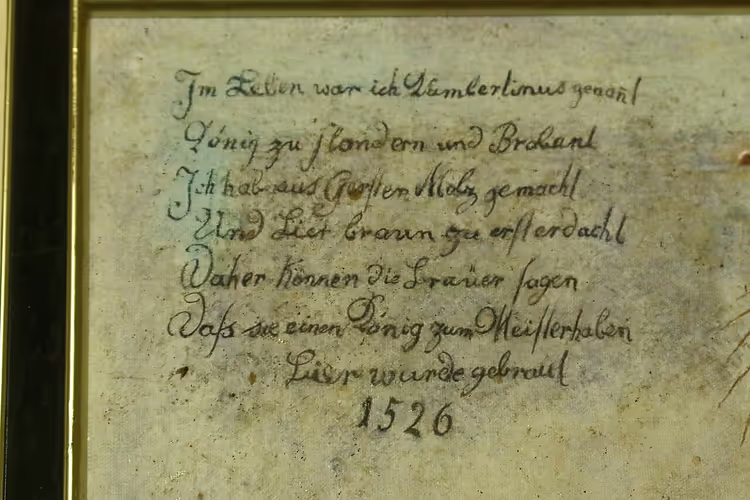
The Beer and Oktoberfest Museum opened in a historic building in the old town. It covers the history of brewing and everything about the famous festival, which began with the wedding celebrations of King Ludwig.
On the ground floor there is a hall where they pour you beer in a Maß mug and serve cheese. The museum is closed on Sundays and Mondays, and its doors are also closed on public holidays.
- What to see: brewing equipment and the history of Oktoberfest.
- Address: Sterneckerstraße, near Isartor.
- Who it's for: adults.
- The catch: closed on Sundays and Mondays.
16. Neue Pinakothek
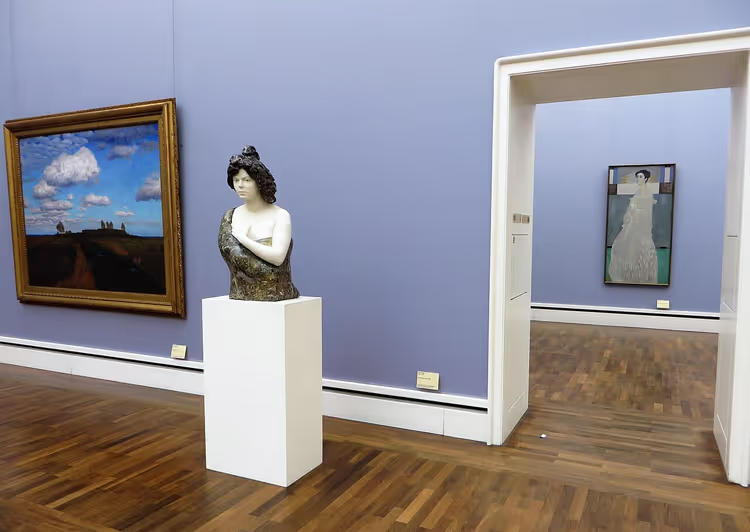 © Bärwinkel,Klaus · CC BYPhoto: Bärwinkel,Klaus, CC BY (https://creativecommons.org/licenses/by/3.0), Wikimedia Commons
The Neue Pinakothek houses painting and sculpture from the 19th and early 20th centuries: Van Gogh, Goya, Cézanne, Degas, Monet. The collection is considered the link between the Alte Pinakothek and the Pinakothek der Moderne.
The gallery has been closed since 2019 for renovation (as of 09/2026, sanierung-neue-pinakothek.de). Some of the masterpieces are shown in the east wing of the Alte Pinakothek and in the Sammlung Schack. The Neue Pinakothek is scheduled to reopen by 2030 (as of 09/2026, reopening date).
- Status: closed for renovation, reopening around 2030 (as of 09/2026, official website).
- Where to see the collection: at the Alte Pinakothek and the Sammlung Schack.
- The catch: the main exhibition is unavailable until the renovation is complete.
17. Glyptothek
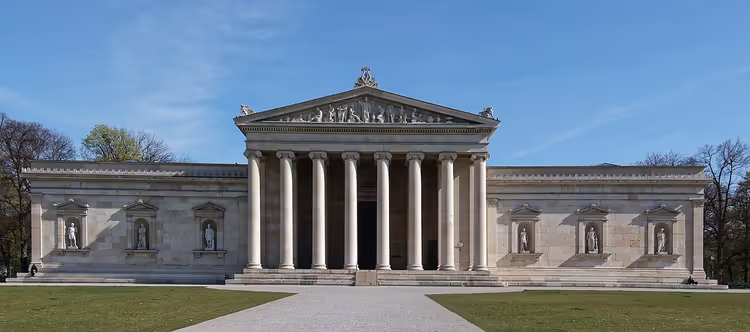 © Burkhard Mücke · CC BY-SAPhoto: Burkhard Mücke, CC BY-SA (https://creativecommons.org/licenses/by-sa/4.0), Wikimedia Commons
The Glyptothek houses the finest ancient sculptures in Munich's oldest public museum. The columned building was designed by architect Leo von Klenze, with thirteen halls arranged around its perimeter. Statues of Hephaestus, Pericles, and Prometheus stand in the facade niches.
Inside you will see marble sculptures and the famous Barberini statue. The ticket is also valid at the neighboring State Collections of Antiquities on Königsplatz.
- What to see: ancient sculpture and the Barberini marble.
- Address: Königsplatz, Maxvorstadt district.
- Who it's for: lovers of ancient art.
- Plus: combined ticket with the State Collections of Antiquities.
18. Museum für abgüsse klassischer bildwerke
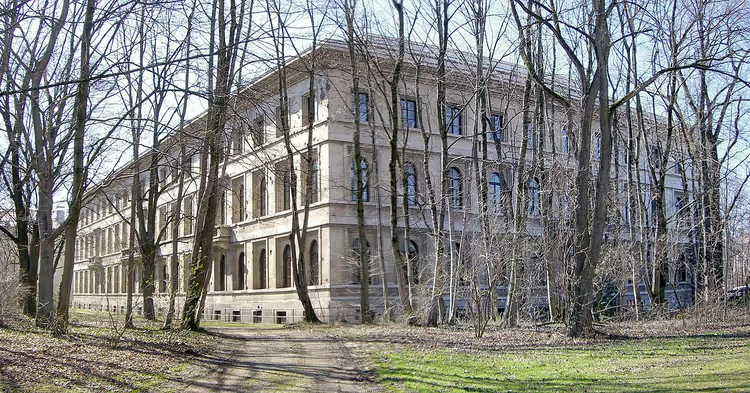 © Maximilian Dörrbecker ( Chumwa ) · CC BY-SAPhoto: Maximilian Dörrbecker ( Chumwa ), CC BY-SA (http://creativecommons.org/licenses/by-sa/3.0/), Wikimedia Commons
This is a museum of plaster casts of famous ancient sculptures. It was founded by specialists from the Department of Classical Archaeology at the University of Munich. It holds more than eighteen hundred casts and a photo archive of one hundred thousand images.
The collection includes a colored model of the Athenian Parthenon that you will not see anywhere else. By number of exhibits, the museum ranks among the top collections of its kind in Germany.
- What to see: the Parthenon model and the cast collection.
- Address: Meiserstraße, Maxvorstadt district.
- Who it's for: students and lovers of antiquity.
19. Residenz München
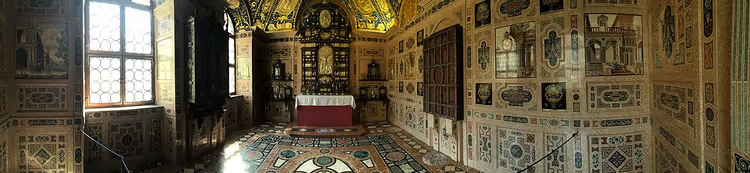 © Antony-22 · CC BY-SAPhoto: Antony-22, CC BY-SA (https://creativecommons.org/licenses/by-sa/4.0), Wikimedia Commons
Residenz München is a palace complex in the center where the kings of Bavaria lived. Receptions were held in the Antiquarium hall, and the ancestral gallery contains more than a hundred portraits.
The museum displays table porcelain, jewelry, and the court chapel with its altar. You should allow several hours for the visit. In winter the palace operates on a reduced schedule, and not all rooms are open.
- What to see: state rooms, porcelain, and jewelry.
- Address: Residenzstraße, near Odeonsplatz.
- Who it's for: lovers of palace architecture.
- The catch: not all rooms are open to visitors.
20. Lenbachhaus
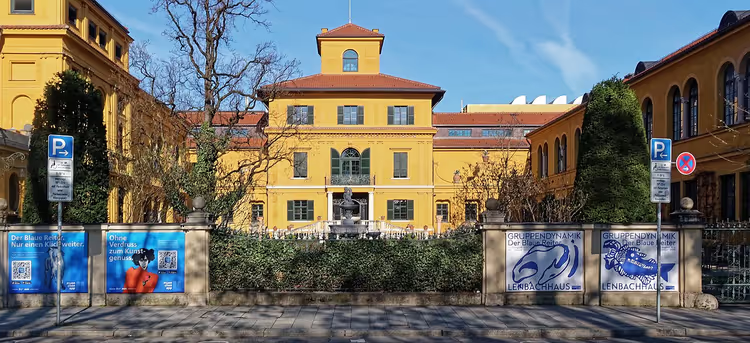 © Burkhard Mücke · CC BY-SAPhoto: Burkhard Mücke, CC BY-SA (https://creativecommons.org/licenses/by-sa/4.0), Wikimedia Commons
The museum in the villa of the artist Lenbach is famous for its collection of the Blue Rider group. Here you will see works by Kandinsky, Franz Marc, Paul Klee, August Macke, and Gabriele Münter. The Italian-style building was constructed in the late 19th century and is protected as an architectural monument.
In addition to the classics, you will see the Munich school of painting and New Objectivity art. Exhibitions of contemporary artists and conferences on new trends in painting are held frequently.
- What to see: the Blue Rider and the Munich school.
- Address: Luisenstraße, near Kunstareal.
- Who it's for: those who love 20th-century painting.
21. NS-Dokumentationszentrum
The documentation center on Brienner Straße tells the story of National Socialism in Munich. A white cube with narrow windows stands in the city center, where the "Brown House" with the National Socialist headquarters once stood.
The exhibition spans four floors of photographs and documents that you can view with an audio guide.
The materials explain why Nazism emerged specifically in Munich. The "Brown House" was demolished after the war. Individual rooms are dedicated to propaganda, the cult of the Führer, and the fates of the victims. There is no justification or propaganda here, only an attempt to understand the causes of the catastrophe. The exhibition is supplemented by audio and video materials, so you can follow the chronology even without a guide.
- What to see: documents about the rise of Nazism in Germany.
- Address: Brienner Straße, near Königsplatz.
- Who it's for: those interested in 20th-century history.
22. Staatliche Graphische Sammlung
 © Fred Romero from Paris, France · CC BYPhoto: Fred Romero from Paris, France, CC BY (https://creativecommons.org/licenses/by/2.0), Wikimedia Commons
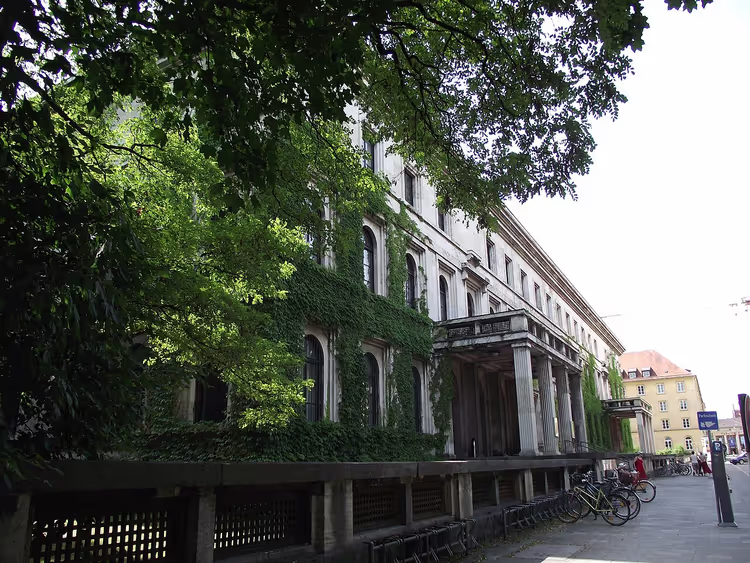
The State Graphic Collection grew out of the Drawing Cabinet, founded back in the 18th century. The collection holds around four hundred thousand works: drawings, prints, and posters spanning eight centuries.
It houses sheets by Leonardo da Vinci, Raphael, Michelangelo, Rembrandt, and Dalí. The museum has no building of its own; the exhibition is shown at Pinakothek der Moderne, closed on Mondays (as of 09/2026, Graphic Collection schedule). You will see only part of the collection; the rest is kept in storage.
- What to see: drawings and prints by old masters.
- Address: Barer Straße, in the Pinakothek der Moderne building.
- The catch: no building of its own, only part of the collection is shown.
23. Sammlung Schack

The gallery was founded by the poet and patron Adolf Friedrich von Schack, who supported Bavarian artists. His collection of 19th-century painting has been preserved in its entirety. You will see landscapes and historical canvases by Anselm Feuerbach, Carl Rottmann, and Moritz von Schwind.
On Sundays admission costs €1 (as of 09/2026, Sammlung Schack admission). The Neoclassical building was constructed on Prinzregentenstraße in the early 20th century.
- What to see: 19th-century painting and Bavarian landscapes.
- Address: Prinzregentenstraße, Lehel district.
- Who it's for: those who love Romanticism.
24. Schloss Nymphenburg
 © Pedro J Pacheco · CC BY-SAPhoto: Pedro J Pacheco, CC BY-SA (https://creativecommons.org/licenses/by-sa/3.0/de/deed.en), Wikimedia Commons
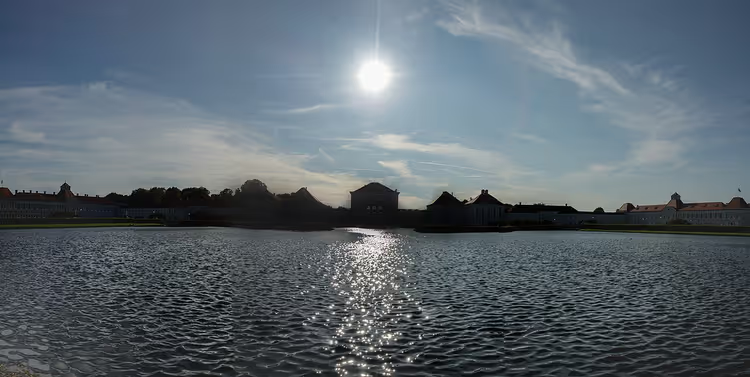
The Nymphenburg palace complex was built over two centuries as a gift to the queen on the birth of an heir. The ensemble includes the palace, park, pavilions, as well as porcelain and carriage museums.
The Great Hall retains its stucco work and frescoes, and the Gallery of Beauties displays a portrait of Lola Montez, because of whom King Ludwig I abdicated the throne. It is more convenient to see the complex with a combined ticket that includes all pavilions.
- What to see: the Great Hall, the Gallery of Beauties, and the park.
- Address: western outskirts of Munich, Schloss Nymphenburg.
- Who it's for: families and palace lovers.
- The catch: not all rooms are open to visitors.
25. Haus der Kunst
 © Avda · CC BY-SAPhoto: Avda, CC BY-SA (https://creativecommons.org/licenses/by-sa/3.0), Wikimedia Commons
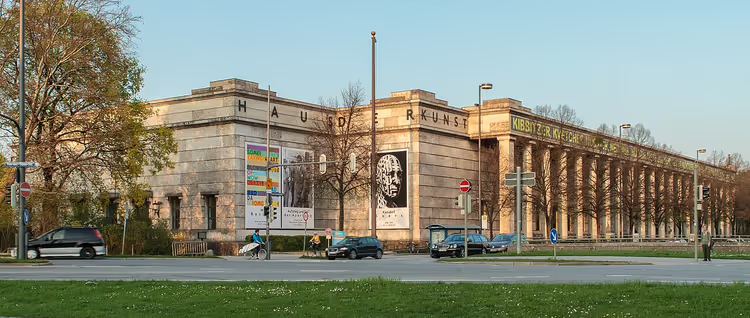
Haus der Kunst opened on the site of the burned-down Glass Palace. Today it is an exhibition hall for contemporary art without a permanent collection: large temporary exhibitions are held here regularly.
Inside there is the Goldene Bar with a restaurant, and some of the exhibits are for sale. The building stands on Prinzregentenstraße near Englischer Garten, so you can easily combine the visit with a walk in the park.
Before the war, the annual "Day of German Art" was held here with speeches by Hitler; later the halls housed an officers' club and sports facilities.
- What to see: temporary exhibitions of contemporary art.
- Address: Prinzregentenstraße, near Englischer Garten.
- Who it's for: lovers of contemporary art.
Munich museums on the map
Museums of Munich
Places on the map
- 1Deutsches Museum World's largest museum of science and technology, on Museumsinsel island
- 2Spielzeugmuseum Toy museum on four floors of the Old Town Hall tower
- 3Pinakothek der Moderne Modern art of the 20th-21st centuries, opened in 2002
- 4Bayerisches Nationalmuseum Wittelsbach treasury, collection of nativity scenes
- 5Archäologische Staatssammlung Finds spanning 120,000 years of Bavarian history
- 6Museum Fünf Kontinente Art of the peoples of Africa, Asia, the Americas and Oceania
- 7BMW Museum Classic BMWs, motorcycles and prototypes
- 8Museum Ägyptischer Kunst Sculptures and sarcophagi of Ancient Egypt, audio guide included
- 9Münchner Stadtmuseum Munich's Stadtmuseum, closed for renovation until 2031
- 10Paläontologisches Museum Over a million fossils, skeletons of ancient animals
- 11Museum Brandhorst Modern art from the Brandhorst collection, Warhol and Beuys
- 12Museum Mensch und Natur A mesosaur skeleton and interactive halls about nature
- 13Staatliche Antikensammlungen Greek vases and ancient sculpture on Königsplatz
- 14Jagd- und Fischereimuseum Over a thousand mounted animals in a former church building
- 15Bier- und Oktoberfestmuseum History of brewing and the Oktoberfest
- 16Neue Pinakothek Neue Pinakothek closed for renovation since 2019, reopening by 2030
- 17Alte Pinakothek Alte Pinakothek, part of the New Pinakothek's collection is shown here during renovation
- 18Glyptothek Ancient sculpture in Europe's oldest public museum
- 19Museum für Abgüsse Plaster casts of ancient sculptures and a model of the Parthenon
- 20Lenbachhaus Collection of the 'Blue Rider' group, Kandinsky and Klee
- 21NS-Dokumentationszentrum History of National Socialism on the site of the 'Brown House'
- 22Staatliche Graphische Sammlung Drawings and prints by old masters in the Pinakothek der Moderne building
- 23Sammlung Schack 19th-century painting from Adolf von Schack's collection
- 24Schloss Nymphenburg Palace park with porcelain and carriage museums
- 25Haus der Kunst Temporary exhibitions of contemporary art without a permanent collection
The map shows the museums from this selection. Open a point to see the address and get directions in Google Maps. This way you can put together a sightseeing plan without unnecessary travel.
Most of the museums are located in two areas: Kunstareal and the old town around Marienplatz. It is easy to move between them on foot or by subway, and a day ticket for public transport pays for itself after a few rides. Mark the halls with discounted admission on the map and build your route around them.
Tickets to popular Munich museums are best purchased in advance to avoid standing in line at the entrance in summer.
Tours and tickets in Munich
Guided tours, skip-the-line tickets and activities — most offers can be cancelled free of charge.
See offers on TiqetsThe widget loads once you give your consent.
⁉️🤔 Frequently asked questions
How much does a museum ticket in Munich cost?
An adult ticket to most city museums costs 3-10 € (as of 09/2026, Munich museum tickets). Check the exact price for the museum you need in the section above.
Which Munich museums are currently closed?
Neue Pinakothek has been closed for renovation since 2019, with reopening expected around 2030 (as of 09/2026, renovation progress). Münchner Stadtmuseum will return around 2031.
Which day is best for visiting museums?
The Pinakotheken buildings are closed on Mondays, which is important to keep in mind when planning (as of 09/2026, pinakothek-der-moderne.de). Come in the morning on Tuesday or Wednesday: fewer groups and shorter lines. On Sundays admission is cheaper, but there are noticeably more people.
How many museums should you see in one day?
For a major museum like Deutsches Museum or Pinakothek der Moderne, allow two to three hours. Smaller collections like Sammlung Schack take about an hour. We recommend two museums per day, otherwise you'll be tired by evening and stop taking in the paintings. In the Kunstareal everything is close together, so you can cover more without rushing.
How do you get to the museum quarter?
Kunstareal is located in the Maxvorstadt district between Königsplatz and Pinakothek der Moderne. The easiest option is to get off at the subway station near Königsplatz; everything is within walking distance from there. Short streets connect the main Pinakothek buildings, so in half a day you can visit several museums without using transport.
In short: what's worth booking
The choice depends on why you came. For technology, go to Deutsches Museum; for painting, to Pinakothek der Moderne and Sammlung Schack; for antiquities, to Staatliche Antikensammlungen and Glyptothek. If you want to see Munich as a whole, add Residenz München and Schloss Nymphenburg.
Small museums are good for a break. Spielzeugmuseum on Marienplatz and Bier- und Oktoberfestmuseum are enjoyable even without long lines. If you have one day, pick Pinakothek der Moderne and Deutsches Museum. If you have three days, add Kunstareal, Residenz and Schloss Nymphenburg.

A small editorial team writing guides for independent travel. We travel ourselves, but we haven’t been everywhere, so we check prices, opening hours and how to get there against official sources.