
















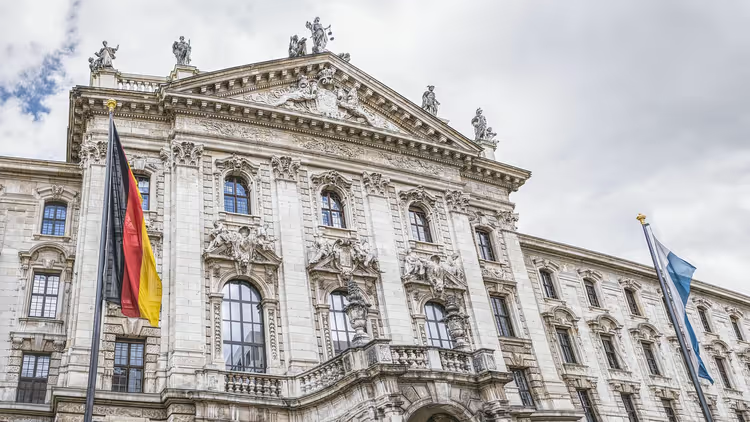
What to see in Munich: 30 places with prices and opening hours
It's easy to get overwhelmed in Munich: there's something interesting at every turn. Museums, palaces, old churches, and beer halls are scattered all over the center, and in one day you won't cover even a tenth of the list. We've put together thirty places worth seeing and arranged them so you spend your time looking at the sights, not traveling between them.
Plan your visits for Tuesday or Wednesday: most museums are closed on Mondays. The Neue Pinakothek has been closed to visitors for several years now, it's facing a multi-year renovation, and the collection is being shown in other Kunstareal buildings (as of 09/2026, Bavarian State Painting Collections). On the plus side, on Sundays admission to the open Pinakotheks costs just €1, and that's the best day for a big museum itinerary.
Below you'll find classics like the Alte Pinakothek, free spots like the English Garden, and places for kids. For each location, we've included how to get there, how much admission costs, and who it's for.
Ad: this article contains affiliate links. We earn a commission if you book through them, at no extra cost to you.
How much tickets cost and where to go first
💡 In short:
- Monday is a day off at almost all museums, so go on Tuesday or Wednesday.
- On Sundays the Pinakotheks let visitors in for €1.
- Prices and opening hours: 09/2026, checked on the Munich museum portal.
Munich isn't the cheapest city, but its cultural program costs reasonable money. Individual museums charge from €4 at the Sammlung Schack to €16 at the Deutsches Museum; there are no universal discounts, each institution has its own rates and passes (as of 09/2026, Pinakotheks, Deutsches Museum). Many museums close early, around 6:00 PM, so don't put off your visit until the evening.
If you | Go to | Why |
|---|---|---|
love old masters | Alte Pinakothek | Dürer, Rubens, and Bosch in one room |
are in Munich for the first time | Marienplatz and the New Town Hall | the heart of the city, free admission |
are with kids | Deutsches Museum or the zoo | interactive experiments and 650 animal species |
want some quiet | English Garden or Olympic Park | free and open around the clock |
are having a rainy day | Munich Residenz or the Palace of Justice | everything is indoors, under a roof |
1. Alte Pinakothek

The Alte Pinakothek is one of the most famous art galleries in the world. It houses more than seven hundred paintings from the Middle Ages and the Renaissance, including works by Bosch, Dürer, Raphael, and Rubens. A visit takes two to three hours if you don't linger in every room.
The Pinakothek der Moderne is right next door, so you can cover the entire museum program in one day. The gallery's address is Barerstraße 27, near Königsplatz. Check the ticket and opening hours online in advance (as of 09/2026, official Pinakothek website).
- How to get there: U2 subway to Königsplatz or tram 27 to the same stop.
- Cost: admission around €9, on Sundays €1 (as of 09/2026, Munich Pinakothek association).
- The catch: closed on Mondays, and on weekends there's a line at the ticket office.
- Who it's for: people who are willing to stand in front of paintings for half a day.
2. Neue Pinakothek
 © Bärwinkel,Klaus · CC BYPhoto: Bärwinkel,Klaus, CC BY (https://creativecommons.org/licenses/by/3.0), Wikimedia Commons
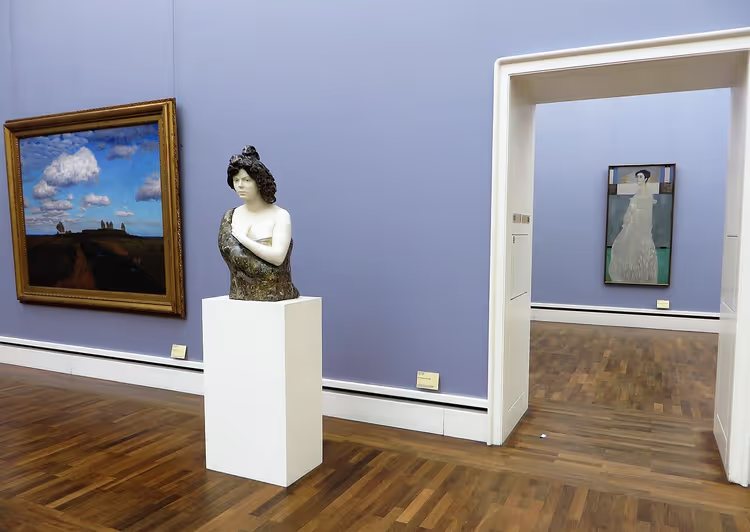
The Neue Pinakothek opened in 1853 as a collection of nineteenth-century art. Today its holdings include more than three thousand paintings and three hundred sculptures, from Thomas Lawrence and Claude Monet to Vincent van Gogh. A full visit used to take about three hours.
Important news: the building itself is closed for a full-scale restoration until the end of the decade, so you can't see the entire collection for now (as of 09/2026, Neue Pinakothek page). Some paintings are being shown in the neighboring Kunstareal museums, so check the schedule before your visit.
- Getting there: U2 subway to Königsplatz, a short walk from the Alte Pinakothek.
- Cost: entry is temporarily unavailable due to the restoration.
- The catch: the building has been closed for several years now.
3. Pinakothek der Moderne
 © Rufus46 · CC BY-SAPhoto: Rufus46, CC BY-SA (https://creativecommons.org/licenses/by-sa/3.0), Wikimedia Commons
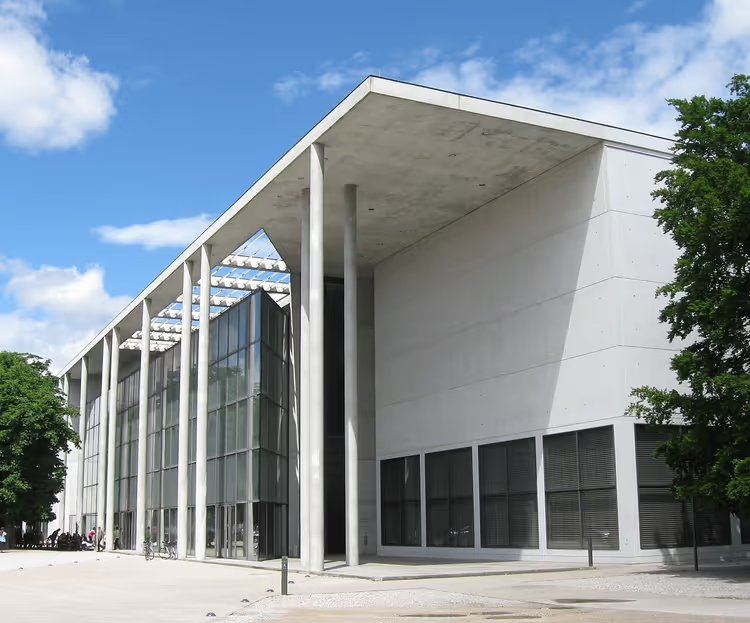
The Pinakothek der Moderne brings together four museums: painting, applied arts, architecture, and graphic art. It houses Picasso and Dalí, and its graphic collection is considered one of the largest collections of drawings in the world. Visitors are advised to tour the gallery from the back, because the most famous works are in the far halls.
The exhibition ranges from canvases made of burnt cellophane to paintings done with colored pens. The architecture and graphic art departments occupy separate floors. All exhibitions are open daily from 10:00 to 18:00, except Mondays (as of 09/2026, Pinakotheken at Königsplatz).
- Getting there: tram 27 or U2 subway to Königsplatz.
- Cost: entry 10 €, on Sundays 1 €, closed on Mondays (as of 09/2026, Munich Pinakotheken).
- Who it's for: lovers of 20th and 21st century art.
4. Hofbräuhaus
 © Burkhard Mücke · CC BY-SAPhoto: Burkhard Mücke, CC BY-SA (https://creativecommons.org/licenses/by-sa/4.0), Wikimedia Commons
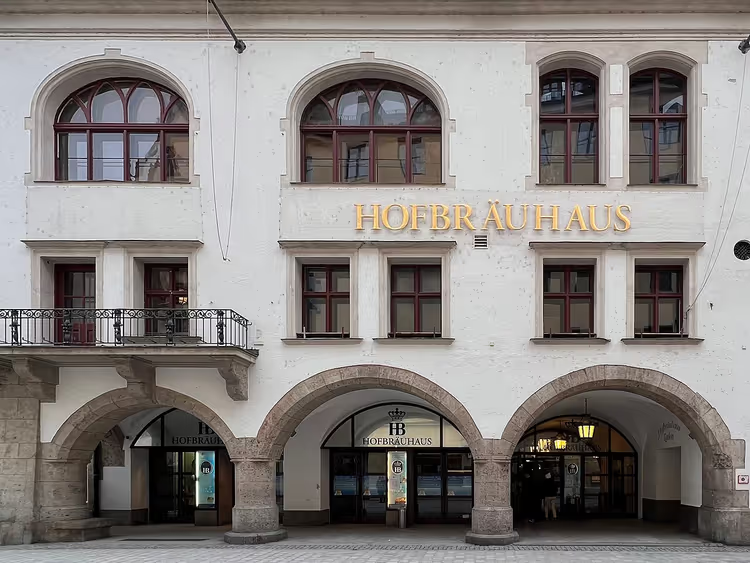
Hofbräuhaus opened in 1607 as a court brewery and later became the city's most famous beer hall. The rooms can hold about four thousand people, and the main hall on the ground floor is called the Schwemme. Every evening an orchestra plays here and more than a hundred reserved tables are in use.
On the second floor there is a ceremonial hall, and nearby a brewery museum with historical exhibits. Menus are available in many languages, and they serve classic Bavarian dishes. A liter mug of beer and a portion of sausages here cost noticeably more than in an ordinary pub on the outskirts; check the current prices on the Hofbräuhaus website menu.
- Getting there: U3/U6 subway to Odeonsplatz, address Platzl 9.
- The catch: in the evening the halls are packed, tables are booked in advance.
- Who it's for: those who want to see a classic Bavarian beer hall.
5. Asamkirche
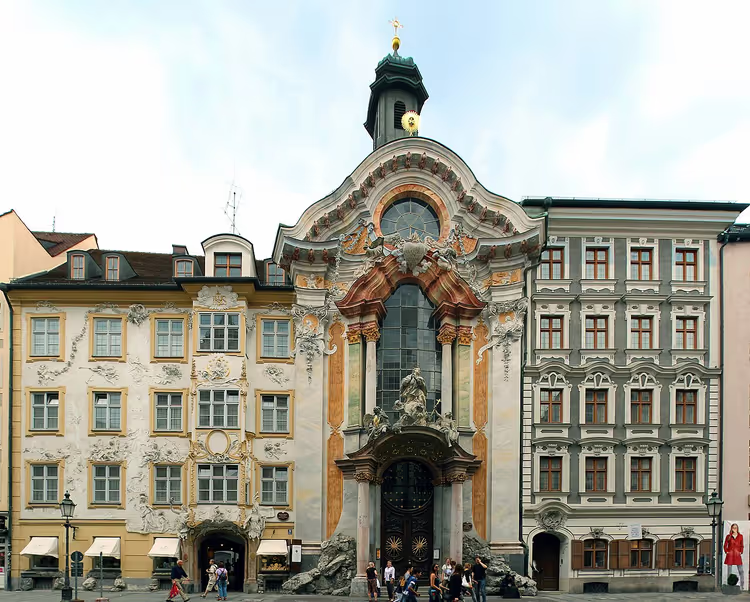 © Wikiolo , derivative work Lämpel · CC BY-SAPhoto: Wikiolo , derivative work Lämpel, CC BY-SA (https://creativecommons.org/licenses/by-sa/4.0), Wikimedia Commons
Asamkirche at Sendlinger Straße 32 is considered one of the most beautiful churches in the city. The Asam brothers built it in the Baroque style, and everything inside is covered with stucco and gilding. The facade is white and gold, and the interior space is narrow and tall.
The interior is divided into three levels: a balcony in white and blue tones, the choir, and the lower level with pews. The painting was done by hand with a fine brush, and you can see it in the smallest details. The church is open from 9:00 to 18:00, and on Fridays only from 13:00 (as of 09/2026, city church guide).
- Getting there: on foot from Marienplatz, the nearest subway station is Sendlinger Tor.
- Cost: free entry.
- The catch: there is little space inside, and during services tourists are asked to wait.
6. English Garden
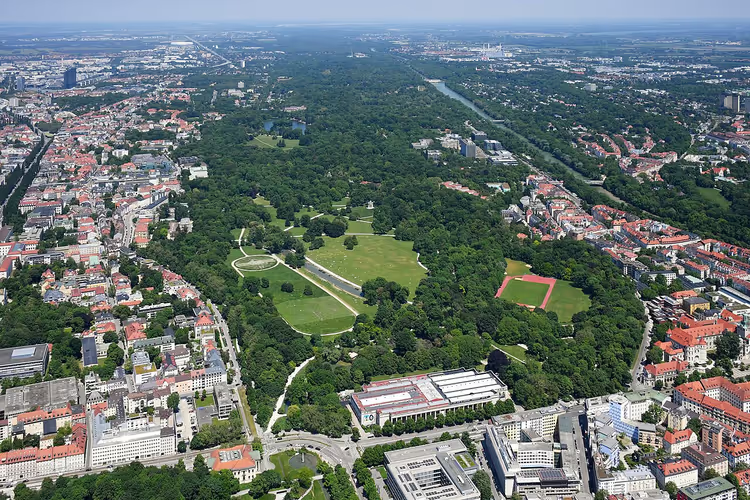 © Carsten Steger · CC BY-SAPhoto: Carsten Steger, CC BY-SA (https://creativecommons.org/licenses/by-sa/4.0), Wikimedia Commons
The English Garden stretches through the very center of the city and is larger in area than Hyde Park. It's free and open around the clock, so both tourists and locals come here. In summer people ride bikes in the park, surf the Eisbach wave, and relax on the lawns.
There's a beer garden and a Japanese garden with a tea house here, and the Monopteros rotunda offers a wide view over the meadows. The northern and southern parts are easy to explore by bike. The park is larger than Central Park in New York (as of 09/2026, city parks website).
- How to get there: U6 subway, tram 17 from Marienplatz, or about a 10-minute walk.
- Cost: free entry.
- The catch: on warm days the lawns get crowded, and there's a line for the surf wave.
- Who it's for: anyone who wants a break between museums.
7. Bavarian state archaeological collection
Bavaria's archaeological collection presents the region's history from the Stone Age to the early Middle Ages. Exhibits younger than the 14th century are rare here, but there are dedicated halls for the Migration Period and the Celtic era. The museum occupies its own building at Lerchenfeldstraße 2.
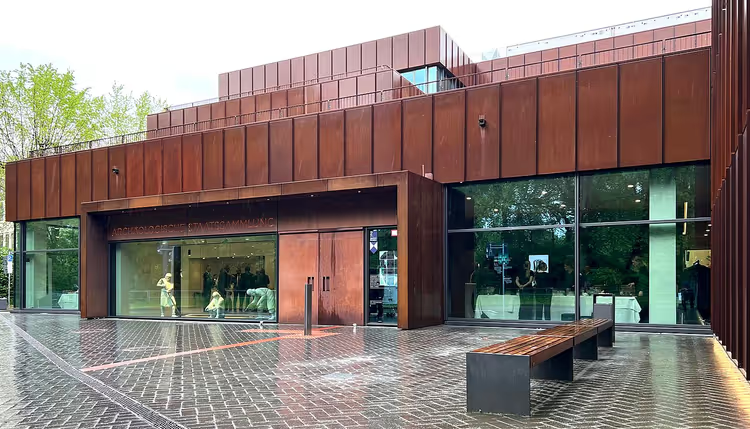 © Burkhard Mücke · CC BYPhoto: Burkhard Mücke, CC BY (https://creativecommons.org/licenses/by/4.0), Wikimedia Commons
The staff conduct excavations and restoration work, so the collection keeps growing. Part of the holdings consists of rare finds from Bavarian burial mounds and settlements. The museum is open six days a week from 9:30 to 17:00, closed on Mondays (as of 09/2026, Bavarian State Archaeological Collection).
- How to get there: subway to Odeonsplatz or Lehel, then walk.
- Cost: entry in the low double digits, closed on Mondays.
- The catch: the museum is closed on Mondays.
8. Blutenburg Palace
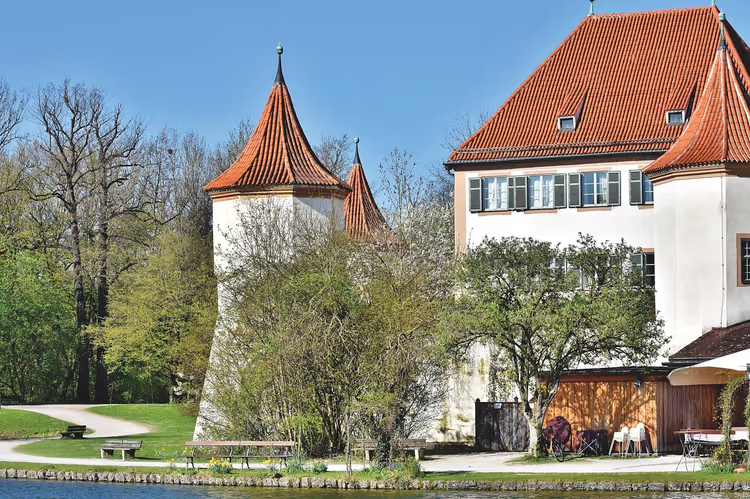
Blutenburg Palace is first mentioned in the 13th century and stands between two lakes in the west of Munich. The facade is late Gothic in style, and a small park is laid out next to it.
Today the palace houses a library and an international meeting center, so getting inside is difficult, but a walk along the lake shore is worth it. You can get there by S-Bahn line S2 to Obermenzing station, then a few blocks along Verdistraße. Address: Seldweg, 81247 München (as of 09/2026, palaces on the outskirts of Munich).
- How to get there: S-Bahn S2 to Obermenzing, then on foot.
- Cost: the grounds and park are free.
- The catch: far from the center, only by S-Bahn and with a walk.
9. Glyptothek
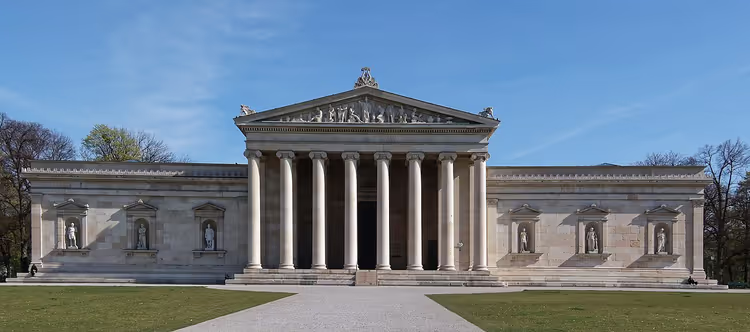 © Burkhard Mücke · CC BY-SAPhoto: Burkhard Mücke, CC BY-SA (https://creativecommons.org/licenses/by-sa/4.0), Wikimedia Commons
"Glyptothek" translates as "repository of sculptures," and the name accurately describes the contents. It houses a collection of Greek and Roman sculpture, with no other materials in the halls. The museum was built by architect Leo von Klenze for King Ludwig I and opened in 1830.
Among the main exhibits are the "Tenea Kouros," the "Munich Kouros," and figures from the pediment of the Temple of Aphaia on Aegina. During the war the building was damaged, but the collection survived almost entirely. The museum stands right on Königsplatz, where the metro of the same name stops (as of 09/2026, Munich museums).
Klenze envisioned a pair of buildings in the same style, so opposite the Glyptothek stands the State Collections of Antiquities with vases, jewelry, and bronze. Today it is one of the best antiquities museums in Germany.
- How to get there: metro U2 to Königsplatz.
- Cost: admission 6 €, the ticket is also valid for the State Collections of Antiquities, on Sundays 1 €, closed on Mondays (as of 09/2026, Antike am Königsplatz).
- Who it's for: for those who love antiquity and sculpture.
10. Hellabrunn Zoo
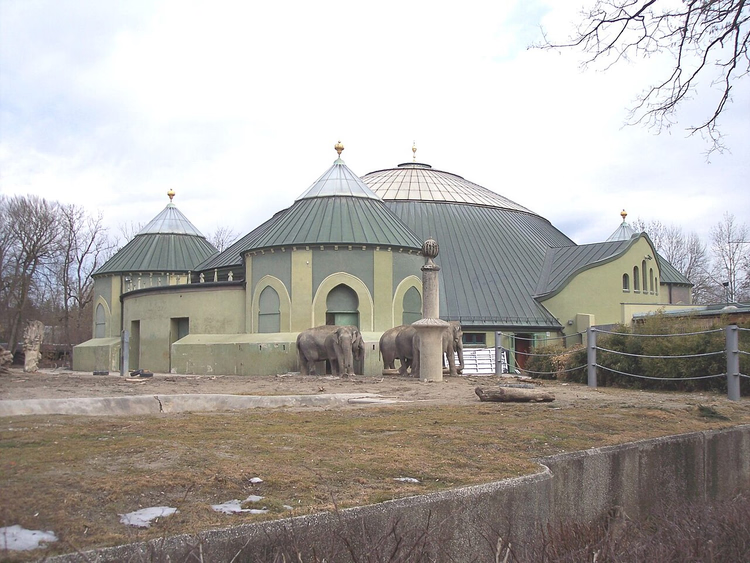
Hellabrunn Zoo opened in 1911 and became the first geo-zoo, where conditions for animals were brought closer to natural ones. The grounds are divided into zones by continent rather than by species. Today it is home to about 14,500 animals of more than 650 species, and every year the park welcomes over a million visitors.
The route starts with flamingo enclosures, then come the jungles with monkeys and an aquarium. Behind the elephant house there is an exercise area, and further on live turtles and leopards. The zoo is open daily, even on holidays, and the entrance ticket offices close earlier in winter than in summer (as of 09/2026, Tierpark Hellabrunn).
- How to get there: metro U3 to Thalkirchen, then follow the signs across the bridge.
- Cost: adult ticket 20 €, children 8 €, from October 2026 the adult ticket will rise to 23 € (as of 09/2026, t-online).
- The catch: it is hard to cover the whole park in one day, allow plenty of time.
- Who it's for: for families with children of any age.
11. Maximilianeum
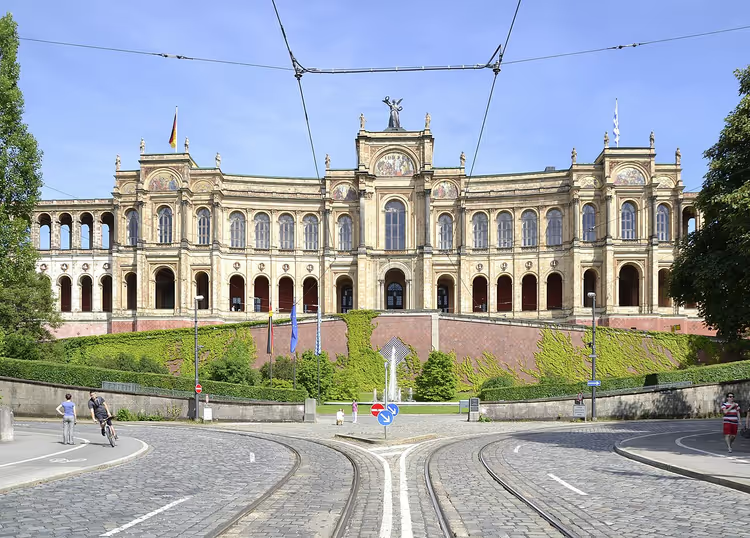 © High Contrast · CC BYPhoto: High Contrast, CC BY (https://creativecommons.org/licenses/by/3.0/de/deed.en), Wikimedia Commons
The Maximilianeum was built over twenty years as a palace in the spirit of the Renaissance. Today it houses the Bavarian parliament and students live there, so you cannot go inside. But from the outside there is a wealth of architectural detail: a mosaic on the pediment, marble statues on the roof, and terracotta stucco work.
The best view of the building opens from the Maximiliansbrücke bridge or from Maximilianstraße. A park with well-kept lawns surrounds it, and skaters and cyclists ride along the paths. Address: Max-Planck-Straße 1, the exterior can be viewed at any time (as of 09/2026, Munich architecture).
- How to get there: by tram or on foot from Maximilianstraße toward the Isar.
- Cost: entry is prohibited, viewing the facade is free.
- The catch: you can't go inside, only an exterior viewing is available.
12. BMW Museum
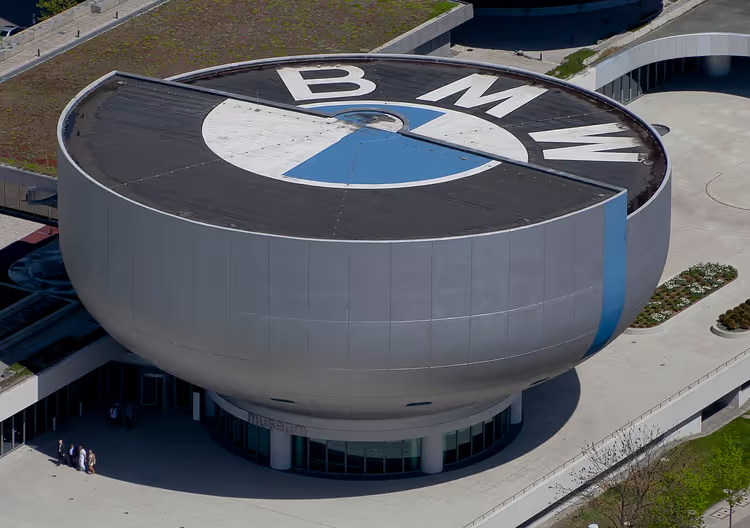 © Diego Delso · CC BY-SAPhoto: Diego Delso, CC BY-SA (https://creativecommons.org/licenses/by-sa/3.0), Wikimedia Commons
The BMW Museum tells the story of the brand, which began in 1913 with aircraft engines. After the war, the company was banned from producing airplanes, and the plant switched to train brakes, and later to motorcycles and cars. Today the halls display coupes, sedans, the brand's first motorcycle, and aircraft engines.
A separate display case is dedicated to the hydrogen car, which the company sees as the future. The most famous exhibit, a kinetic installation of rotating spheres, hangs from the ceiling of one of the halls. You can get there from the main train station: take the subway to Marienplatz, then transfer to the U3 line to Olympiazentrum (as of 09/2026, Munich technology museums).
The museum is open daily except Monday, usually from 10:00 to 18:00. Nearby stands the BMW Welt exhibition center, where new models are shown without a ticket. Allow at least two hours for the visit, otherwise you'll have to rush past the exhibits.
- How to get there: subway U3 to Olympiazentrum.
- Cost: paid entry, check the price on the BMW Welt website before your visit, closed on Monday.
- Who it's for: for those interested in cars and technology.
13. Nymphenburg Palace
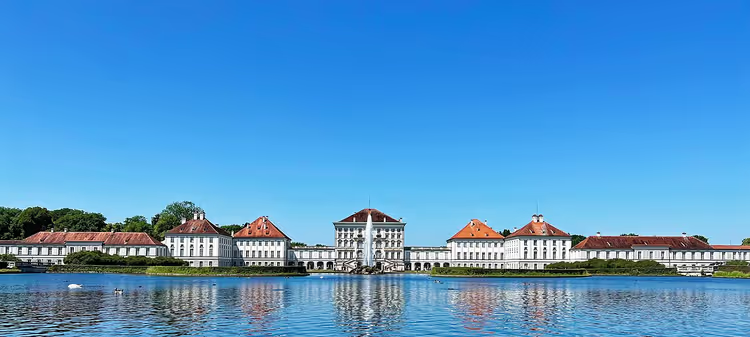 © Burkhard Mücke · CC BY-SAPhoto: Burkhard Mücke, CC BY-SA (https://creativecommons.org/licenses/by-sa/4.0), Wikimedia Commons
Nymphenburg Palace and its park form one of the largest palace complexes in Europe. The complex attracts more than 400,000 people a year, and it's easy to see why: ponds, gardens, and pavilions occupy a huge area. The palace was built over several centuries, so it mixes different styles.
The park contains separate pavilions that are considered independent buildings. The most famous of them, the 18th-century Amalienburg, is connected to the palace by an avenue. The porcelain manufactory has been operating here for several centuries, and its products are displayed in the Nymphenburg museum.
Tickets to the palace are sold only with a time slot, while entry to the park is free (as of 09/2026, Nymphenburg Palace). Get tickets online in advance, otherwise you risk arriving to find the ticket offices closed. If you only want to see the park, no slot is needed.
- How to get there: tram 17 from the center to the Schloss Nymphenburg stop.
- Cost: palace ticket 10 €, combined ticket 20 € in summer, 16 € in winter, free up to age 18, park is free (as of 09/2026, Nymphenburg Palace).
- The catch: the palace only admits visitors by time slot, and on weekends slots sell out quickly.
- Tickets to Munich museums and palaces on Tiqets.
14. Munich Residenz
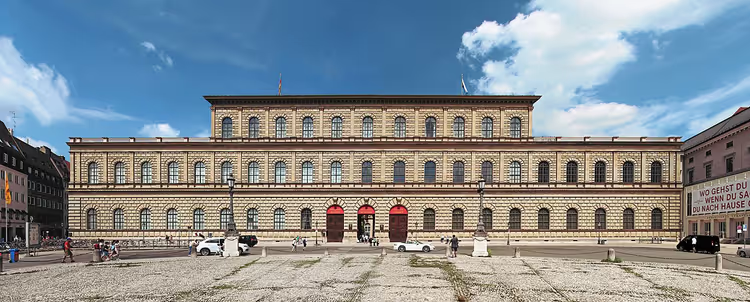 © Wikiolo derivative work: MagentaGreen · CC BY-SAPhoto: Wikiolo derivative work: MagentaGreen, CC BY-SA (https://creativecommons.org/licenses/by-sa/4.0), Wikimedia Commons
The Munich Residenz of the Wittelsbachs is one of the largest palace complexes in Europe, and a full tour takes more than one day. The first palace appeared in the 14th century, and over seven centuries the dynasty expanded it to ten courtyards and 130 rooms. The strongest impressions come from the Antiquarium with its arched vault, the Treasury, and the Royal Apartments.
The Antiquarium served as a hall for receptions and balls, while the Treasury houses jewelry and regalia of the Bavarian rulers. A ticket to the Residenz Museum or the Treasury costs 10 €, both together 15 €, and with the Cuvilliés Theatre 20 €, the museum welcomes visitors daily (as of 09/2026, Bavarian Palace Department). The visit takes at least two hours, so don't leave it for the evening.
- How to get there: subway to Odeonsplatz, entrance from Max-Joseph-Platz.
- Cost: ticket 10 €, combined tickets 15 € and 20 €, free up to age 18.
- The catch: there are a great many halls, you can't cover everything in one visit.
- Who it's for: for those interested in history and interiors.
15. Marienplatz
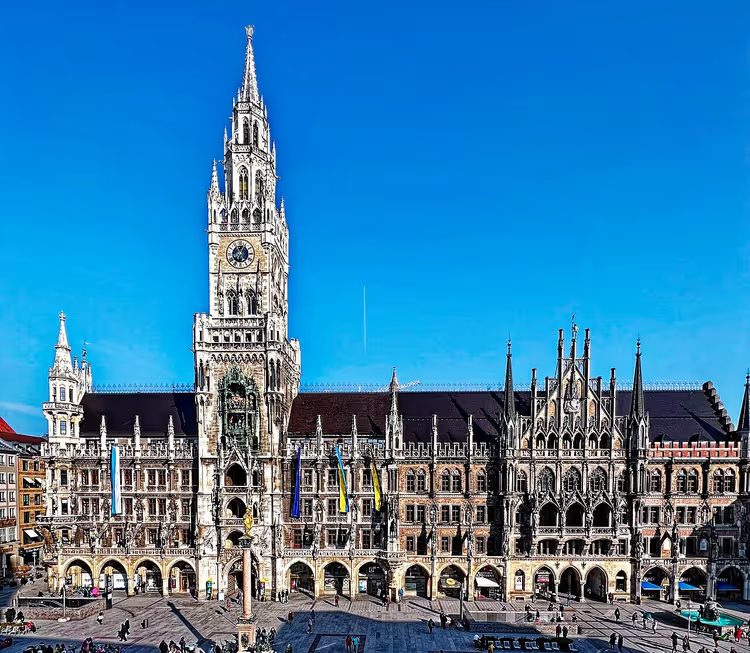 © Burkhard Mücke · CC BY-SAPhoto: Burkhard Mücke, CC BY-SA (https://creativecommons.org/licenses/by-sa/4.0), Wikimedia Commons
Marienplatz is the city's central square with the Column of St. Mary, erected after the Thirty Years' War. The Old and New Town Halls in Gothic style also stand here. The square once hosted knightly tournaments, a fact commemorated by the figurines in the clock on the facade of the New Town Hall.
The figurines move several times a day, usually at 11:00 and 12:00, acting out scenes from the city's history (as of 09/2026, central city squares). Beneath the square is a metro station of the same name with levels of souvenir shops and cafes where prices are lower than above ground. The center of the square is a convenient place to start a walking tour of the city.
- Getting there: Marienplatz metro station, exit directly to the town hall.
- Cost: the square is free, guided tours are paid.
- The catch: during the day the square is packed with tour groups.
- Munich tours on GetYourGuide.
16. German Museum
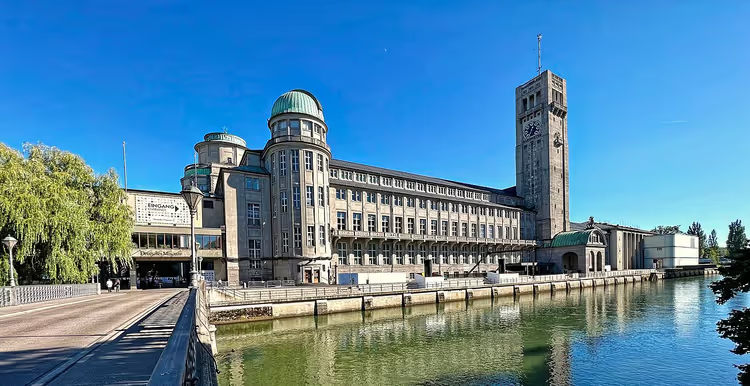 © Burkhard Mücke · CC BY-SAPhoto: Burkhard Mücke, CC BY-SA (https://creativecommons.org/licenses/by-sa/4.0), Wikimedia Commons
The German Museum has been operating since 1903 and houses more than 28,000 exhibits, from agriculture to space. The halls span more than ten departments: navigation, aviation, textiles, glass, ceramics, brewing, and music. Even a week wouldn't be enough to see everything, so pick two or three departments in advance.
For children, there's the "Children's Kingdom" hall, where kids can run experiments themselves and try on the roles of firefighter, engineer, or captain. The museum on Museumsinsel is open daily from 9:00 to 17:00 (as of 09/2026, German Museum website). Admission costs 16 €, for children and teens aged 6 to 17 it's 9 €, and a family ticket is 33 €.
- How to get there: take the U-Bahn to Fraunhoferstraße or walk from the Isar.
- Cost: adult ticket 16 €, children aged 6 to 17 pay 9 €, under 6 free.
- The catch: you can't cover everything in one visit, plan which departments to see.
- Who it's for: families with children and technology enthusiasts.
17. Odeonsplatz
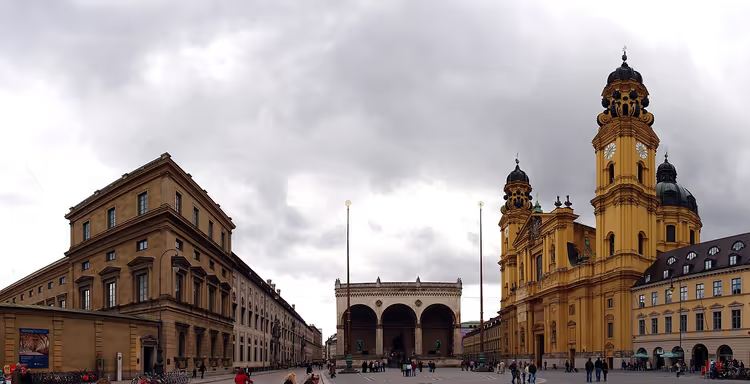 © Florian Adler · CC BY-SAPhoto: Florian Adler, CC BY-SA (https://creativecommons.org/licenses/by-sa/3.0), Wikimedia Commons
Odeonsplatz appeared in 1816 and quickly accumulated Baroque monuments. To the south stands the Feldherrnhalle loggia with statues of commanders Tilly and Wrede, guarded by marble lions. To its right rises the bright yellow Theatine Church, the burial place of the Wittelsbachs.
Behind the square lies the Hofgarten park, laid out in the 17th century by order of Maximilian I. The park features the "Temple of Diana," surrounded by flower beds and fountains. After a stroll, many visitors stop by the historic Café Tambosi, which offers a picturesque view of the square (as of 09/2026, Odeonsplatz on the city portal).
- How to get there: U-Bahn to Odeonsplatz, exit toward the loggia.
- Cost: the square and park are free.
- The catch: in summer the square gets hot, with little shade.
18. St. Michael's Church
 © José Luiz · CC BY-SAPhoto: José Luiz, CC BY-SA (https://creativecommons.org/licenses/by-sa/4.0), Wikimedia Commons
St. Michael's Church is an active church and is considered one of the city's main places of worship. Duke Wilhelm V spent enormous sums on its construction between the 16th and 17th centuries. The facade is adorned with 15 statues of the Wittelsbachs, a figure of Christ, and the Archangel Michael slaying the dragon.
Inside is a burial vault with members of the royal nobility, including Wilhelm the Pious, Ludwig II, and Maximilian I. On weekdays admission is free from 8:00 to 19:00, and on weekends the church stays open longer (as of 09/2026, churches in central Munich). It's worth lingering here to take in the vaults and the altar.
- How to get there: walk from Marienplatz or take the U-Bahn to Marienplatz.
- Cost: admission is free.
- The catch: during services, viewing is limited.
19. Allianz Arena
The Allianz Arena ranks among the most beautiful sports complexes in the world and seats more than 70,000 people. The stadium hosts Bayern Munich matches and concerts by global stars. In the evenings, the facade lights up with a million red, blue, or white lights, and the color changes every half hour so as not to distract drivers on the highway.
Inside, there are shops with club merchandise and a LEGO exhibition. You can tour the arena on days without matches or concerts; check the schedule in advance (as of 09/2026, Munich football arena). The stadium is easy to reach by U-Bahn, and for major matches, buy tickets ahead of time.
- How to get there: U-Bahn U6 to Fröttmaning, then follow the signs.
- Cost: the tour is paid, check the price on the website.
- The catch: on match and concert days, tours are canceled.
- Who it's for: fans and lovers of modern architecture.
20. New Town Hall
The New Town Hall has adorned Marienplatz for over a hundred years. Several residential blocks were demolished to make room for it, but today locals are proud of their landmark. The 85-meter-tall building contains more than 400 rooms, and an elevator takes visitors up the tower for views over the city.
The carillon with 32 figures is especially admired: over 15 minutes, they act out scenes from the city's history. The library halls, picture gallery, and council chamber can be visited free of charge (as of 09/2026, town hall on the city website). The interior is open on weekdays, so don't leave your visit for Sunday.
- How to get there: Marienplatz U-Bahn station.
- Cost: some halls are open free of charge.
- The catch: on weekends, the interior halls are closed.
21. Andechs
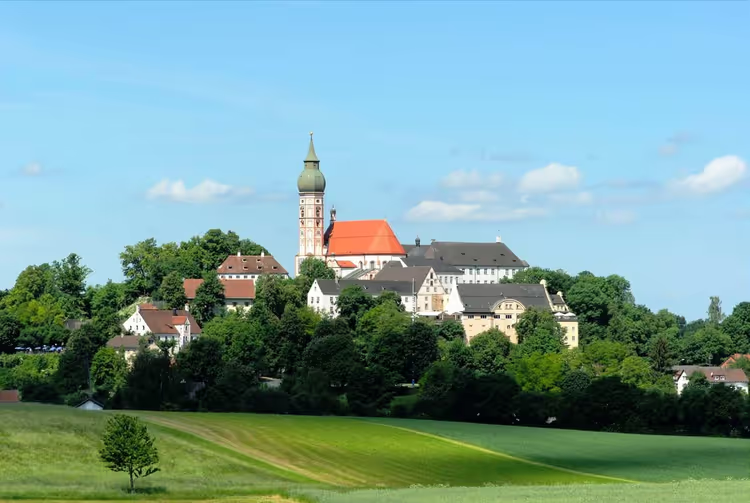 © Bbb · CC BY-SAPhoto: Bbb, CC BY-SA (https://creativecommons.org/licenses/by-sa/1.0), Wikimedia Commons
The Benedictine monastery of Andechs is supported by its brewery, which has been operating for 500 years. The restaurant serves monastery beer and traditional Bavarian dishes, and nearby they sell cheeses and medicinal tinctures. The proceeds are enough to maintain the monastery and fund charitable work.
The grounds include a distillery, stables, butcher shops, and chapels with relics brought by Bavarian dukes: Charlemagne's victory cross, the pectoral cross of Saint Elizabeth, and other holy objects. The monastery is open every day from 7:00 to 19:00 (as of 09/2026, Andechs Monastery). From Munich, it's easy to get here by S-Bahn or by car.
- How to get there: S-Bahn to Herrsching, then bus or walk uphill.
- Cost: entry to the church is free, beer and food are paid separately.
- The catch: the uphill walk takes about an hour.
- Train tickets for Bavaria on Trip.com.
22. St. Peter's Church
St. Peter's Church is the city's oldest parish, and its 92-meter bell tower rises above Marienplatz. The building was destroyed by fires several times, so its appearance mixes features of different styles. At a height of 56 meters there is an observation deck, reached by 306 steps through narrow passages.
Entry to the church is free, but climbing the tower is paid (as of 09/2026, Munich observation decks). From the top you can see the entire center, including Frauenkirche and the town hall. Come at opening time to avoid standing in line in the sun.
- How to get there: Marienplatz metro station, the tower is right behind the town hall.
- Cost: the church is free, climbing the tower is paid.
- The catch: 306 steps with no elevator, the climb is hard for children and seniors.
23. Bavarian State Opera
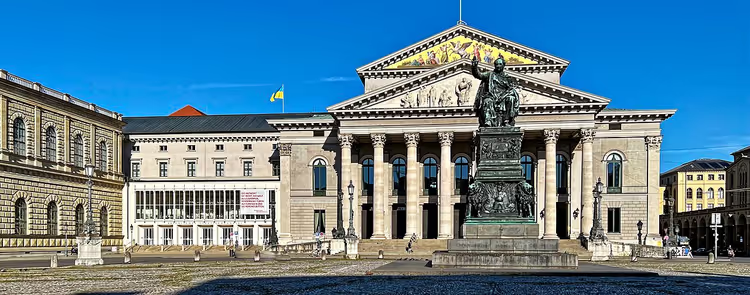 © Burkhard Mücke · CC BY-SAPhoto: Burkhard Mücke, CC BY-SA (https://creativecommons.org/licenses/by-sa/4.0), Wikimedia Commons
The Bavarian State Opera is considered one of Europe's leading stages, on par with La Scala. Since 1963, opera and ballet performances have been staged here daily, with Richard Strauss, Bruno Walter, and Kirill Petrenko among those who have conducted. The hall seats more than 2,000 people.
The building survived the fire of 1823 and the bombing of 1943, and was restored by architect Moritz Grauber over five years. Today the program includes both classics and contemporary productions (as of 09/2026, Bavarian State Opera). Tickets sell out quickly, especially for weekends, so book online in advance.
- How to get there: metro to Odeonsplatz, entrance from Max-Joseph-Platz.
- Cost: prices depend on the seat and production.
- The catch: cheap tickets for well-known productions sell out weeks in advance.
- Who it's for: for those who want to spend an evening in the hall.
24. Botanical Garden
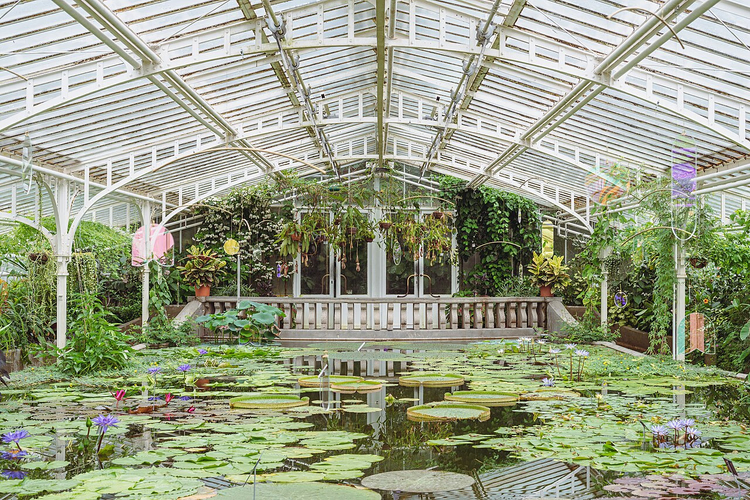 © Flocci Nivis · CC BYPhoto: Flocci Nivis, CC BY (https://creativecommons.org/licenses/by/4.0), Wikimedia Commons
The Botanical Garden greets visitors with a poster saying "Always green, always beautiful," and it lives up to that description. Plants from different climate zones receive round-the-clock care, so it stays green here even in the off-season. Quiet benches surrounded by mandarin trees and cacti are especially appreciated by those tired of crowds.
In the garden you can see rice sprouting on a teaching plot, and the greenhouses hold exotic flowers and aquatic plants. Opening hours depend on the season; in cold months the garden closes early (as of 09/2026, Munich botanical gardens). Come in the morning to catch fewer tour groups.
- How to get there: tram to the Botanischer Garten stop.
- Cost: entry is paid, within 10 €, check the price on the garden's website.
- The catch: in winter only part of the greenhouses are open.
25. Olympic Park
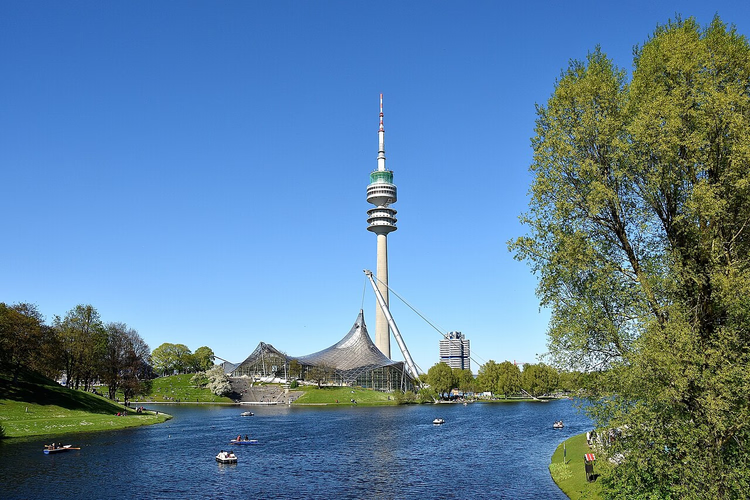 © FaceMePLS from The Hague, The Netherlands · CC BYPhoto: FaceMePLS from The Hague, The Netherlands, CC BY (https://creativecommons.org/licenses/by/2.0), Wikimedia Commons
Olympic Park is a complex that includes an ice rink, a velodrome, an aquatics center, and the Olympic Stadium. The 290-meter Olympic Tower rises above the park, with observation decks and views of the Alps. Until 2005, the stadium hosted Bayern Munich matches, and after Allianz Arena was built, it was almost empty.
At 190 meters, there is a restaurant with high prices, but the view of the blooming park and Olympiasee lake with ducks and swans is worth it. The BMW exhibition center is also located here, and admission is free (as of 09/2026, Olympic Park). In summer, people sunbathe on the lawns; in winter, an ice rink is set up.
- How to get there: U3 subway to Olympiazentrum.
- Cost: park admission is free, tower access is paid.
- The catch: the restaurant in the tower is expensive, and the elevator is busy on weekends.
- Who it's for: for walks and city views.
26. Aviation Museum
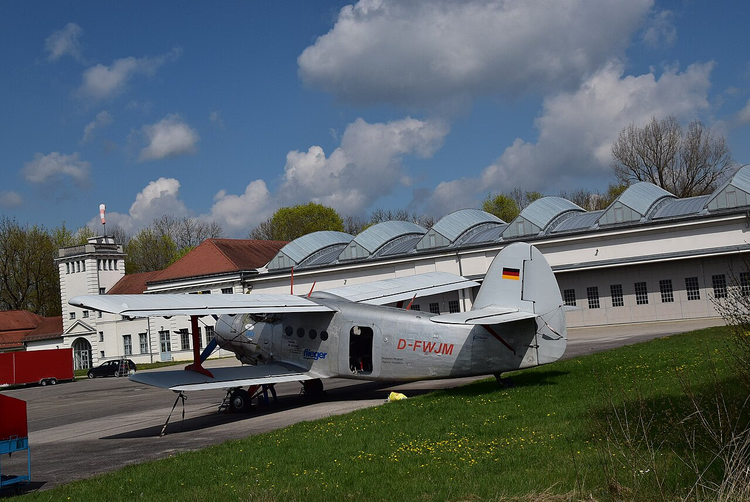 © Alec Wilson from Khon Kaen, Thailand · CC BY-SAPhoto: Alec Wilson from Khon Kaen, Thailand, CC BY-SA (https://creativecommons.org/licenses/by-sa/2.0), Wikimedia Commons
The Aviation Museum at Flugwerft Schleissheim shows both the theory and practice of flight. The halls display Otto Lilienthal's gliders and early aircraft, and you can climb into a helicopter cockpit or a hang glider yourself. For a child, this is a special adventure; adults can see rare engines and documents.
The museum hosts model aircraft clubs and trains young pilots. The museum is part of the Deutsches Museum, so tickets and opening hours should be checked on its website (as of 09/2026, Deutsches Museum tickets). Schleissheim is easy to reach by suburban train.
- How to get there: S-Bahn S1 to Oberschleißheim, then walk.
- Cost: paid admission, cheaper for children, check the price on the Deutsches Museum website.
- Who it's for: for children and anyone interested in aviation.
27. Theatine Church
The Theatine Church was built in the Italian Baroque style, inspired by the romantic story of Princess Henriette Adelaide of Savoy and Prince Ferdinand Maria. The lovers had been promised to each other in advance and met by chance in Bavaria. Henriette vowed to build a church if a son was born, and she kept her word.
The bodies of the princess, her husband, and other members of the Wittelsbach dynasty rest within the church walls. The facade is bright yellow, and inside there are high vaults and stucco work. The church is open every day from 6:30 to 20:00 (as of 09/2026, Munich churches).
- How to get there: subway to Odeonsplatz, Odeonsplatz square.
- Cost: free admission.
- The catch: services are often held inside, which limits viewing.
28. Palace of Justice
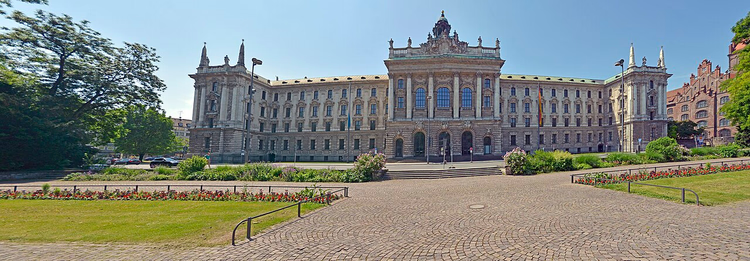 © Guido Radig · CC BY-SAPhoto: Guido Radig, CC BY-SA (https://creativecommons.org/licenses/by-sa/4.0), Wikimedia Commons
The Palace of Justice has adorned the city center since 1897. Architect Friedrich von Thiersch covered the building with a glass dome 67 meters high, which was a bold decision for that time. The main part is built in the Neo-Baroque style, and in 1905 two clock towers in the Gothic style were added.
Today, the Constitutional Court and the Higher Regional Court operate within the palace walls. The building is connected to the memory of the White Rose resistance group members, who were tried here in 1943. They were executed at Stadelheim Prison; today they are considered resistance heroes. The grand central hall is open to visitors on weekdays (as of 09/2026, historic buildings of the city).
- How to get there: subway to Karlsplatz (Stachus), then walk.
- Cost: viewing the hall is free.
- The catch: it is a working courthouse, so some areas are closed to tourists.
29. Legoland Günzburg
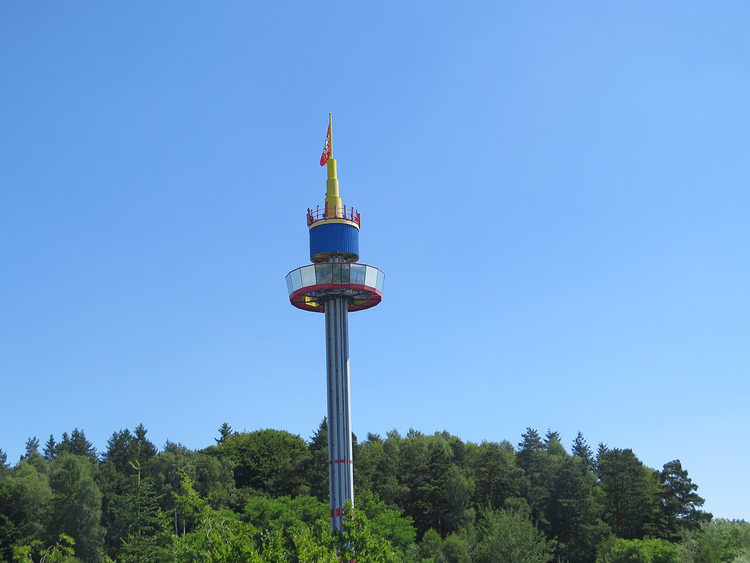 © GT1976 · CC BY-SAPhoto: GT1976, CC BY-SA (https://creativecommons.org/licenses/by-sa/4.0), Wikimedia Commons
Legoland Deutschland in Günzburg is about 120 km from Munich and operates from late March to early November. It's best to start with a sightseeing ride on the mini train, which passes eight themed zones. The most interesting are Miniland, Adventure Land, Pirate Land, and Knights' Kingdom.
Besides rides, there is a driving school for children: after the test, a child receives a "driver's license." It's cheaper to buy tickets online in advance; the price depends on the date (as of 09/2026, Legoland Deutschland). The park is open daily from 10:00 to 18:00 in season; during the off-season, check operating days separately.
- How to get there: by train to Günzburg, then by shuttle, or about 1.5 hours by car.
- Cost: price depends on the date; online in advance is cheaper than at the ticket office.
- The catch: far from Munich, you need a car or train.
- Who it's for: for families with children for a full day.
30. Therme Erding
 © Therme Erding · CC BY-SAPhoto: Therme Erding, CC BY-SA (https://creativecommons.org/licenses/by-sa/3.0/de/deed.en), Wikimedia Commons
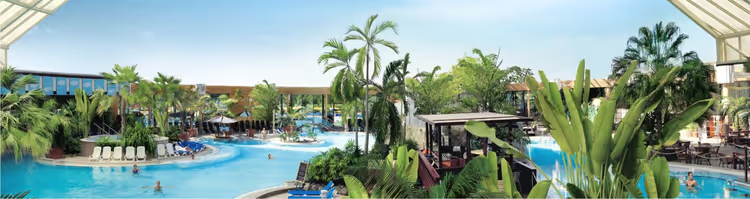
Therme Erding is the largest thermal complex in Europe, covering about 200,000 square meters. Besides the water park, there are saunas and spa centers, which is why the complex is called a water city. Three thermal pools, two outdoor and one indoor, are designed for adults, and the slides are divided by age: the fastest ones are open to ages 14 and up.
In the pool area there is a beach bar and a volleyball court, and the water is enriched with minerals similar in composition to the Dead Sea. There is a Bali hall with yoga and air baths. The complex is open daily from 9:00 to 23:00, a day ticket costs 52 € on weekdays and 59 € on weekends (as of 09/2026, Therme Erding).
- How to get there: S-Bahn S2 to Erding, then a bus to the complex.
- Cost: day ticket 52 € on weekdays and 59 € on weekends.
- The catch: on weekends and during school holidays the lines for the slides are long.
- Who it's for: for those who want to relax and warm up in any season.
Tours and tickets in Munich
Guided tours, skip-the-line tickets and activities — most offers can be cancelled free of charge.
See offers on TiqetsThe widget loads once you give your consent.
Munich attractions on the map
Almost all the places on the list are in the center or within half an hour of it. The U-Bahn and S-Bahn connect Marienplatz, Nymphenburg, the Olympic Park and the airport, so you won't need a car. Lines S1 and S8 will take you from the airport to the center, and with luggage it's more convenient to book a transfer from Munich airport.
Below is a map with all thirty points: open it on your phone and plan your route by day. That way you won't waste time traveling between districts and will manage to see more.
⁉️🤔 Frequently asked questions
How many days do you need to see Munich?
Two days are enough for the center: Marienplatz, the Residenz, the New Town Hall and one or two museums. For all thirty places on the list, allow at least four days, ideally a week. The Deutsches Museum and Hellabrunn Zoo each easily take half a day, so don't try to cover everything at once.
When are museums in Munich closed?
Monday is a day off almost everywhere: the Pinakotheken, the Glyptothek, the Deutsches Museum and the BMW Museum are closed. Some churches and the inner halls of the New Town Hall are also inaccessible on weekends. Plan major museums for Tuesday and Wednesday, when there are fewer tour groups.
What can you see in Munich for free?
The English Garden, Marienplatz, the Olympic Park and the churches Asamkirche, Theatinerkirche and St. Michael's are free. On Sundays, admission to the Pinakotheken costs 1 €. You can also enter the BMW exhibition center near the Olympic Park and part of the New Town Hall halls without a ticket.
Where to go with children?
The first option is the Deutsches Museum, where a child can conduct experiments themselves in the "Kids' Kingdom" hall. Next come Hellabrunn Zoo with 650 animal species and the Aviation Museum outside Munich. Legoland in Günzburg works for a full day, but it's easier to get there by car.
What to do on a rainy day?
Head to museums and palaces: the Residenz, the Deutsches Museum, the Alte Pinakothek, the Palace of Justice and Therme Erding are all indoors. A day like that is convenient for art or a water park. Just check the opening hours in advance, many museums close as early as 18:00.
In short: what's worth booking
Munich is a city where the cultural program easily takes up both your entire budget and your entire day. If you're short on time, start with the center: Marienplatz, the Residenz and the Alte Pinakothek give you a full impression of the city. Schedule major visits for Tuesday and Wednesday to avoid the museums' day off.
If you have two days, take the center and one Pinakothek. If you're with children, plan the Deutsches Museum, the zoo and Legoland. If you like quiet, go to the English Garden and the Olympic Park. If you want warmth in any season, choose Therme Erding.
It's convenient to choose a hotel near Marienplatz, then all the main points will be within walking distance. That way you'll save time on transport and can head out for a walk at any moment.

A small editorial team writing guides for independent travel. We travel ourselves, but we haven’t been everywhere, so we check prices, opening hours and how to get there against official sources.