
















40 places in Tokyo in 2026: what has closed and where entry is free
Half of the old "what to see in Tokyo" lists are already out of date. In recent years, three popular attractions on Odaiba island have closed at once, while the Edo-Tokyo Museum has come back after a long renovation. We went through the forty places in our earlier roundup and checked each one: what is open, where entry is free and where you need to buy a ticket in advance.
Ad: this article contains affiliate links, we earn a commission if you book through them, at no extra cost to you.
What has changed in Tokyo by 2026
💡 In short:
- Closed for good: Toyota Mega Web, Oedo Onsen Monogatari, the Daikanransha Ferris wheel, the Museum of The Little Prince in Hakone and the Takagi Bonsai Museum.
- Free entry: the East Gardens of the Imperial Palace, the Tokyo Metropolitan Government Building observation deck, Yoyogi Park, Senso-ji temple and Meiji Jingu shrine.
- Ticket needed in advance: the Ghibli Museum sells entry by advance reservation only, and the price of Disneyland depends on the date.
- Opening hours and status of the attractions: 10/2026, checked on the official website of the Imperial Household Agency and on the attractions' own websites.
Below is a table of the main changes. Check your plan against it before you buy tickets and book a hotel. That way you won't turn up at locked gates.
Attraction | Status as of 10/2026 | Source |
|---|---|---|
Toyota Mega Web | closed since 31 December 2021 | |
Oedo Onsen Monogatari on Odaiba | closed since 5 September 2021 | |
Daikanransha Ferris wheel | closed in August 2022, dismantled | |
Museum of The Little Prince in Hakone | closed since 1 April 2023 | |
Edo-Tokyo Museum | open again since 31 March 2026 |
The other places on the list are open. But many have changed their entry rules, and some of the earlier descriptions turned out to be inaccurate. We point out these discrepancies separately in each section.
1. Toyota Mega Web: the complex is closed for good
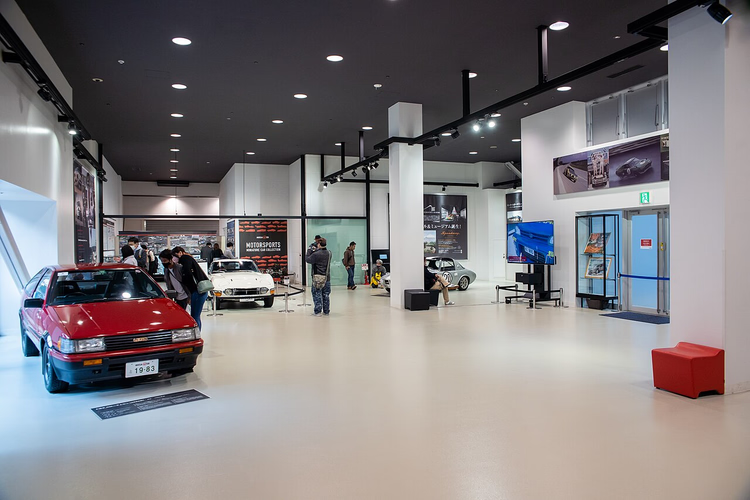
Japan's car industry is known far beyond the country's borders, and Toyota was its main showcase in the capital. The Toyota Mega Web exhibition centre on Odaiba island featured on lists of the world's best car museums. The exhibition filled six halls. In them, visitors didn't just look at the cars and parts but got hands-on with them: they shifted gears on different gearboxes and listened to the engine noise.
 © Dick Thomas Johnson · CC BYPhoto: Dick Thomas Johnson, CC BY (https://creativecommons.org/licenses/by/2.0), Wikimedia Commons
The largest showroom in the complex displayed every current model and prototype from the brand, with rarities from the 1960s alongside. The biggest draw was the Ride One hall: licensed drivers picked a car and took it for a short lap around the pavilions. Children had their own go-kart track, Kids Hybrid Ride One. Entry to the centre was free, and you only paid for the test drive and the go-karts.
That place no longer exists. The complex closed on 31 December 2021 together with its garage of historic cars, according to Time Out's report on the Mega Web closure. The Palette Town district by Aomi station has been redeveloped, and old guidebooks listing the Mega Web address won't help you.
In practice, this means you shouldn't build a "free Toyota museum" into your Odaiba route. If cars matter to you, look for manufacturers' showrooms currently operating in the city and check their status on the official websites. On the island itself you still have the Miraikan museum, Joypolis and the waterfront with its view of Rainbow Bridge. They will easily fill a whole day.
- Getting there: the site of the former complex is by Aomi station on the Yurikamome line.
- Cost: the attraction is closed.
- The catch: there is no replacement with a free test drive on Odaiba.
2. Tokyo Disneyland in Urayasu
Disneyland is often associated with Paris. But the project is American, and the first park under that name outside the US opened in Japan. Today it is a large complex with seven themed lands. Visitors of any age find something to enjoy here.
 © Dick Thomas Johnson from Tokyo, Japan · CC BYPhoto: Dick Thomas Johnson from Tokyo, Japan, CC BY (https://creativecommons.org/licenses/by/2.0), Wikimedia Commons
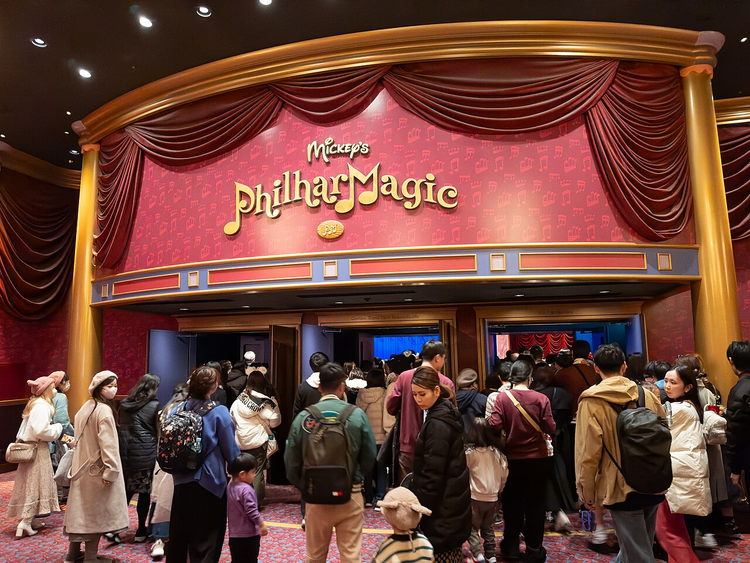
The first land visitors come to is Fantasyland. It is home to Cinderella Castle, the Peter Pan flight ride and the Dumbo the Flying Elephant carousel. Older visitors are drawn to Adventureland, with its tropical jungle and the world of the Pirates of the Caribbean. The rides here are no longer so gentle. In Toontown you can have your photo taken with costumed characters. The longest queue is usually the one for Mickey Mouse.
Tomorrowland brings together the futuristic rides. In Westernland, cowboys and a roller coaster await. You can end the day in Critter Country, which is designed for small children, or at World Bazaar with its themed souvenirs.
The park is not in Tokyo itself but in the suburb of Urayasu. Getting there is easy: take a JR train to Maihama station, then walk or ride the Disney Resort Line. Opening hours vary from day to day, so check the calendar on the official Tokyo Disney Resort website.
The old prices from the guidebooks no longer apply. The park has moved to variable pricing: the same one-day ticket costs a different amount on a weekday in January and on a Saturday in August. Child and junior tickets are cheaper than the adult one. You can compare admission options in advance: tickets to Tokyo's parks on Tiqets.
- Who it's for: families with children and fans of classic Disney cartoons.
- Not for: travellers with a single day in Tokyo, because the park takes up the whole day.
- The catch: the park does not count as free entertainment, and you pay for entry on any day.
3. The Imperial Palace and the East Gardens
The Imperial Palace remains a sacred place for the people of Japan. The emperor's power is nominal, but he is revered. The palace's history began in the 15th century. Old structures survive in the grounds, and next to them stand modern buildings in the classical Japanese style.
You cannot go inside the palace itself. The East Gardens are open to visitors. If you book ahead on the Imperial Household Agency website, you can also join a guided tour of the inner grounds of the complex, though without entering the residence. The gardens have plenty to see even without that.
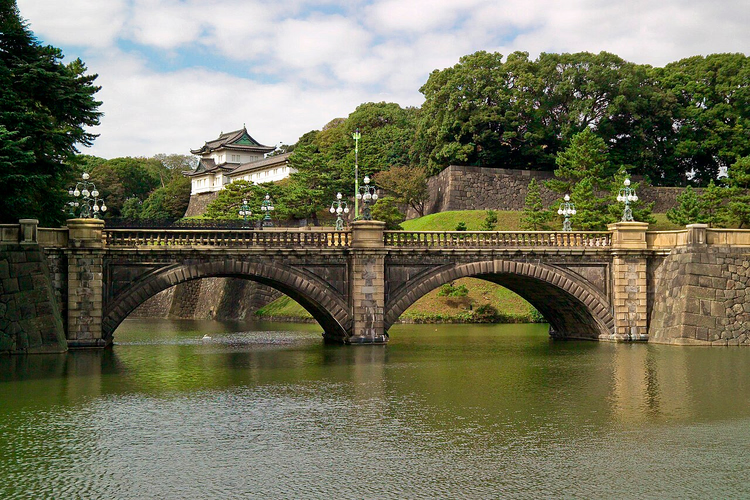
The first thing you'll notice is the traditional landscaping. The flower beds and paths are complemented by bridges, the most striking of which are Nijubashi and Meganebashi. Nearby stands the Fushimi-yagura watchtower, which has survived from the time of the shogunate. Music lovers should look for the Tokagakudo concert hall, where classical concerts are held.
Entry to the East Gardens is free. The gardens open at 9:00, and closing time depends on the season: from 16:00 in winter to 18:00 from mid-April through August. They are closed on Mondays and Fridays, and from 28 December to 3 January (as of 10/2026, Imperial Household Agency). There are three entrances: the Ote-mon, Hirakawa-mon and Kitahanebashi-mon gates.
The gardens are lovely at any time of year. The best period is late March and early April, when the cherry trees are in bloom. Twice a year, on 2 January and on the emperor's birthday, 23 February, the imperial family appears on a balcony behind protective glass and greets the public.
- Getting there: on foot from Tokyo station or from Otemachi subway station to the Ote-mon gate.
- Cost: free.
- The catch: the gardens are closed on Mondays and Fridays, so check the day of the week in advance.
4. The Ghibli Museum in Mitaka
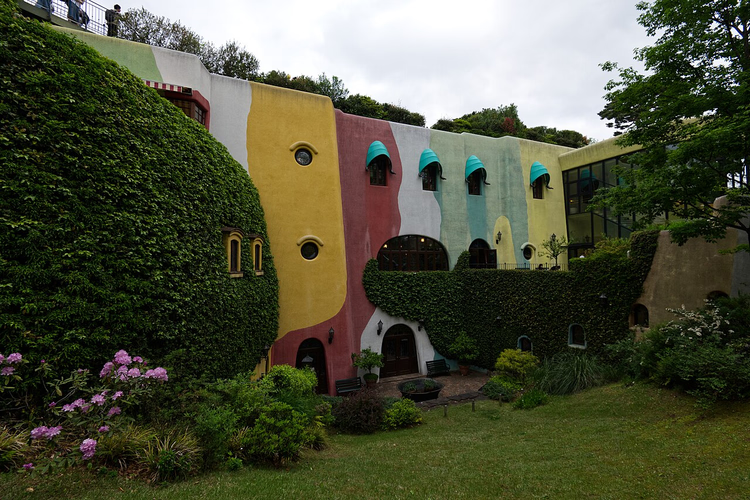
For some people Japan means cars, for others electronics. Still others think of anime straight away. Many famous films were made at Studio Ghibli, and its museum shows how animation comes to life.
 © Maarten Heerlien from Voorschoten, The Netherlands · CC BYPhoto: Maarten Heerlien from Voorschoten, The Netherlands, CC BY (https://creativecommons.org/licenses/by/2.0), Wikimedia Commons
The exhibition is small but thought through down to the last detail. In the galleries and even in the service areas, you'll come across the tracks of mysterious creatures in a corner or cat figurines on the taps in the toilets. There are secret passages, winding staircases and magic lanterns. The lanterns give a clear demonstration of how a moving picture works.
A separate display is devoted to sketches for the films. It shows anime "from the inside": from the first rough drawing to the finished frame. The museum is popular with local schoolchildren, but adult fans of Japanese animation will enjoy it too.
The main rule: tickets are sold in advance only, and you cannot buy them on site. An adult ticket costs 1,000 yen, with reduced prices for children and teenagers. Sales for the following month open on the 10th at 10:00 Japan time (as of 10/2026, official museum website). The old address from earlier guidebooks is wrong: the museum is in Inokashira Park in the city of Mitaka. If you'd like to combine the museum with a walk around the city, take a look at Tokyo tours on GetYourGuide.
- Getting there: by JR train to Mitaka station, then about 20 minutes on foot or by shuttle bus.
- Cost: paid, by advance reservation only.
- The catch: tickets for popular dates sell out on the day sales open.
5. The Tokyo Metropolitan Government Building observation deck
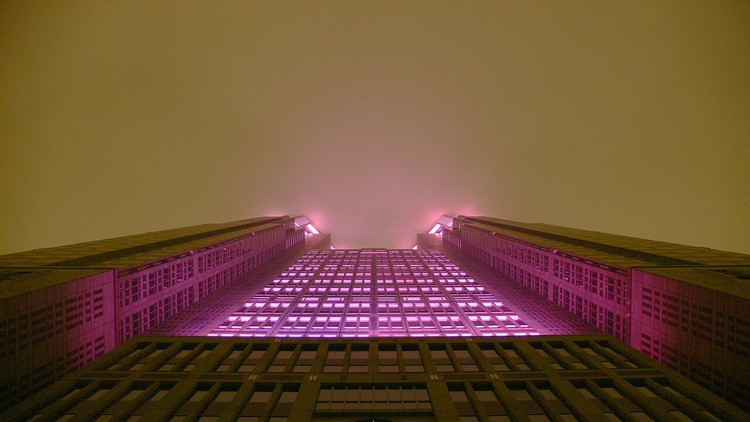
You can photograph the city from above for free. To do so, go up to the observation deck of the Tokyo Metropolitan Government Building in the Shinjuku district. A high-speed lift will take you to the 45th floor, 202 metres up. Visitor details are published on the metropolitan government's website.
 © shuets udono from Tokyo, Japan · CC BY-SAPhoto: shuets udono from Tokyo, Japan, CC BY-SA (https://creativecommons.org/licenses/by-sa/2.0), Wikimedia Commons
The deck is open from morning until late evening, and entry is free. The exact hours and closing days of each of the two towers change, so check the website on the day of your visit. The building was designed by the architect Kenzo Tange.
- Cost: free.
- Who it's for: anyone who wants a panorama without paying for a ticket.
6. The Museum of The Little Prince in Hakone is closed
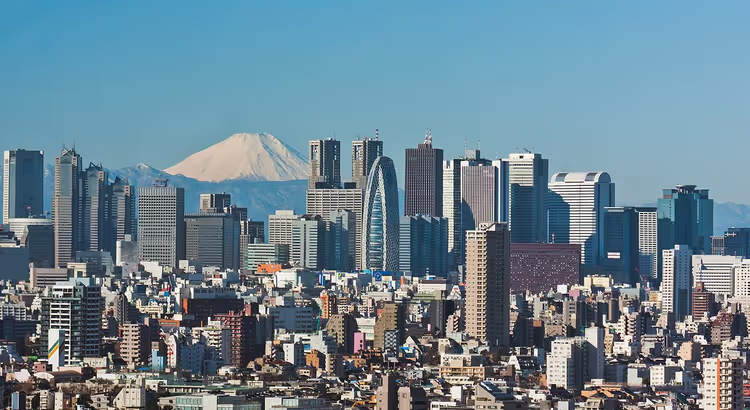
Japan even had its own corner of French Provence. It was recreated at the Museum of The Little Prince in the resort town of Hakone. This was the country's way of paying tribute to Antoine de Saint-Exupéry. A themed museum had appeared very far from the writer's homeland, and that surprised many visitors.
 © Morio · CC BY-SAPhoto: Morio, CC BY-SA (https://creativecommons.org/licenses/by-sa/3.0), Wikimedia Commons
Beyond the gates, visitors stepped into another reality. Bright streets, bakeries smelling of croissants, small shops. Even the signs and directions were written in French. That detail completed the atmosphere.
Deep inside the quarter stood a two-storey house, a copy of the one where the author lived. The ground floor held the writer's personal belongings, and the upper floor housed a library. It contained a single work, "The Little Prince", but in editions from different years and in different languages. After their walk, visitors could relax in a French restaurant with a European menu.
Now for the main point. The museum closed for good on 1 April 2023. The reasons given were the fall in visitor numbers during the pandemic and the deterioration of the buildings (according to the Wikipedia article on the museum). Don't plan a trip to Hakone for its sake.
Hakone itself remains a popular day trip from Tokyo: hot springs, Lake Ashi and views of Mount Fuji in clear weather. Just take the museum off your list.
- Cost: the attraction is closed.
- The catch: there is no direct French-style replacement in the region.
7. Miraikan: the science museum on Odaiba
Miraikan is often called the museum of the future. It is the National Museum of Emerging Science and Innovation, and it presents the latest achievements in technology. This is a subject the Japanese know well.
 © Photograph by Mike Peel ( www.mikepeel.net ). · CC BY-SAPhoto: Photograph by Mike Peel ( www.mikepeel.net )., CC BY-SA (https://creativecommons.org/licenses/by-sa/4.0), Wikimedia Commons
The building itself catches your eye first. It is modern and looks like something between a ship and a flying saucer. The building can be considered a piece of architecture in its own right.
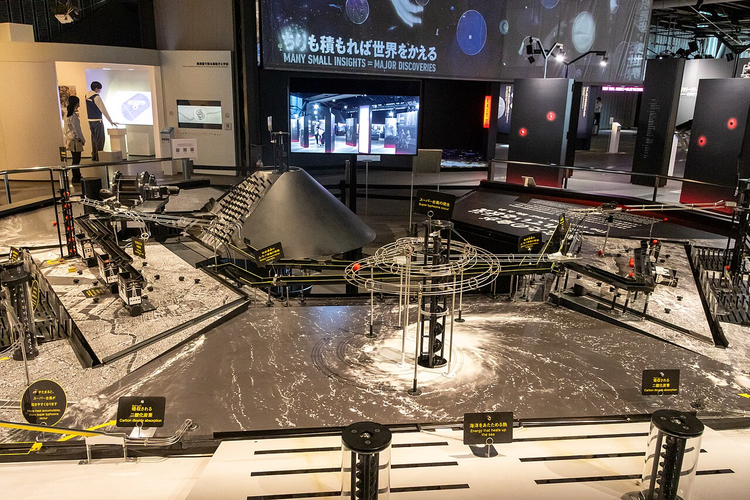
Inside, several floors of exhibitions await you. The permanent exhibitions occupy the upper levels, while the others host temporary projects on technical themes. The star exhibit is called Geo-Cosmos. It is a huge globe made of OLED panels that shows processes on the Earth's surface and combines them into a single moving picture.
There are halls where you'll learn more about yourself: for example, how the brain works. The ASIMO robot, however, is no longer at the museum. Its demonstrations ended in spring 2022, Time Out Tokyo reports. In its place, the museum is developing other robot exhibitions. The current programme is published on the official Miraikan website.
The museum stands on the artificial island of Odaiba. It is open during the day and closed one day a week. Check the hours and ticket price on the website before your visit.
- Getting there: the Yurikamome line to Telecom Center or Tokyo International Cruise Terminal station, then on foot.
- Cost: paid, with a reduced price for children.
- The catch: if you're coming for ASIMO, there is nowhere left to see it.
8. The Subway Museum in the Kasai district
The subway remains the most popular form of transport among Tokyo residents. Visitors can find it hard to make sense of the map, the intersecting lines and the transfers. The Tokyo Subway Museum is a handy place to start getting to know the network.
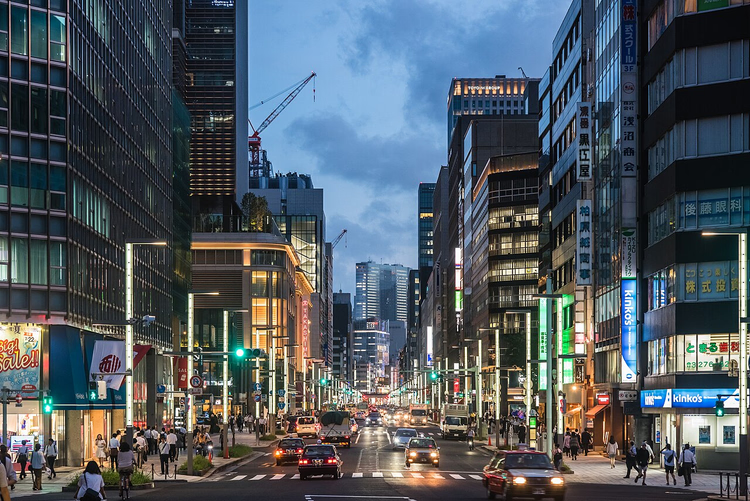 © Sitao Xiang · CC BY-SAPhoto: Sitao Xiang, CC BY-SA (https://creativecommons.org/licenses/by-sa/4.0), Wikimedia Commons
The entrance is designed like a real station. You pass through a ticket gate with your ticket, just as you would in the real subway. It's a small touch, but it sets the tone for the whole visit.
Then the world of the subway itself begins. You'll see historical documents, maps from different years and tools. You can step into an old carriage and sit on a soft seat.
Children are drawn to a large model that shows how the lines operate. The figures are behind glass and cannot be touched. But that doesn't make the crowd around the model any smaller.
Older visitors try their hand at the simulators: you can play at being a train driver. The museum staff explain the rules and help you make sense of the lines and transfers. There are fewer signs in English than in Japanese, so bear that in mind.
To reach the museum, you'll have to use that very subway. It is by Kasai station on the Tozai line, under the elevated tracks. The museum is open during the day, and Monday is usually its closing day. Entry is paid, but the price is low. Check the exact hours before you go.
- Getting there: subway to Kasai station, with the entrance right by the exit.
- Who it's for: families with children and anyone who loves transport.
- The catch: the museum is far from the centre, and the journey eats up a noticeable part of the day.
9. Yoyogi Park by Harajuku station
The park is next to Harajuku station. On Sundays it draws aspiring musicians, photographers with models, rockabilly dancers and Elvis Presley fans. You could watch them for hours.
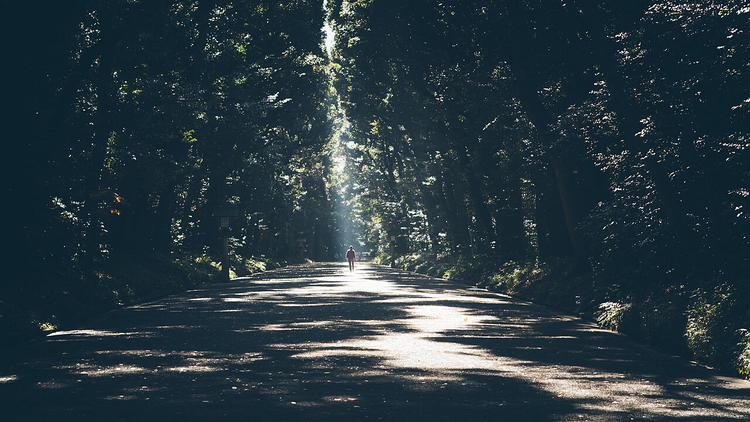
In summer you can escape the heat here in the shade of the trees. Locals walk with their children and dogs and play sports. If you find yourself in the park during cherry blossom season, have a picnic on the grass.
Entry to the park is free. The Tokyo tourist office writes about the surrounding area.
- Cost: free.
10. The Meguro Parasitological Museum
This is one of the most unusual museums in the city. Adults and children learn facts about parasites here and see a large collection of specimens. The star exhibit is a tapeworm more than eight metres long. It was removed from a human body.
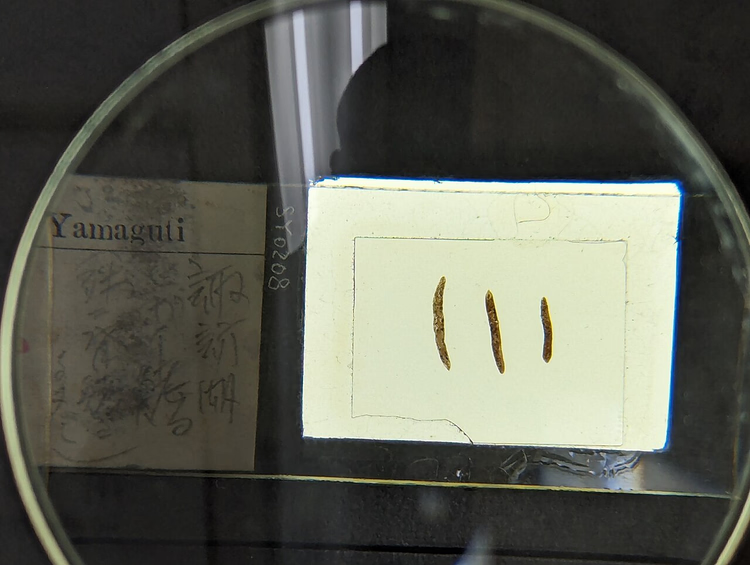
If you've just had lunch, put the visit off. The museum's concept is a rare one, and the Japanese themselves call it the only one of its kind. The museum has a souvenir shop. It sells a guidebook, T-shirts with an unusual print and key rings.
Address: 4-1-1 Shimomeguro, Meguro-ku. Opening days and hours are published on the official museum website. The museum is usually closed on Mondays.
- Getting there: on foot or by bus from Meguro station.
- The catch: the exhibition takes up two small floors, and a visit will last less than an hour.
11. Rainbow Bridge over Tokyo Bay
The double-deck Rainbow Bridge, a suspension bridge, has become a symbol of the modern capital. It links the artificial island of Odaiba with the piers of the Shibaura district. The bridge is more than thirty years old.
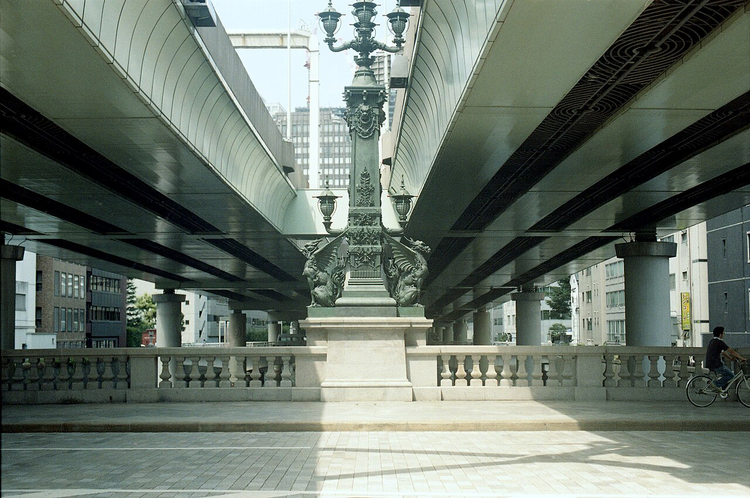 © shikabane taro · CC BYPhoto: shikabane taro, CC BY (https://creativecommons.org/licenses/by/3.0), Wikimedia Commons
The towers hold massive cables, so the structure is built to withstand earthquakes. An expressway runs along the upper deck. The lower deck carries a regular road, the Yurikamome line and pedestrian walkways. Cycling across the bridge is not allowed.
At night the bridge is lit in white, green and red. Hence the name. The bridge offers a view of the bay and the skyscrapers. But the walkways are not open around the clock: they are closed in the evening. Crossing is free.
The view of the bridge itself is better from the Odaiba waterfront. Come there towards sunset: first you'll photograph the bridge in daylight, and half an hour later with the lights on.
- Getting there: from Shibaura-futo or Odaiba-kaihinkoen station on the Yurikamome line.
- Cost: free.
12. The Shitamachi Museum in Ueno Park
The exhibition is assembled from the belongings of ordinary townspeople. It shows life in the Low City (shitamachi) before the Great Earthquake of 1923. Here you'll get a feel for the era of the modest craftsmen and merchants of the Meiji and Taisho periods.
 © Kentaro Ohno · CC BYPhoto: Kentaro Ohno, CC BY (https://creativecommons.org/licenses/by/2.0), Wikimedia Commons
The craftsmen's quarter grew up by the walls of Edo Castle. In the museum, its houses and shops are recreated at full size. You can walk into the rooms, and many of the objects may be picked up.
Some of the exhibits are changed with the seasons. In summer the houses contain one set of things, in winter another. Among them is traditional footwear: wooden geta sandals and woven zori. The earthquake and the fires destroyed the real houses of this neighbourhood. Business districts rose in their place.
The museum has been under renovation. Check the current status and opening hours on the official museum website.
- Getting there: on foot from Ueno station; the museum stands by Shinobazu Pond.
- The catch: the exhibition is small, and the captions are mostly in Japanese.
13. Senso-ji temple in Asakusa
The Buddhist temple of Senso-ji was founded in 628, according to the temple's official website. It is the oldest temple in Tokyo and one of the most visited places in the city. It is in the Asakusa district.
The temple is always crowded. Tourists, monks and local families come here. According to legend, this is where two fishermen brothers pulled up in their nets a statue of the bodhisattva Kannon, the goddess of mercy. The temple was founded in her honour. The statue is still kept there, but it is not shown to visitors.
The complex has burned down and been rebuilt many times. Each time it was reconstructed close to the original design. Today you'll see a five-storey pagoda, the main hall and the Kaminarimon gate with its enormous red lantern. The Nakamise shopping street, with its souvenirs and sweets, leads from the gate to the temple.
The temple grounds are always open, and entry is free. The main hall is open during the day.
- Getting there: subway to Asakusa station (Ginza line), then on foot following the signs.
- Cost: free.
- The catch: during the day Nakamise street is packed, so come early in the morning or in the evening.
14. Meiji Jingu shrine in Shibuya
Locals say that wishes come true here. The shrine stands in a forested park in the Shibuya district. It is dedicated to Emperor Meiji and Empress Shoken. For the Japanese, it is one of the most important places in the country.
The complex was founded in 1920, according to the shrine's official website. During the Second World War the buildings burned down. The townspeople rebuilt the shrine, and for them it became a symbol of unity.
A visit begins with a purification ritual: at the entrance you rinse your hands and mouth with water from a stone basin. At the main hall it is customary to make a wish, bow and clap your hands. Nearby, wooden plaques bearing wishes hang on special racks.
After that you can explore the inner garden. Tradition has it that the empress tended the irises there herself. The grounds also have a museum with objects from the Meiji era.
- Getting there: on foot from Harajuku station through the large torii gate.
- Cost: entry to the grounds is free; the inner garden and the museum are paid.
- The catch: it's about a ten-minute walk along a forest path from the gate to the main hall.
15. Kabuki-za theatre in Ginza
The capital's most colourful theatre is in the heart of Ginza. To a European, its performances seem unfamiliar. For the Japanese, Kabuki-za remains a source of national pride. The emotion, the plot, the vivid costumes and the make-up are worth dropping in for, even for a single act.
The name "kabuki" is explained in different ways, because its characters have several meanings. Two readings come closest to the essence: "to break the rules" and "the art of song and dance". Both capture the character of the theatre precisely.
For first-time visitors to the country, one production is enough. You'll see at once how different this culture is from the European one. Take a look at the building itself too. The theatre has burned down and been rebuilt more than once. Performances often play to a full house.
The programme and ticket sales rules, including tickets for a single act, are published on the theatre's official website.
- Getting there: subway to Higashi-ginza station (Asakusa and Hibiya lines); exit 3 leads straight to the theatre.
- Who it's for: those interested in traditional theatre.
- The catch: a full performance lasts several hours, and the stage language is hard to follow even with a translation.
16. Tsukiji market: the outer market remains
For many years Tsukiji was a wholesale fish market. Tourists came here for the morning tuna auctions. Old guidebooks still advise getting up before dawn for them.
That advice is out of date. The wholesale trading moved to the new Toyosu market in 2018. What remains at Tsukiji is the outer market: blocks of shops and small restaurants. How it works is described on the outer market's official website.
Fresh seafood is still brought here. The shops sell fish, knives, tableware and dried foods. The restaurants serve sushi and other dishes the Japanese love. The market is at its busiest in the first half of the day. After lunch, many of the stalls are already closed.
If you'd like to taste the food with explanations, take a guided walk: Tsukiji food tours on GetYourGuide.
- Getting there: subway to Tsukiji or Tsukijishijo station.
- Cost: entry is free, and you pay only for the food.
17. Shinjuku Gyoen garden
Shinjuku Gyoen National Garden offers quiet in the middle of the noisy Shinjuku district. It has ponds and shady paths. The level of care given to the garden shows how much the locals cherish nature. The garden grew up on land granted to one of the vassals of the Tokugawa clan.
On the one hand, the place looks like a pocket of untouched nature. On the other, the Japanese approach is obvious here: every plant and every pond is tended. Thousands of trees grow in the garden. Most of them are cherry trees of different varieties. It gets very crowded here during the blossom season.
Besides the Japanese garden, there is an English one and a French one. They show European pruning and geometric forms. The greenhouse holds a collection of tropical plants. Among the buildings, the Chinese-style Kyu-Goryotei pavilion stands out.
The rules and opening hours are published by the Ministry of the Environment of Japan.
- Getting there: on foot from Shinjuku-gyoemmae station or from the south exit of Shinjuku station.
- Cost: entry is paid, and the price is low.
18. Happo-en garden in the Shirokanedai district
Tokyo brings together the past and the future. Dense development has left the city with only islands of greenery. One of them is called Happo-en. This garden is about four centuries old. The land was once granted to a retainer of the shogun Tokugawa Ieyasu.
In those days the nobility adorned their residences with gardens. It was considered a mark of good taste. That was also when people began breeding koi, colourful carp with mottled backs, in ponds.
The garden's owners changed, and each one added something new. The core remained the same. Today you'll see a carp pond, a teahouse and old bonsai trees here. The grounds have restaurants serving Japanese and European cuisine.
The best time to visit is spring. When the cherry trees are in bloom, petals cover the paths and the water.
- Getting there: subway to Shirokanedai station, then on foot.
- Cost: a walk through the garden is free.
- The catch: the garden is often booked for weddings, and some of the paths are closed on those days.
19. Hamarikyu Gardens by Tokyo Bay
Hamarikyu is considered one of the finest examples of Japanese garden culture. The national style is evident in it, although many sections imitate wild nature. In the 17th century this was a hunting ground. The nobility hunted wild ducks at the mouth of the Sumida River.
The gardens have been open to the public since 1946. You can watch the tides here: the water in the pond is connected to Tokyo Bay. The garden itself is surrounded by a seawater moat. The green island is set against a backdrop of glass and concrete skyscrapers.
Today it's hard to imagine that this was once marshland. Locals regard the garden as a quiet place for solitude. It has changed owners and appearance several times. That is why it bears the imprint of several eras. In the teahouse on the island in the middle of the pond, you'll be served matcha tea with a sweet.
Check the opening hours and ticket price before your visit on the Tokyo Metropolitan Park Association website.
- Getting there: on foot from Shiodome station or by water bus from Asakusa.
- Cost: entry is paid, and the price is low.
20. Zojo-ji temple by Tokyo Tower
In the city centre, next to Tokyo Tower, stands Zojo-ji temple. Its history begins in 1393, according to the temple's official website. It is the family temple of the Tokugawa clan. Films are often shot here.
The temple was moved to a new site and rebuilt more than once. The main gate, Sangedatsumon, however, has survived since the early 17th century. The grounds contain the mausoleum of six Tokugawa shoguns, their wives and children.
Next to the temple is a Japanese-style garden. It is especially beautiful here in autumn and winter: what remains are the cedars, the stone lanterns and the small towers. Locals like to relax by the temple. The best-known shot is the old hall against the red-and-white Tokyo Tower.
- Getting there: about five minutes on foot from Onarimon subway station.
- Cost: entry to the grounds is free.
- The catch: the shoguns' mausoleum is not always open, and entry to it is paid.
21. Holy Resurrection Cathedral (Nikolai-do)
Many tourists are surprised by the Orthodox cathedral in central Tokyo. Locals call it "Nikolai-do". The cathedral stands in the Kanda-Surugadai quarter of the Chiyoda district.
It is the cathedral of the Japanese Orthodox Church. In 1962 the building was designated an Important Cultural Property, according to the cathedral's website. The design was refined by the British architect Josiah Conder. Nagasato Taisuke was in charge of construction.
In 1872 the Orthodox mission led by Archimandrite Nikolai (Kasatkin) moved from Hakodate to Tokyo. The old premises were cramped: people fainted during services, and some of the faithful stood in adjoining rooms. So the decision was made to build a new church. The building was badly damaged in the fire that followed the earthquake. It was restored a few years later.
- Getting there: on foot from Ochanomizu or Shin-ochanomizu station.
- Cost: it is customary to leave a small donation to look around inside.
22. Koishikawa Korakuen garden
Every garden in Tokyo is unique, but they have a lot in common. At Koishikawa Korakuen, the Chinese influence is noticeable. The garden is in the Bunkyo district. It was laid out in 1629 by Tokugawa Yorifusa, lord of Mito. His heir, Tokugawa Mitsukuni, completed the work. He also gave the garden its name. The garden is managed by the Tokyo Metropolitan Park Association, so check the opening hours on its website.
Many of the layout ideas were new for their time. They were later repeated in other gardens in the capital. Among them are "landscapes in miniature" and the principle of changing seasons: as some flowers fade, others come into bloom.
The miniature landscapes give you a journey without the travel. Beautiful places in Japan and China are reproduced here: Mount Fuji, the surroundings of Kiyomizu-dera temple in Kyoto and the shores of West Lake.
- Getting there: on foot from Iidabashi or Korakuen station.
- Cost: entry is paid, and the price is low.
- The catch: the dome of the Tokyo Dome stadium is visible beyond the wall, and on match days you can hear the noise.
23. Tokyo Skytree broadcasting tower
The name translates as "Tokyo sky tree". The tower stands in the Sumida district. The name Tokyo Skytree was chosen in spring 2008 following an open online vote.
The tower, including its antenna, is 634 metres tall, according to the official Tokyo Skytree website. The number was not chosen by chance. In Japanese, the digits 6, 3 and 4 can be read as "mu", "sa", "shi". Musashi was the name of the old province where present-day Tokyo now stands. The tower is roughly twice as tall as the old Tokyo Tower.
Its silhouette recalls a five-storey pagoda, so the tower fits into the landscape next to Asakusa. The base looks like the legs of a tripod. At night it is illuminated, and the colours change.
There are two observation decks. A spiral gallery leads to the upper one, and the lower one has a section with a glass floor. Beneath your feet you'll see city blocks, roads and cars the size of a matchbox. Entry is paid, and the price depends on the deck and the day. You can compare options in advance: tickets to Tokyo's observation decks on Tiqets.
- Getting there: subway to Oshiage station or train to Tokyo Skytree station.
- Who it's for: those who want the highest viewpoint in the city.
- Not for: if a free panorama is enough for you, choose the government building from item 5.
24. Golden Gai in Shinjuku
Golden Gai covers a very small area, less than half a stadium. Even so, hundreds of bars and small restaurants operate here. At first glance the quarter looks like a chaotic cluster of old houses. But the value of the place lies precisely in its old Tokyo character.
Step into one of the bars, and the life of the metropolis will seem to stand still for you. Sitting at the counters are well-off Tokyoites, young people and tourists. Guests eat unhurriedly and chat with the bartender.
This was once a district with a bad reputation. Later such establishments were banned, but the houses were not torn down. Today these are bars for 5-10 guests, a favourite haunt of the local bohemian crowd. Here you might run into an artist, a designer or the musicians of a well-known band. The Tokyo tourist office writes about the area.
- Getting there: on foot from the east exit of Shinjuku station.
- Cost: entry to the quarter is free, and many bars charge a cover fee.
- The catch: almost everything is closed during the day, and life begins in the evening.
25. Tokyo National Museum
A big city has few places where you want to lose yourself for hours among ancient objects. The Tokyo National Museum is exactly that kind of place. It is the oldest museum in the country. It stands in Ueno Park.
The complex consists of several buildings:
- Main building (Honkan): Japanese fine and applied art.
- Ceremonial building (Hyokeikan): a historic building for special displays.
- Asian Gallery (Toyokan): the art and archaeology of Asian countries other than Japan.
- Gallery of Horyu-ji Treasures: the country's Buddhist heritage.
- Heiseikan building: Japanese archaeology and temporary exhibitions.
The collection holds examples of Japanese art, samurai armour and swords, ceramics, costumes from different eras and much more. Opening hours and the ticket price are published on the official museum website.
- Getting there: about ten minutes on foot from Ueno station.
- The catch: you can't get round all the buildings in one visit, so pick two in advance.
26. Joypolis amusement park
Tokyo guards its traditions but strives to keep pace with the times. Sometimes it seems the Japanese are ahead of their time. Especially in places like Joypolis. It is an indoor interactive entertainment park on Odaiba island.
The park was created by Sega, the well-known developer of games and arcade machines. It's easy to lose yourself in the virtual world here. Instructions are given not only in Japanese but also in English, Chinese and Korean.
Inside you'll find simulators, the latest generation of arcade machines and virtual reality rides. You'll put on a headset and take part in a race. Then you can descend into the depths of the ocean. For prices and the list of rides, see the official Joypolis website.
- Getting there: the Yurikamome line to Odaiba-kaihinkoen station; the park is in the DECKS Tokyo Beach complex.
- Cost: paid, with entry and an unlimited ride pass sold separately.
27. The Edo-Tokyo Museum is open again
This museum in the Sumida district tells how the fishing settlement of Edo became the capital. The way of life of the Japanese in that era, their daily routines and culture, are shown through rare documents and objects.
The big news: the museum is open again. It was closed for renovation from spring 2022 and reopened on 31 March 2026, according to a press release from the metropolitan government. The building, the permanent exhibition and visitor services have been updated.
The permanent exhibition is divided into an "Edo zone" and a "Tokyo zone". The halls contain architectural models and full-size reconstructions. Since the renovation, large screens above them show the sky of old Edo and of modern Tokyo. The exhibits include ukiyo-e prints, a model of Nihonbashi Bridge and senryo-bako coin chests.
The temporary exhibitions are devoted to the history and culture of the city. See the schedule on the official museum website. The building also has a library of historical documents.
- Getting there: Ryogoku station (JR Sobu line or Oedo subway line).
- Cost: paid; check the price on the museum's website.
28. Ueno Zoo
Japan's oldest zoo was founded in 1882 on land that had belonged to the imperial family. When it opened, it showed animals native to the country. Today it is one of the best-known zoos in Asia.
Hundreds of animal species live at the zoo. The collection is added to every year. It brings together wildlife from Africa, the Americas, Australia, Europe and Asia. The giant pandas used to be the main favourites. Before your visit, check the zoo's website to see which animals are on display now.
The grounds are divided into two parts, east and west. You'll cover most of the enclosures on foot. There are cafes and lawns for resting.
- Getting there: on foot from Ueno station through the park.
- Cost: entry is paid, with concessions for children and school pupils.
- The catch: the zoo is usually closed on Mondays.
29. Roppongi Hills and Tokyo City View
The Roppongi district has a life of its own. Its bars, clubs and entertainment venues operate mainly in the evening and at night. But the quarter has a daytime draw too: the Tokyo City View observation deck in Mori Tower.
The tower is 238 metres tall and has 54 floors. It is essentially a business centre. Offices occupy most of the space. The lower floors hold shops and restaurants. The deck is at the top. Next to it is the Mori Art Museum of contemporary art, which is worth including in your visit. Entry conditions are published on the Tokyo City View website.
It's easy to get lost in the district. There are many high-rises around, and from below it isn't always clear where the entrance is. Follow the signs and look for the large spider sculpture at the foot of the tower.
- Getting there: Roppongi station on the Hibiya line or the Oedo line.
- Cost: paid, with the ticket for the open-air rooftop sold separately.
30. Rikugien garden in the Bunkyo district
The Rikugien landscape garden is in the Bunkyo district. This district is home to a concentration of universities. The garden has long been loved by visitors and Tokyoites alike. Many people come here on their lunch break or on a day off.
The name joins two ideas: "rikugi", the six principles of medieval poetry, and "en", garden. At the centre lies an artificial pond with islands. Around it grow individual trees and entire groves. Stone lanterns and teahouses complete the landscape.
The garden was laid out in 1695. The shogun Tokugawa Tsunayoshi gave this land to his adviser Yanagisawa Yoshiyasu. Later, in the Meiji era, the garden became the residence of the founder of Mitsubishi. The land was then handed over to the city. In 1953 the garden was designated a Special Place of Scenic Beauty, according to the Tokyo Metropolitan Park Association.
In autumn people come here to see the red maples. In spring the main event is the blossoming of the large weeping cherry tree by the entrance.
- Getting there: on foot from Komagome station (JR Yamanote line or Namboku subway line).
- Cost: entry is paid, and the price is low.
31. Takeshita street in Harajuku
Takeshita remains one of the most popular spots among Tokyo's young people. There is always something intriguing here: animal cafes, shops selling costumes for anime contests, stalls with unusual clothes. Yoyogi Park and Meiji Jingu shrine are close by. All three places combine easily into one route.
The crowd on the street is a spectacle in itself. You'll come across members of different subcultures here, dressed as robots and anime characters. The neighbouring shopping streets sell things you won't find in European shops. For example, LED costumes and coloured wigs.
During the day the street is pedestrian-only. It is lively in the evening too. The Go Tokyo city portal has more about the area.
- Getting there: the Takeshita exit of Harajuku station (JR Yamanote line).
- Cost: a stroll is free.
- The catch: at weekends you'll move along the narrow street at the speed of the crowd.
32. Oedo Onsen Monogatari: the complex is closed
The Oedo Onsen Monogatari theme complex on Odaiba island was devoted to hot spring culture. Open-air baths and foot baths awaited guests. Around them were Edo-style shopping arcades, cafes and beauty salons.
The custom here was to stroll around in a light yukata kimono. Every guest was given one at the entrance. The complex had rooms for overnight stays. The baths were divided into men's and women's. Open-air baths are called rotenburo. The water was drawn from a well beneath Tokyo Bay.
The complex closed for good on 5 September 2021, when the land lease expired (according to Wikipedia). Don't look for it on Odaiba. Other hot spring complexes operate in Tokyo and its suburbs, and many Japanese-style hotels have their own baths. If a bath matters to you, choose accommodation that offers one: hotels in Tokyo on Trip.com.
- Cost: the attraction is closed.
- The catch: there is no equivalent replacement on Odaiba island itself.
33. The Daikanransha Ferris wheel has been dismantled
The wheel stood on Odaiba island in the Palette Town district. The ride was 115 metres tall. In the evening it was decorated with coloured lights. After opening in 1999, it was for a time the tallest Ferris wheel in the world.
A full rotation took 16 minutes. From the top, passengers could see the whole of the man-made island and the neighbouring districts. Some of the cabins had a transparent floor.
The wheel closed in August 2022 and was later taken apart (according to Wikipedia). The Palette Town district has been redeveloped. For a view of the bay from above, you now have the observation decks from items 5, 23 and 29.
- Cost: the attraction is closed.
34. The Takagi Bonsai Museum is closed
The Japanese adopted the tradition of growing dwarf trees from China. Bonsai was long a pursuit of the nobility: it is the art of growing a tree in a tray. Later, ordinary townspeople took up the hobby too. A bonsai doesn't look like a sapling. What you see is a fully formed tree with its proportions preserved. This is how a miniature landscape is created amid stone buildings.
The plants have their crowns shaped and are trained into the desired form. There are weeping bonsai, cascading and upright ones. The master needs taste and an understanding of the laws of nature. The result of the work often becomes visible only after decades. The trees are grown from a small sapling or from seed.
The private museum of the master Takagi in Tokyo was for many years considered one of the best places to get to know this art. It is now closed. Works from the collection of the former Takagi museum have become part of the collection of the Omiya Bonsai Art Museum in the city of Saitama, according to the official website of the Omiya museum. It is a public museum, and it opened in 2010.
If bonsai interests you, go there. Next to the museum is the "bonsai village", with the masters' private gardens. The train journey from central Tokyo takes less than an hour.
- Getting there: by train from Tokyo to the city of Saitama; see the museum's website for the exact station and route.
- Cost: paid; check the price on the website.
- The catch: the museum is outside Tokyo, and the trip takes half a day.
35. Legoland Discovery Center on Odaiba
Many people have known Lego since childhood. It develops children's motor skills and brings parents' own memories back. Tokyo has an indoor Legoland Discovery Center. Inside there are rides, play zones, a cinema and a model city made of bricks.
Old descriptions confuse this centre with the large park. The full-scale Legoland Japan park is not in Tokyo but in the city of Nagoya, in Aichi Prefecture. It has dozens of rides and a "Miniland" zone with models of the country's famous sights.
The Tokyo centre is designed for families with young children. Entry rules and prices are published on the centre's official website.
- Getting there: the DECKS Tokyo Beach complex, Odaiba-kaihinkoen station.
36. Madame Tussauds on Odaiba
The Madame Tussauds wax museum on Odaiba island operates as a branch of the London attraction. The figures here are not cordoned off. You can walk right up to them and take a photo.
The entrance is in the DECKS Tokyo Beach shopping complex. The halls display figures of actors, athletes, pop and rock performers, and historical figures. For some of the photos you'll be offered props. For prices and opening hours, see the official museum website.
- Getting there: Odaiba-kaihinkoen station on the Yurikamome line.
- Cost: paid, and an online ticket is usually cheaper.
37. Tokyo Dome stadium
From the outside, the covered Tokyo Dome stadium looks like an enormous dome. Inside, it isn't obvious what holds the roof up: it is supported by air pressure. Construction was completed in 1988, and the stadium seats about 55 thousand spectators. It hosts baseball games and other sporting events. It is also a concert venue for Japanese and international artists. The programme is published on the official Tokyo Dome website.
- Getting there: Suidobashi or Korakuen station.
38. Tokyo Sea Life Park aquarium
Tokyo Sea Life Park is in Kasai Rinkai Park on the shore of the bay. Japanese families and visitors from other countries love coming here. The aquarium was built at the turn of the 1980s and 1990s.
The tanks are home to sharks, turtles, sea anemones and tropical fish. There are penguins too. Conditions are tailored to each species: water temperature and composition, depth, light and food. The animals are looked after by specialists in various fields, including vets and divers.
The aquarium's main aim is to show the diversity of marine life. Old descriptions mentioned a show with dolphins and orcas. We found no confirmation of this, so don't count on such a show. Check the programme on the Tokyo Zoo website before you go.
The grounds have a cafe and a souvenir shop. The park around the aquarium is free and makes for a pleasant walk after your visit.
- Getting there: a JR Keiyo line train to Kasai-rinkai-koen station.
- Cost: entry is paid, with concessions for children and school pupils.
39. Tokyo Toy Museum
This place looks like a former school with playrooms. And that's what it is. People mostly come here with children, but the visit brings childhood memories back for adults as well. Every culture has entertained its children in its own way. Japanese toys are unlike any others.
Many people are familiar with origami. But the core of the collection is not paper figures but wooden and ceramic toys and papier-mâché pieces. The more recent exhibits are handmade from plastic and cardboard.
The museum has been open since 1984. It was founded by Mr Nakano, who collected amusing things. In 2008 the exhibition moved to the building of a former primary school in the Yotsuya quarter. There are no traditional guides here. Instead, advisers will happily tell you about each toy and show you how to play with it. Woodcarvers have added their own works to the collection.
- Getting there: on foot from Yotsuya-sanchome subway station.
- Cost: paid, with a reduced price for children.
40. Tokyo Photographic Art Museum in Ebisu
The Tokyo museum of photography opened in 1990. The collection grew quickly, and a few years later the museum moved to a permanent building in the Yebisu Garden Place quarter. Today it is called the Tokyo Photographic Art Museum, or TOP Museum for short.
Besides the main collection, temporary themed exhibitions are held here. The museum shows both art and documentary photography. The programme is published on the official museum website.
Photographs from the post-war years show the lives of Japanese people from different walks of life. Historical record and the aesthetics of the frame meet here. For costume designers in film and theatre, such photos serve as working material.
- Getting there: on foot from Ebisu station along the covered walkway.
- Cost: the price depends on the exhibition.
Tours and tickets in Tokyo
Guided tours, skip-the-line tickets and activities — most offers can be cancelled free of charge.
See offers on GetYourGuideThe widget loads once you give your consent.
Tokyo's sights on the map
The map marks the main spots in the city. The easiest approach is to group them by district. Odaiba: Miraikan, Joypolis, Legoland Discovery Center and Madame Tussauds. Ueno: the national museum, the zoo and the Shitamachi Museum. Harajuku: Meiji Jingu, Yoyogi Park and Takeshita street. That way you'll spend less time on the subway.
⁉️🤔 Frequently asked questions
Which places on the Tokyo list are free?
Without a ticket you can visit the East Gardens of the Imperial Palace, the Tokyo Metropolitan Government Building observation deck, Yoyogi Park, the grounds of Senso-ji and Zojo-ji temples and Meiji Jingu shrine. Walks along Takeshita street, around the Tsukiji outer market, through Golden Gai and along the Rainbow Bridge walkway are free too. You'll only have to pay for food and shopping.
Which Tokyo attractions have closed?
Five attractions from the old lists are closed for good: Toyota Mega Web, Oedo Onsen Monogatari and the Daikanransha Ferris wheel on Odaiba, the Museum of The Little Prince in Hakone and the Takagi Bonsai Museum. The ASIMO robot is no longer shown at the Miraikan museum either. The wholesale trading at Tsukiji market has moved to Toyosu market, and the outer market operates on the old site.
Is the Edo-Tokyo Museum open?
Yes. The museum was closed for renovation from spring 2022 and reopened on 31 March 2026. The building and the permanent exhibition have been updated, and the halls now have large screens showing the sky of Edo and of modern Tokyo. Check the temporary exhibition schedule and the ticket price on the museum's official website before your visit.
Can you buy a Ghibli Museum ticket on site?
No. The Ghibli Museum in Mitaka admits visitors by advance reservation only, and there are no ticket desks at the entrance. Ticket sales for the following month open on the 10th at 10:00 Japan time. Popular dates sell out quickly, so buy your ticket as soon as sales open and plan your other days around that date.
On which days are the East Gardens of the Imperial Palace closed?
The gardens are closed on Mondays and Fridays, and from 28 December to 3 January. If Monday falls on a public holiday, the gardens close on Tuesday instead. On other days the gardens open at 9:00, and closing time depends on the season. Entry is free, and you can get in through three gates.
In brief: what's worth booking in advance
Most of the list requires neither tickets nor reservations. The gardens, temples, the government building observation deck and the Harajuku and Shinjuku neighbourhoods are accessible on any day. There are only three things you need to settle in advance.
- If the Ghibli Museum is in your plans: get your ticket on the 10th of the preceding month.
- If you have one day on Odaiba: choose Miraikan and Joypolis, and cross off the closed Mega Web, Oedo Onsen Monogatari and Daikanransha.
- If you're travelling with children: Disneyland will take a whole day, while Ueno Zoo and the toy museum take half a day each.
Put your route together by district and book the essentials before you fly: guided tours on GetYourGuide and a hotel near the subway line you need on Trip.com.

A small editorial team writing guides for independent travel. We travel ourselves, but we haven’t been everywhere, so we check prices, opening hours and how to get there against official sources.