
















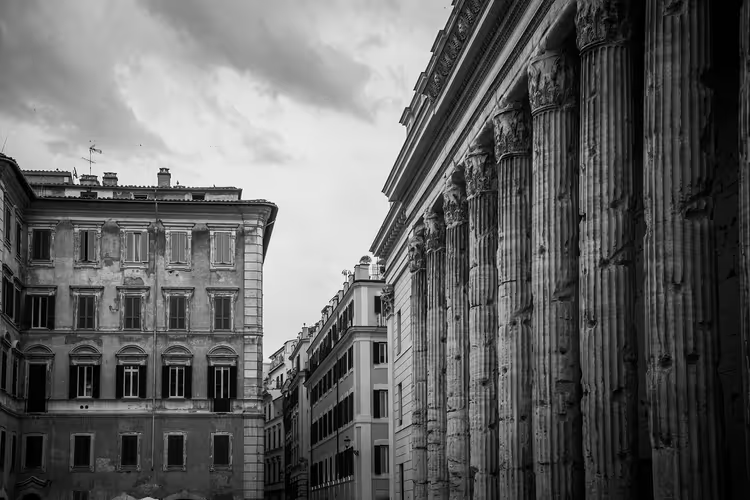
What to see in Rome: 35 places from the Colosseum to the Aventine keyhole
Thirty-five places in one city only look daunting on paper. Rome splits neatly into a few clusters: the ancient centre around the Colosseum, the Baroque squares around the Pantheon, the Vatican on the other bank of the Tiber, and the green hills to the north and south. Since 2 February 2026, even the basin of the Trevi Fountain has required a 2 € ticket (as of 09/2026, Rome tourist office). So we rechecked every entry on the list and noted where you need a ticket in advance and where you can walk in for free.
Ad: this article contains affiliate links; we earn a commission on them, and the price for you stays the same.
How to use this list of 35 places
💡 In short:
- Day one: the Colosseum, the Roman Forum, the Capitoline Hill and the imperial forums are all within walking distance of each other.
- Day two: St. Peter's Square, the basilica, the Vatican Museums with the Sistine Chapel, and Castel Sant'Angelo in the evening.
- Day three: the Pantheon, Piazza Navona, the Trevi Fountain, the Spanish Steps and the Pincian Hill.
- For quiet walks: the Coppedè Quarter, Villa Torlonia, the Aventine with its keyhole, and the Jewish quarter.
- Buy tickets for the Vatican Museums, the Colosseum and the Borghese Gallery online; in high season the ticket offices on site won't save you.
- Prices and opening hours: 09/2026, checked on the official Vatican Museums website and the Capitoline Museums website.
We have grouped the practical details into a table. That way you can see at a glance which places need booking and which you can add to your route along the way.
If you care about | Start with | Admission |
|---|---|---|
Ancient Rome | The Colosseum, the Roman Forum, the forums of Trajan and Caesar | The Colosseum and the Forum are paid, the imperial forums are visible from the street |
Art | The Vatican Museums, Galleria Doria Pamphilj, the Borghese Gallery | Paid, best booked online |
Churches | St. Peter's Basilica, Santa Maria Maggiore, Santa Maria del Popolo | Free, the basilica's dome is paid |
Baroque squares and fountains | Trevi, Piazza Navona, the Spanish Steps | Free, Trevi needs a ticket for the basin |
Unusual Rome | The Coppedè Quarter, Casina delle Civette, the keyhole on the Aventine | Mostly free |
Parks and panoramas | The Pincian Hill, Villa Borghese, the Orange Garden on the Aventine | Free |
1. Spanish Steps
 © Nan Palmero from San Antonio, TX, USA · CC BYPhoto: Nan Palmero from San Antonio, TX, USA, CC BY (https://creativecommons.org/licenses/by/2.0), Wikimedia Commons
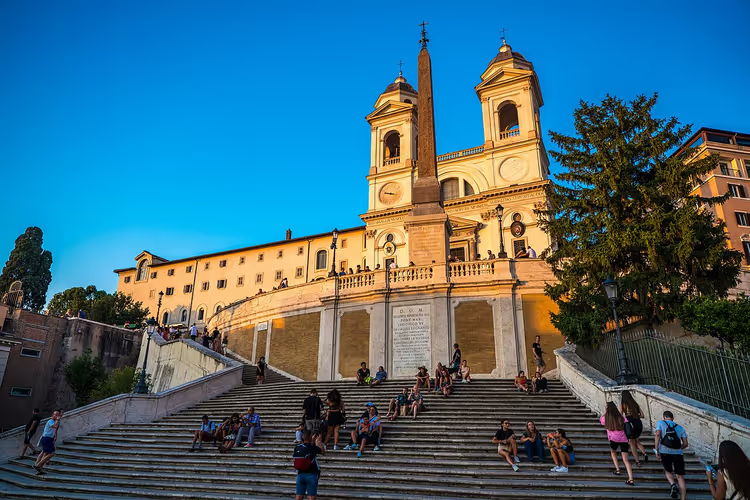
The Spanish Steps link Piazza di Spagna below with the church of Trinità dei Monti on the hill. The square takes its name from the Spanish embassy to the Holy See, while the church has been under French care since the 16th century. The staircase was built in the 1720s with French money. Architect Francesco de Sanctis broke the climb into broad flights with curving landings, and the more than a hundred travertine steps read like a stage set. On the balustrades you can spot the Bourbon lilies and the symbols of the papal family.
At the foot of the steps stands the Barcaccia fountain, shaped like a half-sunken boat. The staircase has appeared in many films, and the most famous scene was shot for "Roman Holiday" with Audrey Hepburn. Today it hosts fashion shows and city festivals, and in spring the flights are decorated with azaleas. Keep one rule in mind: sitting and eating on the steps is banned by city regulations, and you can be fined for it. Come early in the morning, while there are few people around and no queue for photos.
- Getting there: metro line A to Spagna station, the exit leads straight onto the square.
- Tip: climb to the top and follow Viale della Trinità dei Monti to the Pincian Hill, a 10-minute walk.
2. Capitoline Hill
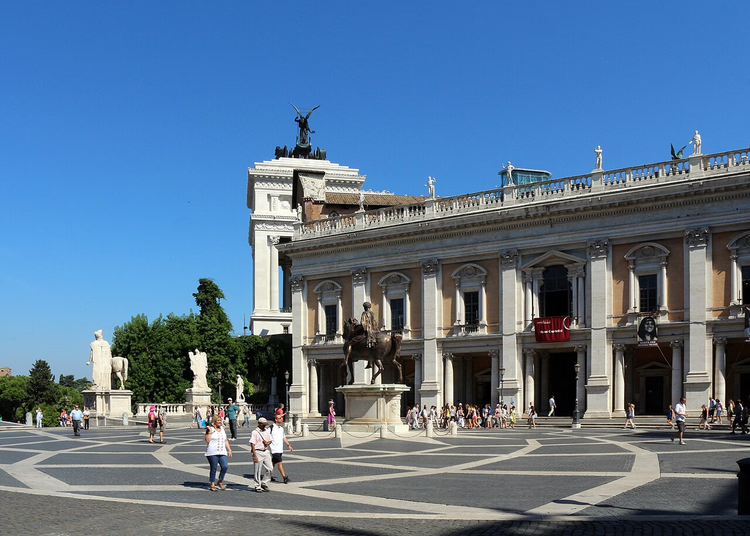
The Capitoline is the smallest of Rome's seven hills, yet since antiquity it has been the city's political and religious centre. The temple of Jupiter, Juno and Minerva stood on its summit. In the Middle Ages the hill fell into neglect and goats grazed there. Everything changed in the 16th century, when the square took on its present look to Michelangelo's design, with a trapezoidal layout and a patterned pavement.
 © Michael aus Halle · CC BY-SAPhoto: Michael aus Halle, CC BY-SA (https://creativecommons.org/licenses/by-sa/3.0), Wikimedia Commons
In the middle of the square stands the equestrian statue of Marcus Aurelius. What you see on the square is a copy; the 2nd-century bronze original is kept in a hall of the Capitoline Museums. Three palaces surround the square: the Palazzo Senatorio, now the seat of the city council, the Palazzo dei Conservatori and the Palazzo Nuovo. The last two house the Capitoline Museums. This is the oldest public museum in the world, with ancient sculpture, the "Capitoline Wolf" and a picture gallery.
The museums are open daily from 9:30 to 19:30, with last admission an hour before closing (as of 09/2026, Musei Capitolini). A full ticket for non-residents, including the current exhibition, costs 16.50 € (as of 09/2026, Musei Capitolini). The square itself is always open and free, so you can come up for the view in the evening too.
To the left of the square, a steep staircase leads to the basilica of Santa Maria in Aracoeli. Inside are a venerated figure of the infant Christ and a carved, gilded ceiling. Admission to the church is free, but on service days visitors are asked not to walk through the nave.
On foot it is about 15-20 minutes from the Colosseum to the Capitoline: the route runs alongside the Roman Forum and brings you out at Piazza Venezia. In the morning the easiest way up is the gentle Cordonata staircase. In the afternoon, when it is packed with groups, take the side ramps on the right.
- Address: Piazza del Campidoglio.
- Getting there: buses to Piazza Venezia, tram 8 to its terminus at the same spot; metro line B to Colosseo and then on foot.
- Tip: the terrace behind the Palazzo Senatorio offers one of the best free views of the Roman Forum.
3. Colosseum
 © Jon Gudorf Photography · CC BY-SAPhoto: Jon Gudorf Photography, CC BY-SA (https://creativecommons.org/licenses/by-sa/2.0), Wikimedia Commons
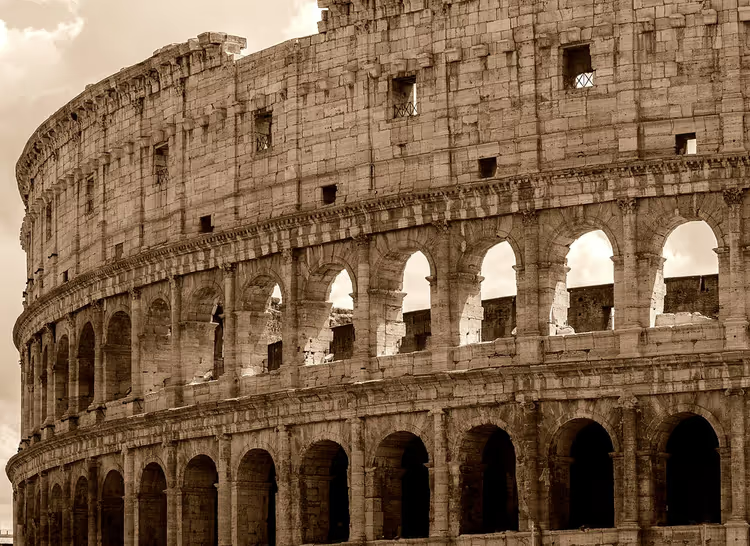
The Colosseum was built in the 1st century AD under the emperors of the Flavian dynasty, which is why its real name is the Flavian Amphitheatre. The familiar name, according to one theory, comes from the giant statue of Nero that stood nearby. The arena held tens of thousands of spectators. Gladiator fights, wild animal hunts and public executions took place here.
After the fall of the empire the fights stopped, and for a long time the building served as a fortress and then as a quarry. Its travertine went into palaces and churches. The southern side of the wall collapsed after earthquakes, which is why the Colosseum's outline is asymmetrical today. The surviving part rests on a system of arches that spreads the load and lightens the structure.
Inside, the underground galleries of the hypogeum are clearly visible: animals and scenery were kept there and raised to the arena by lifts. Part of the wooden floor has been rebuilt, so you can stand at arena level. Access to the underground and the upper tiers requires separate ticket types.
The Colosseum ticket is a combined one with the Roman Forum and the Palatine. Buy it online in advance, because in high season the slots for the coming days sell out fast. The old advice to buy a ticket at the Forum ticket office no longer works: entry is by named tickets for a specific time. It is easiest to combine the Colosseum with the Forum and the Capitoline, since they sit next to each other.
If you don't want to deal with time slots, take a guided tour: Colosseum and Forum tours on GetYourGuide usually include skip-the-line entry.
- Address: Piazza del Colosseo, 1.
- Getting there: metro line B to Colosseo station, tram 3 or buses to Via Labicana.
- The catch: in summer there is almost no shade in the arena, so bring water and come for the first slot.
4. Vatican Museums
The Vatican covers less than half a square kilometre, yet its museums rank among the largest in the world. The route stretches for kilometres of galleries through dozens of rooms, and in a single visit you will see only part of the collection. So decide beforehand what matters most to you.
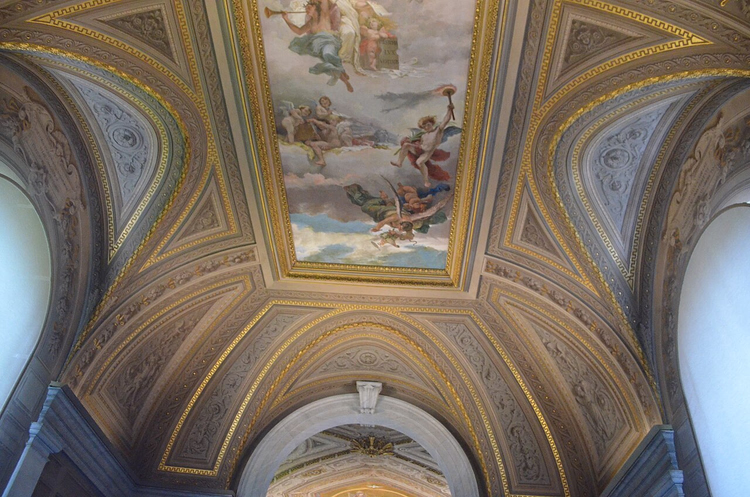 © Darafsh · CC BY-SAPhoto: Darafsh, CC BY-SA (https://creativecommons.org/licenses/by-sa/3.0), Wikimedia Commons
The Gregorian Egyptian Museum was founded in 1839 and holds sarcophagi, mummies and statues. The Etruscan Museum keeps finds from excavations in Lazio: bronzes, vases and jewellery. In the Apostolic Palace you will walk through the Gallery of Maps, the Gallery of the Candelabra and the Raphael Rooms. In the Pinecone Courtyard stands Arnaldo Pomodoro's bronze "Sphere Within Sphere", and beside it the huge ancient pinecone that gave the courtyard its name.
The Pinacoteca fills 18 rooms and shows painting from the 12th to the 19th century. Here hang Raphael's "Transfiguration", works by Titian and Caravaggio, and Leonardo da Vinci's unfinished "Saint Jerome". Besides paintings, the rooms display tapestries and mosaics.
The Belvedere Courtyard links the papal palaces and is famous for its ancient sculpture: the Laocoön and the Apollo Belvedere stand there. The Sistine Chapel awaits at the end of the route, and we cover it separately below. The Vatican Library is closed to tourists, but some of its manuscripts are shown at temporary exhibitions.
A full ticket costs 20 € without an online booking, and buying on the official website with the "Skip the Line" option adds 5 € (as of 09/2026, Musei Vaticani). On the last Sunday of the month admission is free, but the queue that day is enormous. You can get an audio guide along with your ticket, and a guided tour saves you time on choosing a route. An alternative to the official website: Vatican Museums tickets and tours on Tiqets.
- Address: Viale Vaticano.
- Getting there: metro line A to Ottaviano or Cipro, about a 10-minute walk from either station; tram 19 to Risorgimento.
- The catch: backpacks and large bags go through security screening, and bulky luggage is not allowed inside.
5. Sistine Chapel
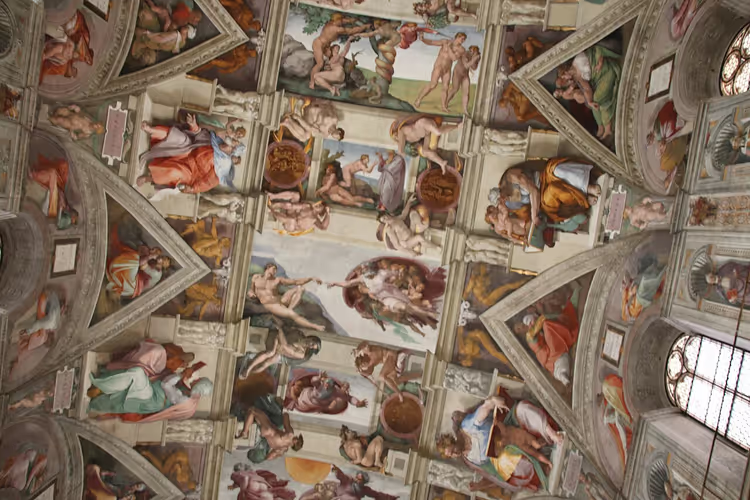
From the outside the chapel looks like a plain brick block. It was built in the 1470s and 1480s under Pope Sixtus IV, hence the name. Conclaves in which the cardinals elect a new pope are still held here. The walls were painted by Botticelli, Perugino, Ghirlandaio and other masters of the early Renaissance.
The main frescoes are by Michelangelo. He spent four years, from 1508 to 1512, painting the ceiling with "The Creation of Adam". A quarter of a century later the master returned and created "The Last Judgment" on the altar wall. The hundreds of figures of sinners and the righteous make a strong impression even on those who are indifferent to religious art.
The chapel stands at the end of the Vatican Museums route, and there is no separate entrance. Photography inside is forbidden and you need to speak quietly; the attendants enforce this strictly. Bring binoculars or simply sit on a bench by the wall: that way you can study the details of the ceiling without a sore neck. If you arrive at opening time, you can still find a free seat in the chapel.
- How to get in: with a Vatican Museums ticket, at the end of the main route.
- Tip: allow at least 20 minutes for the chapel, and set aside half a day for the Vatican as a whole.
6. Raphael Rooms
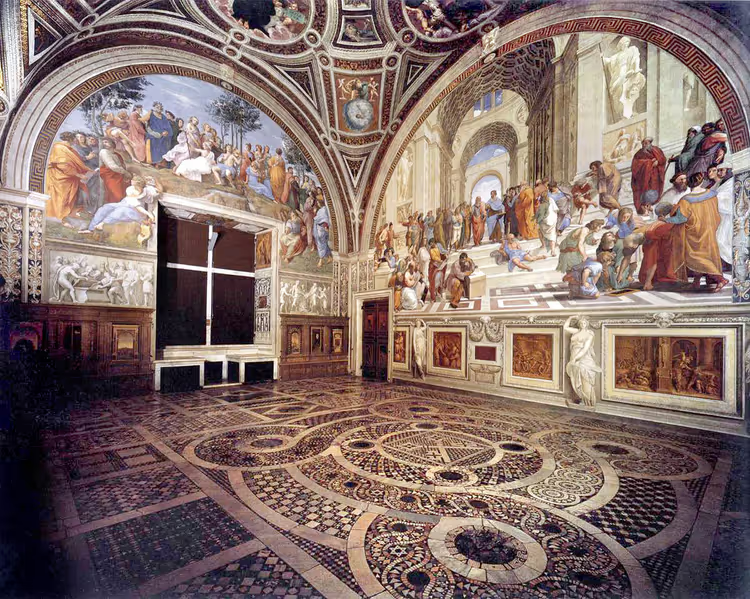
The Rooms occupy four chambers of the former papal apartments in the Apostolic Palace. Pope Julius II entrusted their decoration to the young Raphael, who was about twenty-five at the time. The work dragged on for years and continued after his death. In the Stanza della Segnatura you will see "The School of Athens" with Plato, Aristotle and Pythagoras, and opposite it the "Disputation" on the sacrament of the Eucharist.
The frescoes reflect the programme of the papal court: philosophy, theology, poetry and law. Among the figures you can recognise the artist's contemporaries, including Michelangelo and Raphael himself. The Hall of Constantine was painted by the master's pupils from his sketches. The Rooms lie on the route before the Sistine Chapel, so you pass through them on the same ticket.
- Tip: in "The School of Athens", look for Raphael's self-portrait at the right edge of the fresco; he is looking straight at the viewer.
7. St. Peter's Basilica
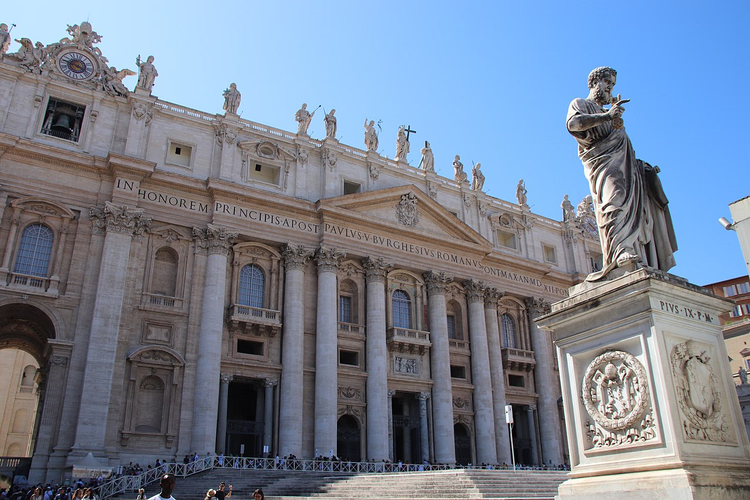
The basilica stands over the spot where, according to tradition, the apostle Peter was buried after being executed under Nero. The first basilica was built by Emperor Constantine, and the present building took more than a century to raise, from 1506 to 1626. Bramante, Raphael, Michelangelo, who designed the dome, and Carlo Maderno all worked on it. Inside, beneath the dome, Bernini's bronze baldachin stands over the papal altar.
To the right of the entrance is Michelangelo's "Pietà" behind protective glass. Pilgrims have touched the foot of the bronze statue of Saint Peter for centuries, and it is visibly worn. Many popes rest in the grottoes beneath the basilica. The treasury with its liturgical objects requires a separate ticket, and you can climb the dome on foot or partly by lift, also for a fee.
The basilica is open daily from 7:00 to 20:00, with last admission at 19:15 to allow for the security queue (as of 09/2026, Basilica di San Pietro). Admission to the basilica itself is free. Dress modestly: shoulders and knees must be covered, otherwise you will not be let in.
- Getting there: metro line A to Ottaviano, tram 19 to Risorgimento, buses 40 and 64 to the Borgo area.
- The catch: the security checkpoint is on the square, and on a morning in high season the queue takes up to an hour.
8. Pantheon
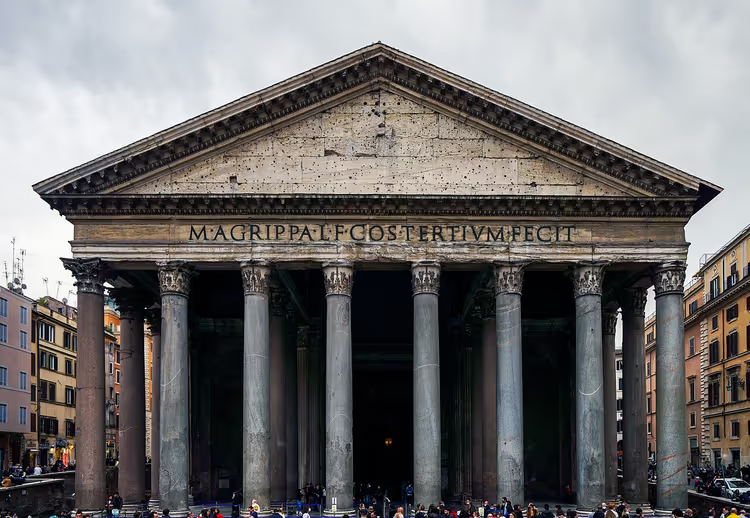 © NikonZ7II · CC BY-SAPhoto: NikonZ7II, CC BY-SA (https://creativecommons.org/licenses/by-sa/4.0), Wikimedia Commons
The Pantheon was built under Emperor Hadrian around AD 125 on the site of an earlier temple of Agrippa. The inscription on the pediment still names Agrippa. The temple was dedicated to all the gods, and in the 7th century it became a Christian church. That is exactly why the building was not taken apart for stone and has come down to us almost intact.
The Pantheon's dome remains the largest unreinforced concrete dome in the world. The Romans lightened it with coffers and a lighter aggregate towards the top. In the centre of the dome is the open oculus, about nine metres across. The light travels around the walls as a circular patch, and when it rains the water falls straight onto the marble floor and drains away through small holes.
Raphael and the first kings of unified Italy are buried inside. Raphael's tomb stands to the left of the altar and bears a Latin epitaph by Cardinal Bembo. The Pantheon impressed the architects of the Renaissance, and the dome of St. Peter's Basilica was in many ways a response to it. Stand beneath the oculus and look up: that is the best way to grasp the scale.
Since 2023 admission to the Pantheon has been paid; the ticket is inexpensive, and there are concessions for children. Come right after opening, because by the afternoon a dense queue forms at the portico. On Piazza della Rotonda in front of the temple there is a fountain with an obelisk, and plenty of cafés all around. Prices at a table there are noticeably higher than in the neighbouring lanes.
- Address: Piazza della Rotonda.
- Getting there: buses 40 and 64 to Largo di Torre Argentina, then a 5-minute walk; the nearest metro stations, Spagna and Barberini, are about 15 minutes away.
- The catch: Mass is held on Sunday mornings, and tourist entry is restricted.
9. St. Peter's Square
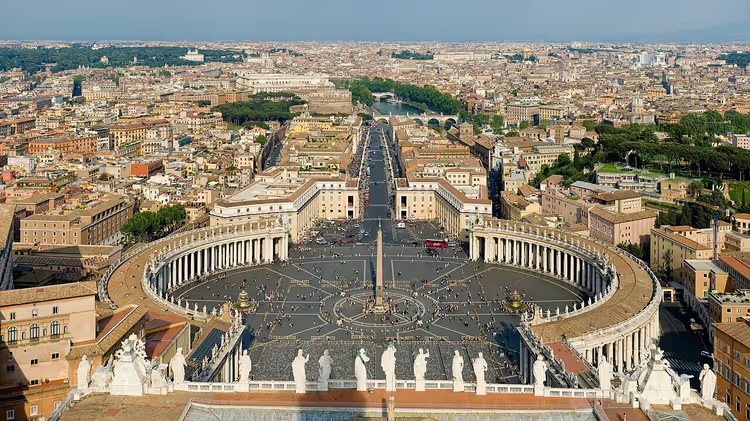 © Diliff · CC BY-SAPhoto: Diliff, CC BY-SA (http://creativecommons.org/licenses/by-sa/3.0/), Wikimedia Commons
The square in front of the basilica came about when the church could no longer hold all the pilgrims. It was designed by Gian Lorenzo Bernini in the 17th century. Two semicircular colonnades embrace the space like the open arms of the Church. Nearly three hundred columns stand four rows deep, and statues of saints line the balustrade above them.
In the centre stands an Egyptian obelisk that was brought to Rome back in Caligula's time. In the 16th century it was moved here with enormous effort, which took hundreds of workers and horses. Two fountains, by Maderno and Bernini, play on either side. Look for the round slabs in the pavement between the obelisk and the fountains. If you stand on one of them, the four rows of columns merge into one.
Statues of the apostles Peter and Paul stand in front of the basilica steps. To the right, above the colonnade, you can see the Apostolic Palace. On Sundays at noon the pope usually recites the Angelus prayer from a palace window. The pope's general audience takes place on the square on Wednesdays. At those times thousands of people fill the square, and the security check at the basilica entrance moves more slowly.
If you only have a couple of days in Rome, start the Vatican with the square. Come early, while there are few people about, look around the colonnade and the obelisk, and then head for the museum entrance. The walk along the Vatican walls takes about 15 minutes. Lunch is easier in the Prati district: there are fewer tourist menus there than right by the colonnade.
- Getting there: metro line A to Ottaviano, buses 40 and 64 to their final stops near Borgo.
- The catch: pickpockets and pushy "helpers" work around the colonnade. Keep your bag in front of you and don't accept street "gifts" such as bracelets: a request for payment almost always follows.
10. Roman Forum
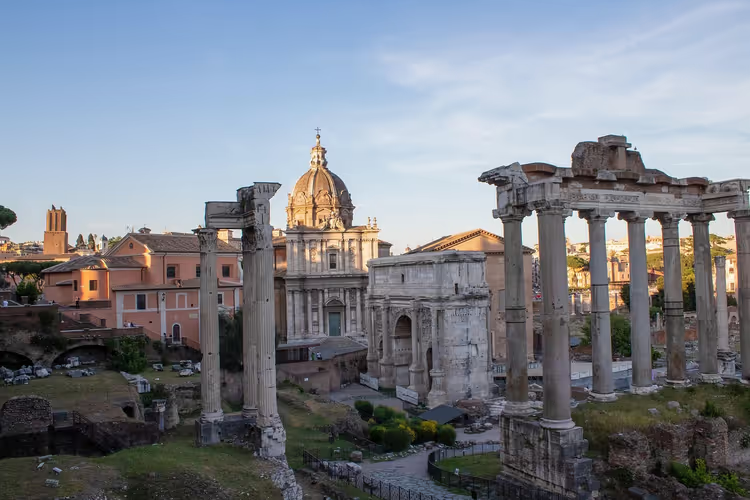
The Forum was the centre of public life in ancient Rome. Triumphal processions passed through here, the Senate met, speeches were delivered and laws were passed. The arches of Titus and Septimius Severus survive, as do the columns of the Temple of Saturn and the Temple of Castor and Pollux. The Curia, where the Senate sat, stands almost intact because it was turned into a church.
Above the Forum rises the Palatine, the hill of the imperial palaces. From there you get a good view over the whole valley of ruins. From above the layout is easier to understand: from below, the broken columns blur into a single field. You will need comfortable shoes and water, as there is little shade among the ruins.
Entry to the Forum and the Palatine is on the combined ticket with the Colosseum. The main entrance is at Via della Salara Vecchia, 5/6, and there is another by the Arch of Titus. Opening hours change with the seasons, longer in summer and shorter in winter, so check them when you buy your slot. Take an audio guide or a tour, otherwise stones without context quickly become tiring.
People in gladiator costumes often stand near the entrances. A photo with them is not free, so agree on a price beforehand or simply walk past. If you want to see the ancient centre with a guide, take a look at the selection of tours below.
Tours and tickets in Rome
Guided tours, skip-the-line tickets and activities — most offers can be cancelled free of charge.
See offers on GetYourGuideThe widget loads once you give your consent.
- Getting there: metro line B to Colosseo, then a 5-minute walk from the station to the entrance by Via dei Fori Imperiali.
11. Santa Maria Maggiore
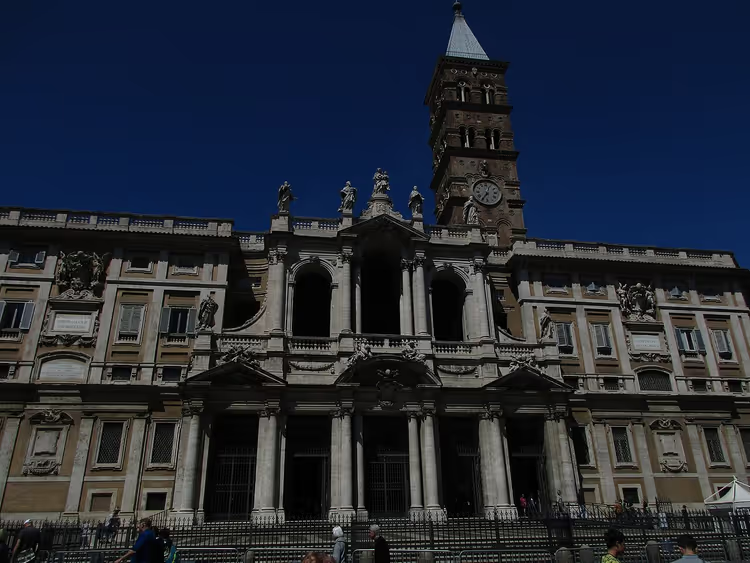 © Cedrichoyer · CC BY-SAPhoto: Cedrichoyer, CC BY-SA (https://creativecommons.org/licenses/by-sa/4.0), Wikimedia Commons
Santa Maria Maggiore is one of Rome's four papal basilicas. According to legend, the Virgin Mary appeared to Pope Liberius in a dream and told him to build a church where snow would fall in summer. On the morning of 5 August, snow covered the top of the Esquiline Hill. In memory of this, every year on 5 August white petals drift down from the ceiling of the basilica, and in the evening the celebration continues on the square.
The basilica has kept its 5th-century mosaics on the walls of the nave and on the triumphal arch. The floor is laid in a Cosmatesque pattern of coloured marble. The coffered ceiling, tradition holds, was gilded with the first gold brought from the Americas. The bell tower, about 75 metres high, is the tallest in Rome.
In the crypt beneath the high altar are fragments of the manger in which, according to tradition, the infant Christ lay. Above them stands a statue of the kneeling Pope Pius IX. The Pauline Chapel holds the icon Salus Populi Romani, one of the most venerated in the city. In April 2025 Pope Francis was buried in a side aisle of the basilica (as of 09/2026, Basilica di Santa Maria Maggiore). Bernini's tomb is here too.
Admission to the basilica is free. Your clothing must cover your shoulders and knees, as in Rome's other churches. If you are staying near Termini station, start your day right here, while it is quiet inside.
- Address: Piazza di Santa Maria Maggiore, 42.
- Getting there: on foot from Termini station along Via Cavour, about 10 minutes.
- The catch: there can be queues at Pope Francis's tomb, and part of the nave is closed during services.
12. Baths of Caracalla
 © Ethan Doyle White · CC BY-SAPhoto: Ethan Doyle White, CC BY-SA (https://creativecommons.org/licenses/by-sa/4.0), Wikimedia Commons
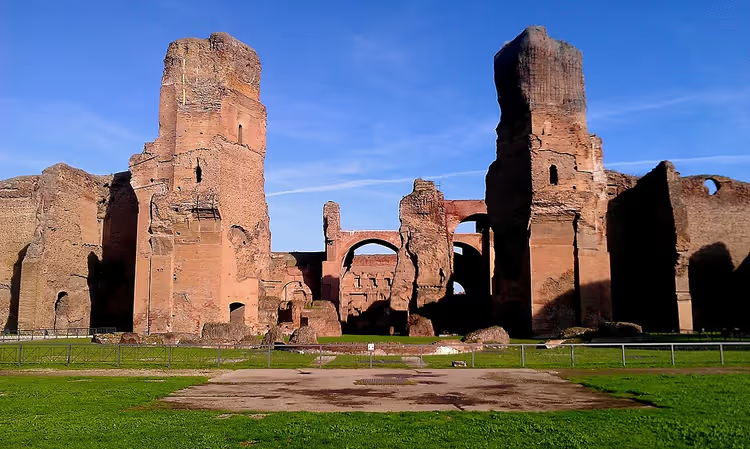
The Baths of Caracalla (Terme di Caracalla) were built in the early 3rd century under Emperor Caracalla. This was not just a bathing complex but a city leisure centre. It had cold, warm and hot halls, an open-air pool, sports grounds, libraries and gardens. Hundreds of people could bathe here at the same time.
Today what remains of the complex are walls several storeys high and fragments of mosaic floors. The thickness of the masonry makes it easy to imagine how much stone and brick went into the building. Underground, the service galleries survive, where slaves stoked the furnaces and supplied the water.
In summer the ruins form the backdrop for the Rome Opera's festival and for open-air concerts. A performance at the baths is worth planning well ahead, as tickets sell out. During the day it is noticeably quieter here than at the Colosseum, and you can wander the ruins for hours. The baths lie a little off the main route, so they pair well with the Aventine and the Circus Maximus.
- Address: Viale delle Terme di Caracalla, 52.
- Getting there: metro line B to Circo Massimo, then about a 10-minute walk.
13. Trevi Fountain
 © Stefano Lovato from Bologna, Italia · CC BYPhoto: Stefano Lovato from Bologna, Italia, CC BY (https://creativecommons.org/licenses/by/2.0), Wikimedia Commons
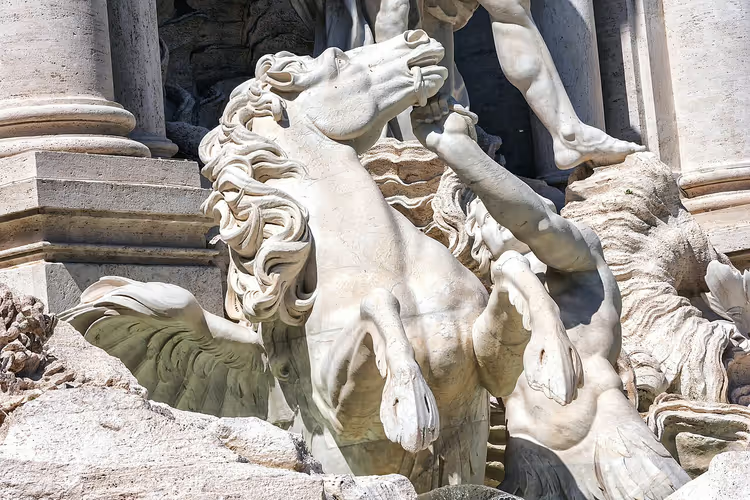
Trevi stands at the end of the ancient Aqua Virgo aqueduct, which was supplying Rome with water back in Agrippa's day. The present fountain was built to a design by Nicola Salvi, with work running from 1732 to 1762. It is attached directly to the facade of Palazzo Poli, so the building and the sculpture read as a single scene. In the centre stands Oceanus on a shell chariot drawn by sea horses with tritons. In the niches on either side are the allegories of Abundance and Health.
Tradition calls for tossing a coin over your shoulder to make sure you return to Rome. The coins are collected regularly and given to charity. The fountain is familiar from films: in Fellini's "La Dolce Vita" Anita Ekberg's character wades into the basin at night, and in "Roman Holiday" Audrey Hepburn's character walks past it. Bathing in the fountain is forbidden, and hefty fines are issued for it.
Since 2 February 2026, entering the area right by the basin, down at the water, has cost 2 € (as of 09/2026, Turismo Roma news on the Trevi ticket). Looking at the fountain from the square is still free. The best time for photos is early morning or late evening, when the crowd thins out and the lighting gives the stone a warm glow.
- Getting there: metro line A to Barberini or Spagna, then a 10-minute walk through the lanes.
- The catch: the square is small, and during the day people stand several rows deep at the parapet.
14. Forum of Augustus
 © Chabe01 · CC BY-SAPhoto: Chabe01, CC BY-SA (https://creativecommons.org/licenses/by-sa/4.0), Wikimedia Commons
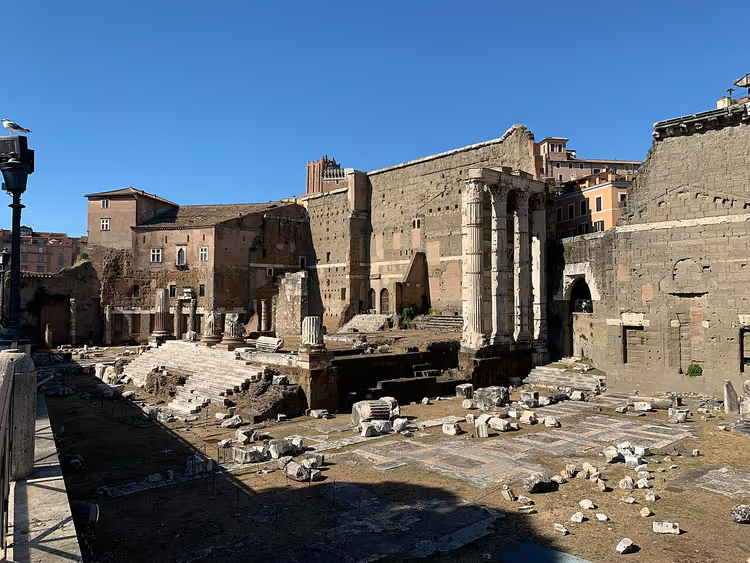
The Forum of Augustus belongs to the group of imperial forums built beside the Roman Forum once the old centre had become cramped. Augustus dedicated the main temple to Mars the Avenger in gratitude for his victory over Caesar's assassins. Several Corinthian columns, part of the podium and the steps survive from the temple.
Behind the temple a high wall of tuff still stands. It separated the forum from the poor, fire-prone Suburra district. Fragments of the forum's sculpture and architectural decoration are kept in the Museum of the Imperial Forums in Trajan's Markets. The ruins themselves are clearly visible from Via dei Fori Imperiali for free, and in the evening they are lit up.
To understand how the imperial forums are laid out, walk along the street from the Colosseum to Piazza Venezia. Along the way you will see the forums of Augustus, Nerva, Trajan and Caesar; we cover the last two below.
- Getting there: metro line B to Colosseo, then a 10-minute walk along Via dei Fori Imperiali.
15. Rocca Savella and the Orange Garden
 © Lasagnolo9 · CC BY-SAPhoto: Lasagnolo9, CC BY-SA (https://creativecommons.org/licenses/by-sa/4.0), Wikimedia Commons
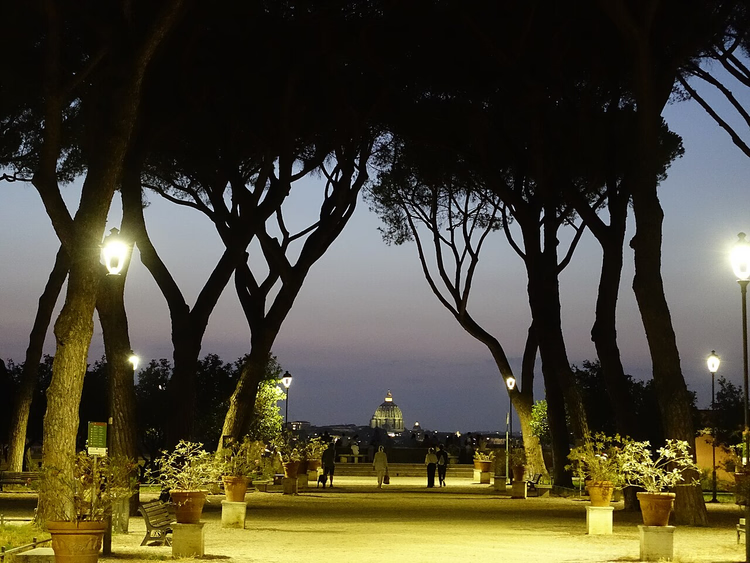
Clivo di Rocca Savella is an old cobbled path that climbs from the Tiber embankment up the Aventine Hill. On the left it is bounded by the wall of the Savelli family's medieval fortress, and on the right cypresses and ivy grow. The climb is short but steep, and within a few minutes the noise of the city is left behind below.
At the top begins the Savello Park, which Romans call the Orange Garden (Giardino degli Aranci). Its terrace gives a wide view over the domes of the centre and St. Peter's Basilica. If you want to see familiar places from a new angle, come here at sunset. Admission to the garden is free.
The spot is central, not far from the Circus Maximus. From here it is five minutes to the keyhole of the Knights of Malta and the basilica of Santa Sabina. Bring a camera: from the terrace you get shots in which the city is not instantly recognisable.
- Getting there: metro line B to Circo Massimo, then on foot along Via di Santa Sabina, or from below from Lungotevere Aventino.
16. Coppedè Quarter
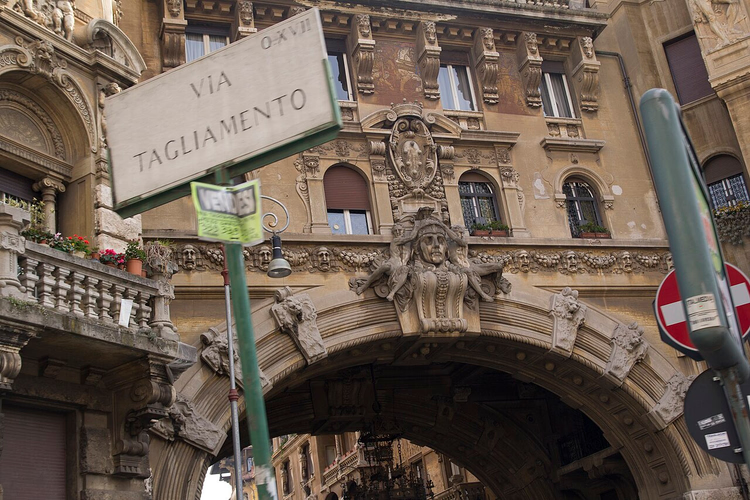
The Coppedè Quarter (Quartiere Coppedè) lies in the Trieste district, north of the historic centre and away from the tourist routes. It was built by architect Gino Coppedè in the 1910s and 1920s. The client was the construction company of the entrepreneur Cerruti. Coppedè blended Art Nouveau, neo-Gothic, Baroque and medieval motifs, and the result is a stage set that looks like a fairy-tale town.
 © Luca Nebuloni · CC BYPhoto: Luca Nebuloni, CC BY (https://creativecommons.org/licenses/by/2.0), Wikimedia Commons
The entrance to the quarter is marked by a huge arch between the two Palaces of the Ambassadors (Palazzi degli Ambasciatori). A wrought-iron chandelier hangs beneath the arch, and above it on the facade stands a figure of the Madonna and Child. Look at the facades closely: you will find masks, bees, spiders and coats of arms. Every detail was made by hand, and a hundred years on the quarter looks almost the same as when it opened.
Beyond the arch you come to Piazza Mincio, the main square of the quarter. In the centre stands the Fountain of the Frogs (Fontana delle Rane). Stone frogs sit around the rim of the upper basin spouting jets of water, while below they are surrounded by figures holding shells. Next to it stands the Villino delle Fate, the "fairy cottage", with paintings depicting Florence and Venice.
The quarter was intended for the middle class, but its unusual architecture quickly attracted wealthy buyers. Today the apartments here are among the most expensive homes in Rome. The buildings are residential, so keep quiet and don't go into the courtyards. A walk takes about an hour and is easy to combine with Villa Torlonia.
- Getting there: trams 3 and 19 to Piazza Buenos Aires, then a 5-minute walk; about 20 minutes from Policlinico metro station.
17. Casina delle Civette
 © Hugo DK · CC BY-SAPhoto: Hugo DK, CC BY-SA (https://creativecommons.org/licenses/by-sa/4.0), Wikimedia Commons
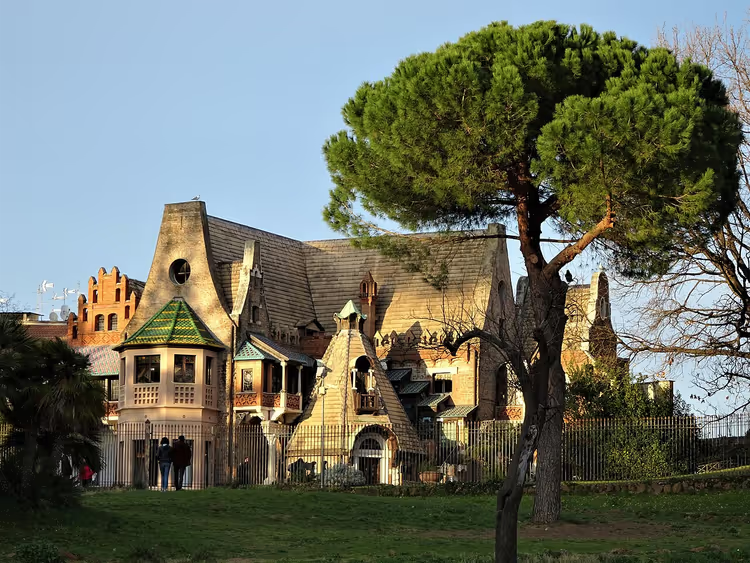
Casina delle Civette, the "House of the Owls", stands in the park of Villa Torlonia. In the 19th century a modest Swiss-style chalet stood here. In the early 20th century Prince Giovanni Torlonia turned it into a whimsical mansion with turrets, majolica and stained glass. The owl was his personal emblem, and owls appear everywhere in the stained glass, the furniture and the decoration.
Today the house is home to a museum of Art Nouveau stained glass. An adult ticket including the exhibition costs 10.50 € (as of 09/2026, Musei di Villa Torlonia). In the same park stands the Casino Nobile, which has a separate ticket. You can buy combined admission if you want to see both buildings.
- Address: Via Nomentana, 70, Villa Torlonia park.
- Getting there: buses along Via Nomentana; about a 15-minute walk from the Coppedè Quarter.
18. Jewish quarter
Rome's Jewish community is among the oldest in Europe: it has lived in the city since the 2nd century BC. In 1555 Pope Paul IV Carafa ordered all Jews to be moved into a walled ghetto by the Tiber. The residents were barred from most professions and required to wear distinguishing badges. The ghetto was finally abolished only after the unification of Italy in the 19th century.
 © Jorge Franganillo · CC BYPhoto: Jorge Franganillo, CC BY (https://creativecommons.org/licenses/by/2.0), Wikimedia Commons
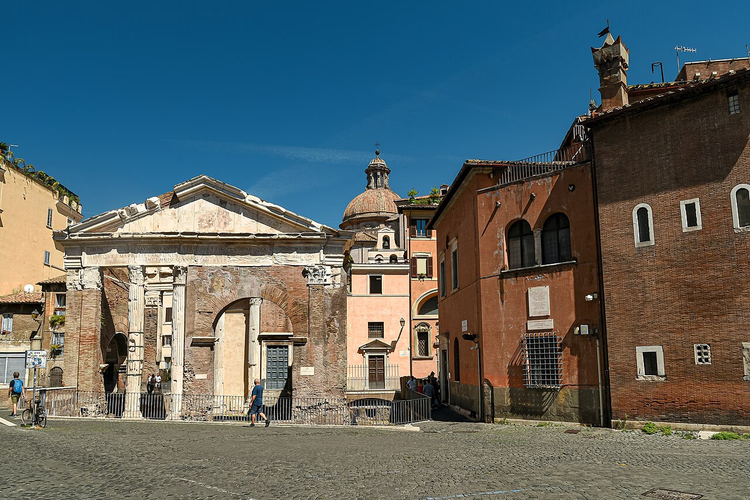
The quarter's history is a painful one, but today it remains one of the liveliest parts of the centre. The dome of the Great Synagogue rises above the houses, and the Jewish Museum of Rome operates alongside it. At the Portico of Octavia, ancient columns stand embedded in medieval walls. Here you can clearly see how, in Rome, layers of different eras live within a single building.
Be sure to find Piazza Mattei and the Turtle Fountain (Fontana delle Tartarughe) in front of Palazzo Mattei. According to legend, Duke Mattei lost an entire fortune at cards, and the bride's father decided to call off the wedding. To prove his influence, the duke had a fountain built beneath the palace windows in a single night. In the morning his future father-in-law saw the fountain and changed his mind.
The legend is a lovely one, but historians do not confirm it: the fountain dates from the 16th century, and the turtles were added later. In the quarter you will find kosher bakeries and restaurants serving Roman Jewish cuisine. Try the fried artichokes "alla giudia"; in season they are served almost everywhere. Come before lunch, since many places are closed on Friday evening and on Saturday.
- Getting there: tram 8 to Arenula, then a 5-minute walk; about 10 minutes from the Capitoline.
19. Botanical Garden
 © Pierfelice Licitra · CC BYPhoto: Pierfelice Licitra, CC BY (https://creativecommons.org/licenses/by/3.0), Wikimedia Commons
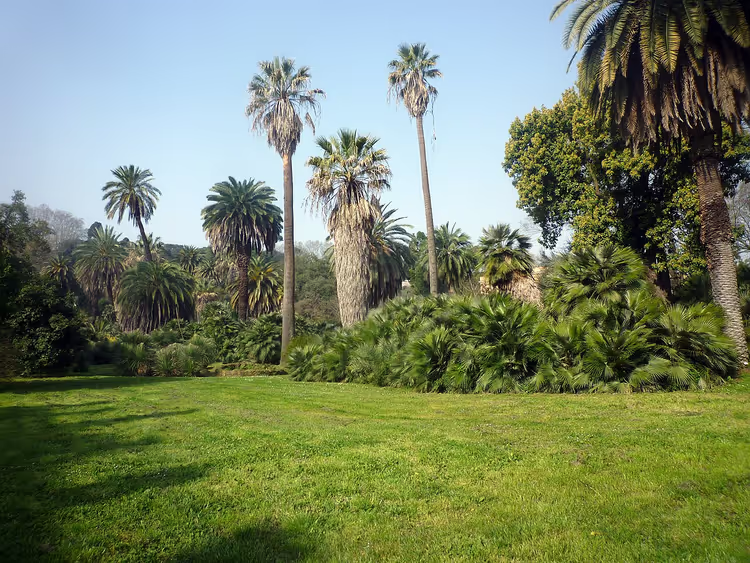
Rome's Botanical Garden (Orto Botanico di Roma) runs down the slope of the Janiculum hill in the Trastevere district. It belongs to Sapienza University and occupies the former gardens of Palazzo Corsini. The collection holds thousands of plant species: palms, a bamboo grove, a Japanese garden and greenhouses. The paths climb the slope, and from the top you can see the rooftops of the city between the trees.
The garden is a good place for a break between museums, especially in the heat. Admission is paid, and it is least crowded on Mondays and in the evening. Bring water with you, as there are almost no cafés inside.
- Address: Largo Cristina di Svezia, 23 A.
- Getting there: tram 8 to Trastevere, then a 15-minute walk along Via della Lungara.
20. Ludus Magnus
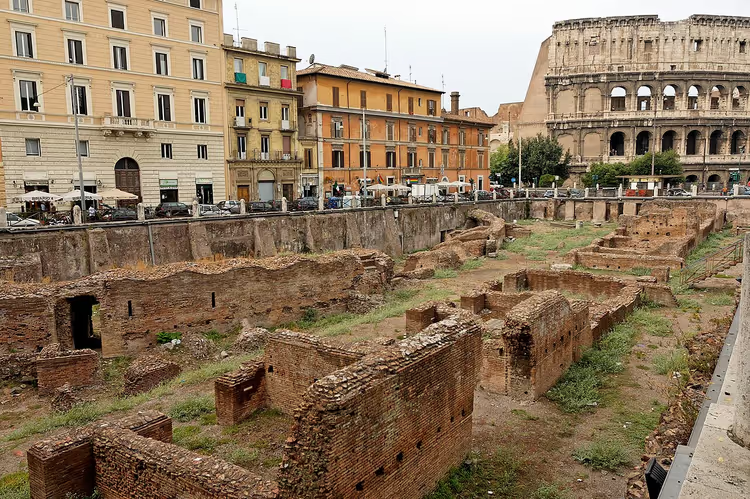
The Ludus Magnus is often called a "Colosseum in miniature". These are the ruins of Rome's main gladiator school, built under Domitian next to the amphitheatre. In the centre was an oval training arena with seating for spectators, surrounded by the fighters' barracks. An underground passage, archaeologists believe, led straight to the Colosseum.
The school was only discovered in the 20th century, and it rarely features on tourist routes. You cannot go down to the ruins, but everything is clearly visible for free from above, on Via Labicana. If gladiators interest you, stop here for five minutes after the Colosseum: you will get a sense of how the fighters lived and trained before stepping into the arena.
- Getting there: metro line B to Colosseo, then a 3-minute walk from the station along Via Labicana.
21. Fountain of the Four Rivers
 © Nicholas Gemini · CC BY-SAPhoto: Nicholas Gemini, CC BY-SA (https://creativecommons.org/licenses/by-sa/4.0), Wikimedia Commons
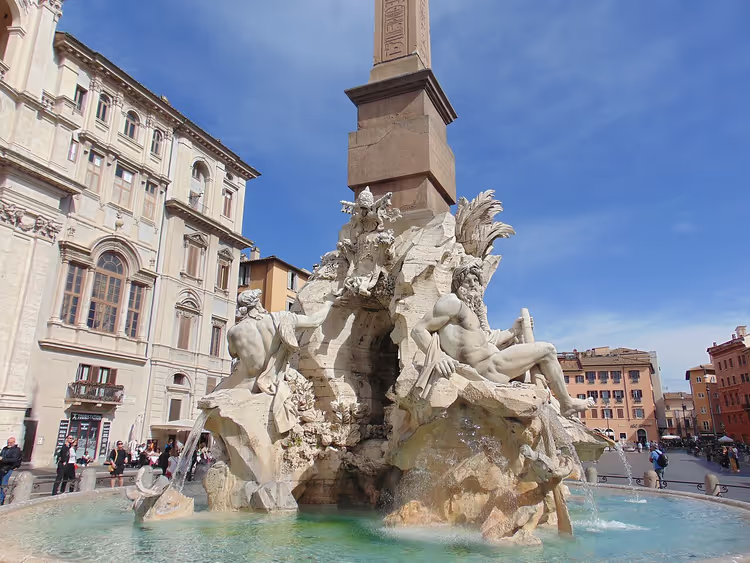
The Fountain of the Four Rivers (Fontana dei Quattro Fiumi) stands in the centre of Piazza Navona. Gian Lorenzo Bernini created it in 1651 for Pope Innocent X, whose family palace faces the square. A granite obelisk about 16 metres tall rises above a rock of travertine. The obelisk was made in the Roman era under Domitian, and later lay in the Circus of Maxentius on the Appian Way.
An urban legend about a "curse" is attached to the obelisk: both emperors who erected it died violent deaths. Bernini and Innocent X were spared, and both lived to the age of eighty. On top of the obelisk sits a dove with an olive branch, the emblem of the Pamphilj family.
Four giant figures personify the great rivers of the parts of the world known at the time: the Danube, the Nile, the Ganges and the Río de la Plata. A palm tree, a lion, a horse and a snake are carved beside them. The water arrives through an old aqueduct. The square has kept the shape of Domitian's ancient stadium, and if you go down to its remains on the northern side, you will see where the elongated oval comes from.
- Getting there: buses 40 and 64 to Corso Vittorio Emanuele, then a 5-minute walk.
- Tip: walk all the way around the fountain, since each river faces a different direction.
22. Fountain of Neptune
 © Fiat 500e · CC BY-SAPhoto: Fiat 500e, CC BY-SA (https://creativecommons.org/licenses/by-sa/4.0), Wikimedia Commons
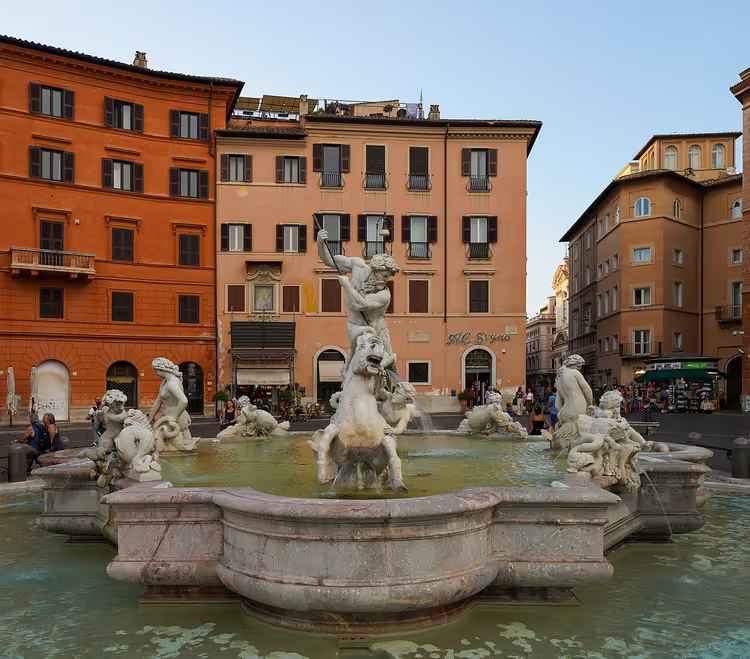
The Fountain of Neptune (Fontana del Nettuno) closes off the northern end of Piazza Navona. The basin was built in the 1570s to a design by Giacomo della Porta. For almost three centuries the fountain stood without sculptures, and coppersmiths' workshops operated nearby, so Romans called it the "fountain of the boilermakers".
The statues only appeared in 1878, after a city competition. The jury combined the designs of two sculptors. Antonio Della Bitta carved Neptune fighting an octopus. Gregorio Zappalà added the nereids, putti and sea horses. The scene of the struggle with the octopus is not based on any ancient myth; it is a 19th-century invention.
The fountain is in the neo-Baroque style and sits well with the Baroque square. In the morning, while the artists are setting up their easels, you can look over the sculptures in peace.
23. Circus Maximus
 © Rione Colonna · CC BYPhoto: Rione Colonna, CC BY (https://creativecommons.org/licenses/by/4.0), Wikimedia Commons
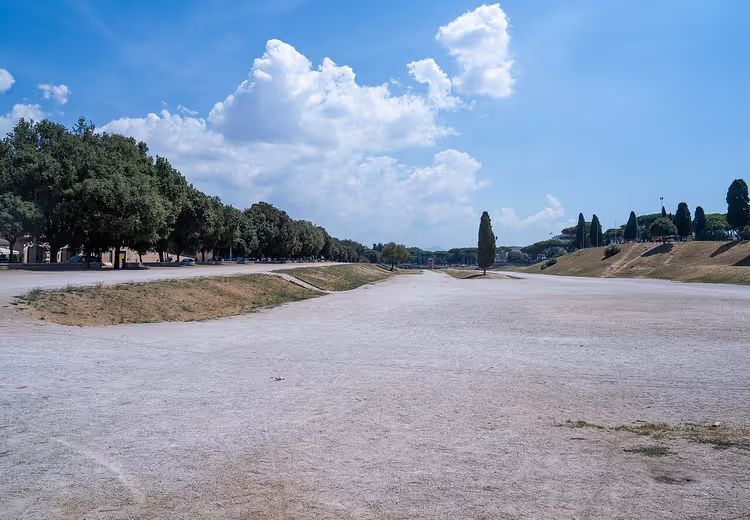
The Circus Maximus (Circo Massimo) lies in the valley between the Palatine and the Aventine. It was the largest hippodrome of the ancient world. According to tradition, this is where the Romans abducted the Sabine women in the time of Romulus. Chariot races were already being held in the age of the kings, and the festivals were tied to the gods of the harvest.
Up to twelve chariots raced on the track at once. Julius Caesar enlarged the stands, and under later emperors the circus held more spectators than any stadium of modern times. The lower rows were stone, for the nobility, and the upper ones wooden, for ordinary citizens. Taverns and shops did business under the stands.
The circus burned several times, the wooden tiers collapsed along with the crowd, and it was rebuilt again. The last races were held in the 6th century, after which the stone was carted off for new buildings. The two Egyptian obelisks that stood on the central dividing barrier were moved long ago to Piazza del Popolo and to the Lateran Basilica.
Today a long green bowl lies on the site of the circus. Big concerts and city festivals are held here. Admission is free, and you can walk along the racetrack and look up at the ruins of the Palatine palaces. At the eastern end, fragments of the stands and a medieval tower survive.
- Getting there: metro line B to Circo Massimo, the exit leads straight to the arena.
24. Trajan's Forum
 © Bgabel · CC BY-SAPhoto: Bgabel, CC BY-SA (https://creativecommons.org/licenses/by-sa/3.0), Wikimedia Commons
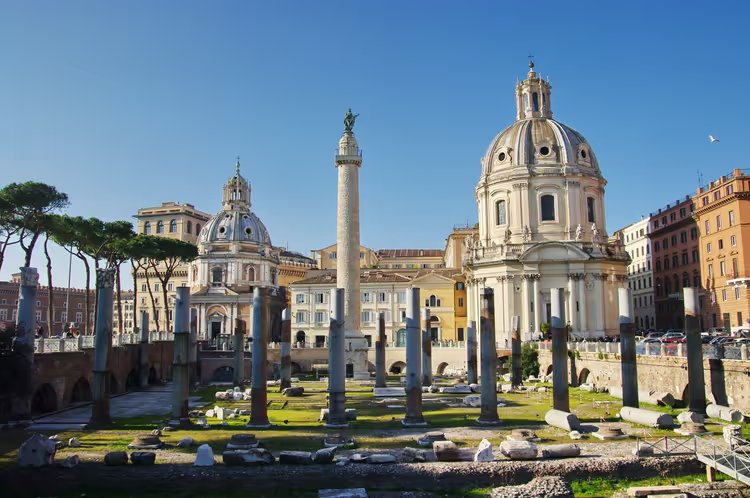
Trajan's Forum is the last and largest of the imperial forums. It was opened in the early 2nd century, paid for by the conquest of Dacia. The design is attributed to the architect Apollodorus of Damascus. The ancient historian Cassius Dio wrote that he later fell out with Emperor Hadrian and was executed, but modern historians doubt this account.
At the heart of the complex was the Basilica Ulpia, a vast hall for courts and business meetings. Rows of columns are what remain of it. Behind the basilica stands Trajan's Column, about 38 metres tall including its base. The spiral relief on it tells the story of the Dacian Wars and contains more than two thousand figures.
Trajan's Markets (Mercati di Traiano) rise in a semicircle above the forum. There were shops, warehouses and offices here. Today the building houses the Museum of the Imperial Forums, and from its terraces you can see the forum from above. The column and the ruins can also be viewed for free from the street.
- Getting there: buses to Piazza Venezia, then a 3-minute walk.
25. Forum of Caesar
 © This Photo was taken by Wolfgang Moroder . Feel free to use my photos, but please mention me as the author and send me a · CC BY-SAPhoto: This Photo was taken by Wolfgang Moroder . Feel free to use my photos, but please mention me as the author and send me a, CC BY-SA (https://creativecommons.org/licenses/by-sa/3.0), Wikimedia Commons
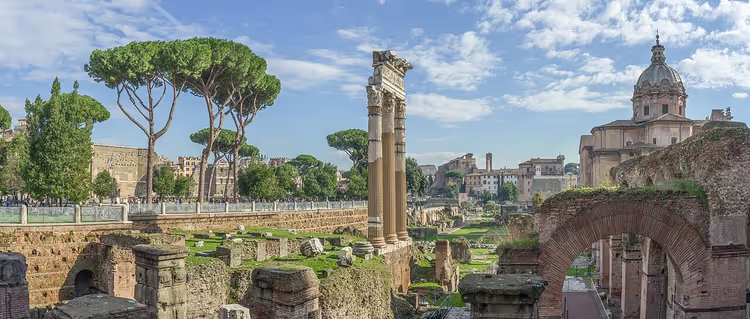
The Forum of Caesar is the first of the imperial forums. Julius Caesar began buying up land for it in 54 BC, and the plot came at a very high price, since houses in the centre cost a fortune. In this way Caesar enlarged the cramped Roman Forum and strengthened his political standing at the same time.
The main building was the Temple of Venus Genetrix. Caesar regarded Venus as the ancestress of his family, the Julii. Next to it stood a basilica where deals were struck, and rows of shops. After the fire of AD 80 the forum was restored under Domitian and Trajan.
In the temple Caesar placed a gilded statue of Cleopatra beside the statue of the goddess. For the Romans this was a provocation: a foreign queen had been set in a sanctuary in the heart of the city. Gestures like this fuelled rumours that the dictator dreamed of royal power.
Today what remains of the complex are three columns of the temple, part of the arcaded gallery of shops and fragments of paving. A bronze statue of Caesar stands on Via dei Fori Imperiali. It is a modern copy of an ancient marble statue whose original is kept on the Capitoline. You can see the ruins for free from the pavement, and in the evening they are lit up.
- Getting there: metro line B to Colosseo or buses to Piazza Venezia.
26. Villa Medici
 © Laterbat · CC BY-SAPhoto: Laterbat, CC BY-SA (https://creativecommons.org/licenses/by-sa/4.0), Wikimedia Commons
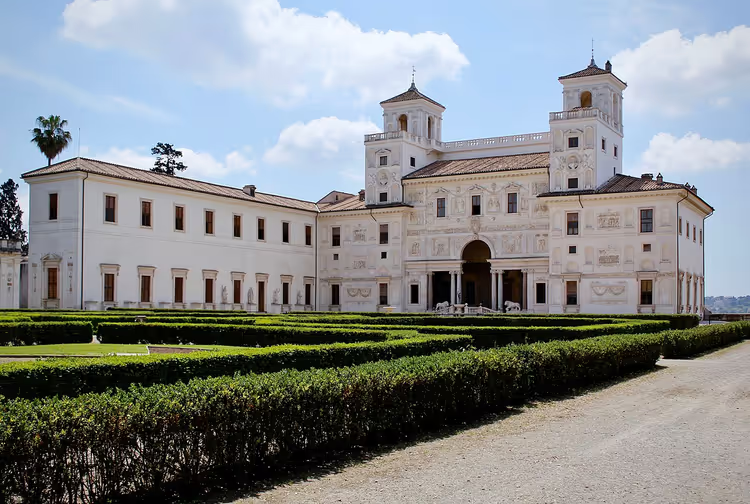
Villa Medici stands on the Pincian Hill next to Trinità dei Monti. In antiquity the Gardens of Lucullus lay here. It was in them, historians relate, that Messalina, the third wife of Emperor Claudius, was killed after a conspiracy was uncovered. Roman authors made Messalina's name a byword for debauchery.
In the 16th century Cardinal Ferdinando de' Medici bought the plot with its vineyards. The villa was given an austere facade facing the city and a richly decorated facade facing the gardens, with ancient reliefs set into it. The Medici collected ancient sculpture, and some of the finds were placed in the gardens.
Since 1803 the villa has housed the French Academy in Rome (as of 09/2026, the villa's history on its website). If you are interested in art, it helps to know that the Prix de Rome scholars moved here, and today the academy's residents live and work at the villa. The building still belongs to France.
You can only get inside with a guide. The tour lasts an hour and a half and costs 18 €, a reduced ticket is 15 €, and admission is free for under-18s (as of 09/2026, Villa Medici). You will see the gardens, the loggia and Ferdinando's study with its paintings of birds.
- Address: Viale della Trinità dei Monti, 1.
- Getting there: metro line A to Spagna, then up the Spanish Steps.
27. Castel Sant'Angelo
 © Livioandronico2013 · CC BY-SAPhoto: Livioandronico2013, CC BY-SA (https://creativecommons.org/licenses/by-sa/4.0), Wikimedia Commons
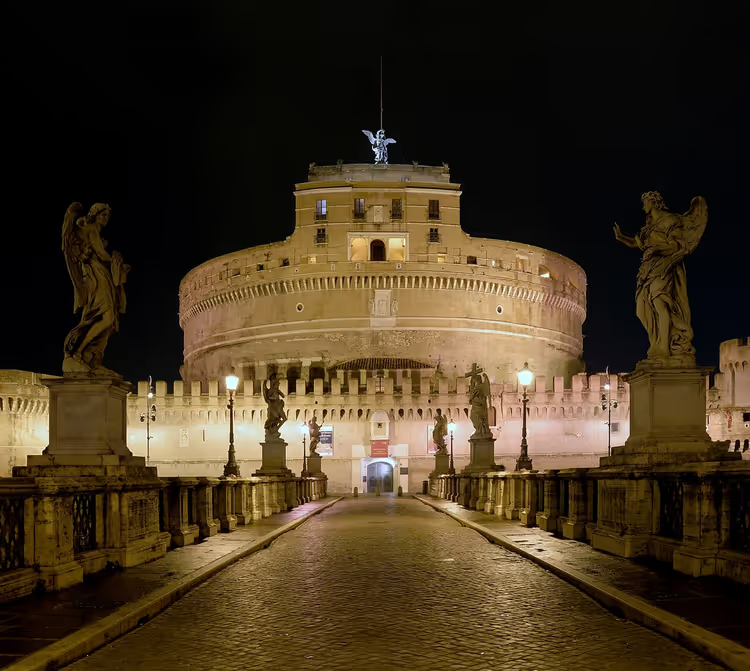
Castel Sant'Angelo began as the mausoleum of Emperor Hadrian, built in the 2nd century. The cylindrical tomb stood on a square base and was faced with marble. Later the mausoleum was built into the city walls and became a fortress. During the Visigoth sieges the tomb's ancient statues and treasures were plundered.
The name comes from a legend dating to 590. During a plague epidemic, Pope Gregory the Great saw the Archangel Michael above the mausoleum, sheathing his sword. Soon afterwards the epidemic ended. A statue of the angel has stood on the summit ever since, and the present bronze figure dates from the 18th century.
In the Middle Ages and the Renaissance the castle served as a papal fortress, a prison and a refuge. The covered Passetto di Borgo corridor connects it to the Vatican. Pope Clement VII fled along it during the Sack of Rome in 1527. The castle contains lavish papal apartments as well as cramped cells where prisoners were held.
Today the National Museum of Castel Sant'Angelo is housed here. The main reward for the climb awaits on the upper terrace: from there you can see the Tiber, the bridge and the dome of St. Peter's Basilica. Admission is paid, so check current prices when you buy your ticket.
- Address: Lungotevere Castello, 50.
- Getting there: metro line A to Lepanto, then a 15-minute walk; about 10 minutes from St. Peter's Square.
28. Ponte Sant'Angelo
 © Blackcat · CC BY-SAPhoto: Blackcat, CC BY-SA (https://creativecommons.org/licenses/by-sa/4.0), Wikimedia Commons
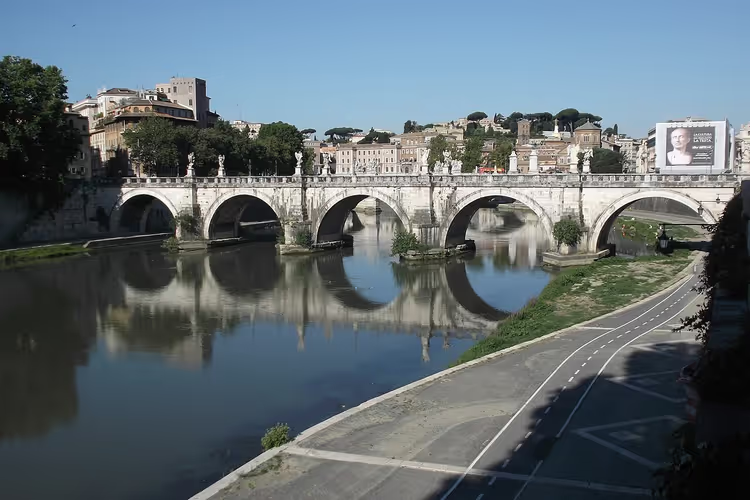
Ponte Sant'Angelo was built by Hadrian in the 2nd century to connect the Campus Martius with his mausoleum. Today the bridge is for pedestrians only and leads straight to the castle gates. The central spans have largely kept their ancient masonry.
The bridge's history is darker than its appearance. Public executions were carried out on the square at its entrance, and the bodies of the executed were displayed by the bridge as a deterrent. In the Jubilee year of 1450 the railings gave way under the crowd of pilgrims, and a great many people died in the river.
In the 16th century statues of the apostles Peter and Paul were set up at the entrance. In the 17th century Bernini's workshop created ten angels bearing the instruments of Christ's Passion. Today the bridge is considered one of the most photogenic in Rome: come at sunset, when the castle's silhouette darkens against the sky.
29. Pincian Hill
 © Diego Delso · CC BY-SAPhoto: Diego Delso, CC BY-SA (https://creativecommons.org/licenses/by-sa/4.0), Wikimedia Commons
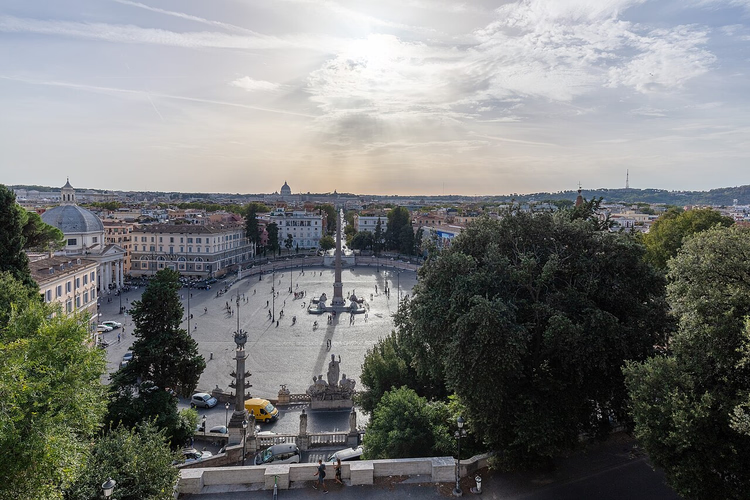
The Pincian is not one of the classic seven hills of Rome, which is why it is sometimes called the eighth. The hill takes its name from the late antique Pincii family, who owned land here. In ancient times the slopes were covered by the gardens of the nobility, including the Gardens of Lucullus, and later by vineyards and villas. Today the Pincian is home to Villa Medici and the edge of the Villa Borghese park.
The park took on its present appearance in the early 19th century, when Rome was under Napoleon's rule. Architect Giuseppe Valadier designed the terraces, avenues and descents to Piazza del Popolo. The French authorities had a large public garden in mind here. The project was completed only after papal rule had returned.
More than two hundred marble busts of Italian poets, scholars and politicians line the avenues. Among the shady paths there are fountains, a water clock and a small lake. But the main draw here is the terrace on Piazzale Napoleone. It gives a panorama of Piazza del Popolo and the dome of St. Peter's Basilica.
Come an hour before sunset: you will watch the city change colour and still have time to walk down to Piazza del Popolo before dark. The climb from the square follows Valadier's broad ramps and staircases and takes about 10 minutes.
- Getting there: metro line A to Flaminio, then on foot across Piazza del Popolo.
30. Villa Borghese
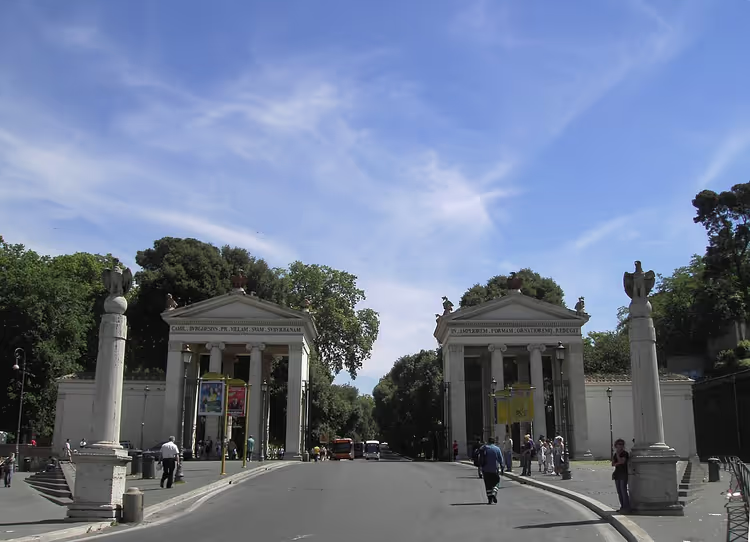
Villa Borghese is one of Rome's largest city parks, covering about 80 hectares north of the centre. The park was laid out in the 17th century by Cardinal Scipione Borghese, nephew of Pope Paul V. In the late 18th century part of the grounds was reworked in the English landscape style, with a lake and a Temple of Aesculapius on an island. In the early 20th century the state bought the villa and handed it over to the city.
Several museums operate in the park and around its edges. The Borghese Gallery holds sculptures by Bernini and paintings by Caravaggio, Raphael and Titian. You can only get in with an advance booking for a specific time; without one you will not be admitted. Villa Giulia brings together Etruscan finds, and the National Gallery of Modern Art covers the 19th and 20th centuries.
Among the trees stands the wooden Globe Theatre, a replica of Shakespeare's playhouse, where Shakespeare's plays are staged in summer. For children there is the Bioparco, playgrounds and bike hire. You can rent a boat on the lake. You could spend a whole day here, alternating museums and walks.
- Getting there: metro line A to Spagna or Flaminio; for the Borghese Gallery, buses along Via Pinciana are more convenient.
31. The Aventine keyhole
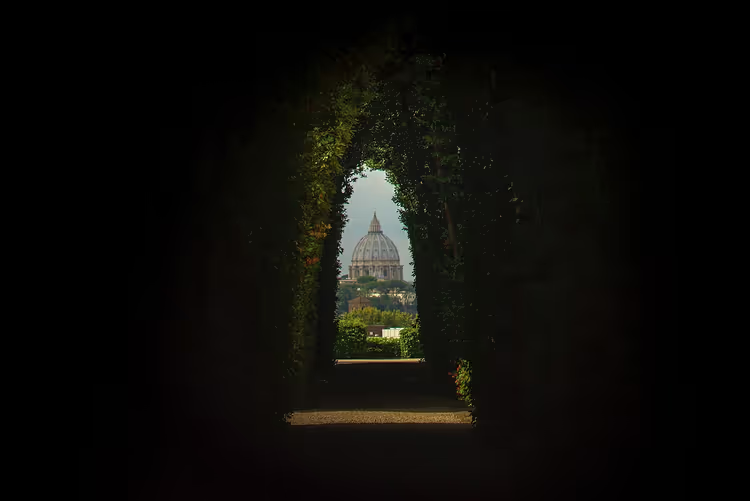
This keyhole is in the gate of the villa of the Order of Malta on the Square of the Knights of Malta (Piazza dei Cavalieri di Malta). The square and its enclosing wall were designed in the 18th century by Giovanni Battista Piranesi. Look through the keyhole: at the end of an avenue of clipped trees, dead centre, stands the dome of St. Peter's Basilica.
Guidebooks love to say that you can see three states at once from here. The villa itself belongs to the Order of Malta, which is recognised as a sovereign subject of international law. The Order has no territory of its own in the usual sense, but it issues passports, maintains diplomatic relations with many countries and has observer status at the UN.
The dome stands on the territory of the Vatican, the smallest state in the world, headed by the pope. The Vatican is also a UN observer and mints its own euro coins. And between the two lies Italy, of which Rome is a part.
There is almost always a queue at the gate. It moves quickly, but on weekend afternoons the wait is long. Come early in the morning or after sunset.
- Getting there: metro line B to Circo Massimo, then a 15-minute uphill walk through the Orange Garden.
32. Church of Trinità dei Monti
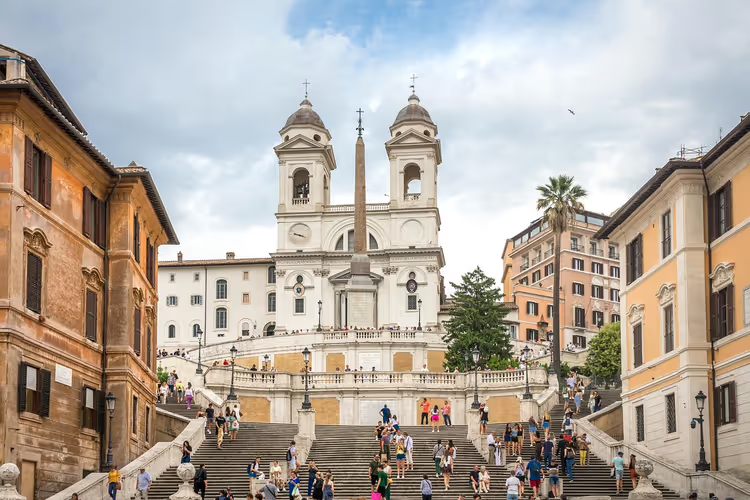
The church of Trinità dei Monti stands at the top of the Spanish Steps. Building began in 1502 with funds from the French king Louis XII, and it was consecrated in 1585. It is a titular church: one of the cardinals is listed as its titular priest. France is still responsible for the church and the adjoining convent.
Construction dragged on for decades, so the facade with its two bell towers is in the spirit of the late Renaissance, while inside you come across Gothic vaults. During the Napoleonic Wars the church was looted, and some of the paintings and decoration were lost. In the 19th century it was restored with French funds.
The church's chief treasure is considered to be the "Deposition from the Cross" by Daniele da Volterra, a pupil of Michelangelo. The fresco in one of the chapels is regarded as the artist's finest work. In front of the facade stands the ancient Sallustian obelisk, which was made in Rome after an Egyptian model.
Admission to the church is free, and during services visitors are asked not to walk through the nave. Stand at the balustrade in front of the facade: from above you can see the whole staircase and Via dei Condotti all the way to the Corso.
- Getting there: metro line A to Spagna, then the lift or the stairs up.
33. Santa Maria del Popolo
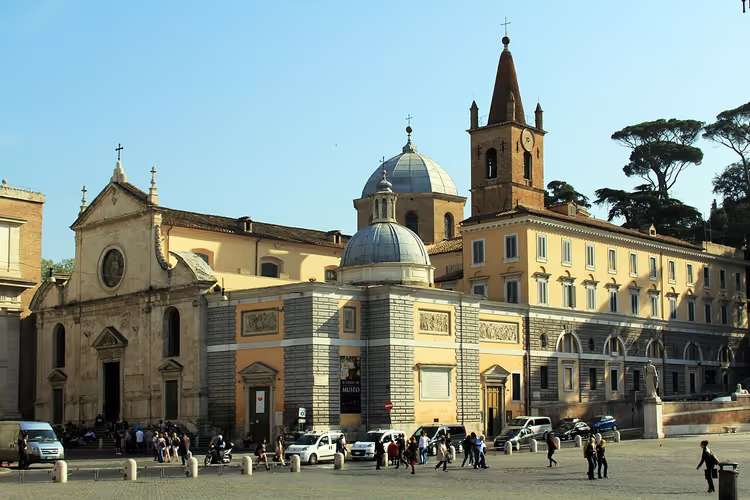
Santa Maria del Popolo stands by the city's northern gate on Piazza del Popolo. The first chapel here was built in 1099 by Pope Paschal II. According to legend, Nero was buried on this spot, and his restless spirit frightened passers-by from the branches of a walnut tree. The Virgin Mary appeared to the pope in a dream and told him to cut down the tree and consecrate the site.
The present building went up in the 1470s under Pope Sixtus IV, and was later remodelled by Bramante and Bernini. The church belongs to the Augustinian order and is also a titular church. Cardinals and members of noble Roman families are buried in its chapels. Above the high altar hangs an icon of the Virgin that tradition attributed to the apostle Luke, but research dates it to the 13th century.
People come here above all for the art. In the Cerasi Chapel hang two canvases by Caravaggio: "The Conversion of Saul" and "The Crucifixion of Saint Peter". The Chigi Chapel was designed by Raphael, and its sculptures were created by Bernini. The vaults of the choir were painted by Pinturicchio.
Admission is free. To light up the Caravaggio paintings, drop a coin into the machine by the chapel. At midday the church closes for a break, so come in the morning or towards evening.
- Getting there: metro line A to Flaminio, the exit leads straight to the gate of Piazza del Popolo.
34. Santa Maria in Cosmedin
 © Archaeaoris · CC BY-SAPhoto: Archaeaoris, CC BY-SA (https://creativecommons.org/licenses/by-sa/4.0), Wikimedia Commons
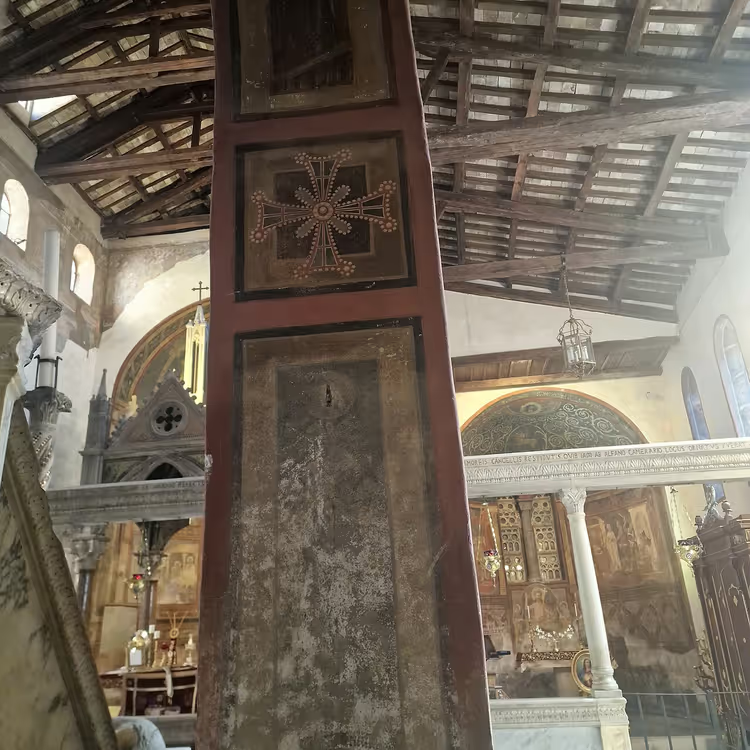
Santa Maria in Cosmedin was built in the 6th century in the ancient trading quarter by the Tiber. An ancient altar of Hercules stood nearby, and part of its structure went into the foundations. At first, food was handed out to the poor at the church. In the 8th century it was given to the Greek community that had fled Byzantium to escape the iconoclasts.
The basilica was damaged more than once by earthquakes and invasions. In the 12th century it was rebuilt and given a Romanesque bell tower about 34 metres high. From the outside you can see seven tiers of arches, but two more lower ones are hidden inside the walls of the church. Inside, the Cosmatesque floor and the marble chancel screen survive.
The queue at the portico is for the marble disc known as the "Mouth of Truth" (Bocca della Verità). It weighs more than a tonne and depicts the face of a sea god. Most likely it was a drain cover in antiquity. A medieval legend says that the disc bites off the hand of a liar.
The queue for the "Mouth of Truth" moves quickly, and a small donation is requested for a photo. If you want to avoid the crowd, come at opening time. The church itself is quiet inside, and it is worth lingering there for at least five minutes.
- Address: Piazza della Bocca della Verità, 18.
- Getting there: buses to Bocca della Verità; metro line B to Circo Massimo and a 10-minute walk.
35. Galleria Doria Pamphilj
 © Vlad Lesnov · CC BYPhoto: Vlad Lesnov, CC BY (https://creativecommons.org/licenses/by/3.0), Wikimedia Commons
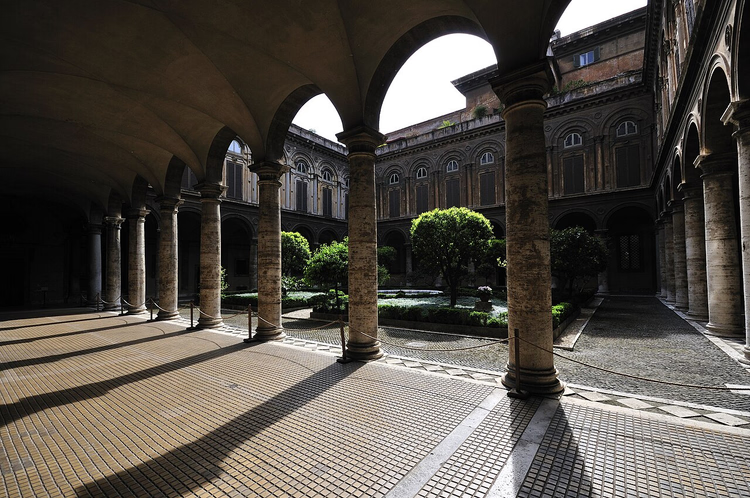
Galleria Doria Pamphilj occupies part of a huge palace on Via del Corso. It is one of the largest private art collections in Rome, and the family still owns it. The name joins two houses, the Doria and the Pamphilj, who intermarried for centuries with each other and with other noble families. The core of the collection was laid down by Pope Innocent X Pamphilj.
The collection runs to hundreds of paintings. The star of the gallery is Velázquez's portrait of Innocent X, with Bernini's bust of the pope beside it. Caravaggio's early canvases "Rest on the Flight into Egypt" and "Penitent Magdalene" hang here too. You will also see works by Titian, Raphael, Parmigianino, Carracci and Claude Lorrain.
The paintings are hung densely, in several rows, as they were in the 18th century. The most spectacular room is the Gallery of Mirrors, with its gilding and painted vaults, which is often compared to Versailles. The state rooms have kept their furniture, tapestries and the family chapel.
From Monday to Thursday the gallery is open from 9:00 to 19:00, and from Friday to Sunday from 10:00 to 20:00, with last admission an hour before closing (as of 09/2026, Doria Pamphilj). It is best to buy your ticket online. Large bags and backpacks are not allowed inside, and there is no cloakroom.
- Address: Via del Corso, 305.
- Getting there: buses to Piazza Venezia, then a 3-minute walk.
⁉️🤔 Frequently asked questions
How many days do you need to see all 35 places on the list?
For all 35 places, allow four to five full days. The ancient centre with the Colosseum and the forums takes a day, and the Vatican with the basilica and Castel Sant'Angelo takes another. The Baroque centre with the Pantheon, Trevi and Piazza Navona can be covered on foot in a day. The rest of the time goes on the Aventine, Coppedè, Villa Torlonia and the parks in the north.
Do you need to buy tickets for the Vatican Museums and the Colosseum in advance?
Yes, for both places it is best to get tickets online. The Colosseum admits visitors on named tickets for a specific time, and in season the slots run out several days ahead. At the Vatican Museums a full ticket costs 20 € without a booking, and booking on the official website adds 5 € (as of 09/2026, prices on the Vatican Museums website), but you don't stand in the general queue.
Which places in Rome can you see for free?
You can see St. Peter's Basilica and the square in front of it, Santa Maria Maggiore, Santa Maria del Popolo, Trinità dei Monti, the Spanish Steps and the Capitoline square for free. The imperial forums, the Ludus Magnus and the Circus Maximus are clearly visible from the street. The Pincian Hill, Villa Borghese and the Orange Garden are also freely open, as is the keyhole on the Aventine.
Is it true that you now need a ticket for the Trevi Fountain?
Yes, but only for the basin itself. Since 2 February 2026, entry to the area by the water has cost 2 € (as of 09/2026, Turismo Roma). Looking at the fountain from the square is still free. The coin over the shoulder is thrown from the area by the basin, so for that tradition you will need a ticket after all.
How should you dress to visit Rome's churches?
In St. Peter's Basilica, Santa Maria Maggiore and other churches, shoulders and knees must be covered. Shorts, short skirts and sleeveless tops will not get you past the entrance, especially in the Vatican. In summer it is handy to carry a light scarf or shirt with you. Hats and caps come off inside, and no one walks through the nave during a service.
All 35 places on the map
We have marked every place on the list on an interactive map. Open it before your trip and group the points by district: that way you won't be crossing the whole city for the sake of a single sight.
Landmarks of Rome
Places on the map
- 1Spanish Steps Connects Piazza di Spagna with the church of Trinità dei Monti
- 2Piazza del Campidoglio Michelangelo's layout, equestrian statue of Marcus Aurelius, Capitoline Museums
- 3Colosseum Amphitheatre of the Flavians, hypogeum, gladiator fights
- 4Vatican Museums Pinacoteca, Belvedere Courtyard, the Laocoön and the Apollo Belvedere
- 5Sistine Chapel Michelangelo's frescoes, "The Creation of Adam", papal conclaves
- 6Raphael Rooms Papal apartments, "The School of Athens" in the Apostolic Palace
- 7St. Peter's Basilica Michelangelo's dome, Bernini's baldachin, the "Pietà"
- 8Pantheon Dome with an oculus, Raphael's tomb, temple of all the gods
- 9St. Peter's Square Bernini's colonnades, Egyptian obelisk
- 10Roman Forum Arches of Titus and Septimius Severus, Temple of Saturn
- 11Santa Maria Maggiore Papal basilica, 5th-century mosaics, tomb of Pope Francis
- 12Baths of Caracalla 3rd-century public baths complex, summer opera festival
- 13Trevi Fountain Ocean on a shell chariot, the tradition of throwing a coin
- 14Forum of Augustus Temple of Mars the Avenger, tuff wall by the Suburra district
- 15Orange Garden on the Aventine Terrace with views of the city centre's domes and St. Peter's Basilica
- 16Coppedè Quarter Art Nouveau, neo-Gothic and Baroque by architect Gino Coppedè
- 17Casina delle Civette "The Owl House" in Villa Torlonia park, stained-glass museum
- 18Jewish Ghetto Great Synagogue, Turtle Fountain, Roman Jewish cuisine
- 19Botanical Garden Gardens of Palazzo Corsini on the slope of the Janiculum hill
- 20Ludus Magnus Ruins of Rome's main gladiator school next to the Colosseum
- 21Fountain of the Four Rivers Bernini, obelisk and four rivers on Piazza Navona
- 22Fountain of Neptune Northern end of Piazza Navona, Neptune and an octopus
- 23Circus Maximus The ancient world's largest hippodrome, between the Palatine and the Aventine
- 24Trajan's Forum Basilica Ulpia, Trajan's Column, Trajan's Markets
- 25Forum of Caesar Temple of Venus Genetrix, statue of Caesar
- 26Villa Medici The French Academy in Rome on the Pincian Hill
- 27Castel Sant'Angelo Hadrian's mausoleum, papal fortress, terrace overlooking the Tiber
- 28Ponte Sant'Angelo Angels by Bernini's workshop, leads to the castle
- 29Pincian Hill Terrace on Piazzale Napoleone overlooking Piazza del Popolo
- 30Villa Borghese 80 hectares of park, the Borghese Gallery, the Globe Theatre
- 31Aventine Keyhole View of St. Peter's dome through a keyhole
- 32Trinità dei Monti Church on the hill above the Spanish Steps
- 33Santa Maria del Popolo Church on Piazza del Popolo
- 34Santa Maria in Cosmedin Church with the "Mouth of Truth"
- 35Doria Pamphilj Gallery Private art collection of the Pamphilj family
In brief: what's worth booking
The main rule for Rome is simple: book anything that runs on time slots before your trip, and leave the squares, churches and parks for your free time.
If you have | Go for |
|---|---|
Just two days | Day 1: the Colosseum, the Forum, the Capitoline. Day 2: the Vatican, the basilica, Castel Sant'Angelo |
An interest in painting | The Vatican Museums, the Borghese Gallery, Galleria Doria Pamphilj, Santa Maria del Popolo |
A trip with children | The Colosseum, the Circus Maximus, Villa Borghese with the Bioparco, the "Mouth of Truth" |
A wish to escape the crowds | The Coppedè Quarter, Casina delle Civette, the Aventine, the Botanical Garden |
The most convenient places to look for accommodation are the historic centre or the Prati district by the Vatican, from where you can walk to most of the places on the list: see hotels in Rome on Trip.com. Entry tickets for museums and viewpoints are easy to gather in one place: find tickets for Rome's sights on Tiqets. Start with the Colosseum and the Vatican; the rest of the list can wait.

A small editorial team writing guides for independent travel. We travel ourselves, but we haven’t been everywhere, so we check prices, opening hours and how to get there against official sources.