
















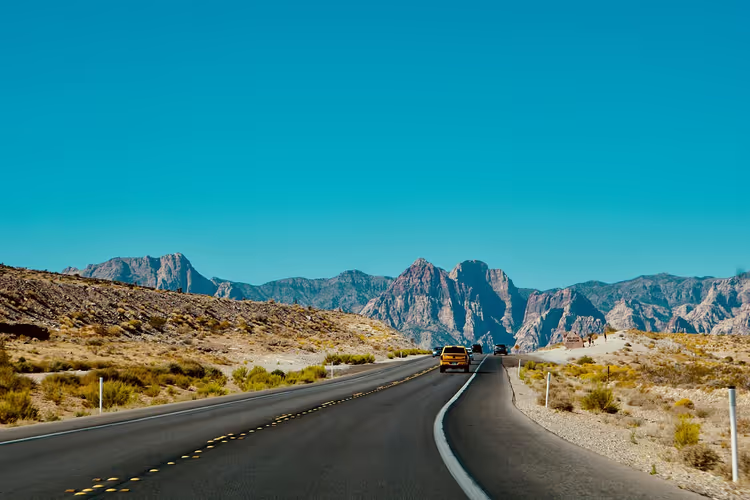
Road trip by car: how to prepare and what to take with you
A road trip by car gives you a freedom a bus passenger will never have. You decide where to stop and when to turn toward the sea.
But freedom requires preparation. One forgotten detail on the road costs hours and money. As of the European Commission, in the EU emergency services are reached by calling the free number 112. Below we have gathered five life hacks for a long trip.
Ad: this article contains affiliate links, we earn a commission if you book through them, at no extra cost to you.
Preparing for a road trip: where to start
💡 In short:
- Plan your route and book overnight stays with free cancellation.
- Prepare the car: diagnostics, fluids, spare tire, safety vest, and first aid kit.
- Check road tolls, environmental zones, and parking rules before you leave.
- Vehicle requirements and road tolls: 09/2026, verified with ADAC on safety vests and ÖAMTC on the vignette.

Plan your route and overnight stays in advance
Determine your starting and ending points, then count the days. Mark the places on the map you want to see and connect them into a rough route. The type of road changes travel time: a highway, a gravel road, and a mountain switchback take different numbers of hours.
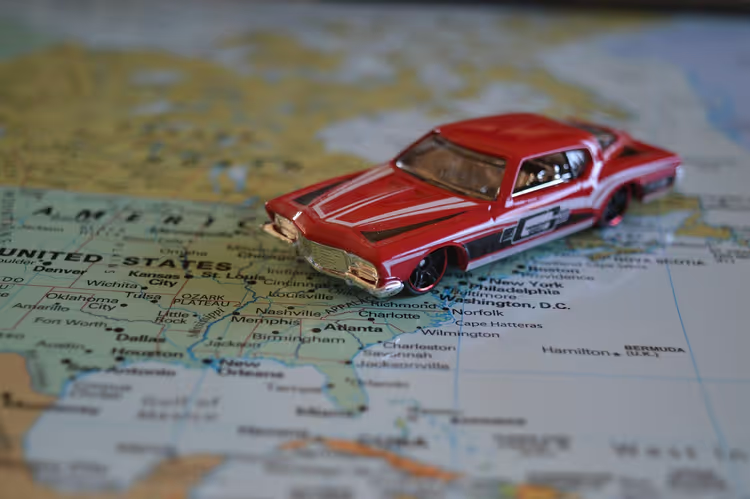
Book overnight stays in advance, but with free cancellation. Hotels along your route are easy to compare in one place, then choose by price and location on Trip.com. Keep a backup city in mind in case you do not make it before dark.
Look into places to eat ahead of time as well. The driver's energy depends on food on the road. Chain locations are predictable, while local cuisine makes the trip more interesting. Pick one reliable option and one new one.
Prepare your car for a long drive
Prepare the car before you leave, not on the shoulder. Start with diagnostics and a technical inspection: check the oil, fluid levels, brakes, and that all sensors work. A minor fault far from home will cost more than scheduled maintenance and eat up several days of your vacation.
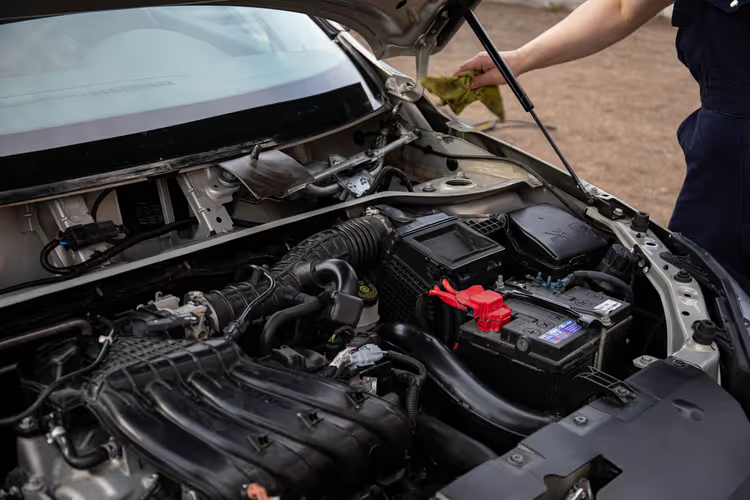
If you rent a car, choose a model you are familiar with. A long drive is not the best time to experiment. Check the car size, fuel consumption, and mileage terms in advance. You can compare options by price and class on DiscoverCars.
Wash the car and remove anything unnecessary from the cabin. You will spend many hours behind the wheel, so the inside should be clean and uncluttered. Put bags in the trunk or in a roof box: it is especially convenient for long trips.
Check the mandatory kit. You need a spare tire, jack, pump, tow rope, tool kit, reflective vest, warning triangle, and extra windshield washer fluid. In Germany, the car must have at least one reflective vest, and you can be fined 15 € for not having one (as of 09/2026, ADAC rules).
A first aid kit is also mandatory. Check the expiration dates of medications and buy anything you might need. On the road, help has to be quick, and looking for the nearest pharmacy is already too late.
Learn the country's traffic rules
The rules are worth reviewing before crossing the border. Not only traffic laws differ, but also driving style and fine amounts. Some places strictly monitor speed, while in others cameras do all the work.
For Austrian autobahns, you need a vignette (Vignette). An annual sticker for a passenger car costs 106.80 €, and a ten-day one is cheaper (as of 09/2026, ÖAMTC prices). In German environmental zones, you need a green sticker, so check it in advance (as of 09/2026, ADAC on environmental zones).
Figure out parking separately. Parking rules in European cities vary significantly, and for a serious violation your car will be towed to an impound lot. Read the signs and the color of the markings instead of relying on experience from other cities.
At the border, you may be asked for a "Green Card," the international car insurance policy. Check in advance that it is valid in all countries on your route. Medical insurance for the travelers themselves can be arranged on EKTA.
Pack your things and documents properly
Pack your luggage according to the length of the trip. The main rule is simple: fewer things. Take a few outfits for different weather, but do not drag five pairs of jeans for three days. Non-obvious small items like a lighter, batteries, a flashlight, and tissues will definitely come in handy on the road.
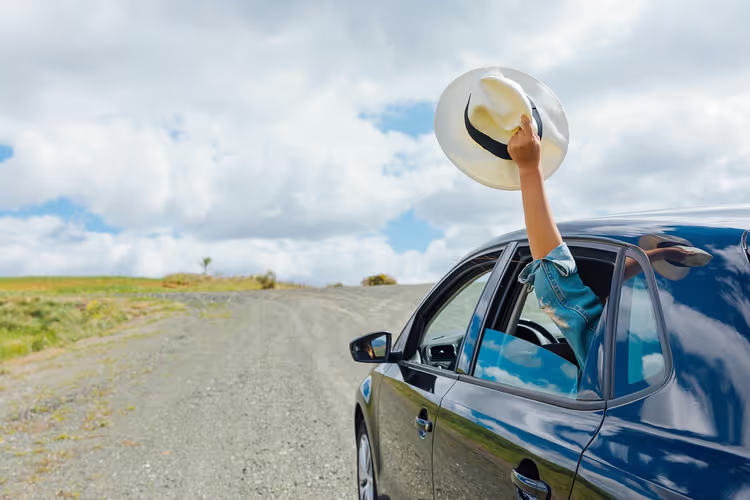
Take blankets and pillows too. Sitting in the car gets less comfortable with every hour. Soft textiles make even the hardest stretches of the route more bearable, and if you end up sleeping somewhere unplanned, you will be glad you brought them.
Keep the most important things separate. Documents (passport, driver's license, vehicle registration, insurance copy), wallet, phone with charger, toiletries, and a change of underwear should be in a small bag within reach. That way you will find everything in seconds instead of digging through bags.
Download offline maps in advance and print a paper version. Internet is not available on every route, and getting lost on an unfamiliar road is easy. A stable connection during the trip comes from an eSIM, and do not forget a power bank.
Make one more list for money. Finding an ATM in the middle of nowhere is hard, especially abroad. Take both large and small bills for gas stations and small shops.
Buy snacks that keep well without refrigeration: crispbread, crackers, bars, fruit, and vegetables. And put several bottles of water in the car.
Plan entertainment for the road
Entertainment is especially important when traveling with children. Long hours in the car are hard even for a calm child. Turn on local radio stations to also get a feel for the region's culture. Podcasts work too, but choose conversational shows rather than lectures.

Games almost always help. Start with simple ones: guess the color of the next car or the digits on its license plate. When those get boring, move on to more complex ones. The internet has plenty of ready-made games, or you can invent your own, such as riddles about the surrounding area.
⁉️🤔 Frequently asked questions
Do I need a vignette to drive to Austria?
Driving on Austrian autobahns requires a vignette (as of 09/2026, ÖAMTC page). The sticker is sold at gas stations near the border. A digital vignette bought online becomes valid only after 18 days, so buy it in advance. Without a vignette, the fine (Ersatzmaut) is issued on the spot.
Which vests and first aid kit should you take in the car?
It is better to pack a reflective vest for every passenger (as of 09/2026, ADAC requirements). Keep the vest and warning triangle within reach, not buried in the trunk. Store the first aid kit the same way, so you can grab it in seconds.
Can you drive into the center of a German city in an older car?
Older cars without a green sticker are not allowed into the center. The sticker is issued based on the car's emissions class (as of 09/2026, ADAC guide). Without the sticker, you risk a fine and being turned around at the entrance to the center.
What number should you dial in an accident abroad?
The single number 112 works throughout the EU, and calls to it are free (according to official information about 112). The operator will connect you with police, ambulance, or fire services. 911 is only familiar in America, so in Europe dial 112.
What should you do if you are running late for your hotel?
Hotels with free cancellation let you reschedule your overnight stay without losses, and on a long road trip this is a common situation. In the low season, vacant rooms can be found on the spot, but in summer it is better to call ahead.
Find hotels
Compare prices across booking sites and filter for rooms with free cancellation.
Compare prices on Discover CarsThe widget loads once you give your consent.
In short: what is worth booking
A long road trip by car rests on three things: a flexible route, a reliable car, and a time buffer. Plan your overnight stays, check your documents, and do not leave without a vest and first aid kit.
If you do not have your own car: compare car rental prices. If your route passes through several cities: book hotels with free cancellation.

A small editorial team writing guides for independent travel. We travel ourselves, but we haven’t been everywhere, so we check prices, opening hours and how to get there against official sources.