
















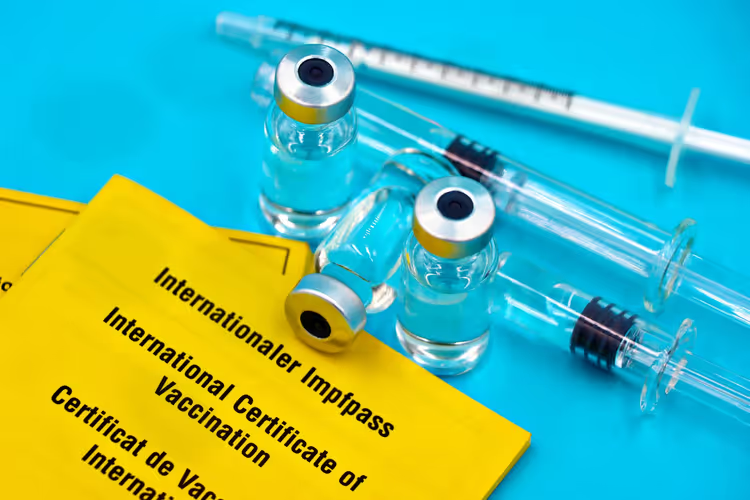
Vaccination for exotic travel: how many weeks before departure to get vaccinated
Planning vaccinations a week before departure is pointless. Most vaccines require two doses, and immunity does not develop immediately.
Keep a simple rule in mind: start vaccinations six to eight weeks before departure. This buffer is necessary because the second dose of some vaccines is given several weeks later.
The short answer to the main question: mandatory vaccinations for entry are almost nowhere required. They are only required where there is a risk of yellow fever, and in Saudi Arabia for pilgrims.
Below we break down which vaccines you need for Asia, Africa, and Latin America, where you will not be allowed into the country without a certificate, and what to put in your first aid kit.
Ad: this article contains affiliate links, we earn a commission if you book through them, at no extra cost to you.
Vaccinations for any trip to warm countries
💡 In short:
- Start preparing six to eight weeks before departure, not in the last days before your vacation.
- Check the requirements of your destination country on the CDC country page, as well as with STIKO, Auswärtiges Amt, and DTG.
- Exact vaccination schedules and timing: 09/2026, verified on the official CDC website.
Doctors recommend three vaccines to almost everyone traveling to the tropics: hepatitis A, typhoid fever, and tetanus with diphtheria. The latter two are usually given as a single injection.
Hepatitis A is transmitted through food and water and affects the liver. Typhoid fever spreads the same way but attacks the intestines and internal organs. Diphtheria travels through the air. Tetanus lives in soil and enters the body through wounds and scrapes.
If you are going away for more than six months, add a hepatitis B vaccine. The virus is transmitted through blood and affects the liver.
Remember the main thing about vaccines. None of them provides 100% protection. So wash your hands, drink bottled water, and stay away from insects.
Vaccinations for Africa, Asia, and Latin America
Here the list expands to include rabies, yellow fever, cholera, and malaria protection. The set depends on exactly where you are going and how close you will be to nature.
Region | Mandatory for entry | Recommended |
|---|---|---|
Tropical Africa | yellow fever vaccination certificate in some countries | hepatitis A, typhoid fever, rabies, malaria prevention |
Southeast Asia | none | hepatitis A, typhoid fever, Japanese encephalitis |
Tropics of South America | yellow fever vaccination certificate in some countries | hepatitis A, typhoid fever, rabies |
Middle East | meningococcal vaccine for pilgrims | hepatitis A, typhoid fever |
There is no malaria vaccine for travelers. Only tablet prophylaxis works: the course starts before departure and continues after return. A doctor selects the drug because drug resistance varies by region (according to the CDC).
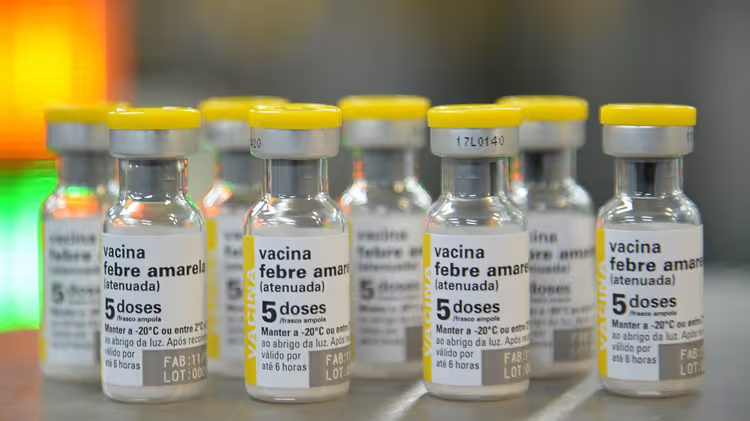 © Agência Brasil Fotografias · CC BYPhoto: Agência Brasil Fotografias, CC BY (https://creativecommons.org/licenses/by/2.0), Wikimedia Commons
Yellow fever is transmitted by mosquitoes, and the disease attacks the liver and kidneys. The vaccine must be given at least 10 days before departure because the certificate does not take effect immediately. Since 2016, one dose provides lifelong protection, and a booster every decade is not necessary (WHO decision).
Cholera is a threat where there is no clean water or sewage system. An oral vaccine is available for travelers and is worth discussing for a long trip to a high-risk area.
Rabies is transmitted through animal saliva via bites. If you are going to a rural area for a long time, getting vaccinated in advance simplifies treatment after a bite. Short city trips usually do not require it.
Where the yellow fever vaccine is mandatory
In some tropical African countries, a certificate is required from every arriving traveler. These include Angola, Benin, Ghana, Cameroon, the Democratic Republic of the Congo, Côte d'Ivoire, Mali, and Togo.
In South America, the rules are softer: a certificate is more often required for those arriving from a risk zone or traveling to the Amazon basin. See the full country list in the CDC directory.
There is also a reverse risk. If you fly from a country with yellow fever without a certificate, you may be turned away at passport control. Do not throw away your old yellow booklet.
Who needs the Japanese encephalitis vaccine
This infection is also transmitted by mosquitoes, and the risk is higher in South and Southeast Asia. The vaccine is recommended for those traveling there for more than a month, working on farms, or spending a lot of time in rural areas (CDC chapter on Japanese encephalitis).
For a regular two-week vacation, the risk is low. Among travelers from countries without natural foci, fewer than one case per million trips is recorded.
Individual countries and regions on the risk list: India, Indonesia, Vietnam, Cambodia, Thailand, Malaysia, Myanmar, Nepal, Sri Lanka, the Philippines, China, Japan, South Korea, as well as Bangladesh and Pakistan. If you are going to a major city and staying in an air-conditioned hotel, the vaccine is usually not offered.
There is always an inexpensive alternative: repellent and dense clothing in the evening. Mosquitoes are most active at dusk, near standing water, and in rice fields.
Meningococcal vaccine: where it is needed
Meningococcus is transmitted through airborne droplets and can cause meningitis. The main risk zone is the "meningitis belt" of Africa, which stretches from Senegal to Ethiopia.
There, the vaccine is recommended for those traveling in the dry season and living in close contact with locals, for example in camps and dormitories. For a regular coastal tourist route, it is not needed.
A special case is pilgrimage to Saudi Arabia. A valid vaccination certificate is required for a Hajj or Umrah visa; without it, documents will not be accepted. Check the requirements in advance because the vaccine does not take effect immediately.
Prevention during travel: water, food, and mosquitoes
The rules are simple, but they are exactly what saves your vacation. Drink only bottled water and wash fruit with it.
Brush your teeth with bottled water too, and ice in drinks from street cafes is an unnecessary risk. Eat where dishes are cooked thoroughly and the place is busy with customers.
Mosquitoes are kept away by repellent on exposed skin, dense clothing after sunset, and a net over the bed. Reapply chemicals if you sweat or swim.
Wash your hands often and keep hand sanitizer in your bag. If a fever appears after you return, tell your doctor right away which countries you visited: malaria and typhoid can show up at home.
What to put in your first aid kit
Assemble the basics in advance; the airport may not have the medications you need.
- pain reliever and fever reducer;
- activated charcoal and remedies for stomach upset;
- antiseptic, iodine, bandages, and plasters;
- burn cream and insect bite cream;
- high-SPF sunscreen;
- antimalarial drugs, if prescribed by a doctor;
- motion sickness tablets and antihistamines;
- rehydration solutions in case of dehydration.
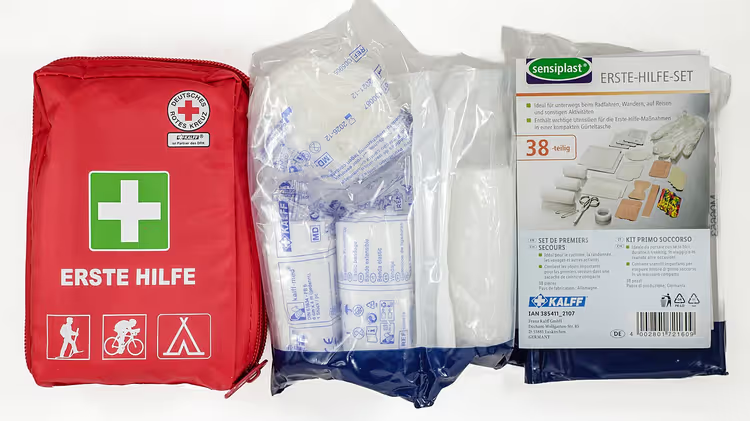 © Friedrich Haag · CC BY-SAPhoto: Friedrich Haag, CC BY-SA (https://creativecommons.org/licenses/by-sa/4.0), Wikimedia Commons
If you take regular medications, bring them with a reserve supply and with a prescription in English. Many countries only allow medications to be imported with a doctor's document. Strong medications sometimes require a separate permit.
Where to get vaccinated and when to start
The yellow fever vaccine is not available at every clinic, only at special centers authorized to record it in the international certificate. Other vaccines are available from a general practitioner and at travel clinics.
Plan your visit six to eight weeks before departure. Some vaccines require a second dose after several weeks, and immunity does not appear on the day of the shot.
Bring a list of countries and dates to your appointment; the doctor will select a combination for your route. Also check whether your tetanus, diphtheria, and measles vaccines are still valid. Expired ones can be updated at the same appointment.
Get the international certificate right away and keep it with your passport. A photo on your phone is usually not accepted at the border.
⁉️🤔 Frequently asked questions
How many days after the yellow fever vaccine can you fly?
We covered when the certificate takes effect in the section "Vaccinations for Africa, Asia, and Latin America." Plan your vaccination at least two weeks before the trip, ideally a month (WHO clarification).
How long does the yellow fever vaccine last?
The duration of one dose is described in the section "Vaccinations for Africa, Asia, and Latin America." Countries do not have the right to require a booster as a condition of entry, and this rule applies even to old certificates. Separately check the requirements of any transit country if your route includes a layover in Africa.
Can you get several vaccines in one visit?
Often yes, if the vaccines are compatible: standard combinations like tetanus with diphtheria are given that way. Live vaccines are sometimes spaced out over time; the doctor decides. Also discuss malaria prevention with them in advance, as the tablets also start before departure.
What if only a few days remain before departure?
Some vaccines have accelerated schedules, but not all. The yellow fever vaccine can no longer be arranged at the last minute; see the timing in the section above. The doctor will select what can take effect in time, and hygiene rules will cover the rest.
Do you need vaccinations for a trip to Thailand or the Maldives?
Mandatory ones are usually not required if you are not flying from a country with yellow fever. The standard set is recommended: hepatitis A, typhoid fever, and an up-to-date tetanus and diphtheria vaccine. Malaria tablets are only needed in certain areas; check the risk map.
In short: what to do before a trip to exotic destinations
Turn your preparation into a short checklist. Check the country's requirements, count the weeks until departure, and book an appointment at a vaccination center. Pack your first aid kit a couple of days in advance, not at the airport.
If your route goes through Africa: first the yellow fever certificate, then malaria prevention. If you are going to Asia for a month: discuss the Japanese encephalitis vaccine. If it is a two-week beach vacation: the standard set and a good repellent will be enough.
Before the trip, also get your medical insurance in order: compare policies to make sure your coverage includes tropical diseases and evacuation.

A small editorial team writing guides for independent travel. We travel ourselves, but we haven’t been everywhere, so we check prices, opening hours and how to get there against official sources.