
















9 Romantic places in Europe: prices, routes and free entry
A romantic trip is easy to ruin with lines and closed ticket offices. Starting April 1, 2026, the courtyard of Juliet's House in Verona is accessible only with a ticket: €5 for the courtyard and €12 for the house interior (as of 09/2026, official ticket platform).
We picked nine places in Europe where couples go for the atmosphere, and checked the price and route for each. The best experiences come in the off-season and early morning.
All sites were verified against official websites and tourist offices as of September 2026. Three places remain free around the clock, and the hike to Kjeragbolten requires shoes with good tread and plenty of time.
Ad: this article contains affiliate links. We earn a commission if you book through them, at no extra cost to you.
How to choose a romantic spot in Europe
💡 In short:
- Split the trip by type: city romance (Venice, Paris, Verona), nature (Kjerag plateau, Ahr valley), and castles (Neuschwanstein).
- Book tickets for Juliet's House, Neuschwanstein, and the top of the Eiffel Tower in advance: in summer, time slots run out weeks ahead.
- If you don't like crowds, come on a weekday morning: by midday the main spots fill up.
- Prices: 09/2026, checked on official site pages.
Below is our pick of nine places, each with a different spirit. The table shows who each spot suits and when it's best to go.
Place | Who it's for | Season | Entry |
|---|---|---|---|
Juliet's House, Verona | Shakespeare fans | April-October | ticketed |
Neuschwanstein | castle lovers | year-round | ticketed |
Venice | honeymoons | spring and fall | day-tripper fee |
Charles Bridge, Prague | walks by the water | May-September | free |
Kjerag plateau | active couples | May-October | free, paid parking |
Eiffel Tower, Paris | classics | year-round | ticketed |
Ghent | a quiet weekend | April-October | free city |
Ahr valley | wine and nature | May-October | free |
Trevi Fountain, Rome | a first date | year-round | €2 to approach the fountain |
1. Juliet's House in Verona
 © This Photo was taken by Andrea Bertozzi . Feel free to use my photos, but please mention me as the author and send me a · CC BY-SAPhoto: This Photo was taken by Andrea Bertozzi . Feel free to use my photos, but please mention me as the author and send me a, CC BY-SA (https://creativecommons.org/licenses/by-sa/4.0), Wikimedia Commons
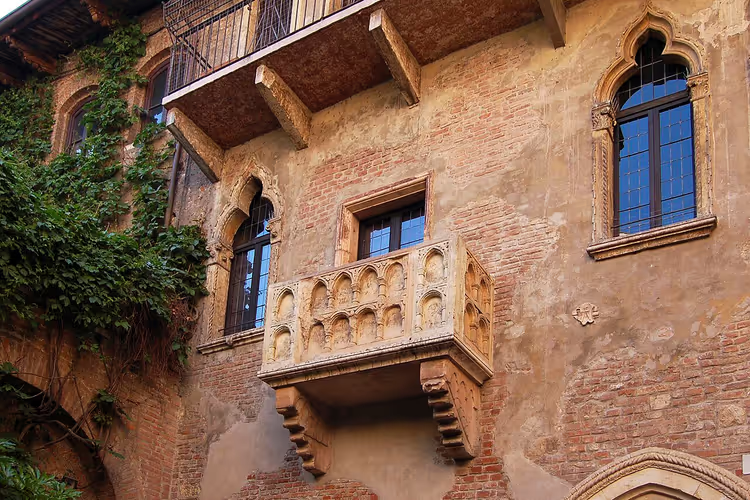
The 15th-century house on via Cappello is linked to the Cappello family: Shakespeare turned their surname into Capulet. The courtyard, balcony, and statue have made an ordinary building a meeting place for couples in love. The romance here rests on legend more than architecture.
Starting April 1, 2026, the courtyard is accessible only with a ticket, and the entrance has been moved to Teatro Nuovo on Piazzetta Navona. You book online; there is no longer any walk-up access from the street. The statue of Juliet stands in the courtyard, and the tradition of touching her hand remains.
- How much it costs: courtyard €5, courtyard plus house €12 (as of 09/2026, MidaTicket).
- How to get there: it's about a ten-minute walk from Piazza Bra.
- Who it's for: couples who care about Shakespeare's story.
- The catch: you can't enter the courtyard without an online ticket, even with a VeronaCard (as of 09/2026, Verona museum tickets).
2. Neuschwanstein Castle in Germany
 © Thomas Wolf , www.foto-tw.de · CC BY-SAPhoto: Thomas Wolf , www.foto-tw.de, CC BY-SA (https://creativecommons.org/licenses/by-sa/3.0/de/deed.en), Wikimedia Commons
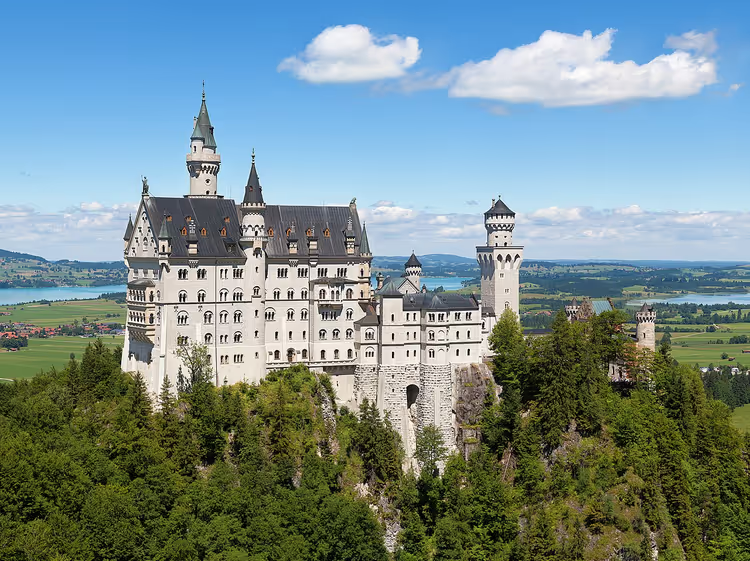
Neuschwanstein sits on a rock above a gorge in Bavaria, not far from Füssen. King Ludwig II built it in the second half of the 19th century as a personal retreat inspired by Wagner's operas. This silhouette became the prototype for the Disney castle.
You can only go inside on a guided tour at a fixed time. In summer, you should book tickets weeks in advance rather than trying to get them on site. A detailed breakdown of the route and rooms is in our article about Neuschwanstein Castle.
- How much it costs: €21 for adults, free for under 18s (as of 09/2026, prices on the castle website).
- How to get there: by train to Füssen, then by bus to Hohenschwangau.
- Who it's for: couples who love history and views from above.
- The catch: you can't go inside without a guide and an entry time slot.
- Book a tour from Munich
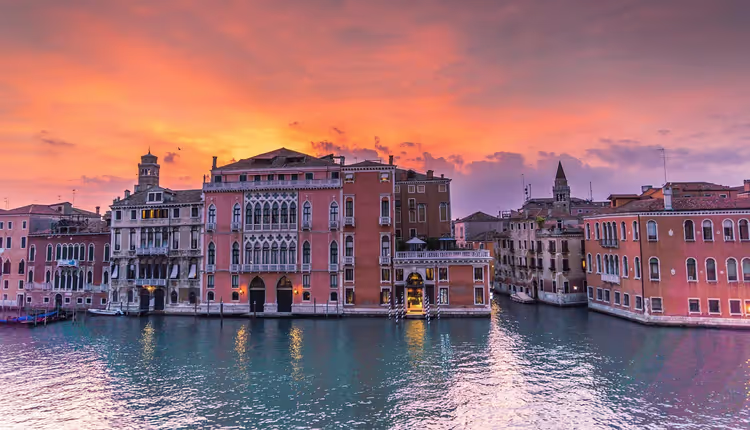
3. Venice, Italy
Venice stands on water and rests on wooden piles, and people get around here by boat and on foot. In the evening the city empties out: visitors from the mainland leave, and the embankments grow quiet. That's when couples come out to the canals.
The gondola remains the main ritual for two, although it costs noticeably more than any museum in the city. Many couples combine the ride with dinner away from Piazza San Marco, where prices are lower. We've put together useful routes in the guide Visiting Venice on your own.
- How much it costs: walking around the city is free, the gondola and vaporetto are paid separately. Day-trippers are charged a city entry fee.
- When to go: April-June and September-October, avoid the August heat.
- How to get there: by train to Santa Lucia station, then on foot or by vaporetto.
- Who it's for: for honeymoons and quiet evenings by the water.
- Hotels in Venice on Trip.com
4. Charles Bridge in Prague
 © Jorge Franganillo · CC BYPhoto: Jorge Franganillo, CC BY (https://creativecommons.org/licenses/by/2.0), Wikimedia Commons
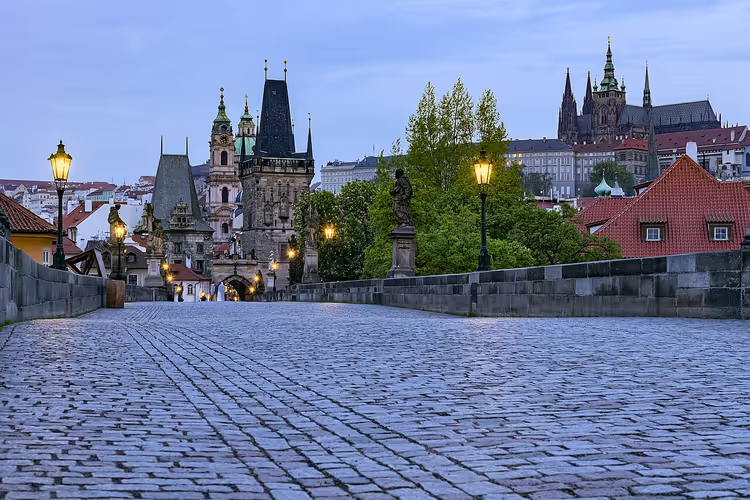
Charles Bridge connects the Old Town and Prague Castle across the Vltava. It opened in the 14th century and has remained a meeting place ever since. Around thirty Baroque sculptures line both sides, mostly on religious subjects.
At dawn the bridge is almost empty: photos without crowds are only possible before eight in the morning. During the day musicians play and artists work here. An overview of other spots in the city is in the article things to see in Prague on your own.
- How much it costs: crossing the bridge is free around the clock.
- How to get there: from Staroměstská metro station it's about a five-minute walk.
- Who it's for: for couples who enjoy walks by the water.
- The catch: during the day in season it's very crowded here.
- Hotels in Prague on Trip.com
5. Kjerag plateau in Norway
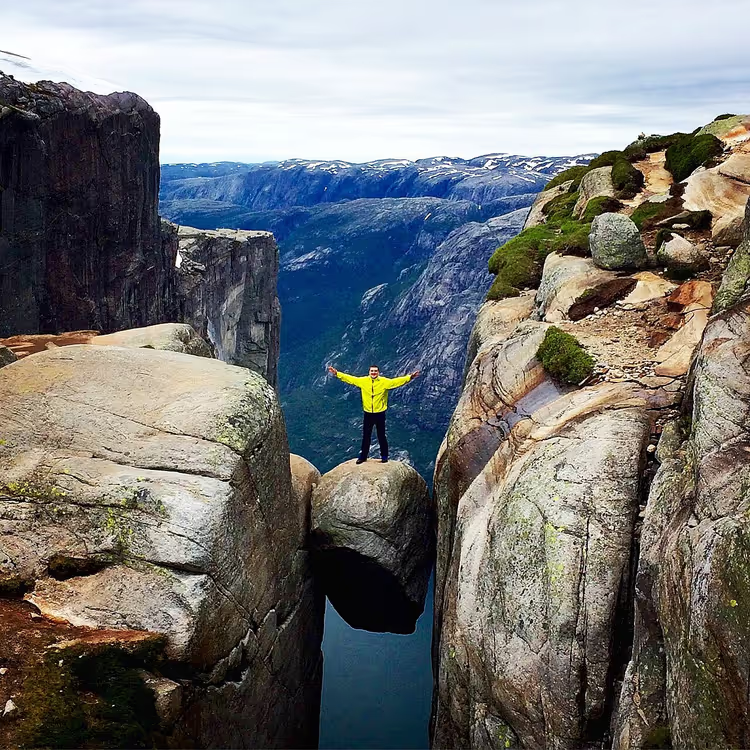 © Scoundrelgeo · CC BY-SAPhoto: Scoundrelgeo, CC BY-SA (https://creativecommons.org/licenses/by-sa/4.0), Wikimedia Commons
Kjeragbolten hangs between two cliffs above Lysefjord. Below it is a drop of about a kilometer, and parts of the trail go over rocks with fixed chains. This is the most extreme entry in the selection.
The official route starts from the Øygardstøl parking lot: you'll face a climb up an exposed slope with no shelter. The season here is short, and outside it the infrastructure is closed. Be sure to bring shoes with good tread and extra water.
- How much it costs: the hike is free, parking at Øygardstøl costs 300 kroner, about €26 (as of 09/2026, kjerag.info).
- How to get there: from the Øygardstøl parking lot, 4.5 km one way along a marked trail (as of 09/2026, kjerag.info).
- Who it's for: for couples in good physical shape.
- The catch: infrastructure only operates from May to October (as of 09/2026, kjerag.info).
- Car rental in Norway
6. Eiffel Tower in Paris
 © Armin Hornung · CC BY-SAPhoto: Armin Hornung, CC BY-SA (https://creativecommons.org/licenses/by-sa/3.0), Wikimedia Commons
The Eiffel Tower was built as the entrance to the World's Fair and was meant to be dismantled after twenty years. It was kept because of the radio antenna, and since then it has become a symbol of Paris. Today it is one of the most visited landmarks in the world.
Going up to the top platform is expensive and requires a time slot, so tickets are bought in advance on the official website. If you are going in the evening, allow extra time: the elevator line does not disappear after sunset. We put together a five-day itinerary in the guide Paris on your own.
- How much it costs: elevator to the top platform 36.70 € (as of 09/2026, official website).
- How to get there: walk from Bir-Hakeim metro or from Trocadéro.
- Who it's for: couples looking for the classics.
- The catch: in high season the elevator line is long even with a ticket.
- Hotels in Paris on Trip.com
7. Ghent, Belgium
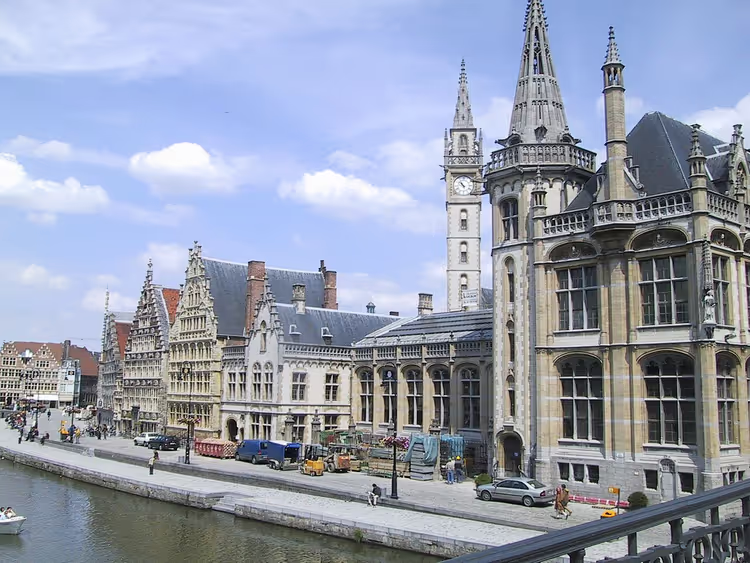 © Unknown author · CC BY-SAPhoto: Unknown author, CC BY-SA (http://creativecommons.org/licenses/by-sa/3.0/), Wikimedia Commons
Ghent in Belgium is smaller in scale than the capital, but it remains a lively city with a university district. There are many houses with sloping roofs and neat windows painted white. For a relaxed weekend it is a good alternative to Brussels.
A couple can stroll along the river, have dinner at one of the restaurants, and stop by miniature museums or classic theaters. The center is compact, so you will not need a car. In the evening the streets empty out and the city becomes quiet.
- How much it costs: walks around the center are free, museums and boat rides are paid separately.
- How to get there: by train to Gent-Sint-Pieters station, then by tram to the center.
- Who it's for: couples who want a quiet weekend without big-city bustle.
- Hotels in Ghent on Trip.com
8. The Ahr Valley
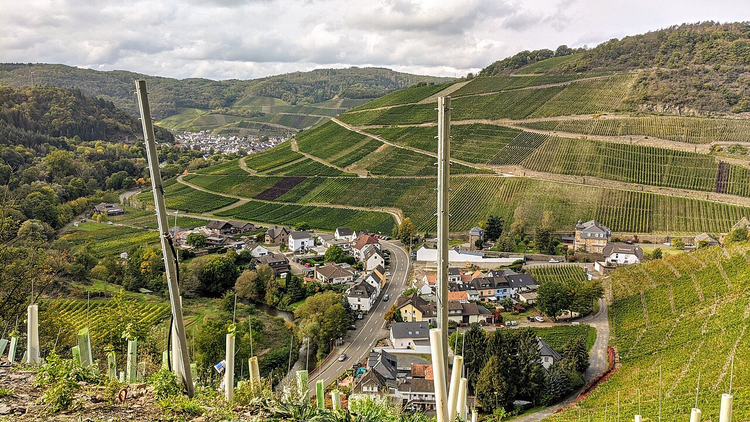 © Uwe Rohwedder · CC BY-SAPhoto: Uwe Rohwedder, CC BY-SA (https://creativecommons.org/licenses/by-sa/4.0), Wikimedia Commons
The Ahr Valley in Germany is known for red wine: grapes are grown on the slopes along the river. Small villages sit between the vineyards, and the region itself is compact. It's a quiet option for a couple who wants to get away from the city.
It's easiest to get here by car: that way you can stop at wineries along the way. The valley offers tours with young wine tastings, and some villages are connected by train along the riverbank.
- How much it costs: walks through the vineyards are free, tastings are paid separately.
- How to get there: by train to Ahrweiler, then through the valley by car or bus.
- Who it's for: couples who love wine and quiet.
- Car rental for the Ahr Valley
9. Trevi Fountain in Rome
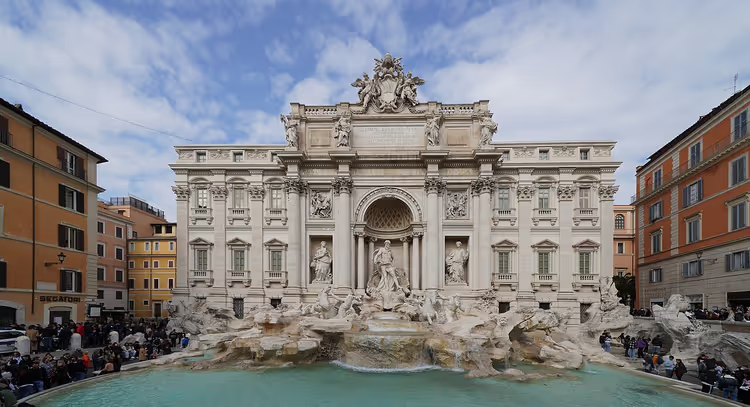 © NikonZ7II · CC BY-SAPhoto: NikonZ7II, CC BY-SA (https://creativecommons.org/licenses/by-sa/4.0), Wikimedia Commons
The Trevi Fountain sits on a small square in central Rome. By tradition, you toss a coin over your left shoulder to return to the city. Coins are collected from the basin regularly and donated to charity.
About €1.5 million in coins is pulled from the fountain each year (as of: 2025, Caritas Roma). The best time for a date by the water: early morning or after sunset. A city route is put together in the guide Four Days in Rome.
- How much it costs: access to the fountain is paid, €2.
- How to get there: from Barberini metro station it's about a seven-minute walk.
- Who it's for: couples who combine a walk with central Rome.
- The catch: the square is small, by midday it gets crowded.
- Hotels in Rome on Trip.com
⁉️🤔 Frequently asked questions
Where in Europe should you propose?
The easiest option is somewhere with a beautiful view: the top deck of the Eiffel Tower, the Kjeragbolten boulder above Lysefjord, or the courtyard of Juliet's House. In Venice, people hire a gondola in the evening for this. Check the weather forecast and buy tickets for the time you need in advance.
Which places from this list can you visit for free?
Charles Bridge, Ghent, and the Ahr Valley are free: there's no entrance fee anywhere. You do need to pay for parking at Kjerag, access to the Trevi Fountain, a ticket to Juliet's House, Neuschwanstein Castle, and the climb up the Eiffel Tower. Venice is free for walking around, but boats and museums are paid. Day-trippers pay an entry fee in Venice.
Do you need to buy tickets in advance?
Yes, for three places. Juliet's House only admits visitors with an online ticket for a fixed time slot, Neuschwanstein slots sell out weeks ahead in summer, and tickets for the top of the Eiffel Tower are limited. The other places don't require advance booking.
When is the best time to visit Venice without the crowds?
For Venice, choose April to June or September to October. August is hot and crowded, and in winter some waterfronts are closed due to high water. The quietest time along the canals is early morning and after seven in the evening.
What should you bring for the Kjeragbolten hike?
Sturdy boots with good tread, a rain jacket, and extra water. The trail runs over rocks, chains are installed in places, and the weather changes quickly. The season runs from May to October; outside that window the climb is not recommended. Check for fresh trail condition updates before you set out.
In short: what's worth booking
Nine spots cover different scenarios: cities, nature, and castles. Here's a quick decision matrix.
- If you have several days and love canals: go for Venice and a gondola ride.
- If you want mountains and adrenaline: go for the Kjerag plateau and a rental car.
- If you're after the classics: go for Paris and the top deck of the Eiffel Tower.
- If you need a quiet weekend: go for Ghent or the Ahr Valley.
Plan your trip with hotels on Trip.com, and book tickets and tours on GetYourGuide for your dates. Get tickets for Juliet's House and Neuschwanstein online in advance.

A small editorial team writing guides for independent travel. We travel ourselves, but we haven’t been everywhere, so we check prices, opening hours and how to get there against official sources.