
















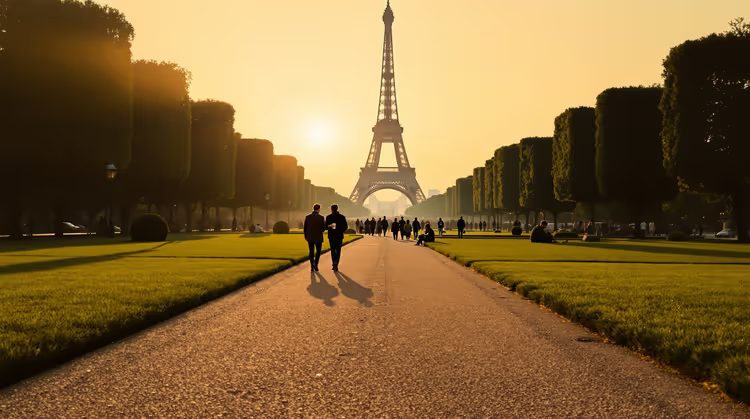
 AIIllustrative image: AI-generated
Paris on foot: a five-day plan, museum tickets and opening hours
Paris is easy to see on foot: the historic center is compact, and the metro runs between the more distant points. We've put together a five-day itinerary, day by day, with metro stations, distances and ticket links. The plan is designed for an independent trip with no guide and no packaged tour.
On the first day you'll walk about ten kilometers through the center (by the map). The second day goes to the Île de la Cité and the Latin Quarter, the third to Montmartre, the fourth to museums, the fifth to entertainment and food. Each day starts at a specific station so you don't waste time searching.
Ad: this text contains affiliate links, we earn a commission from them, and the price for you stays the same.
The 5-day itinerary at a glance
💡 In short:
- The five days break down into five walking blocks: the center, the Cité with the Latin Quarter, Montmartre, museums, entertainment.
- The longest day is the first, about ten kilometers (by the map). The calmest is the fourth, which is museums only.
- The metro covers the distances between neighborhoods, and within each day you walk.
- Prices and opening hours: 09/2026, checked on the official Louvre website.
Day | Highlights | Tickets in advance | On foot, km |
|---|---|---|---|
1 | Eiffel Tower, Les Invalides, Place de la Concorde, Tuileries Garden, Hôtel de Ville | Eiffel Tower, Les Invalides | 9-10 |
2 | Notre-Dame, Sainte-Chapelle, Conciergerie, Luxembourg Garden, Panthéon | Sainte-Chapelle, Panthéon | 4-5 |
3 | Sacré-Cœur, Place du Tertre, Dalí Museum, Moulin de la Galette, Moulin Rouge | Moulin Rouge | 5-6 |
4 | Louvre, Musée d'Orsay, Rodin Museum, Picasso Museum | all four museums | 4-5 |
5 | Disneyland Paris or Parc Astérix, Vincennes Zoo, food tour | Disneyland, Parc Astérix | 3-5 |
The metro is the fastest way to get between the days of the itinerary in Paris. Within a day you're almost always on foot: the central neighborhoods are small, and the distance between neighboring sights rarely exceeds two kilometers (by the map).
Day 1: Eiffel Tower and the old center of Paris
The first day is the busiest. You start at the Eiffel Tower in the morning and finish at the city hall on Place de l'Hôtel de Ville, with lunch planned at a café near the Palais-Royal. The route begins on the Left Bank of the Seine, and after Pont Alexandre III it continues along the Right Bank. Wear comfortable shoes from the start.
Eiffel Tower
The Eiffel Tower stands on the Champ de Mars and remains the most recognizable spot in the city. From Bir Hakeim station you'll reach it in ten minutes (by the map), and Trocadéro gives the best view of the whole structure. The second level holds the viewing platform and the restaurant Le Jules Verne, and the third carries a beacon under the dome. The elevator runs to the top until midnight, so it's easier to catch the sunset from the platform than from under the tower.
 © Yann Caradec from Paris, France · CC BY-SAPhoto: Yann Caradec from Paris, France, CC BY-SA (https://creativecommons.org/licenses/by-sa/2.0), Wikimedia Commons
- How to get there: metro Bir Hakeim (line 6) or Trocadéro (line 9).
- Tickets: Eiffel Tower tickets with a time slot, book ahead, there's a line on site.
- The catch: in high season, going up without a slot takes an hour or more.
Sainte-Clotilde church
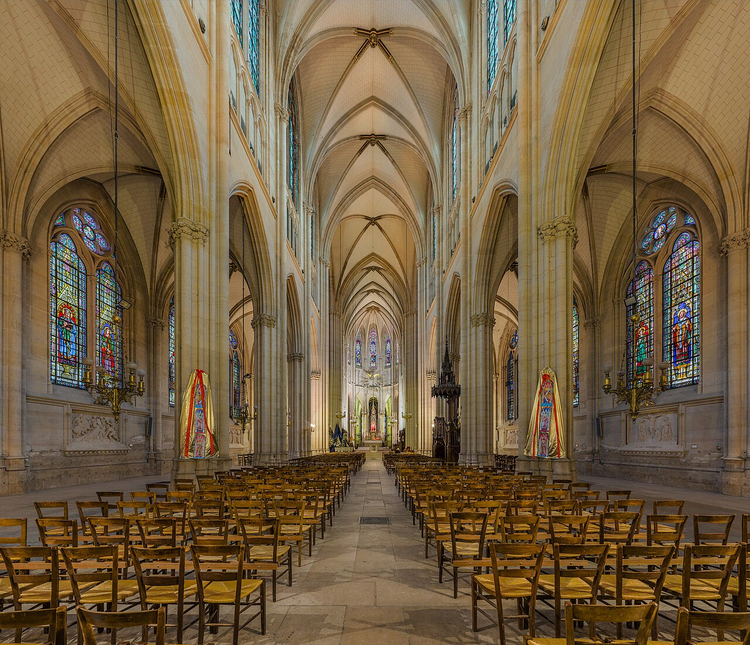
The Basilica of Sainte-Clotilde on Rue Las Cases was built in the mid-19th century in the style of medieval churches. You'll recognize it by its two matching spires and the lace-like stone carving of the facade. Inside are 19th-century stained glass windows, statues of Saint Valerie of Limoges and paintings of the Stations of the Cross. It's a working church with few tourists, and a pleasant pause before Les Invalides.
 © Diliff · CC BY-SAPhoto: Diliff, CC BY-SA (https://creativecommons.org/licenses/by-sa/3.0), Wikimedia Commons
- How to get there: metro Solférino, then a two-block walk.
- Admission: free, the basilica is open daily from morning to evening.
Les Invalides
 © Another one of my pictures: This photograph was taken by Medium69 (William Crochot) and released under the license state · CC BY-SAPhoto: Another one of my pictures: This photograph was taken by Medium69 (William Crochot) and released under the license state, CC BY-SA (https://creativecommons.org/licenses/by-sa/4.0), Wikimedia Commons
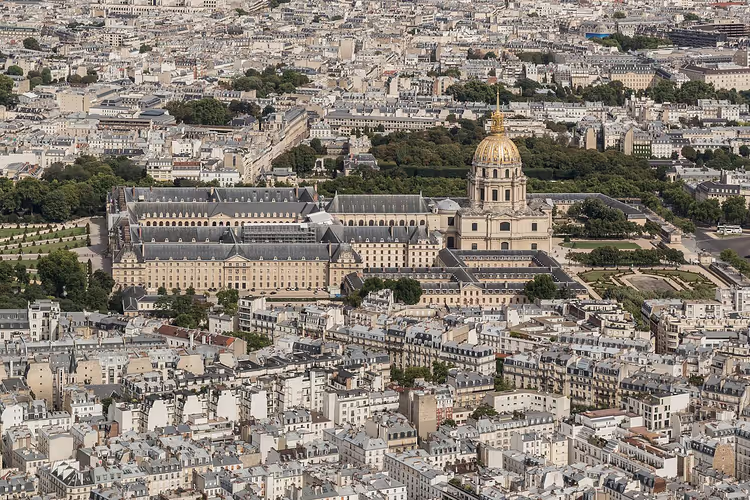
Les Invalides was founded by Louis XIV for war veterans, and today it's a complex of museums, a church and a necropolis. The golden dome of the Cathedral of Saint-Louis is visible from the riverbank long before you reach the entrance. The basilica holds the sarcophagus with Napoleon's remains, and in the Army Museum you'll see armor, banners, trophies and the tomb of Marshal Vauban. The full ticket covers all four museum departments and the tomb.
- How to get there: metro Invalides or Varenne.
- Tickets: ticket to Les Invalides and the Army Museum.
- The catch: by noon, groups fill the halls around the sarcophagus, and mornings are noticeably quieter.
Pont Alexandre III

Pont Alexandre III links Les Invalides with the Champs-Élysées in a single arched span. It was built for the 1900 World's Fair, and its decoration features stone angels, nymphs and Pegasus figures. Bas-reliefs on the pylons depict four eras of French history, and from the river side you can see the nymph of the Seine and the nymph of the Neva. Crossing the bridge is free and it's open around the clock.
- How to get there: a five-minute walk along the riverbank from Les Invalides.
- When to go: early in the morning or after six in the evening, the bridge is crowded during the day.
Place de la Concorde
 © Cristian Bortes from Cluj-Napoca, Romania · CC BYPhoto: Cristian Bortes from Cluj-Napoca, Romania, CC BY (https://creativecommons.org/licenses/by/2.0), Wikimedia Commons
Place de la Concorde lies between the Tuileries Garden and the Champs-Élysées. In the center stands the Luxor Obelisk of pink granite, flanked by two Hittorff fountains with sculptures of a Nereid and a Triton. Marble statues stand at the corners of the square, representing major French cities. It's worth a look on your way through, but the square doesn't need time set aside for it.
- How to get there: metro Concorde (lines 1, 8 and 12).
- Admission: free, the square is open around the clock.
La Madeleine church
 © Callaway Kosine – de Suzannet · CC BYPhoto: Callaway Kosine – de Suzannet, CC BY (https://creativecommons.org/licenses/by/3.0), Wikimedia Commons
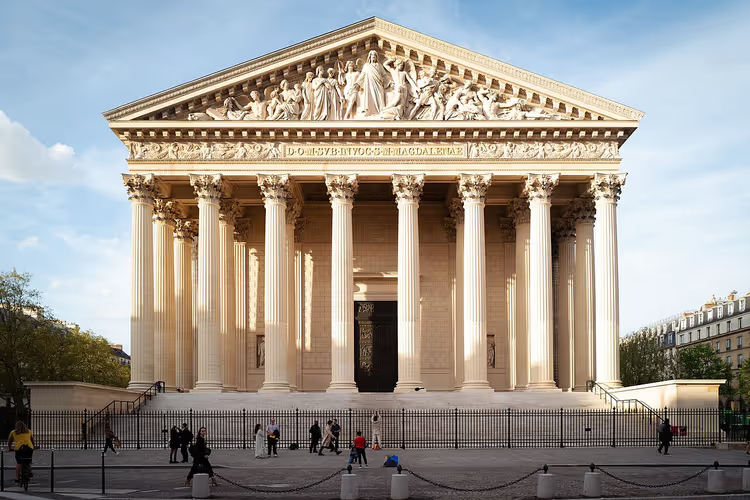
La Madeleine looks like an ancient temple: it's surrounded by a colonnade, and the pediment carries a scene of the Last Judgment. The entrance is closed by bronze doors with the Commandments, and inside, above the altar, stands a sculpture of Mary Magdalene with angels. Visiting the interior is free, and the church is open daily.
- How to get there: metro Madeleine (lines 8, 12 and 14).
- Tickets: City Pass with museums and transport, more on it in the tickets section.
Place Vendôme
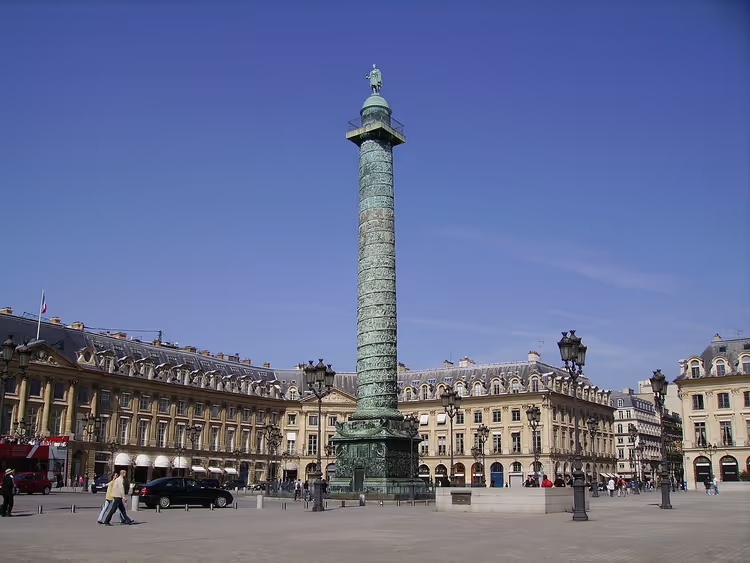 © Yair Haklai · CC BY-SAPhoto: Yair Haklai, CC BY-SA (https://creativecommons.org/licenses/by-sa/3.0), Wikimedia Commons
Place Vendôme is one of the royal squares of Paris, ringed by buildings with columns, arcades and mansard roofs. A white marble column rises in the center with a statue of Napoleon on top. The Ritz hotel occupies one of the buildings, but there's no need to go inside. From here it's convenient to head down to the Tuileries Garden by metro from Opéra station.
- How to get there: metro Opéra, then a two-block walk.
- Admission: free.
Tuileries Garden
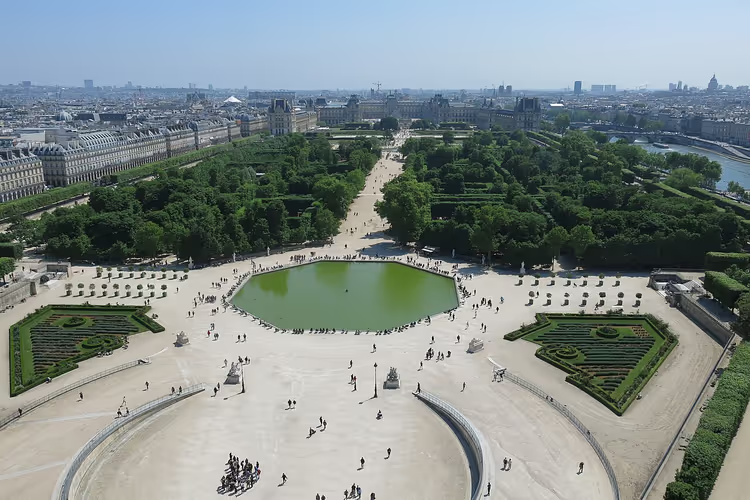
The Tuileries Garden stretches between the Louvre, Place de la Concorde, Rue de Rivoli and the Seine. From the Concorde side you'll come to the Orangerie gallery with paintings by Monet, Renoir and Picasso, and from the Louvre side you'll come out at the Arc du Carrousel. The central avenue is lined with marble copies of ancient statues, along with Rodin's "The Kiss" and works by Aristide Maillol. Walking through the garden is free, and you only need a ticket for the galleries.
- How to get there: metro Tuileries or Concorde.
- Opening hours: the Orangerie is closed on Tuesdays, the Jeu de Paume on Mondays.
- The catch: on sunny weekends the paths are packed, and balloons and ice cream aren't cheap.
Arch on Place du Carrousel
 © Thesupermat · CC BY-SAPhoto: Thesupermat, CC BY-SA (https://creativecommons.org/licenses/by-sa/3.0), Wikimedia Commons
The arch on Place du Carrousel was built in the early 19th century to honor Napoleon's victories, and it separates the Tuileries Garden from the Louvre. Its pink marble columns carry sculptures of soldiers from different branches of the army: a cuirassier, a dragoon, a grenadier and a sapper. The eastern facade is crowned by a quadriga of horses driven by a figure of Peace. Access is free, and a visit takes ten minutes.
- How to get there: between the Tuileries Garden and the Louvre courtyard, on foot.
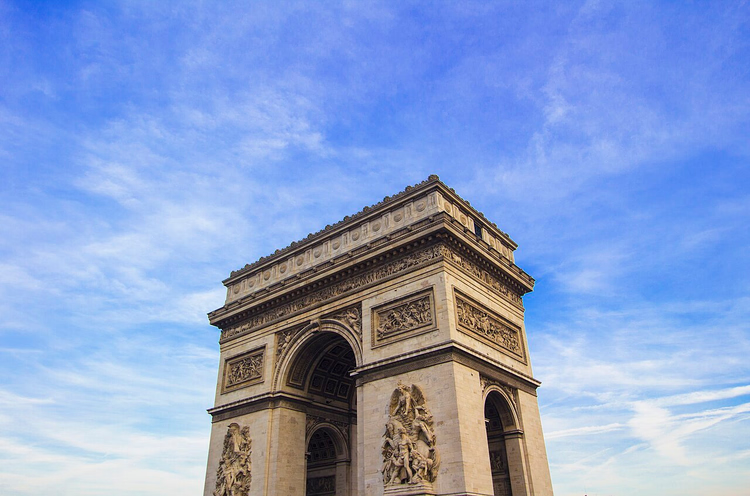
- If you have time: tickets to the roof of the Arc de Triomphe, which is a separate sight at the end of the Champs-Élysées.
Saint-Eustache church
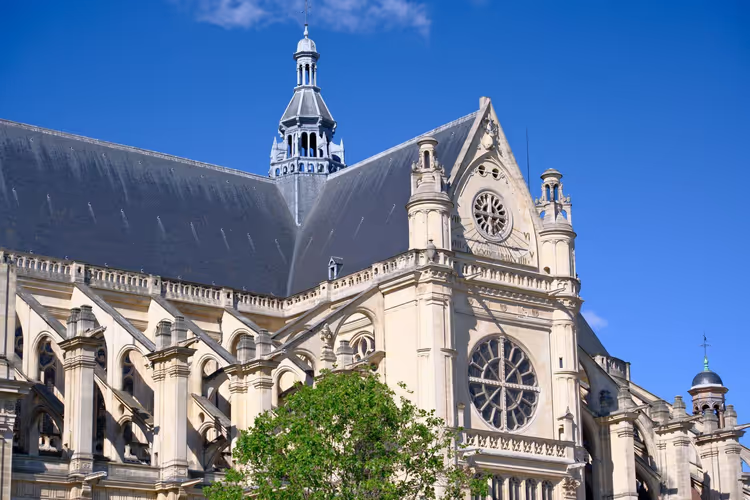
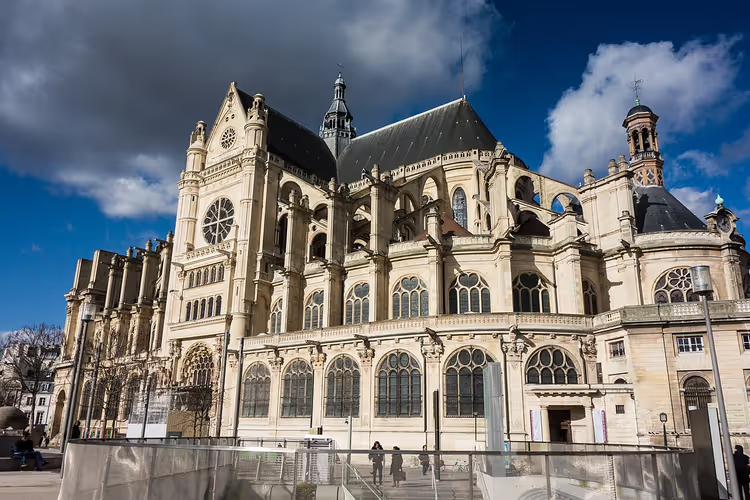
Saint-Eustache church stands a short walk from Place du Carrousel. Here Gothic meets a Renaissance facade, and the vaults are decorated with paintings by Rubens and stained glass. Richelieu and the Marquise de Pompadour were baptized in this church, and Molière was both baptized here and given his funeral service here. Admission is free, and on Sundays you can catch an organ concert.
- How to get there: metro Les Halles (line 4) or Châtelet.
- Admission: free, daily.
Saint-Germain-l'Auxerrois church
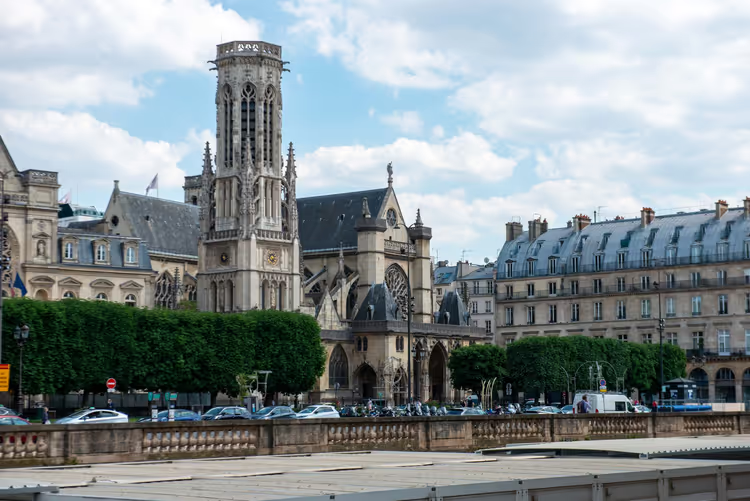
Saint-Germain-l'Auxerrois, opposite the Louvre, is older than the palace itself. The 15th-century facade carries loggias, arches with statues of kings and saints, and a rose window with a pointed gable. Inside you'll see a carved royal pew and a Flemish altarpiece, and this church's bell gave the signal for the start of the St. Bartholomew's Day massacre. Mass was said here for royal families, and the church has kept that atmosphere.
- How to get there: metro Châtelet, exit toward the Louvre.
- Admission: free.
Centre Georges Pompidou
 © Zairon · CC BY-SAPhoto: Zairon, CC BY-SA (https://creativecommons.org/licenses/by-sa/4.0), Wikimedia Commons
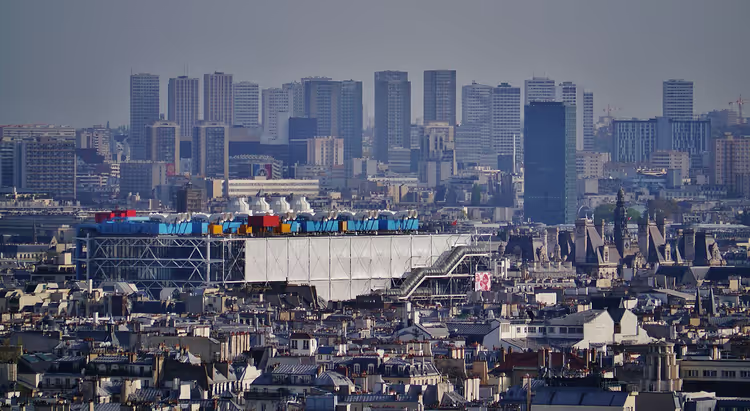
The Centre Georges Pompidou is closed for renovation until around 2030. From the outside it stands in contrast to the neighboring Gothic: blue ventilation ducts, green water pipes, yellow wiring and red escalators all run along the exterior. You can't get inside right now, so here you just walk past on your way to the Stravinsky Fountain.
- How to get there: metro Rambuteau or Châtelet.
- Tickets: skip-the-line tickets to the Centre Pompidou, useful once the center reopens.
Stravinsky Fountain
 © ChrisSampson87 · CC BY-SAPhoto: ChrisSampson87, CC BY-SA (https://creativecommons.org/licenses/by-sa/4.0), Wikimedia Commons
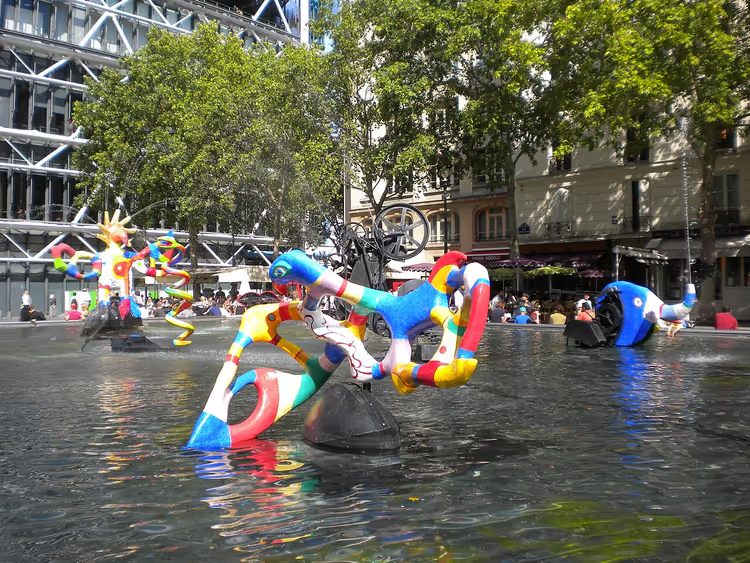
The Stravinsky Fountain plays opposite the Centre Pompidou, on a small square with workshops. Bright figures of characters from Russian fairy tales move across the water, and black aluminum mechanisms echo their movements. The fountain's central figure is the Firebird. The spot is free and photogenic, and a stop here takes five minutes.
- How to get there: on foot from the Centre Pompidou, one minute.
- Admission: free, around the clock.
Saint-Merri church
 © Diliff · CC BY-SAPhoto: Diliff, CC BY-SA (https://creativecommons.org/licenses/by-sa/3.0), Wikimedia Commons
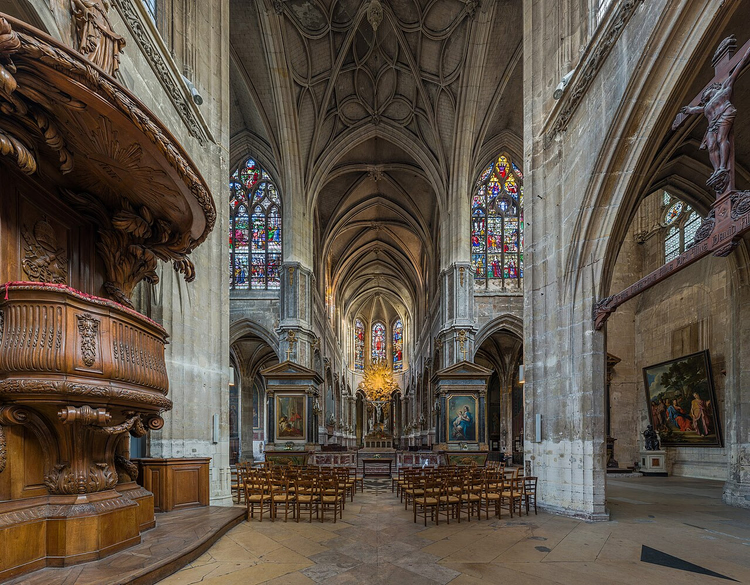
Saint-Merri took more than eighty years to build, and it's called the devil's church because of the figure of Baphomet on the main portal. Inside, the church resembles a smaller Notre-Dame: wood carving, 16th-century stained glass and bas-reliefs of angels with a Bible and a chalice. One of the oldest bells in Paris hangs at the left portal.
- How to get there: metro Hôtel de Ville or Châtelet.
- Admission: free, daily.
Place de l'Hôtel de Ville
 © besopha · CC BYPhoto: besopha, CC BY (https://creativecommons.org/licenses/by/2.0), Wikimedia Commons
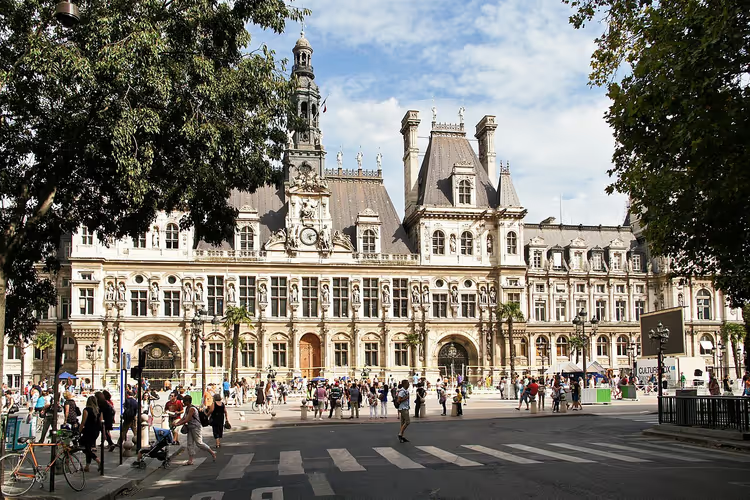
Place de l'Hôtel de Ville is also known as Place de Grève, where criminals were once executed and where the Renaissance-style city hall stands today. The facade is decorated with statues of Voltaire, Molière, Charles Perrault and Cardinal Richelieu, and the central tower holds an old clock. A good way to end the day is at the pier: sightseeing boats on the Seine depart from here.
- How to get there: metro Hôtel de Ville (lines 1 and 11).
- Tickets: Seine cruise departing from the center, the evening sailing shows the bridges lit up.
- The catch: a line forms at the pier in the evening, so arrive half an hour before departure.
The first day is best walked in this order: Eiffel Tower, Sainte-Clotilde, Les Invalides, Pont Alexandre III, Place de la Concorde, La Madeleine, Place Vendôme, Tuileries Garden, Arc du Carrousel, Saint-Eustache, Saint-Germain-l'Auxerrois, Stravinsky Fountain, Saint-Merri, Place de l'Hôtel de Ville.
- Start: nine in the morning at the Eiffel Tower.
- Lunch: a café on the streets near the Palais-Royal, which is also a good place to rest.
- Finish: by four o'clock you reach Place de l'Hôtel de Ville.
- If Gothic isn't your thing: drop Sainte-Clotilde and Saint-Eustache, and the day gets shorter.
- How much time: the tower and Les Invalides take two hours each, the other sights a quarter of an hour each.
The first day's route is the longest of the trip, but it makes geographic sense. From Sainte-Clotilde to Les Invalides you walk along the riverbank, from Pont Alexandre III you head up to Place de la Concorde, and after that the sights are so close together that getting between them takes a few minutes. Up to Place Vendôme the streets are wide and grand, and beyond it the old quarter with its narrow lanes begins.
Lunch is easiest to plan near the Palais-Royal: there are plenty of cafés for any budget and it's a short walk to the Tuileries Garden. If you've fallen behind schedule, cut Place Vendôme and La Madeleine: they don't take much time, but they don't leave a strong impression either. The second half of the day is simpler to build around the Marais, where all the stops are close together.
In the evening it's worth going back to the Eiffel Tower. The lights come on after sunset, and the elevator runs to the top until midnight, so you'll have time for both a Seine cruise and the nighttime panorama of the city. If you're having dinner on a boat, finish your sightseeing earlier, as boarding begins half an hour before departure.
Small things matter when you're on foot. Carry water, wear comfortable shoes and don't leave your bag open in the crowds at the tower and on the bridge. The best place to rest is the Tuileries Garden: it has chairs, shade and water. A short break after lunch helps you get through the second half of the day without tiring out.
If it rains, move the museum part to the fourth day and cut the first day down to the Eiffel Tower and Les Invalides. Both of these are under cover, and you won't lose the whole day. You can buy tickets for them that same morning if you see the forecast the evening before.
Day 2: Île de la Cité and the Latin Quarter
The second day is shorter than the first, about five kilometers (by the map), and almost the entire route runs along the Left Bank. Start with Notre-Dame Cathedral at nine in the morning, and you'll get inside without a line. From there the route leads through the Latin Quarter to the Luxembourg Garden and the Panthéon. Allow up to five hours for the cathedral, the churches and the garden.
Notre-Dame Cathedral
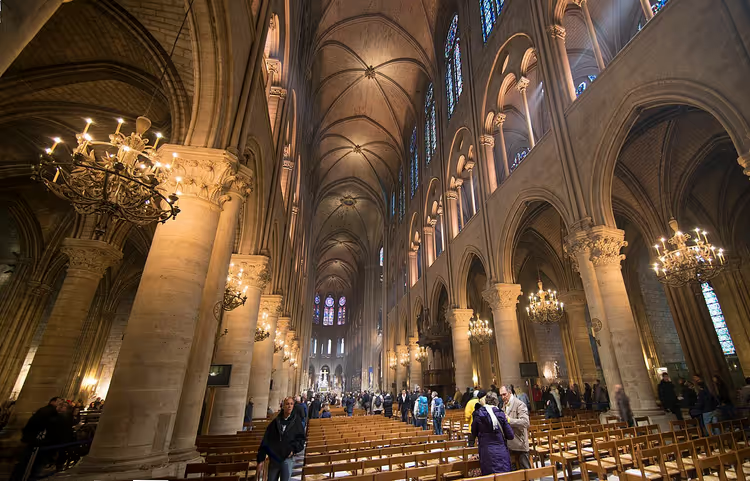 © Jorge Láscar from Melbourne, Australia · CC BYPhoto: Jorge Láscar from Melbourne, Australia, CC BY (https://creativecommons.org/licenses/by/2.0), Wikimedia Commons
Notre-Dame Cathedral took almost two centuries to build and was finished in the mid-14th century, and it's the heart of the Île de la Cité. The facade carries stone tracery, a gallery of statues of kings and a rose window, and inside you'll see stained glass telling the life of Christ. Entry to the cathedral is free, but the climb up the towers is by time slot only, and in summer the slots are snapped up in advance. Since the restoration the cathedral has been keeping regular hours, so check the schedule before your visit.
- How to get there: metro Cité or Saint-Michel.
- Tickets: skip-the-line tickets to the Notre-Dame towers.
- The catch: the staircase to the towers is narrow, and the climb is hard going if you don't do well in confined spaces.
Saint-Michel Fountain
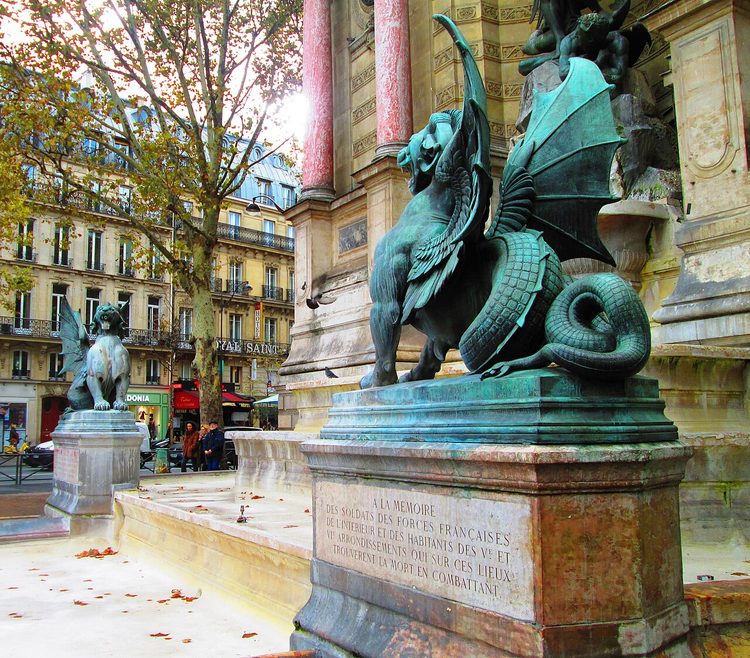 © Beyond My Ken · CC BY-SAPhoto: Beyond My Ken, CC BY-SA (https://creativecommons.org/licenses/by-sa/4.0), Wikimedia Commons
The Saint-Michel Fountain appeared in the Latin Quarter in the mid-19th century and became the meeting point for the whole neighborhood. The composition is laid out like a triumphal arch, with bronze Virtues standing on the columns and the Archangel Michael in the center striking down the devil with his sword. Water runs down the pedestal into a three-tiered basin. Musicians play here in the evening, and the spot is free.
- How to get there: a five-minute walk from Notre-Dame along Boulevard Saint-Michel.
- Admission: free.
Sainte-Chapelle
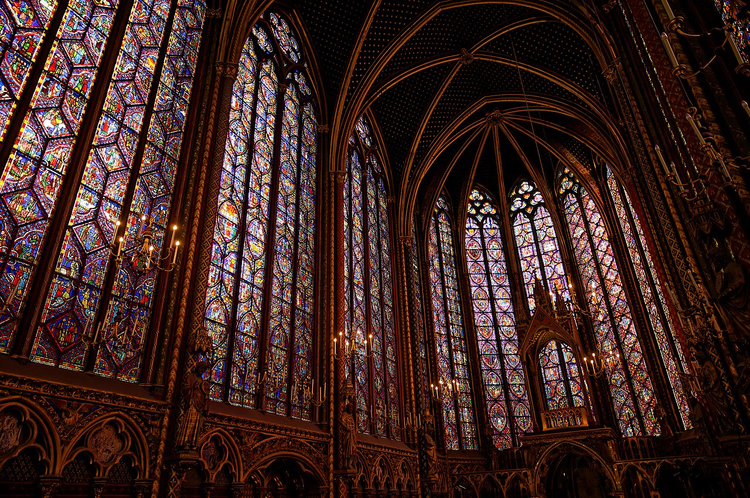 © Laurens R. Krol · CC BYPhoto: Laurens R. Krol, CC BY (https://creativecommons.org/licenses/by/4.0), Wikimedia Commons
Sainte-Chapelle was built in the 13th century as a casket for the king's relics. The chapel looks light thanks to its spire and the stained glass running the full height of the walls: the lower level shows the life of the Virgin Mary, and the upper one tells the story from the Creation to the Apocalypse. The vaults are painted with gold stars on a blue ground. The chapel is best seen in the morning, when the sun comes through the stained glass.
- How to get there: metro Cité, then along Boulevard du Palais.
- Opening hours: open daily, and it's easier to buy the ticket online.
- Tickets: combined ticket to Sainte-Chapelle and the Conciergerie, which is cheaper than two separate ones.
- The catch: in summer the ticket line stretches out into the street, and a time slot solves the problem.
Conciergerie
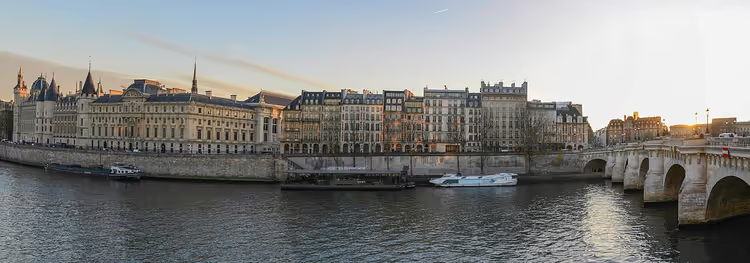 © Jorge Láscar from Melbourne, Australia · CC BYPhoto: Jorge Láscar from Melbourne, Australia, CC BY (https://creativecommons.org/licenses/by/2.0), Wikimedia Commons
The Conciergerie stands next to Sainte-Chapelle and preserves two eras at once. It began as a royal palace with four towers, a Hall of the Men-at-Arms and a kitchen that fed thousands, and later it was turned into a prison. What remains of the prison years are Marie Antoinette's chapel, the women's exercise yard and the corner where prisoners talked through the bars. The visit follows a single route and takes about an hour.
- How to get there: metro Cité, Saint-Michel or Châtelet.
- Admission: paid, and the combined ticket with Sainte-Chapelle is valid here.
- The catch: the halls have little furniture and few captions, so without an audio guide you'll miss part of the story.
Saint-Séverin church
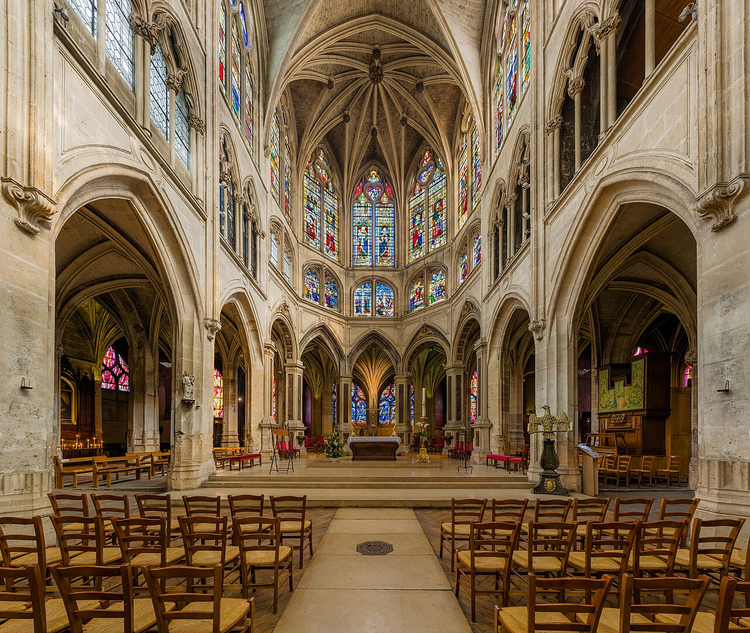 © Diliff · CC BY-SAPhoto: Diliff, CC BY-SA (https://creativecommons.org/licenses/by-sa/3.0), Wikimedia Commons
Saint-Séverin hides on a pedestrian street away from the boulevard. The church was built from the 13th century onward, and both Gothic periods show in the stone: the early palm-tree vaults and the later Flamboyant tracery above the entrance. The 14th and 15th-century stained glass shows biblical scenes, and the 15th-century bell still rings out over the neighborhood. Admission is free, and there are fewer tourists here than at Notre-Dame.
- How to get there: metro Cluny - La Sorbonne, then along Rue Saint-Séverin.
- Admission: free, daily.
Sorbonne Chapel
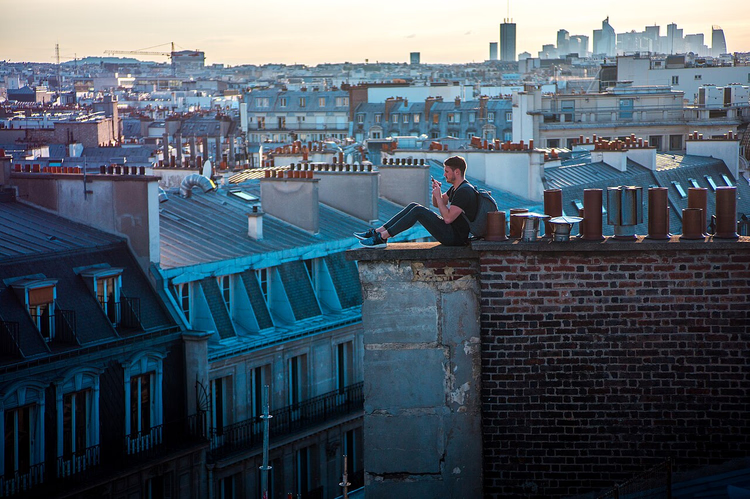
The Sorbonne Chapel was built by Cardinal Richelieu in honor of Saint Ursula, and he himself both studied at the university and ran it. The building became the first domed church in Paris, surrounded by columns and four bell turrets. Inside stands a white marble sarcophagus with a monument to Richelieu. Today the chapel serves as an exhibition hall, with the entrance on the square side.
- How to get there: metro Cluny - La Sorbonne, a two-minute walk.
- Admission: free, during exhibition hours.
Luxembourg Garden
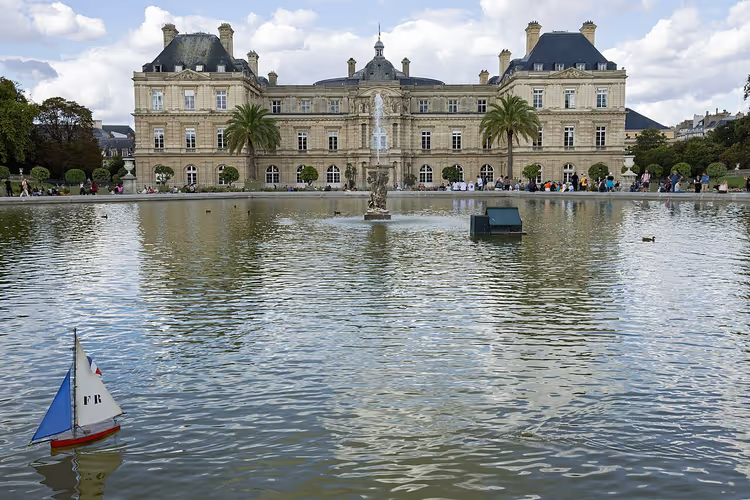 © The wub · CC BY-SAPhoto: The wub, CC BY-SA (https://creativecommons.org/licenses/by-sa/4.0), Wikimedia Commons
The Luxembourg Garden was laid out by Marie de' Medici, and the palace and park reflect the queen's Florentine tastes. The park is on two levels: terraces, flower beds, copies of ancient statues and twenty figures of queens along the central avenue. At the eastern edge you'll find the Medici Fountain with a centaur and Galatea. Admission is free, there are chairs and tables all around, and it's a good place for a mid-day break.
- How to get there: metro Notre-Dame-des-Champs or RER Luxembourg.
- Admission: free, the gates are open from morning to evening.
- The catch: in summer there's a scramble for the loungers and chairs by the pond, and free spots turn up in the morning.
Panthéon
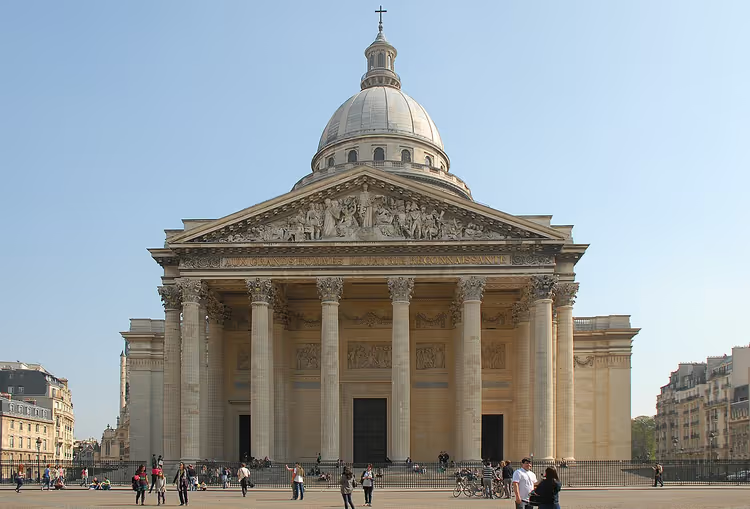 © Camille Gévaudan · CC BY-SAPhoto: Camille Gévaudan, CC BY-SA (https://creativecommons.org/licenses/by-sa/3.0), Wikimedia Commons
The Panthéon was conceived as the church of Saint Genevieve, but after the Revolution it became a mausoleum. Voltaire, Rousseau, Hugo, Zola, Alexandre Dumas and the Curies are buried here. Under the dome hangs Foucault's pendulum, which demonstrates the rotation of the Earth. Admission is paid, the ticket costs in the low double digits in euros, and it's best to book a slot online.
- How to get there: a five-minute walk from the Luxembourg Garden.
- Tickets: Panthéon ticket with a time slot.
- The catch: the crypt is cool and dimly lit, so bring a jacket even in summer.
Saint-Étienne-du-Mont church
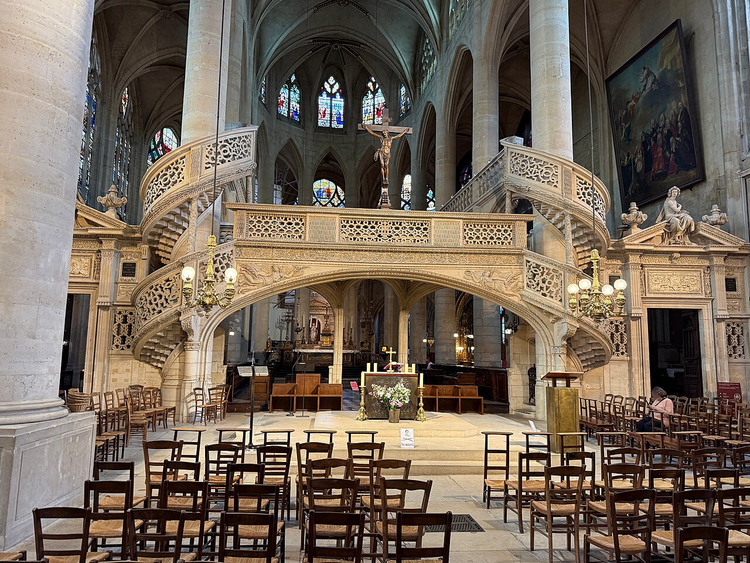 © Chabe01 · CC BY-SAPhoto: Chabe01, CC BY-SA (https://creativecommons.org/licenses/by-sa/4.0), Wikimedia Commons
Saint-Étienne-du-Mont stands a few meters from the Panthéon and holds the relics of Saint Genevieve. The church took more than a hundred years to build, so Gothic and Renaissance sit side by side on the facade, with three different pediments above the entrance. Inside you'll see the rood screen with its spiral staircases and 16th-century stained glass. The church is open until evening and rounds off the second day of the route nicely.
- How to get there: metro Cardinal Lemoine, or on foot from the Panthéon.
- Admission: free.
The second day works best if you start on the Île de la Cité and then cross to the Left Bank. You barely need the metro between sights: from Notre-Dame to Saint-Séverin you walk along the boulevard, then head up to the Sorbonne and the Luxembourg Garden.
- Order of the day: Notre-Dame, Saint-Michel Fountain, Sainte-Chapelle, Conciergerie, Saint-Séverin, Sorbonne Chapel, Luxembourg Garden, Panthéon, Saint-Étienne-du-Mont.
- How much time: the cathedral and Sainte-Chapelle take three hours, then roughly an hour per neighborhood.
- What to book ahead: a slot for the Notre-Dame towers and the combined Sainte-Chapelle and Conciergerie ticket.
Notre-Dame Cathedral holds relics, among them the Crown of Thorns and a nail from the Crucifixion, which are brought out on certain days. The towers take you up to the gallery with the chimeras, but the climb is by a narrow staircase with no elevator, and the steps are slippery in the rain. At Sainte-Chapelle the lower level served the courtiers and the upper one was reserved for the king, which is why the stained glass upstairs is larger and brighter.
At the Saint-Michel Fountain, four Virtues stand at the corners of the arch: Prudence, Justice, Fortitude and Temperance. In the Luxembourg Garden, don't miss the Observatory Fountain, where four young women hold up the celestial sphere and riders rein in the horses around the circle. From the garden's eastern entrance to the Panthéon is less than a two-minute walk (by the map). Voltaire and Rousseau lie in the Panthéon's crypt, and Foucault's pendulum hangs under the dome. End the day at Saint-Étienne-du-Mont: the church is open until evening and stands away from the tour groups.
Day 3: Montmartre and cabarets
You spend the third day on the hill of Montmartre, the highest district in Paris. It's easiest to go up from Place Pigalle: the funicular covers part of the way, and you take the stairs for the rest. A walk around the basilica, Place du Tertre, the Dalí Museum and the old cabarets takes about five hours. The logical way to end the day is at the Moulin Rouge or simply on Boulevard de Clichy.
Sacré-Cœur Basilica
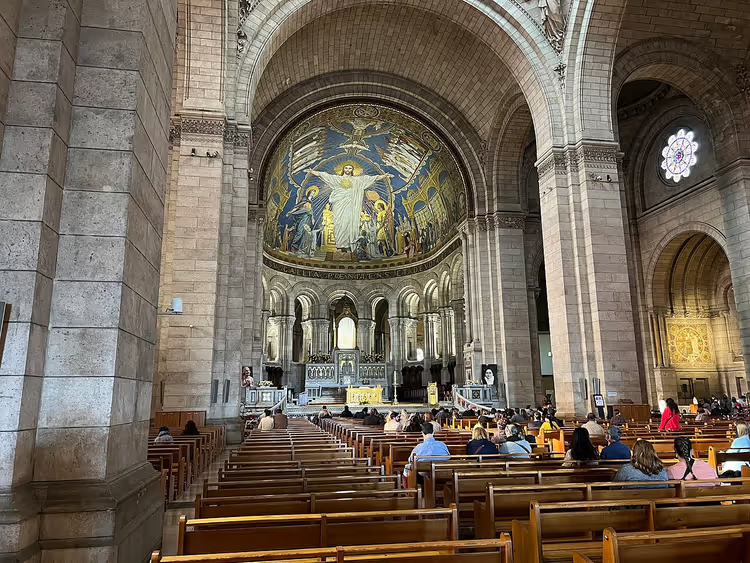 © Chabe01 · CC BY-SAPhoto: Chabe01, CC BY-SA (https://creativecommons.org/licenses/by-sa/4.0), Wikimedia Commons
Sacré-Cœur crowns the hill of Montmartre and can be seen from many points in the city. Its architecture blends Byzantine and Romanesque motifs, and the pale stone takes on a pink glow at sunset. Statues of Louis IX and Joan of Arc stand at the entrance, and inside the walls come alive with stained glass and mosaics. Entry to the basilica is free, while the dome is visited separately for a fee.
- How to get there: metro Anvers or Pigalle, then the funicular or the stairs.
- Admission: free, daily from morning to evening.
- The catch: street vendors work the steps in front of the basilica all the time, so don't leave your belongings unattended.
Place du Tertre
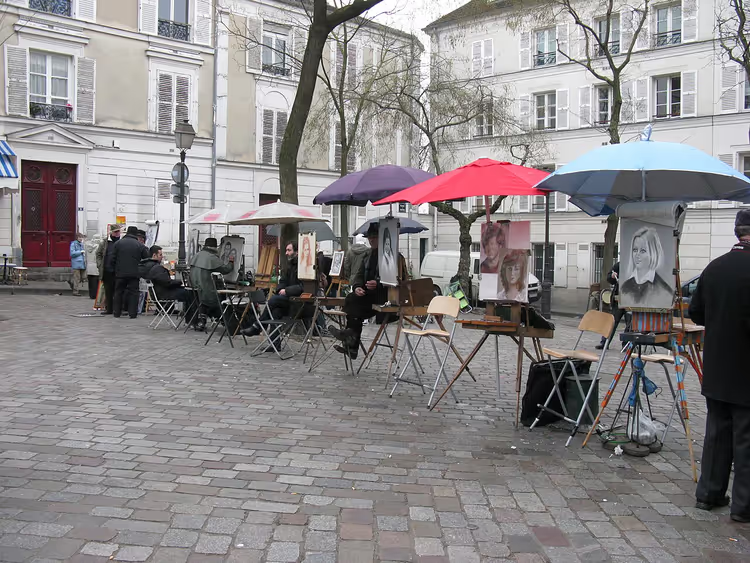 © Рустам Абдрахимов · CC BYPhoto: Рустам Абдрахимов, CC BY (https://creativecommons.org/licenses/by/3.0), Wikimedia Commons
Place du Tertre lies a short walk from Sacré-Cœur and lives off its artists and cafés. The oldest bistro in Montmartre, La Mère Catherine, is here, and it's more than two centuries old. Portrait artists draw on the spot, so agree on the price before they start to avoid arguing at the end. From here, Rue Poulbot takes you to the Dalí Museum.
- How to get there: on foot from Sacré-Cœur, turn left as you leave.
- The catch: tables on the square are noticeably pricier than in the streets further down the hill.
Salvador Dalí Museum
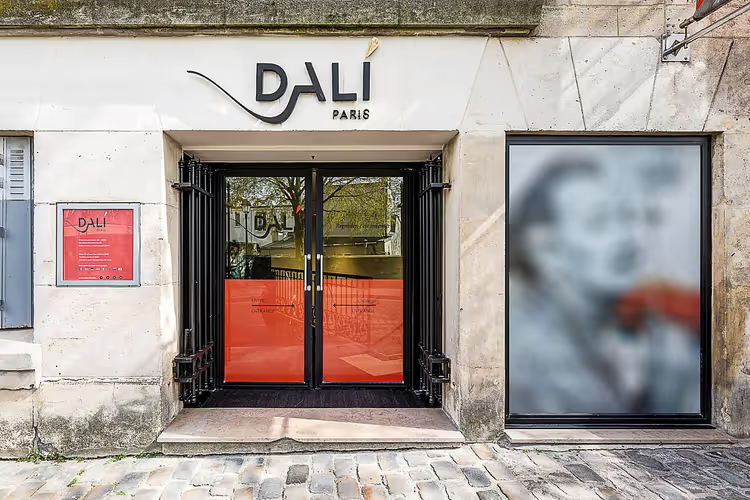 © Florian75018 · CC BY-SAPhoto: Florian75018, CC BY-SA (https://creativecommons.org/licenses/by-sa/4.0), Wikimedia Commons
The Dalí Museum in Montmartre brings together more than three hundred works: paintings, sculpture and engravings on literary themes. The sculptures here are more interesting than the paintings: they show how Dalí pushed beyond the canvas. The rooms also hold the artist's personal collection, with canvases by masters of the Lost Generation. The display is small, and an hour is enough to see it.
- How to get there: Rue Poulbot, one minute from Place du Tertre.
- Tickets: tours and tickets on GetYourGuide, the museum features in Montmartre collections.
- The catch: the rooms are cramped, and a line builds up at the entrance when it rains.
Lapin Agile cabaret
Lapin Agile started out in 1869 as a village tavern and later became a gathering place for bohemian evenings. Verlaine, Apollinaire, Renoir, Modigliani and Picasso all spent time here. A local artist painted the sign with the rabbit, and that's how the tavern got its name. Today it hosts music and comedy evenings, and admission is paid.
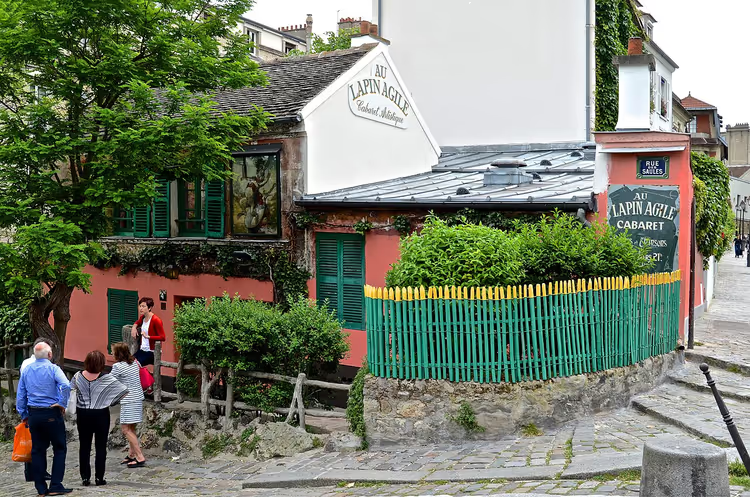 © David McSpadden from Daly City, United States · CC BYPhoto: David McSpadden from Daly City, United States, CC BY (https://creativecommons.org/licenses/by/2.0), Wikimedia Commons
- How to get there: Rue des Saules, next to the Montmartre vineyard.
- The catch: the evening shows run late, so it's not an option for families with children.
Saint-Vincent Cemetery
 © Francisco Gonzalez · CC BYPhoto: Francisco Gonzalez, CC BY (https://creativecommons.org/licenses/by/2.0), Wikimedia Commons
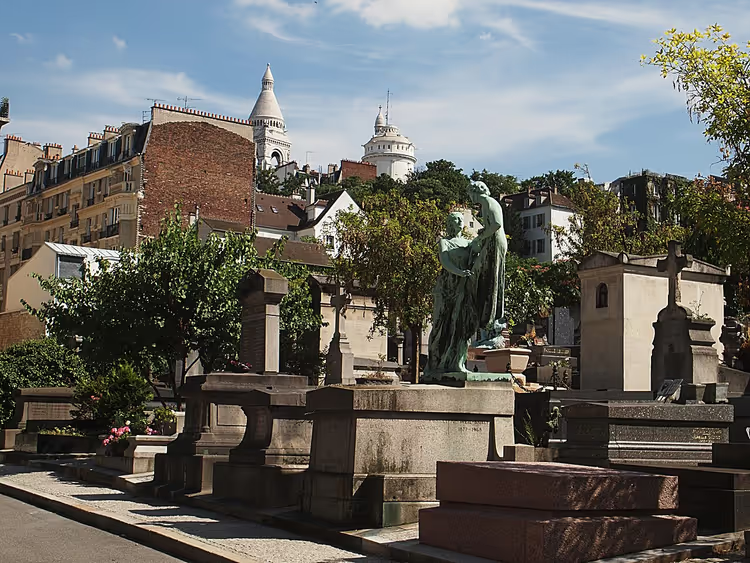
Saint-Vincent Cemetery opened in the 19th century at the foot of the hill. It's a small open-air museum: marble tombstones and the graves of musicians, scientists and artists. A map of the paths hangs at the entrance, which makes it easy to plan a short route. Admission is free, and the quiet here is a sharp contrast to Place du Tertre.
- How to get there: down the steps from Lapin Agile.
- Admission: free.
La Maison Rose restaurant
 © Moonik · CC BY-SAPhoto: Moonik, CC BY-SA (https://creativecommons.org/licenses/by-sa/3.0), Wikimedia Commons
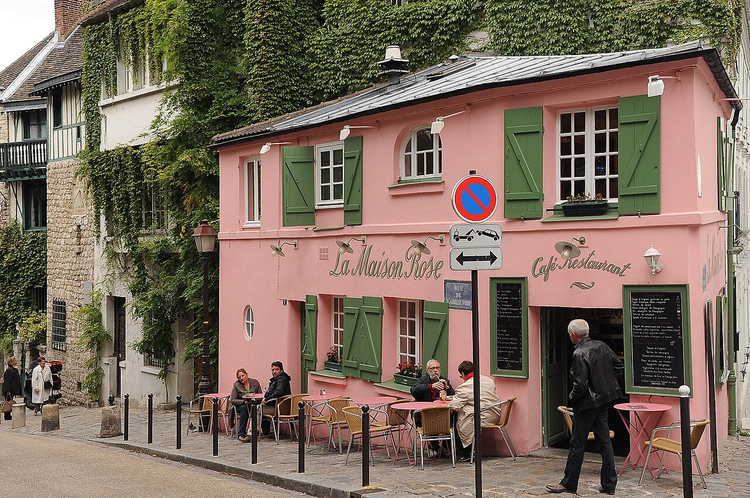
La Maison Rose is a house with a pink facade and green shutters on the corner of Rue de l'Abreuvoir. It was painted by Maurice Utrillo, who lived in Montmartre, and it was artists who repainted the building pink. Today there's a restaurant inside, and it's best to book a table ahead. The house is worth seeing from the outside too, as it's one of the most photographed on the hill.
- How to get there: Rue des Saules, at the corner of Rue de l'Abreuvoir.
- The catch: the tables by the facade go quickly, and you won't get a seat for dinner without a reservation.
Moulin de la Galette
 © GFreihalter · CC BY-SAPhoto: GFreihalter, CC BY-SA (https://creativecommons.org/licenses/by-sa/3.0), Wikimedia Commons
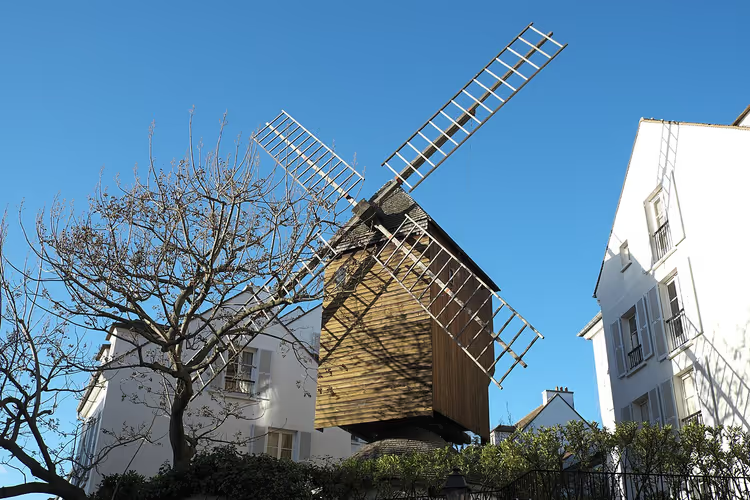
Moulin de la Galette is an old windmill that was turned into a tavern in 1830. Renoir, Toulouse-Lautrec, Van Gogh and Picasso dined here, and Renoir painted the dance held here on one of his canvases. The mill has been granted national monument status, and next to it is a restaurant with a second windmill above the entrance. From here the route heads downhill along Rue Lepic.
- How to get there: metro Lamarck - Caulaincourt or Abbesses.
- The catch: the area is touristy, and café prices are above the Paris average.
Moulin Rouge cabaret
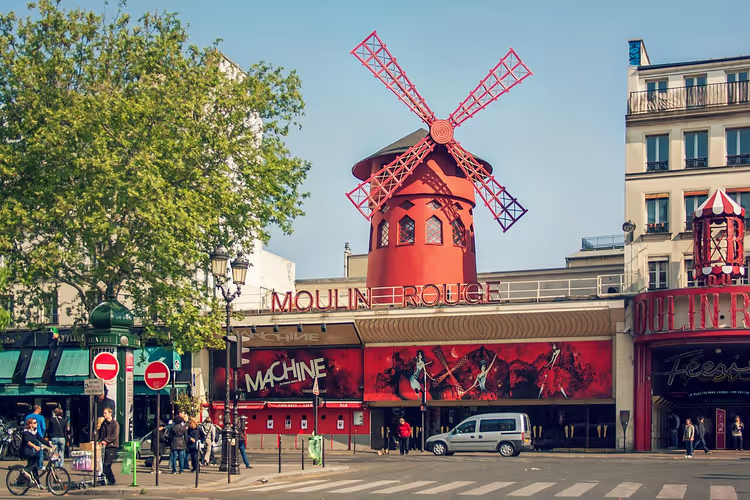 © Juanedc from Zaragoza, España · CC BYPhoto: Juanedc from Zaragoza, España, CC BY (https://creativecommons.org/licenses/by/2.0), Wikimedia Commons
The Moulin Rouge opened in the late 19th century and took its name from the wooden windmill above the entrance. The venue became famous for the cancan, and Toulouse-Lautrec lived and worked here for long stretches. Today it's a large show with sets and costumes, with three performances each evening. Dinner with the show costs the most, and the show with a glass of champagne is noticeably cheaper.
- How to get there: metro Blanche (line 2).
- Tickets: Moulin Rouge show with champagne, book ahead, the hall fills up.
- The catch: the hall is cramped, and seats at the far tables have a poorer view of the stage.
Montmartre is easiest to explore in a loop: from Abbesses station you climb up to the basilica, come down past the cemetery and come out onto Boulevard de Clichy. That way you don't climb the same stairs twice.
- Order of the day: Sacré-Cœur, Place du Tertre, Dalí Museum, Lapin Agile, Saint-Vincent Cemetery, La Maison Rose, Moulin de la Galette, Moulin Rouge.
- How much time: the basilica and Place du Tertre take two hours, the Dalí Museum about an hour, and you see the rest along the way.
- What to bring: comfortable shoes. The hill is steep, and the sidewalks on Rue Lepic and Rue de l'Abreuvoir are narrow.
Next to Lapin Agile lies the Montmartre vineyard, which is a real one and gives the city its own wine. A little further down the hill, on Rue d'Orchampt, stands the house where the singer Dalida lived, and Rue Lepic leads straight to the cabaret. In the evening the neon signs light up on Boulevard de Clichy, and that's the best shot of Montmartre at night. If you're not interested in the show, swap it for dinner at a bistro on Rue des Abbesses: it's calmer and cheaper there than on Place du Tertre.
Before an evening show, check what time you need to leave your hotel: the hill is linked to the center by two metro lines, but on Fridays and Saturdays the area is packed with people. It's easier to walk down to Blanche metro along Boulevard de Clichy than by the stairs behind the basilica.
At the end of the day it's convenient to return to the center on metro line 2 from Blanche station. If you're planning a second cabaret or a concert after the show, remember that the Paris metro closes at night.
Day 4: museums of Paris
Give the fourth day over to museums, as you'll hardly do any walking that day. The metro is the convenient way to get between the Louvre, the Orsay and the Rodin, and each museum closes one day a week, so check the day of your visit. Allow at least two hours for each museum.
Louvre
 © Benh LIEU SONG · CC BYPhoto: Benh LIEU SONG, CC BY (https://creativecommons.org/licenses/by/2.5), Wikimedia Commons
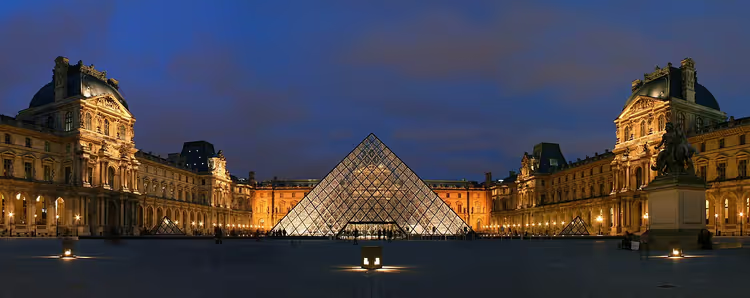
The Louvre occupies a former royal palace on Rue de Rivoli, and the entrance is through the glass pyramid. A ticket costs 22 € (as of 09/2026, official Louvre website), and it's better value to buy it online for a specific time. The museum is closed on Tuesdays, which is worth remembering when you plan your day. The galleries display the Mona Lisa, the Venus de Milo and collections spanning several millennia. You won't see everything in one visit, so pick two or three departments in advance and check the opening hours on the official website.
- How to get there: metro Palais Royal - Musée du Louvre (lines 1 and 7).
- Tickets: timed entry ticket to the Louvre.
- The catch: the rooms around the Mona Lisa have no ventilation and are always full, so head there first.
Musée d'Orsay
 © Sanchezn · CC BY-SAPhoto: Sanchezn, CC BY-SA (http://creativecommons.org/licenses/by-sa/3.0/), Wikimedia Commons
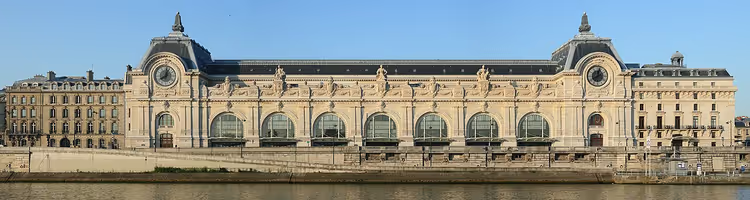
The Musée d'Orsay occupies an old railway station building on the Left Bank of the Seine. It holds the leading collection of Impressionists: Monet, Renoir, Degas, Manet, Cézanne. The museum is closed on Mondays and open until evening on other days. The viewing gallery with the clock is the best photo spot in Paris, and it's included in the general ticket.
- How to get there: metro Solférino or Assemblée nationale, RER Musée d'Orsay.
- Tickets: Paris Museum Pass, which covers the Orsay, the Rodin and the Picasso.
- The catch: the fifth floor with the Impressionists is always crowded, so arrive at opening time.
Rodin Museum
 © Jean-Pierre Dalbéra · CC BYPhoto: Jean-Pierre Dalbéra, CC BY (https://creativecommons.org/licenses/by/2.0), Wikimedia Commons
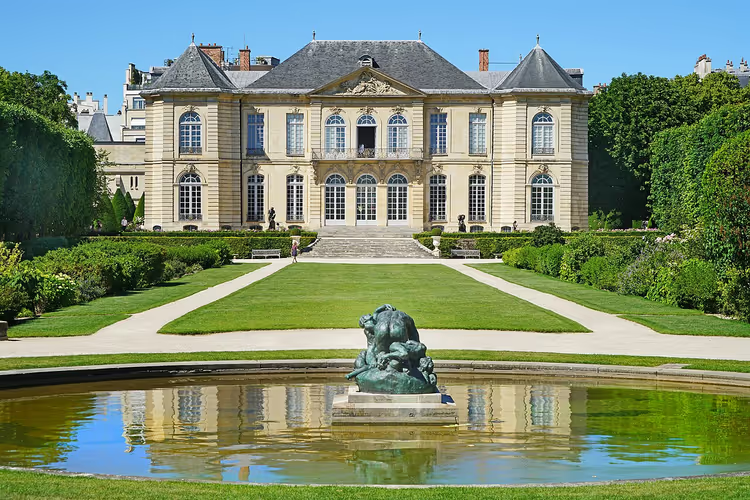
The Rodin Museum occupies the Hôtel Biron mansion on Rue de Varenne. The sculptor worked here from 1908 to 1917 and bequeathed his collection to Paris, with more than six thousand sculptures and tens of thousands of other works. "The Thinker" and "The Kiss" stand in the garden, and you only need a ticket for the house: the park can be visited separately. The museum is closed on Mondays.
- How to get there: metro Varenne or La Tour-Maubourg.
- Tickets: tours and tickets on GetYourGuide, the museum is included in Paris collections.
- The catch: the rooms on the upper floor are small, and groups have to wait to get through.
Picasso Museum
 © GFreihalter · CC BY-SAPhoto: GFreihalter, CC BY-SA (https://creativecommons.org/licenses/by-sa/3.0), Wikimedia Commons
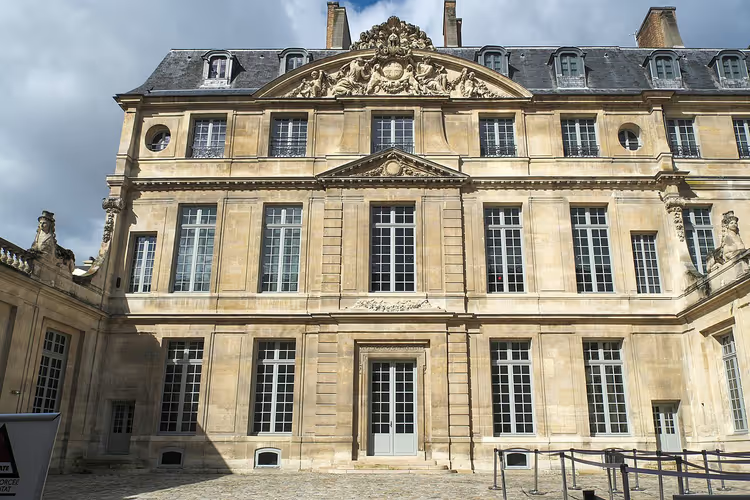
The Picasso Museum is housed in the Hôtel Salé mansion in the Marais. The core of the collection came from the artist's works, which his heirs used to settle their tax bill with the state. There are about five thousand exhibits here: paintings, sculptures, drawings and archival documents, plus canvases by Matisse, Cézanne and Rousseau. The museum is closed on Mondays, and the ticket costs in the low double digits in euros.
- How to get there: metro Saint-Paul (line 1) or Chemin Vert.
- Tickets: Picasso Museum ticket with priority entry.
- The catch: the permanent display gets rearranged, and some rooms may be closed.
Fragonard Perfume Museum
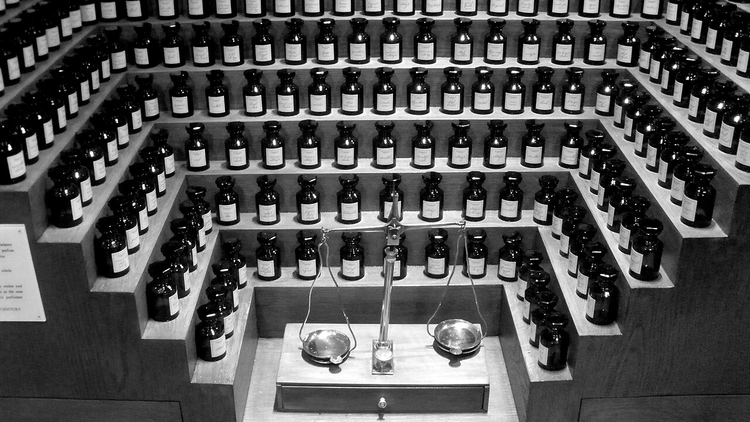
The Fragonard Perfume Museum stands on Rue Scribe next to the Opéra Garnier, and admission is free. Its three sections show the history of perfume, bottles from past centuries, powder compacts and vanity cases. In the museum's gallery you can buy a fragrance at the maker's price. A visit takes less than an hour, making it a handy break between the big museums.
 © Nico Paix · CC BYPhoto: Nico Paix, CC BY (https://creativecommons.org/licenses/by/2.0), Wikimedia Commons
- How to get there: metro Opéra (lines 3, 7 and 8).
- Admission: free, the gallery is open daily.
Victor Hugo House Museum
 © Frédérique PANASSAC · CC BY-SAPhoto: Frédérique PANASSAC, CC BY-SA (https://creativecommons.org/licenses/by-sa/2.0), Wikimedia Commons
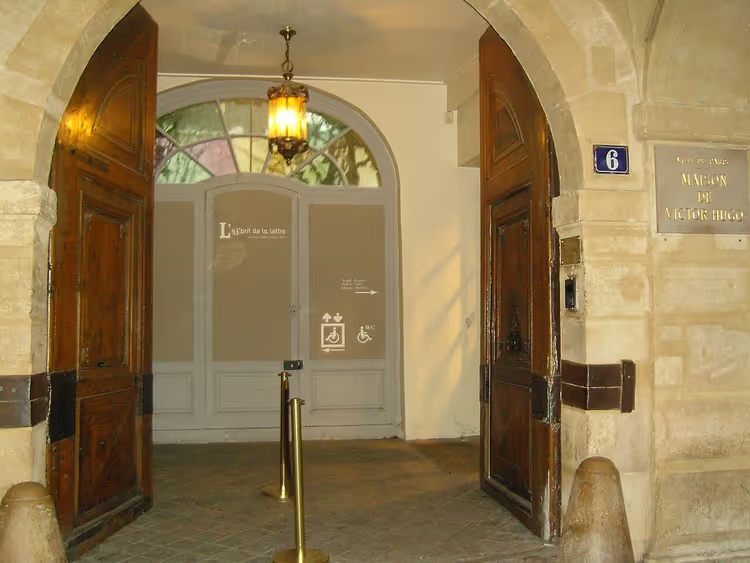
The Victor Hugo House Museum is open on two upper floors of the Hôtel de Rohan-Guéménée on Place des Vosges. The writer's family lived here for more than fifteen years, and the rooms have been restored to how they were furnished in his lifetime. The Chinese drawing room holds a porcelain collection, and the study displays drawings and photographs made by Hugo himself. Admission is free, and the museum is closed on Mondays.
- How to get there: metro Bastille or Saint-Paul.
- Admission: free.
Day 5: entertainment and food
Choose the last day to suit your taste: a theme park outside the city, the zoo in eastern Paris or a food walk through the markets. A trip to Disneyland Paris or Parc Astérix takes the whole day, so don't plan a museum for the evening. If you're staying in the city, build the day from two or three short activities.
Disneyland Paris
 © flightlog · CC BYPhoto: flightlog, CC BY (https://creativecommons.org/licenses/by/2.0), Wikimedia Commons
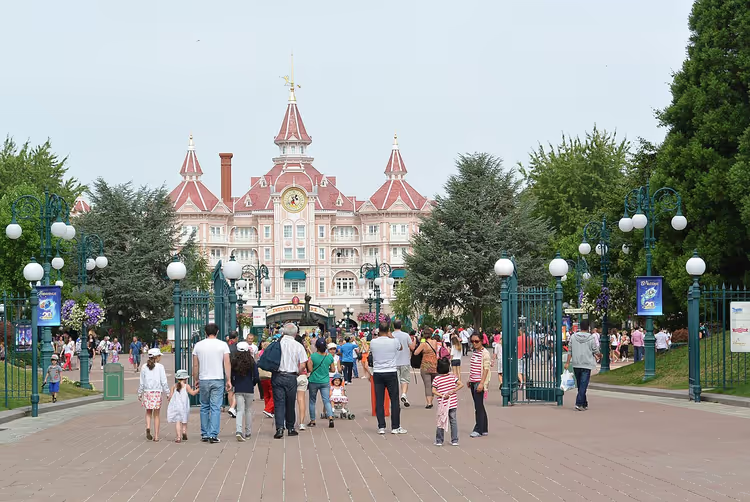
Disneyland Paris is a little over thirty kilometers from Paris and is split into two parks. Disneyland Park, with Sleeping Beauty Castle, is aimed at families with children, while Disney Adventure World (formerly Walt Disney Studios Park) offers thrill rides for adults. The commuter train from the city center runs to the station at the park entrance, and there are also buses from Opéra. Buy your day ticket in advance, as it costs more at the ticket office.
- How to get there: RER A to Marne-la-Vallée - Chessy.
- Tickets: one-day ticket to both Disneyland Paris parks.
- The catch: on weekends and during school holidays, lines for the rides reach an hour.
Parc Astérix
 © cnb · CC BY-SAPhoto: cnb, CC BY-SA (https://creativecommons.org/licenses/by-sa/3.0), Wikimedia Commons
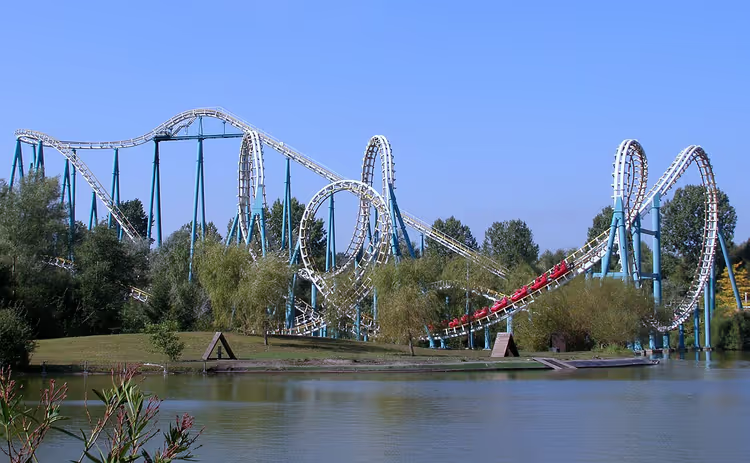
Parc Astérix lies a little over thirty kilometers north of Paris. The park is divided into zones for Ancient Rome, Egypt, Greece, the Vikings and Gaul, each with its own shows and rides. There are more extreme coasters here than at Disneyland, and shorter lines on weekdays. In the summer season the park is open daily and stays open late on weekends.
- How to get there: shuttles from the Louvre, or the commuter train to Roissy and then a bus.
- Tickets: full-day ticket to Parc Astérix.
- The catch: some zones close in the off-season, so check the calendar before you go.
Vincennes Zoo
 © Guilhem Vellut from Paris, France · CC BYPhoto: Guilhem Vellut from Paris, France, CC BY (https://creativecommons.org/licenses/by/2.0), Wikimedia Commons
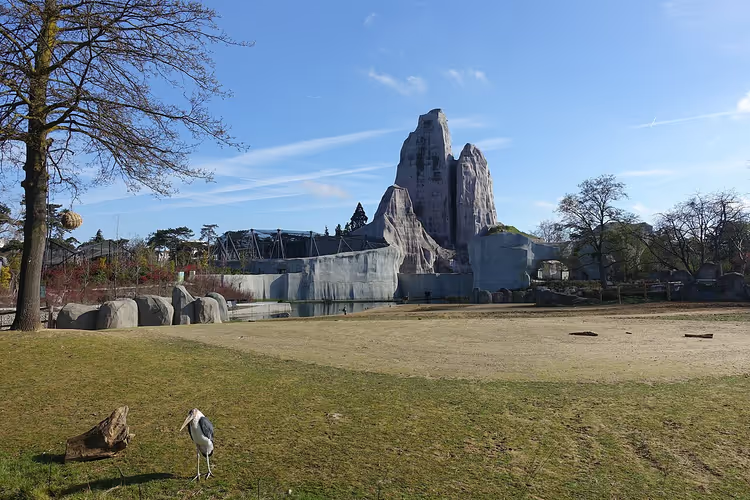
Vincennes Zoo reopened after renovation and recreates the landscapes of Patagonia, Africa, Madagascar and Amazonia. Hundreds of species of animals and birds live on the grounds, some of them in large open enclosures. Children enjoy watching the vets treat the animals and feed the residents. It's easier to buy the ticket online, and the park is open all year round.
- How to get there: metro Porte Dorée, then a bus or on foot.
- Tickets: tours and tickets on GetYourGuide.
- The catch: on weekdays some pavilions open in rotation, so a full circuit isn't always possible.
Food tour
 © Andrew H · CC BYPhoto: Andrew H, CC BY (https://creativecommons.org/licenses/by/2.0), Wikimedia Commons
A food tour of several hours is led by a guide: you walk through markets and tasting stops. The program usually includes seafood, foie gras, Provençal sauces, honey and cheese boutiques, and a wine cellar with a sommelier at the end. The price depends on the size of the group, and a private tour costs more than a shared one. A day like this suits those who have already seen the main museums.
- How to get there: the start is in the center, and the guide sends the meeting point after booking.
- Tickets: food tours on GetYourGuide.
- The catch: the tastings include alcohol, so the program will need changing for children.
Perfume boutique tour
A walk through the perfume boutiques takes a couple of hours and follows historic streets. The guide explains how compositions are built and how to smell a fragrance properly, while the consultants do a scent profile and offer several samples. You can buy a bottle right in the boutique, but it's not required. The format is designed for a small group or a private tour.
- How to get there: the start is in the center, and the route is on foot.
- The catch: a private walk costs more than a group one.
Driving tour of the châteaux around Paris

Dozens of châteaux stand around Paris, and in one day by car you can fit in one or two. History lovers will enjoy Joséphine's Malmaison or the mansion of the Marquise de Pompadour, and literature fans the château where Alexandre Dumas lived. Cézanne, Monet and Van Gogh painted in the suburb of Auvers-sur-Oise. The trip takes half a day, and the route depends on your interests.
- How to get there: only by car or as part of an organized trip.
- Tickets: Versailles ticket with the palace and gardens, Versailles is closer to the city than the other châteaux.
- The catch: without a car the Paris suburbs are awkward, and trains don't run to every château.
Photo shoot at the best spots in Paris
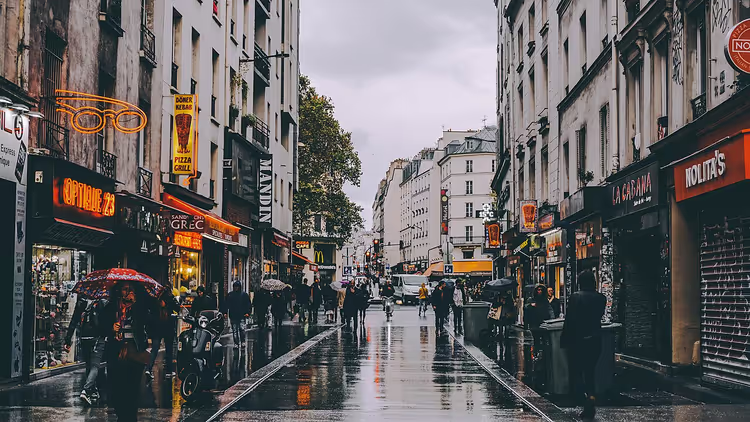
A photo shoot with a guide lasts a couple of hours and is built around your choices. The best shots with the Eiffel Tower come from Trocadéro and the Champ de Mars, and the route also takes in Pont Alexandre III and Place de la Concorde. After that you can head to Montmartre and Sacré-Cœur or to the Luxembourg Garden. The price is per group, so it works out cheaper with company.
- How to get there: the photographer chooses the meeting point.
- The catch: the shoot depends on the weather, and in winter the light fades early.
A hotel and tour search helps you put the whole trip together around your dates and budget: compare options in advance so you're not hunting for a place to stay on the last day.
Tours and tickets in Paris
Guided tours, skip-the-line tickets and activities — most offers can be cancelled free of charge.
See offers on GetYourGuideThe widget loads once you give your consent.
Where to stay in Paris
Choose your area by what you want to see every day. For walking, the Île de la Cité, the Seine embankments, Rue de Rivoli and the streets around the Louvre are convenient: from these spots it's easy to reach the main sights on foot. Art lovers will like Montparnasse, while Montmartre is a better fit for evening entertainment and cabarets. Many travelers stay near the Eiffel Tower, and the Opéra district is handy for shopping.
- Île de la Cité and the embankments: walking distance to Notre-Dame, the Louvre and the Latin Quarter.
- Opéra and Rivoli: metro to anywhere in the city, with shops and theaters nearby.
- Montmartre: cabarets and views, but the hill greets you with stairs every morning.
- Hotels: hotels in Paris on Trip.com, prices depend on the season.
The 5-day Paris route on a map
The assembled map shows all five days on a single canvas. The points follow the order of travel, so you can open the day you need and not get lost between neighborhoods. Before your trip, save the map to an app so it works offline.
A 5-day walking route through Paris
Places on the map
- Eiffel Tower Start of day one on the Champ de Mars, the lift to the top runs until midnight
- Basilica of Sainte-Clotilde Two matching spires and 19th-century stained glass, few tourists
- Les Invalides Golden dome, Napoleon's tomb and the Army Museum
- Pont Alexandre III A single arch span with angels and Pegasus figures, free to cross
- Champs-Élysées The main avenue, Pont Alexandre III leads straight to it
- Place de la Concorde Luxor Obelisk and two Hittorff fountains between the Tuileries and the avenue
- La Madeleine Church Ancient colonnade and a Last Judgement scene on the pediment
- Place Vendôme Royal square with a column and a statue of Napoleon
- Tuileries Garden Free to stroll, the Orangerie gallery is on the Concorde side
- Arc de Triomphe du Carrousel Arch between the Tuileries Garden and the Louvre, ten-minute visit
- Saint-Eustache Church Gothic with a Renaissance facade, organ concert on Sundays
- Saint-Germain-l'Auxerrois Church across from the Louvre, older than the palace itself
- Centre Pompidou 20th-century art and a viewing platform on the top floor
- Stravinsky Fountain Bright kinetic figures opposite the Pompidou Centre, free
- Saint-Merri Church The 'devil's church' with a Baphomet figure and 16th-century stained glass
- Place de l'Hôtel de Ville Renaissance-style city hall, boat trips on the Seine leave from the pier
- Notre-Dame Cathedral Heart of Île de la Cité, free entry, a time slot is needed for the towers
- Saint-Michel Fountain Meeting point of the Latin Quarter, musicians play in the evening
- Sainte-Chapelle Stained glass covering the full height of the walls, best seen in the morning
- Conciergerie Royal palace turned prison, about an hour to visit
- Saint-Séverin Church Flamboyant Gothic on a pedestrian street, fewer tourists
- Sorbonne Chapel Paris's first domed church, with Richelieu's monument
- Luxembourg Garden Terraces, the Medici Fountain and a good midday break
- Panthéon Resting place of Voltaire and Hugo, Foucault's pendulum under the dome
- Saint-Étienne-du-Mont Relics of Saint Genevieve and a pulpit with spiral staircases
- Montmartre The city's highest district, climb up from Place Pigalle
- Sacré-Cœur Basilica Crowns the hill, free entry, the dome is visited separately
- Place du Tertre Artists and the hill's oldest bistro, La Mère Catherine
- Dalí Museum Over three hundred works, the sculptures more interesting than the paintings
- Au Lapin Agile Cabaret Bohemian cabaret since 1869, musical evenings
- Saint-Vincent Cemetery Small open-air museum at the foot of the hill
- La Maison Rose Pink house from Utrillo's paintings, now a restaurant, book a table
- Moulin de la Galette Old windmill-tavern where Renoir and Picasso used to dine
- Moulin Rouge Cancan cabaret, three shows a night
- Louvre Enter through the glass pyramid, ticket 22 euros, closed on Tuesdays
- Musée d'Orsay Impressionists in a former railway station building, closed on Mondays
- Rodin Museum The Hôtel Biron, with The Thinker and The Kiss in the garden
- Picasso Museum The Hôtel Salé in Le Marais, about five thousand exhibits
- Fragonard Perfume Museum Free entry, the history of perfume and bottles from past centuries
- Victor Hugo House Museum Rooms furnished as they were in his lifetime, free entry
- Vincennes Zoo Landscapes of Patagonia, Africa and the Amazon, tickets easier online
- Montparnasse District for art lovers, the tower has a viewing terrace
Tickets and passes: what to book in advance
Paris sells admission in two ways: a single time slot for a specific sight and a multi-day city pass. The pass pays off if you're visiting three or more paid museums. For a short trip it's cheaper to buy two or three separate timed tickets.
Sight | Closing day | Admission |
|---|---|---|
Louvre | Tuesday | 22 € (as of 09/2026, official website) |
Musée d'Orsay | Monday | paid, ticket online |
Rodin Museum | Monday | paid, garden separate |
Picasso Museum | Monday | paid, ticket online |
Orangerie gallery | Tuesday | paid, on a combined ticket |
Victor Hugo House Museum | Monday | free |
Panthéon | open every day | paid, slot online |
Closing days shift on public holidays, so check the calendar on the museum's official website before your visit.
- City pass with transport. City Pass with museums and transport covers admissions and travel for several days.
- Travel pass and cruise. 2 to 5-day card with a travel pass and a cruise suits those who travel around a lot.
- Paris museums. Paris Museum Pass is valid at the Louvre, the Orsay and the Rodin.
- Catacombs. skip-the-line ticket to the Catacombs, the passages are narrow and groups move through in a steady stream.
- Viewing platform. roof terrace of the Montparnasse Tower is open until evening.
- Bus tour. Hop-on Hop-off for one or two days helps you get your bearings on the first day.
- Evening cruise. one-hour "Lights of Paris" cruise departs after sunset.
Plan your transport separately. Single tickets and travel passes are sold by machines at the stations, and card payment doesn't work everywhere, so keep some cash on you for the first ticket. It's not worth buying tickets at the museum entrance: the line is longer and the price is higher.
⁉️🤔 Frequently asked questions
How many days do you need to see Paris?
Five days are enough for the main areas: the center, the Île de la Cité, the Latin Quarter and Montmartre. You'll fit in two or three museums and one theme park outside the city. With three days you'd have to shorten the route and give up the trip to Disneyland Paris. More than a week makes sense if you want to take trips to Normandy or the Loire châteaux.
Can you do the whole route on foot?
The first three days hardly need the metro: the sights are close together and linked by streets. After that the distances grow, and rides save you an hour or two. It's worth walking along the embankments and through the Marais, while between the Louvre and Montmartre it's better to ride. On average, a day on our plan comes to between four and ten kilometers (by the map).
What should you buy in advance?
You need timed tickets for the Eiffel Tower, the Louvre, Sainte-Chapelle and the Panthéon: in summer the slots are gone several days ahead. The Moulin Rouge show and theme park tickets are also sold in advance.
How do you get around the city?
The main form of transport is the metro, which links all the districts and runs late into the evening. For trips outside the city, RER commuter trains work well, for example to Disneyland Paris and Versailles.
When is the best time to go?
It's calmest in the shoulder season: in spring and early fall the lines are shorter and the weather suits long walks. In summer Paris is hot and crowded, but the theme parks are running at full capacity. In winter the days are short, and some of the suburban châteaux close for the off-season.
In brief: what's worth booking
The day-by-day breakdown tells you what to pay for first. If it's your first visit, get Eiffel Tower tickets and Louvre tickets: without a slot you'll lose half a day in lines. If the evening matters more, book the Moulin Rouge in advance, as the hall fills up every night. For a trip with children, plan Disneyland Paris or Parc Astérix and buy the day ticket online. Central accommodation goes first, so it's worth choosing a hotel as soon as you have your dates.
- Louvre ticket with an audio guide, no waiting in line.
- choose a hotel in central Paris on Trip.com, compare areas by reviews.
- compare flights to Paris, prices depend on the day of the week.

A small editorial team writing guides for independent travel. We travel ourselves, but we haven’t been everywhere, so we check prices, opening hours and how to get there against official sources.