








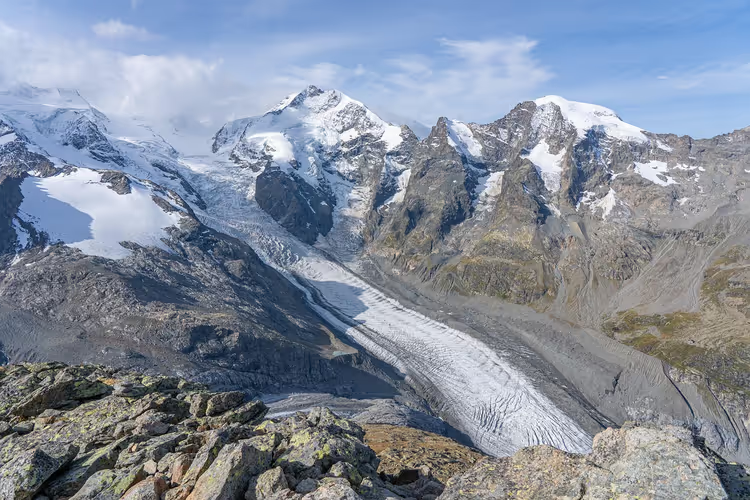
Bernina Express in four hours: route, 2026 timetable and how to avoid overpaying for seats
Four hours in your seat, and half a continent changes outside the window. The Bernina Express runs from Chur in Switzerland to Tirano in Italy, passing through 55 tunnels and over 196 bridges (as of 09/2026, official RhB page). But the panoramic car costs money even when you already hold a rail pass.
Most people have the same main question: is the mandatory seat reservation worth it? On the long route it costs 40-44 CHF depending on the season, on the short one 32 CHF, and you pay it on top of any pass (as of 09/2026, fares on Seat61). Below we break down the route, the 2026 timetable, prices, how to book and the ways to ride the same line for less.
We have gathered everything you need to decide: who will get their money's worth from the train, and who is better off taking a regional service along the same tracks. Each section ends with a practical takeaway, so you can start reading anywhere.
Ad: this article contains affiliate links. We earn a commission on them, and the price for you stays the same.
The Bernina Express line has long featured on lists of the most beautiful railways in Europe. Sections of the Albula and Bernina railways have been on the UNESCO World Heritage List since 2008 (according to UNESCO). This is not a luxury cruise on wheels. It is a tourist train with panoramic windows, where the main event happens outside.
Is the Bernina Express worth it: the short answer
💡 In short:
- With a Swiss Travel Pass, Eurail or Interrail pass you pay only the reservation: 32-44 CHF for a seat in the panoramic car.
- Without a pass, the long Chur-Tirano route in second class comes to 106-110 CHF including the reservation.
- There is a budget alternative: the Allegra car with no reservation, or regional trains with changes in Samedan and Pontresina.
- Prices and timetable: 09/2026, checked against the official RhB page and fares on Seat61
The answer depends on three things: your travel style, your budget and how many days you have in Switzerland. For most travellers with a pass, the train pays for itself straight away. The ticket is already covered by the pass, and for a 32-44 CHF reservation you get four hours of mountain views with no changes (as of 09/2026, Seat61).
The Bernina Express is probably worth the money if:
- you want to see some of the most spectacular mountain scenery you can reach by train;
- you have a Swiss Travel Pass, Eurail Pass or another pass that covers the ticket, and you pay only the reservation;
- you enjoy slow travel and four hours of views without taking a single step;
- you are willing to pay a little extra for a direct, convenient route with no changes.
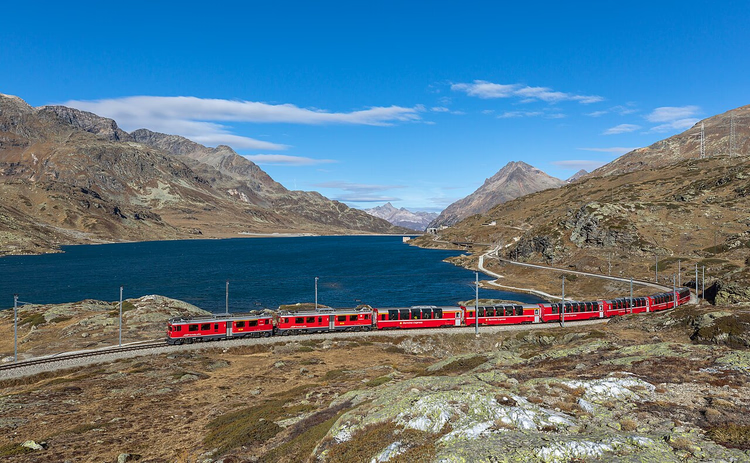
With a Swiss Travel Pass you do not need a separate ticket for the Bernina Express. On the full route in second class, that saves 66 CHF on the ticket alone (as of 09/2026, Bernina Express fares on Seat61). If you are not sure which pass is the better deal, compare prices for your own itinerary before you buy.
 © Kabelleger / David Gubler · CC BY-SAPhoto: Kabelleger / David Gubler, CC BY-SA (https://creativecommons.org/licenses/by-sa/4.0), Wikimedia Commons
The Bernina Express may not be worth the price if:
- you tire quickly on long train journeys;
- your budget is tight and you are happy to change trains to save money;
- you have only 1-2 days in Switzerland and more important stops on your list;
- you are travelling north in winter on the full route from Tirano to Chur, and part of the journey falls after dark.
Many people underestimate that last point. In winter, train 952 leaves Tirano in the afternoon and arrives in Chur in the evening, so you will see the final stretches of the Albula line in twilight (as of 09/2026, RhB timetable). In summer this problem disappears.
If you are still unsure, we go through the routes, costs, alternatives and booking in detail below. We also compare the Bernina Express with the Glacier Express, the other famous panoramic train in Switzerland.
What to pack and book before the trip
Details on each point are waiting for you below. If you are short on time, here is a quick checklist of what to sort out before your Bernina Express trip.
Tickets and reservation
A seat reservation in the panoramic car is required for every passenger, whatever pass they hold, including children of any age. It is best booked on the official RhB website, where you can choose a specific seat (as of 09/2026, RhB frequently asked questions).
- The Swiss Travel Pass covers the ticket in full: on the full route that is 66 CHF in second class and 113 CHF in first (as of 09/2026, Seat61 guide). You also get unlimited travel on trains, buses and boats across the country. You can buy the pass in advance through GetYourGuide.
- The Swiss Half Fare Card gives 50% off the ticket. The card is cheaper than the pass, and for many Swiss itineraries it is the best value of all (according to RhB's answers, the Half Fare is valid on the Bernina Express).
- Without a pass you need a regular Bernina Express ticket plus a reservation.
- If you would rather not plan it yourself, look for organised day tours from Milan or from Lake Como: we cover them in the section on doing the trip in one day.
An eSIM that works on both sides of the border
Many European eSIMs do not include Switzerland, because the country is not in the EU. Buy the wrong plan and you will be without internet for most of the journey, with only patchy Wi-Fi in the car. Check that the coverage includes both Switzerland and Italy. You can find a suitable plan for both countries on Yesim.
Passport
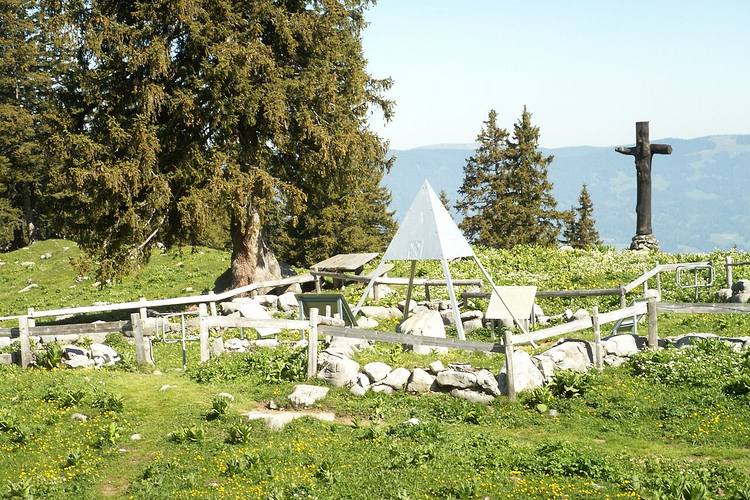
You are crossing the border between Switzerland and Italy. Keep your passport to hand (an ID card is enough for Swiss and EU citizens), because there are occasional spot checks on the train. It sounds obvious. But day trippers regularly leave their documents in the hotel safe.
Where to stay before and after the trip
Three points on the route work for an overnight stay: Tirano, St. Moritz and Chur. Tirano has small guesthouses near the station, St. Moritz has a wider and pricier choice, and in Chur it is handy to stay by the station before the early train 951.
- Chur: Central Hotel Post is about a 7-minute walk from the station, while ABC Swiss Quality Hotel sits right next to it and costs more. It is worth comparing prices at Central Hotel Post on Trip.com in advance.
- Tirano and St. Moritz: we cover specific options below, in the sections on these towns.
What the Bernina Express is and where it came from
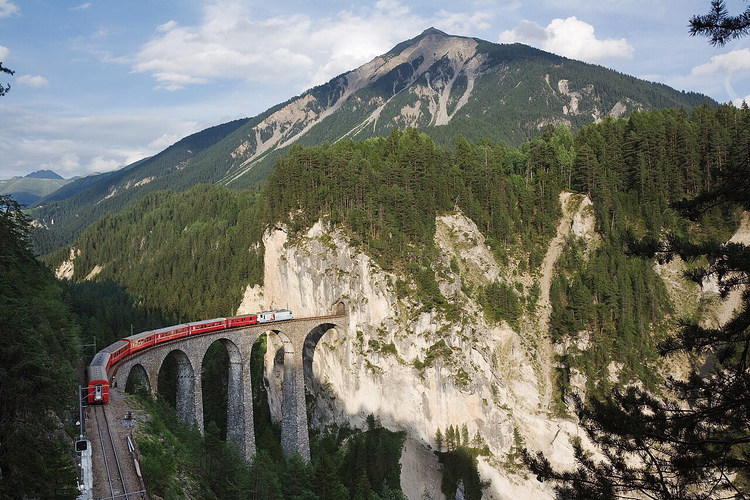
The Bernina Express is a panoramic train run by the Rhaetian Railway (RhB) from Switzerland into northern Italy. The Albula and Bernina line has been on the UNESCO World Heritage List since July 2008 (according to RhB).
Along the way you will see glacial lakes, mountain villages and snowy peaks. The full route takes about 4 hours and has 55 tunnels and 196 bridges (as of 09/2026, Bernina Express page on rhb.ch). The gradient reaches 7% on some sections, which is steep for a conventional railway.
The route joins two historic lines. The Albula Railway opened in 1904 and the Bernina Railway in 1910 (according to the World Heritage List). Both later became part of the RhB network, and the company has been promoting the route to tourists since the 1980s.
Today the Bernina Express, together with the Glacier Express and the Gotthard Panorama Express, is known as a panoramic train. That is the Swiss term for tourist trains with large windows reaching up to the roof. You board it not for the speed, but for the windows.
The route regularly appears in rankings of Europe's most scenic railways. If you are planning a rail trip through the Alps, this stretch is worth building into your plan in at least one direction.
 © Hansueli Krapf This file was uploaded with Commonist . · CC BY-SAPhoto: Hansueli Krapf This file was uploaded with Commonist ., CC BY-SA (https://creativecommons.org/licenses/by-sa/3.0), Wikimedia Commons
The scenery outside: what you will see
The views are the reason the train is known around the world. Over four hours you pass through several types of landscape: vivid alpine lakes, curving viaducts, villages of stone houses and glaciers high in the mountains.
Words do a worse job here than photographs. So below is a series of shots from the route, from the valleys of Graubünden to the Italian Valtellina.
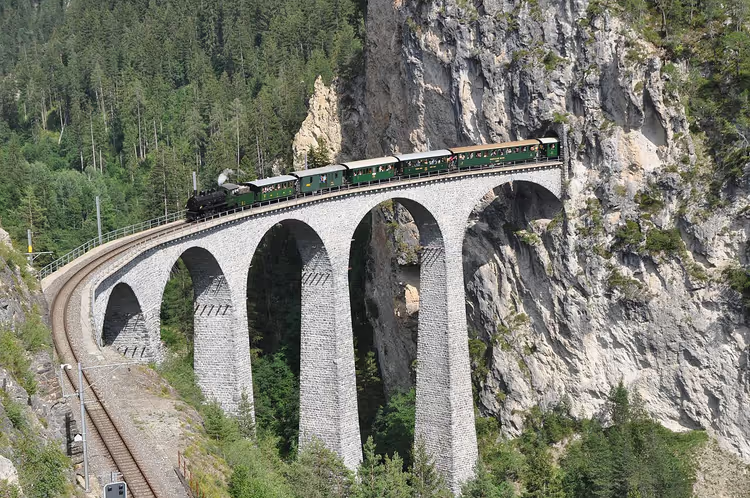 © SchmalspurDVZO · CC BY-SAPhoto: SchmalspurDVZO, CC BY-SA (https://creativecommons.org/licenses/by-sa/4.0), Wikimedia Commons
On the northern section, between Chur and Filisur, the train follows rivers and passes small villages. In autumn the slopes here turn orange and yellow, and it is one of the most photogenic times of year.
The line then climbs towards the Landwasser Viaduct and the Albula Tunnel. You will notice the forest thinning out and the peaks coming closer to the windows.
After Pontresina the climb to the Bernina Pass begins. This is the high-alpine part of the route, and in winter the snow lies right beside the rails.
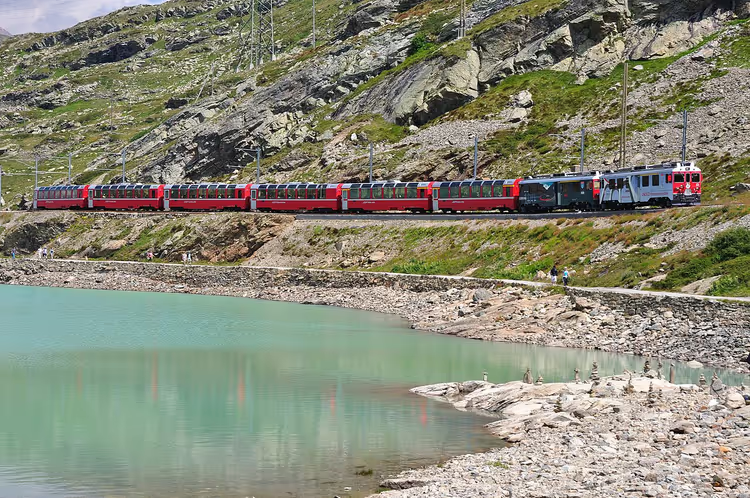
At the pass the train runs past Lago Bianco, a pale high-altitude lake. Then comes the winding descent to Alp Grüm, to the station above Lago Palü.
The southern section is completely different. The valley softens, and Lago di Poschiavo and the Brusio spiral viaduct appear before the Italian border.
The takeaway is simple: in a single day you travel from glacier country to valleys full of vineyards. That contrast is what sets the Bernina Express apart from Switzerland's other panoramic routes.
The Bernina Express route: long and short
At the planning stage, many people get confused about where the train starts and where it ends. The reason is simple: the Bernina Express has two routes, and they pass through the St. Moritz area differently. Let's look at both so you do not buy the wrong train.
The full Chur-Tirano route
The full Bernina Express route runs from Chur in Switzerland to Tirano in Italy and back. The journey takes about 4 hours (as of 09/2026, Rhaetian Railway website), and the line is about 144 km long.
On the official website it is sometimes called the long Bernina Express route. It runs all year: one train a day in each direction in winter, two in summer. If you are coming from Zurich, this is the most convenient option, because direct SBB trains run from Zurich to Chur.
Bear in mind the engineering works in autumn 2026. From 29 October to 13 November 2026, trains 951 and 952 will be diverted through the Vereina Tunnel: Chur, Landquart, Klosters, Sagliains, Pontresina (as of 09/2026, RhB notice). On those days you will not see the Landwasser Viaduct or the Albula line from the window, so plan your trip for other dates.
Map of the full route
The map shows the line climbing out of the Rhine valley near Chur, running along the Albula section through Filisur and Samedan, crossing the Bernina Pass and descending into the Italian Valtellina to Tirano.
The short Tirano-St. Moritz route
This is where the confusion most often starts. Many Bernina Express reviews mention an overnight stay in St. Moritz, even though the full route bypasses the town.
In fact there is a separate short route of the Bernina Express from Tirano to St. Moritz and back. It takes about 2 hours 15 minutes (as of 09/2026, Bernina Express timetable on rhb.ch). It is sometimes called the short Bernina Express route.
In summer 2026 the short route has three departures a day in each direction. In winter there is one daily train plus one more at weekends. Ready-made answers online and in chatbots often give outdated timetables, so check the official RhB timetable before you buy.
Map of the Tirano-St. Moritz section
The close-up of the map shows where the Bernina line splits in two. The full route runs from Pontresina straight to Samedan. The short route turns off towards St. Moritz, which is its terminus.
Does the full route stop in St. Moritz
No. The Chur-Tirano train does not stop in St. Moritz: it runs from Pontresina to Samedan and bypasses the town entirely.
This matters when you book. Check that you are buying the right train if you want to start or end your journey in St. Moritz.
Say you are travelling from Tirano and staying overnight in St. Moritz. Or in summer you want to get off there for a couple of hours and return to Tirano the same day. Then you need the train to St. Moritz, not to Chur, because the Chur train does not call there.
Boarded the wrong train? Get off at the nearest convenient station and continue to St. Moritz by regional train. From Pontresina it takes about 10 minutes.
Bernina Express timetable for 2026
The timetable is valid until 12 December 2026. Departure times depend on the season and the route. Below is the full table of 2026 trains so you can plan your day without surprises (as of 09/2026, official Bernina Express website, price breakdown on Seat61).
Important: there are changes to the 2026 timetable and prices, such as an extra winter train on the short route from Tirano to St. Moritz. Chatbots and old articles often show last year's trains and prices. You lose planning time, so check when any source was last updated.
- Summer season 2026: 2 May to 25 October 2026.
- Winter periods 2026: 14 December 2025 to 1 May 2026, and 26 October to 12 December 2026.
RhB usually publishes the winter 2026/2027 timetable, for dates after 12 December, in the second half of October. Until then, booking for December and January may not be available.
Chur → Tirano (full route)
One train in winter, two in summer.
Train | Departs Chur | Arrives Tirano | When it runs |
|---|---|---|---|
951 | 8:17 | 12:49 | all year |
955 | 13:34 | 18:00 | summer only |
Tirano → Chur (full route)
One train in winter, two in summer.
Train | Departs Tirano | Arrives Chur | When it runs |
|---|---|---|---|
950 | 8:06 | 12:31 | summer only |
952 | 14:24 | 18:31 | all year |
Times are from the 2026 timetable (as of 09/2026, RhB booking system). In winter, train 952 arrives in Chur after dark, so you will see only part of the northern section.
St. Moritz → Tirano (short route)
Three trains in summer, one or two a day in winter.
Train | Departs St. Moritz | Arrives Tirano | When it runs |
|---|---|---|---|
971 | 9:17 | 11:32 | summer only |
973 | 13:17 | 15:31 | summer only |
975 | 15:30 | 18:00 | winter only |
977 | 16:14 | 18:39 | daily in summer, special schedule in winter |
Train 977 has an unusual schedule. For most of the winter it runs only on Saturdays and Sundays, and daily during holiday periods (the Christmas holidays, certain weeks in February, Easter). From 2 May it runs every day until the end of the summer season (as of 09/2026, train page on rhb.ch). Check the exact autumn and winter dates when you book.
Tirano → St. Moritz (short route)
Operating dates match those of the trains in the opposite direction.
Train | Departs Tirano | Arrives St. Moritz | When it runs |
|---|---|---|---|
970 | 9:10 | 11:45 | winter only |
972 | 10:06 | 12:35 | daily in summer, in winter on the same dates as 977 |
974 | 13:17 | 15:45 | summer only |
976 | 16:06 | 18:25 | summer only |
The 972 and 977 pair works well for a day trip: you leave Tirano in the morning, stroll around St. Moritz in the afternoon and head back in the evening. There is more on this in the section on doing the trip in one day.
The Bernina Express bus: Tirano-Lugano
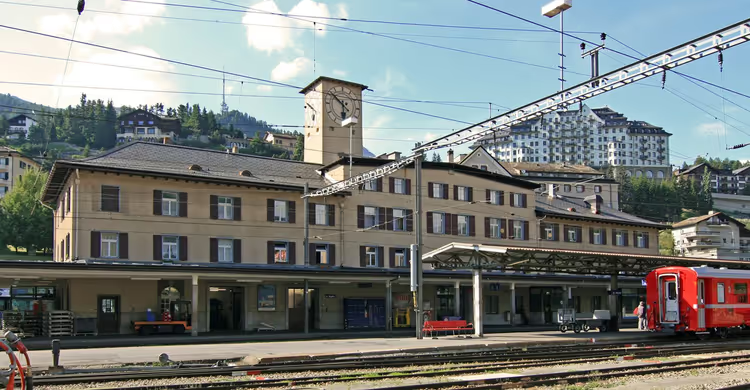
If you want to turn the trip into a loop and return to Switzerland without retracing your route, there is the Bernina Express bus from Tirano to Lugano.
The bus ticket costs 41 CHF at full fare, half that with a Half Fare Card, and the Swiss Travel Pass covers it in full. The reservation of 16-18 CHF is paid separately (as of 09/2026, Seat61 on reservations).
This is an official Bernina Express service, so the timetable is coordinated with the trains. The journey takes about three hours. On the way you pass the vineyards of Valtellina and villages on the shore of Lake Como.
Bus | Departure | Arrival |
|---|---|---|
5950 | Lugano 10:00 | Tirano 13:00 |
5951 | Tirano 14:20 | Lugano 17:30 |
Buses run daily from 26 March to 25 October 2026. From 22 February to 22 March and from 29 October to 22 November they run Thursday to Sunday. From late November to late February there is no bus (as of 09/2026, seasonal schedule on rhb.ch).
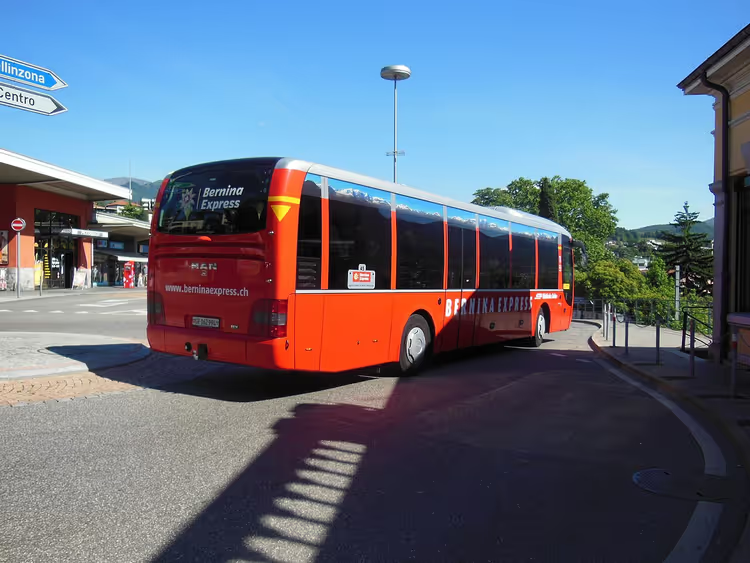 © Chris j wood · CC BY-SAPhoto: Chris j wood, CC BY-SA (https://creativecommons.org/licenses/by-sa/4.0), Wikimedia Commons
The loop works like this: a morning train from Chur or St. Moritz, an afternoon change in Tirano onto bus 5951, and by evening you are in Lugano. From there, direct trains continue across Switzerland via the Gotthard.
Ticket and reservation prices in 2026
The cost of a Bernina Express trip is made up of two separate parts:
- the travel ticket;
- the seat reservation, which is mandatory for the panoramic cars.
Even if your pass covers the ticket in full, you still pay for the reservation separately (according to the questions section on rhb.ch). With a Half Fare Card the ticket costs half as much, but the reservation stays at full price.
Bernina Express ticket prices
Route | 2nd class | 1st class |
|---|---|---|
Chur-Tirano (full route) | 66 CHF | 113 CHF |
St. Moritz-Tirano (short route) | 33 CHF | 57 CHF |
Prices are at full fare (as of 09/2026, Seat61 on the panoramic train). Tickets did not go up in 2026, and the price is the same all year. If you have a pass with 100% coverage (Swiss Travel Pass, Eurail Pass and the like), you do not need to buy a ticket and pay only the reservation.
How to choose the best-value pass
Before buying, add up all your journeys in Switzerland and compare three options: individual tickets, the Half Fare Card and the Swiss Travel Pass. If the Bernina Express is your only expensive journey, a single ticket is almost always cheaper than a pass. If you have several more days in the mountains ahead, do the sums for a pass.
It is best to calculate with your real dates: SBB prices for individual tickets and the Saver Day Pass depend on the day of travel. You can check them in the SBB price calculator.
Reservation cost in 2026
You can sit in the Bernina Express panoramic car only with a mandatory reservation. Its price depends on the route and the season.
2026 update: the reservation has gone up slightly. If you see different figures in old articles, they are out of date.
Route | High season (2 May-25 October) | Low season (rest of the year) |
|---|---|---|
Chur-Tirano (full route) | 44 CHF | 40 CHF |
St. Moritz-Tirano (short route) | 32 CHF | 32 CHF |
Prices are per person, one way (as of 09/2026, Seat61 guide to the Bernina Express).
Without a pass and at full fare, the full route comes to 106-110 CHF in second class and 153-157 CHF in first. The short route costs 65 CHF in second class and 89 CHF in first, reservation included (calculated from the Seat61 fare summary, 09/2026).
What you will pay in total
To compare the options, let's add the ticket and reservation for one adult, one way. The calculation uses the 2026 fares from the tables above (as of 09/2026, prices and reservations on Seat61), and the Half Fare discount applies to the ticket only.
Situation | Chur-Tirano, 2nd class | Chur-Tirano, 1st class | St. Moritz-Tirano, 2nd class |
|---|---|---|---|
Swiss Travel Pass, Eurail, Interrail | 40-44 CHF | 40-44 CHF | 32 CHF |
Half Fare Card | 73-77 CHF | 96.5-100.5 CHF | 48.5 CHF |
Full fare without a pass | 106-110 CHF | 153-157 CHF | 65 CHF |
The difference between the first and last rows on the full route in second class is 66 CHF. That is exactly what you save with a pass. If there are two of you, double everything: the reservation is charged per passenger.
How to save on the Bernina Express
The prices look high, but there are several ways to pay less. Which one suits you depends on whether you have a pass and how much more you are travelling around Switzerland.
Swiss Travel Pass, one-month GA, Eurail and Interrail
If you have a pass valid across the whole GA network, or a Eurail or Interrail pass that covers Switzerland, the pass replaces the Bernina Express ticket. You pay only the mandatory reservation: 32-44 CHF depending on route and season (as of 09/2026, Seat61: prices and seasons).
Check that your pass is valid on the day of travel. On board, you show the conductor your pass and your reservation.
Are you coming to Switzerland for the Bernina Express and a couple of days in St. Moritz, Chur or Zurich? Or passing through the country as part of a bigger rail trip around Europe? Then one of these passes may turn out to be the best-value option overall.
Swiss Half Fare Card
The Half Fare Card gives 50% off the Bernina Express ticket, but you pay the reservation in full (according to the Rhaetian Railway frequently asked questions).
If the Bernina Express is part of a bigger trip across Switzerland covering several days and several regions, the Half Fare Card often works out as the best-value option. The more journeys you have planned, the bigger the difference, so work out your itinerary before buying a pass.
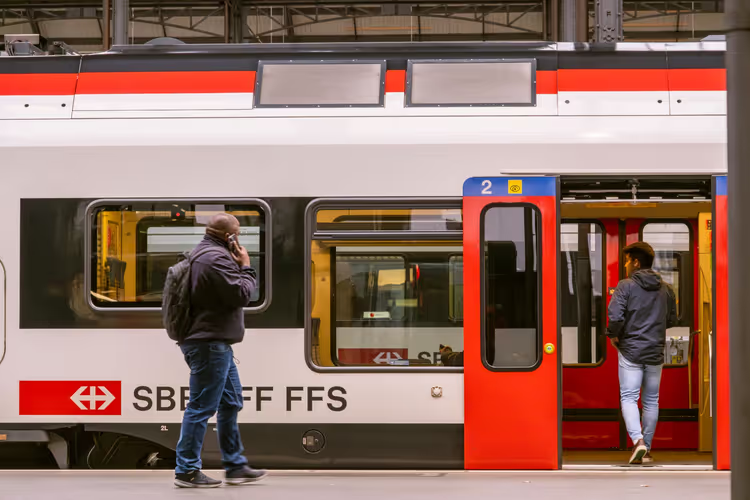
The SBB Saver Day Pass
If you do not have a full pass, the best way to save on the panoramic car is to buy an SBB Saver Day Pass in advance.
The Saver Day Pass works like a one-day Swiss Travel Pass. It gives unlimited travel across the entire public transport network of Switzerland from midnight until 5 am the next day (as of 09/2026, SBB). The pass covers the Bernina Express ticket, but not the reservation. It also covers your other journeys that day, such as the trip from Chur to Zurich.
The number of Saver Day Passes for each day is limited, and the price rises as they sell. Two examples from our 2026 calculations:
- A Saver Day Pass for tomorrow may cost 119 CHF in second class. In that case it is cheaper to buy a regular Chur-Tirano ticket for 66 CHF.
- A Saver Day Pass six months before travel may cost 52 CHF, the minimum price. It is cheaper than the 66 CHF ticket, and you can still continue to Zurich or any other town in the country at no extra cost.
With a Half Fare Card, the Saver Day Pass costs even less (according to the Saver Day Pass page).
Important: the Saver Day Pass does not appear in the Bernina Express booking system on the RhB website. So before buying a full-price ticket, check the Saver Day Pass for your dates on the SBB website.
If the pass is available, buy it, then book the reservation on the RhB website as usual. On the train, show the Saver Day Pass when the conductor asks for your ticket.
The Allegra car or regional trains
Want to see the Bernina Express route, but your budget is tight and you would rather not pay for a reservation? There are two options:
- ride in the Allegra car, which runs as part of the Bernina Express;
- take regional trains along the same line with a couple of easy changes.
In both cases no reservation is needed, and a pass covers the journey in full. But you travel in an ordinary car without panoramic windows. Details on both options are below.
How to book tickets and seats
Booking the Bernina Express is confusing at first. There are several ways to do it, and the right one depends on your situation: you are buying a full-fare ticket, using a Saver Day Pass, or need only a reservation.
First we briefly go through how the three situations differ, so you can identify your own. Step-by-step instructions for the RhB and SBB websites follow below.
Option 1: you already have a pass
Travelling with a Swiss Travel Pass, Eurail Pass or Interrail Pass? Then you already have your ticket. All that is left is to pay for the reservation on the RhB website, where you can choose a specific seat, or on the SBB website, where you cannot choose a seat. We recommend RhB.
 © Ikiwaner · CC BY-SAPhoto: Ikiwaner, CC BY-SA (http://creativecommons.org/licenses/by-sa/3.0/), Wikimedia Commons
Option 2: no pass, and you want to check the Saver Day Pass
Without a pass, the Saver Day Pass can save you money. Especially if you book early and are travelling somewhere else in Switzerland the same day, for example from Chur to Zurich.
The Saver Day Pass is not shown on the RhB website, so the process is as follows:
- check the price and availability of the Saver Day Pass in the SBB app or on the website;
- buy the Saver Day Pass there;
- book the reservation on the SBB website straight away, without choosing a seat, or separately on the Rhaetian Railway website, where you can choose a seat.
Option 3: no pass, and the Saver Day Pass is not good value
Is the Saver Day Pass too expensive or sold out? Or do you simply want one purchase instead of two systems? Then book a full-fare ticket and reservation in a single order on rhb.ch with seat selection, or on sbb.ch without it.
Common booking mistakes
Most problems with booking the Bernina Express repeat year after year. Run through this list before you pay:
- The wrong train. The Chur-Tirano train does not call at St. Moritz. If you are staying in St. Moritz, book a short-route train.
- An unnecessary ticket. With a Swiss Travel Pass, Eurail or Interrail pass you do not need a ticket. Tick the option saying the passenger needs only a reservation, or you will pay twice.
- Mixing up SwissPass and Swiss Travel Pass. A SwissPass account does not entitle you to travel; it is only a login for purchases.
- A random seat on SBB. The SBB website sells reservations without seat selection. If the side matters to you, book on RhB.
- A Saver Day Pass with no seats. First make sure the train has seats available, and only then buy the pass.
- Dates outside the timetable. A search error often means the timetable for those dates has not been published yet.
Check these six points before paying. Step-by-step instructions follow.
Booking on the RhB website step by step
This method is right for you if:
- you have a Swiss Travel Pass, Eurail Pass or Interrail Pass and need only a reservation;
- you have already bought a Saver Day Pass and now need only the reservation;
- you have a Swiss Half Fare Card and are buying a half-price ticket;
- you checked the Saver Day Pass, but it is sold out or poor value;
- you have no pass and want to buy the ticket and seat in one order.
Step 1. Open the official Bernina Express booking system on the RhB website.
Step 2. Enter your departure station, destination station and travel date. Click "Next" to go to the seat availability calendar.
Step 3. Choose a suitable departure, click "Buy a seat reservation", then "Select your seat".
Step 4. The system will show the free seats on the train you selected. Choose a seat, click "Confirm selection", then "Passengers" to move on to passenger details.
The site will ask whether to continue as a guest or log in to a SwissPass account. Note that a SwissPass account and the Swiss Travel Pass are not the same thing. SwissPass is simply an online account for buying Swiss transport tickets. It is not required for the Bernina Express, but if you are booking several journeys it will save you from re-entering your details.
Step 5. If you are booking only a reservation more than six months before travel, when tickets are not yet on sale, the "Passengers" section will ask only for a name and date of birth.
If travel is less than six months away, a "Discount card" drop-down list will appear.
With a Swiss Travel Pass, Eurail Pass, Interrail Pass or Saver Day Pass (listed as "1-day Travel Pass"), tick the box "This passenger only needs a seat reservation" or select the pass in the list. Both actions give the same result: the ticket will not be included in the total.
With a Swiss Half Fare Card, select it in the discount list. In the journey panel, the ticket price will immediately show with 50% off (Half Fare terms on the Bernina Express: RhB ticket information).
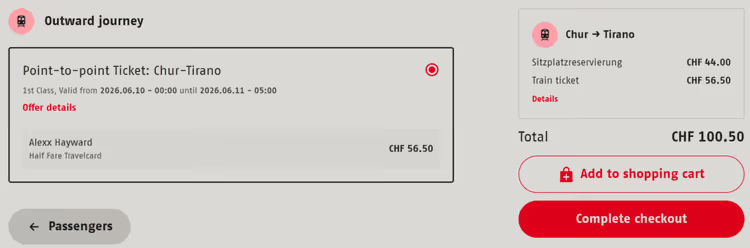
If you have no pass, leave the list empty. You will pay the full ticket price.
Step 6. Click "Complete checkout", enter your payment details and pay for the order.
If the booking will not go through, call RhB Railservice on +41 81 288 65 65 and place your order by phone (as of 09/2026, Rhaetian Railway contacts).
Checking the Saver Day Pass on the SBB website
This method is right for you if:
- you have no pass that fully covers the Bernina Express ticket, AND
- you are watching your budget and want the lowest price for the panoramic car;
- on the same day, before or after the Bernina Express, you are travelling somewhere else in Switzerland.
Without a pass that covers the whole ticket (that is, with no pass or with only a Half Fare Card), the Saver Day Pass can work out cheaper than a separate RhB ticket. Your chances are better if you book early and continue your journey by train within Switzerland the same day.
Important: before buying a Saver Day Pass, check that the Bernina Express train you want has seats available. If seats are sold out, you will not be able to book a reservation. You can check on the official RhB site by following the steps above.
 © Mike Knell · CC BY-SAPhoto: Mike Knell, CC BY-SA (https://creativecommons.org/licenses/by-sa/2.0), Wikimedia Commons
The quick way: the price calendar
The fastest route is to open the Saver Day Pass calendar on the SBB website. You enter your travel date and see current prices day by day.
 © WillYs Fotowerkstatt · CC BY-SAPhoto: WillYs Fotowerkstatt, CC BY-SA (https://creativecommons.org/licenses/by-sa/4.0), Wikimedia Commons
The first example shows a date that is close at hand. The price has already climbed to the maximum.
The second example is three months later. The price is lower, but in second class it is not yet the minimum.
Let's compare the Saver Day Pass prices in three screenshots (three dates within six months) with the price of a separate Bernina Express ticket (example data: SBB prices at the time of calculation, SBB data on the Saver Day Pass):
- A January date, 119 CHF in second class. This is the maximum Saver Day Pass price, which means many people have already bought a pass for that day. It is far more expensive than the 66 CHF Bernina Express ticket. The pass makes sense only if you are travelling Chur-Zurich or a similar route after the train, and the two tickets together cost more than 119 CHF.
- An April date, 79 CHF in second class. That is still more than the 66 CHF Chur-Tirano ticket. But in first class the Saver Day Pass costs 97 CHF against 113 CHF for a separate ticket, so you save. In this case buy the pass straight away, before the price rises, and then book only the reservation.
- A July date, 52 CHF in second class and 88 CHF in first. This is the furthest ahead the Saver Day Pass goes on sale, six months, and the prices here are the best. Both are cheaper than a separate ticket: 66 CHF in second class and 113 CHF in first.
How much the Saver Day Pass saves depends heavily on how far ahead you buy. So check prices for your dates before buying any full-price ticket.
The reliable way: comparing in the SBB search
The clearest way to compare the Saver Day Pass with a Bernina Express ticket is to find the panoramic train you want on the SBB website and see all the ticket options side by side.
Step 1. Open the SBB website or app and enter your departure station, destination and date. Under "Price display", the Half Fare price is shown by default. If you do not have the card, switch to "Full fare".
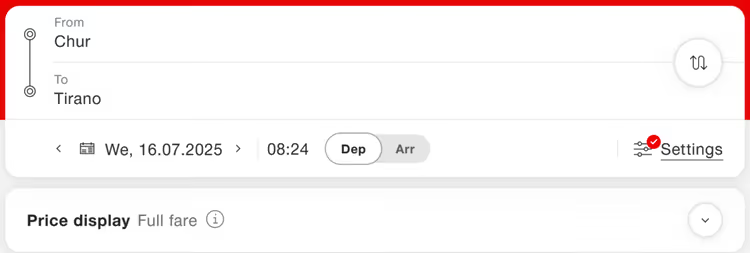
Step 2. Click "Settings", turn on "Means of transport" and untick every type of transport except IR/PE.
Step 3. The results will now show only trains with PE (Panorama Express) cars. Regional trains will disappear from the list.
Step 4. Find the train you want, select it and click "Select tickets". The price page will open. There you will see the Saver Day Pass price, if it is available, and the price of a regular point-to-point ticket.
Important: do not be alarmed by the total. The SBB website automatically adds the mandatory reservation. Click the "Seat reservation" button and untick the box to see the price without it.
In the example below the difference is obvious at once: the Saver Day Pass for this date costs 52 CHF, while a regular Bernina Express ticket costs 66 CHF. The Saver Day Pass is the better deal.
Step 5. If the Saver Day Pass is good value, buy it straight away and lock in the price: the pass gets more expensive with every sale. If not, buy a regular ticket on SBB or on the RhB website; the price is the same.
Step 6. You can now book the Bernina Express reservation on the SBB website too. This option was introduced in December 2024. But in 2026 you still cannot choose a specific seat there: there are only the "panorama" and "no preference" options, and the seat is assigned at random.
Since you are paying for the panoramic car, a window seat probably matters to you. So it is better to book the reservation on the RhB website with seat selection, where you pick a specific seat.
How far ahead to book the Bernina Express
There is a lot of wrong information online about booking windows. So we checked the rules against RhB's official answers.
In 2026, Bernina Express tickets go on sale six months before travel (according to the RhB help pages). The window used to be 60 days and was extended in 2024.
A seat reservation can be booked for the entire timetable period (according to RhB's questions and answers). If you look in January, seats are available right up to the end of the current timetable in mid-December.
If you search for a reservation more than six months ahead, the page sometimes stays blank and finds nothing. The workaround is simple: choose a date within six months, wait for the results and use the arrow on the right to scroll to the day you need.
In high season seats sell out, especially during school holidays and at weekends. If you are travelling in summer, book your reservation as early as possible.
When sales open for your dates
The two windows work independently of each other, so it helps to count them separately (rules: RhB frequently asked questions on sales periods):
What you are booking | When it opens | Example |
|---|---|---|
Seat reservation | for the entire current timetable period | in February 2026 you can book a seat for November 2026 |
Ticket (without a pass) | six months before travel | a ticket for 1 July 2027 will appear around 1 January 2027 |
Saver Day Pass | up to six months ahead, cheapest when sales open | check summer prices in winter |
In practice this means: with a pass, you book your seat as soon as the timetable is published. Without a pass, you can book the reservation early and add the ticket or Saver Day Pass once sales open.
The "No connections found" error on the Bernina Express website
Does the site show an error saying there are no trains when you try to book a seat? Most likely you are looking at dates for which the timetable has not been published yet.
The full winter timetable for the following season usually comes out in mid-October; in 2025 it was published at the end of October. For travel after 12 December 2026, expect the new timetable in autumn 2026.
Do you want to travel from mid-December and need to lock in the train so you can book everything else? And seats are not yet available online? Then email or call the Bernina Express service team and ask when booking will open.
A ticket for the Allegra car without a reservation
The Allegra is an ordinary motor car that hauls the Bernina Express panoramic cars. It has standard windows, not panoramic ones. You do not need to book a seat in it, and you cannot: it is first come, first served.
The windows in the Allegra open. That is why photographers often choose this car over the panoramic one: there is no glare or reflection on the glass.
With a Swiss Travel Pass, Eurail Pass, Interrail Pass or Saver Day Pass, you ride in the Allegra car for free, with no supplements.
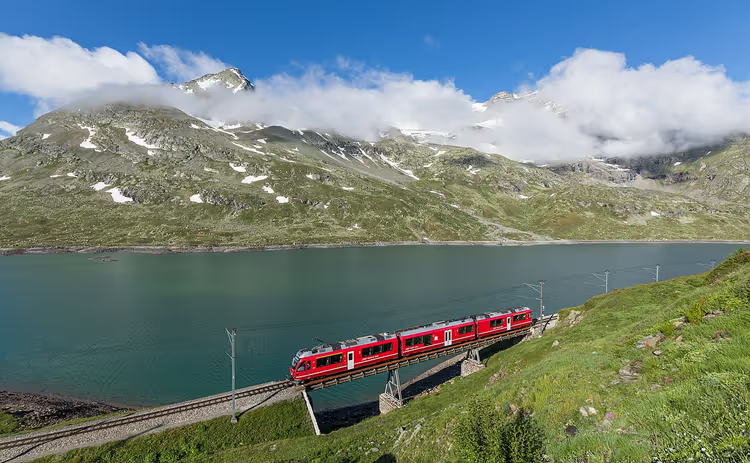 © Kabelleger / David Gubler · CC BY-SAPhoto: Kabelleger / David Gubler, CC BY-SA (https://creativecommons.org/licenses/by-sa/4.0), Wikimedia Commons
Seats in the Allegra are limited, and in high season plenty of people want to save money. Get to the platform early so you can grab a window seat.
If you have no pass but want to save on the reservation, you have two routes:
- buy a regular point-to-point ticket on the SBB website or app following the steps above, unticking the reservation;
- or use the standard RhB booking system.
In both cases, check the train number against the Bernina Express timetable. That way you are sure to buy a ticket for the right train.
Allegra or panoramic car
Criterion | Panoramic car | Allegra car |
|---|---|---|
Reservation | mandatory, 32-44 CHF | not needed and not possible |
Windows | panoramic, do not open | standard, open |
Seat | guaranteed, you can choose it | first come, first served |
Photos | glare is possible | no glass in the way if the window is open |
Luggage | racks at the end of the car | shelves above the seats |
The reservation price is from the 2026 fares (as of 09/2026, Seat61 on cars and reservations). For photographers and travellers with a pass, the Allegra is often a sensible compromise. If you care about views in every direction at once and a guaranteed seat, go for the panoramic car.
Which side to sit on in the Bernina Express
You can try to choose a side, but there is no guarantee.
When you reserve on the RhB website, the car's direction of travel is not shown. The seat selection page says there is no information about direction. The RhB frequently asked questions page states it plainly: the cars can be coupled at either end of the train, so the direction is unknown (according to the RhB service section).
But passengers have noticed a pattern.
According to passenger reports, the single seats in first class usually end up on the right when heading south and on the left when heading north. That is exactly the side with the best views.
If you are travelling second class, switch to a first-class car in the seat map. See where the single seats are on the map, top or bottom. Then go back to second class and choose a seat on the same side.
The trick works often, but not always. There are journeys when the car is coupled the other way round and the single seat ends up on the opposite side. Treat it as a way to improve your odds, not as a guarantee.
Can you walk around the train
You can move around the train within reason. The main thing is not to disturb other passengers.
With a second-class ticket or pass, you may walk only through the second-class cars. You are not allowed into first class, and you can be fined for it.
You can stand in the vestibules, the connecting areas between cars. In some vestibules the windows open, and you will get shots without glare. But as soon as you open a window, other passengers will head over, and it is easy to lose your spot.
If the train is not full, you can change seats for a photo. But if a passenger with a reservation for that seat boards at a station, go back to your own.
The temptation to dash through the cars chasing shots is strong. Remember that your neighbours have also paid for a peaceful journey. Do not ask them to move, and do not keep banging the door of a vestibule with an open window, especially in winter, when cold air pours straight into the car.
First or second class: what's the difference
Choosing between first and second class? Below is a breakdown of what you get in each.
Your pass decides the class for you. With a Swiss Travel Pass, Eurail Pass or Interrail Pass you travel in the class your pass was issued for. With a second-class pass you can sometimes sit in first class on Swiss trains, but it depends on seat availability, and the class upgrade cannot be bought online. Check with RhB or SBB for your specific train.
Seating layout
Class | Layout | Seats per car |
|---|---|---|
1st class | one seat on one side, two on the other (1-2) | up to 28-34 |
2nd class | two seats on each side of the aisle (2-2) | up to 44-50 |
Solo travellers are better off in first class. In the single-seat row you get a window seat and aisle access at once. The best view, an easy way out, and you can work on a laptop without bothering anyone.
There is a trick for couples and friends: book two single seats facing each other. Then each of you has a window and the aisle.
In first class the seats are more generously spaced, with more legroom between rows. The 1-2 layout means the aisle is offset towards one side of the car.
In second class the rows are closer together, but the windows are panoramic in both classes. As far as the views go the difference is small; it is more a question of space.
Space and comfort
The Bernina Express cars are comfortable in both classes, but simpler than on the Glacier Express.
Second class has ordinary train-seat upholstery and small tables that end at the edge of the window seat.
In first class the seats are wider, with more room for legs and elbows, but the tables are just as small. The seats are bigger, so there are fewer passengers in the car.
At the height of summer the Bernina Express fills up. Even on a full train, a first-class car carries at most 28-34 people, and a second-class car 44-50. For anyone who wants more personal space, that is the main argument for paying extra.
Out of season, in mid-October for example, first class can be almost empty. But do not count on it, as tour groups can fill a car on any day.
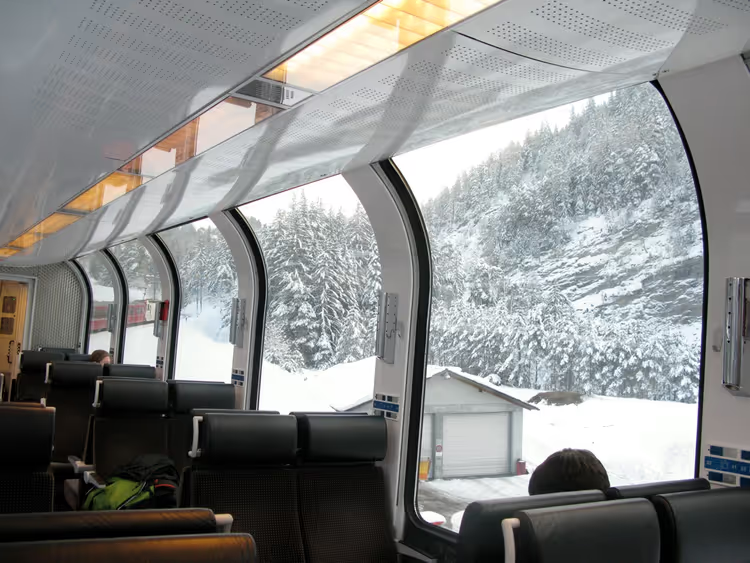
What the train is like inside
The first thing to know: this is not a luxury train with every amenity. For that level of service, people take Excellence Class on the Glacier Express.
The Bernina Express is a comfortable tourist train for half a day or less. The focus here is entirely on the scenery, not on the service or the onboard experience.
What the train has and what it lacks
It has | It lacks |
|---|---|
a trolley with snacks and drinks | a restaurant car |
Wi-Fi, though unreliable | proper tables for a laptop |
luggage racks in every car | overhead luggage shelves in the panoramic cars |
heating and air conditioning | opening windows in the panoramic cars |
This table helps you pack: bring food, internet via an eSIM and a small bag that is easy to keep by your seat.
Food on the train
There is no restaurant car. A snack trolley comes through the cars: crisps, sweets, traditional air-dried meat and cheeses, wine, beer, soft drinks and hot drinks. Prices are high: even a small bottle of water will cost you several francs.
The reservation price includes a small gift: herbal tea from the Poschiavo valley and Lindt chocolate in a souvenir box (as of 09/2026, route overview on Seat61). The box is a decent souvenir in itself.
Wi-Fi on board
The Bernina Express has Wi-Fi, but it is unreliable and not something to depend on. Bring an eSIM that covers both Switzerland and Italy so you stay connected the whole way.
There are no proper tables in front of the seats in either first or second class. There is little room for a laptop, so you are unlikely to get any work done on the way.
Then again, it would be a shame to stare at a screen on a route like this. Put your phone down on the stretches by the lakes and viaducts.
Luggage storage
Every car has luggage racks. There are no overhead shelves like on ordinary trains, because of the panoramic windows. Keep small bags with you, under your seat or on the rack as well.
Rack space is limited, especially in second class. In high season, get to the station a little early so you are among the first to board and can stow your suitcase without stress.
Inside the Allegra car
The Allegra car has both first-class and second-class seats. First class has a 2-1 layout, second class 2-2.
How to take photos from the panoramic car
Panoramic windows are great for looking through. For photos they are worse: reflections get in the way.
Bernina Express staff clean the windows before every departure, so dirt and streaks are not usually a problem. But glare on the glass ruins the shot for any photographer. That is why many choose free seats in the Allegra car, where the windows open.
A few tips for good shots:
- find a vestibule with opening windows, which gives the best pictures, though your hands get cold quickly in winter;
- use a polarising filter against glare;
- wear dark clothing, as light colours reflect more strongly in the glass;
- bring a dark scarf and wrap it around your phone or lens, which also cuts reflections;
- shoot away from the sun where possible;
- use a fast shutter speed so the landscape stays sharp while moving.
 © dirt · CC BYPhoto: dirt, CC BY (https://creativecommons.org/licenses/by/2.0), Wikimedia Commons
It helps to know the best spots on the route in advance so you are ready to shoot. The key places on the Chur-Tirano route, from north to south:
Spot | What to photograph |
|---|---|
Chur-Filisur | villages and mountains, slopes in orange tones in autumn |
Landwasser Viaduct | a stone viaduct where the train runs straight into a tunnel in the cliff |
Morteratsch Glacier | a glacier in the valley near Pontresina |
Lago Bianco | a pale lake at the Bernina Pass |
Alp Grüm and Lago Palü | a station at 2,091 m and a view of the lake |
Lago di Poschiavo | a lake in the Poschiavo valley |
Brusio spiral viaduct | a circular viaduct before the Italian border |
At Alp Grüm, some trains make a photo stop of about 15 minutes. Others run to a tight schedule and do not let passengers off. Ask the conductor at the start of the journey.
The order of the spots makes a handy shooting plan. After leaving Chur, the first hour runs through valleys with villages. The Landwasser Viaduct appears on the Albula section before Filisur, so move to the window in good time so you do not miss the train coming onto the bridge. After Pontresina the high-alpine section begins: the Morteratsch Glacier, then Lago Bianco at the pass and Alp Grüm station. On the descent to Poschiavo you will see Lago di Poschiavo, and before Tirano the train rounds the Brusio spiral viaduct.
If you are travelling the other way, from Tirano to Chur, the order of the spots is the same, only from the bottom up. The Brusio spiral and Lake Poschiavo come at the start of the journey, and Landwasser towards the end.
The most striking stretches come one after another between the pass and Poschiavo. Keep your camera ready after Pontresina: the winding descent to Alp Grüm goes by quickly, and there will be no second chance.
The Bernina Express there and back in one day
Yes, it can be done. Unlike the Glacier Express, which takes all day between St. Moritz and Zermatt, the Bernina Express takes half a day or less. So you can set off and return to the same place in a single day.
Pick whichever direction you like. A stop for lunch or a short walk is possible in Tirano, St. Moritz or Chur. The options depend on the route and the season (as of 09/2026, RhB booking page):
Day trip | Outbound | Return | Season |
|---|---|---|---|
Chur-Tirano-Chur | 951: 8:17 → 12:49 | 952: 14:24 → 18:31 | all year |
St. Moritz-Tirano-St. Moritz, short stop | 971: 9:17 → 11:32 | 974: 13:17 → 15:45 | summer only |
St. Moritz-Tirano-St. Moritz, long stop | 971: 9:17 → 11:32 | 976: 16:06 → 18:25 | summer only |
Tirano-Chur-Tirano | 950: 8:06 → 12:31 | 955: 13:34 → 18:00 | summer only |
Tirano-St. Moritz-Tirano, in winter | 970: 9:10 → 11:45 | 975: 15:30 → 18:00 | winter |
Tirano-St. Moritz-Tirano | 972: 10:06 → 12:35 | 977: 16:14 → 18:39 | daily in summer, weekends and holidays in winter |
From Chur to Tirano and back
This option works all year. You leave Chur in the morning on train 951, and in Tirano you have about an hour and a half before the return train 952. That is enough for lunch and a short walk around the centre.
In winter, part of the return journey is in the dark. If the views on the Albula section matter to you, you will see more in summer.
From St. Moritz to Tirano and back
In summer you leave St. Moritz on train 971 at 9:17 and arrive in Tirano at 11:32. For a short stop, the return train 974 at 13:17 works well. Want more time in Tirano? Take train 976 at 16:06.
From Tirano to Chur or St. Moritz and back
If you are staying in Tirano, in summer you can travel to Chur on train 950 at 8:06 and come back on train 955 at 13:34. In winter the 970 and 975 pair to St. Moritz is convenient: out at 9:10, back at 15:30.
The 972 and 977 pair gives you the most time in St. Moritz: about three and a half hours. In summer it runs daily, in winter at weekends and during holiday periods; check the dates in the timetable section above.
An organised tour from Milan or Lake Como
Staying in Milan for a few days and want to ride the Bernina Express without handling the logistics yourself? There are organised day tours: Lake Como, St. Moritz, the Bernina Express train to Tirano and the return to Milan.
You can look at a guided tour from Milan to St. Moritz on GetYourGuide. On a tour like this the organiser handles the logistics; check the description for exactly what is included.
If you are staying on the lake, there is a similar option. Take a look at the trip from Como to St. Moritz and Tirano with the Bernina Express, which follows the same pattern.
 © Mænsard vokser · CC BY-SAPhoto: Mænsard vokser, CC BY-SA (https://creativecommons.org/licenses/by-sa/4.0), Wikimedia Commons
Practical tips for the journey
Bring your own food
The food on the Bernina Express is limited and expensive for what you get. Bring lunch or a snack so that hunger does not spoil one of the best train journeys in Europe.
Stock up before boarding, especially ahead of the early train 951, so you do not have to rely on the snack trolley.
Warm clothes in winter
The cars have heating and air conditioning, so the temperature is comfortable all year. But in winter it can be cold by the doors at the end of the car. And if you are shooting from open vestibule windows, the alpine air chills your hands very quickly.

Bring a thin jumper, a hat and gloves even for the short route. Tirano, meanwhile, can be noticeably warmer than the pass.
Add other panoramic trains
The Bernina Express is one of Switzerland's five premium panoramic trains, and the others are worth the trip too.
All five, together with three connecting sections, form the Grand Train Tour of Switzerland, a route of about 1,280 km (according to Switzerland Tourism). If you are planning a long trip around the country, start your planning with this map.
 © Bybbisch94 · CC BYPhoto: Bybbisch94, CC BY (https://creativecommons.org/licenses/by/4.0), Wikimedia Commons
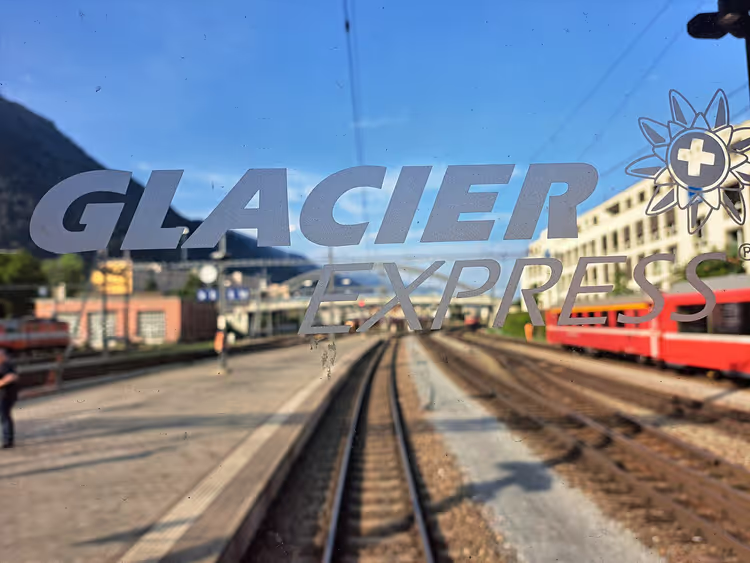
Bernina Express or Glacier Express. The Bernina Express is shorter and steeper: the route runs from Chur or St. Moritz to Tirano, and it is prized for its sharp changes of scenery and its feats of engineering. The Glacier Express takes all day between Zermatt and St. Moritz, slower and with a higher level of service, but also more expensive. If your budget is limited, the Bernina Express gives you more variety in less time.
The route by regional train
You can travel the entire Bernina Express route on regional trains, which run throughout the day. You will need a couple of easy changes, usually in Samedan and Pontresina.
To find these trains, open the SBB website, enter Chur and Tirano (or the reverse) and add "via Thusis". That sends the route along the Albula line past the Landwasser Viaduct. Without it, the search will probably show a faster route via Davos Platz. It bypasses the viaduct and is less scenic.
 © Kabelleger / David Gubler ( http://www.bahnbilder.ch ) · CC BY-SAPhoto: Kabelleger / David Gubler ( http://www.bahnbilder.ch ), CC BY-SA (https://creativecommons.org/licenses/by-sa/3.0), Wikimedia Commons
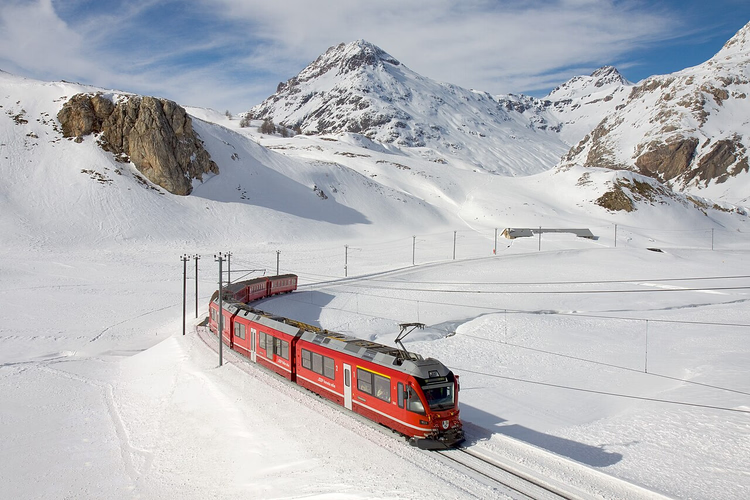
The regional trains are also called the Bernina Red Train. This is not a separate train, but a general name for the red RhB trains on the Bernina line. Only the Bernina Express is the official panoramic train.
Tirano: what to see and where to stay
Tirano is a quiet mountain town on the border of Italy and Switzerland, known above all as the gateway to the Bernina Express. Many people arrive here from Milan (about 2.5 hours by train) and see Tirano only from the platform. We recommend staying a night or two if your plans allow.
Swiss and Italian heritage mingle in Tirano. The cuisine is Italian, but with an alpine accent and dishes you will not find in other regions of Italy. Around the town there are hiking trails, cycle paths and the wineries of Valtellina.
The town's main sight is the basilica of Santuario della Madonna di Tirano, built in the early 16th century. Step inside when it is open to see the carved 17th-century organ and the rich decoration of the walls and vaults.
 © Bybbisch94 · CC BYPhoto: Bybbisch94, CC BY (https://creativecommons.org/licenses/by/4.0), Wikimedia Commons
If you are staying overnight in Tirano, set aside a full hour for the basilica. On a day trip, the time between trains is better kept for lunch.
Where to eat in Tirano. Try the local Valtellina cuisine at the restaurant Parravicini. For pizza, head to L'Hostaria Ristorante.
Where to stay in Tirano. Ostello del Castello stands on a hill above Tirano with a wide view over the valley. This guesthouse is run by local owners. The rooms are spacious, there are shared lounge areas, and the restaurants and shops of the centre are a short walk away. You can check prices at Ostello del Castello on Trip.com.
If being close to the station matters more to you, look at Bernina Express Eco Rooms: simple rooms right by the station. You can check available dates at Bernina Express Eco Rooms.
For a more comfortable stay, DIMORA1934 is a step up. Compare prices at DIMORA1934 on Trip.com.
St. Moritz: what you need to know
St. Moritz is one of Switzerland's most famous resorts. The town is considered the birthplace of alpine winter tourism: the first winter guests arrived here in 1864 (according to the St. Moritz tourist office). Today visitors from all over the world come here all year round.
There is a particularly large choice for lovers of the outdoors. In winter it offers some of the best skiing in the Alps. In winter the daily Bernina Express 970/975 runs to St. Moritz. At weekends and on holidays the 972/977 pair is added. If the times do not suit you, there is a workaround: the Tirano-Chur train with a ticket to Pontresina. There you change to a regional train to St. Moritz, which takes about 10 minutes. In summer you will find hiking trails, climbing routes and cable cars up to viewpoints.
Dining in St. Moritz is aimed at well-heeled guests. If you want to treat yourself to an expensive dinner, this is the place.
 © Giorgio Galeotti · CC BY-SAPhoto: Giorgio Galeotti, CC BY-SA (https://creativecommons.org/licenses/by-sa/4.0), Wikimedia Commons
Where to stay in St. Moritz. Randolin's Berghotel offers a hearty breakfast buffet, a restaurant serving traditional cuisine with views of the mountains and the lake, a spa area and children's playgrounds. An unusual option at the hotel is the historic Sternwarte observatory, more than 100 years old. It has a working rotating dome mechanism and a hand-operated window for stargazing. See prices for your travel dates at Randolins Berghotel on Trip.com.
This kind of stay suits you if you want to make the stop in St. Moritz an event in its own right. For an ordinary night before your train, the hotel's main building is all you need.
The verdict: who gets their money's worth
The Bernina Express route itself is unquestionably worth the trip: it is one of the most scenic railways in the world. Whether it is worth paying for the panoramic train specifically depends on your priorities.
With a Swiss Travel Pass, Eurail Pass or Interrail Pass the decision is easy. The ticket is already paid for, and you add only a 32-44 CHF reservation for one of Europe's most famous rail routes (as of 09/2026, Seat61 price table).
Without a pass, it all comes down to budget. Managed to get a Saver Day Pass, especially if you are travelling Zurich-Chur or back the same day? Take the panoramic train. The Saver Day Pass is sold out, but a simple direct route with panoramic windows is worth full price to you? Then yes again.
If money is really tight, get to the train early and take an unreserved seat in the Allegra car. Or put together a journey on regional trains along the same line, with easy changes in Samedan and Pontresina.
Whichever option you choose, the views will be the same. The difference is in the comfort, the size of the windows and how many times you have to change trains.
⁉️🤔 Frequently asked questions
Where does the Bernina Express start and end?
The full Bernina Express route runs from Chur in Switzerland to Tirano in Italy. There is also a short route between St. Moritz and Tirano. The full route does not call at St. Moritz, so check the train's final station when you book, especially if you are staying overnight in St. Moritz.
How much does the Bernina Express cost?
A full-fare Chur-Tirano ticket costs 66 CHF in second class and 113 CHF in first. The short St. Moritz-Tirano route costs 33 CHF and 57 CHF. A seat reservation in the panoramic car is mandatory and costs 32-44 CHF depending on season and route (as of 09/2026).
How do I book Bernina Express tickets and reservations?
Tickets are sold on the SBB and RhB websites. SBB shows both the Saver Day Pass and regular tickets. With a pass you do not need a ticket, only a reservation. It is best to book the reservation on the RhB website: there you choose a specific seat, while SBB assigns one at random.
How long does the Bernina Express journey take?
The full Chur-Tirano route, about 144 km long, takes around 4 hours, and up to 4.5 hours depending on the train. The short St. Moritz-Tirano route takes about 2 hours 15 minutes, up to 2.5 hours on some trains. Check the exact time in the RhB timetable for your day.
How far in advance can I book the Bernina Express?
Tickets go on sale six months before travel, and reservations can be booked for the entire timetable period. The current timetable is valid until 12 December 2026. For travel after that date, wait for the winter 2026/2027 timetable to be published, usually in the second half of October.
Can I travel the Bernina Express route on regional trains?
Yes. Regional trains run along the same line throughout the day, with changes usually in Samedan and Pontresina. On the SBB website, enter Chur and Tirano and add "via Thusis" so that you travel along the Albula line past the Landwasser Viaduct, not via Davos Platz.
Which side is best to sit on in the Bernina Express?
For the main views, sit on the right when heading south, from Switzerland to Italy, and on the left when heading north. You cannot guarantee a side: according to RhB, the cars can be coupled at either end. The single seats in first class usually end up on the right side, but not always.
Can I do the Bernina Express in one day?
Yes, a same-day return trip is possible from Chur, St. Moritz or Tirano. The 951 and 952 pair of trains from Chur runs all year. There are more options in summer and fewer in winter. Suitable train pairs by season are listed in the table in the section on doing the trip in one day.
Is there food on the Bernina Express?
There is no restaurant car, but a trolley comes through the cars with snacks, cheeses, air-dried meat and drinks, including wine and hot drinks. Prices are high. It is better to bring your own food.
Is the Bernina Express included in the Swiss Travel Pass?
Yes, the Swiss Travel Pass covers the Bernina Express ticket. The seat reservation in the panoramic car must be booked and paid for separately, at 32-44 CHF depending on route and season. Without a reservation, pass holders can ride in the Allegra car for free, but the windows there are standard.
Is the Bernina Express included in the Eurail Pass?
Yes, the Eurail Pass covers the basic ticket, as does an Interrail Pass that covers Switzerland. To travel in the panoramic car you need a paid reservation. Check that the pass is valid on the day of travel, and show the conductor both the pass and the reservation. The Allegra car is available to pass holders at no extra charge.
How is the Bernina Express different from the Glacier Express?
The Bernina Express is shorter and steeper, runs from Chur or St. Moritz to Tirano and is known for its sharp changes of scenery and its feats of engineering. The Glacier Express takes all day between Zermatt and St. Moritz; it is slower, has a higher level of service and costs more. The views on both routes are impressive.
Which should I choose: the Bernina Express or the Glacier Express?
The Bernina Express is cheaper and offers more variety in a short time: glaciers, a mountain pass and an Italian valley in four hours. The Glacier Express is longer, more comfortable and more expensive, and the views are just as good. If you have one day and a limited budget, start with the Bernina Express.
How is the Bernina Red Train different from the Bernina Express?
The Bernina Red Train is not a separate train, but a general name for the red trains on the Bernina line. The Bernina Express is the official panoramic train with reservations. "Red Train" often refers to the ordinary regional trains that run along the same line throughout the day.
Which section of the Bernina Express is the most beautiful?
The key spots on the route are the Landwasser Viaduct, Alp Grüm, Lago Bianco and the Brusio spiral viaduct. Many people single out the stretch by Lago Bianco and the winding descent to Alp Grüm. Keep your camera ready after Pontresina: the most striking views come one after another all the way to the Poschiavo valley.
Can I ride the Bernina Express and the Glacier Express in one day?
Technically yes, but only at certain times of year, when the two trains' timetables connect in St. Moritz or Chur. It makes for a very long day on the train. Before booking, check the current timetables of both trains on the RhB and Glacier Express websites for your date.
Can I take luggage on the Bernina Express?
Yes, luggage travels free of charge, and there are racks at the end of every car. Space on them is limited, especially in second class, and there are no overhead shelves in the panoramic cars. In high season, get to the station a little early so you board first and can stow your suitcase without stress.
In brief: what's worth booking
The Bernina Express pays off above all for those whose ticket is already covered by a pass: you pay only the reservation and get four hours of mountains with no changes. Without a pass, check the Saver Day Pass first, and only then buy a full-price ticket.
- If you have a Swiss Travel Pass, Eurail or Interrail pass: book the reservation on the RhB website and choose a single seat in first class or a seat on the same side in second.
- If you have no pass, but your trip is several months away: look for a Saver Day Pass on SBB, then book your seat on RhB.
- If your budget is minimal: board the Allegra car or take regional trains via Thusis, Samedan and Pontresina.
- If you would rather not deal with logistics: choose an organised tour from Milan or Lake Como.
Ready-made day trips with the Bernina Express are easy to compare on GetYourGuide.

A small editorial team writing guides for independent travel. We travel ourselves, but we haven’t been everywhere, so we check prices, opening hours and how to get there against official sources.