
















Switzerland without a car: castles, glaciers and ski resorts
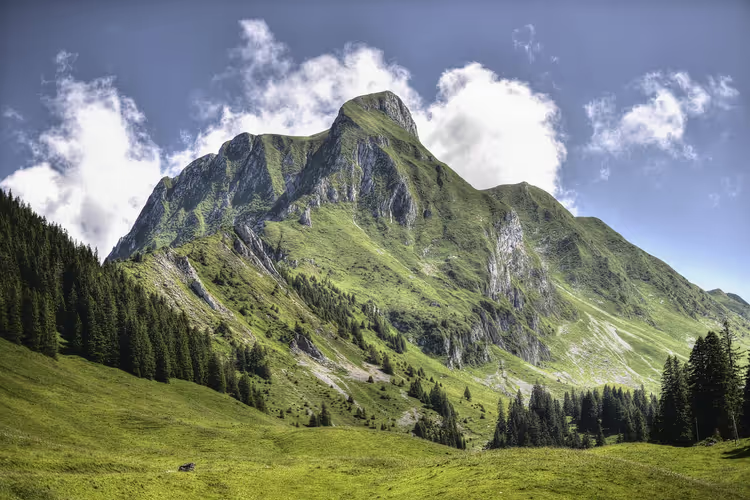
Switzerland looks like an expensive country in any photo. And that's true: the bill for a trip grows fast. But the country fits between Lake Geneva and the Rhine, and trains run so frequently that you don't need a car.
Take tickets, for example. Entry to Chillon Castle is paid, while you can see the Rhine Falls from the shore for free. We've put together Switzerland's sights, cuisine, and ski resorts, and added prices, opening hours, and practical details for each one.
Ad: this article contains affiliate links, we earn a commission if you book through them, at no extra cost to you.
What to know before you go
Almost all of the country's tourist spots are connected by rail. Tickets are sold in the SBB app, transfers are short, and you can see the schedule in advance. You only need a car for remote valleys and wine villages where the rails don't reach.
💡 In short:
- Trains connect Geneva, Lausanne, Lucerne, and Zurich, and lines run from them into the mountains.
- Castles and waterfalls are open year-round; in summer, sites stay open longer.
- You can ski on the glacier even in summer, and high-altitude resorts run their season from fall to spring.
- Prices and opening hours: as of 09/2026, verified on Chillon.ch.
Below you'll find facts, four sights, national cuisine, ski resorts, and things to do in the off-season.
Interesting facts about Switzerland
- Europe's highest railway station. Jungfraujoch receives trains higher than any other station on the continent, and the route runs through a tunnel inside the mountain.
- Europe's largest waterfall. The Rhine Falls near Neuhausen are considered the largest on the continent by water volume (as of 09/2026, official waterfall website).
- An underground lake. Europe's largest underground lake lies in the canton of Valais near the town of St-Léonard, and you can take boat rides on it.
- Low crime. The country ranks among the calmest in Europe by crime rate.
- Schengen without the European Union. Switzerland is not in the EU, but it is in Schengen. A passport or ID card is enough; no visa is needed.
Switzerland's main sights
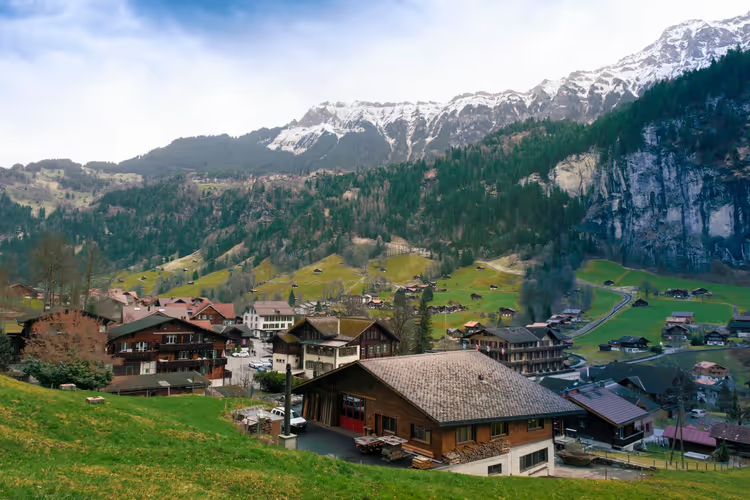
A first itinerary usually includes four stops. Two of them sit by the water, two take you up into the mountains. This summary of tickets and entry will help you plan your day.
Sight | Entry | Source |
|---|---|---|
Chillon Castle | 15 CHF for adults, 7 CHF for children | |
Matterhorn | lifts by resort tickets | |
Chapel Bridge | free entry around the clock | Lucerne waterfront |
Rhine Falls | 5 CHF for the Schloss Laufen viewing platforms |
Chillon Castle
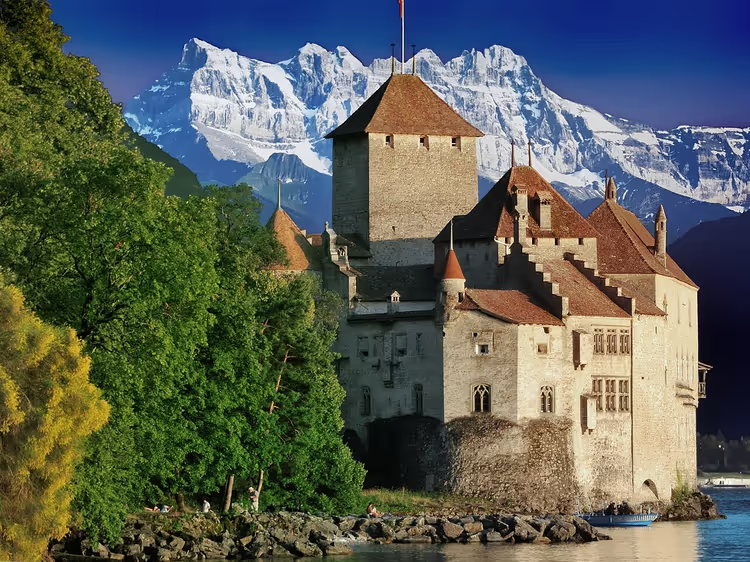
The castle stands on a rock right in Lake Geneva, on the eastern shore. A train runs here from Montreux, so a visit to the castle is easy to combine with a stroll along the waterfront. Inside, you'll walk through the halls, the chapel, and the dungeons where prisoners were held.
An adult ticket costs 15 CHF, a child ticket for ages 6 to 15 costs 7 CHF, and a family ticket costs 35 CHF (as of 09/2026, official castle website). From April to September, the doors are open from 9:00 to 19:00, with the last entry at 18:00. From November to February, the castle closes at 17:00, and tickets are recommended to be purchased online.
 © Zacharie Grossen · CC BY-SAPhoto: Zacharie Grossen, CC BY-SA (https://creativecommons.org/licenses/by-sa/3.0), Wikimedia Commons
- How to get there: by train from Montreux or Lausanne to Veytaux-Chillon station, then on foot along the lake.
- Who it's for: for those who care about more than just the facade: there is a permanent exhibition inside.
- The catch: the castle is closed on December 25 and January 1, and in winter the last entry is already at 16:00 (as of 09/2026, castle schedule).
- Tickets: see tickets and tours on GetYourGuide.
Matterhorn
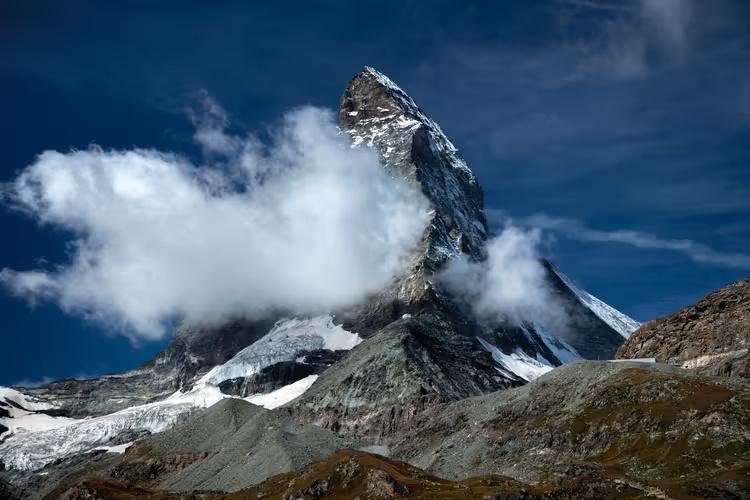
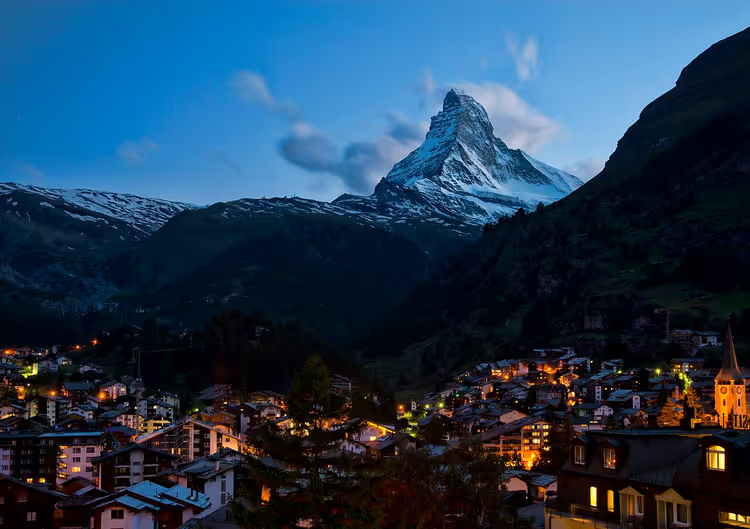
The Matterhorn rises above Zermatt and is considered one of the most recognizable peaks in the Alps. You don't need mountaineering experience for the trip: hundreds of kilometers of hiking trails are laid out around the village. A cable car takes you to Matterhorn Glacier Paradise on the border with Italy.
- How to get there: by train to Visp, then by narrow-gauge railway to Zermatt, where regular cars are not allowed.
- Where to go up: cable cars lead to the glacier and to viewing platforms below the summit, and some lines operate in summer too (as of 09/2026, Matterhorn Ski Paradise).
- Who it's for: for hiking, panoramic views, and going up to the glacier.
- Not for: climbing to the summit without a guide, because the routes here are designed for experienced mountaineers.
- The catch: Zermatt remains one of the most expensive places in the country, and rooms in February are booked well in advance.
Kapellbrücke
The Kapellbrücke spans the Reuss River in the center of Lucerne. The covered wooden bridge was built in the 14th century and is considered the oldest in Europe. Under the roof you'll see old paintings: some were lost in a fire, but restorers brought them back.
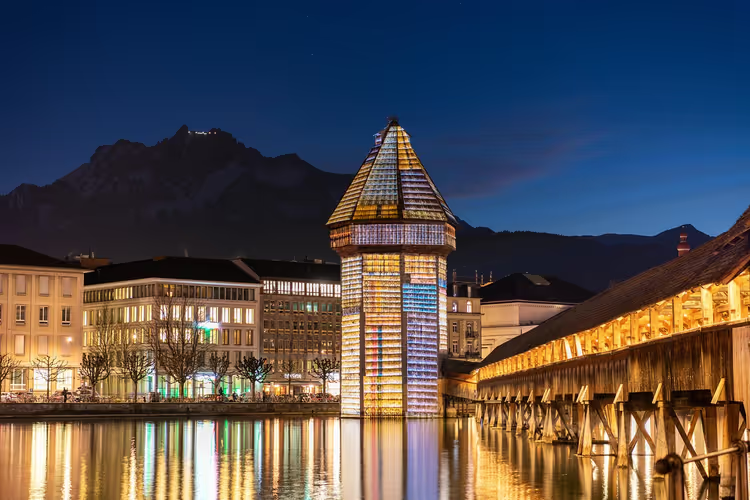
- How to get there: from Lucerne train station, walk along the river embankment; the bridge appears right after Rathausquai square.
- Cost: admission is free, and the bridge is open around the clock.
- Not for: those seeking quiet, because in summer crowds stroll here.
Rhine Falls
The Rhine Falls (Rheinfall) roar near the town of Neuhausen am Rheinfall, close to Schaffhausen. It is the largest waterfall in Europe by water volume. From the shore you'll hear the flow before you see it, and the best view opens up from Schloss Laufen castle.
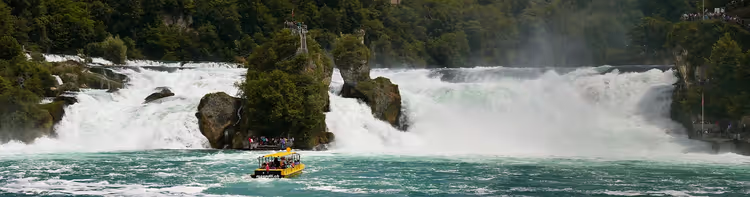
- Cost: access to the basin at Schlössli Wörth is free, while entry to Schloss Laufen with its panoramic trail and platforms costs 5 CHF for adults and 3 CHF for children aged 6 to 15 (as of 09/2026, rheinfall.ch).
- Boat trip: a short ride to the rock costs about 10 CHF, a longer one about 17 CHF (as of 09/2026, boat tour operator).
- How to get there: by train from Zurich to Schloss Laufen am Rheinfall station, then on foot through the castle grounds.
Swiss national cuisine
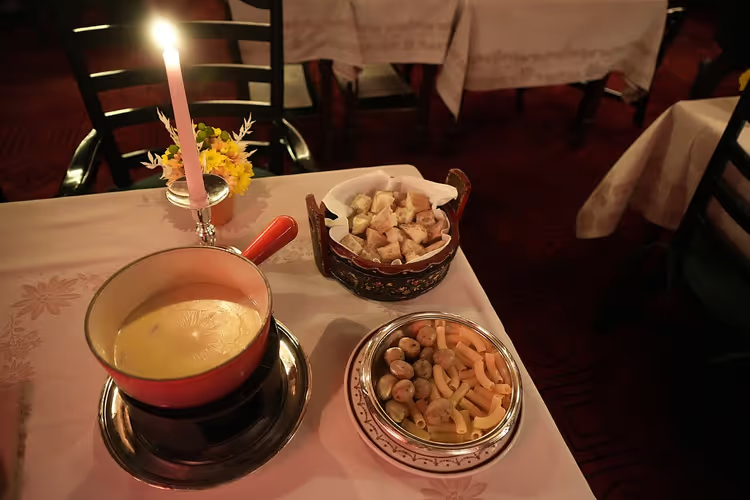
Local cuisine grew out of mountain farming: cheese, potatoes, bread, and meat. You already know the menu of mountain restaurants: Fondue and Raclette. Fondue is made from melted cheese into which you dip bread. Raclette is served differently: the cheese is melted and scraped onto a plate with potatoes, pickles, and onions.
Rösti is a potato galette made from coarsely grated potatoes. It's served with sausages, mushrooms, or an egg, and especially often in winter.
 © Peachyeung316 · CC BY-SAPhoto: Peachyeung316, CC BY-SA (https://creativecommons.org/licenses/by-sa/4.0), Wikimedia Commons
Tirggel is baked only for Christmas: this honey cookie with spices is sold at Zurich fairs. Papet vaudois is made from leeks and potatoes and served with sausages. You should try dishes like these in mountain chalets: portions there are bigger than in central Zurich or Geneva.
Ski resorts in Switzerland
Skiing remains the country's main winter activity. There are dozens of resorts here, and four of them give a sense of the different types of skiing: from a glacier to relaxed family slopes.
Zermatt
Zermatt operates year-round. In winter, the slopes of three sectors under the Matterhorn are open; in summer, the lifts lead to the glacier. With an international ski pass, you can cross over to the Italian side, to Cervinia.
 © chensiyuan · CC BY-SAPhoto: chensiyuan, CC BY-SA (https://creativecommons.org/licenses/by-sa/4.0), Wikimedia Commons
- Ski area: about 200 km of slopes, and the international ski pass adds another 160 km in Italy (as of 09/2026, official resort website).
- Who it's for: confident skiers and those who want to ski in summer.
- The catch: you leave your car in Täsch; from there, only a train goes into the village.
- Hotels: hotel prices in Zermatt on Trip.com.
Champoussin
Champoussin and neighboring Les Crosets are part of the Val-d'Illiez municipality in the Dents du Midi region. This is the Swiss side of the Portes du Soleil area, where lifts connect the country to French resorts. There are no parties and late-night crowds like in Zermatt.
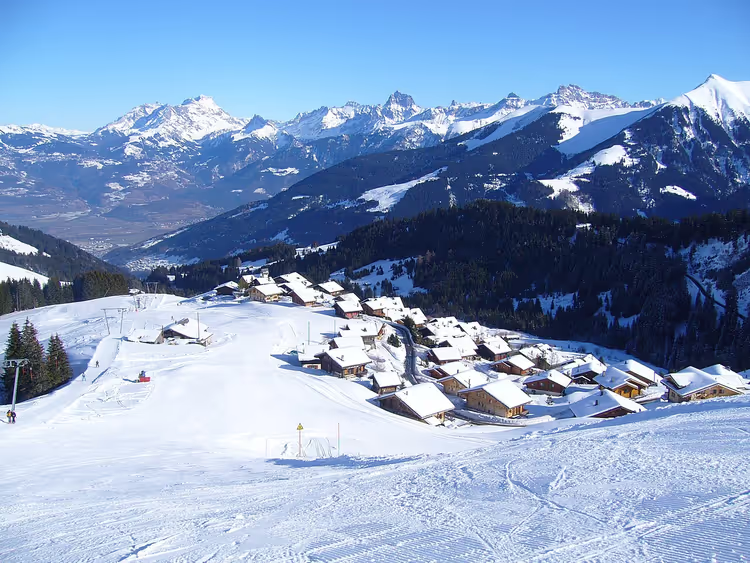 © James Preston · CC BYPhoto: James Preston, CC BY (https://creativecommons.org/licenses/by/2.0), Wikimedia Commons
- Ski area: lifts lead to the border and onward into the French part of Portes du Soleil (as of 09/2026, Portes du Soleil).
- Who it's for: families and those who want a quiet evening after skiing.
- How to get there: by train to Aigle, then on a narrow-gauge railway through the valley.
Verbier
Verbier is part of the 4 Vallées area, the largest in Switzerland. Freeriders value it for its off-piste routes, while beginners find gentle slopes near the lower stations.
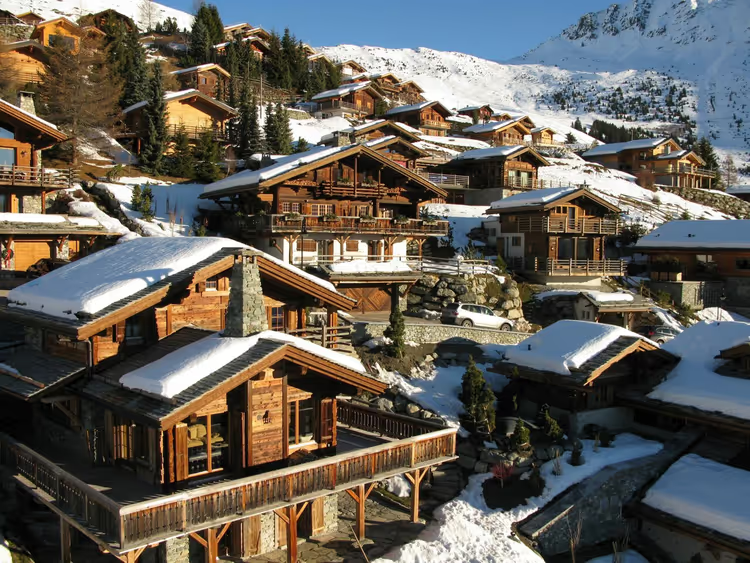 © Leo-setä · CC BYPhoto: Leo-setä, CC BY (https://creativecommons.org/licenses/by/2.0), Wikimedia Commons
- Ski area: 410 km of slopes and freeride routes shared by six resorts (as of 09/2026, Verbier 4Vallées).
- Who it's for: confident skiers and freeriders who want long descents.
- The catch: the upper stations close in strong winds, so a day on the glacier may not happen.
Villars-Gryon
Villars-Gryon sits on a terrace above the Rhône valley, between Lake Geneva and the Alps. The skiing here is smooth: long blue and red runs suit beginners and those returning to skiing after a break. The longest run, Bouquetin, stretches for several kilometers.
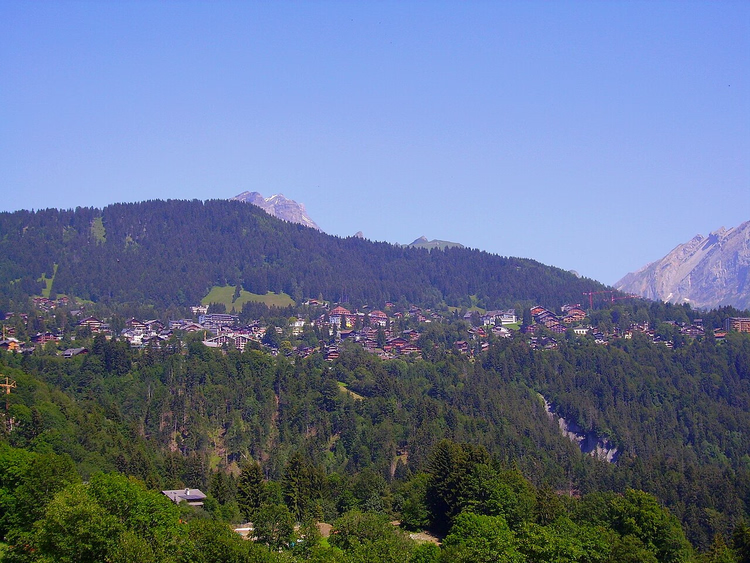 © Bledard92 · CC BY-SAPhoto: Bledard92, CC BY-SA (http://creativecommons.org/licenses/by-sa/3.0/), Wikimedia Commons
- Who it's for: beginners and families, because most of the slopes here are not technical.
- Not for: freeriders who want steep, ungroomed slopes.
- How to get there: by train to Bex, then the BVB train goes directly to Villars.
Other things to do: trains, wine, and thermal baths
If skiing isn't for you, the country offers just as many alternatives. Some of them operate year-round, while others depend on the season.
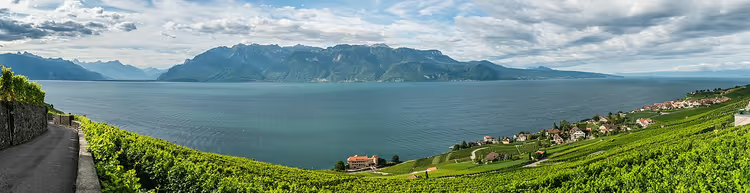 © Krzysztof Golik · CC BY-SAPhoto: Krzysztof Golik, CC BY-SA (https://creativecommons.org/licenses/by-sa/4.0), Wikimedia Commons
Panoramic trains
Glacier Express and Gotthard Panorama Express cross the Alps in cars with panoramic windows. Seats on the Glacier Express should be booked in advance: in summer you can't buy a ticket without a reservation. Timetables and booking are available on the official Glacier Express website, and for trains across Switzerland check Trip.com.
Lavaux Vineyards
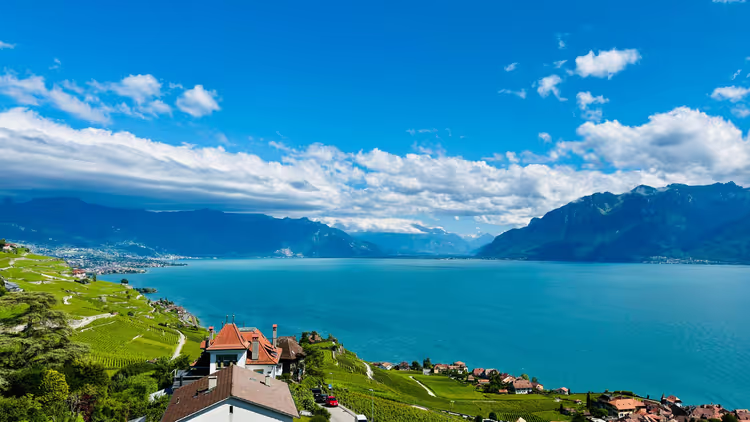
The Lavaux terraces stretch along Lake Geneva between Lausanne and Vevey. Winemaking here goes back almost a thousand years, and the terraces themselves are a UNESCO World Heritage site. Walking routes connect villages where wine is poured right at the wineries.
Thermal spas
Swiss thermal baths grew out of resort medicine. In Davos, lung conditions were treated in sanatoriums as early as the 19th century, but it is not considered a thermal resort. Today people go to the thermal baths of Leukerbad and Bad Ragaz for spa and post-ski recovery, not for medical treatment.
Tours and tickets in Switzerland
Guided tours, skip-the-line tickets and activities — most offers can be cancelled free of charge.
See offers on GetYourGuideThe widget loads once you give your consent.
⁉️🤔 Frequently asked questions
How many days do you need for a first trip to Switzerland?
Plan a week if you want to combine mountains and lakes. Two to three days go to Lake Geneva and Chillon Castle, a day to Lucerne with the Chapel Bridge, and the rest to Zermatt. Trains run frequently, so transfers don't eat up a whole day.
When is the best time to visit Switzerland?
The shoulder season is good for cities: from April to June castles and waterfalls are open, and there are fewer people. The ski season in Zermatt and Verbier runs from late autumn to spring, and you can ski on the glacier year-round. In summer the mountains are cooler than the valleys of Geneva and Zurich.
Do you need a car to travel around Switzerland?
No, trains are more convenient between cities, and there's space for a suitcase in the cars. For SBB tickets and exceptions for remote valleys, see the beginning of the article.
How much does entry to Chillon Castle cost?
An adult ticket costs 15 CHF; for child and family rates see the "Chillon Castle" section above. An audio guide costs 6 CHF, and the castle app costs 3 CHF (as of 09/2026, official castle website). It's recommended to buy tickets online, especially in July and August.
Where should you ski if you're a first-timer?
Start with Villars-Gryon or Champoussin. They have more gentle blue and red runs, and rentals and schools are located at the base stations. Zermatt and Verbier also have beginner slopes, but the routes are longer and prices are higher.
In short: what to book
For a relaxed week with the family, Villars-Gryon and Champoussin are a good fit. Chillon Castle covers the cultural side, and you can build a short trip without skiing around Lucerne and the Rhine Falls.
- If you have a week and it's your first time in the country: Lake Geneva, Lucerne, and one ski resort.
- If you're going only to ski: take Zermatt or Verbier for a full day.
- If you don't have a car: trains and panoramic routes replace a rental car.
Compare options in advance: hotels in Zermatt on Trip.com and tours on GetYourGuide.

A small editorial team writing guides for independent travel. We travel ourselves, but we haven’t been everywhere, so we check prices, opening hours and how to get there against official sources.