
















Iceland's winter Ring Road: 14 rules to check before departure
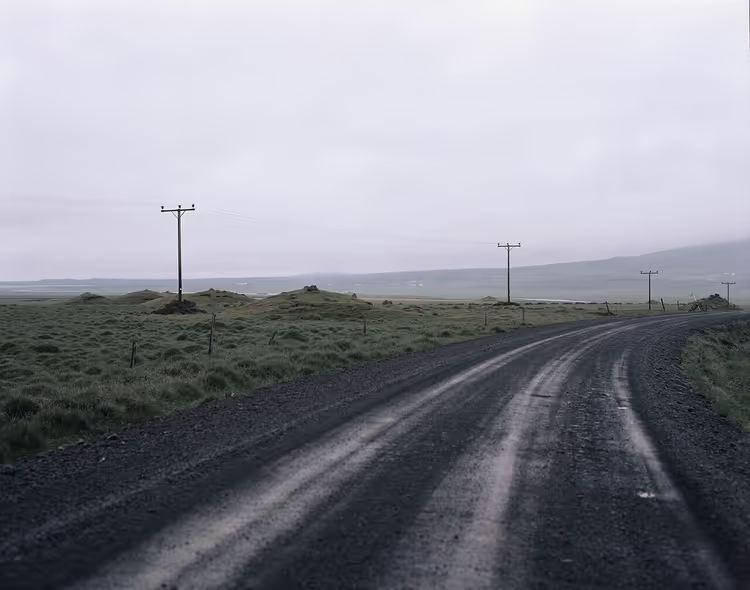
The Ring Road around Iceland looks calm only on a map. In winter there is ice, crosswinds, and stretches that easily take twice as long. The asphalt turns to gravel in places, and single-lane bridges appear even on the main route.
Route 1, the Ring Road, loops around the island for nearly 1,339 km (as of 09/2026, Icelandic Transport Authority data). Part of the road is still at the level of 1940s roads: blind curves, narrow passages, one-lane bridges. Between March and November you can drive it comfortably in a regular car. In winter that plan only works with preparation.
There is no single secret that solves everything. A safe winter leg comes down to the car, connectivity, road information, and a plan B. Below are 14 rules the editorial team recommends checking before leaving Keflavik.
Ad: this article contains affiliate links, we earn a commission if you book through them, at no extra cost to you.
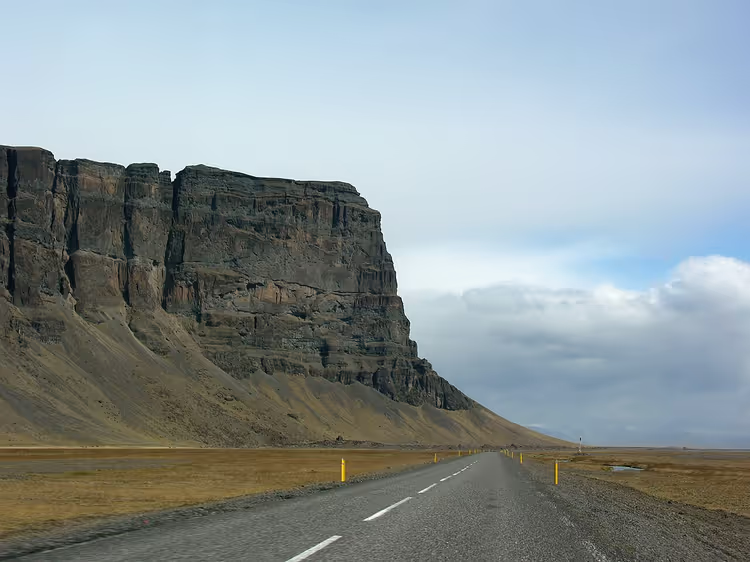 © Hansueli Krapf This file was uploaded with Commonist . · CC BY-SAPhoto: Hansueli Krapf This file was uploaded with Commonist ., CC BY-SA (https://creativecommons.org/licenses/by-sa/3.0), Wikimedia Commons
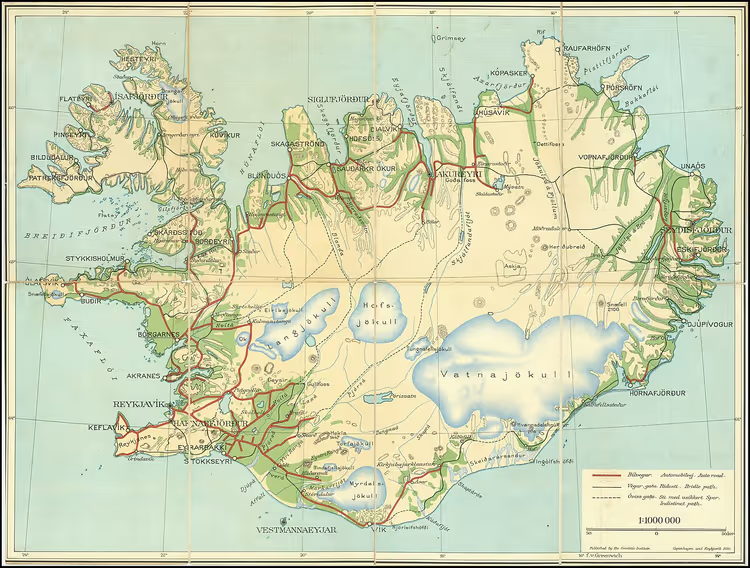
1. First, think about whether you should drive in winter
💡 In short:
- Check road conditions on Vegagerdin the morning of the same day.
- Book an all-wheel-drive car with winter tires and gravel insurance.
- Allow extra time: a winter leg takes one and a half to two times longer than a summer one.
- Install 112 Iceland on your phone and keep it charged.
- Traffic rules and winter tires: verified 09/2026 on the official transport authority website.
In Iceland they say: if you don't like the weather, wait five minutes. That is not a joke. A front comes in from the sea within an hour, and a road that was open in the morning is under snow by lunchtime.
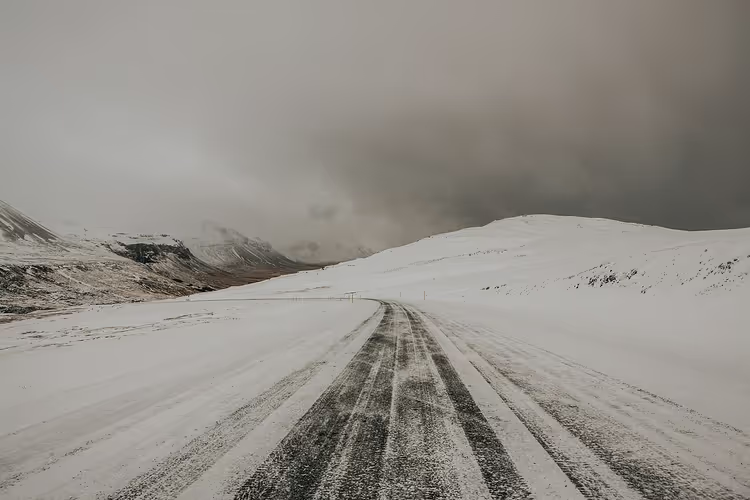
In the southern lowlands the average winter temperature stays around 0 °C (as of 09/2026, Icelandic Met Office). Snow and rain on the same day are normal here. The danger is not the temperature, but that water on the asphalt freezes by evening and the wind pushes the car out of its lane.
Closures happen year-round, and noticeably more often in winter. Navigation apps remain a poor advisor in this. They know nothing about a closed section or a washed-out road, so you risk driving into a dead end. According to SafeTravel, you cannot rely on Google Maps alone in Iceland.
The idea of a winter trip itself is not forbidden. People do drive the Ring Road in January, just with short legs and a willingness to turn back halfway. What ends worst is trying to fit a summer itinerary into a winter day: it gets dark early, and the road takes longer than it looks on the map.
Add two things to your morning check. First: how much daylight will be left after the leg. Second: where the nearest gas station and hotel are if the section closes. This plan takes ten minutes and removes half the anxiety on the road.
In winter on the Ring Road you need not only documents and a full tank, but also the willingness to cancel a day. That flexibility is exactly what people who build their route from summer photos lack.
2. Get all-wheel drive and winter tires
For the winter Ring Road you need all-wheel drive, not hope in careful driving. Winter tires are mandatory in Iceland from November 1 to April 14 (as of 09/2026, Icelandic Transport Authority). Studded tires are allowed during the same period, and they grip noticeably better on ice.
The car class matters no less than the tires. Toyota Land Cruiser and Dacia Duster are the most common in Icelandic rental fleets. Ground clearance and all-wheel drive matter more on gravel than cabin size and fuel consumption.
Standard insurance does not cover damage on F-roads, meaning the mountain roads in the interior. If you turn onto one without the rental company's permission, you pay for repairs yourself. Separately ask about gravel protection and sand and ash protection. In winter and spring, sharp stones and volcanic ash hit the body and glass.
There are almost no guardrails on Icelandic roads. On an icy curve, only your tires and your speed hold the car, and the shoulder drops away without warning. Ask at the counter whether your car has studded tires or regular winter tires.
It is easier to compare classes and book a car in advance on DiscoverCars. Get all-wheel drive right away: in winter an upgrade on the spot costs more, and there are fewer available cars.
3. Buy a SIM card or get a router
Mobile coverage in Iceland reaches almost the entire island. Public Wi-Fi outside Reykjavik and Akureyri is almost nonexistent, and on an empty road you can go hours without seeing another car. Connectivity here is not for messaging, but for calling for help.
Iceland has an emergency alert system. SMS messages arrive even on prepaid cards and eSIMs, and these messages are worth reading carefully. They warn about road closures, storm winds, and volcanic gases.
Check coverage before the trip, not after the fact. On popular sections along the Ring Road there is enough signal, but in mountain passes and highlands it disappears. Write down the day's route on paper as well, so you do not depend on the network.
There are three options: buy a SIM card at Keflavik Airport or in Reykjavik, rent a portable router for the whole trip, or install an eSIM for Iceland on Yesim. The last option is more convenient than the others: it activates before departure and doesn't require waiting in line at the store.
Before leaving the city, check that the card works and that your phone doesn't die after half a day of navigation. A small thing that stops being small in freezing weather.
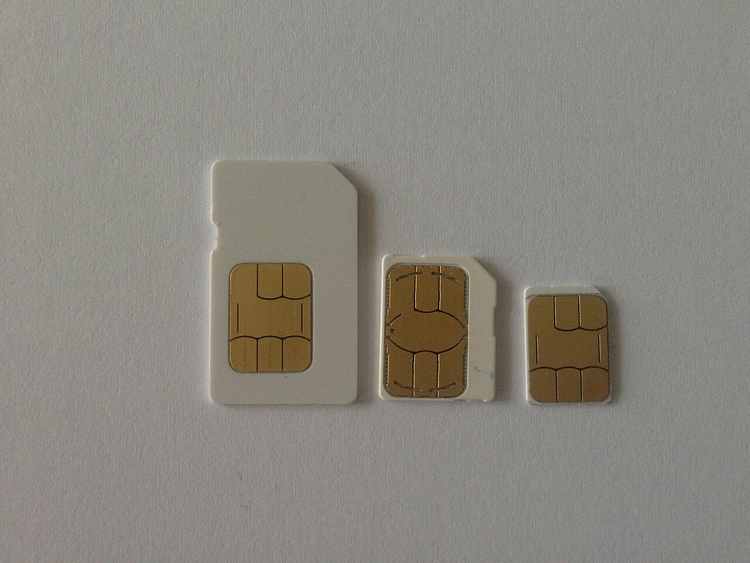 © Bidouille82 · CC BY-SAPhoto: Bidouille82, CC BY-SA (https://creativecommons.org/licenses/by-sa/3.0), Wikimedia Commons
4. Bookmark the Vegagerdin website
Road closures in Iceland happen at any time of year. The Vegagerdin website updates in real time, and local drivers check it as regularly as the weather forecast. A minute in the morning and another before the evening leg pay off.
Look not only at the color of a road section, but also at the wording. What an Icelander marks as "patchy ice" usually means a solid sheet of ice for a driver from Germany. Winter driving experience in the Alps helps less here than you might think.
Review the traffic rules before the trip (as of 09/2026, according to the rescue service):
What is regulated | Rule |
|---|---|
Paved road outside town | 90 km/h |
Gravel road outside town | 80 km/h |
Town | 50 km/h |
Single-lane bridge | 50 km/h |
Blood alcohol | 0.2 ‰ |
Low beams | on year-round |
Keep twice the summer following distance, and brake well before turns. On ice, the brake pedal works like an on/off switch.
5. Install 112 Iceland on your phone
The free 112 Iceland service sends your coordinates to the Icelandic search and rescue service. Fill in your name and an emergency contact, the rest works on its own.
The point is the check-in feature. You register along the way, and rescuers have a trail of points. If you lose connection, they'll know where to look for you and won't waste hours searching for the location.
The service works both in a car and on a hiking trip. For a winter trip, this is a must-have, not a nice extra.
6. Bring a paper map of Iceland
Online maps are convenient as long as you have a connection. Download offline maps in advance, but don't treat them as a guarantee: the service doesn't always know about closed sections and washed-out roads.
You can bring your own GPS navigator or rent one from the rental company for a couple of euros a day. The second option saves you extra luggage and arguments with a device that leads you down something that can hardly be called a road.
A paper map is for something else. It shows where a road is a mountain road and suggests a detour when the main route is closed. It also works when your phone freezes or dies.
7. Fill up at every opportunity
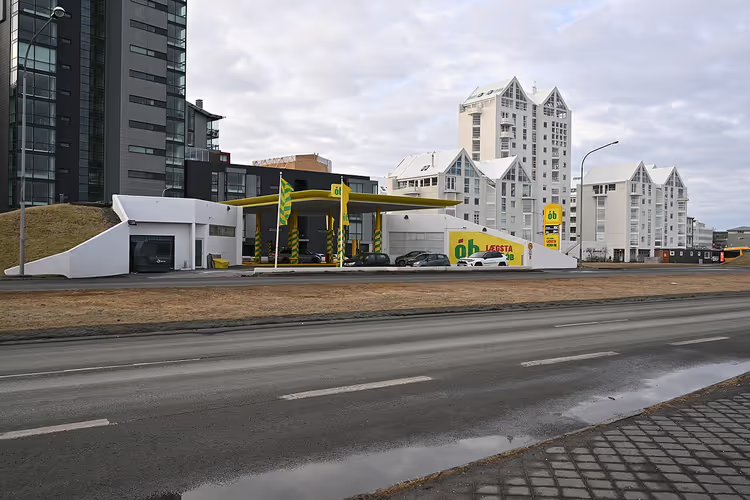
Many Icelandic gas stations are unstaffed: just a pump and a terminal. Payment is by card only, so keep at least two cards on you. Banks sometimes decline a payment, and on an empty road that ends badly.
A PIN is mandatory, even for a credit card. Check it before the trip, not in the cold at the terminal.
On the East Coast, there are long stretches between gas stations. The rule is simple: when you see a gas station, fill the tank. Fuel in Iceland is expensive (as of 07/2026, Wayfarer), but standing with an empty tank off the highway costs more.
8. Check what fuel your car takes
Before leaving the rental lot, ask one question and get one answer: gasoline or diesel. A mistake here costs more than the entire rental for several days.
The process is simple. Ask the staff member about the fuel type. Look at the sticker on the fuel filler flap. Check what is written in the rental agreement. Take a photo of the sticker with your phone. Only then drive away.
In Iceland, pumps are labeled in Icelandic: bensín means gasoline, dísel means diesel. Green and black nozzles mean different things at different chains, so don't trust the color, look at the label.
The mistake happens out of nowhere. A late arrival, sideways snow mixed with rain, fatigue after a flight. In a rush, people simply don't notice the sticker on the filler flap and find out about their mistake a minute after refueling.
If you put in the wrong fuel, don't start the engine. This will preserve the fuel system and reduce the repair bill. Call the rental company's roadside assistance: at major companies it operates around the clock. The car will then be taken to a service center and the tank flushed.
Before the tow truck arrives, don't try to get to town on your own. An engine running on a mixture doesn't last long, and repairing the fuel system costs many times more than draining and flushing. Save the rental company's roadside assistance number in your phone before you leave, not at the moment of breakdown.
You will receive the full bill for the tow truck and flushing, standard insurance does not cover such mistakes. Checking the sticker takes ten seconds and saves a day of your trip.
9. Plan your day around the short daylight
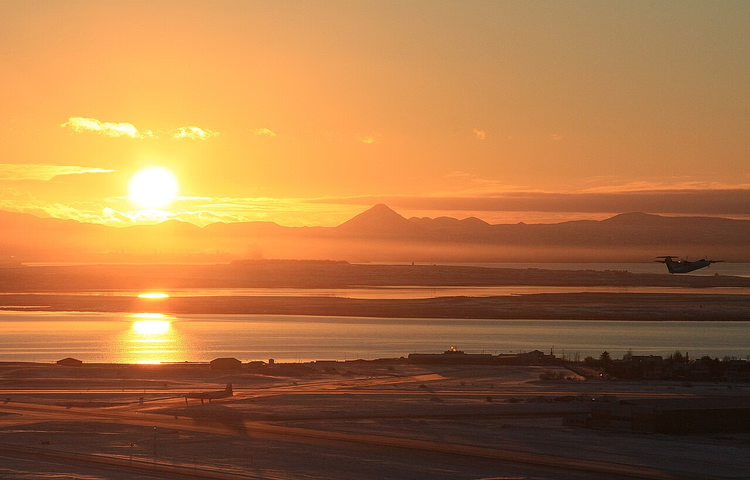
The shortest day in Reykjavik gives about four hours of light (as of 09/2026, timeanddate). In the north of the island, daylight is even shorter, so your schedule should adapt to sunrise, not the other way around.
Leave with the first twilight, and save the long stretch for the daylight window. Plan fewer sights than in summer: in daylight you'll manage about half of a summer itinerary.
Navigating an icy road in complete darkness is exhausting. If a stretch does fall at night, reduce your speed and keep a larger following distance.
 © Helgi Halldórsson from Reykjavík, Iceland · CC BYPhoto: Helgi Halldórsson from Reykjavík, Iceland, CC BY (https://creativecommons.org/licenses/by/2.0), Wikimedia Commons
10. Watch for reindeer on the East Coast
Reindeer live only on the East Coast of the island. In summer they move to the highlands, and in winter they come down to the lowlands for lichen and venture out to the road.
In winter there are more reindeer on the road than in summer, and spotting them at dusk is hard: dark fur blends in with the asphalt. Slow down on stretches where there is open field or brush on both sides.
If one reindeer crosses the road, expect the rest: the animals move in a group. A sharp maneuver on ice is more dangerous than a collision at low speed, so brake smoothly and don't swerve.
11. Put toilet paper in your luggage
Self-service at Icelandic gas stations means a pump and a terminal, there is no restroom there. An hour or more easily passes between two gas stations, and there are almost no stops along the way.
Toilet paper, wet wipes, a trash bag, and a supply of water will come in handy in the car. It costs pennies and solves half the everyday problems of a winter drive.
 © G. Edward Johnson · CC BYPhoto: G. Edward Johnson, CC BY (https://creativecommons.org/licenses/by/4.0), Wikimedia Commons
12. Keep a backup route and a backup hotel
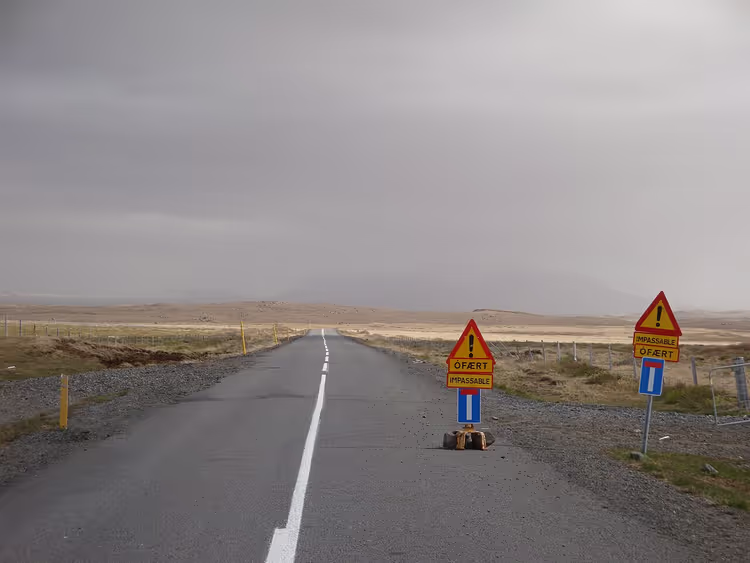
Weather in Iceland can close a road so that you can't reach your booked hotel. This is not a rare scenario, it's a normal risk of a winter trip.
Prepare alternatives in advance. Write down two or three hotels along the route that you can reach at night. Keep a second card or cash for an unexpected night.
Don't leave drinks in the cabin in freezing temperatures. Water in bottles freezes and bursts the plastic, and sugary drinks leave a sticky mess all over the car.
Near Jökulsárlón there are farm guesthouses, such as Hali Country Hotel. If the road closes late in the evening, you won't be able to get from there to Reykjavik, and you'll have to stay overnight where you are.
Storm winds close even the stretch between Keflavik Airport and Reykjavik, which is less than an hour's drive. Then you'll be stuck in the town until morning, and that's a normal scenario, not a disaster.
Count your time honestly. A stretch on the Ring Road in winter takes one and a half to two times longer than in summer, and the daylight window in December is enough for about four hours. That means one long segment and one or two short stops fit into a day, not five waterfalls from a summer list.
Put an overnight emergency kit in the car: water, chocolate, warm socks, a power bank, and a blanket.
Sleeping on the roadside in a storm is a bad idea: the wind rocks the car, and the cabin cools down quickly. It's better to drive to any open hotel and wait it out there.
Keep a shovel and a tow rope in the car. In winter they're not for heroics, but for pushing your car out of a snowdrift or helping a neighbor on the roadside.
Leave your route and checkpoints with loved ones. The Icelandic rescue service advises registering your travel plan in advance: if you don't get in touch, rescuers will at least know where to look for you.
Check the forecast for the next day every evening. If storm winds are predicted, it's better to postpone the drive rather than test your luck on an empty road.
 © User:JøMa · CC BYPhoto: User:JøMa, CC BY (https://creativecommons.org/licenses/by/3.0), Wikimedia Commons
Book a hotel along the Ring Road with free cancellation. Plans here are changed by the weather, not by you, and a non-refundable booking turns into lost money. You can look at options on Trip.com.
13. Know how to change a tire in freezing weather
Volcanic basalt on gravel sections cuts tires as easily as a knife. A puncture on the Ring Road in winter is not a rarity, it's a matter of time.
Before leaving the rental lot, check the spare tire. Make sure the jack and lug wrench are in place and that the spare is inflated. In the dark on the roadside it's too late to look for them, and in freezing weather it's unpleasant.
Change the tire on a level surface, turn on your hazard lights, and set up a warning triangle. Work in gloves: metal in freezing weather burns your fingers.
 © Christian Bickel · CC BY-SAPhoto: Christian Bickel, CC BY-SA (https://creativecommons.org/licenses/by-sa/2.0/de/deed.en), Wikimedia Commons
14. Book several winter excursions
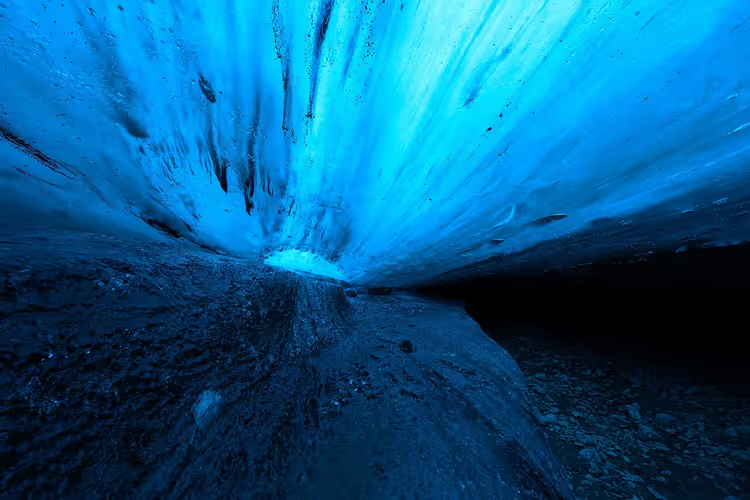
Some winter attractions are accessible only with a guide. A glacier, an ice cave, a snowmobile, and snorkeling in a fissure require equipment and permits that an independent driver doesn't have.
The list is short, but every item is tried and tested:
- Sólheimajökull glacier hike. Pickup from Reykjavik, with stops at Seljalandsfoss and Skógafoss waterfalls along the way. No experience needed, gear is provided on site.
- Sólheimajökull hiking without ice climbing. Same transfer, less adrenaline: blue ice and the black Atlantic beaches nearby.
- Golden Circle with a snowmobile. You can't drive your own car up to the base camp on Langjökull, but the tour includes the ascent.
- Snorkeling in the Silfra fissure. The water stays at 2-4 °C year-round (as of 09/2026, Wayfarer), so a guide and a dry suit are mandatory.
- Northern lights by Super Jeep. The vehicle gets away from Reykjavik's city lights; the season runs from September through March.
Book tours in advance: winter dates sell out quickly, and providers usually reschedule for free if the weather turns bad. You can browse options and prices on GetYourGuide. A glacier or Silfra ticket doesn't replace a rental car, it complements it.
If you're going to Silfra, take a morning slot. The fissure gets more crowded later in the day, and the water is cold at any hour, so the only thing you gain is time.
 © Eric Kilby · CC BY-SAPhoto: Eric Kilby, CC BY-SA (https://creativecommons.org/licenses/by-sa/2.0), Wikimedia Commons
Leave a weather buffer here too. Tours get canceled in strong winds, and it's better to find out the evening before than to stand in an empty parking lot in the morning.
Compare tours by travel time, not by price. Trips south from Reykjavik take a full day, while the Golden Circle fits into half a day. If your daylight window is short, pick something closer to the city.
Don't plan more than one tour per day. There's a drive between them, and in winter it goes slower than in summer. Two activities back to back can easily turn into night driving on ice.
Tours and tickets
Guided tours, skip-the-line tickets and activities — most offers can be cancelled free of charge.
See offers on GetYourGuideThe widget loads once you give your consent.
⁉️🤔 Frequently asked questions
Can you drive the Ring Road in winter in a regular car?
Technically yes, practically it is not worth it. In winter you need all-wheel drive and winter tires, and on the gravel sections of the East Coast a regular car loses traction. Rental companies specifically prohibit mountain F-roads. If saving money matters more than the experience, choose a trip between March and November.
Are winter tires mandatory in Iceland?
Yes, they are mandatory from early November to mid-April, and studded tires are allowed during this period. Rental cars in winter are usually already equipped, but you should inspect the tires when picking up the car. Also check gravel insurance: it covers damage from stones kicked up from under the wheels.
How much daylight can I use in winter?
In Reykjavik in December there are about four hours of light, less in the north of the island. Plan one short leg per day and keep a backup option in case a road closes. Drive at night only when necessary and with a greater following distance.
What should I do if a road is closed?
Check the Vegagerdin website and stay in a town, not on the highway. Find a hotel along the route and move the leg to the morning. Keep a supply of water, food, and warm clothes: sometimes the wait takes more than a day.
Is there cell service on the Ring Road?
The cellular network covers almost the entire island, but there is no public Wi-Fi outside Reykjavik and Akureyri. Get a SIM card or eSIM and add the 112 service to your speed dial. Emergency SMS messages arrive even on prepaid plans.
In short: what is worth booking
The winter Ring Road is doable if the car, connectivity, and a plan B are sorted out before you leave. The rest comes down to the weather, which you check on the road authority website every morning.
The matrix is simple. If you need a car: all-wheel drive with winter tires and gravel insurance, book a rental car. If you want experiences: a glacier, the Golden Circle, Silfra, or the northern lights, find tours. If you want to sleep without surprises: a hotel with free cancellation along the route.
Start with the road report, not with photos. Then a long leg will stay an adventure, not a problem on the shoulder.

A small editorial team writing guides for independent travel. We travel ourselves, but we haven’t been everywhere, so we check prices, opening hours and how to get there against official sources.