





Canaries in January: where it is warm and when prices drop
In January, the Canary Islands have the mildest weather in Europe. On the southern coasts, daytime temperatures reach 21 °C while the rest of the continent is freezing. The figures come from climate normals, not resort promises (as of: 09/2026, AEMET).
The main planning factor is tied to January 6. After that date, prices drop while the weather barely changes.
If you want warmth, light, and walks, go for the second half of January. The sea remains cool, though, so a classic beach vacation is not in the cards. Below you will find island-by-island weather, an honest assessment of swimming conditions, and an events calendar.
Ad: this article contains affiliate links, we earn a commission if you book through them, at no extra cost to you.
Who January in the Canary Islands suits
💡 In short:
- Warm south: around 21 °C by day, 13-14 °C at night, water 19-20 °C (climate normals, AEMET data).
- The month is cool for swimming, but it is the best time for hiking and sightseeing.
- Prices drop after January 6 and stay low until carnival starts.
- Weather and water temperature by island: 09/2026, verified on the official AEMET website.
January suits you if you want warmth and light without summer heat, enjoy hiking, or can simply travel after January 6 and catch low prices.
It does not suit those who expect a warm sea, or those heading there in the first week of the month without wanting to pay premium rates.
Warm by day, cool in the evening. January in the Canary Islands feels like spring in the middle of a European winter, but it is not summer here.
Island weather in January
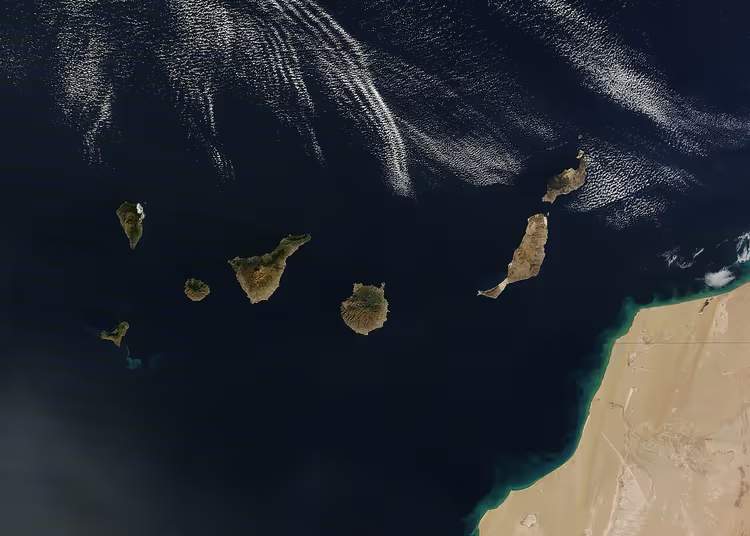
Below are climate benchmarks for the typical resort areas of each island (as of: 09/2026, according to AEMET). January remains the coolest month of the year, but the southern coasts stay warm and sunny. The northern slopes and western islands are changeable, and Teide has snow at this time.
Island | Day | Night | Water | Sun, hours | Rainy days |
|---|---|---|---|---|---|
Tenerife (south) | 21 °C | 14 °C | 20 °C | 6 | 5 |
Gran Canaria | 21 °C | 14 °C | 20 °C | 6 | 5 |
Fuerteventura | 21 °C | 13 °C | 19 °C | 6 | 4 |
Lanzarote | 21 °C | 13 °C | 19 °C | 6 | 4 |
La Palma | 20 °C | 13 °C | 20 °C | 5 | 8 |
La Gomera | 20 °C | 13 °C | 20 °C | 5 | 6 |
El Hierro | 20 °C | 14 °C | 20 °C | 5 | 6 |
La Graciosa | 21 °C | 13 °C | 19 °C | 6 | 4 |
All values are averages, so deviations can be noticeable in individual years. If you want stable weather, choose the southern parts of the islands rather than the mountainous and western areas.
Swimming in January: an honest assessment
January cannot be called a classic swimming month. The sea stays at 19-20 °C, which is enough for a short refreshing dip on a sunny day on the southern coast. For a long beach vacation, the water is too cool (as of: 09/2026, sea temperature according to AEMET).
Most winter visitors spend their time by the pool, and many hotels heat the water precisely during these weeks. When booking, check whether the pool is heated: during the New Year period this makes a noticeable difference. If you want serious sea swimming, come between June and November.
Hiking trails and snow on Teide
For hiking, January offers the best conditions of the year. The lowlands and mid-altitude belt have comfortable temperatures, the landscape gets greener every week after the first winter rains, and long-distance visibility is the clearest of the year (as of: 09/2026, Tenerife tourism office).
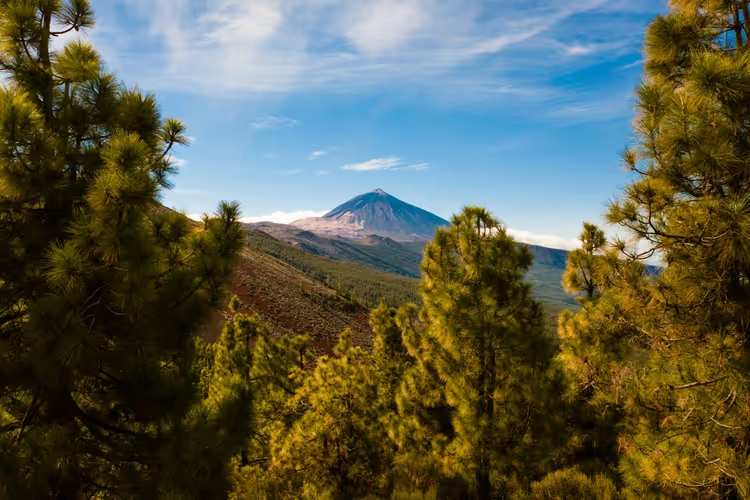
In the mountains, it is a real winter at this time. On Teide above roughly 2000 meters, snow regularly lies on the ground, sometimes for several weeks (according to the Teide National Park website, 09/2026). A morning trip to the snow and a beach evening on the southern coast have long become a January classic on Tenerife.
After snowfalls, roads into the national park are sometimes closed for clearing. Check road status before heading out, and book your cable car ticket in advance: lines are long on clear days. Hikes along the park's marked trails are best started in the morning.
If you want a ready-made program without doing the planning yourself, take routes and excursions on Tenerife.
Three Kings and almond blossom
January begins with the main family holiday of the Spanish calendar. On the evening of January 5, cities host Cabalgata, large parades of the Three Kings, and on the Canary Islands gifts are traditionally brought by them (as of: 09/2026, Spanish tourism office data).
For the holiday, people bake Roscón de Reyes, a ring-shaped cake with a surprise inside. If you are on the islands at this time, order it in advance: bakeries have lines before January 5.
Toward the end of the month, almond blossom begins in the mid-altitude mountain belt. Around Santiago del Teide on Tenerife and Tejeda on Gran Canaria, the slopes turn white and pink (as of: 09/2026, Santiago del Teide tourism office). The blossom coincides with the best hiking season of the year, and the peak of flowering falls in February.
The Almendros en Flor festival in Santiago del Teide usually runs from late January to late February, with hiking routes and a cultural program in the surrounding villages.
January's price window
January in the Canary Islands has two price tiers. Until January 6, Spanish holidays continue, and festive demand from all over Europe keeps prices high (as of: 09/2026, spain.info). After that date, the market turns quickly.
Right after January 6, with almost the same weather, one of the best price windows of winter opens, and it lasts until carnival starts.
If your dates are flexible, plan your trip for these weeks. That way you can book accommodation and find reasonable flight prices before carnival starts.
⁉️🤔 Frequently asked questions
What is the weather like in the Canary Islands in January?
By day on the southern coasts around 21 °C, at night 13-14 °C, sea water 19-20 °C (as of: 09/2026, AEMET summary). Rain falls on average 4-8 days per month, more often on the western islands and in the mountains. The values describe climate normals, not a forecast: in individual years they differ noticeably.
Can you swim in the sea in January?
A short swim is possible, swimming for hours is not. The water stays at 19-20 °C, and the southern coasts of Tenerife and Gran Canaria are the most comfortable on sunny days. Many hotels heat their pools, so check this when booking. For a full beach vacation, it is better to come between June and November.
Is it worth going to the Canary Islands in January?
Yes, if you want warmth, light, and walks rather than heat. It is warm by day, cool in the evening, and there is no snow in the lowlands. January is also the best time for hiking: the landscape turns green after the rains, and visibility is the clearest of the year. The month is not suitable for a beach vacation in the usual sense.
When is the cheapest time to fly to the Canary Islands in winter?
After January 6, when the holidays end. The favorable window lasts until carnival starts.
Is there snow on Teide in January?
Yes, above roughly 2000 meters snow lies regularly. Bring a warm jacket even when it is sunny below.
In short: what to book
If your dates are flexible, go for the second half of January: warmth in the south, clear views in the mountains, and low prices after the holidays.
- If you are going for sun: the south of Tenerife or Gran Canaria.
- If you want hiking: Teide and the mid-altitude mountain belt.
- If price matters: fly after January 6.
- If you need a heated pool: book your hotel in advance.
You can browse hotels in the Canary Islands on Trip.com.

A small editorial team writing guides for independent travel. We travel ourselves, but we haven’t been everywhere, so we check prices, opening hours and how to get there against official sources.