
















Car rental in Germany: how to remove the excess and save on parking
Renting a car in Germany saves time and nerves. Rail and airport strikes happen regularly, and with a rental car you don't depend on schedules. The price of freedom is made up of the daily rate, fuel, insurance, and parking, and the last three items are often more expensive than the rental itself. Here's a step-by-step breakdown: what documents you need, how to remove the deductible, how much a liter of fuel costs, and where to leave the car in a German city. We verified all prices and rules on 09/14/2026 using official sources.
Ad: this article contains affiliate links, we earn a commission if you book through them, at no extra cost to you.
What you need to rent a car in Germany
To rent a car, you'll need a passport, a driver's license, and a bank card in the driver's name. Without a card, most rental companies won't hand over the car, even if you're willing to pay cash. Driving experience is usually required to be at least one year, and the minimum driver age depends on the company. For powerful vehicle classes and for young drivers, the threshold is higher, and a surcharge applies.
💡 In short:
- Bring your passport, driver's license, and a credit card in the driver's name.
- Choose your rate in advance and decide whether you need insurance with no deductible.
- Budget for fuel, parking, and the deposit, not just the daily rate.
- Fuel prices and traffic rules: verified on 09/14/2026 on the official ADAC website.
The rental company blocks the deposit on your card, and the money doesn't come back on the day you return the car. The hold is released after two to four weeks, because police fines arrive with a delay. Plan for this timeline in advance.
Rental terms and the deductible
The standard contract includes third-party liability and collision coverage with a deductible. The deductible is the amount you pay out of pocket if the car is damaged. So don't take the "no deductible" promise in an ad at face value: check the actual rate, because cheap offers often have deductibles of several hundred euros.
Rental companies also sell GPS units, child seats, and the right to add a second driver. Young drivers are often offered an insurance upgrade, without which the contract won't be signed. Policy terms vary, so it's worth comparing them in advance: compare insurance terms.
Before you drive off, walk around the car and take a video. Ask them to record every scratch in the inspection report, otherwise the disputed amount will be deducted from your deposit.
Where to rent a car
 © Steffen Wurzel · CC BY-SAPhoto: Steffen Wurzel, CC BY-SA (https://creativecommons.org/licenses/by-sa/3.0), Wikimedia Commons
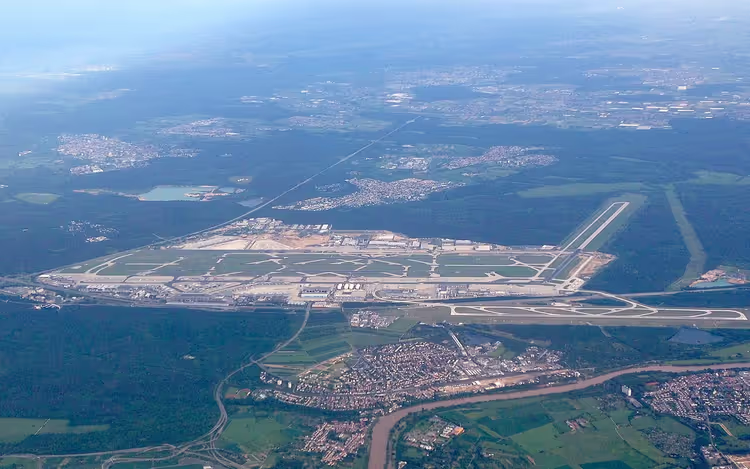
The main rental locations are concentrated at the airports in Frankfurt, Munich, and Düsseldorf. These hubs handle the bulk of tourist traffic, so they have the largest selection of cars. Major chain counters are also available in city centers, but usually outside the historic districts where driving is restricted.
Rental offices operate at train and bus stations, as well as in large hotels. If you're arriving at night, check the counter's opening hours in advance: some locations close in the evening, and keys are handed out at the parking lot using a code. Tickets to Germany are cheaper to book in advance: find a flight on Kiwi.com.
How much does a rental car cost
Rental companies revise prices almost daily: they depend on demand and the number of available cars on the lot. Booking early is almost always cheaper, and premium class costs several times more than economy. A minivan or SUV will cost more than a passenger car for the same period.
Picking up a car at the airport is more expensive than in the city: the rental company pays for counter space. Returning the car in a different city adds a fee, and sometimes it's outright prohibited by the contract. Calculate the total for the entire trip, not just a single day: compare car rental prices in Germany.
How much does fuel cost in Germany
The average price of a liter of Super E10 nationwide is 2.259 euros, diesel costs 2.321 euros per liter (as of 14.09.2026, ADAC average prices). On the autobahn, fuel is noticeably more expensive than in the city. The difference between individual stations reaches up to seven cents per liter, so it is worth comparing prices before refueling.
Since April 2026, gas stations raise prices only once a day, at 12 noon. It is more advantageous to refuel in the morning or shortly before noon, rather than in the evening, as was previously advised (according to ADAC's weekly review). Diesel is now more expensive than gasoline, and Super E5 costs five to six cents more than E10.
All gasoline cars of recent years are designed for E10, so there is no point in overpaying for E5. You will refuel the car yourself: almost all gas stations here are self-service, and you pay at the cash register.
Driving in Germany: what to know
 © Dietmar Rabich · CC BY-SAPhoto: Dietmar Rabich, CC BY-SA (https://creativecommons.org/licenses/by-sa/4.0), Wikimedia Commons
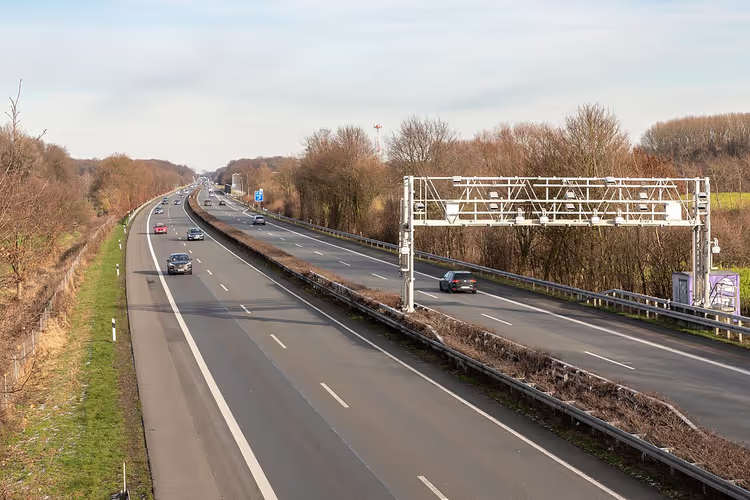
Rules in Germany are strictly enforced, and cameras are installed on almost every highway. The fine goes to the vehicle owner, meaning the rental company, which then forwards it to you along with a processing fee. Parking signs here should be read carefully: a mistake costs more than a paid garage.
Speed limits and fines
In built-up areas the limit is 50 km/h, outside the city 100 km/h, and on autobahns there is no general limit: instead, a recommended speed of 130 km/h applies (according to ADAC). If you exceed these limits, the fine depends on where you were caught:
Excess | In the city | Outside the city |
|---|---|---|
up to 10 km/h | 30 € | 20 € |
16-20 km/h | 70 € | 60 € |
21-25 km/h | 115 € and 1 point | 100 € and 1 point |
31-40 km/h | 260 € and 2 points, one month driving ban | 200 € and 1 point |
Source of figures: ADAC fine catalog, data 09/2026. For a repeat offense of more than 25 km/h within a year, a one-month driving ban is added to the fine (according to ADAC's fine table).
Environmental zones
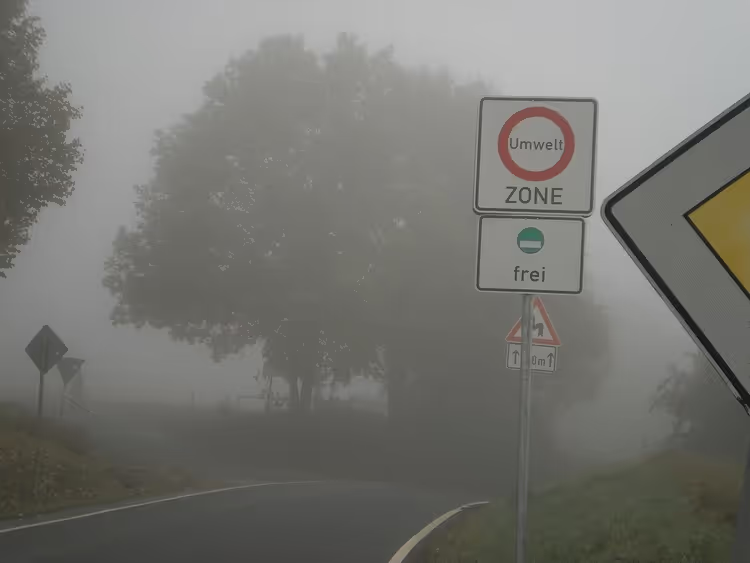
Major cities have Umweltzone zones, where only cars with a green sticker on the windshield are allowed. Rental companies usually provide such cars, but it is worth checking the sticker when you pick up the vehicle. Entering without one costs 100 euros, and you can also be fined for parking inside the zone (as of 09/2026, fine catalog).
You will see the Umweltzone sign at the entrance to the district. If you do not have the sticker, leave the car outside the zone boundary and continue by public transport.
 © LudwigSebastianMicheler · CC BY-SAPhoto: LudwigSebastianMicheler, CC BY-SA (https://creativecommons.org/licenses/by-sa/4.0), Wikimedia Commons
Child seats
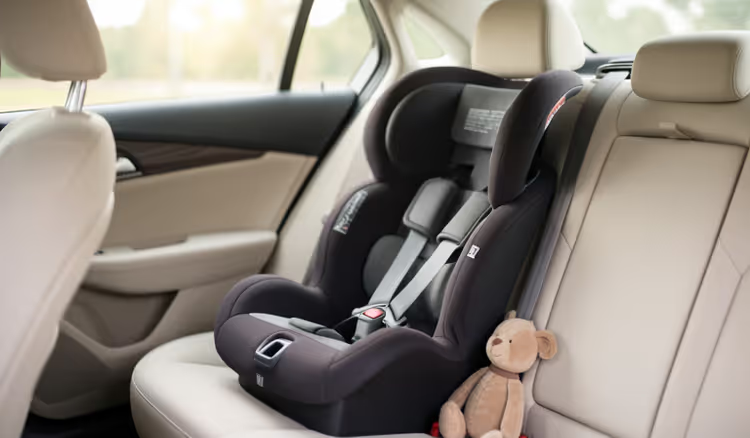
A child seat is mandatory until the child turns twelve or until their height exceeds 150 cm (according to ADAC). A child may ride in the front seat, but only in an appropriate seat. Driving without a seat results in a fine of 60 euros and one point in the Flensburg register, while an incorrectly installed seat costs 30-35 euros (as of 09/2026, ADAC child seat regulations).
It is cheaper to rent a seat with the car than to buy one locally. Tell the rental company the child's age and height in advance: suitable seats may run out at the pickup location.
 AIIllustrative image: AI-generated
Winter tires and difficult weather
In snow and ice, the car must be on tires marked Alpine, meaning with the mountain and snowflake symbol. Summer tires in such conditions can result in a fine and an entry in the register. Rental companies provide a winter set for an additional fee, so confirm this when booking.
When visibility is less than 50 meters, you may drive no faster than 50 km/h (according to ADAC data on weather restrictions). In Bavaria and the Black Forest, snow lies on the roads in winter, and in the Alps a car without chains may be turned away from certain passes.
Alcohol and phone use while driving
The alcohol limit in Germany is 0.5 per mille, and for drivers under 21 and those who have been driving for less than two years, a zero limit applies (according to ADAC). Exceeding it can result in a fine starting at 500 euros and a driving ban. Drinking and driving here costs more than any taxi ride.
Holding a phone while driving is also prohibited: you may only talk through a headset. To avoid roaming charges and searching for Wi-Fi for navigation, get an eSIM with data in Germany.
Parking in Germany
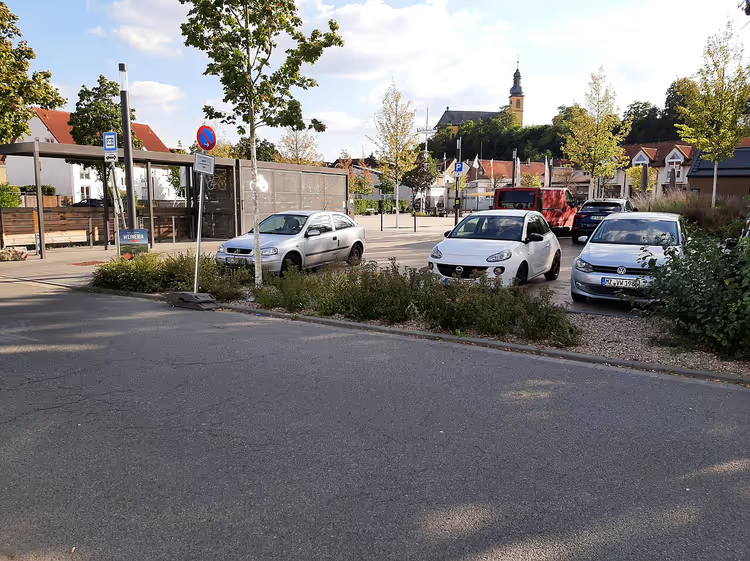
There are almost no free parking lots in city centers. Large free lots are concentrated in residential areas and outside the city, with shuttle buses running from there to the center. A stop for this shuttle is marked with a green letter H in a yellow circle.
Free parking and the Parkscheibe disc
Where parking is time-limited, you need a Parkscheibe disc showing your arrival time. The disc is sold at gas stations for a few euros, and you set the arrival time on the display. You can park on the roadside if there is no prohibiting sign nearby.
Signs specify the schedule: restrictions often apply on working days (werktags) or only during certain hours. The sign "Einfahrt und Ausfahrt Tag und Nacht freihalten!" prohibits leaving your car at an exit around the clock.
Paid parking and garages
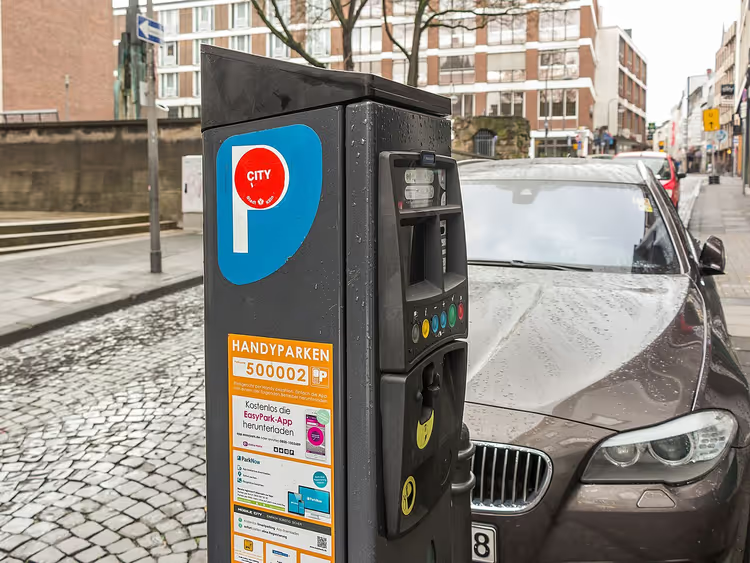
Paid roadside parking is indicated by the sign "Hier Parkschein lösen". You pay at a machine and place the receipt under the windshield. You definitely need coins: some machines do not give change and do not accept bills.
Parking type | Signage | How to pay |
|---|---|---|
Roadside without restrictions | no prohibiting sign | free |
Roadside with time limit | P sign and Parkscheibe disc | need a disc with arrival time |
Roadside with payment | "Hier Parkschein lösen" | coins in the machine, receipt under the windshield |
Garage and underground parking | Parkhaus, Tiefgarage | ticket, payment at the Kassenautomat |
Near airports, train stations, and shopping centers you will find multi-level garages and underground parking. At the entrance you get a ticket for free, and before exiting you insert it into the Kassenautomat machine and pay with coins, bills, or card. In many cities payment is handled through an app, and in Bewohnerparken zones you need a separate resident permit.
 © Raimond Spekking · CC BY-SAPhoto: Raimond Spekking, CC BY-SA (https://creativecommons.org/licenses/by-sa/4.0), Wikimedia Commons
If parking in the center eats into your budget, leave the car at a Park&Ride and take the train into the city: find train tickets in Germany. This way you avoid paying for a garage and spend less time in traffic.
⁉️🤔 Frequently asked questions
Do I need an international driver's license to rent a car in Germany?
For licenses issued in an EU or EEA country, an international driving permit is not required. If your license was issued outside the EU and the entries are not in Latin script, check with the rental company in advance. Ask in writing and keep the response: you won't have time to argue at the counter.
How do I get rid of the deductible?
Choose a rate with zero deductible or purchase additional insurance that covers the excess amount. Keep in mind that the deposit is not released immediately, but two to four weeks after returning the car. Check that it is not withheld as a repair charge. It's better to compare rates in advance, when you have time to read the terms.
Can I take a rental car outside Germany?
Only if the contract allows it. For some rates, crossing the border must be arranged in advance and for an additional fee, and for certain countries it is not permitted at all. Tell the counter staff where you are going and ask for written confirmation.
How much does a liter of fuel cost in Germany?
Average price as of 14.09.2026: 2.259 euros per liter of Super E10 (source: ADAC fuel figures). For diesel prices and the best time to refuel, see the fuel section. Fuel is more expensive on highways than in the city.
What happens if I enter an Umweltzone without a sticker?
You will be fined; the amount is listed in the environmental zones section (as of 09/2026, Umweltzone fine). Check the sticker when you pick up the car. Entry to the center is not physically blocked, but you will receive a fine for the violation.
Find hotels
Compare prices across booking sites and filter for rooms with free cancellation.
Compare prices on Discover CarsThe widget loads once you give your consent.
In short: what to book
- If you are visiting cities and castles: get a compact class car with full insurance and pick it up in the city, not at the airport.
- If you are traveling with children: book a child seat and a car with a large trunk in advance.
- If you are going to the center for one day: leave the car at a Park&Ride and explore the city on foot or by tram.
Book your car in advance for your travel dates: find a car for your trip dates.

A small editorial team writing guides for independent travel. We travel ourselves, but we haven’t been everywhere, so we check prices, opening hours and how to get there against official sources.