
















Car rental in Greece in 2026: documents, deposit and prices by season
Without a car in Greece, you won't get everywhere. Buses on the islands run infrequently, and a taxi from the airport eats up half your daily budget. Your own car opens up beaches and mountain villages that routes don't reach.
Renting in 2026 will be cheaper if you book in advance. Gasoline is getting more expensive: in August, the average price of 95-octane gasoline exceeded €2 per liter for the first time (as of 08/2026, Athens Times).
Let's go over the documents, road rules, insurance, car return, and rental prices by season.
Ad: this article contains affiliate links, we earn a commission if you book through them, at no extra cost to you.
Why you should rent a car in Greece
💡 In short:
- On the islands, buses run infrequently, and a car saves time on transfers.
- To rent, you need a license with driving experience, a passport, and a card in the main driver's name.
- In high season, cars get several times more expensive, so book in advance.
- Road rules and speed limits: 10/2026, according to Rules Abroad.
Greece has thousands of kilometers of coastline, and many beaches are simply not reachable by bus. On Crete, Rhodes, and Corfu, the schedule thins out by evening, and there are almost no routes between mountain villages.
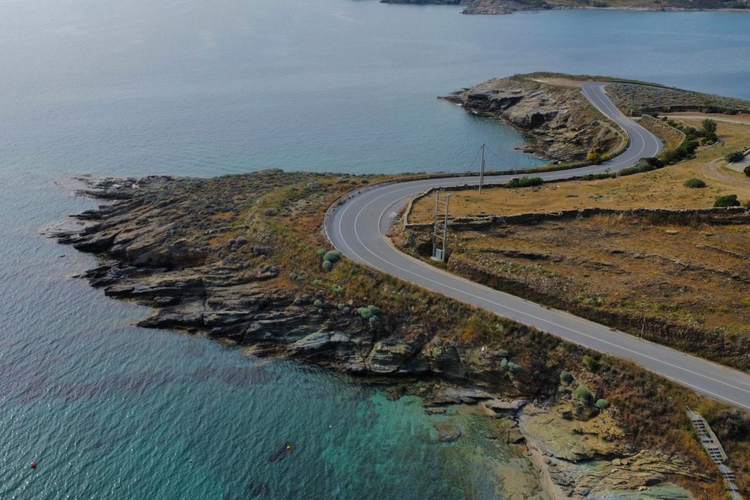
A car removes this dependence on schedules. You choose your own departure time, stop at viewpoints, and change your route based on the weather. For a family or group, renting often works out cheaper than taxis.
What documents you need to rent
The basic set is the same at most Greek rental companies:
- Driver's license. EU licenses are accepted directly. Drivers from outside the EU and EEA usually need an international driving permit along with their national license.
- Passport or ID card of the main driver.
- A bank card in the driver's name for the security deposit. Some services don't take a deposit, in which case a debit card or cash will work.
- Booking voucher if you ordered the car online.
Rental companies have their own minimum driver age and experience requirements. They are usually stricter than the conditions for simply driving your own car, so check them before paying.
The card is the most common reason a car handover falls through: not all companies accept debit cards. Clarify this point in advance.
Rental without a deposit and without a credit card: RosCar
A credit card and a deposit are the most common obstacles at the rental counter. The rental search service RosCar helps here: according to the service description, it aggregates offers from local and international companies where you can take a car without a deposit, without a credit card, and with payment in cash or by debit card at pickup.
According to the service (checked 10/2026), prices rise starting in June: in August, the average booking reaches €42 per day, and in November it drops to around €12. Benchmarks by class from the car rental catalog for Greece:
Class | Example model | Low season | High season |
|---|---|---|---|
Mini | Toyota Aygo | from €16 | from €35 |
Compact | Volkswagen Polo | from €26 | from €55 |
SUV | Nissan Qashqai | from €45 | from €90 |
Van | Volkswagen Caddy | from €60 | from €120 |
So booking early really does save money.
- Who it's for: those who don't have a credit card or don't want to freeze a deposit on their account.
- Not for: those who need a branded office right in the airport terminal and a strictly specified model with no alternatives.
What makes up the rental price
The final price depends on the car class, season, rental period, and pickup location. The base price usually includes unlimited mileage, mandatory insurance with a deductible, and taxes.
You pay extra for:
- full insurance without a deductible;
- a child seat and GPS;
- an additional driver;
- ferry permission if you're taking the car to an island.
You can compare offers by class and dates on DiscoverCars. The pickup date has a strong effect on the price: in winter and spring it's noticeably lower than in July and August.
Which car to choose for islands and mountains
The choice of car depends on your route, not just your budget.
For Athens and Thessaloniki, go with a compact class. In the narrow streets of the old town, size matters more than power, and a long body is a hassle in underground parking.
For the mountains of Crete or Zakynthos, you need ground clearance. On roads to gorges and remote beaches, there are dirt sections with rocks and slopes.
For a family, a station wagon or minivan works well. Two suitcases and a stroller won't fit in the trunk of a subcompact.
Also check the fuel type. Diesel and gasoline differ in price, so it's better to calculate consumption in advance for your route.
Road rules for tourists
Before you set off, study the local rules. Fines in Greece are high.
According to Rules Abroad (10/2026), the speed limit in cities is 50 km/h, on rural roads 90 km/h, and on highways 130 km/h. The legal blood alcohol limit is 0.5 g/l, and for new drivers 0.2 g/l. A warning triangle, first aid kit, and fire extinguisher are mandatory in the car.
A few more rules:
- You can't hold a phone while driving; calls only through a headset.
- All passengers must wear seat belts in all seats.
- Speed is set by signs, and they take precedence over the general limit.
On the islands, roads are narrow, and local drivers often drive in the center of the lane. Keep your distance and don't overtake blindly.
Insurance: what the basic package covers
The rental price usually includes mandatory insurance with a deductible. It covers damage, but if there's damage, you pay part of the amount yourself. The deductible amount depends on the car class and the offer.
Full coverage without a deductible costs more, but it removes the financial risk. If you're driving on narrow mountain roads, this option is justified.
You can compare insurance terms on EKTA. Read not only the price but also the list of exclusions: tires, glass, and the underbody are often listed separately.
Returning the car: how to avoid a fine
Return the car at the agreed time and, if possible, during the day. Inspect the car together with a staff member and record the condition in the report.
- Photograph the interior, body, and fuel level before returning.
- Clarify the fuel policy: full tank or pay as used.
- At the airport, arrive early; the car inspection takes time.
Keep the return report and voucher until the end of your trip. If a claim comes later, these papers will help you dispute it.
⁉️🤔 Frequently asked questions
Can I rent a car in Greece without a credit card?
Yes, if the offer allows it. RosCar aggregates offers where no deposit is taken and payment is accepted in cash or by debit card. Terms depend on the specific rental company, so check them before booking.
Do I need an international driving permit?
Drivers with EU and EEA licenses usually don't need one. If your license was issued outside the EU, bring both your national license and the international permit. That way you'll get through the rental counter faster.
When are rental prices lowest?
In winter and the off-season, when demand drops. In August, cars are noticeably more expensive than in November. It's convenient to compare the difference directly in offers before booking to choose a better date.
Is there a minimum age for renting?
Under Greek law, adults can drive category B vehicles, but rental companies have their own age and experience conditions. Some companies refuse young drivers or add a fee. Check the requirements of the chosen offer.
What should I do in an accident?
Stop, turn on your hazard lights, and put out the warning triangle. Call the police and file a report; otherwise the insurer may refuse to pay. Call the rental company at the number on your voucher before leaving the scene.
In short: how not to overpay for a rental
Look for a car in advance: in high season, prices are noticeably higher, and the best offers go first. Consider not only the rate but also fuel, insurance without a deductible, and the fee for a second driver.
If you don't have a credit card, choose a no-deposit offer in advance. If you're heading to the mountains, get a car with ground clearance. Without a warning triangle and first aid kit, you'll get a fine in Greece.
Before paying, check the list of exclusions in the insurance package and the fuel policy. These two lines most often add money to the final bill.

A small editorial team writing guides for independent travel. We travel ourselves, but we haven’t been everywhere, so we check prices, opening hours and how to get there against official sources.