
















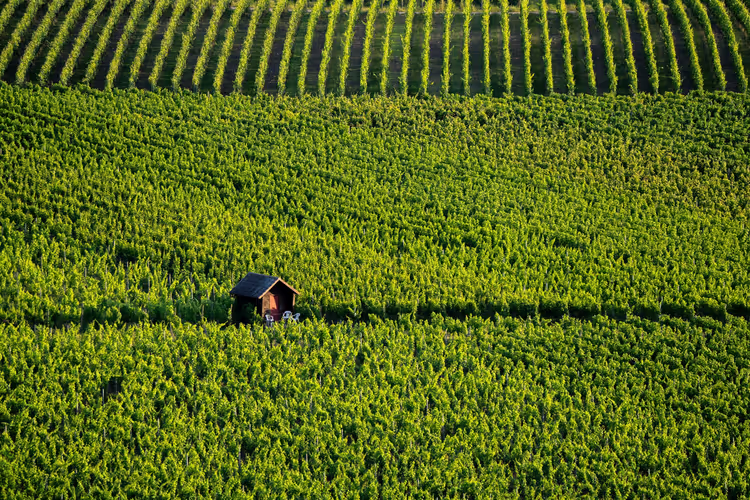
Franconia: Bavaria's wine region where silvaner ripens
Franconia is one of the six largest wine regions in Germany. It has about 6,250 hectares under vines (as of 09/2026, LWG Bayern), and wine is made by almost 2,900 estates (as of 09/2026, Franken-Silvanerheimat). The region stretches along the Main river from Würzburg to Bamberg.
Wine in Franconia is not a souvenir, it is the reason for the trip. You go for it to villages, down into cellars, and end up at festivals. Below we break down what to try, where winemakers live, and when to go.
Ad: this text contains affiliate links, we earn a commission from them, the price for you does not change.
What Franconian wine country is
💡 In short:
- Vineyards cover about 6,250 hectares, making this Germany's sixth-largest region by area.
- Almost 2,900 wine estates work this land.
- Festivals run from May through October, and cellars are open in the cold months too.
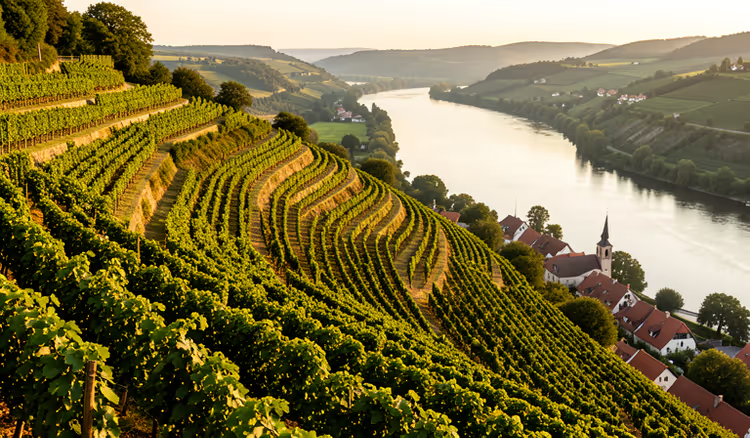 AIIllustrative image: AI-generated
Viticulture in Franconia is old. The first traces of winemaking date to the 8th century, and in the 12th to 16th centuries the local vineyards were the largest continuous wine region in Europe (as of 09/2026, LWG Bayern). The area later shrank, and only in the 1970s did the region start growing again.
The geography here is simple. Vineyards run along the Main, Würzburg sits to the west, Bamberg to the east. Dozens of wine villages are scattered between them, and those are where you should stay overnight. Two or three days are enough to figure out which wine suits you best.
Silvaner and other Franconian varieties
Silvaner is the main variety here. It covers about a quarter of the region's vineyards and has been number one by area again since 2019 (as of 09/2026, Deutsches Weininstitut). It produces dry white wines with a mineral character.
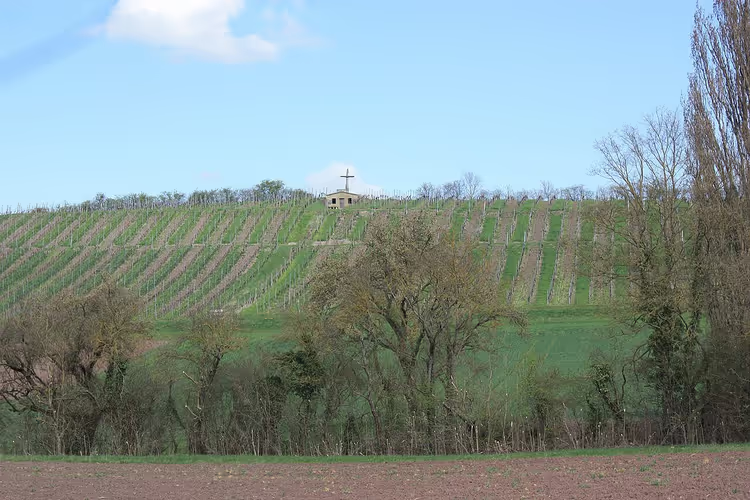 © Dguendel · CC BYPhoto: Dguendel, CC BY (https://creativecommons.org/licenses/by/4.0), Wikimedia Commons
Besides Silvaner, the region grows Müller-Thurgau, Bacchus, Kerner, and Riesling. Red wine is also made, but there is less of it: the region bets on white varieties. If you like light wines, go for a young-vintage Silvaner. For a fuller taste, Bacchus or Kerner works well.
Riesling in Franconia is drier and more austere than in the Rhine valleys. This matters if you are used to sweet German wines: you will hardly find them here. At a tasting, ask for dry samples first, then compare them with the softer varieties.
Why the Bocksbeutel bottle is flat
Franconian wine is easy to recognize by its bottle. The Bocksbeutel looks like a flat, squat flask that does not fit in a standard rack. This shape is almost 300 years old: the decree on the Bocksbeutel was issued in 1728 (as of 09/2026, Wikipedia: Bocksbeutel).
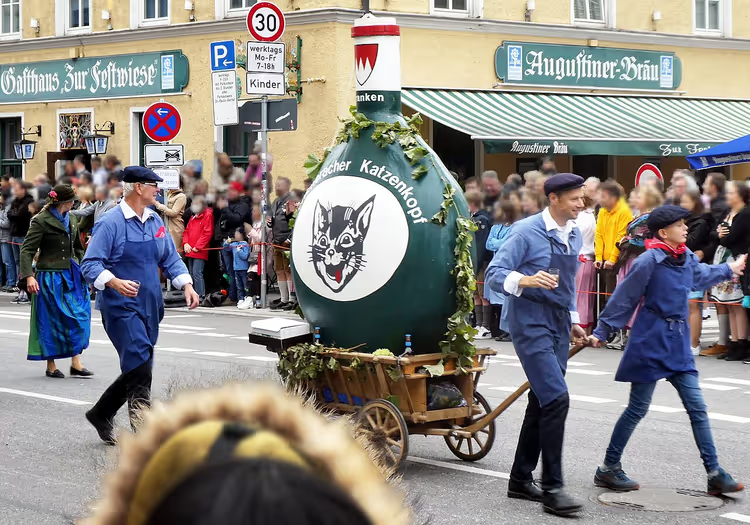 © Renardo la vulpo · CC BY-SAPhoto: Renardo la vulpo, CC BY-SA (https://creativecommons.org/licenses/by-sa/4.0), Wikimedia Commons
Under German wine law, only quality and Prädikat wines from Franconia may be bottled in the Bocksbeutel. For you, this is a simple cue in a shop: if you see a flat flask, it is local wine. Inside it is most often Silvaner or Bacchus.
One of the region's best-known vineyards is called Würzburger Stein. It lies on a slope above the city and has been mentioned in documents since 779 (as of 09/2026, Wikipedia: Bocksbeutel). You will find a bottle from this slope at an estate or in a wine shop in central Würzburg.
Wine villages and cellars
The most interesting things in Franconia happen in villages, not cities. Many winemakers sell wine right in their courtyard and keep a small wine shop. There you taste wines by the glass and buy a bottle without the restaurant markup.
Every autumn the "Night at the Winery" program takes place. Estates open their cellars, walk you through the vineyard, and pour wine right by the barrels (as of 09/2026, Franken-Silvanerheimat). If you want to understand the process, not just drink, take one of these programs.
Overnight stays are built into the same system. Some estates keep guesthouses right on the farm. Rooms are few, so weekend spots in season go fast. Book ahead if you are traveling with a group.
Tours and tickets in Wurzburg
Guided tours, skip-the-line tickets and activities — most offers can be cancelled free of charge.
See offers on GetYourGuideThe widget loads once you give your consent.
Franconian wine festivals
From May through October, the region hosts a string of wine festivals. Exact dates are collected in the official wine festival calendar for 2026. Each village holds its own festival, often with a vintners' parade and live music.
The village of Sommerach makes the most noise. Its festival lasts several days in July, and the local cooperative pours dozens of wines. Come for the opening ceremony: that way you get a spot and have time to try rare samples.
In Würzburg, the festival takes place in the historic center. Dates change from year to year, so check the calendar. In summer, guided wine walks along the slopes are added to the festivals.
tours and tastings on GetYourGuide
How to get there and when to go
Getting to Franconia without a car is easy. Würzburg and Bamberg sit on Germany's main lines, served by high-speed ICE and regional trains. You can check train schedules and tickets in advance online.
Regional trains and buses run from both cities to the villages, sometimes with a transfer. This is convenient if you do not want to rent a car. Check the time of the last bus back, as it runs less often in the villages.
The wine season is stretched out. The cold months are good for indoor tastings: cellars, wine shops, restaurants. From May through October, festivals and vineyard walks are added. For a first trip, late spring or early autumn works well.
⁉️🤔 Frequently asked questions
When is the best time to go to Franconia for wine?
Festivals and vineyard walks take place in the warm season. The cold months also work for cellar tastings. Get exact festival dates from the official calendar.
What is a Bocksbeutel?
It is the name for a flat bottle that, under German law, may only be used for quality wines from Franconia.
Which variety is the most famous in Franconia?
Silvaner. Franconian white wines are made dry, with a mineral character.
Can you go to a tasting without a reservation?
In many villages, yes. Winemakers keep open wine shops right in their courtyard, and you can walk in without booking. For the "Night at the Winery" and major festivals, book ahead, as weekend spots are scarce.
How to get to Franconia without a car?
By train. Würzburg and Bamberg are connected by high-speed lines, and regional trains and buses run from them to the villages. You can get from the city to a village in one day and return in the evening.
In short: what to book
Franconia suits a relaxed two- to three-day trip. Base yourself in Würzburg or Bamberg, and look for wine in the villages along the Main.
- If you have two days: stay in Würzburg, give one day to the villages and the second to the neighboring city.
- If you are going for tastings: take a guided cellar tour.
- If you are going for a festival: book village accommodation in advance.

A small editorial team writing guides for independent travel. We travel ourselves, but we haven’t been everywhere, so we check prices, opening hours and how to get there against official sources.