
















Vatican Museums: ticket price, opening hours and visiting procedure
The line to the Vatican museums eats up half a day. Even in spring, hundreds of people stand along the walls on Viale Vaticano. A full ticket costs 20 €, and booking a time slot on the official website adds another 5 € (as of: 09/2026, Musei Vaticani).
The complex brings together dozens of museums, galleries, and papal apartments. In one visit you will cover only part of the halls; everything else will have to wait.
Below you will find a suggested route, current prices, and the way from the airport to the entrance. Set aside several hours for the visit.
Ad: the text contains affiliate links; we earn a commission from them, and the price for you does not change.
History and layout of the complex
💡 In short:
- The complex is open daily except Sunday (as of: 09/2026, museum website).
- Prices and opening hours: 09/2026, verified on the official website
The Vatican lies inside Rome, and its museums were assembled over centuries. The collection grew out of the papal holdings of the Renaissance. The site itself preserves the memory of the ancient circus that Emperor Nero built here.
The Romans considered the hill on which the Vatican stands to be sacred. Chariot races took place here, and later the burial site of the Apostle Peter appeared. So a secular spectacle gave way to a Christian shrine.
The modern complex occupies two papal palaces and dozens of halls. Some of the museums were opened by papal decree to show private collections to the public. Today it holds one of the largest collections of ancient and Renaissance art in Europe.
The most famous hall, the Sistine Chapel, was built at the end of the 15th century. The frescoes "The Creation of Adam" and "The Last Judgment" were painted by Michelangelo. Cardinals elect a new pope here, and the stovepipe above the roof is a reminder of that.
The total length of the corridors reaches seven kilometers. Without a plan, you will be exhausted by the halfway point.
Which museums are part of the complex
The complex includes museums from different eras and regions. Below are the ones you will see with a single ticket. Start with the antiquities and leave the Sistine Chapel for the finale.
 © Darafsh · CC BY-SAPhoto: Darafsh, CC BY-SA (https://creativecommons.org/licenses/by-sa/3.0), Wikimedia Commons
Egyptian Museum
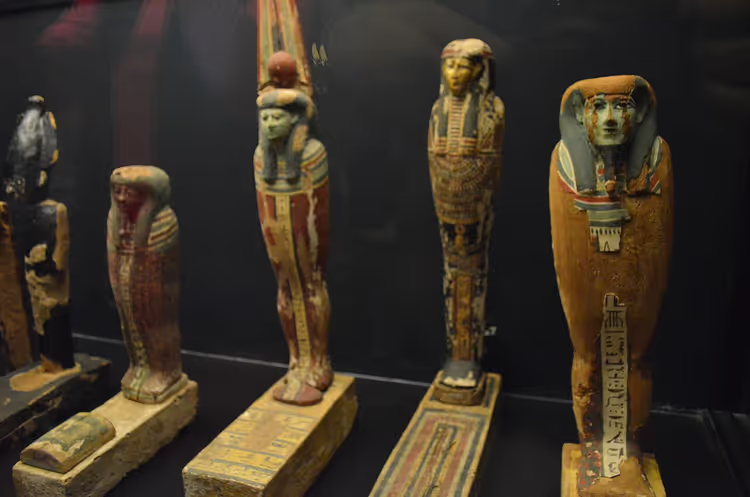
It was opened under Pope Gregory XVI. It houses statues, sarcophagi, papyri, and mummies brought from Egypt. The exhibits are arranged in halls decorated in the Egyptian style. Look for the stele of a female pharaoh and the statue of Ramesses II.
 © Darafsh · CC BY-SAPhoto: Darafsh, CC BY-SA (https://creativecommons.org/licenses/by-sa/3.0), Wikimedia Commons
Etruscan Museum
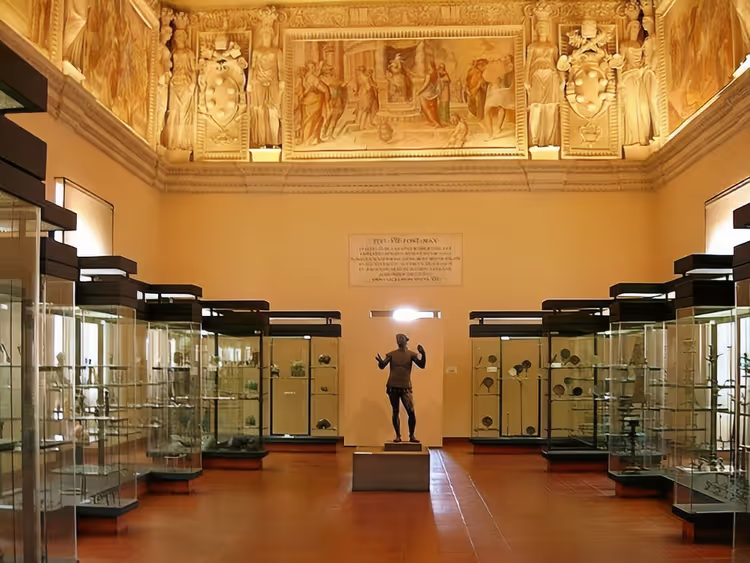
A collection of finds from the necropolises of ancient Etruria. Twenty-two sections display silver, ceramics, and funerary urns. There is a hall with the full equipment of warriors of that era. One hall is currently being renovated.
 © xiquinhosilva · CC BYPhoto: xiquinhosilva, CC BY (https://creativecommons.org/licenses/by/2.0), Wikimedia Commons
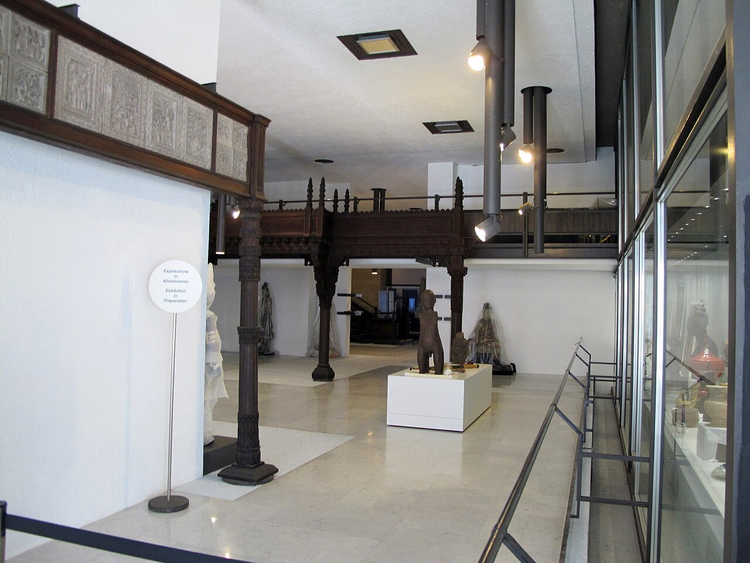
Ethnological museum
The museum grew out of a missionary exhibition from the last century. Twenty-four pavilions in the Vatican Gardens hold religious objects from around the world. The collection later moved to a separate building and grew to nearly one hundred thousand items. Here you will find pieces from Africa, Asia, and the Americas.
 © Sailko · CC BYPhoto: Sailko, CC BY (https://creativecommons.org/licenses/by/3.0), Wikimedia Commons
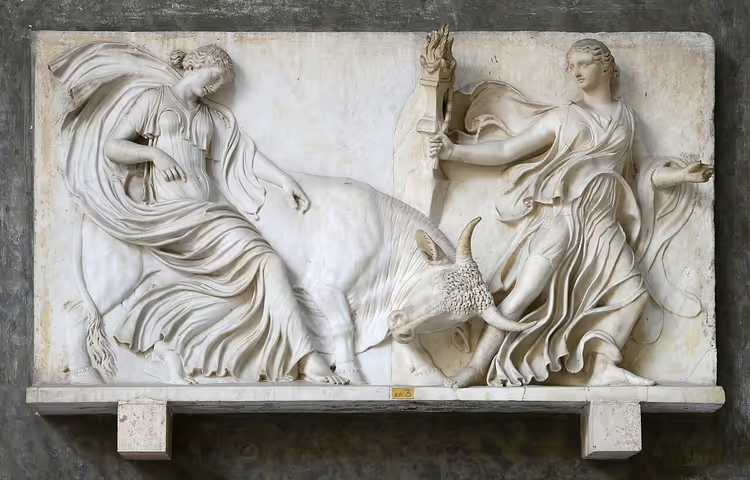
Gregorian museum of secular art
The exhibition opened in a new wing in the second half of the last century. It houses ancient sculpture found in Rome. Statues of ancient gods and funerary reliefs stand here. Crowds rarely make it this far, so you can view the hall in peace.
 © Alvesgaspar · CC BY-SAPhoto: Alvesgaspar, CC BY-SA (https://creativecommons.org/licenses/by-sa/4.0), Wikimedia Commons
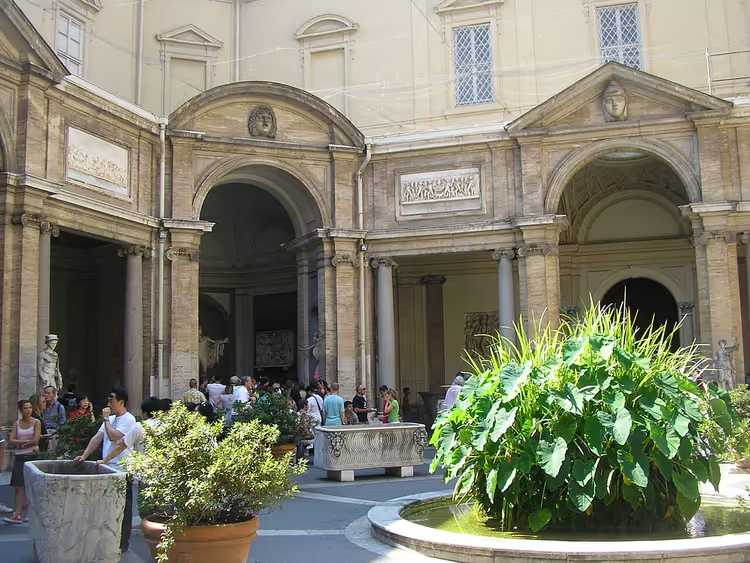
Pio-Clementino museum
Created by order of Pope Clement XIV. It houses ancient statues from Rome and Greece, including the Laocoon and the Apollo Belvedere. The octagonal courtyard with sixteen columns sets the tone for the entire wing. Most routes start here.
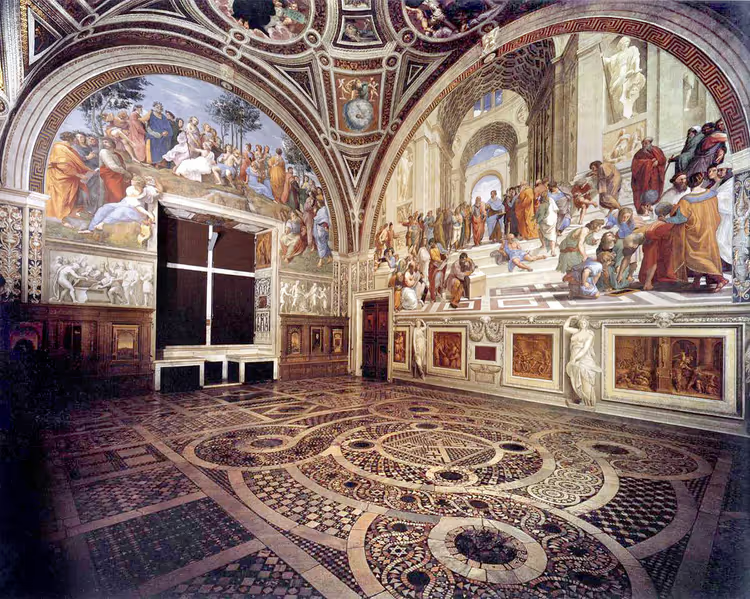
Raphael rooms
Four rooms were painted by Raphael and his students in the early 16th century. The fresco The School of Athens is considered the main one. In earlier centuries the halls served as a reception room and a church court. Spend some time at The Fire in the Borgo.
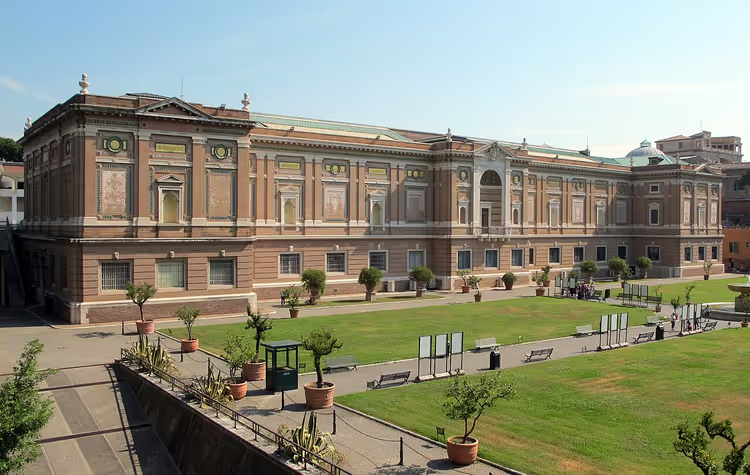
Vatican pinacoteca
The picture gallery occupies a separate building from the last century. Eighteen halls display Italian painting from the Middle Ages to the Baroque. Works by Raphael, Titian, Caravaggio, and Leonardo da Vinci hang here. You will find the hall with icons at the very beginning.
 © Sailko · CC BYPhoto: Sailko, CC BY (https://creativecommons.org/licenses/by/3.0), Wikimedia Commons
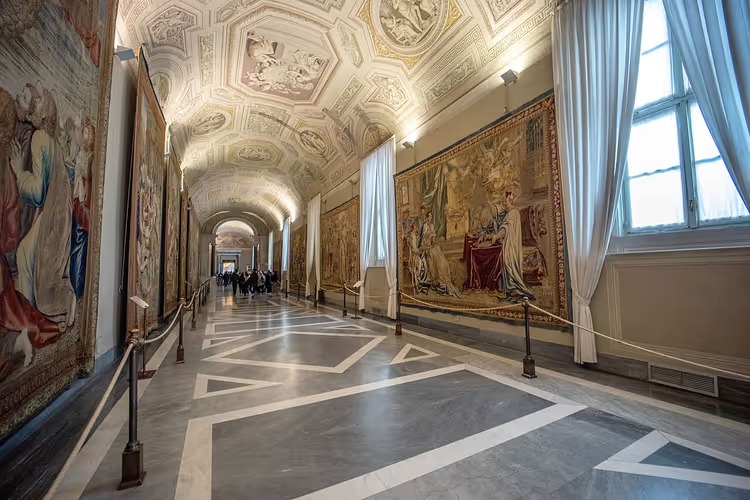
Gallery of tapestries
The gallery opened under Pope Gregory XVI. The tapestries were made from sketches by Flemish masters on biblical subjects. Some of them were previously kept in the Sistine Chapel. Look for the tapestry The Massacre of the Innocents at the start of the row.
 © Fabrizio Garrisi · CC BY-SAPhoto: Fabrizio Garrisi, CC BY-SA (https://creativecommons.org/licenses/by-sa/4.0), Wikimedia Commons
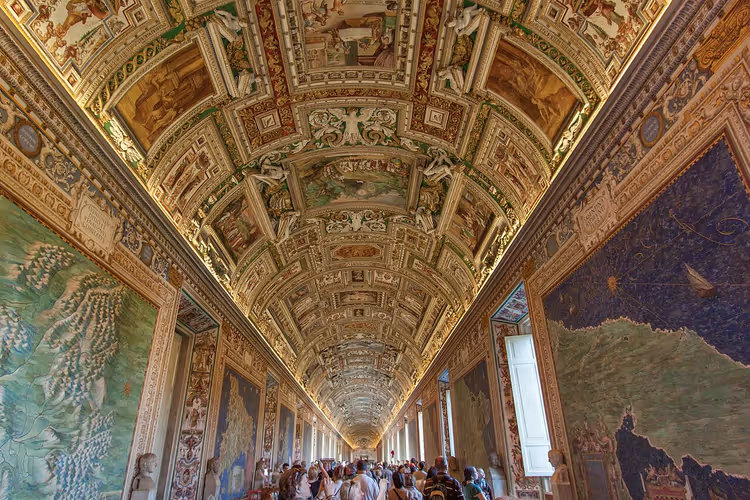
Gallery of maps
A corridor about one hundred and twenty meters long is filled with maps of 16th-century Italy. The frescoes were painted under Pope Gregory XIII. The ceiling is decorated with stucco and gilding. This corridor is photographed more often than any other.
 © Tim Sackton · CC BY-SAPhoto: Tim Sackton, CC BY-SA (https://creativecommons.org/licenses/by-sa/2.0), Wikimedia Commons
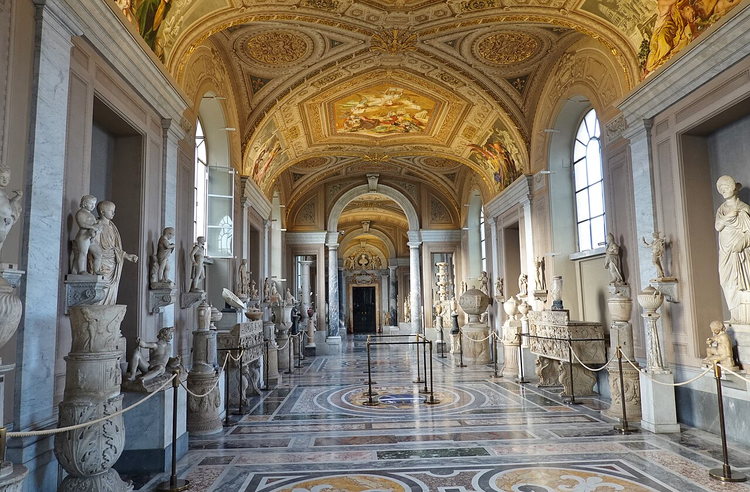
Gallery of the candelabra
The name comes from the marble candelabra placed along the walls. Roman copies of Greek statues are displayed here. The corridor leads to the Etruscan museum. Walk through it at a leisurely pace.
 © Richard Mortel from Riyadh, Saudi Arabia · CC BYPhoto: Richard Mortel from Riyadh, Saudi Arabia, CC BY (https://creativecommons.org/licenses/by/2.0), Wikimedia Commons
Chiaramonti museum
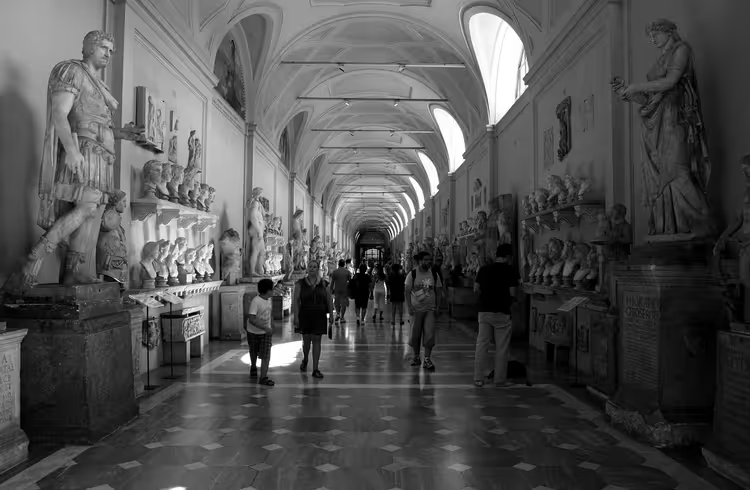
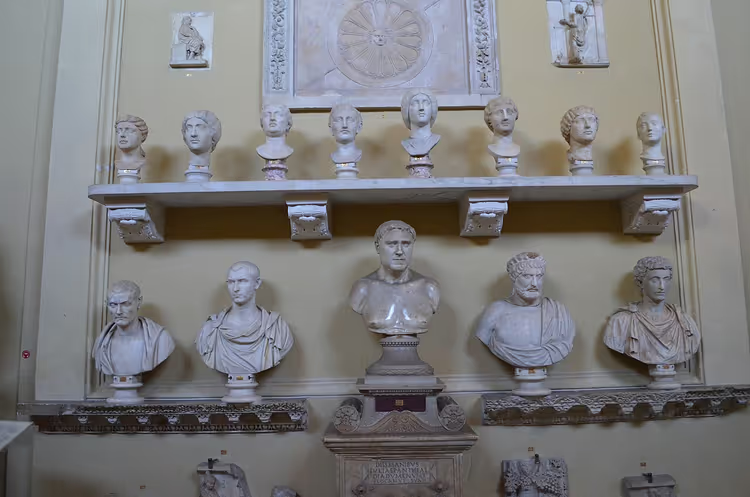
One of the oldest museums in the complex. A long gallery is filled with busts and statues from the Roman era. The statue Augustus of Prima Porta stands in the neighboring Braccio Nuovo wing.
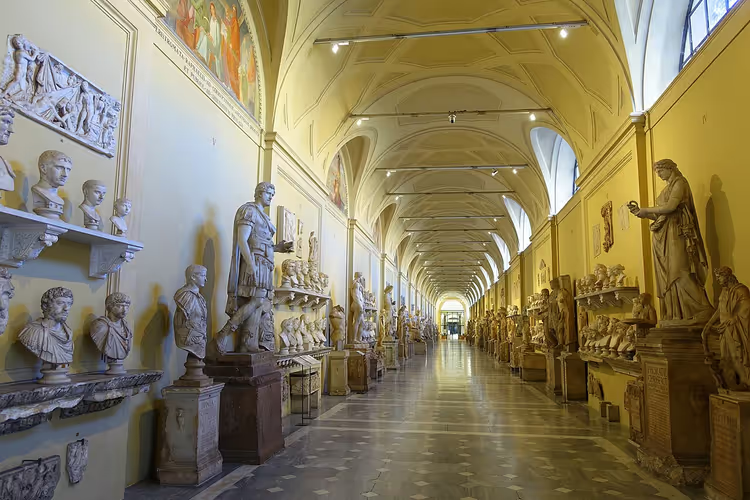
Borgia apartments
Six rooms were painted at the end of the 15th century by order of Pope Alexander VI. The frescoes mix biblical subjects and mythology. Contemporary religious works are now displayed here. Spend more time examining the ceiling paintings.
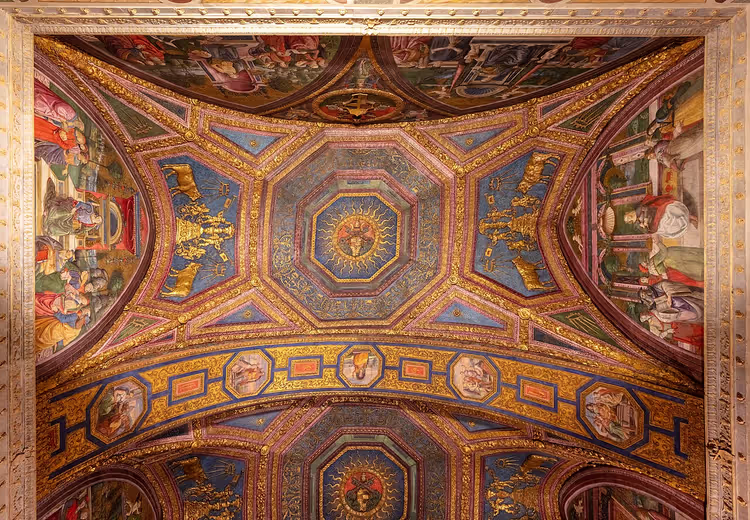 © Diego Delso · CC BY-SAPhoto: Diego Delso, CC BY-SA (https://creativecommons.org/licenses/by-sa/4.0), Wikimedia Commons
Tickets and opening hours
A single ticket covers the museums and the Sistine Chapel. Buy it online in advance: at the ticket office in high season you lose hours.
Ticket | Price | What it includes |
|---|---|---|
Full | 20 € | Museums and the Sistine Chapel |
Reduced | 10 € | The same halls for eligible categories |
Online booking | +5 € | Timed entry, no ticket office line |
Prices and categories are checked against the museum price list (as of 09/2026).
The complex is open daily except Sunday. There is one exception: the last Sunday of the month, when entry is free (according to the official museum website, 09/2026).
The ticket is tied to a time slot and is non-refundable. Take a morning slot; before noon you can get through the main halls with almost no crowding.
Booking timed tickets is easy through Vatican Museums tickets.
Tours and tickets in Vatican Museums
Guided tours, skip-the-line tickets and activities — most offers can be cancelled free of charge.
See offers on TiqetsThe widget loads once you give your consent.
How to get to the Vatican Museums
The entrance is on Viale Vaticano, and it is easy to spot by the signs.
From Fiumicino Airport, the Leonardo Express train reaches Roma Termini station in thirty-two minutes; the ticket costs 14 € (as of 09/2026, Trenitalia).
From Termini, go down to metro line A and get off at Cipro or Ottaviano. From Cipro to the entrance is about a five-minute walk; from Ottaviano it is slightly farther (per the map).
Bus 49 stops right at the entrance on Viale Vaticano (according to the Vatican Museums website). A Schengen visa for Italy also covers the Vatican; you do not need a separate document.
Arrive at opening time. By late morning the entrance fills up, and you stand in the general line.
The museum complex on the map
Below is a map with the entry point on Viale Vaticano. Save it in advance so you do not have to search for it in a rush.
⁉️🤔 Frequently asked questions
How much does a ticket to the Vatican Museums cost?
A reduced ticket costs 10 € (as of 09/2026, Musei Vaticani). Children and some other categories enter free of charge. You confirm the exact price for your date when booking.
Can you skip the line?
Yes, if you buy a ticket with a fixed time slot online. At the ticket office in season, you stand in a physical line, sometimes for hours. Take a morning slot, arrive at opening time, and you get through security faster.
Are the museums open on Sunday?
No, the complex is closed on Sundays. The exception is the last Sunday of the month, when entry is free for everyone. On that day the line is especially long, so arrive at opening time. For a relaxed visit, choose a weekday.
What should you see first?
Start with the Pio-Clementino Museum and the Raphael Rooms, and leave the Sistine Chapel for the finale. That way you follow the flow and don't have to backtrack. Allow at least an hour for the Raphael Rooms. Then follow the signs toward the exit.
How much time do you need for the visit?
Allow several hours to see the highlights without rushing. A full walk through all the corridors takes almost an entire day. If you're short on time, pick one route following the signs and don't turn off it. Cafes and restrooms inside the complex also eat up time.
How do you get there from the center?
Take metro line A and get off at Cipro or Ottaviano, then it's a few minutes' walk to the entrance (per the map). Bus 49 stops right at the entrance on Viale Vaticano. From Termini the trip takes about fifteen minutes. Buy your metro ticket in advance.
In short: what's worth booking
The Vatican Museums deserve a dedicated morning in Rome. Structure your visit like this: an early time slot, metro to Cipro, a few hours for the main halls.
- If it's your first time: get a full ticket with a time slot and follow the signs to the Sistine Chapel.
- If you have one day in Rome: leave the museums for the morning, and save St. Peter's Basilica for the second half of the day.
- If you're with children: start with the Egyptian Museum, where the statues and mummies are the biggest hit.

A small editorial team writing guides for independent travel. We travel ourselves, but we haven’t been everywhere, so we check prices, opening hours and how to get there against official sources.