

















Gastronomic guide to Iceland: 10 dishes from skyr to hakarl
Icelandic cuisine grew out of harsh necessity, not gastronomic fashion. For centuries people here ate what the sea and the meager land provided, and fresh products were replaced by fermentation, drying, and smoking. Today half of these dishes have become a tourist attraction, but Icelanders themselves still cook them at home and for holidays.
We have collected ten dishes you will encounter on menus from Reykjavik to small towns in the north. For each one we explain what it is, what it is made of, and whether it is worth the risk at all. Some you will like from the first bite, others will test your endurance.
Our picks: Icelandic dishes
The order is roughly the one in which the dishes are convenient to try: from dairy and mild to the most unusual. If you are short on time, start with skyr, lambalæri, and fish soup, they almost never cause rejection. Leave the exotic items for tasting plates, where they serve a small piece of each.
💡 In short:
- Start with the safe options: skyr, rúgbrauð, kleinur, and lambalæri.
- Try the hot dog in central Reykjavik in between activities, the line moves fast.
- Take hvalspæk and hákarl once and in a small portion.
- Dish ingredients and seasons: as of 09/2026, according to Visit Iceland.
Dish | What it is | Who it suits |
|---|---|---|
Skyr | A soft dairy product similar to yogurt | Everyone, especially for breakfast |
Rúgbrauð | Dark rye bread from a geothermal oven | Bread and soup lovers |
Kleinur | Fried pieces of sweet dough | Those with a sweet tooth and children |
Gellur | Baked cod "tongues" | Those who like fish and liver |
Sjávarréttasúpa | Thick creamy seafood soup | Everyone in cold weather |
Hot dog | Lamb sausage with special sauces | For a quick snack |
Lambalæri | Lamb stewed in butter | Meat lovers |
Hvalspæk | Raw whale blubber | Only for the brave |
Hákarl | Fermented shark | Only for the very brave |
Slátur | Sheep fat, offal, and blood | For experience collectors |
Below we break down each dish in order, so you understand exactly what you are ordering and how to eat it.
1. Skyr
Skyr is called Icelandic yogurt, although by its production method it is closer to a soft cheese. The taste resembles Greek yogurt, only milder and with almost no sourness. Classic skyr is fat-free and rich in protein, which is why both athletes and children love it.
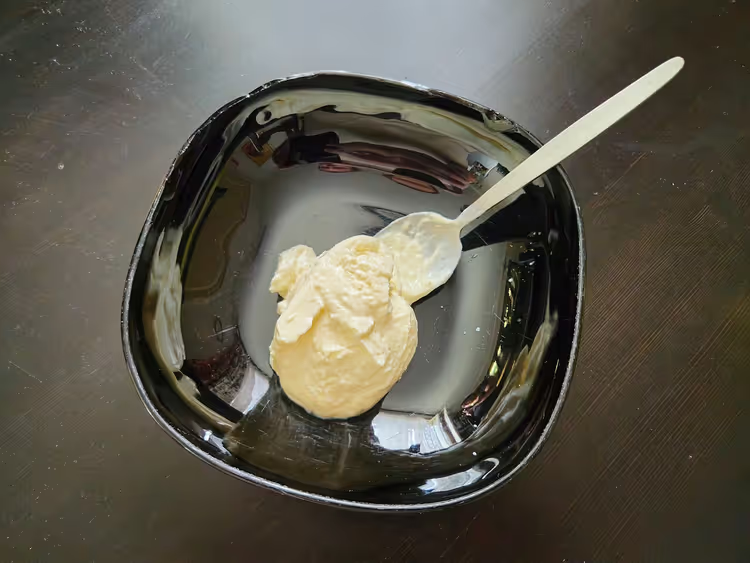
In Iceland skyr has been made for over a thousand years, and many recipes have accumulated around it. It is eaten plain, mixed with milk and berries, added to ice cream and pies. Two local dishes based on it are the ones you will encounter most often: hræringur, a mixture of skyr and porridge in equal proportions, and skyrkaka, Icelandic cheesecake.
Try skyr for breakfast at least once. That way you will understand the taste of local dairy in a couple of minutes and spend less than in a cafe.
- The catch: skyr is almost not sweet, so it is more often eaten with honey, berries, or cereal.
2. Volcanic bread rúgbrauð
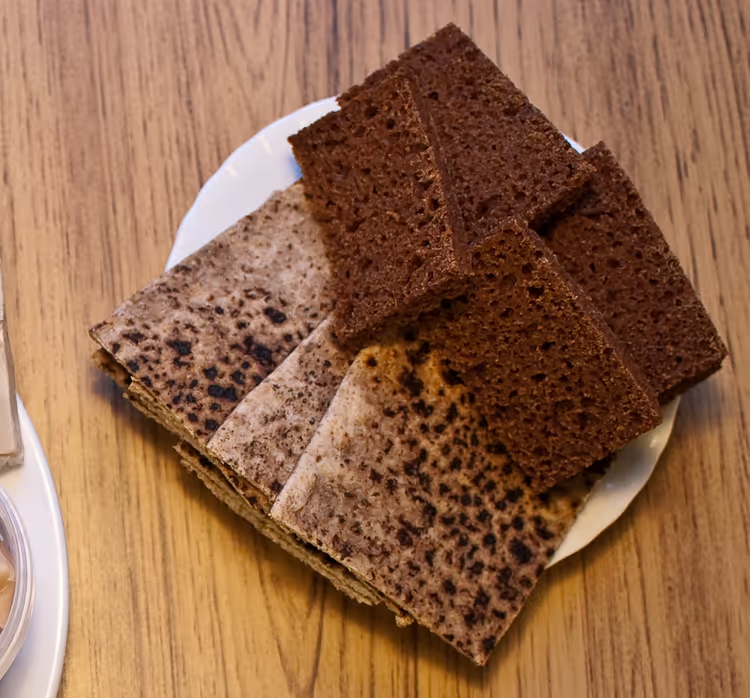
Rúgbrauð, a dark rye bread, is still baked in the ground in Iceland. The dough is placed in a container, buried near a hot spring, and left for a day. Underground heat brings the loaf to readiness, so the crumb turns out dense and slightly spongy.
 © The blanz · CC BY-SAPhoto: The blanz, CC BY-SA (https://creativecommons.org/licenses/by-sa/3.0), Wikimedia Commons
The finished bread is sweetish and resembles a moist sponge cake. It is served with soup or simply spread with butter.
Store-bought packaged rúgbrauð is available in any supermarket, but the taste is different. Order the bread once specifically as a dish, on geothermal tour menus or at a bakery near hot springs.
- The catch: real earth-baked bread is harder to find, in tourist areas it is often replaced by the store-bought version.
3. Kleina or kleinur
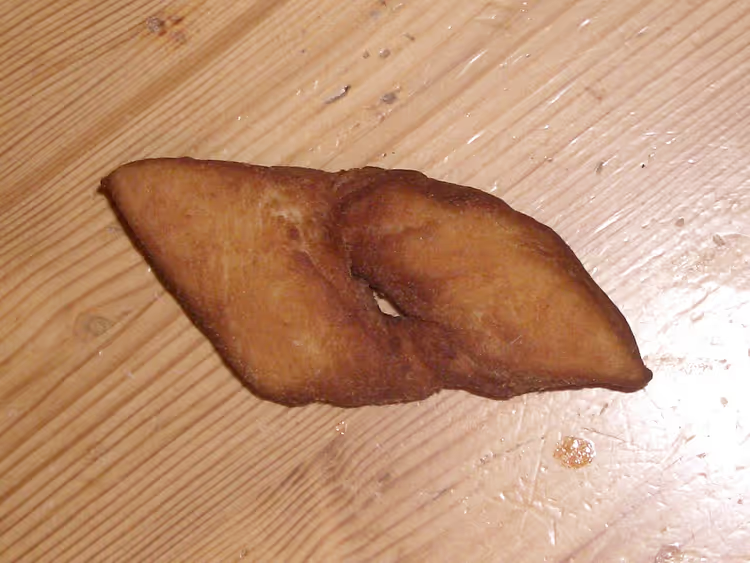
Kleinur, fried pieces of dough, are closest to dried-out donuts. Among Scandinavian peoples the dish has more than ten names, but the essence is the same: thin strips of dough are twisted into a knot and fried in fat.
 © Steinn inn ♨ · CC BY-SAPhoto: Steinn inn ♨, CC BY-SA (https://creativecommons.org/licenses/by-sa/3.0), Wikimedia Commons
At home kleinur are made from flour, egg yolks, margarine, and sugar. Icelanders added a national touch to the recipe, which is Danish in origin: the dough sometimes includes cinnamon, cardamom, strong brennivín, or cognac.
Try kleinur with coffee or hot chocolate: in cold weather this is the coziest snack in the city.
In winter and during holidays you will find kleinur in every pastry shop, in summer the selection is more modest.
- The catch: by composition it is simple fried dough, so at first the dish seems too high in calories.
4. Gellur
Icelandic cuisine is rich in seafood, but not every fish will surprise you. Cod, haddock, salmon, and herring are everywhere here, even if prepared differently. It is more interesting to try gellur, the so-called cod "tongues."
 © Wolfmann · CC BY-SAPhoto: Wolfmann, CC BY-SA (https://creativecommons.org/licenses/by-sa/4.0), Wikimedia Commons
Strictly speaking, these are not the tongues themselves, but the muscles that lie beneath them. Boiled gellur, which is often served in restaurants, is almost unremarkable. Everything changes if the tongues are baked in the oven with spices: then you will understand why locals keep this dish on the menu.
Order gellur baked, not boiled. Ask the waiter how the kitchen prepares it.
- The catch: boiled gellur easily disappoints, so the cooking method matters.
5. Sjávarréttasúpa
Sjávarréttasúpa, a fish soup with a hard-to-pronounce name, easily replaces a full lunch. It is thick, very filling, and made on a creamy base. Inside you will find shrimp, langoustines, mussels, fresh fish, onion, and spices.
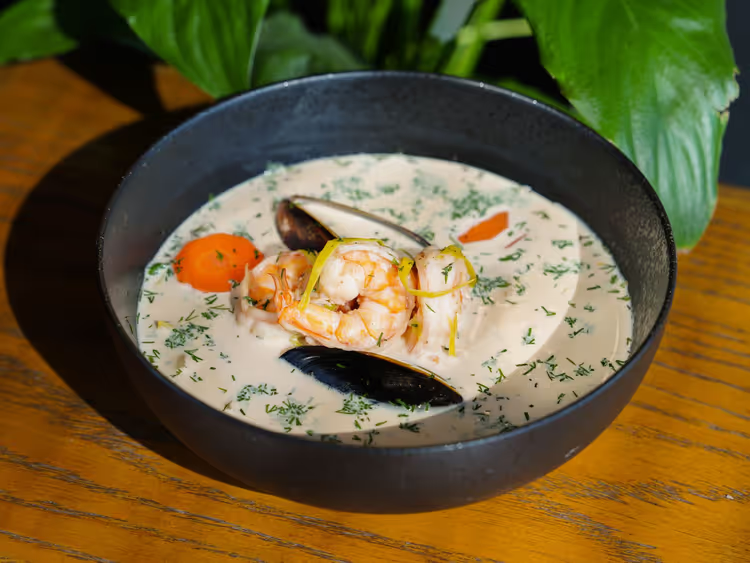
The soup is served with bread and butter. If you like seafood, this soup deserves a place at the top of your list.
- The catch: the soup is very rich and high in calories, after it you will not need a second course.
6. Hot dog
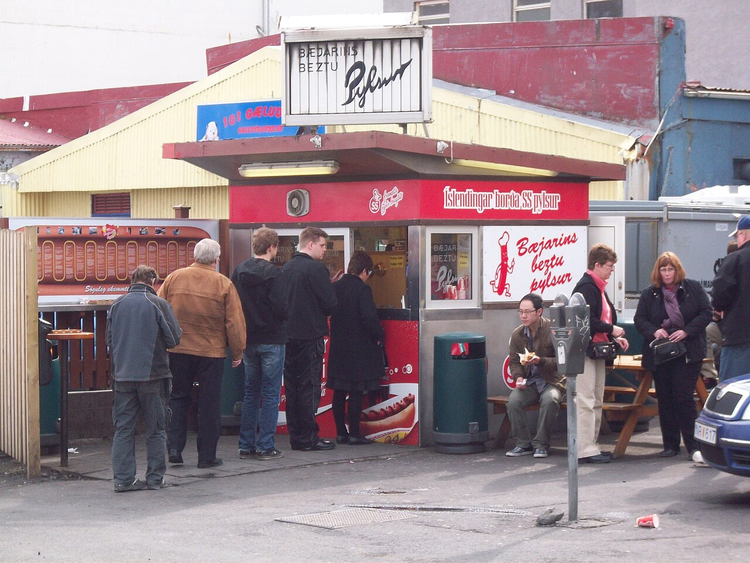
The Icelandic hot dog has long become part of urban culture, although it looks like ordinary fast food. The recipe is genuinely special: the sausage is made from lamb, topped with fried onion in buttermilk and flour, and finished with a mayonnaise-based remoulade sauce.
 © Jóhann Heiðar Árnason · CC BY-SAPhoto: Jóhann Heiðar Árnason, CC BY-SA (http://creativecommons.org/licenses/by-sa/3.0/), Wikimedia Commons
If you want to be guaranteed satisfied, go to the Bæjarins Beztu Pylsur stand in central Reykjavik. It has been operating since 1937 and has long become one of the city's most recognizable spots (as of 09/2026, Guide to Iceland). The line at the stand never thins out, but it moves quickly.
Get the hot dog "with everything" and do not be afraid of these ingredients. One such snack easily satisfies hunger for several hours and costs less than any restaurant.
- The catch: there is almost always a line at the stand, at lunchtime it stretches along the entire sidewalk.
7. Lambalæri
Lamb, the most popular meat in Iceland, is worth trying here even for those who usually avoid it. Local animals graze on rocky fields, so the meat has almost no smell and melts in your mouth. Sheep are kept for milk, wool, and meat on practically every farm.
 © CharmaineZoe's Marvelous Melange from England · CC BYPhoto: CharmaineZoe's Marvelous Melange from England, CC BY (https://creativecommons.org/licenses/by/2.0), Wikimedia Commons
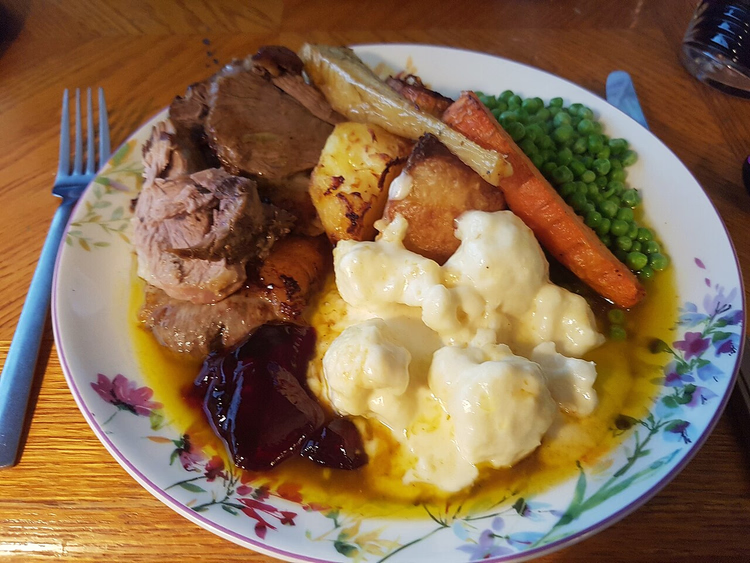
Lambalæri, lamb stewed in butter with vegetables, is considered a royal treat, although the recipe is simple. If the price seems high, get lamb goulash: it is served in many cafes and eateries and is cheaper.
Give lamb one last chance in Iceland, even if you do not like it at home. The local meat differs from what you are used to, and this is the best way to test your attitude toward it anew.
- The catch: lambalæri is considered an expensive dish, the portion hits your budget harder than the rest of this list.
8. Hvalspæk
Next come dishes not for the faint of heart, and hvalspæk opens that section. The name echoes "spik," meaning blubber, and that is no coincidence. Hvalspæk, raw whale blubber, is eaten in Iceland in two ways: according to Icelandic tradition it is first boiled in sour milk, according to Greenlandic tradition, following the Inuit, it is eaten raw. Sometimes the pieces are seasoned with soy sauce.
In the past islanders used the whole whale, during the times of active whaling. Now whales are hunted little, and the dish has almost fallen out of use. That makes the chance to try it, while it still appears on menus, all the more valuable.
Look for hvalspæk in traditional restaurants and on tasting plates, not in ordinary cafes. Reviews of the taste are usually restrained but approving: it is blubber, not steak.
- The catch: hvalspæk appears on menus less and less often, it is realistically only found in traditional restaurants.
9. Hákarl
Hákarl, fermented Greenland shark meat, scares tourists more than any dish in the country. It has a sharp ammonia smell and an acquired taste. At the same time people eagerly try it, because hákarl has become a symbol of Icelandic cuisine.
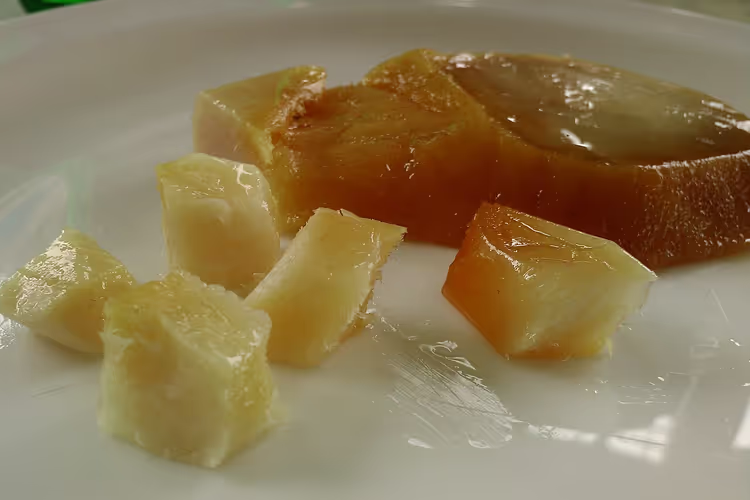
The Greenland shark is inedible and almost poisonous due to the high concentration of ammonia in its meat. That is why the shark is buried in the ground for several months, pressed down with stones, to draw out the urea. Then the pieces are taken out and hung to air-dry for several more months.
 © Xfigpower · CC BY-SAPhoto: Xfigpower, CC BY-SA (https://creativecommons.org/licenses/by-sa/3.0), Wikimedia Commons
The finished shark is cut into small cubes and served, most often in January, during the Þorrablót food festival. Hákarl is traditionally chased with brennivín, and this advice really works.
Take one cube for the experience, not a whole portion. Many compare hákarl to Swedish surströmming: the same fermentation logic, only the Swedes have herring and the Icelanders have shark.
- The catch: the smell and taste are so specific that most of the plate usually remains untouched by a beginner.
10. Slátur
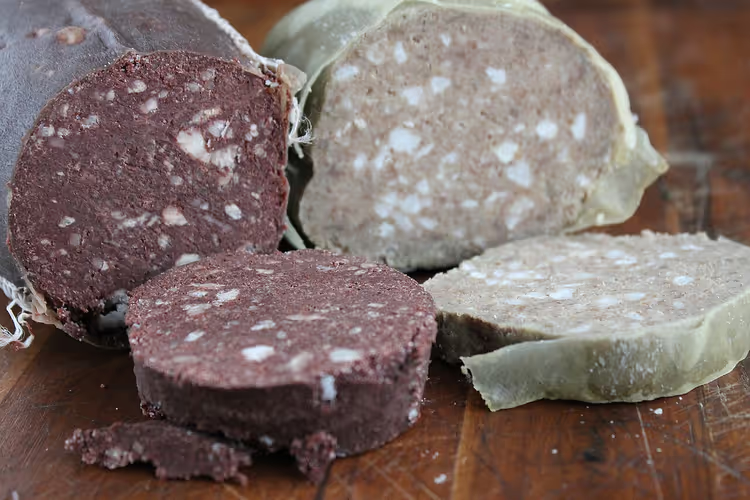
Closing the list is slátur, another embodiment of the "nothing goes to waste" principle. It is a mixture of sheep fat, offal, and blood, sewn into a sheep's stomach and boiled. The word itself translates roughly as "bloodshed," and the name honestly describes the contents.
Slátur comes in two types. The blood version is close to familiar blood sausage, while the liver version resembles liver sausage. The dish with the gruesome name is served with the most innocent side dish: sweet rice pudding.
 © Navaro · CC BY-SAPhoto: Navaro, CC BY-SA (https://creativecommons.org/licenses/by-sa/3.0), Wikimedia Commons
Sometimes the pieces are sprinkled with sugar, cinnamon, and raisins, and then sweet and savory meet on one plate. For the brave, this is a logical conclusion to a gastronomic trip around the country.
- The catch: the name itself and the ingredients scare off some tourists before the first spoonful.
⁉️🤔 Frequently asked questions
Where in Iceland should I try traditional cuisine?
Best of all in Reykjavik, at local cuisine restaurants and on tasting plates that combine several dishes at once. In small towns look for geothermal bakeries and roadside cafes with homemade soup. In winter traditional dishes are more widely available during festival days (as of 09/2026, Visit Iceland).
Can I try these dishes in summer?
Yes, except for seasonal festival items. Skyr, rúgbrauð, hot dogs, and lambalæri are available year-round. Hákarl and hvalspæk appear more often in winter, but tourist restaurants keep them on the menu permanently.
Is hákarl dangerous to health?
Finished hákarl is safe, otherwise it would not be sold in stores. What is dangerous is raw shark because of the ammonia, but nobody eats that. Start with one cube: the effect comes from the smell, not poison.
Is Icelandic cuisine suitable for children?
Children readily eat skyr, kleinur, rúgbrauð, and hot dogs. Lamb is trickier, but lambalæri is tender and has almost no specific smell. Leave the dishes from the not-for-the-faint-of-heart section to adults.
Where can I buy skyr and rúgbrauð to bring home?
Skyr and store-bought rúgbrauð are sold in any Bónus or Krónan supermarket. For travel, take skyr only in sealed packaging: an opened product does not handle a long journey well.
In short: what to try first in Iceland
If you have just one evening, get skyr, rúgbrauð, and lambalæri: these are the safest and most "Icelandic" items. If you love the sea, add sjávarréttasúpa and gellur. If you want a story for your friends, take one cube of hákarl, ideally with brennivín.
The selection matrix is simple. You like dairy: skyr. You want a filling lunch: fish soup. You are ready for an experiment: hvalspæk and hákarl. You are on a budget: hot dog and kleinur.
Try things calmly and do not chase the whole list in one day. Half of these dishes require habit, not courage. Order a tasting plate on the first evening, and you will quickly understand what will make it into your personal menu for the whole trip.

A small editorial team writing guides for independent travel. We travel ourselves, but we haven’t been everywhere, so we check prices, opening hours and how to get there against official sources.