

















Gastronomic tour of Tbilisi: route, tastings and price
Georgian cuisine doesn't start in a restaurant, it starts at the market. Khinkali and khachapuri are sold on almost every corner in Tbilisi, and you can't tell from the sign outside whether the food is good or the place just exists to catch tourists. A food tour solves this problem: you follow a guide through the Old Town, sample dishes at several trusted spots, and hear how they're made.
Let's break down the format offered by Culinary Backstreets. The official tour name is "Old Town and Beyond: A Tbilisi Silk Road Feast"; in older listings it appeared as "Old Market & Beyond" (verified 09/12/2026 on the official Culinary Backstreets website).
Ad: this article contains affiliate links, we earn a commission if you book through them, at no extra cost to you.
Is a Tbilisi food tour worth it
💡 In short:
- The tour takes almost a full day: meeting at 9:30 AM in the Old Town, finishing in the afternoon.
- The program includes a bakery, a market, wine tasting, and a big lunch in a courtyard.
- The group is small, so everyone gets a chance to ask questions.
- Prices and hours: 09/2026, verified on the tour page.
Tbilisi's Old Town is compact. You can walk between the main sights in a couple of hours, but food is trickier: there are so many restaurants you couldn't check a tenth of them in a week. Khinkali is served in every other building, khachapuri too, and the difference between good cooking and mediocre cooking only shows in the details.
Let's look at what people actually eat on the streets. Khinkali is made from dough with broth and a filling of meat, mushrooms, or potato sealed inside. Khachapuri is baked from fresh dough with cheese, sometimes topped with an egg. Two or three kinds across a couple of stops is enough to fill you up, while a dozen more real specialties sit nearby.
The tour structures the route differently. The guide leads the group to places where you're expected in advance, explaining how each dish is made along the way. In one day you get what would take several evenings on your own.
What you sample on the route
The program is built around baked goods, the market, and wine. The tour description lists the tastings: khinkali, bread from a neighborhood oven, shkmeruli, small-batch wines, and churchkhela with walnuts. You also try matsoni, the local yogurt, mixed with honey.
Wines in Georgia are made from indigenous grape varieties that are almost never found outside the country, and the route includes several small-batch samples. If you don't drink alcohol, let them know in advance.
Another habit that comes in handy at any Georgian feast: photograph the table from above. Once the plates cover the entire surface, that shot conveys the scale of the meal better than any other angle.
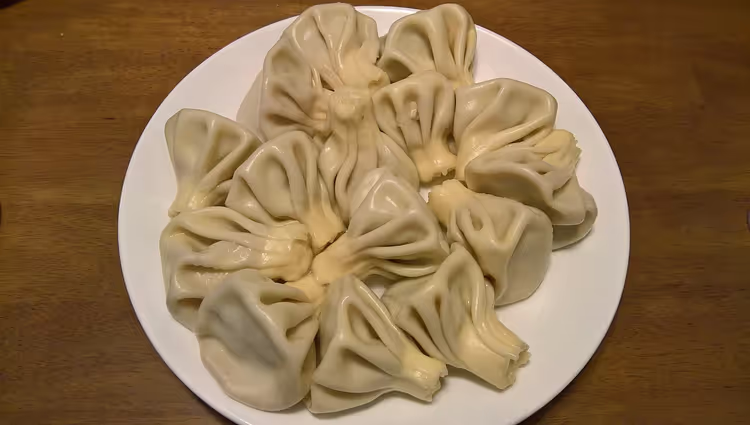 © MIKHEIL · CC BY-SAPhoto: MIKHEIL, CC BY-SA (https://creativecommons.org/licenses/by-sa/4.0), Wikimedia Commons
Who the tour is for and who it isn't
- Who it's for: people who want to understand Georgian cuisine in one day and aren't afraid of hearty food.
- Not for: people expecting a light tasting of three small bites, because the route feeds you a lot and generously.
- The catch: the tour takes about seven hours and costs more than a typical two-hour walk.
The tour operator wants every guest to feel comfortable, so special requests are discussed at booking. More on that below.
How the day goes: the route step by step
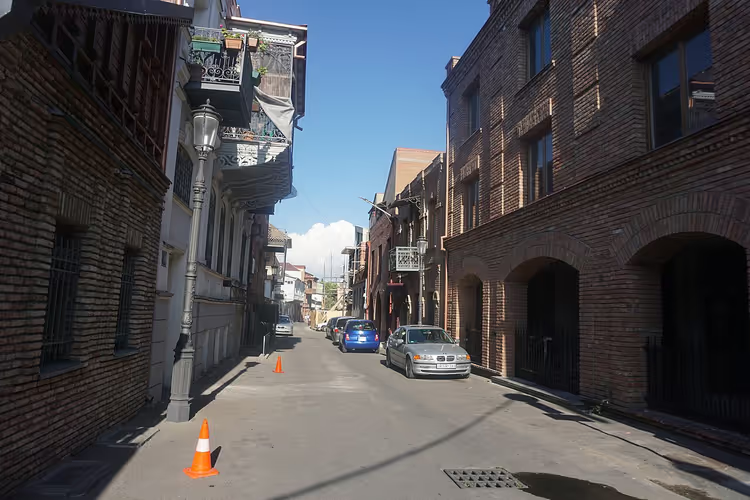 © Andrew Milligan sumo · CC BYPhoto: Andrew Milligan sumo, CC BY (https://creativecommons.org/licenses/by/2.0), Wikimedia Commons
Start at the history museum
The group meets at 9:30 AM at the Tbilisi History Museum next to Sioni Cathedral. The spot is easy to find: the museum stands a stone's throw from the cathedral, and the entire route lies within the old quarters. After this you barely use public transit, so comfortable shoes matter more than you'd think.
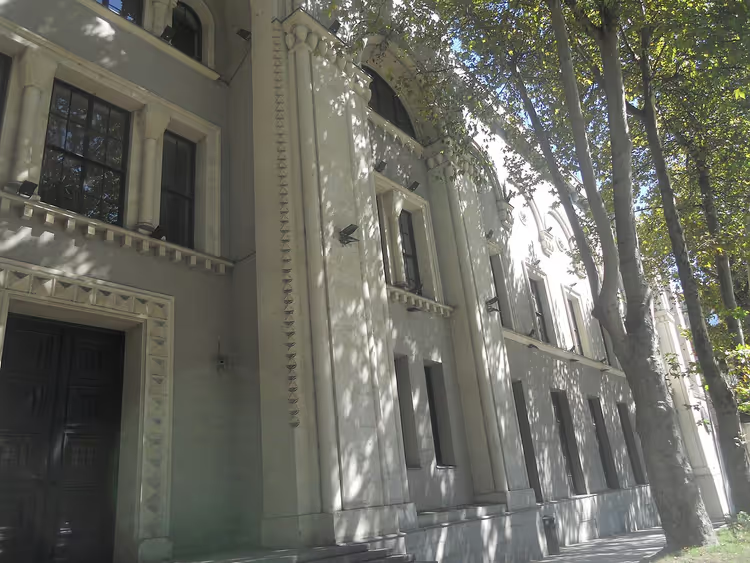 © Davit butulashvili · CC BY-SAPhoto: Davit butulashvili, CC BY-SA (https://creativecommons.org/licenses/by-sa/4.0), Wikimedia Commons
Check the booking details in advance. Tours run Tuesday through Saturday, last about seven hours, start at 9:30 AM, and cap at seven people. See the schedule and available dates on the official tour schedule (verified 09/12/2026).
Bread, matsoni, and the market
The first stop surprises you twice. You descend into a basement where the oven has been running since early morning, and you're handed warm bread the size of a good wheel of cheese. The bread is yours to keep, so take it without hesitation: it'll come in handy before the day is over.
At the market you'll see the spices, cheeses, and herbs that make up the flavor of Georgian cuisine. The guide explains how one variety differs from another and what's worth bringing home. You get to taste almost everything, so move along the stalls slowly and don't skip the far rows.
Ask questions. In a group of up to seven people there's time to find out what a dish is made from and how it's prepared at home, and that's half the pleasure of a Georgian table.
Courtyard lunch and wine tasting
The main part of the day takes place in the courtyard of Ezo restaurant. Tables sit in the shade, waiters bring out plates one after another, and Georgian white wine accompanies the food. The portions are such that halfway through lunch you stop counting plates.
The meal follows Georgian rules: conversation, toasts, gestures, complete loss of time. You won't want to leave the table, and that's a normal part of the format. If you're in a hurry, keep your evening free after the tour and don't plan any travel.
The wine portion is led by the guide. You'll learn how local wines differ from familiar European ones and why producers take pride in their small batches.
What's included in the tour price
The tour costs more than a typical two-hour walk, and for good reason. The price includes food and drinks, taxi rides, the guide's work, the market tour, and wine tasting. You don't need to pay separately for dishes or transport along the route.
See the exact price and booking terms on the organizer's website (verified 09/12/2026).
If your dates are booked, check out similar food walks and cooking classes: a selection of Tbilisi tours on GetYourGuide.
Tours and tickets in Tbilisi
Guided tours, skip-the-line tickets and activities — most offers can be cancelled free of charge.
See offers on GetYourGuideThe widget loads once you give your consent.
Allergies, vegetarianism, and cilantro
Dietary restrictions are discussed before the tour, not at the table. After booking, you fill out a short online form on the organizer's website: you indicate allergies, vegetarian or vegan preferences, and foods to exclude.
Cilantro deserves a special mention. It's added to dozens of Georgian dishes, and for some people it tastes like soap. If that's you, let them know in advance: they'll find you a dish without this herb.
For serious allergies, email the organizer before your trip and bring a trusted antihistamine with you. The guide will know about your restrictions and tell you which dishes to avoid.
How to get to the meeting point
The easiest way to reach the Old Town is by metro: the line takes you to Freedom Square, and from there it's about a ten-minute walk to the history museum (per the map). Fares are paid with a Metromoney transport card; rates are published on the Tbilisi Transport Company website (as of 09/2026).
Marshrutkas run frequently and stop on request, but on weekday mornings they sit in traffic like everything else. If you're staying in the center, walk and save yourself the hassle of transfers.
Arrive with time to spare. The start is at 9:30 AM, and the group leaves on schedule, so a morning delay on the road could cost you half the program.
Where to stay in Tbilisi
For this route, it's most convenient to choose a hotel in the Old Town or near Freedom Square. That way you can walk to the meeting point and return to your room after lunch without transfers. See hotels in central Tbilisi on Trip.com.
Good to know: what to see around Tbilisi
After a food-focused day, it's worth continuing your introduction to the country. Day trips leave from Tbilisi, and two of them deserve a separate day in your plan.
The first goes to the David Gareji monastery on the border with Azerbaijan: semi-desert landscapes and frescoes in cave halls. The second follows the Georgian Military Road to Stepantsminda, formerly called Kazbegi: on a clear day you can see Mount Kazbek from there.
In the city itself, leave time for two spots. The pedestrian Bridge of Peace over the Kura River is most beautiful in the evening when the lights come on. And it's worth setting aside a couple of hours for the sulfur baths in the Abanotubani district, where the water comes from thermal springs.
⁉️🤔 Frequently asked questions
How long does the Tbilisi food tour take?
Almost a full day, from morning to afternoon. It starts at 9:30 AM at the history museum and ends after a big lunch. Between stops the group walks and takes taxis a couple of times. It's best not to plan anything for the evening after the tour: lunch easily runs long, and the schedule is on the dates page.
Do I need to tell the organizer about allergies?
Yes, and ideally in advance. Dietary restrictions are noted in the online form after booking. For serious allergies, send the organizer a separate email.
Can I do this route on my own?
Partially. Anyone can find khinkali and khachapuri in Tbilisi, but the bakeries and restaurants the guide takes you to accept groups by arrangement. Wine tastings aren't offered without a group either. Going solo would be cheaper, but finding the same addresses would take several days.
Is the tour suitable for vegetarians?
Yes, if you let the organizer know when booking. The form includes vegetarian and vegan options, and the menu is planned in advance. Keep in mind that Georgian cuisine is built on meat and cheese, so some dishes will be replaced for you rather than simply omitted.
When should I book a spot?
The earlier, the better. Tours run Tuesday through Saturday, the group is small, and spots fill up weeks in advance during high season. In summer, book about a month ahead. In winter, dates open up more often, but some markets keep shorter hours.
Should I eat breakfast before the tour?
No. This is the most common mistake guests make. Bread from the basement bakery, matsoni with honey, and the market come one after another, and a heavy breakfast will leave you watching instead of tasting. Come hungry, but bring water.
In short: what to book
A Tbilisi food tour covers your introduction to Georgian cuisine in one day: khinkali and khachapuri, warm bread from a basement bakery, matsoni with honey, small-batch wines, and a big courtyard lunch. The format suits first-time visitors who don't want to gamble on restaurants based on reviews.
If you're short on time, book the tour for your first day. If you have allergies or follow a vegetarian diet, send the organizer the form first. If you want to see the country, add a trip to Stepantsminda and an evening at the Bridge of Peace.
See available dates and booking terms on the booking page: the group is small, so it's best to reserve your spot early.

A small editorial team writing guides for independent travel. We travel ourselves, but we haven’t been everywhere, so we check prices, opening hours and how to get there against official sources.